Category Archives: Holidays

The Longest Day

Beltane                                                                             Rushing Waters Moon

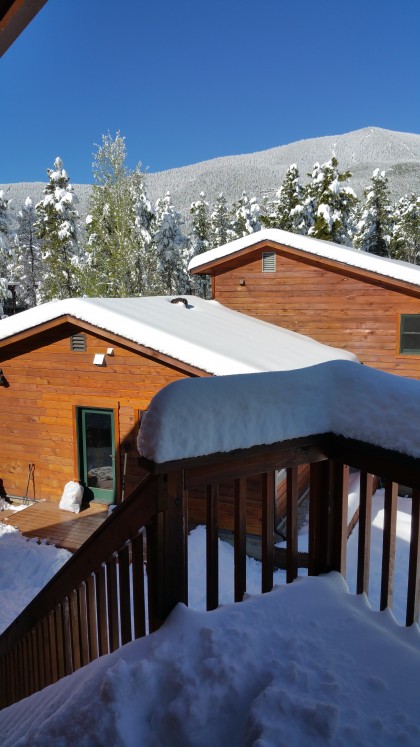
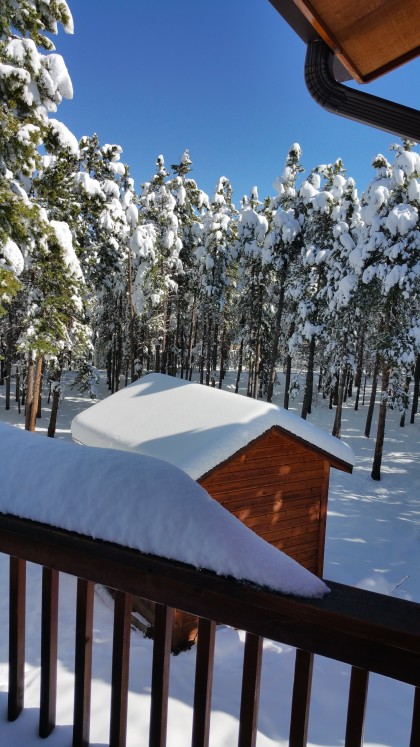
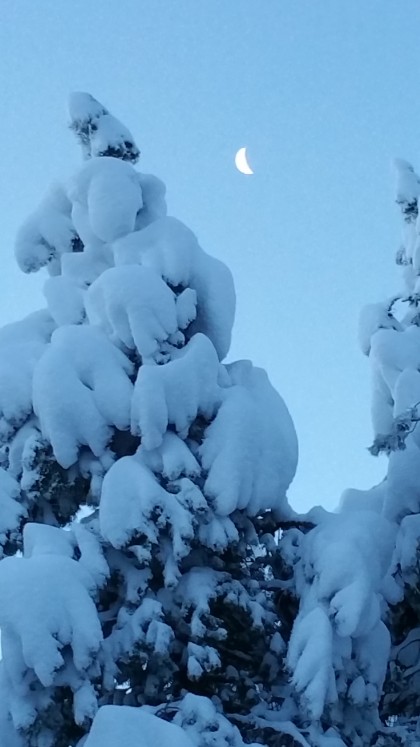
These are the last two days of the Rushing Waters Moon but its namesake creeks will continue rushing for another week or two. Last week’s substantial snow has been followed by some rain and last night another inch or so of snow. More precipitation to come, too.

The Moon of the Summer Solstice is new on the 25th. If I had the cash, I’d go to Sweden.


Memorial Day

Beltane                                                                          Rushing Waters Moon

To any Hoosier boy Memorial Day announces the Indy 500. Likewise, as a Hoosier student it meant, summertime! But up here on Shadow Mountain? We’re not quite ready for the parades and “Gentlemen, start your engines!”

May 20th, 2017
May 20th, 2017

20170520_08535320170520_085347

Mother’s Day

Beltane                                                                          Rushing Waters Moon

Mother’s Mothers dayday. It’s hard to write about Mother’s day. My mother’s death in 1964, when I was 17, drained the day of meaning. I suppose it didn’t have to be that way. I might have taken the opportunity to celebrate her on this day, but somehow it’s never felt right.

Even though I know it’s a Hallmark holiday, a clever way to sell cards and flowers and candy, it has a sneaky power that comes from the Judaeo-Christian admonition to honor thy mother and thy father. This is a simple phrase, easy to remember and oft repeated, but often difficult to fulfill. This sentiment is not unique to the West, of course. Asian cultures often have an exalted view of parents, extending even past death to care and grooming of graves.

Mom was a 50’s mom. She never learned to drive. She stayed at home, raising Mary, Mark and me though at the time of her death she was updating her teacher’s license so she could work again full-time. It was her plan to use her income to pay for our college costs.

cards-mothers-day-ad-1952She was not, however, fond of the typical duties of a housewife. That’s not to say she neither cleaned, nor cooked, nor did laundry. She did all these things, but only as necessities.

Mom’s been dead 53 years and my memory of her has faded, but the presence of her has not. That is, I can still feel the love she had for me, the countless hours she spent bringing me back from literal paralysis during my long bout of polio. In fact, in what is surely an apocryphal memory, I can recall being in her arms at the Madison County Fair surrounded by bare light bulbs strung through the trees, a cotton candy machine whirring pink spun sugar, and suddenly feeling sick with what would become that disease. But I felt safe with her. The memory may be a later construct, but the feelings behind it are genuine.

Since my relationship with my father soured during the Vietnam War, in 1968 to be exact, I have felt parentless, sort of adrift in the world without close family support. That’s a long time. And, yes, much of that experience was reinforced and maintained by my own actions. Nonetheless it has never changed. My analyst once described my family as atomized rather than nuclear. It was apt.

So, mom, today I want to say thanks for your love and your caring. Thanks for all the energy and attention you put into all of us. Thanks for the gift of recovery. Thanks for the vision of me as a capable person. Thanks for all the meals, the clean laundry, the clean house, especially since I know these things were not what you really wanted to be doing. Thanks for giving me life. It’s been a long time, but perhaps I can celebrate mother’s day now. For you.


Ichi-go ichi-e Once in a lifetime

Beltane                                                                                   Rushing Waters Moon

Fog this morning over Black Mountain. It comes in and out of view as the mist moves toward us. Now it’s gone altogether. There’s a thin scrim of icy snow on the solar panels. Colder last night.

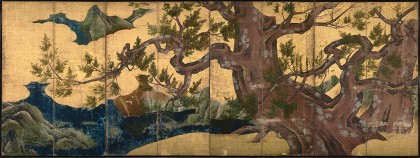
Kanō Eitoku (1543–1590), Cypress Trees

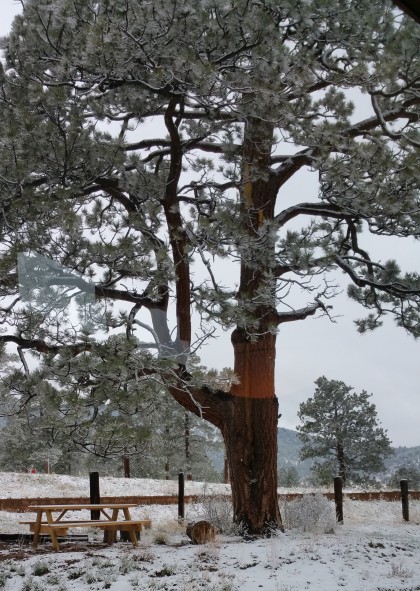
My Japanese informed aesthetic often finds resonance here in the mountains. The ponderosa pines that surround Beth Evergreen’s synagogue present heavily crenulated bark, twisted branches and a sturdy calm. From the sanctuary, looking south and east, one window pane has an especially crooked branch that reaches up like a hand. When the snow comes, it looks like a portion of a Kano school gold screen. Ravens and crows land on these branches, too, also emulating the scenery that inspired so many Japanese painters and printers.

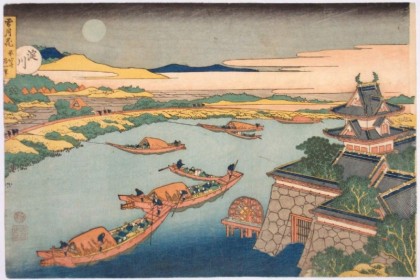
Moon watching, a Japanese pastime, has its analogue here as well. The moon rising and setting among the mountain peaks, clouds placing a thin gauze in front of it, the stars as its context, emphasize the moon’s romance. I can stand on my deck here off the loft and watch clouds cross the moon’s face. Its silvered light makes beautiful shadows of the lodgepole pine.

Hokusai (1760-1849), Boats and Moon, an ukiyo-e print

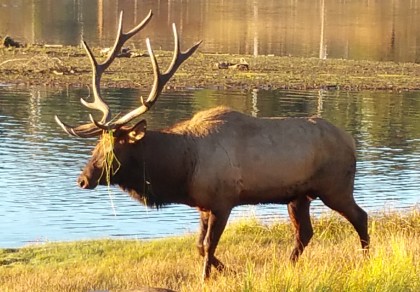
Big eared mule deer and thick, tall elk come down to Maxwell and Cub creeks, lapping up the cold fresh melted snow. Mountain lions slip noiselessly through the undergrowth, lie prone on rock cliffs waiting for them to pass nearby. Bears root up tubers. Minx, bobcats, pine martens, smaller predators, hunt for prey. Rabbits and squirrels and mice feed, look over their shoulder. The web of life is vibrant.

Bull Elk, Evergreen, 2015

Ichi-go ichi-e is a Japanese phrase often associated with the tea ceremony. The tea master arranges art in the tokinama, chooses teas and sweets, decides which tea bowls and tea pots and tea utensils to use, then greets their guests as they arrive, often no more than one or two. He does this to create an ichi-go ichi-e, a once in a lifetime moment or for this moment only. It connotes the treasure of each meeting between or among people.

Each moment of the day Black Mountain offers ichi-go ichi-e to those of us who live near it, if only we stop and look. To appreciate ichi-go ichi-e though we need to pause, or as mussar teaches us, put a space between the match and the flame. If we slow down our glance, our gaze, let it come to rest, if we take a breath and consider what is right there in front of us, then we find once in a lifetime moments happening throughout our day.

Ponderosa Pine, Beth Evergreen, April, 2017

These do not, as you might think, cheapen or dilute over time, rather they enhance our experience of the world. We recognize the fleeting nature of life, of this moment and that moment, of the unique and precious and irreplaceable flavor to each encounter. Nothing is old, all is new, always.

In fact, to the extent that we can gain an appreciation of ichi-go ichi-e, then we never age.


Beltane, 2017

Beltane                                                                       Rushing Waters Moon

beltane_2017Cue the couples out in the fields doing their sympathetic magic for the fertility of the crops. Light the bonfires for leaping over and the bonfires for driving the cattle between. Gather the naked Scots outside of Edinburgh for the great fire festival. Dance in the streets because the growing season has finally come round again, the Great Wheel has turned and food will begin to appear from mother earth.

The greenman is dead, long live the greenman. Let the lady and the god Cernunnos mate again and again and again. Watch as the seeds break open and pierce the soil, spreading leaves, gathering in sunlight and drinking in rain. See the birds, gone for the season, return to sing and fly and swoop and delight us.

As winter has made us fold our arms and shiver, put on coats and boots, Beltane says, open them, embrace the sky, kick off the boots, shed the coat. Go out into the forest and walk, slowly. Listen to the streams falling down the mountainside. Feel the wind come over the continental divide, still cool from the snow covered peaks beyond it.

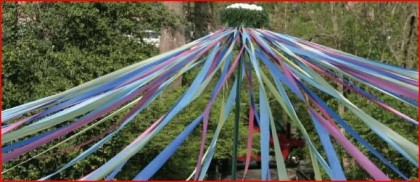
maypoleThis is Beltane. Mayday. Collect women and men, girls and boys, give them streamers and ribbons, connect them to the tall pole and have everyone swirl, under and in and out and back again. Pick flowers for the table, for a basket, for your lover.

May the power in each plant, in each rock, in each deer and fox and moose and elk and badger, in every person you meet, each bit of food you eat illuminate your heart and may your heart illuminate theirs. This is a time for coming out. Hug. Kiss. Smile. Appreciate.

Show gratitude for the snows of winter, the transition of spring, and the promise of nourishment spreading among us now. We have come again to the season of plant growth. The time when animal babies slowly mature. Celebrate, celebrate, dance to the music of the earth herself and her consort the sun.

Wakin’ Up Mornin’

Spring                                                                             Passover Moon

easterEaster morning. Sunrise services somewhere. The celebration of the resurrection and, by implication, the incarnation. As Passover defines Jews, Easter defines Christians. Whether you find the idea of resurrection absurd or inspiring, it heralds, as does Passover, the coming of spring. It’s not difficult, at least for me, to see the power of resurrection in the emergence of spring ephemerals: daffodils, crocus, grape hyacinth, early tulips, snowdrops, pasque flowers, bloodroot.

The same flowers could be seen as passover metaphors, too. Their emergence from the long sleep of winter makes good on promises made the year before as the bulbs, corms, rhizomes all stored up energy from the sun, drank in nourishment from the minerals of the soil and sipped up water from the sky, all gathered below ground after the leaves and flowers of last year withered away. The hiddenness of these promises and the darkness in which they flourish is like the life of the Hebrew slaves in the Egypt of the Exodus.

haggadahMoses reminds the slaves, and God, of the covenant made with Abraham long ago. That covenant is the bulb planted in the hiddenness and darkness of bondage. When God finally forces Pharaoh to let the slaves go free, the bulb begins to push its stalk toward the surface. Though it takes forty years of wandering for the stalk to break the surface in the Promised Land, the beauty of freedom’s flower has dazzled those struggling with their own personal or political bondage ever since.

My sister Mary’s friend, Anitha Devi Pillai, who teaches in Singapore with Mary, posted on facebook about the Kerala new year, Vishu, which is also celebrated right now. This was new to me, but it underscores the number of New Year holidays that honor the same rhythm of mother earth. The spring festivals in Korea and China, which come earlier, also mark the resurrection in fields and gardens.

These human holidays honor the emergent freedom from darkness and cold as each new flower and vegetable breaks the surface. VishuSo on this great wakin’ up morn, I’m greeting the sun, the greening lodgepole pines, the daffodils, the pasque flowers and bloodroot with a religious fervor.

During my cancer season two years ago I wrote about the consolation of Deer Creek Canyon, the stolid, very long term lifetime of the mountains that create the canyon. Today I’ll make note of the consolation of spring, its power to awaken wonder. We will all die, this we know, but the mountains will continue and so will the daffodils. Blessed be.

The Gulf of All Souls

Spring                                                                           Passover Moon

Under the full passover moon Kate and I drove over to Mt. Vernon Country Club for a community seder. There were about 60 people there, sitting in groups of 8 around circular tables. The dining room looked out to the south and east. As the sun set, the lights of Denver began to sparkle around Table Mesa in the distance.

Passover

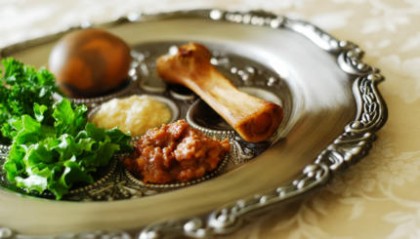
The tables had platters of oblong chunks of gefilte fish, a bowl of haroset (a sweet mixture that symbolizes the mortar used by Hebrew slaves in Egypt), a small bowl of pink grated horseradish, a stack of matzo covered in a linen napkin, and a seder plate with the traditional passover items: lamb shank, boiled egg seared over a flame, parsley, haroset and maror (horseradish). And an orange. The orange is a recent addition to the passover plate-at least for Reconstructionists-and it symbolizes the fruitfulness of women’s contributions in Jewish history and in the present.passover-seder-plate-cropped-430x245

The haggadah, the telling of the story, contains all the prayers, readings, songs and explanations for the evening. The seder (order) of the passover celebration has 15 steps, symbolizing the 15 steps that led up to the Temple in Jerusalem. The Temple passover celebration had two priest on each of the fifteen steps and they sang the passover ritual as worshippers brought up their lamb for sacrifice.

The evening followed this ancient ritual, commemorated in Christian churches as the last supper and ritualized among them as communion or the eucharist.

Dirk-Bouts-The-Feast-of-the-Passover

As Kate and I got out of the car at Mt Vernon, a young woman asked, “Is this the place for the seder?” It was, I said. Her name was Leah. We walked in together, past the slightly ridiculous pretension of the lobby, its fireplace and the sitting room with the observation deck like windows. Down a set of stairs was a lower level under the sitting room.

We chatted casually with Leah. The room was almost empty then, not many had come. We were early. I went out on the big deck that overlooked Table Mesa and Leah followed. She knew Rabbi Jamie in the synagogue he served previously in Buffalo, New York.

“I’m bi-polar and I went on a road trip, trying to find someplace new. I went to Florida, drove all over and came this way but decided I couldn’t cross the mountains in the winter, so I ended up working in Boulder.”

Oh. I have bipolar illness in my family. Two aunts hospitalized, one died in the state hospital, another came out, but under heavy medication. “Oh. That’s good. Well, I mean it’s not good that you have bipolar in the family, but it’s good you understand.”

And I do. It was as if this ancient ritual, one that gathers the tribe across the world to honor its release from bondage, had found a member of that tribe who also belonged to mine. Leah sat next to me and we dipped our little fingers in the wine, the parsley in the salty water, the tears of those in bondage, ate our matzo with haroset and made our Hillel sandwiches, haroset and maror between two slices of matzo.

river-lb

The ways the universe conspires with us: it lets us paddle along the river of time for a bit, then puts us through some rapids, lets us drift into a clear pool, but always moves us forward through the Grand Canyon of our life, and sometimes helps us to land on shore for awhile, perhaps in a spot that looks familiar, yet is always new. At 70 the river which carries me is much closer to the Gulf of All Souls than it was in my twenties, but unlike then, I can see through the translucent canyon walls to the canoes of my friends, family and new acquaintances.

There are even moments, like an April passover meal in the Rocky Mountains, when we come together on the strand of our common journey, our lives and our rivers joined for a moment. We travel apart but we are not alone.

Sacred Time

Spring                                                                         Passover Moon

20160330_091630“You need a rest day.” “Not for cardio.” This exchange with Kate has reverberated since we had it a couple of days ago. “You need a rest day.” I’d taken Sundays for many years, but recently began doing a longer cardio workout on that day.

Then again. A rest day. A sabbath. Oh. Since early in my seminary days, I’ve been taken by the idea of sacred time. Christianity adopted the word and a changed practice from Judaism. Christians, except for the 7th Day Adventists, shifted the sabbath to Sunday and started the day in the morning, rather than on the night before. This was to emphasize that the Christian sabbath celebrated the resurrection. With the crucifixion recorded as happening on a Friday, three days later meant Jesus rose from the dead on Sunday.

Even in my youth Sunday had a special tone. Just why it should was not well understood intellectually, but it was strong in practice. We had church in the morning with Sunday School then communal worship, in our case sitting in the second pew from the back, on the west side of the sanctuary, under the stained glass window of Jesus praying in the Garden of Gethsemane.

Mangas Cafeteria
Mangas Cafeteria

Afterward, we would often drive 7 miles to Elwood, Indiana and eat lunch at Mangas Cafeteria. This was a major event in our week since going to restaurants was a rare occurrence. I don’t recall if the later afternoon had much of a pattern, but we did often visit relatives on Sunday, too.

What I do know is that my body remembers Sunday as a day when doing nothing was encouraged. Even now, at 70, Sundays still have a languid feel, a pull away from the usual, whatever the usual is.

When I was in the ministry, Sunday was, ironically, a day of work, with Monday taking the place of Sunday, as it does for many Christian clergy. After I retired from the Presbyterian church in 1991, leaving behind Christianity for good, Sunday lost any sacred aura it had, but retained the languid overlay.

06 20 10_Garden_6705As many of you know, I began, not long after this time, to follow the Celtic sacred calendar, The Great Wheel, a practice now long embedded in my life as you can see each day on this blog in the upper left hand corner.

Now, with shabbat shalom a familiar greeting on Friday night and Saturday, I’m still fascinated with sacred time and wanting some version of the Jewish sabbath as part of my week. Why? Well, at its simplest, it’s a rest day. But, it’s a rest day with a purpose. The Jewish sabbath emphasizes relationships and torah study.

SabbathTable-1Work is discouraged (forbidden, in the stricter applications). The discipline includes not even discussing work on the sabbath, no planning for the next week. It also emphasizes personal spiritual development, torah study, attending services, private meditation. This is a day, once a week, strictly for being. Being in the here and now.

As I’ve written here before, this makes a lot of sense to me, even in retirement. So, I’m going to take my rest day starting on Friday night and continuing through Saturday night. I’m not becoming a Jew, nor do I want to play one on TV, but I believe I am becoming Jewish. That is, a lot of the cultural practices of Judaism resonate with my own spiritual development. Beth Evergreen encourages that growth and I find it nourishing. Trying out the sabbath, the old, original one, is part of that ancientrail and one I plan to walk on for now.

So, yes. A rest day. Kate was right. And today is that day.

At the Tallgrass Spa

Imbolc                                                                    Valentine Moon
 

tall grass spa

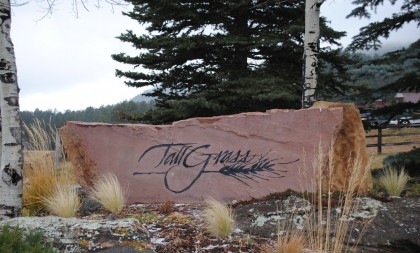
Tallgrass Spa on Upper Bear Creek Road. We had originally intended to go to Maui for my 70th birthday. We wanted to celebrate at Mama’s Fish House, where we’ve had both anniversary and birthday meals. The divorce and its impact on our time created a different focus for this February. Our plan was to celebrate our mutual entry into the 7th decade, Kate having preceded me, as she always does, in things age related.

We decided, instead, to combine our upcoming 27th anniversary (27!) with my birthday and Kate’s of last year by having a couples afternoon at the Tallgrass Spa in Evergreen.
tall grass view

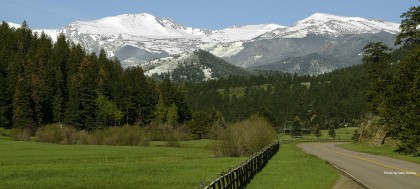
As you drive in to the spa, this is the view toward the west. The mountains give any trip, no matter how short, a sense of majesty. The thirty minute drive from Shadow Mountain to Tallgrass is especially beautiful.

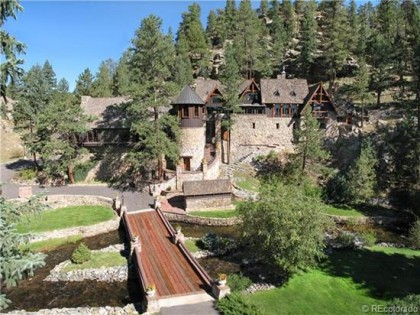
Upper Bear Creek Road begins at Evergreen Lake and continues for some miles. Along it are homes, many of them, that are big, stony or wooden, with elaborate grounds. This one sold recently for $2,300,000.
upper bear creek road

That was getting there. Once in the Spa we were given sandals to wear, shown to a room where we could change into Tallgrass robes (blue, one size fits all) and then taken to a quiet lounge area, beautiful with a fireplace, and a view of the mountains.

First, we had an 80 minute massage lying on tables next to each other with lots of hot oil, slippery hands, the scent of eucalyptus and mint and bergamot and, for me, a heated blanket, not for my Scandinavian wife.

In their relaxation of muscles the hands of the masseuse triggered memories, ones held in the body, not sure how they were resident there, but they were. An obvious one was her treatment of my knee, still somewhat swollen from the surgery. When her hands were on it, the journey of the last three months came forward. At another spot I remembered a moment in Rome on our honeymoon.

The biggest revelation though was the amount of tension, of anxiety I carried. As she relaxed me, I could feel my body tense, trying to get back to the state with which it had become familiar. We both knew the last nine months had been difficult ones for our family, but like all things, even that difficulty can become normal. On that table at Tallgrass my body told me so.

After this was a spa lunch, turkey sandwich for Kate, brie and fig sandwich for me. It was a pleasant time, sharing the lunch in the quiet lounge. We were creating a memory, probably the long time result, perhaps an alternative body narrative, too, for the last few months. That is, it was possible to relax even in the midst of family turmoil.

The last event of our day there was a pedicure. I’ve gone 70 years, literally, without ever having had a pedicure. The process fascinated me. In this room there were four throne like chairs lifted above the floor on risers, two steps up to them. Below the chair is a basin, a small sink, filled with soapy water. The pedicurist sits at the basin. Bare feet go into the water and the pedicurist cleans them, a very biblical, foot-washing moment and surprisingly intimate.

Did I want short or long nails? Short. She clipped my already short nails with a nail clipper. An implement somewhat like a dental pick but with a flattened end went underneath and around the toenails. Cuticle cream, tan and squirted on in small dabs, softened the cuticles, allowing Becky to clip my cuticles. I forgot the emery board which she used to smooth off rough edges.

All the while conversation was going back and forth among Kate, her pedicurist, Becky, me, and the woman getting her feet done in the chair next to Kate. The woman next to Kate was having a spa day paid for by her employer. Her husband was a chef. “I only make reservations,” she said, a line she’d obviously used before.

The talk turned to animals, llamas, dogs, mastiffs and rescues and bulldogs. Kate’s pedicurist, whose name I don’t recall, had a pitbull mix that had been attacked by a mountain lion a month and a half ago, but survived. She and Becky both live in Bailey. Sobering. Kate, whose throne was in the middle, could see out into a meadow across from Tallgrass where a herd of mule deer and several elk bucks wandered.

Exfoliation with a salt scrub came next. Becky rubbed a gently scratchy substance onto my feet, one at a time, sloughed it off with water, foliation and hydration with oil followed.

Touch, human touch, was the theme of the whole day. Where the massage was quiet, the pedicure was chatty, friendly and the lunch was just for us two. I’m now launched into my seventh decade, partnering with Kate as she walks the path, always ahead of me.

Why leave?

Imbolc                                                                            Valentine Moon

facebook1Often on Facebook I see people taking time off, time away. An article on how to cope with the flood of news now available and clamoring for our attention suggested not reading any news online at all. Read a newspaper and when you finish it, throw it away. Of course, the idea of a vacation is not reserved for hypervigilant news consumers-like me, for instance-but has broad application in the workplace, too.

It’s an interesting notion, vacating something we either enjoy too much or have too much of, regardless of its valence for us. The theory is, of course, that we leave something behind for awhile, don’t interact with it. We distract ourselves by going on a cruise, hopping a plane to another state or another country. We “unplug”, an interesting metaphor, from the internet or from Facebook or Instagram or whatever time eater we’ve grown accustomed to using.

good-for-the-soulI’m a bit suspicious of our motivations. We may be solving the wrong problem. I love travel, seeing new places and becoming a stranger in someone else’s world. I love travel not as a distraction from work or home or the current political climate, but for itself, for the fact of being, literally, somewhere else. It seems to diminish travel, at least as I understand it, to use it as escape. Perhaps the differences here are prepositional. In my sense of travel, I travel to places. In the escapist sense we travel away from something.

When we feel a need to escape a cyber world, a work situation, a too familiar home setting, a relationship, is escape the best answer? I’d say no. The more important question is why do we feel the need to escape? What in the current situation seems so unresolvable that only leaving it behind can help?

Those of us who’ve spent any time in AA meetings know about the notion of geographical escape. Alcoholics often convince themselves that only if they were in a new place, a new job, a new relationship, then their troubles would melt away, vanish. The trouble with the geographical escape is the cliched, but true: Wherever you go, there you are. The you addicted to alcohol travels with you.

chiloAddiction is an overused idea, so I’m not going to talk about Facebook addiction or any other, but the issue in all these instances seems the same as a yearning for geographical escape. Something is not working right now, so I need to go. The problem is, there you are.

In other words distractions like new places, new people, new things to do don’t change your inner life. The first question is, what in me needs to be away from this? Is it that this work just doesn’t fit me anymore? Is it that I’ve worked too hard and become exhausted? Have I read and read and read about other people’s lives while forgetting to be in my own? Have I somehow misused the opportunity that this job or this person or this cyberplace has to offer?

Answering these sort of questions before deciding to vacate makes a lot of sense to me. This is not an anti-vacation diatribe, however. Rather, it is a how you define is how you solve sort of diatribe. Identify the true issue and work on that first. Then, figure out someplace or something you can move towards, travel to the beach or the mountains or Korea or the ballgame, not away from wherever you are.