Winter Stent Moon
 The stent moon is a crescent, 12% illumination, hanging over Eduardo and Holly’s. It’s been everything I hoped. Next, a month focused on getting Kate’s weight up. What would you name the moon for that month? I’ll take ideas until Friday.
At night, before going to sleep, I identify the gifts given to me during the day, the gifts I’ve given and any trouble I’ve caused. Then, on waking I identify things I’m grateful for and things that bring joy. These simple habits, developed in mussar work over the last year, keep me aware of the ongoing miracle of the ordinary.
 I woke up. The air is cool. My body’s ok. Kate’s beside me with no nausea or cramping. Kepler’s wagging his tail, ready to go upstairs for breakfast. The power came back on yesterday after a long outage. The generator works. I didn’t even know it was on. The long road to DIA offered good conversation with our second son. He’s going back to Minnesota to spend time with a friend who’s depressed. That gives me joy. Ruth up here painting and giving me tips. Joy. Pure. Gertie’s kisses. Murdoch’s bouncy, smiley presence. Snow. Cold. The black clear night sky with stars and a crescent moon. A car that works. SeoAh’s cooking. Kate’s joy at her relief. Gifts, joys, and gratitude. Everywhere I look.
 Are there challenges? Oh, yes. But our human tendency to scan the horizon for threats, be alert for danger often blinds us to everyday wonders. Life is not all about illness, or finances, or legal trouble, or separation from loved ones. Yes, these matters crop up in our lives just like the occasional predatory lion or tiger came upon our ancestors in the veldt or in the forests of India and, yes, we need to see them, understand them, respond. We do not, however, have to build our lives around them.
I’m reading an interesting book by two North Carolina political scientists, Prius or Pickup. It posits a continuum on these very matters with one ended anchored in a fixed worldview and the other in a fluid worldview. The fixed worldview folks see danger and threat wherever they look. Those with a fluid worldview have more confidence in the world, focus more on the richness of life. In between are various blends between the two that the authors call a mixed worldview. They argue that over the last few decades our political life has gradually aggregated those with a more fixed worldview in the Republican Party and those with a more fluid worldview in the Democratic.

A field I didn’t even know existed, biopolitics, ties these worldviews to neurological differences, our partisan political environment has an increasing gap of understanding. Since that gap has roots in our neurobiology, we find it increasingly difficult to understand, or perhaps more importantly, trust anyone in the other camp. I’ve not finished the book so I don’t know what they propose. Gifts, joy, and gratitude identifying habits might help.
2019 lies mostly ahead of us. Yes, it’s an artificial segmentation of our ongoing orbit around the sun, but it does mark the end of one orbit and the beginning of another. (though any day of the year would serve just as well) So we might consider, as we set off on another journey of 584 million miles, what, over all that distance, over that pilgrimage on which all us earthlings travel, we’ll choose as our focus. The threats in our life? Or, the joys, the ordinary miracles? Where we put our attention is our choice.
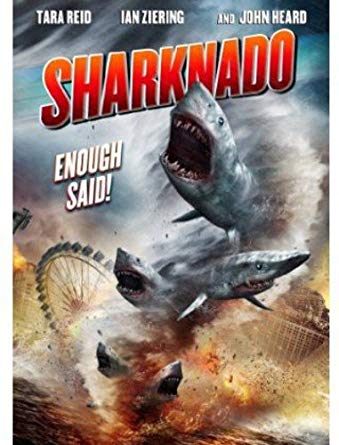 Chum is in the water. It may be Sharknado for he who shall not be named’s presidency. Part of Michael Cohen’s testimony indicates that individual-1, i.e. 45, the orange tumor on our democracy, ordered hush payments to two women with whom he had affairs, Stormy Daniels and Karen McDougal.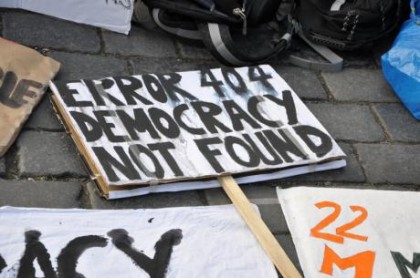
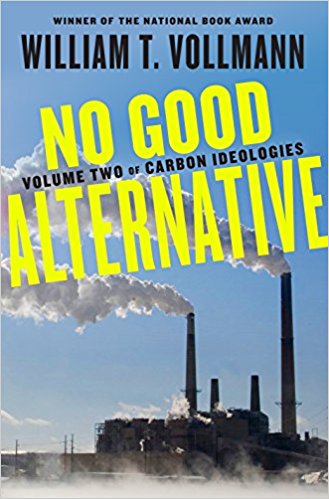 Though I haven’t begun to read them yet, William Vollman’s two volume work: No Immediate Danger and No Good Alternative, the Carbon Ideologies paints a bleak picture. So does the
  If we cannot slow down the rate of climate change (which is the most we can do, since so much climate change is already baked in), then we move to mitigation and adaptation. Geoengineering will become a buzz word as various strategies are tried. Climate refugees will become more and more disruptive across the world, especially those moving from coastal areas into interiors and onto higher ground. The already underway shifts in plant and animal eco-systems, climate refugees all, will bring them with different disease vectors, disruption to agriculture and sea life.
 We will not be known for Vietnam, civil rights, feminism, ruining health care, electing fascists to high office, but as the generation that allowed an earth compatible with human populations to slip away. Hard as it is to imagine the results of this inaction will be far, far more damaging than all the wars, holocausts and pogroms. How will we explain this to our grandchildren, to Ruth and Gabe in our instance? I understand the political and economic forces that have gotten us here, but explaining them will not alter the misery.
 The country I used to know. It wasn’t perfect. Take MLK and the civil rights movement. Vietnam. Crushing, unnecessary poverty and the dismal, shameful access to health care. Coal and gas poisoning the atmosphere. The lives of women and girls. And, yes, so much else.
 As I drive down the hill, then climb back up, I wonder if this is the way it was. Lives going on, wives in hospitals, trying to make sense of the unexpected, sudden calamities that visit us all but finding those calamities embedded in a greater one like Russian nesting dolls. Kate’s struggle a small instance of the larger one, a people beset by unforeseen tragedy. But, where do you take a country in extremis? Where are the emt’s for a sick nation?


 Sad. Mad. Incredulous. Shocked. Mystified. Hurt.
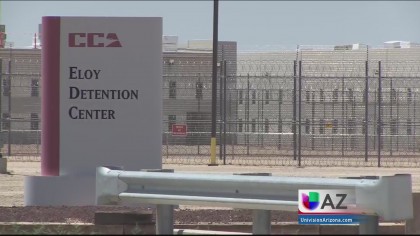
  Ms. Montoya became too emotional to talk. Several times. She answered question after question from this audience of maybe 75 people, all outraged, most wanting to do something. Kate stood up and asked what kind of medical care did these children receive? Ms. Montoya said no particular medical care was available. That means diabetes goes untreated. Other chronic conditions, too. Another asked what kind of education the kids were getting? Ms. Montoya said, “The kids speak Spanish; all the guards and caretakers speak English.”
 Part of the problem for legal projects like Florence and
  *Valentina Restrepo Montoya was born in Boston to Colombian-immigrant parents. She earned her J.D. from Berkeley Law, where she advocated on behalf of asylum seekers, latinx workers, latinx tenants, and indigent defendants in criminal cases. Valentina clerked for The Southern Center for Human Rights, where she investigated language access to adult and juvenile courts. After law school, she joined The Southern Poverty Law Center, dedicating herself to litigation against The Alabama Department of Corrections for providing constitutionally inadequate medical and mental health care to prisoners, and not complying with The Americans with Disabilities Act. Prior to joining The Florence Project, Valentina was an assistant public defender in Birmingham, Alabama. She enjoys playing soccer, reading The New Yorker, practicing intersectional feminism, and rooting for The New England Patriots.
 Why are we so reluctant to recognize that racism, sexism, homelessness, income inequality, white fear are the result of decisions we’ve made collectively and individually? I think the answer lies in ideas Arthur Brooks identifies as the bedrocks of conservative thought. Below is a portion of that article,
  But, to sacralize that unique reality, “…conservatives have always placed tremendous emphasis on the sacred space where individuals are formed.” says Brooks, serves to deny its perniciousness, its damning of so many to lives of desperation, marginalized from both economic and cultural blessings. Once we emerge in the era, the family, the town or neighborhood or rural place, the religious or areligious space gifted to us, the nation of our birth, once we are over being thrown into circumstances beyond our volition, we gain the power of choice.
 Probably won’t be going back to Chainsaw Bob’s. Went yesterday to get my chain sharpened. They have a new deal, smart, where you leave your old chain and they put an already sharpened one on your saw. Supposed to save time. And it would if the guy putting the chain back on wasn’t trying to sell another guy a saw.
 Sexism is still raw and unvarnished in many places, like racism on public display in Charlottesville, Virginia. Murica.
 I’ve been reading a book by
  It reminded me, the reason I liked it, of Paul Ricoeur’s notion of second naiveté in which a scholar of religion first distances him or her self from his faith as a result of academic work, then returns to the texts after that distancing with a second naiveté, an embrace of the former belief now informed by reasoned analysis. The result, in both cases, is something new, neither level 1 nor level 2, but an amalgam.
 Washington, Jefferson, Lincoln, FDR and LBJ would be my top five Presidents, no particular order. Yes, Teddy Roosevelt and maybe Eisenhower are in a close second tier. I disagree with historians who rank Truman and Reagan above LBJ. And JFK is overblown. LBJ gave a damn about those in the U.S. who had less. In a commencement speech at the University of Michigan on May 22nd, 1964, he “… called on the nation to move not only toward “the rich society and the powerful society, but upward to the Great Society,” which he defined as one that would “end poverty and racial injustice.”