
Summer Woolly Mammoth Moon

Zoomed. We talked for over an hour, Mark, Paul, Bill and me. Each of us was in a different physical location, Paul in Maine, me in Colorado, Mark and Bill in the Twin Cities. This technology is a definite push beyond Facebook, Instagram, Twitter. It is more like letter writing in its length of interaction and interpersonal depth. In that sense it works against the grain of 140 characters, photographs and short posts. It’s more like real life in its immediacy and interactions that includes body language.

Even its limits are closer to real life. No e-mail blasts. No dashing off a quick post, then moving on to something else. This is sitting across the room from someone, though in this case the rooms can be hundreds of miles apart. Some of the social niceties are impossible of course. No shared snacks. No hugs. Different weather. It was pouring rain in the Twin Cities, dry here in the Rockies. No offering hospitality of the physical kind. We couldn’t decide to get up and go somewhere else afterwards, or, for that matter, even during the hour. If we got up, it would be as if we left the room.
I liked it. In this mode we can nurture old friendships, share confidential news in private (at least I think it’s private, but who knows really), spark off each others sentences, laugh together. It may not be a trip to Durango or a hike at the

summit of Guanella Pass, but it’s not a short typed note either. Can this technology sustain us over time? Difficult to tell. We’re creatures, at least those of us on this Zoom session, of the old, pre-computer days when communication across distances was sporadic and limited to long distance phone calls and letters; for us this way of being with each other is novel to some extent and compares not so much, really, to social media, but to actual, in person meetings.

Whether the digital natives will see in it a form of being with each other that they want to pursue, I don’t know. One of the factors that held me in the Twin Cities so long was the physical presence of and frequent visits with Woolly friends. In the important sense of in depth conversation Zoom and its like provides a very close equivalent. Perhaps it will make distance matter less, allow us to rearrange ourselves physically with less loss. I hope so.

 Gonna work a new technology into old relationships this morning. At 9 am MDT, 10 am CDT and 11 am EDT, Mark, Paul, Bill and I will crank up Zoom. A virtual gathering of part of the Woolly Mammoth herd. On the shores of the St. Croix River in northern Maine, the top of Shadow Mountain, and in the Twin Cities of Minnesota we’ll gather around an early 21st century campfire and tell stories. It’s hard to say how this sort of meetup, a more sophisticated version of Skype, might transform relationships, but that it has begun already, is clear to me.

 I suppose this has implications as well for the old wheeze of uploading my consciousness, complete with memories, to the cloud. What would I, or you, be then? What would it be like to not be embodied? I suppose these virtual platforms give us a way to try out that transition without going all the way into an electronic reality. Perhaps they’re really a transition moment between this stage of human evolution and one we cannot imagine.
 Yesterday was a big day. Up early to write, workout. Lunch with Alan Rubin to start planning for the 6th and 7th grade religious school at Beth Evergreen. Home for a fitful nap. Left at 5:30 pm with Ruth for Boulder. We had a reservation at Japango on the Pearl Street Mall before seeing the Fiske Planetarium show on black holes. Driving home under the waxing gibbous moon with Jupiter below it, Mercury and Venus visible, too, as well as Mars and Saturn. A planetary moment. No twinkling please.
 We want to reframe the high holidays, Rosh Hashanah through Yom Kippur, in a reconstructionist way, then help the kids come to their own way of reframing. In the traditional understanding, taken here from the
 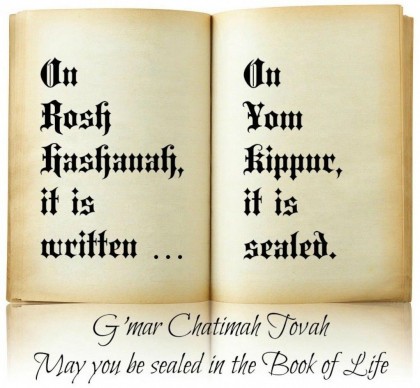 The tradition implies a white bearded, Santa Claus like God who checks on the naughty and the nice. He takes out his celestial quill pen and starts scratching. He pauses, waiting to see what you have to say for yourself, then after a reasonable interval (the ten days), he writes fini.
 In my peculiar little world this is great fun. Looking forward to engaging similar research throughout the upcoming liturgical year.
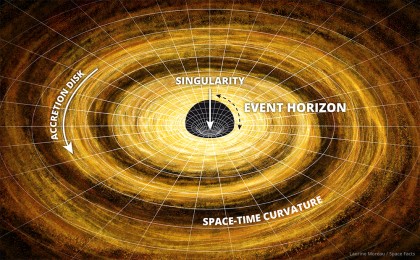 After the dinner we drove back up Broadway to the Boulder campus of the University of Colorado, about 5 minutes. At the planetarium, where we’ve gone many times, we saw a presentation on black holes. It covered the usual topics of star death, neutron stars, supernovas and the formation of black holes with their extraordinarily deep gravity wells. It also covered recent observation of the long pursued gravity waves at the
  Odd things. First, a small group of folks at Beth Evergreen, mostly qabbalah students like myself, report seeing me as an artist. A visual artist. This is based on my last two presentations, the first being Hebrew letters with quotes relating to their deeper meanings and the second, last Wednesday, that used the sumi-e zen practice of enso creation. Now I’m far from a visual artist, I have two very good ones in my immediate family, Jeremiah Miller and Jon Olson, but to be seen even modestly in their company is a real treat.
 Second. Damned mower wouldn’t start. As I said earlier. Put in fresh gas. No joy. Hmmm. You Tube. You Tube, that Chinese patron saint of the do it yourselfer. Looked up mower won’t start. Found a video of a guy. One with a small wrench who showed how to take apart the carburetor, poke wire into various holes and then, voila, vrrooom. Didn’t look too hard.
 Best of all, when I yanked the starter cord after closing the carburetor back up, the mower started. To those of you with a mechanical gene this no doubt sounds trivial, probably very trivial, but to me. Wow. I fixed it myself.
 I’m not an athlete, not a Latin scholar, not a very good visual artist and definitely not much of a mechanic, but I have an amateur’s capacity. Trying these things makes my heart sing, keeps life vital. I suppose, going back to yesterday’s post, you could say I have faith in myself. Not faith that I can do anything I try, that’s just silly, but faith that if I try I can learn something new, maybe introduce something important to my life.
 OK. Been down in the theological weeds for a couple of days here. One of the reasons I love Beth Evergreen. Regular chances to go deep, swim in the ocean of this fast, temporary experience. Life. Bits and pieces of a new way of looking at faith continue to float up from the sea vents of the soul, still nurturing life after all these billions of years.
 Starting a hunt for a new vehicle. One of us might be gone, say on a red flag day like today, when a fire rushes through leaving the home front without a vehicle to carry the dogs and our small emergency file box. We’ve done well, very well, with only one vehicle, renting when needed, but we’re in a more vulnerable situation here. Buy one, keep the old one. Not cheap though. Probably a Toyota SUV. Something hybrid. Another Rav4 or a Highlander, maybe.

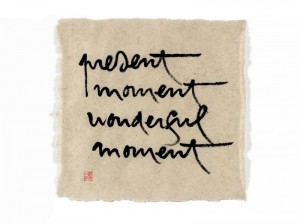 Here’s the real trick in Rovelli’s book though. The present is highly local. The present is a construct meaningful only within the part of the universe with which we are in direct relation. So my present here on Shadow Mountain is different than the one down the hill in Aspen Park or down the hill even further in Denver.
 Picky? I don’t think so. The present is just that. Now. But I can discover no other present without encountering it after mine has already disappeared. This highly local nature of the present unhinges our assumption of time as a constant, the same everywhere. No, in fact it’s exactly not the same everywhere. You have to let that trickle in, at least I did.
 Started a long project yesterday. I’m printing out all of Ancientrails. Been wanting to do a total backup and I will at some point, but if it’s going to be useful to my ongoing work, hard copy is better. Besides, think how satisfying it will be to hold a copy of all this. Then, I got to thinking. Oh, but a fire! I’m going to make a copy of the copy when it’s done, then make copies of all my hard copies of my novels. I’m going to ask Jon if I can store those copies in his garage in Aurora. Yes, all the novels are on flashdrives (and in a safety deposit box, all except my work on Jennie’s Dead and Rocky Mountain Vampire) and all of Ancientrails is in the cloud, but the hard copies are important, too. The things that come up before we fall asleep.
 If I’m understanding his primary argument, time at the Newtonian level is a result of blurring. This may seem like an odd idea, and it is, but it’s not so hard to grasp if you think about the blurring that is necessary for us to perceive the world around us. Example. If you shrank to the atomic level and tried to walk across a table top, you’d fall in. It’s blurring of the quantum world that makes the table seem solid to us. Time is a result, again if I’m getting this, of the blurring of the transitions from event to event which, at the quantum level have no prescribed order.