Category Archives: Minnesota

Don’t Get Too Comfortable

Beltane                                                          Early Growth Moon

Mark Seeley University of Minnesota & MPR

My MPR colleague Dr. Mark Seeley gave us some astounding benchmarks on just how rapidly Minnesota’s climate is shifting, and how extreme weather in Minnesota is becoming the new normal.

-Weather Whiplash: The record warmth of March 2012 was the “most anomalous month in Minnesota and USA climate history” Fast forward to spring of 2013, and Minnesota is living through one of the coldest and wettest springs on record. This kind of year to year “weather whiplash” is unprecedented in Minnesota’s climate record.

-On the need to adapt: Minnesota’s infrastructure is built upon older perceptions of climate behavior that no longer hold true. We need to adapt our infrastructure to the new climate reality…which include more heat waves, tropical humidity episodes (70F to 80F+ dew points) in summer and excessive rainfall events.

-On changing rainfall patterns: A greater percentage of Minnesota’s annual precipitation is coming from summer thunderstorms…and the extreme rainfall they produce. The gentle soaking rains of our youth are fewer and farther between. That is promoting a cycle of flood…and drought in Minnesota. Twice in the past 6 years several counties in Minnesota were declared in flood…and drought at the same moment in time.

The “new normal” in Minnesota’s changing climate includes an “amplified thunderstorm signature” meaning more of our rainfall is coming in the form of heavy downpours.

Magnetic or Sticky?

Beltane                                                                     Early Growth Moon

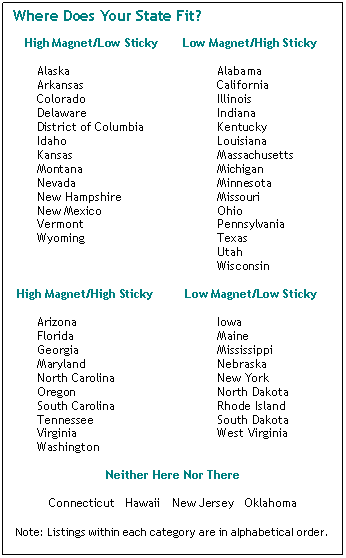
Sister Mary discovered an interesting analysis by the Pew Trust which measured states as magnetic and sticky.  Essentially magnetic meant the capacity, demonstrated by census data, to attract newcomers while sticky measured the capacity or lack of it to retain those born in the state.  States received rankings on both measures and then were grouped into categories such as high magnet/low sticky, low magnet/low sticky and so on.

Minnesota and Indiana are in the same group, along with surprisingly, California.  That is, neither state attracts all that many new folks, but those born there tend to stay.

I’m not sure why folks remain in Indiana, except for inertia, but I’m sure folks stay in Minnesota because it offers a distinctive culture, one rooted in an outdoor life-style coupled with progressive politics and a highly developed arts and performing arts scene in the Twin Cities.  All this set in a spot tucked up next to Canada with the boreal forest extending almost to the northern exurb of the Twin Cities where Kate and I live, a forest filled with lakes and wilderness bounded on its eastern edge by the largest fresh water lake in the world, Lake Superior.  (Lake Baikal has more depth and therefore more water, but its surface area is somewhat smaller than the shallower Superior.)

Having said that I moved here by accident when I came for seminary in 1970 and remained by choice.   Minnesota is a low magnet state for several reasons, the chief one being climate.  We have, or had, severe winters coupled with short but intense summers.  Another factor working against Minnesota is its location.  It’s not on the way to anywhere in the US.  You have to come here on purpose, either for school or outdoor recreation or a work related move.  The Upper Midwest, of which Minnesota is a part with Wisconsin and Michigan all share that sense of isolation from the more southerly tiers of states.  And you’ll notice they are in the same column.

Indiana does not attract folks, especially now, I imagine, due to poor job prospects.  The closing of industrial manufacturing facilities put Indiana solidly in the rust belt.  It does not have the natural amenities of the hills and mountains of Tennessee, Kentucky, Arkansas, nor does it have any other particularly noteworthy natural features.  It does have a strong blue collar culture focused on basketball, cars, racing and the remnants of unionism which might help explain why folks stay.

The whole article on the Pew website is worth reading.  They do very interesting work on several topics.


Cities

Beltane                                                                       Early Growth Moon

Writing the post below reminded me of a topic I pursued in some depth for many years, cities.  Cities fascinated me from the moment I visited Chicago, Washington and NYC as a teenager.  Small town central Indiana, even the Indianapolis of the late 50’s and early 60’s, had none of the energy, the danger, the possibility.

(Cedar-Riverside People’s Center, formerly Riverside Presbyterian Church.  I had an office there in the late 70’s and early 80’s.)

When I moved to New Brighton in 1970, on my very first day at Seminary, also my very first day in Minnesota, we visited the Guthrie, the Walker and the MIA.  Not too much later I discovered a program, I don’t recall its name, that allowed students to buy theater tickets and orchestra tickets for ridiculously low prices.  That put me in the seats at the Guthrie, its design in the old spot based on the Stratford, Ontario festival theater, a theater in the round(ish) with a thrust stage, a theater I had visited many times.

At some point not long after that I got a job as a weekend staff person for Community Involvement Programs (CIP), a facility for training recently released and high functioning developmentally disabled adults.  The concept involved apartment based training, teaching folks how to live independently.  The next stop after C.I.P. was your own apartment.

I lived in the facility, located in Mauna Loa apartment building, just to the east of what was then Abbott Hospital in the Stevens Square Neighborhood.  After that move I lived in either Minneapolis or St. Paul until 1994, our relocation year from Highland Park, St. Paul to Andover. (There was a brief and unhappy hiatus at the Peaceable Kingdom, my first wife and mine’s 80 acre farm in Hubbard County, and a bit of time in Centerville, the rest all in the cities.)

Over those years, starting with the organizing of the Stevens Square Community Organization and its subsequent redesign and redevelopment, which featured a very public fight with General Mills over their purchase and rehabbing Stevens Square apartments, my life became inextricable from the life of urban neighborhoods.  That engagement stuck until I left the Presbyterian ministry in 1991.  It even lasted a year beyond that when I took on teaching a small group of students in urban ministry internships.

Someday, I’m going to write about those years.  They were fun and a lot of good got done.  Plus I learned a lot of things about cities.

Proud. Again.

Beltane                                                                        Early Growth Moon

Proud to be a Minnesotan.  Again.  Finally.  It has been a long, long time in the conservative weeds with no new taxes chanted ahead of every policy debate, ruining the things that have made Minnesota the strong, progressive state I loved when I first moved here over 40 years ago.  Now, in one legislative session we have more money going into education instead of raiding our school systems piggy banks while raising property taxes.  And, incredibly and beautifully and thankfully, we have marriage as an institution available to all Minnesotans.

It is not, after all, gay marriage, anymore than it is hetero marriage or African marriage or white marriage.  No, it is a legally sanctioned bonding of two people for the purpose of creating a strong family unit, whether that unit is two people or two plus kids.  Hopefully, in not too many years, we will look back on this debate and shake our heads, “Why was that such a big deal?”

An open civic society, a thriving K-12 system with post-secondary education appropriate for all, a world class health system, diverse cultural life and a commitment to a healthy environment, that’s the Minnesota I love and I can begin to see it emerging again from the compassion drought we’ve suffered under the tax-obsessed Republicans.

As Leonard Cohen sings, Hallelujah!

Another Country

Spring                                                               Bloodroot Moon

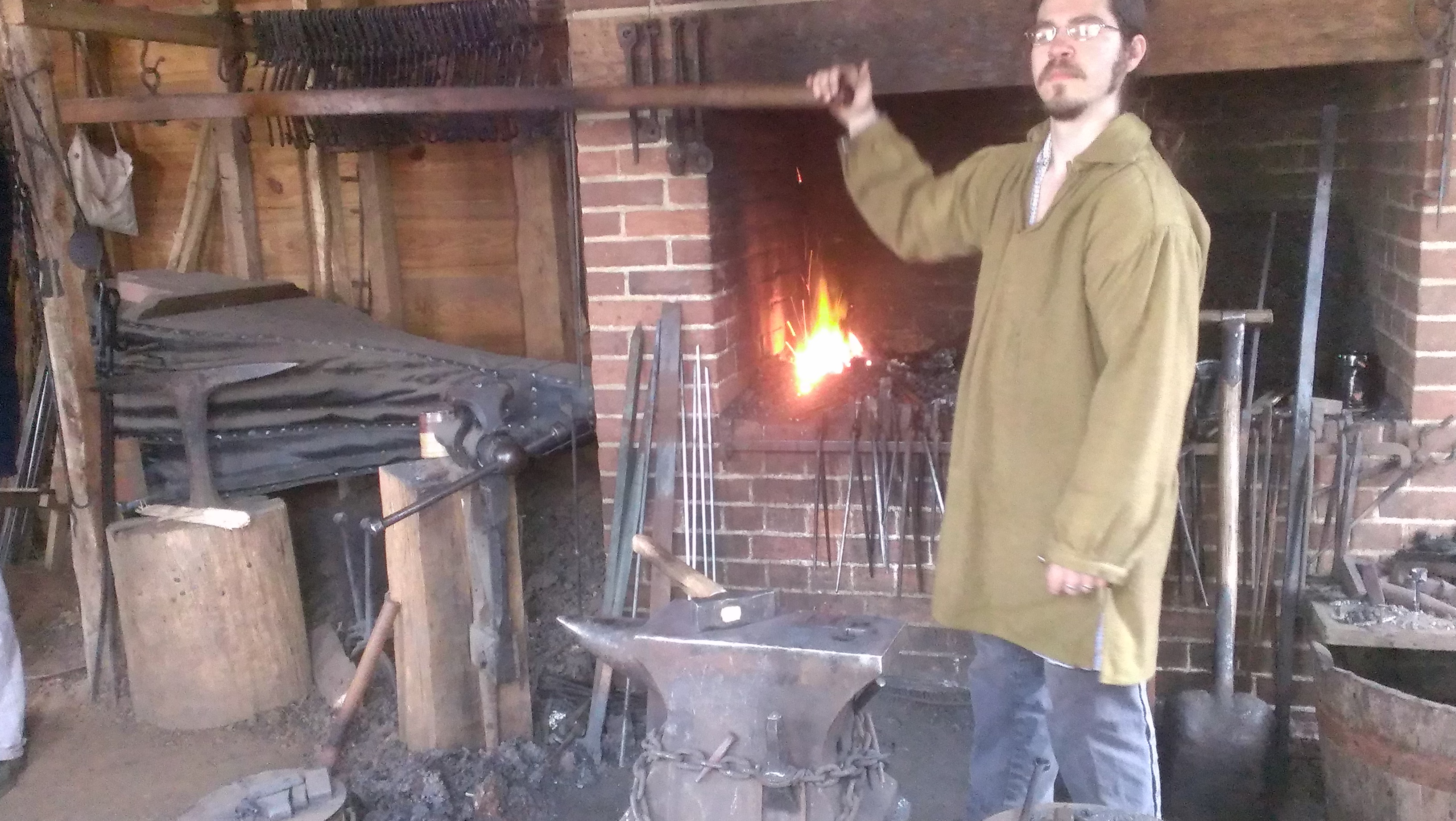
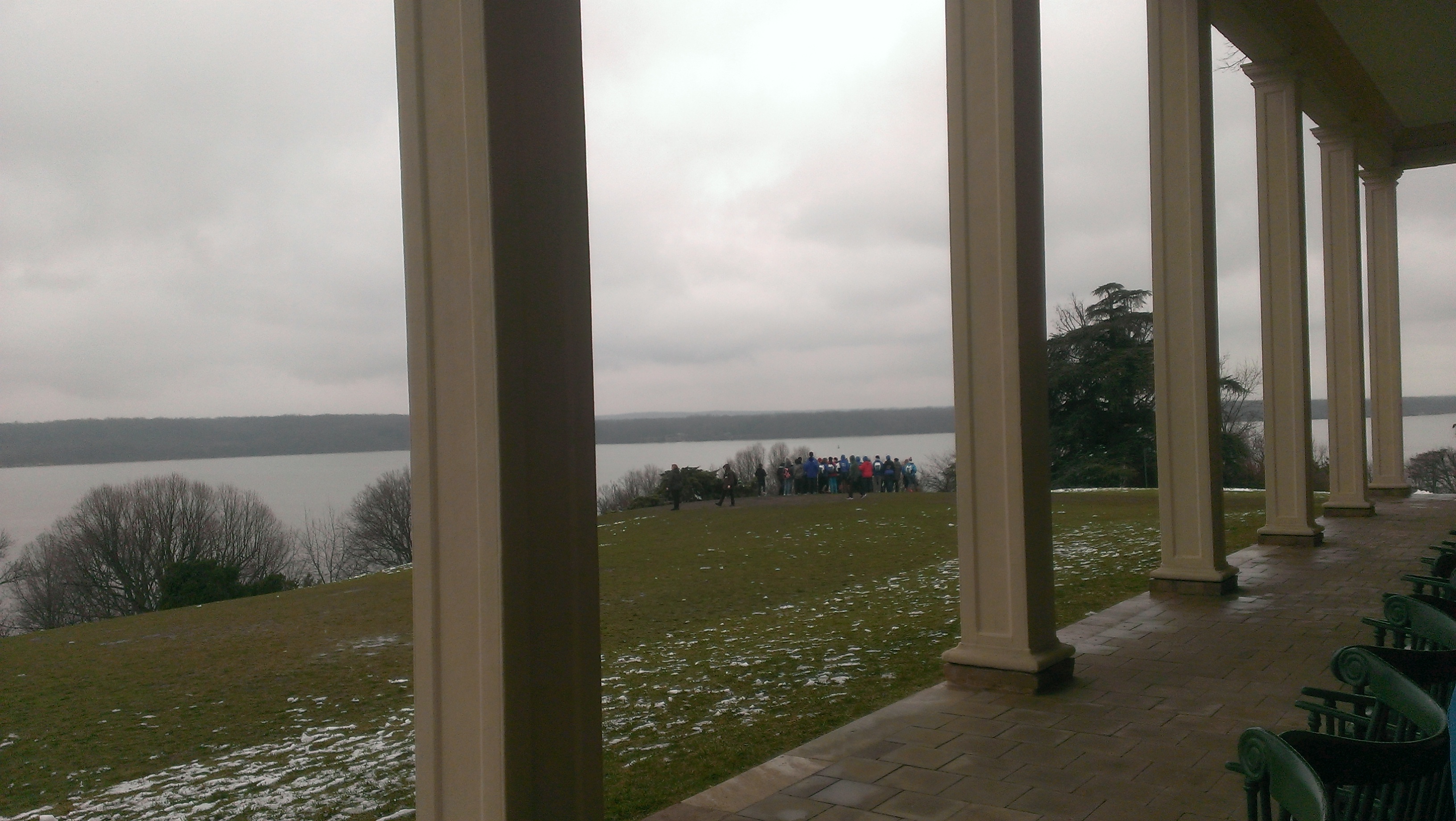
A few pictures from my trip to Mt. Vernon.

Before the pictures though.  Here in Washington and at Mt. Vernon the early history of our nation has a presence on the street, among the documents, in the traditions, and by shaping the forms of architecture from government buildings to residential homes: the brick homes, the limestone greco-roman revival government buildings and monuments and the cobblestone street in Alexandria, Virginia.  The constitution and the declaration of independence lie entombed in the Archives not far from where I write this.

Each place you go some element of our history peeks around the corner, waves. Says, “Psst, want to see some history, kid?”  I remember the same sense when I was on the Capitol, the sleeper train that runs between Chicago and Washington.  Once we got into central Pennsylvania the architecture changed.  We passed places I knew mostly from history books.

Here’s the thing.  I’m a Midwestern guy born, raised and never left.  A heartlander.  This does not feel like my country here on the east coast.  When I think of Minnesota from here, it feels far away, up north and filled with pine trees and lakes.  Which, of course, as most of you know who read this, it is.  Pine trees and lakes are in a large part of the state and they do define our identity as Minnesotans.

This feels like the old world, Europe to our heartland new world.  A place so built up and fought over and crusted up with money and power that it has a different tone entirely from the one at home.

Sure, we’re all subject to the same government and fly the same flag, speak the same language and send our kids off to the same military.  True.  But the east coast, like the south, the West and the Left Coast are different enough to be different countries in Europe or Southeast Asia or Africa.  You know this, I’m sure, but I’m experiencing it right now and it unsettles me in some way.

Here are the pictures.

GO D Park

Imbolc                                                                       Valentine Moon

Saw the full Valentine Moon rising over Gold Medal Park near the Guthrie yesterday late afternoon.  Some clever vandal has knocked out the L on the large metal sign there so it reads GO D MEDAL PARK.  This is the park given by plutocrat and former CEO of UnitedHealth Partners, William McGuire.  Why both rich people and the public seem to think the wealthy have a fine aesthetic that should get public spaces for expression continues to be beyond me.  The saving grace here is that a well-known landscape architect designed the park, Tom Oslund.

Back to the Latin this morning, resuming my work on Ovid and about to start up on the novels again, reading the last of the Eddas today and tomorrow.  Still a good bit of reorganizing work to do, but the vast bulk of it in here (study) has been accomplished.

Yeah, You Betcha

Samain                        Moon of the Winter Solstice

Went out on an errand this afternoon as the sun began to set.  At 4:00 pm.  When I hit Round Lake, I saw a car in the rear view.  It had something on top.  A Christmas tree.  We have one of the metro’s favorite cut your own tree places about 6 miles north of us.

This triggered two memories.  The first, which you’ve encountered if you’ve traveled in the tropics during Christmas, is the jarring sight of Christmas trees, wreaths and lights all atwinkle at 80+ degrees.  In Rio they have applied to Guiness for certification of their floating Christmas tree in the big lake near the funicular for Corcovada (muy grande Jesus).  It’s supposed to be the biggest.  Among a crop of how many floating Christmas trees, I wonder?

An oddity I realized in Rio was that most of these Christmas decorations have a fir or pine as their exemplars.  That was the trigger with the Christmas tree on the car.  When I took my trip to Southeast Asia seven years ago, I was in Singapore at this time.  Same strange thing.  Christmas trees, wreaths, Christmas tree decorations all sprouting from vertical shopping malls in the air conditioned nation.

The second memory triggered by the car with the Christmas tree was the sight of golf carts all loaded up on flat bed trucks headed south for the winter season.  Soon we’ll have the rickety trucks coming to town piled high with cut wood sold door to door for fire places.

We do have a very distinct culture here and it’s visible to me right now, with South America so present to me.

One guy on the cruise asked me about ice fishing.  Seems the word of our palatial fish houses has spread to the larger world.

Yeh, you betcha, we’re our own culture up here.  For sure.

Seasonal Pilgrimage

Fall                                           Waning Harvest Moon

Each turn of the Celtic seasonal calendar I find ideas, personal reflections, astronomical or traditional lore to pass along.

This time I’ll pass along one from Waverly Fitzgerald who maintains a website, living in season.

She suggests a seasonal pilgrimage, a visit each turn of the year to a place that, for you, embodies the energies and essence of the new season.  This recommendation struck me because I have a place myself, next to the Carlos Avery Wildlife Refuge, the Bootlake Scientific and Natural Area.

To get to my sacred area I walk back through a field, it formerly held a house, now gone, traverse a crescent of young oak and birch to emerge in a circular meadow filled with furze.  Across the furze and to the northwest is a path back into the woods, not long, that takes me to a parcel of land between a pond on the south and the marshy edge of Bootlake on the north.

On this land between the waters stands an old growth white pine, a white pine with a crooked top, probably the main trunk broke off in a storm or lightning strike and a secondary branch took over, but at an angle from the main.  My guess is that this deformity allowed the old giant to survive the woodsman’s axe.

In a ring around this older tree are its offspring, a small grove of younger white pines who now stand sentinel around their older parent, a conversation now lasting at least a hundred years of more.

A portion of Tully’s ashes came with me one day.  I scattered them around the base of the tree, then sat down with my back to its trunk, snugged in between two great roots while I gave thanks for this Irish Wolfhound who had taken a special place in my heart.

At other times, often on New Year’s Day, I have visited this sacred grove, the air often below zero, snow crunching, black crows watching me from high atop leafless oak.

This small place, away from the city and the suburbs, a place intact, has been a refuge for me for over twenty years.  I visit it still, though less in the last few years.  It’s time to return.


Just Like Canada

Lughnasa                                                                                             Waning Honey Extraction Moon

The nights have grown cooler.  The August moon has begun to fade away, and the September moon will not come for a bit.  Dark nights approach, a time for the occult.

Minnesota, Mark says, feels like Canada and the Twin Cities feel like Canadian cities.  The bright blue August sky, the changed slant of the sun’s rays, the occasional cottony fluff high above us all combine, with cool nights and the gradually decreasing highs to put us in the same northern space as Ontario, our nearest Canadian neighbor.

At our best, we are like Canada.  We believe in health care for all people, a good education and jobs that require education.  Winter helps define us and, hey, hockey is big.  We have an openness to our governance that seems to be true in Canada, too.

We share some totem animals, too:  moose, raven, lynx, wolf.

If Minnesota could be the next province, it would fit right in.

In Case of Environmental Catastrophe Who You Gonna Call?

Mid-Summer                                                            New Honey Extraction Moon

Here’s a question to test your judgement.  If you had an industrial application already noted for its 100% bad track record in all installations (sulfide mining), who might you call to cope with the negative fall out?  What?  Did you say Tony Hayward?  Who’s he?  You remember the Gulf Oil Spill of recent environmental catastrophe fame, right?  Do you remember the BP Executive who said, a week or so into the mess, “I want my old life back.”?  Yep.  Tony Hayward, former CEO of BP.  Well, you did better than I imagined.  Right on the first try.  Yes, Glencore Corporation and their Polymet sulfide mining plant that is under the permitting process now, chose Tony, Big Oil, Hayward as their go to guy in case–really, given the track record, when–something happens, something that can’t be explained but needs someone to stand up and take the heat anyhow.  Tony’s just the right guy.

Hard to imagine a less savory choice, but the sulfide mining folks found him.  Maybe the C students run corporations, too?