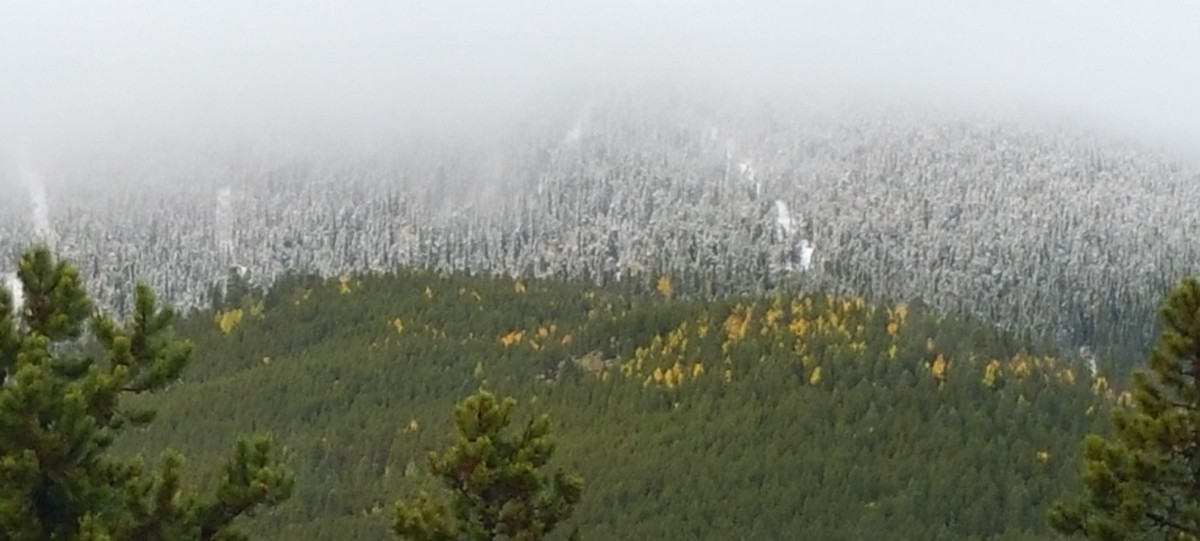
Snow this morning. Coming down in fat flakes, wet, the small deck outside the backdoor slick. I let the dogs out briefly before their breakfast and they slipped a little. They have to relearn to drive on snow and ice just like us humans. We took an abrupt right turn last week away from a fading summer and toward late fall. This was Black Mountain on Wednesday of last week.
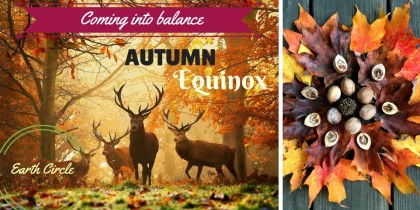
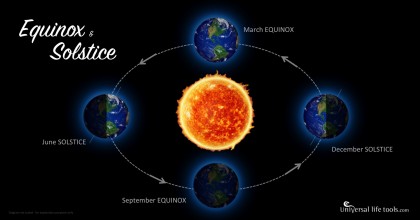
Today is the autumnal equinox. As the great wheel rolls on through the year, this is a day/night of balance, of night and day roughly equivalent. Here in the Rockies, on Mountain Time, the earth and sun are not, at the equator, tilted away or toward each other. The moment when this is true occurs at 2:02 p.m, MST. The day itself will be 12 hours and 9 minutes long. The 12 hours and 1 minute day doesn’t come until September 25th this year.
The notion of equinox though, equal day and night, reminds us that this astronomical event, sun and earth’s midpoint lining up, does mark a significant change. The light gradually increased from the vernal equinox to a maximum day on the summer solstice. Darkness gradually increases from September 25th to its maximum at the Winter Solstice, the longest night of the year.
For reasons I don’t fully understand, I prefer the six months of the year when darkness dominates. This period between autumnal and vernal equinoxes is my favorite half of the year. Here in the temperate latitudes-we’re 4 degrees north of the 35th latitude here in Conifer and temperate equals 35 – 55 degrees of latitude-this six months goes from the tail end of the growing season’s warmth to the slow release from winter’s cold that usually happens in late March.
Here in the mountains the streams have long ago drained off last winter’s snowfall; the aspen have turned golden. The cervids have begun their annual procreational dance. Sex is in the air. We have snow in the forecast for Monday and night time temperatures are in the good sleeping weather range for Kate and me. In Minnesota we could hear the Andover marching band practicing and here the high school football season is already well underway. Coats become an item of consideration when leaving the house.
It’s a time to consider the balances in your life. Has anything gotten out of whack that needs adjustment? Working too much? Seeing too little of family and friends? Or, too much? How about the diet of your choosing? Too much or too little exercise? Television? Social media? What other dialectics in your life might you examine?
Consider taking a cup of coffee (beverage of your choice) on one of these days with a just right temperature and going somewhere quiet. Investigate your life, probing for parts of it that may not be nurturing you right now. What are they? How can you make gradual, not sudden, changes that will help you become the person you already are? It may be that some of that work involves cutting something back or increasing something else, just like the temperate latitudes do with their light menu.
We can learn from the rhythm of day and night over the course of a year that each one, light and dark, nurtures different things, sometimes drastically different. Summer grows our food while Michaelmas, September 29th, is known by some as the springtime of the soul.
The last night of the Eclipse Moon, a disastrous month for North America from the eclipse to its waning moment. The wildfires are still burning in the West from the state of Washington to California, in Oregon and Montana and Idaho. Harvey and Irma related disaster cleanup has only begun. The same in southern Mexico for the victims of the 8.1 earthquake. Jose is still pounding around in the Atlantic and Maria, now a category 5, has just shattered Dominica, Guadeloupe, and is headed for Martinique and Puerto Rico. It’s not the apocalypse, no, but for those whose homes and forests are on fire, under water, battered by wind or destroyed by the movement of the earth, it may as well be.
Awe is not confined to the benign, the amazing and wonderful. Each of these disasters, both in their gestalt and in their particulars, and as a collection of events, is awesome. They show the limits of human preparation, of human intervention. We are not, even with our nuclear weapons and our space station and our icebreakers, more than bystanders when these acts of earth strike us. We even have a name for them, force majeure, enshrined in insurance policies.
Nations and civilizations rise and fall, but earth, air, fire and water continue in their eternal way, or, at least as long as the earth herself lasts, to do what they want, when they want, where they want.
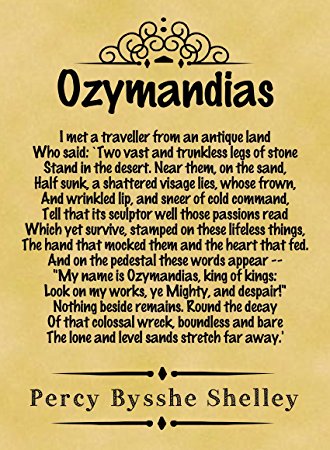
We are, in the end, Ozymandias, look on our works, ye Mighty, and despair.
That old moon, the one that occulted our star, has two days left in its cycle. It will give way to the first moon of this new fall, this moon that oversaw the journeys of millions to watch it work in the daylight. It also presided over Hurricane’s Harvey, Irma, Jose and Katia, over the 8.1 earthquake in southern Mexico and the fiery end to many forests in the U.S. West. Earth, Air, Fire and Water. What will this next moon bring?
I’m still feeling a sense of exhaustion from Saturday night, not unusual I guess. Seventy after all. The burns I got on my right hand making the sugar cream pies last Tuesday are still healing. Again, seventy year old skin. This exhaustion feels ok, part of the third phase.
Went to bed last night in a mild funk, exhaustion will do that, allow negative moods to take hold, grip me. They’re like infections, sudden and pervasive; but usually, if I can find their source, a triggering event, then I can quiet the infection, let it dissipate. It takes brutal self-honesty.
Yesterday I traced the funk back to an e-mail I sent out late Saturday night thanking all the main participants in the Evergreen Forum. Two folks responded quickly, thanking me, too, and I realized, as I searched for the source of the mood, that I wanted more of those and when they didn’t come, I wondered why not? It was that wondering that created the bad mood. In others words I had poisoned my own well, then drunk from it. Well, I realized, that’s silly. Take the compliments, move on. So, I did.
Rosh Hashanah begins Wednesday evening, erev Rosh Hashanah. This is a pensive time in the Jewish calendar. As the old year ends, Tishrei 1 (Sept. 21st) ushers in the Jewish year 5778. Rosh Hashanah, according to Chabad.org, means head of the year and celebrates the birthday of the universe and in that process, the day of the creation of Adam and Eve.
After it there are then 10 days to complete a cycle of seeking forgiveness from others so God can be approached on Yom Kippur for forgiveness. At the end of Yom Kippur the book of life is sealed for 5777 and written in the book will be all those sins for which forgiveness has not been received.
This is a wonderful way because it encourages an annual cleaning of the slate, then beginning a new year ready to live fully, unburdened by baggage from the year before. Whether or not you accept the metaphysics, the practice itself is healthy.
– Nancy Drew, “Morris Louis, 1959″, (96 x 92) acrylic, flock and glitter on canvas, 2002 (This piece was created as an homage to Morris Louis, influenced by his work from 1959) Dana McClure
The eclipse moon, still in the sky, now three weeks after blotting out the sun at midday, has become a crescent. I just looked up the moon calendar and noticed that the new moon falls on the two days prior to the fall equinox. The beginning of fall on the Great Wheel comes, this year, with the new energy of a rising and waxing moon.
Golden spears have begun to show up among the lodgepole pines on Black Mountain. Fall here announces itself with a subtle show of a single color, gold amongst green. As fall progresses, the subtlety disappears in wide swaths of yellow gold splashed across the mountains as a colorfield artist (Morris Louis, for example) might. Mountains become three dimensional canvases, temporary installations, a visual treat announcing the coming of the white season.
The angle of the sun has changed, it’s lower in the sky now, spreading its considerable energy over wider and wider areas, lowering the amount of warmth we receive over the course of a day. The trees and the birds and the bears and the elk and the mountain lions know this. The elk rut has begun and there are reports of bugling elk with large harems of twenty five cows coming in from many locations. A photograph and video collection on a local facebook group showed two bull moose with their velvet recently scraped off, clacking their wide racks against each other in a marshy area about twenty miles from here.
The Mt. Evans’ road has been closed for two weeks now, not to open again until after Memorial Day, 2018. OpenSnow, a website for skiers, announced the first snow of the season in the Cascades, noting that it should help fight the wildfires burning now in the northwest.
This turning of the Great Wheel brings with it, at least for me, renewed energy, an eagerness to engage the world fully. Heat saps me, makes me want to put on one of those funny hats that has room for two beer cans fitted to plastic hoses for constant cooling sips, sit down, and wait until, well, now.
I’m grateful for this seasonal change, though the growing season has its definite charms, too. It’s just that the temperatures important for plant growth are not so pleasing to me. And, BTW, Kate has pulled off a mountain gardening trick. She has several tomatoes ripening in our single 5 gallon plastic bucket container garden. My Demeter.
We’re still under the Eclipse moon that brought us totality across the U.S. That same moon has now shone on Harvey, as he devastated the western Caribbean, then Texas, and Irma, as she moves through the eastern Caribbean on her way to landfall in Florida. Meanwhile, Jose, another Category 4 storm is following Irma’s path for now and Katia, a Category 2, is going ashore in the Mexican state of Veracruz. An earthquake 8.1 on the Richter scale struck southern Mexico on the Pacific side shaking much of the nation.
Lost in the darkness of totality, the shaking of Mexico and the powerful winds, rains and storm surge of the hurricanes, at least on national news, are the wildfires rushing through the forests of the West. According to the National Interagency Fire Center, 8,081,369 acres had burned in the U.S. from Jan. 1 through Sept. 9. This well exceeds the average from the last ten years for the same time period: 5,558,384 acres. Worryingly, the average number of fires per year over the same Jan thru Sept period is 50,857. The number of fires in 2017 so far is 47,854. Fewer fires and more acreage burned means larger fires with more destructive potential. These are the megafires Michael Kodas has written about in his book of that name, published last week.
Warning for Irma
The Eclipse Moon of 2017, its lunar month, might well change its name to disaster moon. My mind often feels overwhelmed by the magnitude of the catastrophes during the month of the Eclipse Moon. I’m able to notice them as they present themselves, but unable to hold my attention on any but the most recent, most horrific news.
This is a problem because each of these disasters: hurricane, earthquake, wildfire brings devastation to wide swaths of land, over multiple populations, concentrated and rural. The news predicts their coming, at least in the case of wildfires and hurricanes, then sends out pictures and text of their immediate, painful encounter with whatever is in their path. But this season, the wildfire this time has been followed by the hurricane now and the earthquake, then more hurricanes. And the critical phase, the recovery and rebuilding phase, does not begin until the event has finished.
This means that across North America, in Mexico, the U.S., the Caribbean and Canada we have centers of destruction that have not even begun to pick up the debris and sort through wreckage before the next catastrophe has hit. Millions of people, millions of acres of land, buildings, millions of wild animals are suffering and will continue to suffer. Right now. Which one has priority? How do we marshal our collective resources across so wide a swath of pain?
Perhaps an even better question is, how do hold in our hearts and minds all of these, the burned forests, lost homes and devastated wildlife? The buildings and lives inundated by waters from the Atlantic and Caribbean displaced by wind and rain. The cities and towns and villages gripped by a moving earth. Will we go forward from the month of the disaster moon, watch football, go back to school, prepare our homes for winter and forget about them?
OK. Cataracts. The good news. Stable and not too bad. Bad news. The same. Sigh.
Had a nightmare last night. Not often I have those. This one involved a gradual decompensation from ordinary life to forgetfulness to a social worker coming to help me as a vagrant, finding me in a dilapidated house with some others, also disoriented. Frightening. Might have been instigated by a pun game I played last night at Beth Evergreen. I wasn’t very quick, sometimes had nothing. I felt a bit embarrassed, slightly intimidated. It had been a long day, I was tired and the games went on past my bedtime, so it wasn’t the best circumstances for me. Still.
This morning I’m off to Stevinson Toyota to see if I can get the air conditioning revved up again. Ironic because it was 40 degrees when I got up this morning. Down the hill is hot, record breaking hot over the last week with DIA hitting 96 two days ago, and we’re going in more often with Jon’s move to Aurora still underway. So. Fix the air con.
Electrical problem fixed. A wonky main circuit breaker. Fortunately Brian of Altitude Electric was nearby and had time in the early afternoon.
Kate had problems with hypoxia yesterday. The wildfires further west have filled our skies with particulates and ozone, making air quality tough on those with respiratory issues. Once she hooked up with her O2 concentrator, she improved quickly.
So. Life’s sine curves oscillate through our days. Yesterday had more trough than peak.
That was the idea I was reaching for in the post below about the West. Wildfire. Precious Water. Mountains and high plains. Blue sky and fancy clouds. Of course versions of these are everywhere, yes, but here they’re in your face, unavoidable and unmissable companions of daily, even hourly life. Not the wildfire, you say? Live in tornado alley? On a hurricane prone coast? In an earthquake zone? You’re always aware.
Earth, air, fire and water. Not a 70s disco band, but the notes of a changing composition of seasonal change. Right now we’re in the transitional movement between the allegro of the growing season to the andante of harvest, the celebration of senescence. Human activity does become more frenetic during the harvest, a sort of false allegro, but only because the plant world knows winter is coming. You can hear those bass notes as seeds form and disperse, plant stalks brown and wither, green fields become tan or golden.
Up here in the mountains the occasional aspen has begun to turn. The grasses in the mountain meadows have lost their intense green. The angle of the sun has already lessened, casting deeper shadows. Orion is visible in the dark, clear night sky. Moose, elk and deer bucks have begun to drop the velvet on their antlers, preparing for the quickening of the rut. The bears become more brazen as their need for calories, more calories, before hibernation makes them feel an urgency.
Somewhere around us in the Arapaho National Forest, up in the Mt. Evans Wilderness Area, over in Staunton State Park, the fox and the marmot and the fisher and the pika, the Abert squirrel and the red squirrel can feel their coats beginning to thicken. The mountain lions know the seasonal changes in their prey and change their hunting patterns.
The orchestra of life plays this symphony all year as it responds to the conductors spring, summer, fall and winter, each with their own favorite tempo. The elemental nature of the West makes the composition here often raw, sometimes going as far as dissonance during the chinooks, or a dry summer month, during a blizzard, yet it is usually majestic with soaring blue notes and the babbling background music of mountain streams and bugling elk.
summit lake park, the highest city park in North America
In fact, the highest paved road in North America. Which happens to be only 46 miles from our front door, the Mt. Evans Road. It’s a joint project of the Denver Parks System and the National Park Service with the NPS controlling admission to the road leading to the summit and DPS controlling access to three fee areas: Mt. Goliath (bristlecone pines at the krummholz level), Summit Lake, which is a clear mountain lake with a small glacier poised high above it on Mt. Evans, and the summit itself.
Last year Ruth and I drove up, but were too late to get any further than Summit Lake, the road continuing on past there closed for the season. This year, today, Ruth and I went again. This time we made it all the way to the top. But. The Mt. Evans Road closes every year the day after Labor Day and the summit had a huge number of people with the same idea we had. I knew it would be that way, but it was an incremental improvement over last year.
mt. goliath natural area
Next year, during the week, early in the morning in June, July or August. It opens on Memorial Day, if, that is, it has no snow.
The road itself, especially the segment after Summit Lake is narrow and, as the orange sign said, Damaged. That makes crawling up and down it with others entertaining. The downhill side of the road, which shifts as it snakes its way up and down the mountain, has no barrier and for much of the road virtually no shoulder.
Since Colorado has many bikers, both bicyclists and motorcyclists, sharing the road with a car in the other lane and a bicycle or two can be challenging. Not to mention the road damage which can include, and in fact often did today, chunks of road missing, eroded away. This phenomenon almost always presented itself on the downhill side of the road. So there’s that big SUV pushing its way up, you’re on the way down, a good long drop with plenty of over and over and over and over again potential if you make the wrong move, and a bicyclist or two, bless their VO2 maxed out hearts, struggling up or down. Yowza.
In visiting it next year I plan to visit it as a mountain deity, one which took my breath away today, even sitting in my internal combustion powered chair. Mt. Evans is our weather god, altering the flow and intensity of weather patterns as they come from the west and cross the continental divide not far away. The result, in our little Evansonian microclimate, is increased precipitation both winter and summer, but more in the winter. Remember that 200 inches plus we had the second winter we were here? Mt. Evans for the assist.
Mt Evans Summit
There was one mountain goat visible to me today. Improbably it was standing among a bunch of hikers above the Meyer-Womble Observatory, which, until an Indian Observatory opened in 2001 was the highest operating telescope in the world. Apparently the mountain goats lick the soil on the summit to obtain needed salts.
If you ever visit during the summer, let’s go. I’m always up for a visit to the mountain top.
Vast, blue sky with puffy white clouds. Jagged mountains and flat plains, forests and wildlife. Wildfire. Snow, rivers, a few lakes. Air, earth, fire and water. The West is so elemental. It’s no wonder that it has enlivened the imagination of those who visit it or read about it, yet is so difficult a place to live. Here the natural world apart from the built world (also natural in its way) dominates. The cities like Denver and Salt Lake City, Cheyenne and Boise, Vegas, Tucson, Phoenix are islands, admittedly big islands, but islands nonetheless, of concentrated human habitat. They disappear around the bend of a mountain pass, or are obscured by arid land with few towns.
It is obvious that we humans are here on sufferance, ravaged by fire, made thirsty by drought in an already arid land, moving slowly even in our cars and trucks across mountain reaches, unable to grow enough to eat. It is, I think, this stark contrast between the wealth and power of human civilization humbled by the land and the sky that makes the west mythic, much like northern Minnesota and Michigan.
The west has begun to seep into my bones, become my home. I live here and have begun to feel it, the place. Still learning, though.

 Here in the mountains the streams have long ago drained off last winter’s snowfall; the aspen have turned golden. The cervids have begun their annual procreational dance. Sex is in the air. We have snow in the forecast for Monday and night time temperatures are in the good sleeping weather range for Kate and me. In Minnesota we could hear the Andover marching band practicing and here the high school football season is already well underway. Coats become an item of consideration when leaving the house.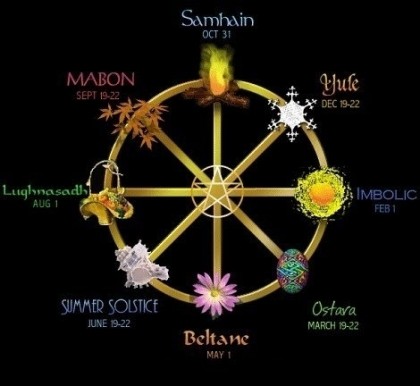
 The last night of the Eclipse Moon, a disastrous month for North America from the eclipse to its waning moment. The wildfires are still burning in the West from the state of Washington to California, in Oregon and Montana and Idaho. Harvey and Irma related disaster cleanup has only begun. The same in southern Mexico for the victims of the 8.1 earthquake. Jose is still pounding around in the Atlantic and Maria, now a category 5, has just shattered Dominica, Guadeloupe, and is headed for Martinique and Puerto Rico. It’s not the apocalypse, no, but for those whose homes and forests are on fire, under water, battered by wind or destroyed by the movement of the earth, it may as well be.
 Yesterday I traced the funk back to an e-mail I sent out late Saturday night thanking all the main participants in the Evergreen Forum. Two folks responded quickly, thanking me, too, and I realized, as I searched for the source of the mood, that I wanted more of those and when they didn’t come, I wondered why not? It was that wondering that created the bad mood. In others words I had poisoned my own well, then drunk from it. Well, I realized, that’s silly. Take the compliments, move on. So, I did.


 This means that across North America, in Mexico, the U.S., the Caribbean and Canada we have centers of destruction that have not even begun to pick up the debris and sort through wreckage before the next catastrophe has hit. Millions of people, millions of acres of land, buildings, millions of wild animals are suffering and will continue to suffer. Right now. Which one has priority? How do we marshal our collective resources across so wide a swath of pain?
 Had a nightmare last night. Not often I have those. This one involved a gradual decompensation from ordinary life to forgetfulness to a social worker coming to help me as a vagrant, finding me in a dilapidated house with some others, also disoriented. Frightening. Might have been instigated by a pun game I played last night at Beth Evergreen. I wasn’t very quick, sometimes had nothing. I felt a bit embarrassed, slightly intimidated. It had been a long day, I was tired and the games went on past my bedtime, so it wasn’t the best circumstances for me. Still.
 Up here in the mountains the occasional aspen has begun to turn. The grasses in the mountain meadows have lost their intense green. The angle of the sun has already lessened, casting deeper shadows. Orion is visible in the dark, clear night sky. Moose, elk and deer bucks have begun to drop the velvet on their antlers, preparing for the quickening of the rut. The bears become more brazen as their need for calories, more calories, before hibernation makes them feel an urgency.
 The orchestra of life plays this symphony all year as it responds to the conductors spring, summer, fall and winter, each with their own favorite tempo. The elemental nature of the West makes the composition here often raw, sometimes going as far as dissonance during the chinooks, or a dry summer month, during a blizzard, yet it is usually majestic with soaring blue notes and the babbling background music of mountain streams and bugling elk.


 Vast, blue sky with puffy white clouds. Jagged mountains and flat plains, forests and wildlife. Wildfire. Snow, rivers, a few lakes. Air, earth, fire and water. The West is so elemental. It’s no wonder that it has enlivened the imagination of those who visit it or read about it, yet is so difficult a place to live. Here the natural world apart from the built world (also natural in its way) dominates. The cities like Denver and Salt Lake City, Cheyenne and Boise, Vegas, Tucson, Phoenix are islands, admittedly big islands, but islands nonetheless, of concentrated human habitat. They disappear around the bend of a mountain pass, or are obscured by arid land with few towns.