Summer Woolly Mammoth Moon
 Spent most of yesterday on submissions. I revised School Spirit, taking 2.0 down to 2,700 words from 4,800, and submitted the revision to Mysterion. I developed a table in Word to track my submissions. It has these columns: submission, work, publisher, response, rejection, acceptance, contract, published. Later on today I’m going to begin revision of Superior Wolf, which I want to get out as soon as I can get it where I want it.
I now have an Evernote file for Novel and Short Story markets which contains 25 new markets and I will build that file. I need another log to track reading periods, periods when a particular market opens to submissions. They are often only a month long, so you have to both have work that fits their interests and know when to send it. Once I get a rhythm going here, I’ll get back to agent submissions, arguably more important than submissions to markets.
 So, I’m facing my fear, not only that, I’m leaning into it, grabbing it by the scruff of the neck and saying, “Come on, now. Message received. Stop already.” This is partly mussar driven, the practice I wrote about on July 6; but, it’s also driven by self talk that long preceded mussar, though ineffectually, and even a bit by the shame and embarrassment.
What, exactly, has the fear been doing for me? It’s tried to protect me, fence me off from disappointment and failure. It feels the pulse of shame before it rushes through me and says, go another way, that feels bad. Just keep your head down, don’t poke it up, make yourself visible. And, of course, in spite of that self-protective urge, the result has been that for 30 years I’ve felt disappointed and I’ve failed at publishing because I never took the risk.
Fear, like doubt, is good. To not fear the fall from a high cliff is stupid. Getting a flu shot makes sense because fear rightly says the flu is worse. Slowing down around a mountain curve? Sure, fear tells me I’d fly off into the void otherwise. But fear is pluriform, it responds to many things. When on the Savannah, a fear of vulnerability probably sensed a predator nearby, or an enemy. Pay attention. Hide. Be ready to defend yourself against death. Having a red light moment is adaptive, until it isn’t.
 Publishers and editors and agents, even critics and readers, are not lions or hyenas on the veldt. The fear I’ve allowed to rule me for the past three decades however has believed them so. The shame then is a complicated emotion which recognizes the self-deception and self-protection. It knows I’ve chosen the critique of intimates, why hasn’t Charlie ever published, to the critique of possible readers. That’s embarrassing, but it’s where I’ve been for a long, long time.
Now, however, a strange, new moment is on the rise. In part I got tired of the narrative I’d been telling myself, been telling others. “I’m just not good at marketing.” I call bullshit on that. In part I read this article about setting a rejections goal and this time it made sense to me, a sort of akido move, use the power of your adversary against them. In part it was this month’s mussar practice of facing fear in order to learn about trust.
Yesterday, for the first time I can ever recall, I felt like I was getting down to the business side of writing. Yes, I’ve made submissions before, but I have never made as organized and concerted an effort as now. It feels good.
But, if I’ve begun to push the fear, tried to educate it that this is not an arena where it’s helpful, which I have, I’ve begun to wonder about it, too, from the mussar perspective. If I face the fear, face it down, then does trust appear? If the student is ready…
 I know that fear vitiates trust. If we’re afraid of another person’s motives, we’ll never get to know them well. If we’re afraid of public speaking, no one will hear us. If we’re afraid of our own motives, we’ll take few risks. In these cases, if we face the fear, listen to it, talk it down, choose to act differently, then we may find love, may discover that people want to know what we have to say, may open ourselves to the world’s rich opportunities.
I’m starting from the fear, however, not trust. If I eliminate the fear, if I continue (and I’m pretty sure I will) to organize, revise, submit, and create new work, will trust appear? In what? The question I’m asking is this, does eliminating or modulating fear create trust, always? If so, in what?

In this instance, for example. If I have pushed back the fear, acknowledged the shame of constant wheedling about submitting my work, and have finally gotten somewhere with both, in what do I now have trust? That eco-system of publishing and readers will therefore embrace my work? Not really up to me beyond getting my work out there. That I’ll be a better person? Maybe. Since the fear has weighed heavily on my psyche for all these years, lifting it might have, probably will have, a positive effect on my sense of self. Perhaps I’ll trust life more, be less reticent. This would be huge, obviously.
Don’t think this is the heart of it though. Somehow the trust that emerges is, more importantly, in acceptance of vulnerability, trusting that when I’m afraid, or even ashamed, that I can still be in this world. We’ll see, of course, if this is true, but it feels right. Fear, then, can be seen as a tool, an important and necessary one, but one to pick up and then set down. It’s not a tool we want to always have to hand and when it is in hand, we need a plan to get it back in the toolbox after it’s done its work.

 With these elements identified lesson planning will be easier because content can be plucked from any of the columns to enhance a particular class. There’s another move in the process, integrating the b’nai mitzvah curriculum developed by a national organization called Moving Traditions with those classes for which Alan and I have to develop our own lesson plans. Once how we do that is decided and dates for the b’nai mitzvah classes show up on the calendar, we should be able to move fairly quickly to a plan for the year.
 Why are we so reluctant to recognize that racism, sexism, homelessness, income inequality, white fear are the result of decisions we’ve made collectively and individually? I think the answer lies in ideas Arthur Brooks identifies as the bedrocks of conservative thought. Below is a portion of that article,
  But, to sacralize that unique reality, “…conservatives have always placed tremendous emphasis on the sacred space where individuals are formed.” says Brooks, serves to deny its perniciousness, its damning of so many to lives of desperation, marginalized from both economic and cultural blessings. Once we emerge in the era, the family, the town or neighborhood or rural place, the religious or areligious space gifted to us, the nation of our birth, once we are over being thrown into circumstances beyond our volition, we gain the power of choice.
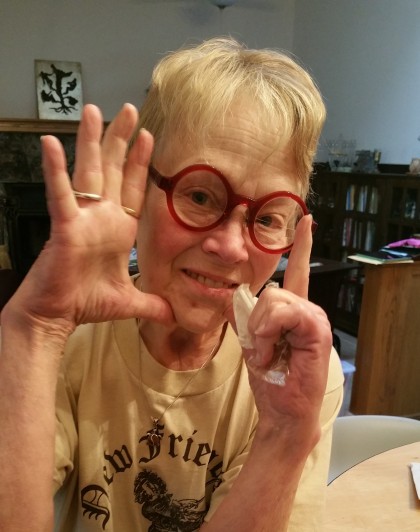 Oh. Sometimes the sweetness of life becomes palpable. More and more of late. Not drowned out by the drumbeat of illness, family struggle, heat it underscores that life, our lives, are moveable feasts. The meaning of life itself lies in this realization, not in achievement or wealth or knowledge or belongings. Why? Because no thing in life carries permanence, not joy, not hate, not anger, not even love. All is transitory, the matter of a moment, then it will change.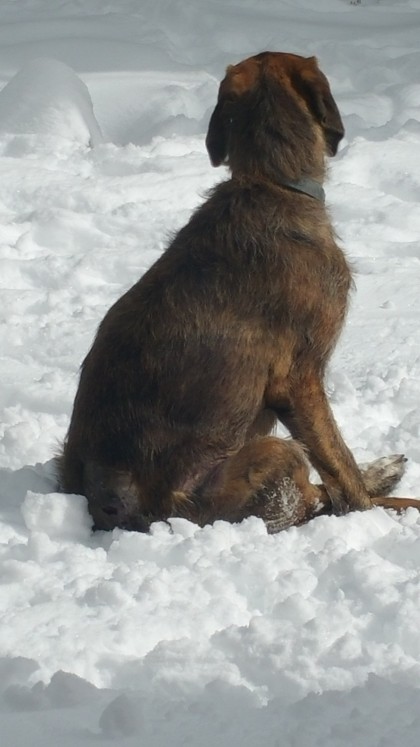
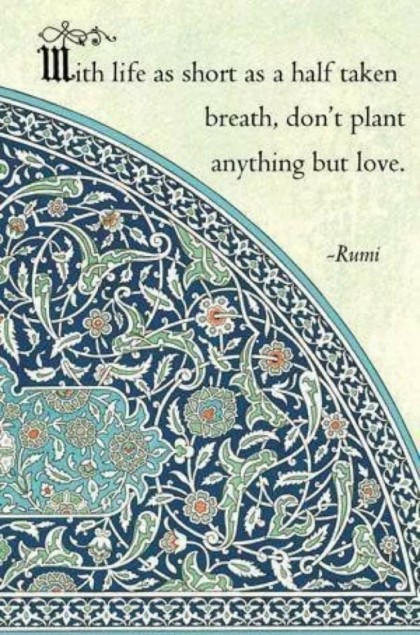
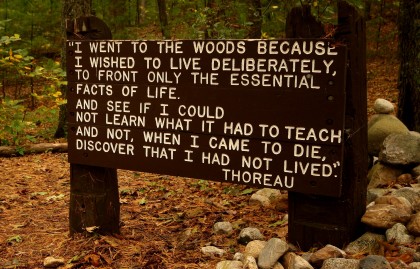 But, and I might call this the Emersonian turn, we cannot use the offerings of the past without remembering his introduction to Nature: “The foregoing generations beheld God and nature face to face; we, through their eyes. Why should not we also enjoy an original relation to the universe? Why should not we have a poetry and philosophy of insight and not of tradition, and a religion by revelation to us, and not the history of theirs?”
 Yesterday was a big day. Up early to write, workout. Lunch with Alan Rubin to start planning for the 6th and 7th grade religious school at Beth Evergreen. Home for a fitful nap. Left at 5:30 pm with Ruth for Boulder. We had a reservation at Japango on the Pearl Street Mall before seeing the Fiske Planetarium show on black holes. Driving home under the waxing gibbous moon with Jupiter below it, Mercury and Venus visible, too, as well as Mars and Saturn. A planetary moment. No twinkling please.
 We want to reframe the high holidays, Rosh Hashanah through Yom Kippur, in a reconstructionist way, then help the kids come to their own way of reframing. In the traditional understanding, taken here from the
 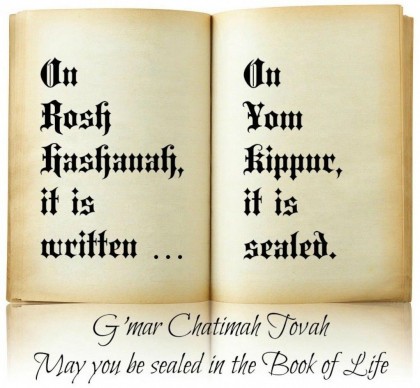 The tradition implies a white bearded, Santa Claus like God who checks on the naughty and the nice. He takes out his celestial quill pen and starts scratching. He pauses, waiting to see what you have to say for yourself, then after a reasonable interval (the ten days), he writes fini.
 In my peculiar little world this is great fun. Looking forward to engaging similar research throughout the upcoming liturgical year.
 After the dinner we drove back up Broadway to the Boulder campus of the University of Colorado, about 5 minutes. At the planetarium, where we’ve gone many times, we saw a presentation on black holes. It covered the usual topics of star death, neutron stars, supernovas and the formation of black holes with their extraordinarily deep gravity wells. It also covered recent observation of the long pursued gravity waves at the
  Mario is already in town, taking wildfire pictures with his usual acumen, traveling over mountain passes. Tom and Paul fly in today and we’ll have a slow cooker Irish stew up here on Shadow Mountain, all of us. These are friends of well over thirty years, men with whom I shared twice monthly meetings over that time, plus annual retreats. That bond was the toughest thing to leave behind when Kate and I moved out here.
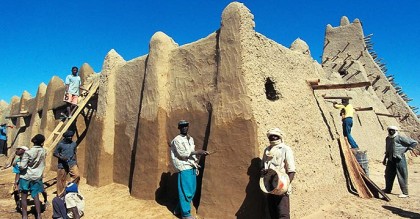
 Here’s the key idea, from Mordecai Kaplan: the past gets a vote, but not a veto. That is, when considering tradition, in Kaplan’s case of course Jewish tradition, the tradition itself informs the present, but we are not required to obey it. Instead we can change it, or negate it, or choose to accept, for now, its lesson.
 Which brings me to another realization I had this week. Just like environmental action is not about saving the planet, the planet will be fine, it’s about saving humanity’s spot on the planet; the idea of living in the moment is not about living in the moment, it’s about remembering we can do no other thing than live in the moment.
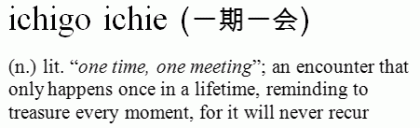 The past is gone, the future is not yet. Always. We can be sure, confident, only of this instance, for the next may not come. To be aware of the moment is to be aware of both the tenuousness of life, and its vitality, which also occurs only in the moment. To know this, really know it in our bones, means we must have faith that the next moment will arrive, because it is not given. Not only is it not given, it will, someday, not arrive for us. That’s where faith comes in, living in spite of that knowledge, living as if the next moment is on its way.
 Probably not many folks count down to the Summer Solstice, but I do. It marks my favorite turning point in the year, the point when the dark begins to overtake the light. Yes, it’s the day of maximum daylight, but that’s just the point, maximum. After the summer solstice, nighttime begins a slow, gradual increase until my favorite holiday of the year, the Winter Solstice.
 Summer and the light has its charms and its importance, too, of course. A warm summer evening. The growing season. The ability to see with clarity. The sun is a true god without whose beneficence we would all die. Worthy of our devotion. And, btw, our faith. So I get it, you sun worshipers. My inner compass swings in a different, an obverse direction.