Category Archives: Reimagine. Reconstruct. Reenchant.

The Harvest Season Is Nigh

Summer                                                                    Park County Fair Moon

Jon, Ruth, GabeInto Denver for the Denver County Fair today with Jon and the grandkids. Our county and state fairs, stocked with canned goods and quilts and wholesome teenagers with Guernseys and prize boars, are in the Lughnasa spirit. Lughnasa, starting on August 1st, is a Celtic holiday of first fruits. Also called Lammas in the Catholic tradition, villagers brought bread baked from the first wheat to mass.

Each of the cross quarter days in the Celtic calendar: Imbolc, Beltane, Lughnasa and Samhain were the occasion for weeklong market fairs. Goods were sold, contracts for marriage and work made and broken, dancing happened around bonfires, general merriment abounded as individuals tied to the grinding daily labor of subsistence agriculture found themselves with time free for fun.

In our hearts we are a rural country still and there is something deeply satisfying about seeing sheep, cows, chickens, rabbits in competition for some mysterious (to city dwellers, now the dominant fair goer type) prize. Yes the number of family farms is at its lowest point in the nation’s history, but we have a communal memory of the time when most of us lived on the small farms that used to dot the land. In fact that small farming culture was often subsistence farming, very similar to the sort of rural life in the Celtic countries of Ireland, Wales, Scotland, Breton, and Cornwall.

It is this underlying sensibility of lives lived close to the land that seems so absent from our political discourse in this election. We are a people of the plow, the barn, the hay rick. We masquerade as global sophisticates, but in truth the itch to grow tomatoes or to have a small herb garden is as American as, well, apple pie, which we will see on display at the Denver County Fair, I have no doubt.

Lughnasa begins the harvest season which continues through the feast of Mabon at the autumnal equinox and ends on Samhain, or Summer’s End. It is one of my favorite times of the year, only the dead of winter is better for my soul.


Becoming Vishnu

Summer                                                           Park County Fair Moon

Bhagavan_VishnuVishnu is the Hindu god of stability, the preserver and protector. When I look at the Hindu pantheon, my eye has always gone to Shiva, the god of creation and destruction, the whirling vibrant energy of the universe. Were I Hindu, I would be a Shaivite. But as we’ve aged, as we’ve become the members of our family and, for that matter, of our generation, at the edge of extinction, it has become clear to me that Vishnu defines us better.

When we stand, as we do, between life and death, life itself takes on a different color, a different valence. That’s not to say that we don’t always stand between life and death, life is fragile and death, in its entropic way, more natural. But as we veer past the mid-60’s, the path from birth to death has grown long and its terminus closer.

We stand, too, at the end of our ancientrail, able to look back over the days and years with gathered wisdom. At least sometimes. Shiva forces are at work in our children’s lives and especially in the lives of our grandchildren, creating careers, destroying dreams, unfolding the future. Our reach now extends into those lives as a somewhat distant, but sometimes intimate force, offering stability and protection. We have become the avatars of Vishnu.

natarajThe role is unnatural for me, having been more of a bomb thrower in my youth and in my middle-age, too. The Vaishnavite forces, always there, for we are a mix of all these fundamental powers, have gradually strengthened, gained more purchase. It’s possible, I suppose, to see Shiva as the radical, willing to take apart received wisdom, to burn institutions to the ground, to start over and over and over, and Vishnu as the conservative, or at least conservator, the solid, steady hand needed when Shiva’s work has gone too far.

The Hindu trinity of Shiva, Vishnu and Brahma, the God of origins, the creator force who lives now distant from the work of his creation, constitutes, like the Christian trinity, an expression of the one god in three manifestations. Like the Great Wheel it is a poetic, a metaphorical expression of the nature of reality. You may choose to believe that these gods are real and I wouldn’t argue the choice, but in my maturing understanding of religious belief, all the world’s religion are artistic renderings of the subtle and not-so subtle forces set in motion at the big bang. No, they are not all the same, hardly; but they are all attempts to give expression and coherence to the context of this temporary, wonderful miracle we call life.

So, it’s not surprising to me that in this third phase of my life, I find a purpose defined by a Hindu god. We arrive at this moment shaped and pulled by the paths we have chosen. Our ancietrail is now more experience than future. As Vishnu rises in our lives, that experience becomes his form, the vital energy that allows us to serve as anchor for our family, for our community, for the world we’re passing on to our children and grandchildren.

I said above that the Vishnu role is unnatural to me. Perhaps I should say that it was unnatural to the younger me. Now, it seems natural, necessary, good. The maintainer and protector.


Fraught

Summer                                                        Park County Fair Moon

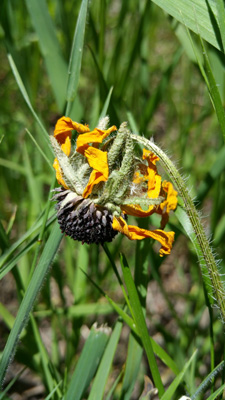
rudbeckia ReynoldsFeeling the pressure of the divorce. So many tensors pulling this way and that. Jon and his understandable anxiety about his immediate and near term future. Kate’s tough position as mother, mother-in-law and grandma. Court hearings with deep consequences. The fate of Ruth and Gabe as their mother and father fight over them. The friable nature of our extended family as it goes through a wrenching alteration, one with permanent implications. Trying to stay centered and available. All difficult.

This is life at its most fraught, perhaps the only analogue being serious illness or an unexpected financial crisis. All of us become frayed, our best persons fighting to remain present, but often submerged in our collective anxiety. A good time for Mussar, the Jewish spiritual practice Kate and I have taken up through Congregation Beth Evergreen.

If there were a red flag warning for families, we’d have one on our flagpole right now.

Yet. The immersion in each others lives at increased intensity also has positive implications. We get to know each other better, perhaps most possible when the day-to-day gets set aside and we become more vulnerable, more accessible. If we listen to our inner life, we have a chance, too, to learn more about ourselves.

A friend going through a difficult period refers to it as graduate school for self-awareness, for learning what truly matters. Yes.

Mussar

Summer                                                               Parker County Fair Moon

Mussar. I mentioned it a while back. It’s an old spiritual discipline in the Jewish tradition. Rabbi Jamie teaches a class each Thursday at 1 pm and Kate, the new member of Congregation Beth Evergreen, and I went today.

The big takeaway from today’s session for me was about stimulus and response. Mussar, the Rabbi said, is about lengthening the time between stimulus and response. The longer we can wait between an external or internal event and our response to it, the more options we can choose. Each month mussar practice encourages the practitioner to take a different middot, or virtue, and concentrate on it. This is an emphasis on character as a religious matter. The longer time between striking the match and lighting the fuse, the better chance we have of living out a virtuous character.

This was familiar ground for me and it felt good. I’ve learned from many spiritual practices over the course of my life and mussar will be beneficial, too.


Chevra Kadisha

Summer                                                          Moon of the Summer Solstice

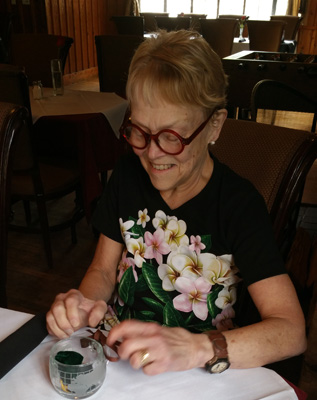
Mother's DayKate’s meeting with Rabbi Jamie of Congregation Beth Evergreen today. A joining up meeting. This is an ancientrail she began to walk a long time ago, converting at Temple Israel under Rabbi Max Shapiro. She felt at home within the Jewish tradition. The power of feeling at home, that this place is my place, these people are my people, may be the most significant feeling we ever have. Why? Because it locates us, puts us in context, gives us a base.

Last night we attended a learning session for the chevra kadisha, a burial society that guards a person’s body from the minute they die to the point of burial. They also wash the corpse, may wrap it in a traditional shroud. They do all this anonymously.

We watched the movie, Taking Chance, about the process and journey of caring for the body of pfc. James Phelps from his death in Iraq to his burial in Wyoming. Though focused on military ritual, it apparently conveyed much of the Jewish attitude toward honoring the dead and caring for the corpse in a respectful and dignified way.

Jewish tradition and the Jewish faith cannot be separated. This is a thousands year old culture that has survived many dislocations, much persecution and yet retained its link to the very distant past. Rabbi Jamie said the origin of the guarding of the body was quite literal, coming from a time when wild animals might approach a corpse as scavengers. Obviously a long time ago. But the respect and care that began in this practical way has been transmuted in the alchemy of time into a spiritual practice.

This is not my way; but it is a way, one with depth. I look forward to learning more about this ancient faith and walking with Kate along her path.

Summer Solstice 2016

Summer                                                                     Moon of the Summer Solstice

redagainstwhite cropped
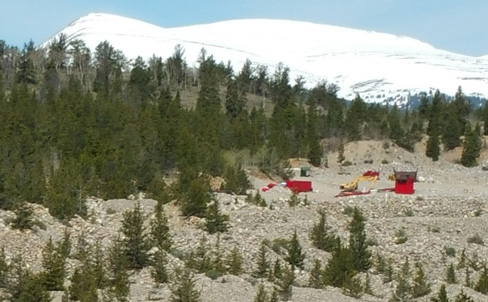
Fairplay, South Park

Light to dark. A continuum and a dialectic. Our inner lives fall, always, somewhere along this line. Our life might be bright, cheery, goals and actions easy to see, our days bouncy and their weight upon us like a feather. Or, our lives might be dark, intense, solemn, our next moves difficult to imagine, our days heavy, weighing upon us like a great rock.

But the Great Wheel shows us a yet deeper truth. Light to dark and dark back to light is the way of life on this earth. In the temperate latitudes this truth is at its most nuanced and its most fruitful. Quite literally. In temperate latitudes, as the Solstices mark out, we go from the Summer victory of light to the Winter victory of darkness.

Though darkness seems to be the dialectical opposite of light-winter the antithesis of summer-in fact darkness gives plant life a time to rest, rejuvenate, prepare for the rigors of another growing season. The light, when it begins to bear down upon the fields and forests, encourages and feeds them, preparing them for the harvest. In the places where the seasons are more extreme, like the tropics where daylight remains equal to night all year round and at the poles where night and day extend for months exuberant plant life can overtake whole regions. Or, at the poles ice can become so thick and vast that it covers hundreds, thousands, of square miles.

The Summer Solstice and the Winter Solstice then are not opposed to each other. The transitions from light to dark and dark to light for which they are the zenith are necessary engines for the well-being of all of us who call this planet home.

Thus we might consider the transitions from light to dark in our psyche, in our soul, as variations necessary for a full and rich life. Of course we need the sunshine of children, of love, of hope, of success. The times in our lives when those can dominate are like the summer, the growing season. Yet, grief and failure are part of our soul’s turning, part of our reaction to and integration of life’s darkness. Also, those practices which can take us deep into our inner life are like the fallow times of fall and winter providing rest and rejuvenation to us.

Today we celebrate the solar equivalent of our live’s growing season. Mark out those matters in your life that flourish, that bring joy and love, that encourage your fulfillment. But, know as well that even events like divorce, like the death of a loved one, like the failure of a dream can enrich the soil of your life, must enrich the soil of your life or else we pretend that the Great Wheel does not turn, but rather stops and becomes one season, to the eventual death of all we know.

The Summer Solstice begins the gradual victory of dark over light, the one we celebrate at the Winter Solstice. Light and dark are not opposite, but parts of a whole, parts of your soul and its ancientrail toward death.


Mussar

Beltane                                                                      Moon of the Summer Solstice

The Evergreen Rodeo closed the streets of this mountain town this morning, but Kate and I managed to slip in just after it was over. We went to Beth Evergreen, a Reconstructionist Jewish congregation located just off Highway 74 on the way out of town toward I-70.

Kate’s serious about joining and I’m serious about supporting her. It’s about time I began meeting some new friends here. I’ll not go to membership with her, I’m past joining. At least I think I am. But I’ll attend, help out.

There was an interesting piece of today’s two hours that showcased what Beth Evergreen has to offer. Mussar. Here’s a short piece:

“By this time I had already come to see myself as a soul. That’s one of the first things any student of Mussar needs to understand and acknowledge, deeply and clearly. Each of us is a soul. Mostly we have been told that we “have” a soul, but that’s not the same thing. To have a soul would indicate that we are primarily an ego or a personality that in some way “possesses” a soul.

The first step on the path of Mussar is to unlearn that linguistic misconception and to realize that our essence is the soul and that all aspects of ego and personality flow from that essence. At its core, the soul is pure, but habits, tendencies and imbalances often obscure some of that inner light.”

It looks interesting and requires no theological perspective. There will be more on all of this as we move forward.


Old habits, rejuvenated

Beltane                                                           Moon of the Summer Solstice

crow hill cafe
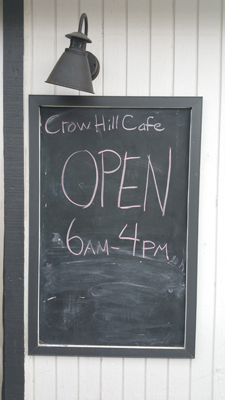
Home cooking in Park County, near Bailey

Slowly getting back into cooking using NYT recipes. A tomato and pomegranate salad I made Sunday received an encore performance for Kate’s quilting group. The eight women that showed up left only a spoonful to take home. The best kind of praise.

Today I’m marinating leg of lamb to make Jerusalem shawarma.  This one required some herbs and spices we didn’t have so I had to go to a spice shop. A fun place.

I used to cook a lot and enjoyed it; but, after Kate’s retirement, we slipped into a habit of her cooking. Rectifying that requires some rearrangement of my day since I normally work out around 4 p.m., a good time to cook supper.

Learned last night that Seth and Hannah will not be taking the logs from the backyard. Seth’s done a lot of fire mitigation, too, and has plenty. That means I’ve got to figure out something to do with a hell a lot of wood. It’s work I would have had to do if they hadn’t been in the picture, but I’d hoped they would relieve me of a lot of it. Not gonna happen. Still noodling this one.

freshman year
Still this guy, 55 years later

The flow of work, Latin and novels and reimagining, has slowed to a trickle since late March: Asia, Vega, iconetectomy on Ancientrails, then wildfire mitigation. This week or next, probably next, I’ll start up again.

Like restarting workouts I’ve found it’s best for me if I start slowly, build toward a full morning of work. I’m excited to return to intellectual work though I’ve enjoyed the hiatus.

Physical labor has its own rewards, not least among them a mindfulness required when using sharp objects and lifting heavy weights.

Hillary, Yes

Beltane                                                               Moon of the Summer Solstice

Hillary. Not my candidate. Not my politics. Though. A hell of lot closer to me than that one with the hair. Even so. A woman.

Back in the early seventies I was in seminary in New Brighton, Minnesota. It was there that the feminist movement and I made solid contact. My girlfriend of the time, Tina, and my then best friend’s wife, Carol, began going to conscious raising sessions. Still drinking at that point I would grab David and we’d head out to the bar for what I called conscious lowering sessions. It took me a while to get it. But not too long.

Once the notion of patriarchy and sexism became clear to me I began to change. The sixties and the anti-war movement had not been a feminist moment, but those of us involved back then, men and women alike, had been self-educated in criticism/self-criticism. Not the Marxist variety, but the internal, self-directed challenges to establishment thinking which made many of us say no to the draft, avoid careers in business, and fight the government directly through marches, guerilla theater, saying hell no, I won’t go.

Another fundamental shift in our thinking, our behavior, was possible, I believe, because of those years struggling against the military-industrial complex. This time the foe was not Congress, not the President or the Selective Service, but ourselves. We were all children of the fifties, Leave It to Beaver and Father Knows Best. A time when women appeared with fond affection for kitchen appliances in magazine and television ads. A time when, still, women changed their minds just because, you know, they were women. Women, no matter how well educated, stayed at home once children, their primary mission, came into the family. These were our mothers, the models for what a woman’s role was.

Hillary was one of us. So was Bill. Hard as it is to imagine the early seventies are now forty years in the past. Forty years is not so long in the life of a culture and its bedrock assumptions, but over those forty years women’s lives opened up, blossoming into the sort of possibilities appropriate to those who hold up half the sky. Yet our political culture proved very resistant, especially at the presidential level. Now, though, Hillary is the first female candidate for president representing a major political party in the U.S.

The fact that she is so disliked is a raised fist for the success of the feminism. She’s disliked for actions she’s taken as a person wielding power. She’s not being dismissed because of her gender. She’s being disagreed with as a person of significance. Of course, there is much sexism in resistance to her candidacy, but it needs to be cloaked in the phony Benghazi incident or her use of an email server-while Secretary of State.

Even though Hillary is not my first choice, even though her politics are more centrist than my own, I’m excited and proud to have her running for the presidency. In fact, thinking of first Barack Obama, then Hillary as candidates of the Democratic Party almost restores my faith in party politics. Almost. I will not vote for Hillary because she’s a woman. I’ll vote for her because she’s the politician left standing that most closely represents my politics.

But that she’s the one left standing makes me proud of our country. It makes me as proud of our country, ironically, as Trump makes me ashamed and bewildered.