Cozy. Kate finishing a quilt gift for Sandy, who will have surgery again this week
Well. Finally. A real snow storm. The white stuff started falling around midnight on Saturday and continued through the day Sunday. Maybe 10 to 12 inches. Ted of All Trades plowed us out in the afternoon. I cleared our deck and the path to garage 5 times as the snow fell. It’s easier to clear it before it builds up too much bulk.
When the temperature drops, the clouds roll in over Mt. Evans and the flakes begin to come down in earnest, I feel Shadow Mountain most keenly. Not sure why, but I know we’re on a mountain top then. It feels secure and cozy, the forest and the peaks around us our real home.
Maybe that’s it. When the snow falls, we are intimately linked to the mountains and the forests, all of us experiencing this change, the soft silence that pervades the lodgepole stands, the aspen groves, that covers the iced over Maxwell Creek with more cold water, that drifts in our open bedroom window. Just as the deer and the fox and the mountain lion and the elk have to wade through the snow, so do I on my way out to get the mail or the newspaper.
Beautiful. Important. A gift from the sky to our thirsty plants. We’re all grateful.
The solstices mark swings to and from extremes, from the longest day to the longest night, there, and as with Bilbo, back again. Darkness and light are never steady in their presence. The earth always shifts in relation to the sun, gradually lengthening the days, then the nights.
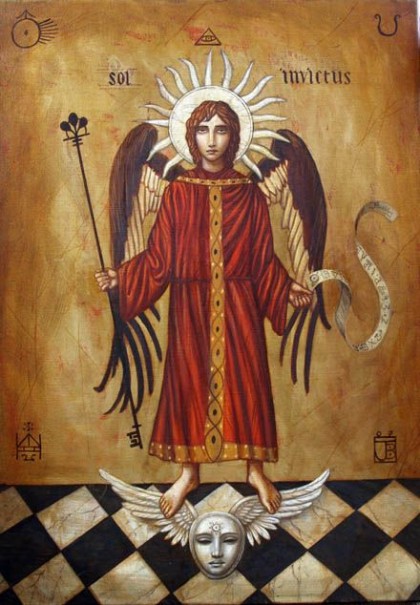
Most folks celebrate the Winter Solstice for its moment of change toward increasing light. Sol Invictus, the Roman sun god, added a martial spirit. The ancients feared that the nights would continue to grow in length, and act as a shroud thrown over the earth marking an end to growing seasons, to warmth, to life. It’s no wonder that relief at the return of the sun, revealed by small increases in the length of the day, caused holidays to be born around this subtle astronomical change.
There are also bonfires and songs and drinking and sex on the Summer Solstice. The sun manifests itself as light giver, light bringer, with the longest days. The growing season is well underway then, the miracle of life that the sun’s increasing light creates is the very relief anticipated on the Winter Solstice. Fear and the vanquishing of fear. Sol Invictus, the conquering sun.
Yet even in ancient times there had to be a few outliers like myself. We don’t begrudge the return of the sun, nor deny all the miracles that its return makes possible, that would be silly; but, for some psychic reason, perhaps not clear even to us, we reverse the common sensibility and find succor in the gradual lengthening of the nights that begins at the Summer Solstice and reaches its maximum on the night of the Winter Solstice.
We know that the cold and the darkness, the fallow time whose genesis each year happens on the longest day, is also necessary, also worthy of honor. It is earth’s sabbath, a time for all the generative powers to rest, to regather themselves, to ready themselves for the next florescence. I suspect somehow in our psyches we honor slight dips into depression or melancholy, knowing that in those times we regroup, rest the eager forward creative parts of our souls and the gradual lengthening of the darkness outside mirrors that.
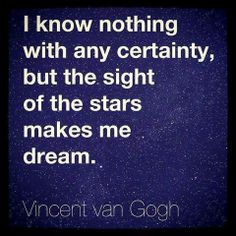
In these long nights the cold often brings clear, cloudless skies. The wonderful Van Gogh quote that I posted a few days ago underscores a virtue of darkness, one we can experience waking or asleep. Dreaming takes us out of the rigors of day to day life and puts us in the realm where ideas and hopes gather. So, the lengthening of the nights increases our opportunity to experience dream time. Whether you believe in Jung’s collective unconscious or not-I do, the rich resources of dreaming are available to us with greater ease when the nights are long and the cold makes sleeping a joy.
It was, too, many years ago when I pushed the notion of transcendence out of my spirituality in favor of immanence, incarnation over a god in the sky. My focus moved to down and in, not up and out. Our inner world is a mystery, a place of fecundity, but also a place often occulted by the demands of the day. When we shift our focus to the night, to the half of the year when darkness grows, we can use that external change as a trigger to lean inside, to find the divine within. If we can make this discovery, the god that we are, we can stiff arm the notion that revelation stopped thousands of years ago.
each birth, always
Every moment of our existence is a revelation, the path of a god, the most fundamental ancientrail of all. No, we are not omnipotent, that’s an illusion created by the idea of transcendence, the need to find validation outside of our own soul. This is the true polytheism, the one that folds its hands, says namaste, bows to that of god in everyone, in every animal, in every plant and stone and star.
When you reach out in love to another person, to a dog, to a crocus blooming in the snow, you bring the finger held out by the white haired floating god in Michelangelo’s Sistine Chapel ceiling. That moment of creation is always, ongoing, a joint effort between and among us all, human and inhuman, animate and inanimate, the cosmic dance of Shiva brought into this mundane world. He or She is not out there, waiting to be called by prayer, but in here, waiting to be called by the quiet, by the joy, by the persistence held in the soul container that is you.
For my unconquerable soul.” William Ernest Henley, Invictus
astronomy today, formation of the moon
The Winter Solstice. Today and tonight. 23.4 degrees of tilt. Explanation for the tilt is not settled science though at least part of the answer seems to lie in the accretion of matter and the occasional outright collisions that occurred during our planets formation early in the history of the solar system. Another interesting theory, perhaps part of the answer too, is that any large imbalance, say a supervolcano with a huge mass, could have caused the earth to tilt so that mass ended up near the equator.
Whatever the exact reason, the current tilt, which remains constant as the earth revolves around the sun, creates our seasons. As the earth orbits, the tilt causes a reduction and increase of the energy of the sun’s light by either concentrating it during the summer solstice (leaning toward the sun) or by spreading the light over a wider area (leaning away from the sun) during the winter solstice. Today at 9:28 MST the northern hemisphere will be at its maximum tilt away from the sun while, of course, the southern hemisphere is thrust toward the sun and celebrating its summer solstice.
All of this is a continuing evolution caused by forces set in motion by the big bang over 13 billion years ago. The fact that I’m sitting at 8,800 feet on a chunk of rock thrust up by the Laramide orogeny, watching snow drift down as the air up here cools toward below zero temperatures, waiting for the longest night of the year, 14 hours and 39 minutes here in Conifer, showcases the violent origins and their ongoing impacts on earth and her sister planets. When we settle into the chair tonight, or hike outside with a headlamp, or listen to some quiet jazz or Holst’s The Planets, the darkness enveloping us is an in the moment result.
As the earth leans away from the sun, we can lean into the darkness, the long night when the woods are lovely, dark and deep. As we do, we have the opportunity to sink into the fecund darkness within us, a soul link with the darkness all around us and our tiny solar system. In it we can recall sleeping animals in their dens, beneath chilled lake waters, in their lodges made of sticks and branches. In the darkness we can rest a moment beneath the surface of the snow and cold covered soil where roots and microbes work feverishly transmitting nutrients and available water into plants slowed, but not killed by the seasonal temperatures.
In the darkness we can attend to the dark things within us, the places in our souls where our own origins and their ongoing impacts create a climate for our growth, down below the conscious considerations of our day-to-day lives. We can embrace this darkness, not as a thing to fear, but as a part of life, a necessary and fruitful part of life.
I’ll sit in my chair this evening as the night unfolds (I love that imagery.) and consider death, my death, my return to the woods, lovely dark and deep. And, I’ll hug close to my heart the life I’ve been given and this opportunity, granted by the stars, to meditate on it.
When Hanukkah ends tonight, it will only be two days to the Winter Solstice. I long ago kicked transcendence out of my religious toolkit, believing it encourages authoritarianism, the patriarchy, and body negativity. How, you might ask? If we find our source of authority outside of ourselves, either up in heaven or with a divine father figure or anywhere outside of our body, we give away our own deepest connection to divinity, the sacred that lies within us. BTW: locating revelation in written texts does the same.
You could argue that cavalierly jettisoning a millennia old religious idea, celebrated and loved by millions, is anathema. Yes, may well be. OK with me. You could say if transcendence is real, then denying it is misguided or just plain wrong. Yes, you could say that. But if the downside of accepting transcendence includes self-oppressing, self-negating ideas, then it’s functionally bad, whether it’s true or not. So out with it.
If not up and out, then what is the direction for spiritual enlightenment? In and down. In your body/mind, and down into the depths of your soul. You say soul links us to the transcendent. Yes, you might say that. I’m more in the metaphysical world of Jungian thought though, where the soul connects us to collective unconscious, a deep stream of reality to which we belong and which belongs to us. Or, another way to think about it, the soul is our direct link to the nature of reality. It is the part of us that is eternal, that is divine and to know eternity, to know the divine, we only need know ourselves, as the Delphic Oracle said long ago.
Image Artwork by Susan Seddon Boulet
All this to say that the Winter Solstice is my high holiday (or, low holiday) because it encourages us to go inside, to sit in the darkness, to be part of the Gaian womb from which life emerged. As we head toward it, I’m considering my eternal soul, that divine spark within which makes me holy. And you, too.
The holy scripture I choose to read starts at my fingertips, but extends into the reality around me. When I look at the lodgepole pine and its elegant means of sloughing off snow, or at Maxwell Creek as it slowly carries Shadow Mountain toward the sea, or the lenticular clouds over Black Mountain, my sense of wonder and awe increases. These close by things and I share the same building blocks, the stuff, the things that burst out so long ago in the great expansion. Just after the tzimtzum, the great contraction. There is no transcendence here, only interpenetration, the universe and its evolutionary marvels.
Down we go, into the longest night. A darkness profound enough to reshape our lives, to help us see.
I also recalled yesterday that I’ve had this end of year let down often. When I worked for the Presbytery, I noticed that no congregation wanted a church executive around during the run up to Christmas and the week after, through New Year’s. This may have been a post-school rationalization to give myself a winter break. Whatever it was I think the pattern is probably there, triggered this time by the end of kabbalah.
It feels ok now that I know what it is. I’m going to ride it out through New Year’s, continuing to write Ancientrails and exercising, but other than that trying to follow a more unpredictable path. Getting some work done around the house. Reading outside my current Judaism concentration. Movies. More cooking. Enjoying holiday time and visits.
For lack of a better term, this is my winter break.
It also occurred to me that I live in the mountains, a spot in the U.S. that literally millions come to see every year, then go home. Maybe I’ll get out and about a bit more over the next couple of weeks. Strap on those snow shoes. Oh, yes, we did have snow. Not a lot, but enough for snow shoeing, I think.
The great wheel has turned again, moving Orion further down the southwestern horizon in the early morning. The air is cooler here. A Beth Evergreen friend, Alan, came in to the kabbalah class and announced, “Winter is really here. It’s so cold outside!” It was 22. Now in my fourth winter season here I’ve stopped commenting.
Temperature tolerance is so much about perspective. I saw a meme on Facebook that featured two parka clad folk with frost on the edges of their hoods. “What people in Texas are like if the temperature dips below 80.” A man from Texas wrote, “This is true.” Another posted a photograph of a red bench rest with two snow flakes, “It’s a blizzard in Dallas!”
Those -40 degree nights at Valhelga during one Woolly retreat. Working out on my snowshoes in the woods behind the library in Anoka, -20 degrees. The moments of -50 degree wind chill. Days with the temperature below zero, many days in a row. Minnesota. Not a lot of snow, but pretty damned cold.
And, yes, my body has begun to change its reaction, 22 does seem cold. Yet my brain. Nope. T-shirt weather. Rock the sandals and the shorts.
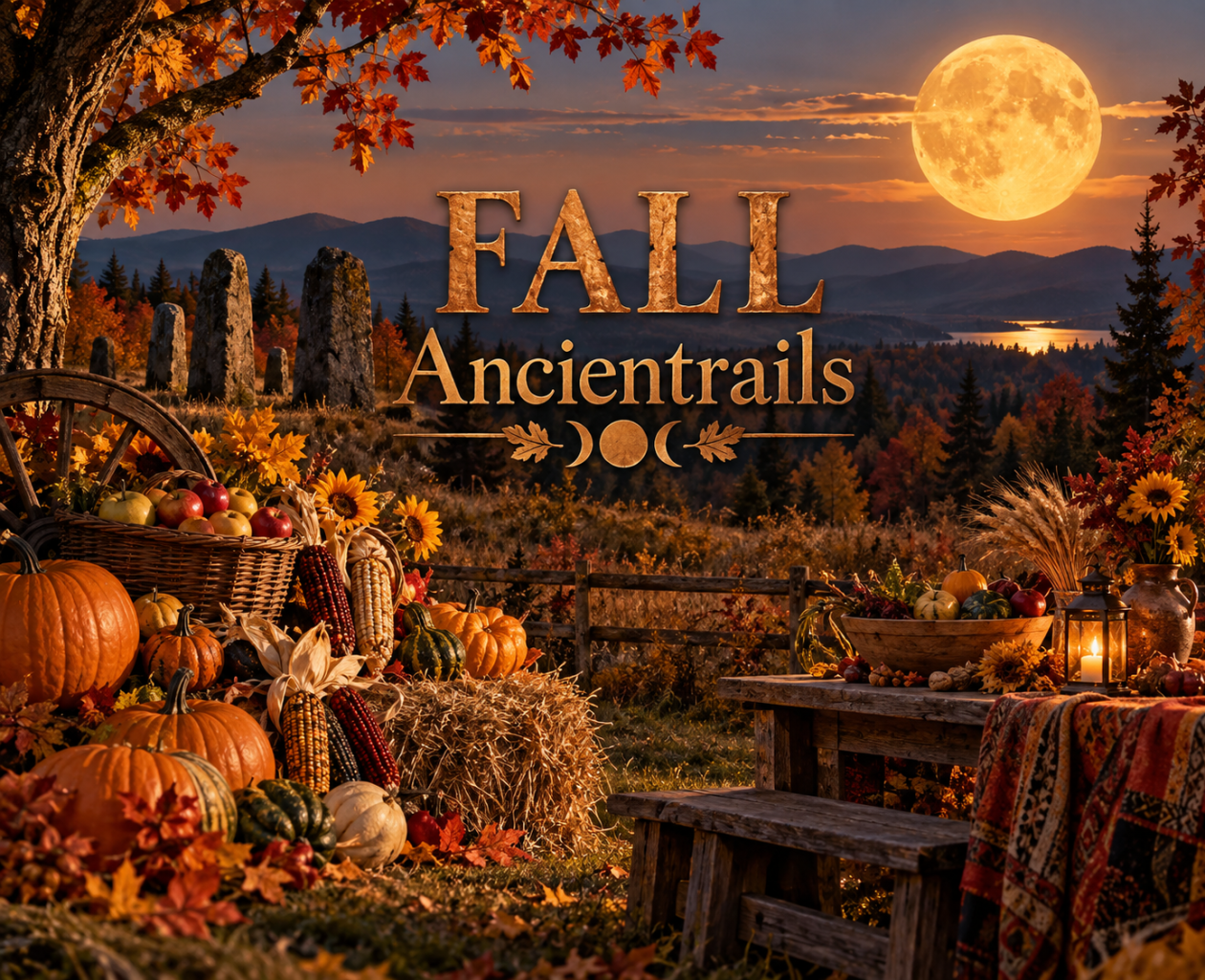
The Winter Solstice, no matter what the temperature, is coming. My favorite time of the year.
The nearly full bare aspen moon stood over Shadow Mountain drive last night, bright and low enough to be poked by the lodgepole pine. Full moons up here alter the appearance of the mountains, sometimes putting them in lunar shadows, dark silhouettes against the late evening sky, and shining their ghostly light into clearings and onto roadways. They also light up the eyes of animals wandering through the Arapaho National Forest or crossing the road: mountain lions, mule deer, elk, black bear.
When I was a flatlander, I imagined mountains as always the same, like the Matterhorn, tall and rocky, always tall and rocky. Or, Mt. Everest, always snowy and cold. Now that I’m a mountain man I know they change appearance many times during each day and from season to season. The beauty of the mountains is usually stark, but stark for different reasons: snow one day, hoar frost on another, golden aspens one season, bare aspen in another.
Later in November
Mountain streams like Cub Creek, Maxwell Creek, Bear Creek, Shadow Brook run fast and full in the late spring, slower during the summer and often freeze over in the winter. There are, also, particularly this close to Denver, seasonal fluctuations in traffic on mountain roads. When Kate and I moved here in December of 2014, we saw signs that said Heavy Roadside Activity. We couldn’t imagine what meant. Lots of earth moving equipment? Animals? It wasn’t until spring that parking at trail heads along our drive down to Evergreen began to fill up with cars, then spill over to the roadside and fill even what we came to recognize as overflow parking lots that had been covered by snow.
Right now? Invisible. It’s dark. No mountains out there according to my eyes.
My phone camera didn’t do it justice, but Thanksgiving came in over Black Mountain with a gorgeous pink cloud, a penumbra of gold light on Black Mountain itself and a glow over our home. May the rest of the day, and especially the capon, be as beautiful.
Finished the pancetta and fig stuffing by celebrity felon, Martha Stewart, last night. It smells like it will be as good as I imagined. The capon-yes, we have it-thawed out and will go in the oven around 11:00 a.m. Kate made a pumpkin pie and got the caramelized yams ready. Ruthie’s pecan pie is covered in foil. She’s also bringing deviled eggs. They’re planning on coming up around noon or so.
Last night, for some strange reason, the neighbor had his sledge hammer out, using it to pound on a plastic garbage container. For quite a while. Don’t know if his mother or his mother-in-law or both are coming today.
We will be saying our gratefuls around 2 p.m. I’m grateful for you if you’re reading this. I’m also grateful for all the love here: dogs, Kate, Jon, Ruth, Gabe, Annie. I’m also grateful for the lodgepole pine that spent millions of years acclimating themselves to this particular altitude. And for the clouds and the mountains, which have such great altitude, and the streams and the mule deer. The elk, the red and gray fox, the moose, the mountain lions, the bears, the marmots and pikas. The rattlesnakes. The available oxygen in the atmosphere and the amazing organs we have that convert it to our use. So many things. Endless really. Thankful for all of them, now and forever.
Destinations with Ruth (planetarium in Boulder and Sweet Cow, an ice cream place in Denver) The Rav4’s purpose.
Into Stevinson Toyota yesterday for a Rav4 oil change. Stevinson’s West on the western edge of Denver. The big yellow signs with their dire steep inclines, tight curves warnings go past me now unremarked, except for the occasional realization that I’ve acclimated to mountain driving some while ago.
Stevinson is about 35 minutes away, but the Toyota approach to service appeals to me enough to make the trek. They do what needs to be done to keep the vehicle in good shape. That’s what I want. And, it works. The next oil change will be at the 100,100 mark. Can’t say I like the Rav4, but it gets us from point A to point B, even in winter in the mountains. I do sense an electric car in our future.
Kate, Ruth and Ruth’s bff, Wilson
Family business meeting at Brooks Tavern over lunch. We’re still absorbing some financial strain from Jon’s time with us, so the budget’s a little tight, but that won’t last forever.
Kate’s doing well with the substantial burden Sjogren’s places on her daily. Though the dryness that is Sjogren’s signature symptom, especially mouth, throat, eyes, is definitely bothersome, the most difficulty for her comes from fatigue. It makes her self-defining upper middle class get’r done energizer bunny approach to life just not possible anymore, except for short periods of time. That imposes a psychological burden that is worse, I think, than the fatigue itself.
Finished the installation of the weather station. It looks great, to my eye, on the loft’s deck. I’ve reacquainted myself with some of the buttons and whiz bangs of the console, but it will require some rtfm to get back to facile with them. The internet connection might be harder because I purchased the link for it back when Vista was the most recent Microsoft OS. We’ll see.
Been trying to get Boiler Medics, the guy who installed our new boiler, out for a seasonal check of the system. Something’s happening there because they’ve ghosted me for the last few days. This behavior is the mountain way for tradespeople in our stretch of the Front Range; it’s frustrating.
Get my new workout today from On the Move Fitness. I’m enjoying getting a new workout every 6 weeks or so. It’s easy to get in a rut with fitness and Deb, owner of OMF with her husband Dave, seems to have a good grasp of my needs. The workouts she devises challenge me, but are not onerous. Lower back pain and my left shoulder pain have largely disappeared thanks to them. Not to mention that knee. I can now get up from a chair using only my legs, an accomplishment that seems small unless you’ve spent a good deal of time unable to do it.

 Well. Finally. A real snow storm. The white stuff started falling around midnight on Saturday and continued through the day Sunday. Maybe 10 to 12 inches. Ted of All Trades plowed us out in the afternoon. I cleared our deck and the path to garage 5 times as the snow fell. It’s easier to clear it before it builds up too much bulk.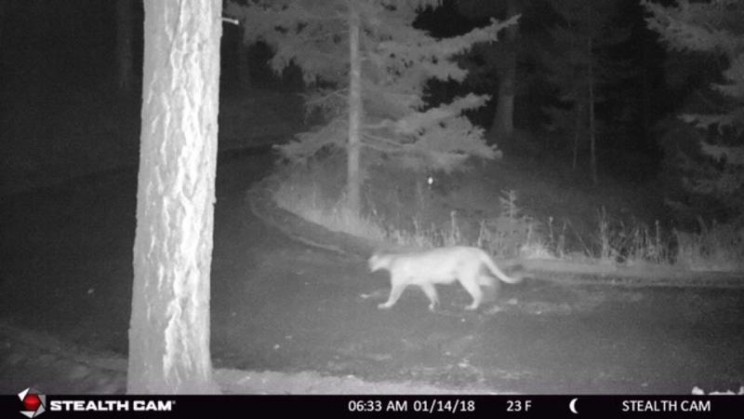
 The solstices mark swings to and from extremes, from the longest day to the longest night, there, and as with Bilbo, back again. Darkness and light are never steady in their presence. The earth always shifts in relation to the sun, gradually lengthening the days, then the nights.
 In these long nights the cold often brings clear, cloudless skies. The wonderful Van Gogh quote that I posted a few days ago underscores a virtue of darkness, one we can experience waking or asleep. Dreaming takes us out of the rigors of day to day life and puts us in the realm where ideas and hopes gather. So, the lengthening of the nights increases our opportunity to experience dream time. Whether you believe in Jung’s collective unconscious or not-I do, the rich resources of dreaming are available to us with greater ease when the nights are long and the cold makes sleeping a joy.


 In the darkness we can attend to the dark things within us, the places in our souls where our own origins and their ongoing impacts create a climate for our growth, down below the conscious considerations of our day-to-day lives. We can embrace this darkness, not as a thing to fear, but as a part of life, a necessary and fruitful part of life.
 When Hanukkah ends tonight, it will only be two days to the Winter Solstice. I long ago kicked transcendence out of my religious toolkit, believing it encourages authoritarianism, the patriarchy, and body negativity. How, you might ask? If we find our source of authority outside of ourselves, either up in heaven or with a divine father figure or anywhere outside of our body, we give away our own deepest connection to divinity, the sacred that lies within us. BTW: locating revelation in written texts does the same.
 I also recalled yesterday that I’ve had this end of year let down often. When I worked for the Presbytery, I noticed that no congregation wanted a church executive around during the run up to Christmas and the week after, through New Year’s. This may have been a post-school rationalization to give myself a winter break. Whatever it was I think the pattern is probably there, triggered this time by the end of kabbalah.
 The great wheel has turned again, moving Orion further down the southwestern horizon in the early morning. The air is cooler here. A Beth Evergreen friend, Alan, came in to the kabbalah class and announced, “Winter is really here. It’s so cold outside!” It was 22. Now in my fourth winter season here I’ve stopped commenting.
 Those -40 degree nights at Valhelga during one Woolly retreat. Working out on my snowshoes in the woods behind the library in Anoka, -20 degrees. The moments of -50 degree wind chill. Days with the temperature below zero, many days in a row. Minnesota. Not a lot of snow, but pretty damned cold.




 Been trying to get Boiler Medics, the guy who installed our new boiler, out for a seasonal check of the system. Something’s happening there because they’ve ghosted me for the last few days. This behavior is the mountain way for tradespeople in our stretch of the Front Range; it’s frustrating.