Fall Hunter Moon
 Divorce matters seem finally to be breaking Jon’s way. Can’t say more than that right now, but I’m glad.
Took a long ride with Kate out to Elizabeth, Colorado to the Elizabeth Meat Locker. We purchased a quarter side of beef from the Carmichael Cattle Company and they have a contract with the Elizabeth Meat Locker for butchering. We’d not been out this way, south and east of the Denver Metro, so it was an interesting drive. Passing through Parker we both commented on the area’s similarity to Chanhassen, Chaska, Jordan in Minnesota. Then the hilly country began to look like 169 headed to Mankato. Of course, to maintain these similarities we had to keep our eyes from the west where the Front Range rose.
 Elizabeth itself is a small rural community that could have been anywhere, usa. It has a small historic downtown; that is, older retail buildings repurposed into boutiques and a fiber art store and antique shops. Mainstreet is Co. Highway 86 and there is the obligatory Walmart anchored, downtown killer of a strip mall on the edge of town.
We ate at the Catalina Diner, a restaurant that would have felt at home in southern Indiana. It had automobile, 1950’s automobiles, posters, high-backed white booths, two lunch counters. Comfort food.
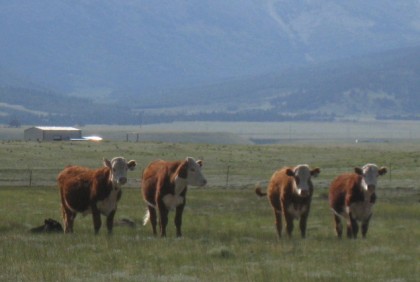
This whole journey was an unusually difficult one, emotional in a way I’ve found strange for over a year. Let me explain. Each time we headed down Shadow Mountain Drive for Aspen Park or Denver, we passed two small fields carved out of a narrow mountain meadow that sits under Conifer Mountain. It has two ponds, a few stands of trees, but is mostly grass.
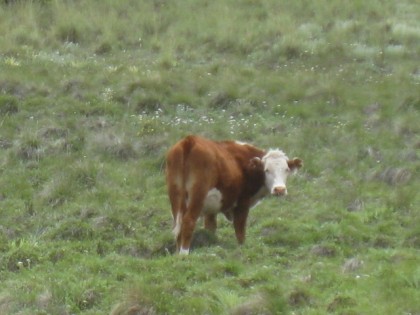
Over the course of the year Carmichael Cattle has fed three angus and one hereford there. As we drove past, I would look for these cattle, tails twitching, heads down. Or, huddled together in the shade in a hot summer sun. Each time I was glad to see them. Glad these animals were there as we drove by. Part of my enjoyment of them was a tie to my rural roots in the Midwest. I miss the ever present signs of agriculture: fields of corn, fields of soybeans, tractors, combines, dairy and beef cattle. These cattle gave me a link back to the roadsides of my former life.
But. I also enjoyed them as individuals, seeing them interact with each other, wander off in search of a good spot to graze, standing next to each other. Each time I went past them I knew it could be that later in the fall I would be eating one of them. This made me sad and a bit forlorn, knowing that my heart was in conflict with my head.
 My head says ethnobotany. Our culture chooses our diet for us, decides which foods are tasty, which gross, which taboo. Our bodies are neither obligate carnivore nor obligate vegetarian. We are designed by evolution as omnivores, able, thankfully, to eat what the world places in front of us, be it plant or animal. This is a great advantage for us as a species and has allowed us to thrive in many diverse climates. There is nothing wrong, then, about eating meat, either from a biological or cultural perspective. Meat is simply one source of food.
But. I enjoyed seeing them as individuals. I knew they were individuals. I could tell by they way moved through the field. One seemed to gravitate toward the shade. Another seemed more social, following its colleagues closely. They were, in fact, separate from each other, unique, not cattle sui generis, but this cow, that bull. They were not, in other words, meat in the abstract, but meat on the hoof, meat as the muscle of living creatures, muscle that functioned within these animals I enjoyed.
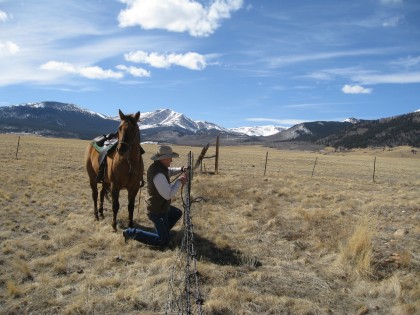 To purchase their meat was to kill them as surely as if I took a rifle out and shot them. Back in 1974 I moved onto the Peaceable Kingdom, a farm Judy and I bought in Hubbard County, Minnesota, the county home to the headwaters of the Mississippi. We had goats and decided we wanted to barbecue some goat meat. Johnny Lampo, the man who rented our fields and farmed them, gave me his rifle and I killed one of our our goats. I’ve not been the same since. I can’t even euthanize our dogs.
Though raised in the agricultural Midwest, though I attended 4-H fairs in my youth and state fairs in Indiana and Minnesota, though I knew well the connection between actual animals and the wrapped packages of hamburger, the sirloin steak, the lamb chop, the pork tenderloin, I had still been insulated from knowing that this cow, this bull was the source of my pot roast.
It was this awakened sensitivity, perhaps a sentimental one, ok, definitely a sentimental one, a sensitivity awakened in brief moments passing cattle in a mountain meadow that put my heart into conflict with my head. Even in my heart I don’t feel eating meat is wrong, but I do feel that knowing the animal from which my meat comes changes things. A lot.
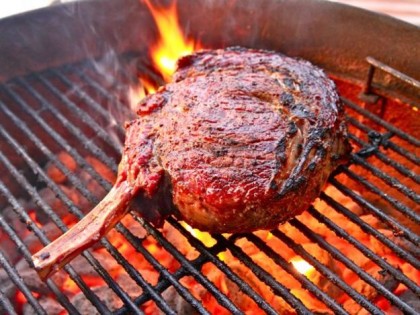 So this evening when Kate cooks the ribeye steaks thawing right now in our sink, I plan to add a small ritual to the lighting of the shabbos candles and the sharing of challah. We will remember the animal that died so that we may eat, so that our bodies might be strong. We will thank this particular individual for the role he or she plays in our daily life. We will acknowledge the cycle of life, the interlocking web of life and our mutual parts in it.
This is, I think, one of the missing parts of our 21st century life, honoring the plants and animals that have to die to keep us alive. Without the heart connection we are rapers and pillagers of our environment, no better than Big Ag and its ruthless exploitation of the chain of life for profit.
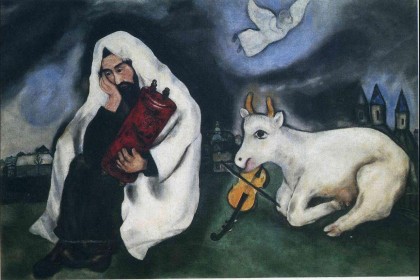
 Beth Evergreen’s sanctuary has multiple clear glass windows that offer views of Bergen Mountain and Elk Meadows. The view next to the Torah Ark had a mountain side filled with lodgepole and Ponderosa pine. Almost to the peak of the mountain though there was a small stand of aspen, golden still, in a perfect heart shape. All through the service I had a symbol, an accident of nature, created by my view, my perspective that synched up remarkably well with the overall theme of Yom Kippur, atonement. Also, up and to my right, at the roof of the sanctuary, a square window framed the tip of a Ponderosa pine. It looked like a painting by a member of the Kano school of Japanese art.
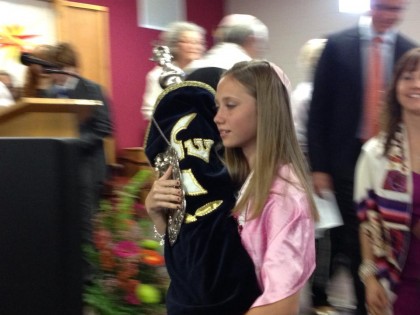
 When Kate and I drove home from the kol nidre service at Beth Evergreen last night, the Hunter Moon lit up a sky covering labyrinth of white fluffy clouds. Occasionally, a few clouds would become very bright, then a hole would open, briefly, and the three quarter moon would not only backlight the cloud cover, but provide a luminous presence, too. It was a magical sky, a sort that seems particular to the onrushing fall. Aspens still blaze bright gold in some places, in others the leaves have turned brown and blown away leaving stands of naked branches as harbingers of the winter months.
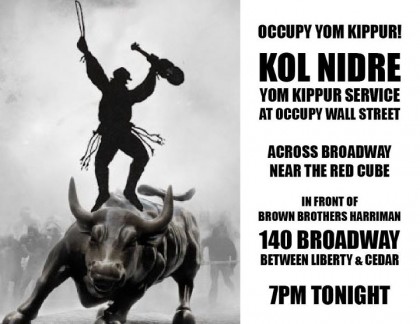 I feel odd at Beth Evergreen. My physiognomy is out of place. The language of many of the prayers and songs is foreign to me. I don’t feel, and don’t expect to feel, part of the tribe. Yet, Kate feels, is, part of the tribe. Also, much of the content resonates with my own faith reimagining project.
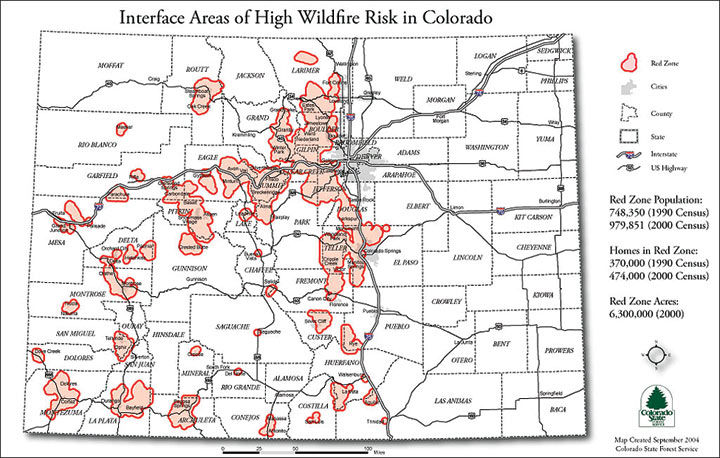 Working on homeowners insurance right now, a fraught topic in the red zone. The red zone, which I have mentioned before, is the area in Colorado most likely to experience wildfire. Jefferson County, our home county is the long, narrow county which abuts the southwest side of the Denver metro (gray blob, high center right). We are smack in the middle of Jeffco’s redzone.
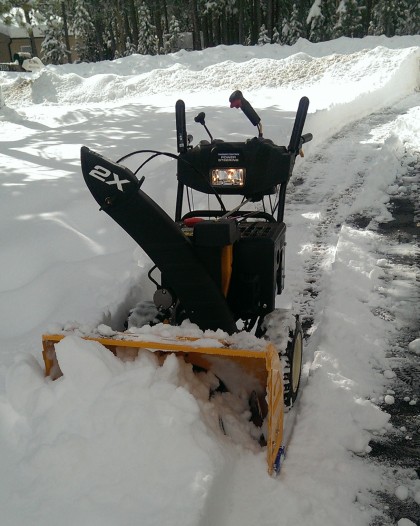 Final activity for yesterday was changing the oil in the snowblower. If you have any mechanical aptitude, this is probably not worth mentioning. In my case the material world and I struggle every time we come in contact. I did get the job done, but it took much more thinking and jiggering than it might have. Example: to drain the oil the snowblower has to be tipped over on its side, but not fall over. That meant balancing the snowblowers unwieldy bulk with my legs while my arms prevented it from tipping over all the way. The result was dependence on my knees for backward stability. And that left one isn’t working so well right now. Gave me a couple of interesting moments.
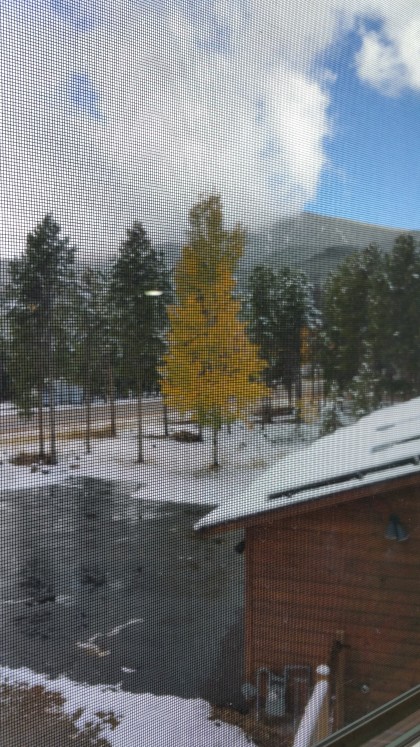
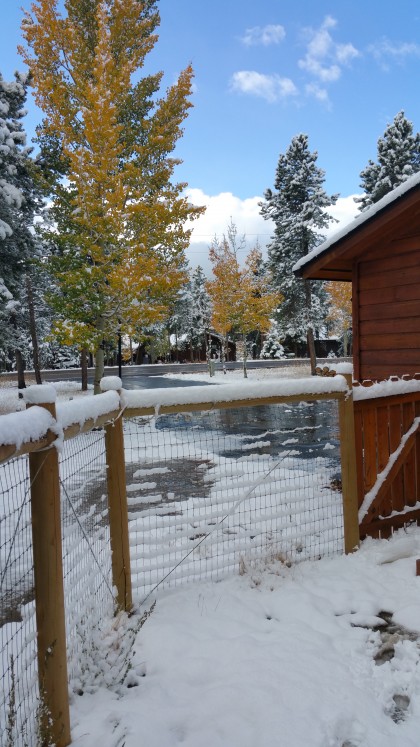
 Speaking of seasons, this is not the silly season; it’s the Insane Clown Posse season. When a reactionary like Mike Pence gets kudos for a stable debate performance, the world has gone seriously out of whack. This is a guy who tried to abrogate the first amendment, destroy unions, and denigrates women. The only reason he looked less than totally unappealing is the comparison to his running mate, Donald the Hair Trump. OK, Kaine wasn’t much better, but, hey, these guys were picked as Vice-Presidential candidates for a reason. Whatever it was.
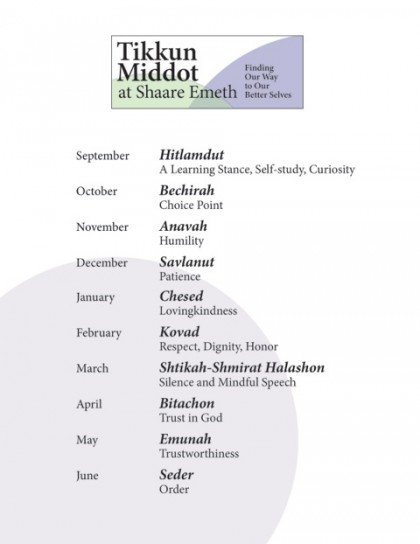 Yesterday was a reading day, getting up to speed on the middot (character trait) of watchfulness. The notion of Mussar is to take character traits like watchfulness, explicate them, then practice them. Literally. Mussar encourages taking a character trait like watchfulness, then working over the period of a month to manifest it in your life or raise your observance of it to a higher level. Watchfulness entails what a Jesuit might call examen. Paying attention to your behavior, becoming conscious of it rather than letting it flow by out of habit unnoticed, that’s the first part.
 Yesterday included three separate trips into Evergreen. First, I took Kate in for the morning Rosh Hashanah service at Beth Evergreen. Then, I came back to answer questions, be available for the electrician and the painter. At noon I went back to pick up Kate and eat the after service lunch with her. All these trips included waits in two spots on Brook Forest Road for culvert repair. Stop. Slow. Stop. Slow.
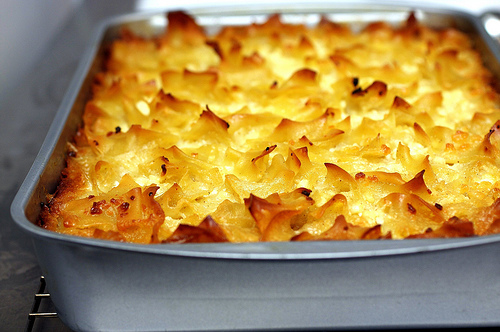 There were kugels in aluminum pans, bagels with lox and cream cheese or chopped egg, fresh cut vegetables, fruit. Paper plates and plastic forks. Lots of eating and greeting. Some very short skirts. Some men carried small cloth pouches containing prayer shawls and yarmulkes. Kids ran around,
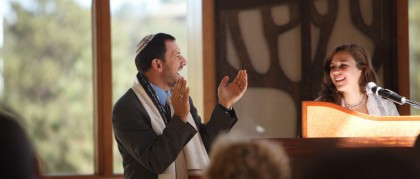
 My fellow traveler shoes are beginning to get a lot of mileage on them at Congregation Beth Evergreen. The Rabbi there, Jamie Arnold, is a very sweet guy, empathetic, bright, learned, good singing voice. At the Mussar midday session yesterday we looked again at the first chapter of Mesillat Yesharim. There are many important ideas in it, two stand out for me right now.
 The second idea is that we can be tempted, pulled away from delight and joy, by both prosperity and adversity. Recalling this simple, but far from obvious truth about the human condition helps us see that our material advantages are not the core focus of our lives. Our material success is incidental to the spiritual journey-unless it distracts us from it.