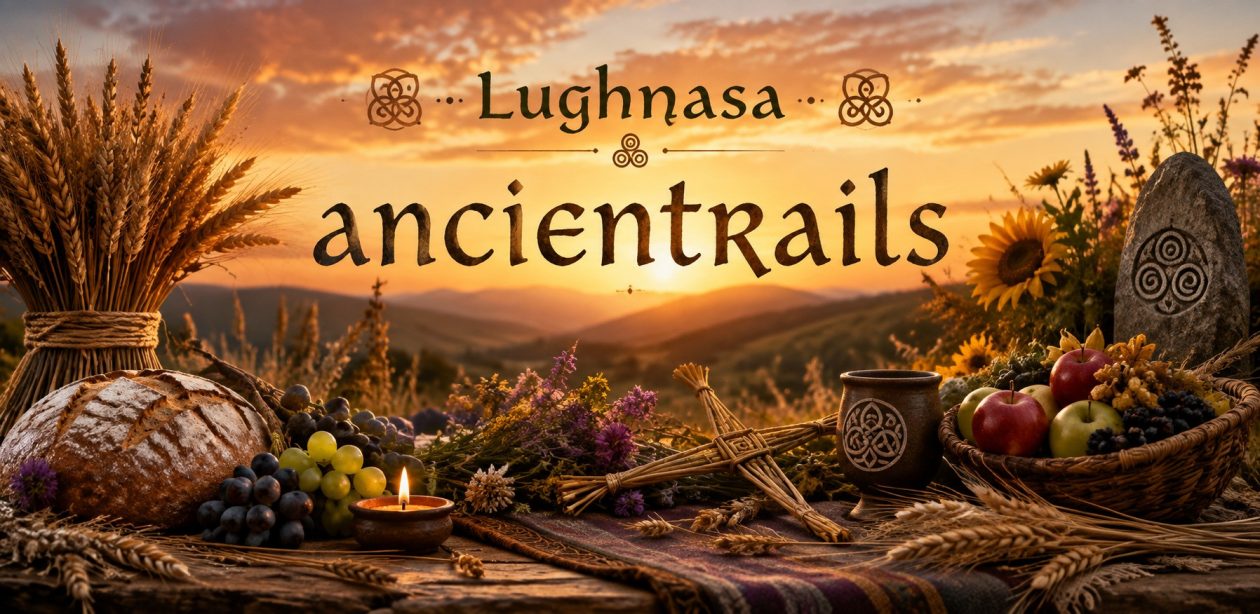
Midsommar Most Heat Moon
 After leaving the ministry, a gradual process of demythologization and disenchantment took over. In retrospect it’s not hard to see why. A primary motivator of the shift away from Christianity and toward a more pagan worldview came because transcendence bothered me. Transcendence takes us up and out of our bodies, or least out and away from our bodies.
A more important idea, at least for these times, seemed to be incarnation, a going in and down, rather than out and up. Incarnation takes us toward mother earth, toward our blood and bones. It does not pretend there’s an escape hatch from this earthly realm. This is our home, where we live, how we are.
Over time a godless world emerged. This was a world without a scrim, a world in which what you saw was what was. And that seemed enough. The Great Wheel provided a sacred lens through which to see seasonal change and the dramatic results those seasonal changes had on daily and yearly life. This focus on the here and now also informed, in a positive and self-reinforcing way, the Great Work. Building a sustainable presence for humankind on this earth requires, first of all, a sensibility attuned to the earth herself.
 Then, at some point-the reimagining faith project signals that point-the flat-earth humanism of this pagan orientation no longer felt like enough. Could the warmth and the depth available to those in the ancient religious traditions somehow be suffused into this empiricist, anti-metaphysical worldview? Could, in other words, a feeling of religious awe and wonder emerge out of our relationship with the web of life and the cosmic experiment we know as the universe?
Must be possible since, with the trappings of culturally specific myths and legends, all religions are an attempt to explain why we’re here, where we’re going and what we need to do on the journey. The journey takes place within in the web of life and the grand experiment of cosmological evolution.
 Transcendence still seems suspect. Reimagining though has to take account of it in some way. Here’s one idea. The mystical experience, a well documented and not at all rare phenomenon, often carries the descriptor transcendent. I had one and I want to challenge that idea. In mine, which occurred in 1967 on the quad at Ball State University, I did feel a sudden and inexplicable connection to the universe, all of it. Threads of light and power emanated in a pulsing glory carrying with them a physical sensation of oneness.
You might focus on the threads moving out from the center and psychically travel with them in some sort of astral projection, maybe that would be transcendence, but I don’t think so. The critical point for me is that all this connecting and interconnecting occurred within me. Yes, the sensation was of cosmic linkage, and, yes, I believe it was cosmic connection, but it didn’t feel as if I left my body at any point. I entered fully into my inner world, a world that already had these interconnections, always had them, and in that moment I could see them, at least for a sudden, blazing instance. This is maybe incandescence, perhaps the feeling often referred to as transcendence.
Still working on this one.
 Kabbalah was a trip through contractions, shattering, shards and healing. In the cosmology of Isaac Luria the ohr, the divine energy that was once all there was, wanted an other, yet it was all that there was. The ohr contracted, leaving room for something else. It created a vessel for the other, then poured divine energy into it, but the vessel proved too weak and shattered, scattering shards with ohr, divine light, trapped within them. Those shards, each filled with ohr, are the elemental stuff of the universe, forming the stuff which we experience as reality.
 Yet again, I didn’t follow this one completely, but the Lurianic God is a God in exile, separated from the shards. So when the Jews go into exile, they do so as one with their estranged God. The purpose of the Jews is to remind humanity of this estrangement and that we all have a role to play in overcoming it.
 With the first draft of Superior Wolf finished I’m taking this week to do various tasks up in the loft that I’ve deferred. Gonna hang some art, rearrange some (by categories like Latin American, contemporary, Asian) and bring order to some of my disorganized book shelves. I want to get some outside work in, too, maybe get back to limbing and do some stump cutting, check out nurseries for lilac bushes.
 Even so, reimagining is beginning to exert a centripetal force on my thinking, book purchasing, day to day. For example, last night as I went to sleep a cool breeze blew in from the north across my bare arms and shoulder. It was the night itself caressing me. I went from there to the sun’s warm caresses on a late spring day. The embrace of the ocean or a lake or a stream. The support given to our daily walking by the surface of mother earth. The uplift we experience on Shadow Mountain, 8,800 feet above sea level. These are tactile realities, often felt (0r their equivalent).
 Next, eliminate the metaphorical. If we do that, we can immediately jump into a holy moment, a moment when the bonds that tie us to grandmother earth are not figurative, but real. The breeze on my bare arms and shoulders is her embrace. The sun on my face, penetrating my body, is him in direct relationship with me, reaching across 93 million miles, warming me. The ocean or the lake or the pond or the stream cools me, refreshes me, hydrates me, acts of chesed, loving-kindness, from the universe in which we live and move and have our being.
 While the world burns, at least the Trump world, kabbalah suggests a bigger world, more worlds, right next to this one. There is, as Rabbi Jamie said, a bigger picture. I learned a similar lesson from Deer Creek Canyon during my cancer season two years ago. These Rocky Mountains, still toddlers as mountains go, were and will be present when we are not. In their lifetime humanity will likely have come and gone.
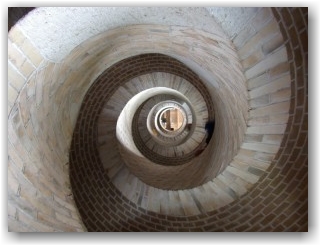 Yet. We do not live either in the deep geological past nor in the distant geological future, we live now. Our lives, our mayfly lives from the vantage point of geological time, come into existence and blink out, so we necessarily look at the moment, the brief seventy to one hundred year moment into which, as Heidegger said, we are thrown.
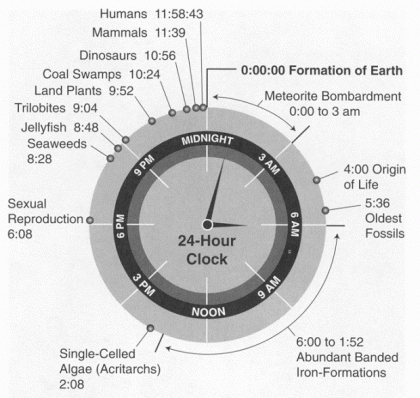 Somehow we have to realize that though our lives are small compared to the immensity of the universe and the imponderable nature of time, they are everything while we have them. As for me, I find all this comforting. Putting my efforts in the larger perspective gives me peace, putting them in the immediacy of my life gives me energy. We will not complete the task, no, we will not. But we are not free to give it up either.
 Our next Sierra Club meeting will be on June 19th, one day before the summer solstice. Sierra Club work is paganism stripped bare of its mythic content. There is passion for sure, but not the poetry, no ritual, no inner work. It’s all outer work: hike, lobby, analyze, network, persuade. We may, for example, show the next Al Gore movie, Inconvenient Sequel: Truth to Power. See trailer below.*
 Somehow I need to find a way for my inner work to imbue my outer work. Todd, a long-time member of the Mt. Evan’s local group to which I belong, talked about a hike he took yesterday in Reynold’s Park. He named a particular orchid that he found and his face lit up. “A bullsnake, too.” It may be that these folks, tied to the very local region encompassed by our borders, find their inner work in being on the trail, hiking Mt. Bierstadt, taking the Mt. Evan’s road, helping clear trail.
 If, as a Western white male, a U.S. citizen of mostly European genetics, I cannot create characters in my novels that are outside that narrow slice of the world’s reality, my work is restricted in ways that make no sense to me. Would I always get it right? No, of course not. But how do we understand other’s understanding of their others unless we can see it or read it or watch it? And is not the fraught interaction between and among cultures important to understand from all perspectives?
 As a former student of anthropology, I know that cultural diffusion is always happening. Look at pidgin languages. Look at the appreciation of art in the different departments of encyclopedic museums. Look at the cultural diversity within the fabric of our nation. Go to Singapore and see the merging of several South Asian cultures into one nation.
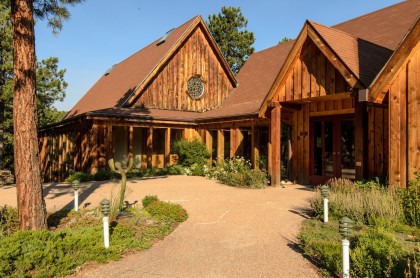 Irv Saltzman invited us to a performance by his singing group, the Renaissance Singers. It was held in a wooden Episcopal Church, St. Laurence’s, which is near our home. Directed by a Chinese national, Hannah Woo, who is finishing her Ph.D. in musicology, they were 8, four men and four women. As a group, they matched each other well. April, a soprano, had a lovely clear voice and a large range. Irv, formerly a tenor, has now transitioned into a bass/baritone role. Their performance was wonderful. At a meal afterwards we discovered April is our neighbor.
 Renaissance choral music and instrumental renaissance music has always captivated me. It’s easy to see courtiers in colorful costumes listening to this music in a palace, brown robed and cowled monks hearing it in a morning prayer service, or small groups performing at home for their own amusement. It’s also the music most often heard at Renaissance festivals. Sorta makes sense, eh?
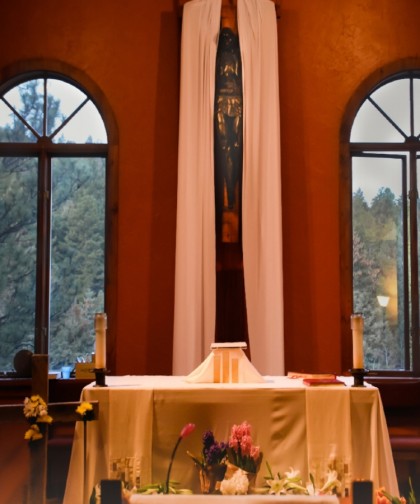 Between the two windows hung a large crucifix, a cross made of bare, light wood and a bronze Jesus hung by two nails. I had an odd sensation while listening to this music I’ve often heard in monastic settings on retreat. It carried me back into the spiritual space of an ascetic Christianity that often comforted me. This time though I came into the space as a peri-Jew, identifying more with Marilyn and Irv and Kate, with the still new to me spiritual space of Beth Evergreen, than the theological world represented by this spare, but beautiful sanctuary.
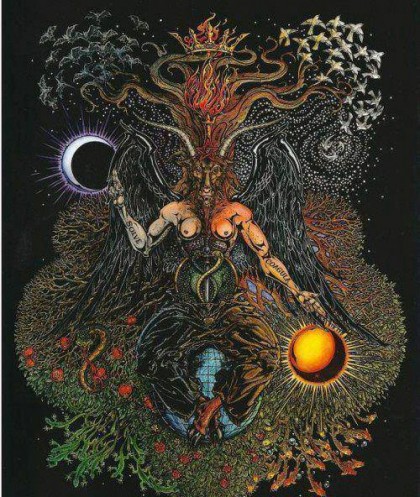 This was an afternoon filled with the metaphysical whiplash I’ve experienced often over the last year, a clashing of deep thought currents, spiritual longings. This process is a challenge to my more recent flat-earth humanism, a pagan faith grounded not in the next world, but in this one. Literally grounded.
 The waning passover moon is behind a faint scrim of clouds giving it a moonlit halo. Each moon cycle repeats the past, yet is unique to itself. The slow orbit (relatively slow) of the moon around the earth produces the same phases each month and in that sense repeats. But the lunar month and the sidereal year do not quite match up*, as all cultures that depend on lunar months for their calendars have long known. Judaism is such a culture.
 When you consider the irregularities in the lunar position occasioned by the sidereal/synodic difference and the speed of our solar system both moving on its own toward Lambda Herculis and around the Milky Way and then throw in the speed of the Milky Way itself, it becomes clear that no one phase of the moon every occurs in even remotely the same location.
 Finally, the point. We are, each of us, unique and precious instances of over 2 billion years of evolution of life on Earth. We represent a moment in time, yet even our moment is not static. It finds us moving incredible distances.
 Think about it. Out of all the billions of years since the Big Bang, moving in all the various ways discussed above and at speeds that make Formula One look slothful in the extreme, you and I exist in this special time together. How remarkable! We are in fact made as the conscious image of this whole universe, with all its reckless momentum and we have been given the chance to know each other and through knowing each other to know the universe that gave birth to us.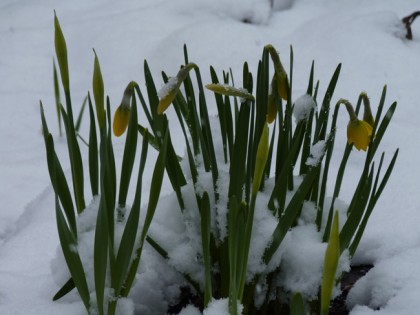
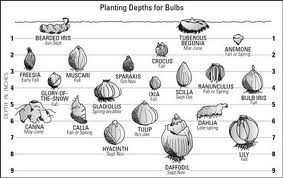 Yet it is not a true analog. Mother earth only seems to defy winter and the fallow time. It is not, in fact, death and resurrection, but a continuum of growth, slowed in the cold, yes, but not stopped forever, then magically restarted. Corms, bulbs, tubers and rhizomes all store energy from the previous growing season and wait only for the right temperature changes to release it. Seeds sown by wind and animal, by human hand are not dead either. They only await water and the right amount of light to send out roots and stalks.
 I prefer the actual analog in which human and other animals’ bodies, plant parts and the detritus of other kingdoms, all life, return their borrowed materials to the inanimate cache, allowing them to be reincarnated in plant and animal alike, ad infinitum. Does this deny some metaphysical change, some butterfly-like imaginal cell possibility for the human soul? No. It claims what can be claimed, while reserving judgment on those things that cannot.
 It is spring, I think, that gives us this hope, no matter how faint, that death might be only a phase change, a transition from this way of becoming to another. It’s possible.

