In January the solar panels often disappear under snow cover. In June they’re more likely to be covered in pine pollen. Both reduce their effectiveness. Snow, however, does not reduce my effectiveness while the true yellow peril does. Fuzzy, nose focused, weighed down not only by the pollen but by the helps (and thank god for them) for the symptoms. No good solutions here. Do what you can. Wait.
the orgy continues
Two full days now, Friday and Saturday, given over to sneezing, lack of sleep (due to sneezing), consuming nasal steriods, second generation antihistamines (so called non-drowsy), and using saline sprays. Not to mention eliminating the current stash of kleenex we have. All this more for the record here than anything else.
The Persistence of Memory, Dali, 1931. By Image taken from About.com, Fair use, en.wikipedia.org/w/index.php cur id 20132344
Time last night. Qabbalah. Does the past exist? Oh? How do you know? Key learning, something I have to learn and relearn, the past exists, yes, but only in the present. Just like, oddly, the future. Why? We never have any time other than the present. Never. We can pull ourselves away from awareness of the present by being focused on the past regrets, anger, guilt, yet we can only experience the past in the present. So, whether it has any ontological reality or not, we cannot know it except as a ghost that we carry forward with us.
Likewise, the future never arrives. Free beer tomorrow. Our dreams or fears or hopes or anguish about a future event can affect us, but, again, only in the present. Now is all there is, and, again oddly, the moment we think of the now, it is past.
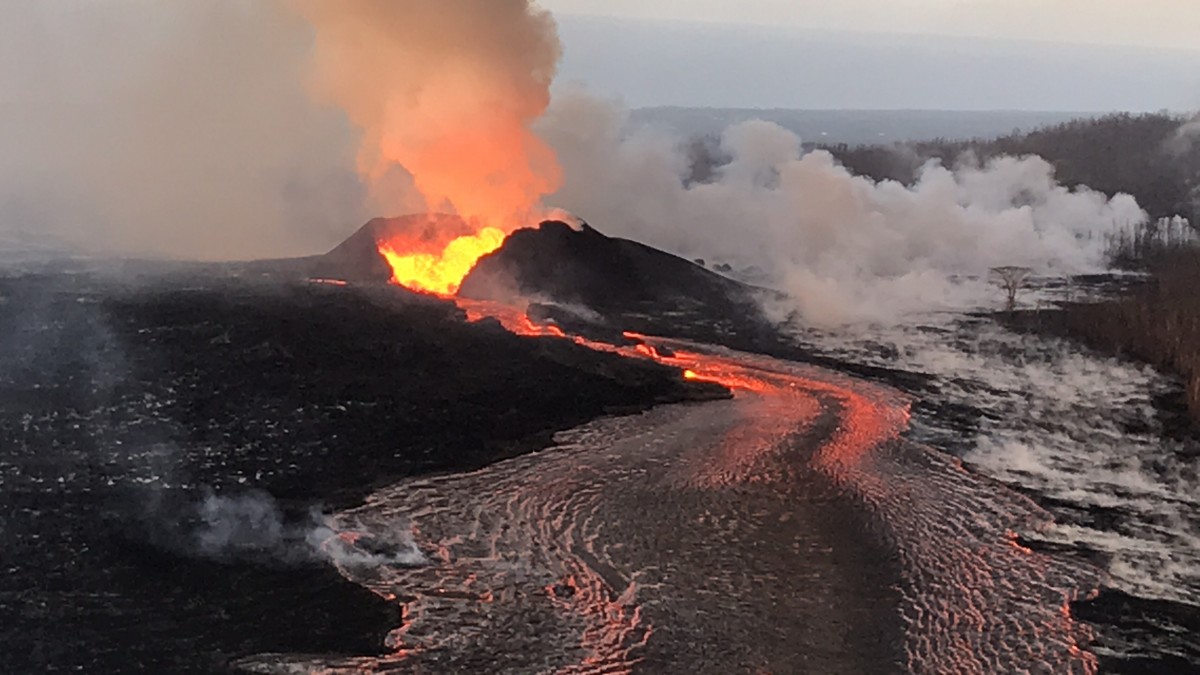
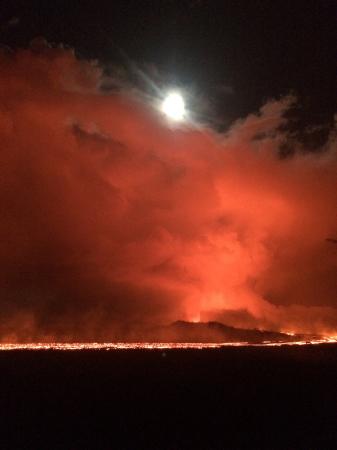
Kilauea Leilani May 5 lava fountains 230 feet high, USGS
Moment to moment the Reconstructionist prayer book says, the process of creation is renewed. Creation continues. Revelation continues. Tradition changes. This seems right to me and offers us substantial hope. We are not bound by past. This moment is new and we can choose in it to experience the past differently, to change the narrative, to reframe. In the same way we can choose-this is very existential-to reframe our future hopes and fears.
In the present, which has never existed before and will recede as if it were never there, all things can be made new. This is a subtle idea, at once obvious and at the same time almost impossible to grasp. Yet it is true that the 71 years of my life have passed in moments, always in the now. Even in 1947 my life passed moment to moment in increments, the very same as the increments I experience today in 2018.
Reb Zalman, founder of the Jewish Renewal movement, and a resident of Boulder until his death, talks about sin as a remnant of the past that is no longer useful, a story whose narrative obscures our ability to be in the present and, therefore, to make choices in the present. I really like this idea since it removes sin from morality and certainly removes it from any stain on the essence of a person. When we discussed this last night, I offered a metaphor from gardening, “A weed is a plant out of place.”
Mentioned The Third Plate a few posts ago. A book by chef Dan Barber, owner of the Blue Hill restaurant in Manhattan and a principle in the Stone Barns Center for Food and Agriculture in Westchester County.
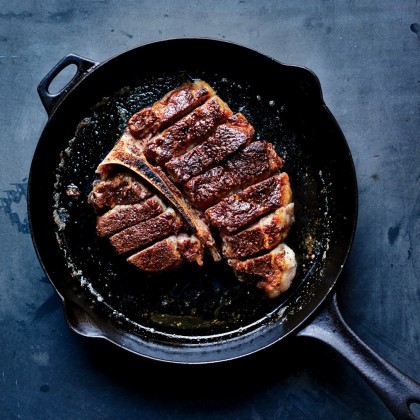
He uses four big concept areas, pictured at the top: Soil, Land, Sea, Seed to tell a story about what he sees as the future of food. He’s trying to take the conversation about food beyond the now well known critiques of books like Hard Tomatoes, Hard Times, Michael Pollan’s The Omnivore’s Dilemma, Aldo Leopold’s The Sand County Almanac, and any number of books published in the late sixties like Eull Gibbons, Stalking the Wild Asparagus, Small is Beautiful by E.F. Schumacher. Throw in Wes Jackson’s Becoming Native to This Place, almost anything by Wendell Berry and the thought world championed by John Muir and Edward Abbey and you can see the big conceptual field Barber has tried to plow.
He seems on to something. Using examples like the dehesa in Spain that produces jambon iberico, The Bread Lab run by Washington State plant geneticist Stephen Jones, the farm of Klaas Martens who teaches him about reading the language of the soil, Veta La Palma, a Spanish aquaculture corporation set up in an estuary of the Gulf of Cadiz, and Anson Mills, a fascinating concept by Glenn Roberts who uses landrace farming to resurrect old grain crops and nurture new ones, he seems to propose a recursion to localized crops, that is, wheat, for example, that grows best in upstate New York. This recursion includes animals, too, where their rearing takes on the characteristics that oenologists call terroir in wines.
This recursion would have chefs take their cues, their menus, from what farmers can grow in their immediate area and from those sites with a focus on sustainability and ecosystem regeneration. The fascinating aquaculture experiment that is Veta La Palma uses the Guadalquivir River and the salt water of the Gulf of Cadiz to farm high quality sea bass. The focus does not have to be only local or regional but can include instances of food production with ecosystem supportive techniques.
This seems similar to the disaggregation idea in power production, local solar and wind and geothermal and hydro. Anything that deemphasizes the industrial and the corporate in favor of the local and ecological.
He talks about his idea in agriculture as middle agriculture, that is agriculture smaller than corporate, but larger than the small family farm or the boutique garden. He’s trying to get to scale sufficient that it could actually feed large numbers of people.
It makes me want to cook in the way he suggests. That is, find food grown here in the Rockies, use it along with food sourced from the Veta La Palmas, the dehesas or the Bread Labs, and build our menus at home around it, changing with the seasons. Right now that would take a good bit of work, but it might be possible and it would certainly be worth it.
Had a strong sense yesterday of the tao. Often elusive for me, yesterday had a distinct flavor, a wind blowing through the events of the day and I rode with it.
Gabe’s sick, a croupy respiratory bug. Now, Jon has to deal with this as a single parent. A sick kid and two working parents is hard, but a sick kid and two divorced working parents is harder.
Into Aurora yesterday at eight a.m. to pick Gabe up and bring him up here. It was daylight saving time, the next day, and I felt loggy, off, a mild buzzing in my head and stomach not quite settled. There’s only one route to Aurora from here, Hwy 285 which becomes Hampden Road in Denver. Hampden runs through southern Denver, four lane at points, six lanes at others, lots of businesses, especially past Interstate 25 headed east.
I’d waited until eight to leave to avoid rush hour. The tao of the day laughed. At about Swedish hospital traffic seemed to slow, slow, slow, then crawl. And, occasionally, stop. Three lanes of traffic clotted. And, the clot lasted. Usually, from Swedish Hospital to Colorado Avenue is about a three minute drive. Thirty minutes. A lot of it with plenty of time to read the warning label about the semi-fluid lubricant in tire bearings on the semi sitting next to me.
It was jaggedy, edgy tao, putting up barriers, then releasing. Gabe had his own struggle with this tao. I was forty minutes late picking him up.
We drove back to the mountains in silence. My hearing aid battery died in Lakewood, about thirty minutes from home. Even with the hearing aid, the noisiness of the Rav4 makes hearing Gabe’s soft voice from the back seat impossible for me.
Once home Kate had to leave for a mani-pedi, so I remained in the house in case Gabe needed anything. He came with a cooler containing ginger ale and cheese.
I felt jangly, stomach still off. Reading the Third Plate kept my mind distracted, a positive barrier to temporary discomfort. This book has a lot to teach. Of the many key learnings so far, one that keeps coming back like a ruminant’s cud was a short encounter between Dan Barber, the author, and Wes Jackson, a hero of mine who runs the Land Institute in Kansas.
Stone Barns and Dan Barber’s Blue Hill restaurant
Dan had visited an organic farmer in upstate New York who “listened to the language of the soil,” reading soil health from the weeds that grew in his fields. This particular formulation, language of the soil, grabbed me because I had come to the same metaphor over my years of gardening in Andover. The soil speaks, tells you what it needs. You just have to see what you’re looking at. This farmer’s attention to that language resulted in an organic farm, growing mostly heirloom varieties of corn, wheat and other grains, intermixed with soil healing crops like spelt and clover.
After Dan told Wes about this farmer, he nodded. “Yes, Dan. He sounds like a great guy, but it won’t last.” Someone else, he went on, will buy the farm and all of the careful reading of the soil’s language will disappear. The chemical/industrial farming ethos will return. When Wes recognized Dan’s disappointment, he said to him, “What can I say? We live in a fallen world.”
This anecdote has stuck with me, I think, because of the sale of our land in Andover. We did so much, worked hard at creating soils that would grow healthy, vibrant plants, but then we moved on.
It was the tao of Monday, a slow pulsing tao that put up obstacles, then took them down. It placed Gabe’s illness alongside a huge accident with ambulances and fire trucks, wreckers, clean up crews and three lanes of traffic forced down to one lane. It put Wes Jackson’s sigh alongside my sensitive stomach, alongside Kate’s beautiful nails, calming her and getting her ready for surgery next week. Rigel once again pushing her nose into us, pacing. An obstacle. Back on the metronidazole.
Riding with this tao I let the obstacles and their resolutions wash over me, not as frustrations (mostly), but as the way of this Monday. When the day was over, I was glad, especially glad to have been sensitive to the tao.
Taxes mailed in. Two packages headed back to the land of sky blue waters. One to a soon-to-be 70 year old guy. Got more tramadol for Gertie and Rigel. Both of them are arthritic. We know how that feels.
Spent an hour frustrating myself yesterday trying to use my sumi-e brushes and ink. I wanted to draw a raven. The bill kept coming out like a nutcracker or Angelina Jolie’s lips. Beyond my skill level right now. Back to learning strokes. I have completed 10 Hebrew letters, adding a quote and my chop. I bought the chop in Beijing in 1999. First time I’ve used it. A fun add to this work.
Well, I’m no calligrapher for sure, but I still like this. A bit funky. Still working. Not gonna do all the letters, but enough to make my kabbalah presentation interesting.
Odd night at Beth Evergreen. A fellow congregant, Jonathan, who describes himself as a CBD evangelist, gave a presentation on cannabis. He has done some research on both CBD’s and THC, in particular their therapeutic value. “We need,” he said, “to reestablish our relationship with these plants. They’ve been used for healing for thousands of years.” The transition is from getting high to getting well.
cannabis oil and hemp marijuana extract
He made some claims that seemed hyperbolic to me, shrinking brain tumors, for example, but the current state of cannabis research is so abysmal that it could be true and no one can prove it.
His basic message was that THC/CBD mixtures were the most effective due to a synergistic effect between these two molecular structures. CBD’s can be derived from hemp plants, which have essentially no THC, or marijuana plants which do have the psychoactive THC. CBD’s relieve pain and have anti-inflammatory properties while THC alone gets you high. Or, as in my case, to sleep each night. The two together have less psychoactivity, but more therapeutic power.
This was part of our adult education program. I show up before the events and set up chairs, this time in a semi-circle. We were in the sanctuary, the Torah ark behind Jonathan with its eternal light glowing. Not your usual adult ed event.
As my melancholy continues to lift, new and old values push themselves forward, wanting to be included or excluded. I didn’t, for example, attend the Democratic caucus last night. Though I did want to be home for Kate, who uncharacteristically has anxiety about her upcoming surgery, Sjogren’s adds an unknown, I also didn’t want to go. Kate pushed back on this, saying the activist has been an important part of me, well, almost forever. True. And maybe, probably, I’ll alter course on this one, but right now I want to focus on other things.
In addition to cooking, the sumi-e (ink brush painting), and working out, I mentioned the possibility of a greenhouse. Expensive, so we’ll see about that. But. I began reading a book I’ve had for a while, The Third Plate. It puts me back in the mental and very physical world of Andover. In fact, the feeling, while I was reading it, was so comfortable, a sort of ah, here I am at home feeling, that I recognized it as an old value pushing itself forward.
It’s more than just getting my hands in the soil, nurturing seeds. It’s about being part of the farm-to-table movement, about acting on eating better food, about staying connected, directly, with mother earth. While reading this, I realized horticulture was a deep part of me, one Kate and I spent a lot of time, energy and money on, not because we had to, but because it was significant and nourishing.
Buddy Bill Schmidt will recognize the quote that begins the chapter on Soil: “See what you’re looking at.” Carey Reams, an unlikely looking radical, used to say this. He was the founder of the outfit from which I purchase soil additives, the High Brix Gardening folks in Farmington, Minnesota. He contended, as do many now in the farm-to-table world, that agriculture went astray long ago, moving toward products that fit mechanized food production rather than human nutrition.
There are too many examples that prove this, unfortunately. One is that the bulk of corn grown in the U.S. either goes for corn syrup or feeding cattle. Another is the development of tomatoes with skins hard enough to stand a mechanical picker.
The vast wheat fields of the Great Plains grow an annual wheat, two varieties that work well in steel rolling mills. Not only have these annual crops destroyed the ten feet or more of top soil that buffalo and deeply rooted grasses developed there, but the steel mills which make this crop profitable separate the germ and bran from the kernel, leaving only fluffy white flour. What’s bad about that? Well, turns out the nutrition in wheat lies in the germ and the bran.
I guess this is the native Midwesterner in me. I grew up driving past corn fields, pastures filled with Holsteins and Guernseys, pigs and beef cattle. The Andover gardens, the orchard and the bees, along with our small woods satisfied this part of my soul. I’m going to investigate local CSA’s, see if that’s a route back into this world. We have to buy groceries anyway, so why not from folks who share a philosophical position close to my own.
This is different, you see, than being attentive to the lodgepole pines and the aspen, the mule deer and the elk, the fox and the mountain lion. These are part of wild nature and beautiful, also important to my soul. But the world of horticulture, of growing and consuming food and flowers, fruits and honey is, too. A reemerging part of me. And I’m happy to see it, to feel it come.
The full new life moon had a cloudy cover as it rose in the east yesterday, a halo. Driving back from the Purim celebration last night it was moving west, though then in a clear sky, Orion visible nearby. This morning as I came up to the loft it sat near the horizon, visible only through under the branches of our lodgepoles. This bout of melancholy began under the waning Imbolc moon, grew stronger under the first days of the new life moon and now seems likely to be gone during its waning. Maybe a month total. As these visits go, not too bad.
Fellow melancholic and friend, Tom, called yesterday and we talked about the gremlin’s energy sink, its dredging up of old emotions, its general sucking out of life’s marrow. We both have long acquaintance with it. And, long experience does yield some perspective, a hint of how it will probably go. For me, the down is matched by an up, a safer version of the bi-polar depression to mania swing. The up has not come yet, but I can feel it on its way.
A couple of things have come into focus over the last few days. One, I need to work more with my hands, with my body. Now that the turmoil of our first years here has begun to subside I’m missing the garden, the orchard. Not just the growing, the plant care, the flowers and vegetables and fruits fresh out of our soil, but carrying bags of compost or digging or moving bee hives, tending to the raspberry patch. If I don’t do this, I can get stuck in my head. Not the only part of me I want to nurture.
Two, I need to read more, be quiet more. Meditate. I’ve been reading novels, as is my habit, and I read news of all kinds on the web, but I need to shift my reading diet a bit to include more philosophical, theological non-fiction. Example. I began re-reading, as I mentioned, David Miller’s, The New Polytheism. That’s the sort of work I’m talking about. It sends sparks off in so many different directions.
A few possibilities for more tactile activity. Kate and I looked at a greenhouse made by an outfit called Grandio Elite. I’m not interested in the very laborious work it would require to garden in the rocky Shadow Mountain soil. But, in a greenhouse, yes. I miss working with the soil, with plants. And, we could grow plants in the greenhouse and put them outside in containers during our short growing season. Green thumb Kate grew tomatoes here last year. Not easy.
alephs and a mem
Finally got to working with my brushes and ink, rice paper. Still a really, really long way to go before I have any true facility with it, and that’s a good thing, lots of practice required. My presentation for the kabbalah class, unveiling the Hebrew letters, will be certain letters drawn with these ancient Chinese tools and a line of poetry congruent with the letters deeper meanings written below it. Here’s a couple of alephs and a mem.
Hiking, of course. And to that end, more new workouts. Though. Got a new workout Tuesday and my left quad and bursa have complained a lot. Gotta figure out what caused that. Still, these workouts give me more strength and balance, continued ability to be in the world with my body.
And the reading. Oddly, the deeper my immersion into Judaism, the more my interest in Taoism increases. So. Diving into those books, some online educational material. Also, Reimagine. Reconstruct. Reenchant. Material on emergence. James Hillman. Magic and reenchantment. Reinvention of the sacred. The auld Celtic faith.
These things seem to have traction and will be a significant departure from the immediate past. A balancing, or rebalancing, of time, of attention. An outcome I expect from melancholy. Underway now.
Hippity hop to the ortho shop. Kate’s got an appointment at Panorama Orthopedics today. Her right shoulder. She can no longer hold things up with her right arm and has to use two hands to put dishes away, sometimes to lift a cup. Annoying and painful. Screws up her sleep, too. She needs some kind of solution, more than likely a shoulder replacement. This is the first step, a consult to see what her options are.
A friend of Kate and mine is having surgery for breast cancer today, too. It’s a cancer that has the improbable, but very desirable, cure rate of 100%. In the sort of piling on that getting older can deliver, her husband, only a week later, got a diagnosis of idiopathic pulmonary fibrosis. It’s a killer, but slow, maybe 5-10 years. He’s mid-70’s. Mortality is always stalking us, but seems to knock on the door more often past three score and ten.
Sister Mary tells me she’s been invited as a visiting professor to a university in Kobe, Japan this summer. Very close to Kyoto. And, great beef. Congrats to Mary. Brother Mark is in Bangkok right now, chillin’ in the tropical heat.
An interesting week ahead. A session on green burial tomorrow night at CBE. It’s part of a conversation about creating a Jewish cemetery up here in the Evergreen/Conifer area. Oddly, I think I’d like to work on that. The next night, Wednesday, is Tu B’Shevat, the New Year of the Trees. Judaism has a lot of pagan inflections, Tu B’Shevat and Sukkot, a harvest festival at the end of the High Holidays, for example. Looking forward to this one because there’s a seder, too, with seven species of fruit and nuts. I’ll explain more on Wednesday. After the this celebration is another Kabbalah session, more double letters in the Hebrew alphabet.
Rigel has her second appointment at the Vet Referral Clinic with Dr. Bayliss this Friday, too. I’m excited about it because we’ll get a clearer picture of what’s going on with her. And, it’s not the dire prognosis we anticipated when we took her in a week ago last Friday.
Meanwhile, I’ve finally levered myself back into writing, now on both Jennie’s Dead and Rocky Mountain Vampire (only a working title). Not sure exactly how I did it, just did it, I think.
Getting closer to using the sumi-e brushes, maybe today. Yesterday I tied string at the base of each new brush after applying a bit of glue all round, too. That had to set for a day. I gathered some towels, watched a couple more videos. Youtube is a fantastic resource for all kinds of things. Jon watches Japanese woodcrafting videos to calm down, for example.
Next week is Kate’s quilting retreat in Buena Vista.
The solstices mark swings to and from extremes, from the longest day to the longest night, there, and as with Bilbo, back again. Darkness and light are never steady in their presence. The earth always shifts in relation to the sun, gradually lengthening the days, then the nights.
Most folks celebrate the Winter Solstice for its moment of change toward increasing light. Sol Invictus, the Roman sun god, added a martial spirit. The ancients feared that the nights would continue to grow in length, and act as a shroud thrown over the earth marking an end to growing seasons, to warmth, to life. It’s no wonder that relief at the return of the sun, revealed by small increases in the length of the day, caused holidays to be born around this subtle astronomical change.
There are also bonfires and songs and drinking and sex on the Summer Solstice. The sun manifests itself as light giver, light bringer, with the longest days. The growing season is well underway then, the miracle of life that the sun’s increasing light creates is the very relief anticipated on the Winter Solstice. Fear and the vanquishing of fear. Sol Invictus, the conquering sun.
Yet even in ancient times there had to be a few outliers like myself. We don’t begrudge the return of the sun, nor deny all the miracles that its return makes possible, that would be silly; but, for some psychic reason, perhaps not clear even to us, we reverse the common sensibility and find succor in the gradual lengthening of the nights that begins at the Summer Solstice and reaches its maximum on the night of the Winter Solstice.
We know that the cold and the darkness, the fallow time whose genesis each year happens on the longest day, is also necessary, also worthy of honor. It is earth’s sabbath, a time for all the generative powers to rest, to regather themselves, to ready themselves for the next florescence. I suspect somehow in our psyches we honor slight dips into depression or melancholy, knowing that in those times we regroup, rest the eager forward creative parts of our souls and the gradual lengthening of the darkness outside mirrors that.
In these long nights the cold often brings clear, cloudless skies. The wonderful Van Gogh quote that I posted a few days ago underscores a virtue of darkness, one we can experience waking or asleep. Dreaming takes us out of the rigors of day to day life and puts us in the realm where ideas and hopes gather. So, the lengthening of the nights increases our opportunity to experience dream time. Whether you believe in Jung’s collective unconscious or not-I do, the rich resources of dreaming are available to us with greater ease when the nights are long and the cold makes sleeping a joy.
It was, too, many years ago when I pushed the notion of transcendence out of my spirituality in favor of immanence, incarnation over a god in the sky. My focus moved to down and in, not up and out. Our inner world is a mystery, a place of fecundity, but also a place often occulted by the demands of the day. When we shift our focus to the night, to the half of the year when darkness grows, we can use that external change as a trigger to lean inside, to find the divine within. If we can make this discovery, the god that we are, we can stiff arm the notion that revelation stopped thousands of years ago.
each birth, always
Every moment of our existence is a revelation, the path of a god, the most fundamental ancientrail of all. No, we are not omnipotent, that’s an illusion created by the idea of transcendence, the need to find validation outside of our own soul. This is the true polytheism, the one that folds its hands, says namaste, bows to that of god in everyone, in every animal, in every plant and stone and star.
When you reach out in love to another person, to a dog, to a crocus blooming in the snow, you bring the finger held out by the white haired floating god in Michelangelo’s Sistine Chapel ceiling. That moment of creation is always, ongoing, a joint effort between and among us all, human and inhuman, animate and inanimate, the cosmic dance of Shiva brought into this mundane world. He or She is not out there, waiting to be called by prayer, but in here, waiting to be called by the quiet, by the joy, by the persistence held in the soul container that is you.