Winter Waxing Moon
Took Kate to Bailey yesterday, the social hall of St. Mary’s of the Rockies. She stayed several hours for a meeting of the Bailey Patchworkers. It was the first time she’d been back since August, a session when she piled up the good eats for a quilt documentation day. That was also the day I backed into her friend’s car. With said friend in it. Sigh. Kate’s stamina has improved markedly. So good to see.
After Bailey, I drove not home, but to Evergreen where I had lunch with Tara and Alan. Murphy’s sits right on Bear Creek, a lovely place in the spring, summer, and fall for an outside lunch. Tara and Alan and I talked CBE religious school. Alan returned Saturday from a couple of weeks in Argentina. In Patagonia, at a national park, he was told, no, you can’t walk on the glacier. You’re over 65. Didn’t know glaciers took notice of such brief lifespans; but, it was Argentina.
 I’m responsible for the next lesson, tomorrow, as I was last week, but with Alan as back up this time. Last week we worked with the middah, character trait in the Jewish ethical discipline of mussar, chesed, or loving-kindness. This week we stay in mussar, but focus on yirah. Yirah often translates as fear in the Torah, as in “the fear of the Lord.” I prefer awe as a translation, but it does mean both and we’ll use that in the class.
Rudolf Otto, a famous theologian of the early 20th century, wrote a book called, The Idea of the Holy. I mentioned his thinking from this work in a post a couple of days ago. It’s one of a handful of theological texts that have had a radical effect on my thinking. Another is Moses and Monotheism by H. Richard Niebuhr. In both cases the authors try to dig behind religious concepts often simply accepted to find their phenomenal roots. Otto wants to understand the strange nature of the sacred. Niebuhr was after the psychic meaning of monotheism.
Otto’s work has a lot to do with yirah. His idea of the numinous, a distinctive feeling we often equate with the holy or the sacred, has two components: mysterium tremendum et fascinans. When we encounter the numinous, we encounter mystery, a mystery that both attracts us, we want to move toward the experience (awe, yirah, fascinans), and repels us, (fear, yirah, tremendum).
 I have had many encounters of this kind and they vary in which characteristic of the Holy they emphasize. I’ve written before about my mystical experience on the quad at Ball State. Fascinans dominated. I wanted to be there, in a state of total linkage with all. I wanted to stay. In high school I attended a summer church camp at Epworth Forest in Indiana. We learned a lot about communion and in particular I took to the heart the idea that if we didn’t reconcile with others, we might “eat and drink our own damnation.” OK. I was an impressionable guy in that moment. But the fear occasioned by that idea made me find a young woman whom I’d teased and ask for her forgiveness. Stepping into the Sistine Chapel. Awe. Driving to Bailey and seeing the Continental Divide capped with snow. Awe. Contemplating my own death. Fear moving toward awe.
Another. In Ely, Minnesota at the International Wolf Center, during a week long wolf studies immersion, we did a necroposy on a collared wolf that had been hit by a car. When we opened his rib cage, a space opened up in front of me where the mystery of life and death vibrated, took me in, absorbed me. This was both fascinans and tremendum. I wanted to look away, to be elsewhere. Right now. I wanted to dive in, swim in the galaxy revealed by this too intimate experience.
How about you? Got any experiences of the holy or the sacred? I especially encourage considering Otto’s point that an experience of the Holy is without moral freight. It simply is. We apply the morality later, much later.
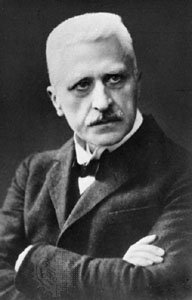
*”In his most famous book, Das Heilige, Otto turned from a critical philosophical account of the possibility of religious experience to a descriptive psychology of the content of that experience and its relationship to the “rational,” symbolic dimension of religion. To designate religious feelings at their most distinctive he coined the word numinous, which referred, he said, to the Holy or Sacred minus the moral dimension. But he soon encountered a methodological limitation. Conscious experience is only available to the person who has it; therefore, it is possible to formulate a descriptive account of religious feelings only on the basis of introspection, informed by apparent similarities in what others have said. In other words, in order to study the experience that is the ultimate source of religion, a scholar must have a sensus numinis, an ability to experience numinous feelings—just as the description of color in painting or pitch in music requires certain kinds of perceptual abilities. Those who have such abilities, Otto suggested, experience the numinous as a mysterium tremendum et fascinans. As a mysterium, it is completely other, beyond the realm of ordinary existence, apprehensible but not comprehensible, evoking in human beings the feeling of stupor and stunned silence. People find this mysterium both attractive (fascinans ) and repulsive (tremendum ). On the one hand, it arouses the sense of grace, love, and mercy. On the other, it arouses feelings of terror and awe and the conviction that human beings are in reality nothing—feelings to which Otto, countering tendencies to equate genuine religion with love, gave a great deal of attention.” encyclopedia.com
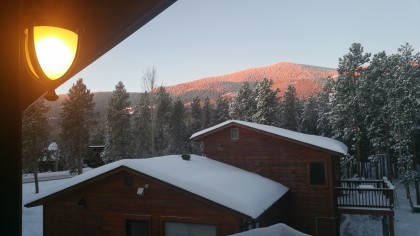

 Gonna look at material for the religious school class on the 16th. Alan will be back from Argentina. Our lesson theme is yirah, awe. Getting fifteen inches of snow over 36 hours creates yirah. We do not impact the weather, at least not directly. Yes, climate change is effecting the sorts of weather we get, but we don’t get to choose the diverse effects of our self-genocide. Fifteen inches of snow is like a volcanic eruption or a tsunami or a tornado, sudden, unpredictable except just before the fact, a natural act that changes the immediate environment dramatically. Though not as devastating as those violent manifestations, a great snow storm does show the power of the natural world, something to which we have to adapt rather than something we can manage.
 Yirah and kadosh, holy or sacred, go together. Rudolf Otto defines sacred as an experience of awe, yirah, and the mysterium tremendum et fascinans:
  Something experienced in ordinary life but also wholly other. I’ve been following a sailing race, the Golden Globe, in which several skippers competed against each other in solo jaunts around the world. Ask any sailor, solo or not, who’s navigated the roaring forties about yirah and mysterium. They’re manifesting every day, every hour in places most of us will never go; but, a few do. Wholly other, but also part of the same puzzling universe which coughed us up into life.
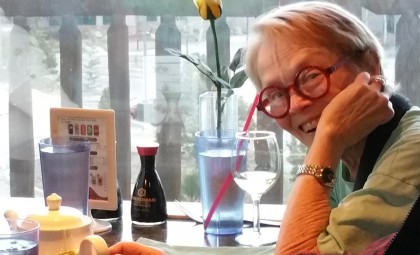 Kate’s wanting to get out and not just visits to medical facilities. Her stamina has improved some, she’s eating more. She’s still in the 80-82 zone, but I’m looking forward to her cracking 83. Then up from there. She’s laughing and smiling, things I didn’t see often over the last three months. Enjoying these moments. Both of us.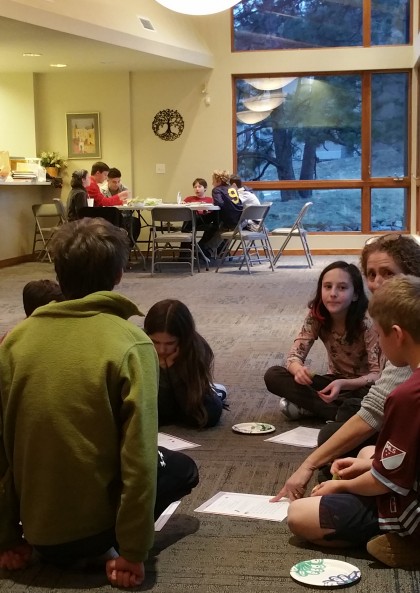


 What I’m seeking in Wonderland is a synthesis Tarnas contends is necessary for us now, a different sort of Great Work than Thomas Berry’s, yet related to it, I think. Berry, if you recall, said that the Great Work of our time is the creation of a sustainable human presence on earth. Not goin’ so well. Tarnas wants to take the ancient, ensouled universe that prevailed until the Enlightenment, mash it into the disenchanted universe occasioned by rationalism and the hegemony of science, and come up with a Hegelian synthesis that can move us out of the stuck place created by their tension.
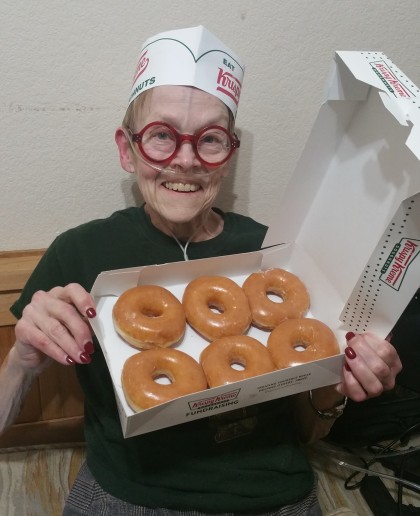
 Made a big circle yesterday. Drove into Denver on 6, a six lane version of 6th Street between hwy 470 and Santa Fe. Wanted to try LeMar’s Donuts since Kate needs weight and likes donuts. It’s right at the intersection 6th and Santa Fe. I like Bismarck’s and crullers, Kate prefers original glazed. The Bismarck at LaMars was about twice the size of the usual. It was quiet there, mid-morning, after the before work rush. This picture is the counter.
 Kate wanted more mushroom empanadas, corn, and spinach. Lisa Gidday, our internist, had recommended the spinach. “Your new favorite food.” I got an Argentina which has steak, onions, and red peppers.
 As I drove further on the Green Mile, I came across Goddess Isis books. I thought it was on Colorado. I’d always wanted to stop and this was my chance. I’d accomplished my errands and had some free time.
 Not long after my December 1st, 2016, knee surgery, I had an odd moment. It was Hanukkah. Gabe and Ruth were plowing through their presents, and I sat on the couch, my leg up and some combination of pain meds circulating, morphine and oxycontin, I think. Ruth lit the menorah. A sudden, overwhelming (undoubtedly drug accelerated) sense of dislocation came over me. Sadness, too. What was I doing in this house? No Christmas tree. No decorations. This exotic holiday had pushed all that away and left me on the outside.

 On the drive over to Tony’s Market to pick up Christmas dinner I got to thinking about ohr, the shards of divine light kabbalists believe actually make up the known universe. When I bow to the divine light in you and you bow to the divine light in me, we say that makes sense in that framework. So there can be the ohr, the light of the divine blasted apart at the moment of creation; but, I thought, there’s also the more immediate light, that of the sun.
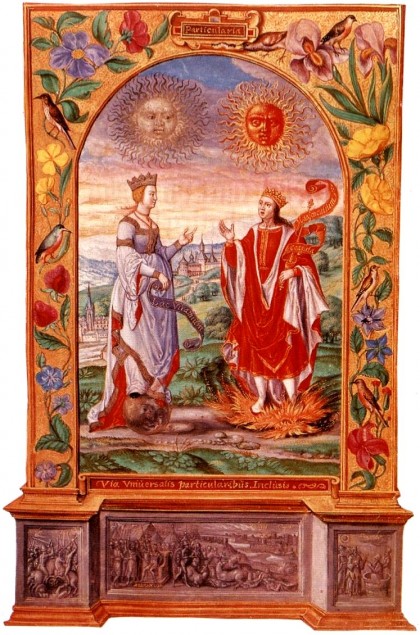 It is this dance, the days of the dancing star, that we are thrown into this world to execute. Sure, you could take this and conclude a scientistic flat-earth humanism, minus the divinity, but it seems to me you end up in the same place with a reductionistic refusal to see the simcha, the joy, of life as part of, not separate from. It is the bondedness we have with our star and our planet which is divinity, we are part of a dialectic between power and fertile elements, a fruit, in fact, of its creative tension.

 I’ve begun to assimilate into Jewish culture. Different from becoming a Jew, just like Jewish assimilation into American culture is different from no longer being a Jew, my identity is largely intact, but I find myself much more aware of living life through a Jewish lens. Their holidays are now mine. Their community, mine. Their marginal reality, also mine, though this last requires a full choice on my part, not just acquiescence. That is, I choose to stand with my new culture against all elements domestic and foreign and not to retire into privilege when things get hairy.