Category Archives: Aging

A Hole

Beltane                                                              Summer Moon

Sometimes these moments reach out, grab a part of you unexpectedly. Evoke a feeling long forgotten. In unusual places. Kate and I went to see How to Train Your Dragon 2, better than the first installment and worth seeing for any proud Scandinavian. It’s a touching story, dramatic and funny by turns with a quality of animation that shows how far we’ve come since Bugs Bunny and Woody Woodpecker. If you have a kid in your life, see it. If you have a kid left in your heart, see it.

Here’s what got me. Spoiler alert. Hiccup, the lead character, a boy just grown into young manhood (since his youth in the first picture) meets a mystery figure who loves and helps dragons, just like he does. The surprise is that she’s his mother, thought dead. There was a scene where this animated mother reached out and hugged her 20 year old boy for the first time since he was in the cradle.

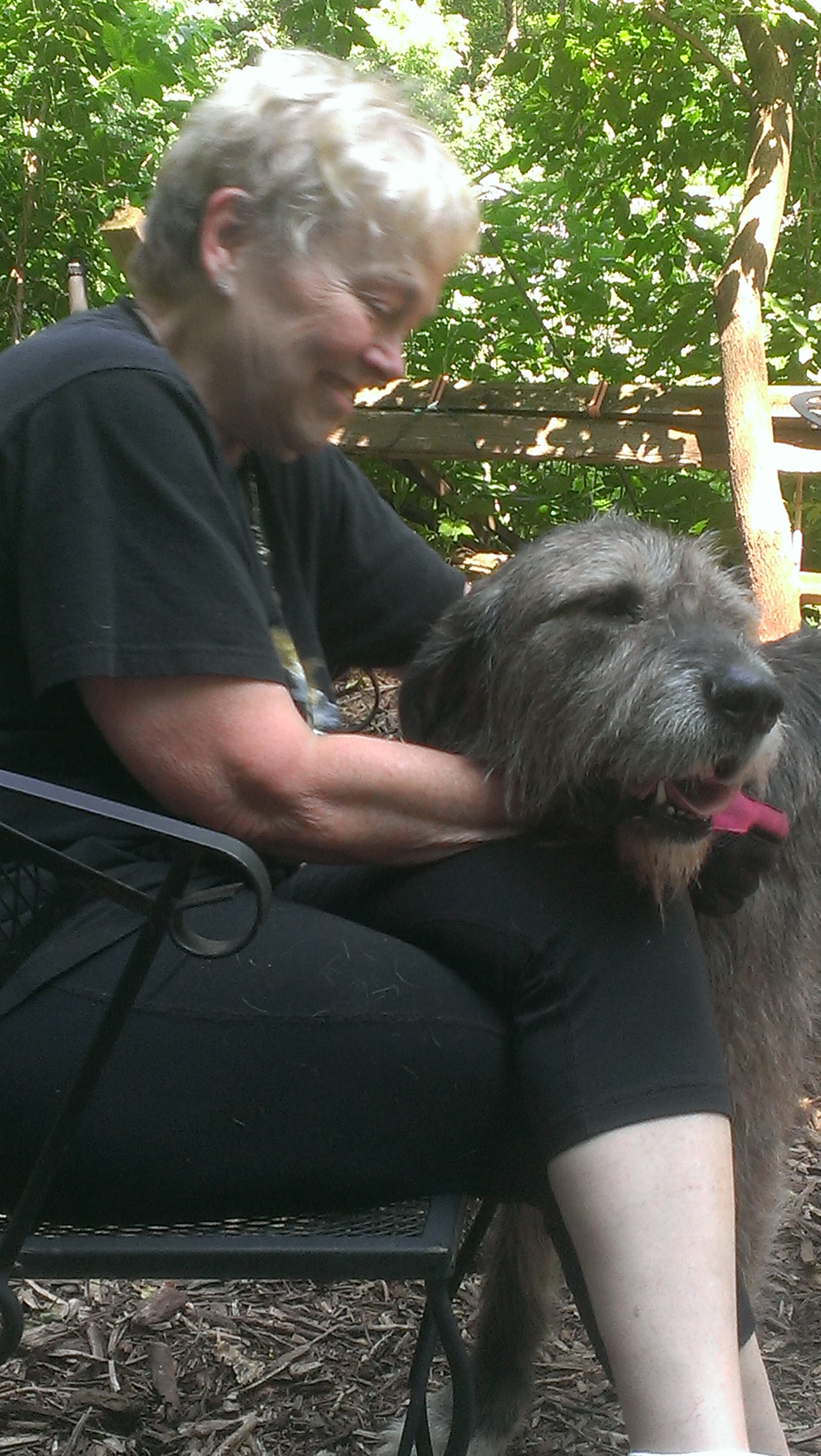
A sudden wave of longing swept over me. For a second it was my mother, met again, reaching her hand out, a hug, the smell of her hair. The feeling rose from somewhere long forgotten. To be hugged by my mother. I miss it. Still. At 67 and her having been dead for IMAG016150 years this October. It reminded me of the hole I’ve lived around, never filled since her death and of the simple joys not possible for all those years.
It’s not regret nor nostalgia nor something I even wish for, just a hole, the hole that death leaves. And yet in its own way it was affirming. I loved my mother and I know she loved me. I know, if we found ourselves together, even over this long span of years, that she would hug me and caress my cheek. Kiss me. Tell me she was proud of me. That was her way. And, thankfully, I’m sure she would be proud of me.
 

Young

Beltane                                                               Summer Moon

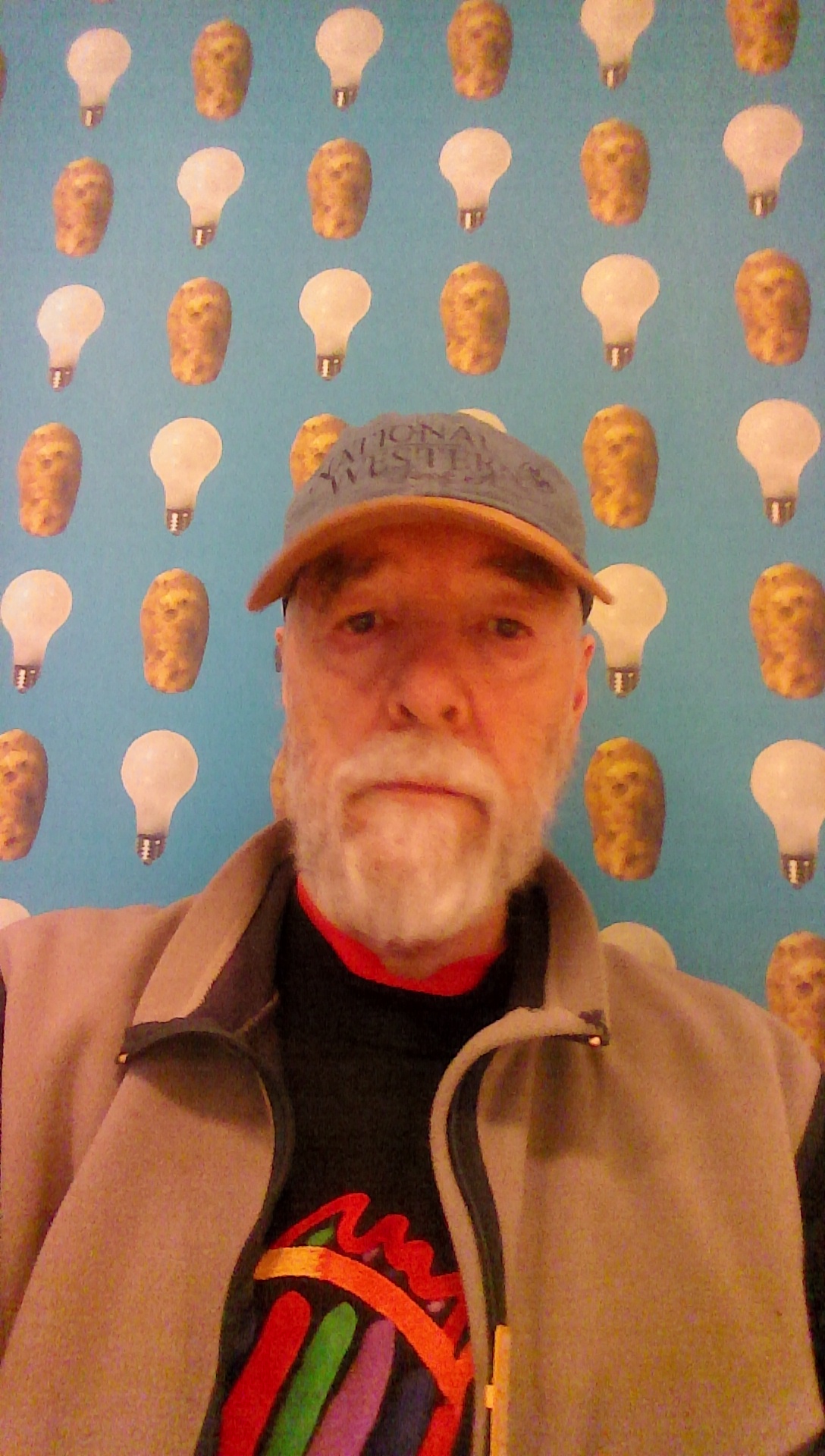
How do they get so young? Had my meeting with the organizer for the Franken campaign. She graduated this spring from American University. 20 years old if that. She wanted to know how I got involved in politics. So I told her my story, watching the Stevenson-Eisenhower returns in 1952. She was born in 1994 or 1993. The time difference would be the same for me for an event in 1906/1907. Hmmm.

We chatted for about 45 minutes. She was energetic, hopeful, trying to be realistic and tough, yet still eager. A hard combination to pull off. She’ll get there though, I imagine.

The interaction taught me something. Probably something I’ve learned several times, but I’m learning it again. It was fun and revitalizing to meet someone new, to talk about stuff I care about, to get out of the house in the evening.

One real downside of living up here all these years, with few places where folks just go to hangout (none, really) and with no folks to go hangout with anyhow, is the tendency to get in a rut. Stay home, watch tv in the evening. I love Kate and watching tv, winding down in the evening, is a pleasant and even important part of our time together. Our lives during the day have the garden or sewing or writing or Latin or the dogs, never boring, fulfilling.

But. What I’m reminded of is the need to engage others, new folks, on a regular basis. When we move to Colorado, I’ll see to it. Politics. Art. Gardening. It does highlight a criteria for our new home (a favorite parlor game for us these days. Oh, and it should have…) I came up with a couple of weeks ago. A community where we want to be.

Andover’s not bad, it’s just not much at all. And politically it’s very conservative. Political leanings are not everything, of course not, but they do speak to a wider range of compatibility and I’d like to have at least some of that where we live next.

He did that on purpose

Beltane                                                                      Summer Moon

Another word for your third phase consideration: purpose. People who have purpose do much better than those who don’t, especially in the third phase and in several senses.

“It’s a very robust predictor of health and wellness in old age,” said Patricia Boyle, a neuropsychologist at the Rush Alzheimer’s Disease Center in Chicago.  NYT, Living on Purpose.

Lower rates of Alzheimer’s and mild cognitive impairment (by significant amounts, JAMA article) as well as lower rates of mortality were noticed in people with high purpose scores. Too, the protective powers of purpose seem unrelated to age. (SAGE publication on Purpose and Mortality.)

Purpose covers a wide range of matters. I looked it up in my favorite, the OED. Here’s a germane definition or two: 1. That which one sets before oneself as a thing to be obtained or done; the object which one has in view. And 3. The object for which anything is done or made, or for which it exists; the result or effect intended or sought; end, aim

When this article crossed my horizon, Frank Broderick and his mitzvahs came to mind. 81 years old, bad hip pain from lower back, Frank braved the surgery at some risk so he could keep on helping people. “I’d rather wear out than rust out.”

Among certain folks helping people defines life’s purpose. And it certainly can, Frank being a strong example of the type. But helping others is far from the only purpose that can invigorate the third phase. A friend makes art. They are books, visual memoirs. I don’t know if he would define them as a purpose for his life, but they seem to be. Another friend has built a company well-known for excellence. The work no longer stimulates him (and hasn’t for a long time), but helping the company make a graceful transition to a time after his leadership, that does. That’s a clear purpose. Another has organized a group to focus on maintaining a healthy sea shore in Maine. Yet another freely shares his expertise with the computer, with building websites while another continues a life-long passion for drumming. If I understand this literature correctly, each of these have a real and solid guard against the onset of dementia and the likelihood of a longer life.

Made me wonder about myself. What is my purpose? Well, you’re reading part of it. Yes, the written trail I’m leaving behind is part of what gets me up in the morning. So does working with the land and with plants. Working for a sustainable human path on this planet. Being a good husband, father, grandparent, friend. A reliable partner for the animals in my life. There’s that Latin work I’m doing, too. Art and art history are a passion. Novels, too. So, I feel like I have a reasonable seawall against dementia and at least a shot at a longer life. And that’s on purpose.

The Grandchildren Project

Beltane                                                       Emergence Moon

A shift in public opinion concerning climate change seems to be accelerating. We may be near a tipping point where acceptance of climate change science corresponds to acceptance of evolution. Yes, there will always be outliers, just like the Texas and Kansas school boards exhibit every once in a while on evolution, but the mass of us will finally hear the very clear science behind many changes impacting us already.

Proof? Jon Huntsman, former governor of Utah and a possible GOP candidate for President in 2016, wrote this remarkable sentence in an op-ed piece for the NYT: “If Republicans can get to a place where science drives our thinking and actions, then we will be able to make progress.”  Paul Douglas, local and national meteorologist and a conservative, too, has long observed the conundrum behind conservatives who refuse to conserve.

It may be that the long game for climate politics is about to bear fruit. For those patiently (and not so patiently) working on climate change related issues the era of solution based debates rather than denial and obfuscation might be coming near. This will be an exciting but also frustrating time as those only recently convinced try to digest the difficult realities ahead of us.  Those of us who’ve wanted to see forward motion will be in danger of refusing to listen to solutions that don’t fit our already existing paradigms.

It will be important to recall that our solutions have largely been developed among those of us who already agree with each other. Gaining political consensus for policy will require including those who don’t share many of our assumptions. Here’s a clear one. Nuclear energy may well be an important component of a transition to a non-carbon based energy regime. We need critical mass for the generation of electricity while renewable sources begin to catch up and storage technologies improve. We simply may not have time to ignore capable non-emitting nuclear power plants.

I’m excited that this push for solutions may happen in my lifetime and that those of us with grandchildren might help create the change. Call it the grandchildren project.

How We Walk

Beltane                                                                 Emergence Moon

It has always been so, I imagine. That those closest to us teach us life’s important lessons. Over the last couple of years my longtime and good friends in the Woolly Mammoths have taught me many things. This sort of teaching is much closer to apprenticeship than classroom lecture. That is, the lessons are taught by example rather than declamation. When we learn by example, we integrate the lesson into our journey; we learn as it affects us, rather than focusing on getting it right.

Regina_20120926aTwo lessons stand out though there have been many from each Woolly. The first, accepting the death of a spouse has come from Woolly Bill Schmidt whose wife, Regina, died in September of 2012. The grace in his acceptance of her death, his willingness to give voice to his grief and his sense of loss while remaining upright and present to all around him teaches one elegant way to walk the ancientrail occasioned by our mortality. It is not in mimicking him that we will learn his lesson but, in heeding the deeper lesson, that is, to be present to grief in a way that is authentically our own.

The second is the homecoming of Frank Broderick. Frank has been in tremendous pain from spinal degeneration for the last couple of years. To deal with it a back operation, his second, was the only solution. But, Frank has a bad heart. Frank had to choose between a image002life of constant pain (He’s 81.) or an operation with some risk of death. As Frank does, he weighed his options seriously, getting a second opinion at the Mayo Clinic. Satisfied with the level of risk, he decided to go ahead.

He came home yesterday after a grueling 10 days of rehab and faced with several weeks of rehab still ahead. Again, the Frank lesson is not in how to deal with pain or a bad back, though he did both of those well, but how to bring personal courage and intelligent decision making to the often complex health matters we will all deal with as we age.

Both of these men have granted me access to their lives and to the way they live them. When the student was ready, his teachers appeared.

Journey Before Destination

Beltane                                                                        Emergence Moon

A book I’m reading has these phrases: life before death, journey before destination. An adequate life philosophy and not far from the one I try to represent here at ancientrails. Which, in fact, emphasizes the journey. As does the Malay saying which I got from my sister, “Welcome to the journey.”

Kate and I now have a destination that reaches out from the future and pulls us toward it, yet we must go on the journey first. That journey involves preparation, execution, leave-taking and much more before the destination. I like the emphasis on the journey. Slow travel makes so much sense to me: car, train, ship. Slow by twenty-first century standards.

When the journey is as important as the destination, then a trip becomes whole. It is not a disjointed transportation from one locale to another with no appreciation of the changes along the way. Of course, slow travel is just that, slow, and often times cannot accomplish what our life demands. But, more often than not we can go slower than we think.

I want getting ready to move to Colorado to be as pleasurable as we imagine our life there will be. Journey before destination.  And always, life before death.

Three Lifetimes: What to Do?

Spring                                                               Bee Hiving Moon

The process of reintegration begins now.  These intensive journal workshops mark an end to one period of life and the beginning of another.  That’s by design.  The period I was in when I got to Tucson began when Kate retired, when I left Tucson I had begun a new period, her retirement in the past, and what’s in the present and future is life in the third phase for both of us, together.

BTW:  A big aha on the idea of the third phase which came while listening to a cd by Ira Progoff (Intensive Journal creator) speaking about the process of the journal’s development.  He noted that in society’s not all that long ago, the average lifespan was thirty to forty years.  At some point in that life a death/rebirth ritual would occur and the initiate would emerge an adult member of the society with a particular role to fill.

In contemporary civilization two realities make that clear process difficult, not impossible, but difficult.  The first is the secular nature of society.  We have stripped away the culturally specific religious practices by uprooting ourselves from the context in which those practices had unquestioned authenticity.  So the ritual elements of traditional culture simply has no weight in the modern psyche.

The second reality is the one that directly bears on the third phase.  Progoff notes that with modern life spans an individual might live two or three of the lifetimes available to a member of a traditional society.  Each full lifetime requires a death/rebirth ritual to adjust/reconfigure the image the self carries as its primary identity.  We’ve created two fundamental images for the first two phases:  student and worker/parent.  We have no fundamental image for the third phase, or, in Progoff’s analysis, our third lifetime.

One of the key tasks in the intensive journal workshop itself is to come up with an image for the next phase of your life.  I’m not sure I have it yet, though the Greenman has come to me.

The Celtic triskele (see above) can serve as symbol for this tri-fold life that each of us now is heir to.  The bottom two spirals are the beginning pair:  student and worker/parent. The third life, the third phase, sits atop the first two, growing out of them, but beyond them.


It’s About Time

Imbolc                                                               Hare Moon

A long time ago, during college, while majoring in philosophy and anthropology, I read an article about the maturation points in different academic disciplines.  Mathematicians on the very young end of the scale and philosophers at the other, older end.  At that time my interest was theory of the social sciences.  That is, theoretical anthropology, psychology, sociology.  What were the major philosophical questions that each discipline raised by the assumptions and research methodologies it employed.

This turned out to be an unfortunate focus because I got turned down at three graduate schools for fellowships because no money was on the table for people wanting to focus on theory. At the time I was not interested in changing my orientation, so I passed on graduate school.  A decision I have regretted off and on ever since.

Ending up in seminary actually allowed me to continue my interest in theory since theology is just that, a philosophical and theoretical approach to the questions raised by religion.  I loved it.  Of course, there was that vocation on the other end, ministry, but at first I ignored that and enjoyed the work. (and the politics.)

That process funneled me (somewhat by inertia) into getting ordained, working for the church.  Even then, though, I still wondered about the systems of the church, how congregations worked, how they grew and declined, how the various denominations grew and declined.  My Doctor of Ministry thesis was on the decline of the Presbyterian Church from a post-modern perspective.

Anyhow, after I pulled back from that 20 year immersion in the Christian world, I revisited that earlier question about maturation.  When I looked at that material during college, I’d concluded that I would mature late, probably very late since I was interested in theory, a sort of meta-perspective on politics, social science and religion.

And so, now, in my 67th year, I can report that I feel the maturation process beginning to congeal.  It’s not yet finished, probably never will be, but I’m beginning to see how my odd path through the world has led me to today and how I might use that path for the good of others.  In large part, I’ll do that by continuing to write, continuing to learn Latin, continuing to educate myself, continuing to grow things with Kate and continuing some level of political activity.

(Jacob Wrestling the Angel, Maurice Denis)

I do think you will see more from me over the next few years in the form of ideas and actions.  It’s exciting to me to see that possibility ahead.

24

Imbolc                                                                      Hare Moon

Nicollet Island Inn tonight for our 24th anniversary dinner.

Marriage is an interesting institution and not an obvious one.  There is certainly no need IMAG0331for marriage as a means of assuring reproduction.  There is ample evidence that monogamy grinds against some people all of the time and most people some of the time. The notion of finding someone in your twenties with whom you will be compatible in your sixties is almost laughably difficult.  Of course, that problem can be solved.  First, a divorce.  Second, capitulation.  Third, growing along with each other.

I’ve done the first, would find the second constitutionally impossible and now, thankfully, have ample evidence that the third is an option, too.  Even marrying in our forties, as Kate and I did, doesn’t necessarily augur well for life together in old age.  Why not?  Well, forty somethings getting married are still in their working years, burdened and shaped by the demands of occupation and vocation.

After the work life recedes, there’s no guarantee that the two will still want to see each other across the breakfast and lunch and dinner table.

Kate and I have made this transition over the last couple of years, integrating our lives in a IMAG0531more closely choreographed dance.  Now, when I work here in my study, her sewing machine whirs above me, her feet move across the floor from table to ironing board as she works on her current project.  When we look at travel opportunities, we can be much more flexible in our decisions.  As the growing season unfolds, so will another year of mutual garden work, growing food, caring for the bees.

We didn’t know we’d be good at this when we got married.  It wasn’t on our minds.  But that third option, the growing together one?  It’s marked every step along the pilgrimage of our life together, a pilgrimage far from finished.

Every Two Weeks

Imbolc                                                       Valentine Moon

Read the other day that the average connection between close friends is every two weeks. The Woollies have been getting together every two weeks for over twenty five years. Builds a lot of trust. A lot of shared memories. A lot of support given and received.

Woolly Frank Broderick turns 81 next week.  Jim Johnson 72 today.  I was 67 on Valentine’s Day.  Even our group puer, Stefan, will turn 60 on April 1st, finally bringing us all beyond that mark.  A lot of white hair, a few bald spots, the occasional creak in the bend and much laughter.  And, too, grandchildren come up more and more often.

To have ten close friends is a rare and special gift, one I chanced into and I’m grateful.

Thanks, guys.