Category Archives: Family

Yom Kippur

Fall                                                                                 Hunter Moon

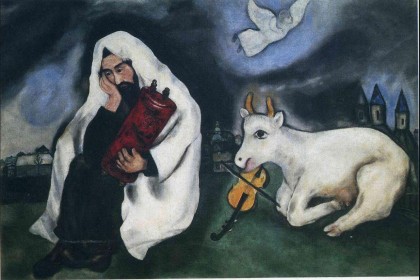
solitude-by-marc-chagall. 1933

On erev Rosh Hashanah I went to Beth Evergreen with Kate. The beginning of the Jewish New Year, 5777. Last night I went to the kol nidre service which starts the holiday of Yom Kippur, the end of the 10 days of awe. This morning Kate and I went to the main service for Yom Kippur. It began at 9:30 am and finished at 1:00 pm. Surprisingly, it went so smoothly that I barely noticed the time passing.

yomkippurBeth Evergreen’s sanctuary has multiple clear glass windows that offer views of Bergen Mountain and Elk Meadows. The view next to the Torah Ark had a mountain side filled with lodgepole and Ponderosa pine. Almost to the peak of the mountain though there was a small stand of aspen, golden still, in a perfect heart shape. All through the service I had a symbol, an accident of nature, created by my view, my perspective that synched up remarkably well with the overall theme of Yom Kippur, atonement. Also, up and to my right, at the roof of the sanctuary, a square window framed the tip of a Ponderosa pine. It looked like a painting by a member of the Kano school of Japanese art.

On this day Jews (and those of like mind) look back over the last year and consider the ways they have fallen short. A prompt to discover how you might have done so are the al chets. For example:

For the mistakes we committed before You through having a hard heart.

For the mistakes we committed before You through things we blurted out with our lips.

For the mistakes we committed before You through denial and false promises.  

There are 44 such prompts at this website. A woman who spoke during the service made a very helpful distinction, “Christians,” she said, “are sinners. We sin.” And, Yom Kippur is a day when Jews can acknowledge their sin, atone for it and enter the new year a new creation. This makes abundant sense to me. We are limited creatures, bound to err, even as we strive not to. This does not make us essentially bad (original sin); it makes us human. It is no wonder that Yom Kippur is the most sacred day of the year for Jews.

There was much music. A choir. A jazz band. Last night a cello. Guitars, Rabbi Jamie Arnold and a former member of the congregation. A grand piano. The cantor Tara Saltzman. A lot of congregational singing. A congregational songbook of 30 pages contained songs for the congregation to sing, several of them written by Rabbi Jamie.

This was interspersed with events like members of the congregation lighting candles, taking the Torah in its full dress and carrying it throughout the congregation, short speeches and Torah readings. The Reconstructionist prayer book provided the traditional liturgy, but one filtered through the reconstructionist theology.
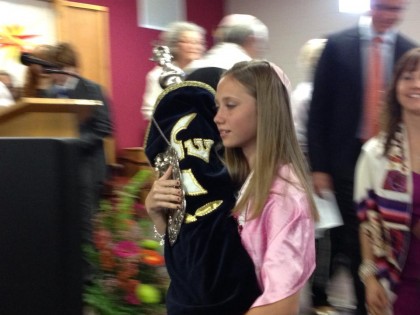
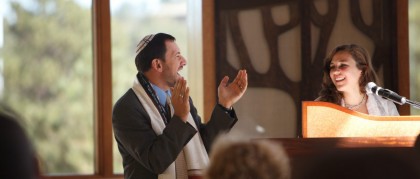
Grace Carrying the Torah. Congregation Ohr Tzafon
Grace Carrying the Torah.
Congregation Ohr Tzafon

When the Torah in its red cover and its silver ketel (crowns) on its atzei chayim (the wooden shafts that hold the scroll itself) and a torah shield hanging from the atzei chayim went among the congregation on the shoulders of a congregant, people reached out with their with High Holy Day prayer books, touched it and kissed the book. Others with prayer shawls lifted a corner of the shawl and touched the Torah, kissing the shawl where it had touched the Torah.

At other moments those who had a death in the last week stood and gave the names of the one who died. Remembrance of those who have died and recognition of those in mourning are parts of each service, not just Yom Kippur. This recognizes the tribal nature of the congregants, their intimate relationships with each other through blood. The Yahrzeit, the year anniversary of a death, is also important and recognized during each service.

This was my first experience of the ten days of awe, the period from Rosh Hashanah to Yom Kippur. It reinforced my view of Judaism as a practical, humanistic faith, one that knows the human animal for what we are, not what we pretend to be. Yes, for many it still has a God at the center, but for many it does not. Oddly, it works just as well either way. At least from where I sit.


A Kol Nidre Night

Fall                                                                  Hunter Moon

kohl-nidreWhen Kate and I drove home from the kol nidre service at Beth Evergreen last night, the Hunter Moon lit up a sky covering labyrinth of white fluffy clouds. Occasionally, a few clouds would become very bright, then a hole would open, briefly, and the three quarter moon would not only backlight the cloud cover, but provide a luminous presence, too. It was a magical sky, a sort that seems particular to the onrushing fall. Aspens still blaze bright gold in some places, in others the leaves have turned brown and blown away leaving stands of naked branches as harbingers of the winter months.
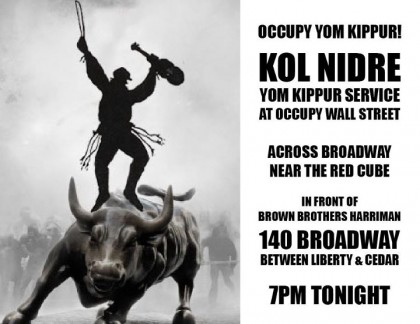
The kol nidre service starts Yom Kippur, the day of atonement, and has many elements, most elements, new to me. Even so, I could tell that this service with roots in the middle ages as well as the ancient past, spoke of a people, a tribe, with a nuanced understanding of what it means to be human. We are neither angels nor devils, rather we do good one minute and bad the next. Knowing this, placing it at the heart of the most sacred day of the year, makes Judaism a powerful poem. It teases out the curious mix of pride and shame that inhabits us all, says, yes, ok, but now let’s focus on next year. Let’s seek pardon and forgiveness for where we failed and reinforcement for what was good.

occupy-kol-nidreI feel odd at Beth Evergreen. My physiognomy is out of place. The language of many of the prayers and songs is foreign to me. I don’t feel, and don’t expect to feel, part of the tribe. Yet, Kate feels, is, part of the tribe. Also, much of the content resonates with my own faith reimagining project.
I’m learning, at 69, that analytical thought is not the best tool for religious insight. Rather, the heart and its contradictions, its powerful pushes and pulls, can create a warm and joyous place where even the most egregious of errors can be contained without problem.


Taking a Knee

Fall                                                                      Hunter Moon

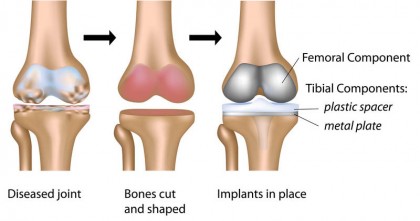
total-knee-replacement-surgery-methodsSaw my doc yesterday about my knee. She gave me a referral to Dr. William Peace, an orthopedic surgeon. I called him and got an appointment for this Friday. Kate and I watched a video about knee replacement. It was helpful. Somewhat. The biggest new information I got was that the new knee lasts about 15 years. I figure I’m in a lighter use period of my life so I could get a full 15.

Why do it? Well, the arthritis has negatively impacted my workouts, making them painful. I find hiking with the grandkids something I can do, but the price I pay afterwards is high. Also, I’ve started to make decisions based on my knee. As I mentioned here last week, I drove to Minnesota because I didn’t want to have to deal with all the standing and torquing of my knee during air travel. Also, without the cbds and thc at night I’m sure I wouldn’t be sleeping well. The pain is worse at night. So, it makes sense to me to go ahead.

After taking Kate’s glasses to a shop for nose pads, we ate at a chain called Black Eyed Peas, a southern comfort food place. They didn’t have collard greens, which should be illegal for a southern restaurant. The food was mediocre. Not terrible. Just unimpressive. So now we know.

When we got home, we took a long nap and both declared ourselves with little ambition for the rest of the day. And proved it.

The sliding glass door is up in the new bathroom. The only thing left is staining the trim. The bathroom is fully functional now and looking great. Kate made great choices in slate, pebbles, fixtures, paint color.

The divorce stumbles along with plenty of acrimony and orneriness. November 26th is final orders. That should smooth things out somewhat.

A Busy Few Days

Fall  (High Holy Days)                                                                            Hunter Moon

rosh-hashanahYesterday included three separate trips into Evergreen. First, I took Kate in for the morning Rosh Hashanah service at Beth Evergreen. Then, I came back to answer questions, be available for the electrician and the painter. At noon I went back to pick up Kate and eat the after service lunch with her. All these trips included waits in two spots on Brook Forest Road for culvert repair. Stop. Slow. Stop. Slow.
It was a glorious Colorado day with brilliant blue punctuated by puffy white, a soft wind, then a brisk wind blowing and temperatures in the mid to high sixties. Low humidity.

The service, as services often do, ran 20 minutes over so I sat on a concrete patio outside of Beth Evergreen’s event hall. The brisk wind stripped pine needles from the huge ponderosa’s on the hillside sending flotillas of the connected two needle bunches at me. Round top tables set outside on the patio had rocks on their table cloths. A table near where I sat blew over; the tablecloth, I think, acting as a sail.

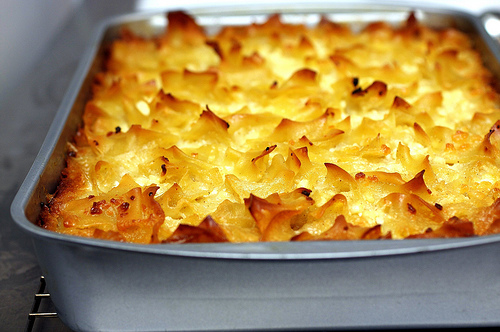
my-familys-noodle-kugel1There were kugels in aluminum pans, bagels with lox and cream cheese or chopped egg, fresh cut vegetables, fruit. Paper plates and plastic forks. Lots of eating and greeting. Some very short skirts. Some men carried small cloth pouches containing prayer shawls and yarmulkes. Kids ran around,
teenagers laughed knowingly to each other. The wind continued to blow.

Back home we napped while Caesar finished painting. The big thing unfinished is installation of the shower door. That will probably happen today. The result is even more pleasing than I imagined it would be.

Where the Books Go
Where the Books Go

The third trip into Evergreen was for the Evergreen Writer’s Group at Where the Books Go. Writing groups are fragile things, easy to get wrong. They focus on critiquing work, the very work you’ve been laboring over in private for hours, days, sometimes weeks and years. The internal stakes are high, no matter the outward stance individuals take.

If one of Kate’s sewing groups was similar, the women would bring in their current project and ask others what they thought. How are the seams? What about color choice? The fabric. Their intention for the work and whether they seemed to be achieving it. Most important, the event would not be collaborative as these groups are, but critical.

There might be something to learn here. Perhaps the writing group could be more collaborative, be more a place where we could write together, work on current projects or doing writing exercises together.

Anyhow this trip to Evergreen was without the stop. slow. stop. slow bit because the Jeffco work crews had shut down the skip-loaders, dump trucks and road graders and gone home.

Kate went with me, dropping me off at the meeting and going on to the Lariat Lodge where we ate a couple of weeks ago. She managed to get most of the reading done for our Mussar group, four chapters worth! She also bought supper for me.

With the grandkids coming last Friday night and leaving at 2 pm on Sunday, then erev Rosh Hashanah that night, and the three trips into Evergreen yesterday, it’s been a very busy few days for us. And, we’re not done yet.

This morning I’m seeing Lisa Gidday, our internist, to discuss knee replacement. We’ll also get our flu shots. The week calms down some after this.


Shana Tova

Fall                                                                                 Hunter Moon

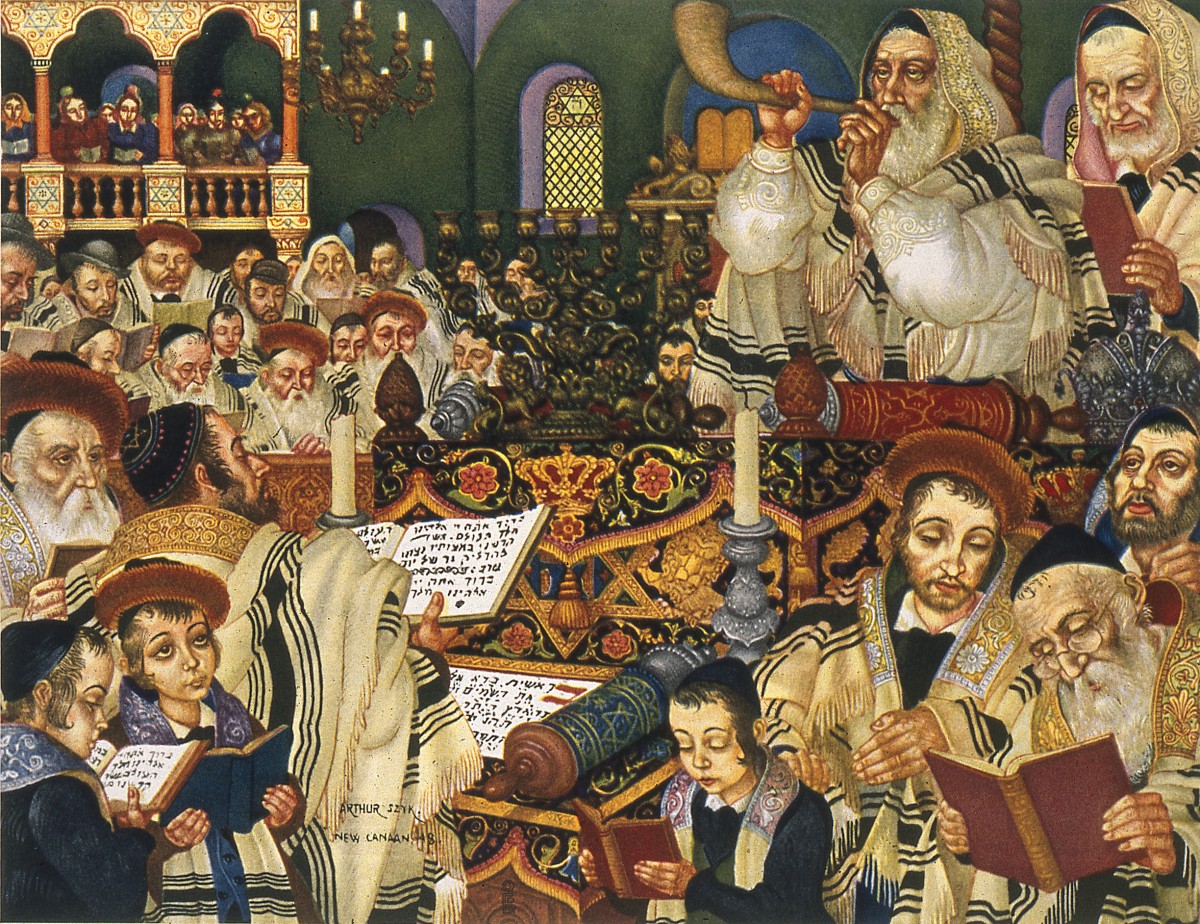
arthur_szyk_1894-1951-_the_holiday_series_rosh_hashanah_1948_new_canaan_ct

The winds howled from Mt. Evans early this morning, signals of a sudden change in the weather. We’re cooling down. The winds blow finished gold leaves into the air, creating bright spots of light fluttering in the shadows of the lodgepole pines. This is the time of that not-so-gentle stripping of the deciduous tree’s leaves. Up here that means the aspens will soon be leafless and slowing down like the calorie gorging bears. Winter, as they say on HBO, is coming.

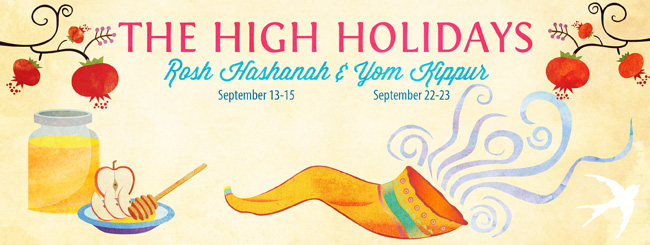
The sliver moon that rose last night marked the beginning of ten days of High Holy Days for Jews across the world. Today is Rosh Hashanah, the Jewish New Year. Shana tova! Happy new year in Hebrew.

Kate, Jon and I went to the service at Beth Evergreen last night. It was a joyful event with lots of singing punctuated by readings from the prayerbook. Occasionally certain men would bow. Others had prayer shawls, many wore yarmulkes, many (including me) did not. It was not fancy dress, though some were dressed up, including me.

rosh-hashanah

The service commemorates the creation of the world and a Jewish belief that God must continuously recreate the world. This opens up the possibility of a truly new world being formed at the new year just as it opens up the possibility of a truly new you. So, this is a moment of celebrating the coming of the new year, 5777, and the opportunity to shed last year’s skin and to redecorate.

In this case I reinterpret God as the creative principle in the world, along the lines of process metaphysics, a notion made popular by Alfred North Whitehead. If we lean into that creative principle, we can reshape ourselves and our environment. The actual execution of such changes are made much easier by life in community, especially a beloved community. That’s the potential power of a congregation.

Having all this come while the sky is bright blue, while the aspens are showing what they’ve done with their one wild and precious life, while the crispness of autumn begins to change the nights, makes the Great Wheel and the cycle of the Jewish calendar sync up.


An Ancientrail, A Walk Along It

Fall                                                                                     New (Hunter) Moon

jamie

imagesMy fellow traveler shoes are beginning to get a lot of mileage on them at Congregation Beth Evergreen. The Rabbi there, Jamie Arnold, is a very sweet guy, empathetic, bright, learned, good singing voice. At the Mussar midday session yesterday we looked again at the first chapter of Mesillat Yesharim. There are many important ideas in it, two stand out for me right now.
The first is that delight and pleasure are primary to our lives. Why? Because the contentment and serenity they provide give us a life in which we can focus on what matters. I love the notion of joy as a, or even the, core attribute of our day to day existence.

mussar-path-of-w-logo1The second idea is that we can be tempted, pulled away from delight and joy, by both prosperity and adversity. Recalling this simple, but far from obvious truth about the human condition helps us see that our material advantages are not the core focus of our lives. Our material success is incidental to the spiritual journey-unless it distracts us from it.
When the hour long learning session is over, we go into vaad, which is personal sharing. Yesterday’s sharing was so profound. The level of trust and intimacy in this group, a testament to Jamie’s leadership, is deep. When a person finishes, we say shimat, “I have heard you.” (I think that’s right.)

Springtime of the Soul (& the Equinox)

Fall                                                                                       Harvest Moon

“Just as we can experience the Death and Resurrection of the God in the Easter season in spring, so can we experience in the autumn the death and resurrection of the human soul, i.e. we experience resurrection during our life on earth…”  Festivals and Their Meaning, Rudolf Steiner

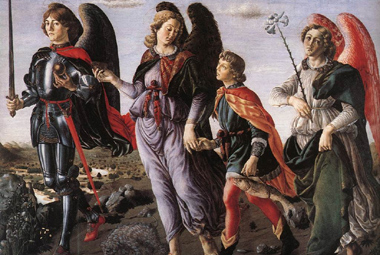
The Archangel Michael (left), Gabriel (right) and Raphael accompany Tobias. Francesco Botticini, 1470; Galleria degli Uffizi, Florence. Source: Joachim Schäfer
The Archangel Michael (left), Gabriel (right) and Raphael accompany Tobias.
Francesco Botticini, 1470; Galleria degli Uffizi, Florence.

Today is Michaelmas, the feastday of Michael the Archangel. British universities start their terms today, the Michaelmas term. Following Steiner, I have, for some years, seen Michaelmas as the beginning of a long period for soul cultivation. It is not, I think, an accident that the Jewish New Year, Rosh Hashanah, falls in the same period.

These are, too, harvest festivals, falling near the autumnal equinox. It makes sense to me to begin the New Year as the growing season ends.  Samain, Summer’s End, in the Celtic calendar, marks the finish of the harvest festivals and the beginning of the fallow time. It is also the Celtic New Year.

Last night at Congregation Beth Evergreen I waited for Kate while she took Hebrew. Where I chose to sit filled up with religious school kids, bouncing with tweeny energy. Rabbi Jamie Arnold came down to talk to them about the shofar and the upcoming New Year. He talked about Rosh Hashanah and described it as a moment when the creation can begin anew. It is possible, he said, for each of us to start life anew on Rosh Hashanah. I like this idea and the question it poses: Who do you want to be in the New Year?

Marc Chagall, Shofar

I’m going to consider this question over the next few days before Kate, Jon and I attend the Rosh Hashanah service on October 2nd at Beth Evergreen.

Another way to pose this question is, how do I want to nourish my soul in this, its springtime? What practices can I use? Kate and I have begun to seriously wrestle with the Jewish spiritual practice of Mussar, as I’ve mentioned here before. It will be one lens through which I approach the possibility of a new being, a new me.

Yet. That new me will have a strong relation to the man who harvested years of friendships over the last week in Minnesota. He will have a strong relation to the man who hears, Grandpop!, from Ruth and Gabe. He will have a strong relation to the man who loves Lynne Olson, and Kate, too. He will have a strong relation to the man who is several dogs’ companion. He will have a strong relationship to the man who writes novels. He may be a new man, yet still the old one, too.

Grandkid Weekend

Lugnasa                                                                            Harvest Moon

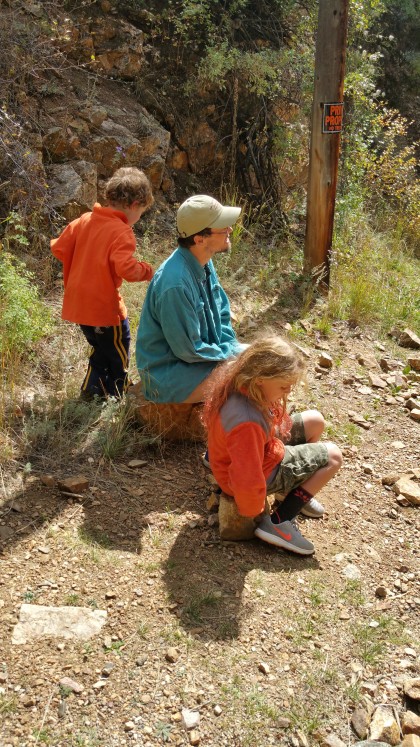
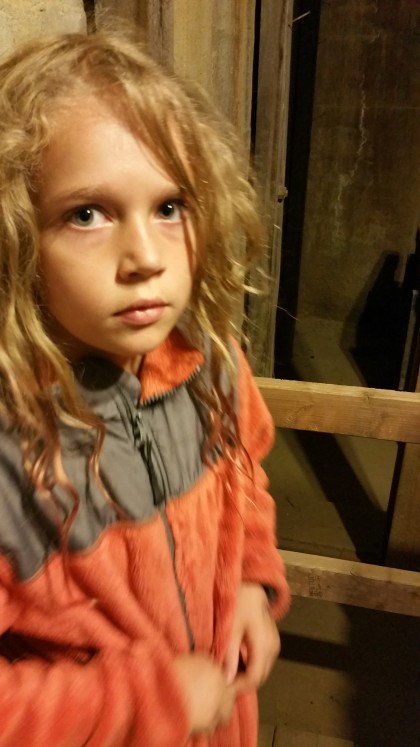
Jon and the grandkids went camping at Upper Maxwell Falls, less than 2 miles from here in the Arapaho National Forest. They watched a fawn come up underneath a doe and whack her underside a couple of times, then drink. Having this kind of opportunity so close to our home makes grandkid life richer. Ours, too. Ruth got cold; Gabe got hot. They ate clam chowder with sourdough bread and drank hot chocolate. Breakfast was back here.

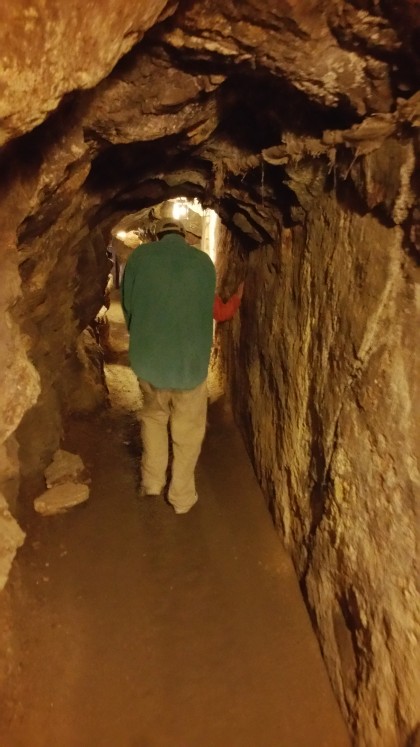
Jon leaving the Double Eagle

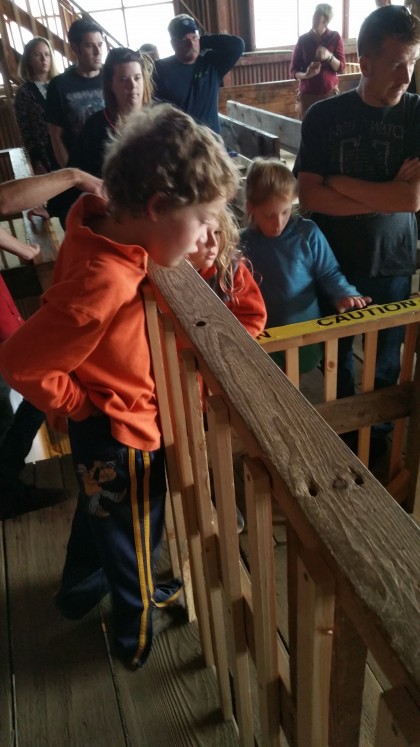
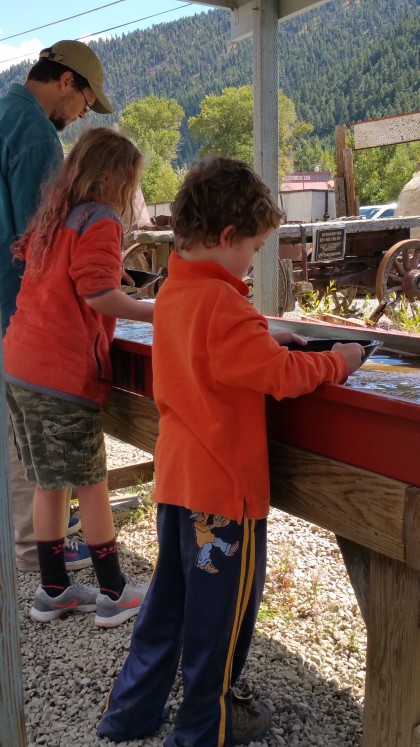
The trip to the Argo Gold Mine was a promise to Ruth, made after I took Gabe there last year. It was much better this time since new owners had a guide that went with us on the whole tour, including the Double Eagle Mine. The Double Eagle was dug by hand, went back maybe two hundred feet, following a vein of quartz (gold shows up near the quartz). It was called the Double Eagle because the entire mine netted its two miners only $20, a double eagle coin. A helluva lot of work for 20 bucks, even in the late 19th century.

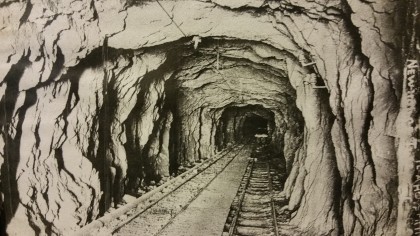
The tour is really of the Argo mill, the processing plant that received, through the Argo Tunnel, ore from 800 mines. The tunnel, 4.2 miles long, ran from upslope Central City to a spot just above the processing plant.

An assayer’s office determined the percentage of the big five metals in each ore cart: gold, silver, copper, lead, zinc.  The mill purchased the ore cart based on the value of the metals. Then the ore cart moved over to the receiving pits. The cart tipped over on its side, spilling the ore into these deep bins.

20160917_121556
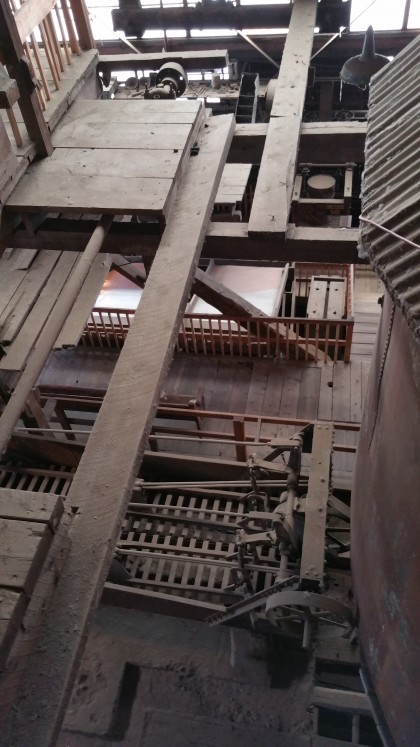
Interior of the mill

From there the ore went to stamping mills for crushing of larger chunks of ore, through chemical slurries and ball mills and finally onto sorting tables. The process used vaporized mercury at one point and a cyanide leaching tank for the gold. Added to the physical dangers in the wooden mill, criss-crossed by belts to drive various machines and filled with the noise of the stamping mills that could be hear fourteen miles away, the poisons used made the mill a dangerous place to work.

This all came to an end when 5 miners, trying to retrieve gold from a vein when the mines were shut down, set off an explosion that drained older mines of water built up in their drifts. This sent a pulse of water jetting through the 12 foot wide Argo Tunnel, killing four of the miners, shooting a one ton ore cart a mile in the air and making the tunnel unfit for use.

The Argo mill shut down the next day. No way to get ore out of the mines and to the mill.

Lectio Divina

Lugnasa                                                                       Harvest Moon

lectiodivinaInteresting intersection of past and present yesterday. In my Christian days, I explored many different forms of spiritual practice, including a Benedictine form called lectio divina. Turns out a Rabbi is teaching a version of lectio to other rabbis for use, in particular, with Torah study. Bonnie, a rabbi in training who attends Beth Evergreen, modified it to use in our Mussar study.

She read short passages three times, emphasizing different words each time and we all listened silently. She then gave us a brief time and introduced two questions about the passage. The idea was to react to the feelings generated, not the intellectual content. This is congruent with what I know of lectio in which language, often as little as one word, functions as a mantra rather than a message.

imagesI found myself slipping into a comfortable place, going inside, considering my inner journey. It felt good. I hope we use the process more.

Kate has had her second Hebrew lesson. We plan to attend at least some of the high holy day services, beginning with Erev Rosh Hashanah, the first service of the Jewish new year.