Made chicken noodle soup yesterday morning. Worked out while the chicken boiled. When that was done, Jon, Ruth, Gabe and I took off for the Stapleton Art Fair. Stapleton was the Denver international airport before DIA. Its vast footprint is now new housing, a very successful example of new urbanism with what Jon thinks is about 14,000! new units. There are also many parks and small retail hubs. The art fair was in the Northfield section of Stapleton, spread out around the edges of its Central Park.
Ruth, 11
The fair had vendors with high production values, but usually not high aesthetic values. Not unusual for these things, but still disappointing. A good example was a woman who had obvious sculptural skill, but wasted it on kitschy 4 feet high hugging abstract forms. She could clearly do something much more interesting.
It was hot in the way of the arid west. Not oppressive, as in a Minnesota summer, but high UV, so standing or walking in the sun soon felt risky to this fair-skinned Celt. Ruth and I went to an Indian food vendor and got his last bit of food, vegetarian korma, on the house. I ate it with a fork, she used the knife. Skillfully.
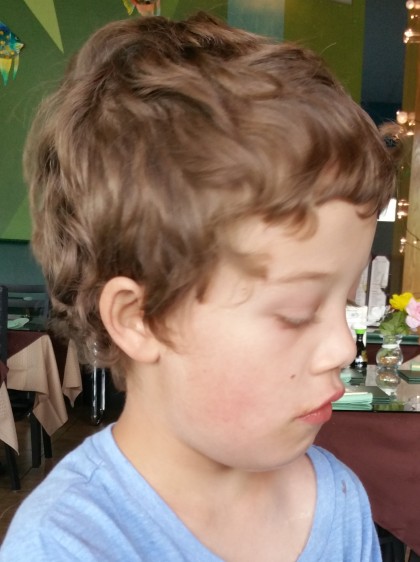
Gabe, 9
We found some shade and watched kids wander through what was in effect in a big puddle, stone pavers slightly inclined away from a simple apparatus consisting of two seven foot high metal poles and a highly polished metal pipe running between them at the top. Holes spaced a couple of inches apart let a steady jets of water stream out. Lots of screaming as kids ran under the water curtain, then often lay on their stomachs on the wet stones. Meanwhile various musical acts played indie rock, then country western.
It was an ordinary outing, the kind of thing families do, but these ordinary things are what knit families together. Afterward, I made grilled cheese sandwiches to go with the soup and we ended the day with supper together.
Lunch with Bonnie at the Everbean, a coffee shop overlooking Lake Evergreen. Bonnie is in a mentored adult education style path to becoming a rabbi in the Renewal Movement. I wanted to discuss my material for today’s mussar session. She was the mussar point person as Beth Evergreen managed a two-year grant awarded to them. The program focused on how to integrate mussar into synagogue institutional life. 22 congregations received a grant and coordinated their work with each other. (If you don’t recall what mussar is, here’s a reminder website.)
Bonnie encouraged me that my approach, focusing on the application of the ideas of hasidut (a person of loving deeds) and chesed (loving-kindness) toward grandmother earth was in bounds for a mussar dialogue. We’ll see how that works out later today. I’m excited.
In the evening Kate and I went to a havurah, a fellowship gathered for a specific purpose. This havurah is a once a month mussar session that features food and wine before exploration of a middot of the month. The Thursday afternoon mussar group studies a text and meets weekly.
Bonnie led a session on tikvah, hope. She took us into the idea by using the Israeli national anthem, Hatikvah.
I found the melody haunting and the poem, written in 1877 or 1878, used for the lyrics, a profound expression of the yearning for a place to call home. Bonnie led us in a close reading of the poem’s stanzas used in the anthem, only two.
The lines that struck me most were these: “Our hope is not yet lost,
The hope of two thousand years…” The two thousand years here references the destruction of the second temple in 70 a.d. It still amazes me to be in the midst of this group of Jews, members of the tribe, whose time horizon extends far back. This two-thousand year old hope marks a rebellion by the Jews against the Roman empire, a failed rebellion since it ended in the destruction of the temple built to replace the first constructed by King Solomon.
Rabbi Edgar F. Magnin, 1929-1930: “The Jews march captive out of Jerusalem bearing a golden Menorah or candlestick of the Temple.”
What amazes me is the historical reach while genetic and genealogical descendants of that same history sit around the table as we discuss these things. My viewpoint toward religious matters is radical and skeptical, but I also have a conservative side that relishes history and personal connections to history. Judaism, like the Chinese civilization of the Han and Japanese civilization, all cultivated over several thousand years, appeals to me in part for this reason. These older, truly ancient trails offer a correction to the almost ahistorical sensibilities of American culture.
Working on a presentation for our mussar class at Beth Evergreen. Want to include Berry’s idea of the great work for our generation: creating a sustainable human presence on earth.
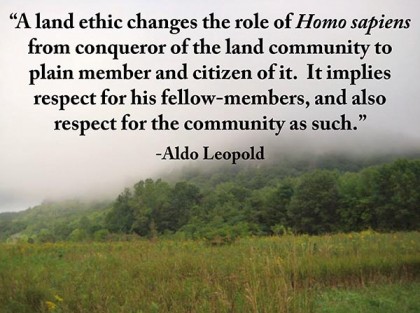
Also want to include Aldo Leopold’s land ethic:
“All ethics so far evolved rest upon a single premise: that the individual is a member of a community of interdependent parts.The land ethic simply enlarges the boundaries of the community to include soils, waters, plants and animals, or collectively the land.” The Land Ethic, A Sand County Almanac.
The date of the presentation happens to be Emerson’s birthday. So, from Nature: “The foregoing generations beheld God and nature face to face; we, through their eyes. Why should not we also enjoy an original relation to the universe? Why should not we have a poetry and philosophy of insight and not of tradition, and a religion by revelation to us, and not the history of theirs? Embosomed for a season in nature, whose floods of life stream around and through us, and invite us by the powers they supply, to action proportioned to nature, why should we grope among the dry bones of the past, or put the living generation into masquerade out of its faded wardrobe? The sun shines to-day also. There is more wool and flax in the fields. There are new lands, new men, new thoughts. Let us demand our own works and laws and worship.” introduction to his essay, Nature.
Linking up with the parsha* (Torah portion read in Shabbat services) I found Leviticus 25 filled with interesting ideas about the land. Here are a couple that fit well with these ideas.
Lev. 25:18 “…you shall live on the land securely.”
Lev. 25:23 “…the land shall not be sold permanently for the land belongs to Me, for you are all strangers and temporary residents with me.”
Of course, this is a mussar class so all of this has to connect with the Mesillat Yesharim, Path of the Upright, that we’re reading. To do that I think kedusha, holiness, hasidut, piety, and chesed, loving-kindness are key. These last two come from the same root.
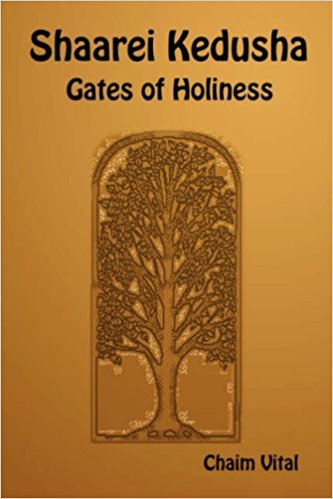
Here are some ideas about holiness from the parsha of a couple of weeks ago, Kedoshim. Leviticus 19:2b: “You shall be holy, for I, the Lord your God, am holy.” In commentary on Kedoshim the Conservative text* that I have quotes many famous Jewish scholars.
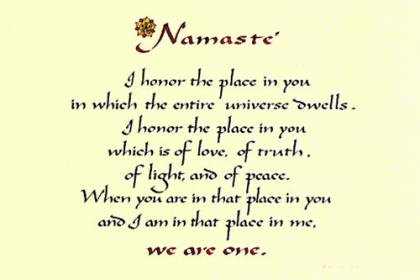
Martin Buber: Holiness is not found in rising above one’s neighbors but in relationships, in human beings recognizing the latent divinity of other people, even as God recognizes the divinity in each of us. The commentary adds, “As human beings we can be Godlike by exercising our powers to sanctify moments and objects in our lives.” Namaste.
I can also link this idea to the Japanese ichi-go ichi-e, once in a lifetime, attitude gleaned from the work of Japanese tea masters, especially the renowned Sen no Rikyū. He learned ichi-go ichi-e from his master, Takeno Jōō. “Jōō believed that each meeting should be treasured because it can never be reproduced.” wikipedia
ichigo ichie
Another of my favorite Japanese ideas is shinrin-yoku or forest-bathing. Here’s a one-line summary from the website linked to here. “The idea is simple: if a person simply visits a natural area and walks in a relaxed way there are calming, rejuvenating and restorative benefits to be achieved.”
More from the commentary on Kedoshim: “The modern distinction between “religious” and “secular” is unknown to the Torah. Everything we do has the potential of being holy.”
Again, from Buber, “Judaism does not divide life into the holy and the profane, but into the holy and the not-yet holy.” Another scholar, a man named Finklestein, adds, “Judaism is a way of life that endeavors to transform virtually every human action into a means of communion with God.” or, perhaps with a pagan sensibility, ichi-go ichi-e.
I say perhaps intentionally because my reimagined faith could intersect with these ideas in a positive way, especially so if the locus of the divine is the individual soul, that part of us that connects with collective unconscious, Brahma, the three Sephirot: kether, the crown, chochmah, wisdom and binah, understanding, that part of the other to which we bow when we say Namaste. Or, as I quoted Buber earlier, “Holiness is not found in rising above one’s neighbors but in relationships, in human beings recognizing the latent divinity of other people…”
This, too, is in the commentary: “…(find) ways of sanctifying every moment of your life. We can be as holy as we allow ourselves to be.” again, the Japanese ichi-go ichi-e and shinrin-yoku.
I’m also trying to pick up some ideas about Hebrew roots but that, so far, has eluded me.
Somewhere in this stew is enough material for a session. Just gotta sort it out.
*Etz Hayim, Torah and Commentary, The Rabbinical Assembly, The United Synagogue of Conservative Judaism. 2001. New York, N.Y. 10027
Our next Sierra Club meeting will be on June 19th, one day before the summer solstice. Sierra Club work is paganism stripped bare of its mythic content. There is passion for sure, but not the poetry, no ritual, no inner work. It’s all outer work: hike, lobby, analyze, network, persuade. We may, for example, show the next Al Gore movie, Inconvenient Sequel: Truth to Power. See trailer below.*
The work is good, necessary. It is even, as Thomas Berry said, the great work of our generation, but it often feels mechanical to me. Pull this lever. Have this meeting. Create this sign. Monitor Polymet. Call the governor. Write your Senator. Hike this trail. In its mechanistic form this does not feel like my love for our home, this earth, this planet, third rock from the sun.
Somehow I need to find a way for my inner work to imbue my outer work. Todd, a long-time member of the Mt. Evan’s local group to which I belong, talked about a hike he took yesterday in Reynold’s Park. He named a particular orchid that he found and his face lit up. “A bullsnake, too.” It may be that these folks, tied to the very local region encompassed by our borders, find their inner work in being on the trail, hiking Mt. Bierstadt, taking the Mt. Evan’s road, helping clear trail.
The hike I took at Flying J Ranch (see posts below) was shinrin-yoku, forest bathing. Perhaps that’s a way to combine the inner work with the outer work. Or, perhaps I could follow the mussar notion of outer work affecting the inner work. Not sure. But, there is a need for me to more closely match my spiritual journey with this work. Maybe the mountain art notion will fit here, too. More to come.
Cultural appropriation. I’m not sure I understand this argument, but this wikipedia entry contains a long summary. I get it when the issue is the Redskins as a football team name or Indians as the basketball team name in Anderson, Indiana with its related arena named the Wigwam. I understand it when the issue is blackface, Aunt Jemima, the wearing of war bonnets as fashion statements. I fully understand and appreciate, for example, the Northwest Coast First Nation’s desire to own their artistic heritage, a good example of which is the Transformation mask at the Minneapolis Institute of Art.
The argument begins to fray for me when I see complaints about using traditional cloth in new and different ways or even when others choose to reinterpret traditional art. Or, particularly, when I read books that create characters from different cultural traditions, gender perspectives, or ethnicities. I don’t understand how the life of art can go forward without all kinds of cultural appropriation.
If, as a Western white male, a U.S. citizen of mostly European genetics, I cannot create characters in my novels that are outside that narrow slice of the world’s reality, my work is restricted in ways that make no sense to me. Would I always get it right? No, of course not. But how do we understand other’s understanding of their others unless we can see it or read it or watch it? And is not the fraught interaction between and among cultures important to understand from all perspectives?
Of course intentionally stereotypical representations are abhorrent, but should not the critique of them be left up to the reader or the viewer? At least in the way I write self-censorship is the ultimate enemy, a foe to be fought off. This notion seems to introduce so large an element of self-censorship that an artist could find themselves crippled. This does not create cross-cultural understanding, it undermines it.
As a former student of anthropology, I know that cultural diffusion is always happening. Look at pidgin languages. Look at the appreciation of art in the different departments of encyclopedic museums. Look at the cultural diversity within the fabric of our nation. Go to Singapore and see the merging of several South Asian cultures into one nation.
I’m interested in reactions to this piece since I’m sure I don’t have a complete understanding.
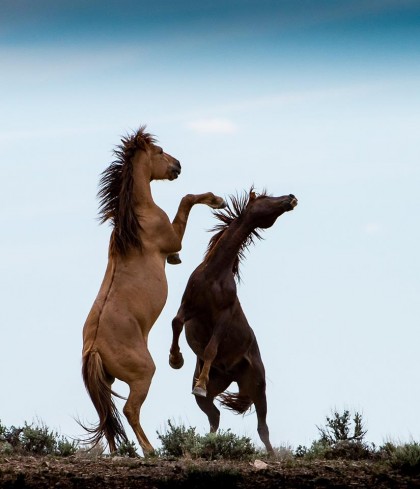
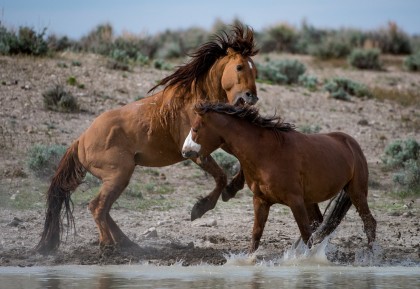
I belong to a facebook group called Front Range Wildlife Photographers. The following photographs are by Boulder resident Michelle Theall. I think they’re amazing.
Irv Saltzman invited us to a performance by his singing group, the Renaissance Singers. It was held in a wooden Episcopal Church, St. Laurence’s, which is near our home. Directed by a Chinese national, Hannah Woo, who is finishing her Ph.D. in musicology, they were 8, four men and four women. As a group, they matched each other well. April, a soprano, had a lovely clear voice and a large range. Irv, formerly a tenor, has now transitioned into a bass/baritone role. Their performance was wonderful. At a meal afterwards we discovered April is our neighbor.
Renaissance choral music and instrumental renaissance music has always captivated me. It’s easy to see courtiers in colorful costumes listening to this music in a palace, brown robed and cowled monks hearing it in a morning prayer service, or small groups performing at home for their own amusement. It’s also the music most often heard at Renaissance festivals. Sorta makes sense, eh?
The sanctuary had a vaulted ceiling with exposed beams and two large, clear windows that looked out to the east, toward Shadow, Evergreen and Bear mountains. It rained while we were there and the mountains were in mist, the windows covered with raindrops slowly moving from top to bottom. There were individual chairs, padded with kneelers, arranged in a three sided configuration, making the sanctuary a sort of thrust proscenium stage, an ideal arrangement for a small group of singers.
A church artist had painted the stations of the cross and they were around the sanctuary, set off by bent sheet metal frames. A copper baptistry, large, sat over a cinerarium where the congregation deposits cremation remains and memorializes the dead with small plaques.
Between the two windows hung a large crucifix, a cross made of bare, light wood and a bronze Jesus hung by two nails. I had an odd sensation while listening to this music I’ve often heard in monastic settings on retreat. It carried me back into the spiritual space of an ascetic Christianity that often comforted me. This time though I came into the space as a peri-Jew, identifying more with Marilyn and Irv and Kate, with the still new to me spiritual space of Beth Evergreen, than the theological world represented by this spare, but beautiful sanctuary.
The crucifix stimulated the strongest, strangest and most unexpected feeling. I saw, instead of the Jesus of Christianity, a hung Jew, a member of the tribe. More than that, I felt the vast apparatus and historical punch created by his followers, followers of a man who shared much of the new faith world in which I now find myself. It was an odd feeling, as if this whole religion was an offshoot, a historical by-blow that somehow got way out of hand.
These feelings signaled to me how far I’d moved into the cultural world of reconstructionist Judaism. I see now with eyes and a heart shaped by the Torah and mussar and interaction with a rabbi and the congregants of Beth Evergreen.
This was an afternoon filled with the metaphysical whiplash I’ve experienced often over the last year, a clashing of deep thought currents, spiritual longings. This process is a challenge to my more recent flat-earth humanism, a pagan faith grounded not in the next world, but in this one. Literally grounded.
What’s pushing me now is not a desire to change religious traditions, but to again look toward the unseen, the powerful forces just outside of the electromagnetic spectrum and incorporate them again into my ancientrail of faith. This makes me feel odd, as if I’m abandoning convictions hard won, but I don’t think that’s actually what’s going on. There is now an opening to press further into my paganism, to probe further into the mystery of life, of our place in the unfoldingness of the universe, to feel and know what lies beyond reason and the senses.
Spring is grandkid viewing time. That is, the schools here put on multiple performances and grandparents can watch their kin perform in various ways. Gabe narrated a portion of Midsummer Night’s Dream. Ruth and her team, the Jaw Dropping Crunchy Brains, performed their original play twice in competition. This last Friday Ruth performed both in the chorus of a Sweigert Elementary musical and in a smaller group singing “Somewhere.”
Both Gabe’s performance during the William Shakespeare Festival and Ruth’s musical were at the Denver Center for the Performing Arts. There are many venues there from small to large. It makes accessing dance, opera, theatre and various types of musical concerts easy by concentrating them in one location and providing decent parking. Near by are both the Denver Convention Center and the Arts District which contains the Denver Art Museum and other, smaller museums. The liveliest art scenes in Denver are not, however, at these more conventional, institutional locations but at several spontaneously arisen art areas like the one along Santa Fe.
Fog this morning over Black Mountain. It comes in and out of view as the mist moves toward us. Now it’s gone altogether. There’s a thin scrim of icy snow on the solar panels. Colder last night.
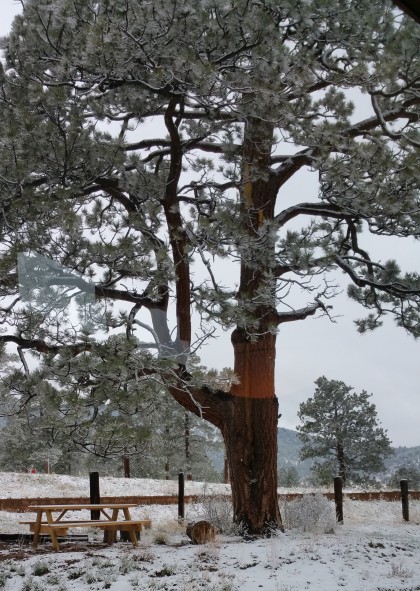
My Japanese informed aesthetic often finds resonance here in the mountains. The ponderosa pines that surround Beth Evergreen’s synagogue present heavily crenulated bark, twisted branches and a sturdy calm. From the sanctuary, looking south and east, one window pane has an especially crooked branch that reaches up like a hand. When the snow comes, it looks like a portion of a Kano school gold screen. Ravens and crows land on these branches, too, also emulating the scenery that inspired so many Japanese painters and printers.
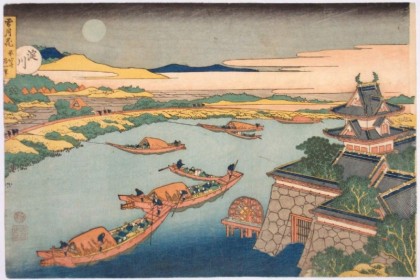
Moon watching, a Japanese pastime, has its analogue here as well. The moon rising and setting among the mountain peaks, clouds placing a thin gauze in front of it, the stars as its context, emphasize the moon’s romance. I can stand on my deck here off the loft and watch clouds cross the moon’s face. Its silvered light makes beautiful shadows of the lodgepole pine.
Hokusai (1760-1849), Boats and Moon, an ukiyo-e print
Big eared mule deer and thick, tall elk come down to Maxwell and Cub creeks, lapping up the cold fresh melted snow. Mountain lions slip noiselessly through the undergrowth, lie prone on rock cliffs waiting for them to pass nearby. Bears root up tubers. Minx, bobcats, pine martens, smaller predators, hunt for prey. Rabbits and squirrels and mice feed, look over their shoulder. The web of life is vibrant.
Bull Elk, Evergreen, 2015
Ichi-go ichi-eis a Japanese phrase often associated with the tea ceremony. The tea master arranges art in the tokinama, chooses teas and sweets, decides which tea bowls and tea pots and tea utensils to use, then greets their guests as they arrive, often no more than one or two. He does this to create an ichi-go ichi-e, a once in a lifetime moment or for this moment only. It connotes the treasure of each meeting between or among people.
Each moment of the day Black Mountain offers ichi-go ichi-e to those of us who live near it, if only we stop and look. To appreciate ichi-go ichi-e though we need to pause, or as mussar teaches us, put a space between the match and the flame. If we slow down our glance, our gaze, let it come to rest, if we take a breath and consider what is right there in front of us, then we find once in a lifetime moments happening throughout our day.
Ponderosa Pine, Beth Evergreen, April, 2017
These do not, as you might think, cheapen or dilute over time, rather they enhance our experience of the world. We recognize the fleeting nature of life, of this moment and that moment, of the unique and precious and irreplaceable flavor to each encounter. Nothing is old, all is new, always.
In fact, to the extent that we can gain an appreciation of ichi-go ichi-e, then we never age.
Friend Bill Schmidt knows me well. A while back he noted I’d not yet written anything about tea while here in Colorado. He was right. Two or three years before the move out here I’d somehow gotten to making tea the Chinese way, gong fu cha. This was after years of tea from tea bags and the occasional loose tea steeped in tea infusers.
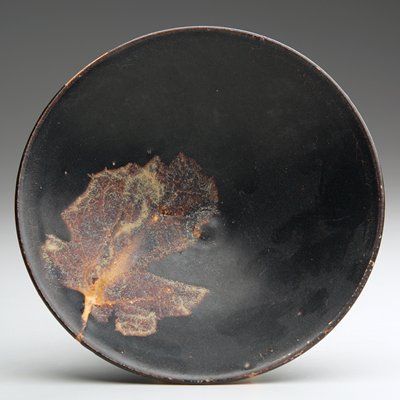
The impetus may have been my favorite object in the entire collection of the Minneapolis Institute of Art, a Song dynasty tea bowl. I don’t recall now.
Gong fu cha involves various implements and techniques that differ significantly from British/American tea preparation and drinking, but also from the Japanese chanoyu, which is a direct descendant of gong fu cha.
Gong fu cha inspired visiting Japanese monks to introduce tea to their Buddhist compatriots as a way of staying awake during long sessions of meditation. The Japanese tea ceremony grew out of this cultural exchange beginning in the 12th century.
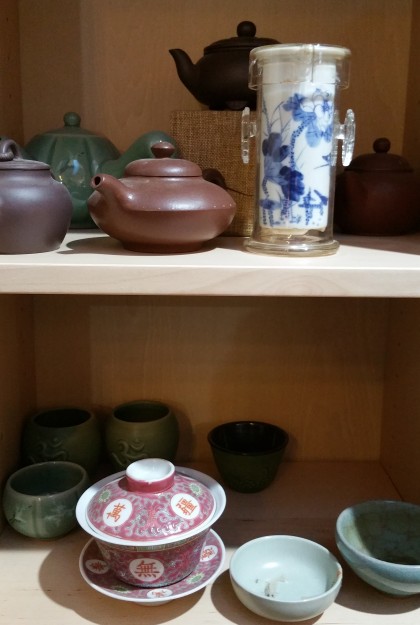
Over a period of years I acquired several yixing teapots, many different teabowls (including one with a leaf embedded), tea scoops and picks for tightly compressed chunks of pu’er tea, a bamboo tea tray and, of course, several varieties of tea.
Zojirushi
The Zojirushi is my favorite tea appliance. The Zojirushi, a Japanese model, boils water to a particular temperature and has a large reservoir so water at the right temperature is always available. Water temperature, the teapot and the quality of the tea itself are the critical variables in gong fu cha.
I considered making tea in the loft a final flourish to the work on it, so I waited until everything else was finished: book cases, art table, things put in their places. Why? I don’t know. Gong fu cha became, in my mind, a symbol that this space was ready for serious work.
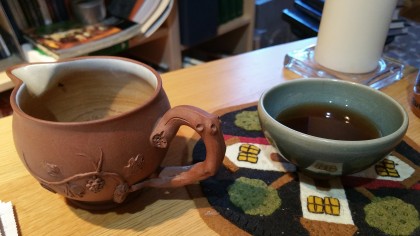
Right now I’m drinking Master Han’s loose leaf pu’er from 2000. Very smooth and smoky. I guess that means I’m getting serious about the work.
Bill knew me well. Now I’m truly here. Yixing pot in hand.




 Also want to include Aldo Leopold’s land ethic:
 The date of the presentation happens to be Emerson’s birthday. So, from Nature: “The foregoing generations beheld God and nature face to face; we, through their eyes. Why should not we also enjoy an original relation to the universe? Why should not we have a poetry and philosophy of insight and not of tradition, and a religion by revelation to us, and not the history of theirs? Embosomed for a season in nature, whose floods of life stream around and through us, and invite us by the powers they supply, to action proportioned to nature, why should we grope among the dry bones of the past, or put the living generation into masquerade out of its faded wardrobe? The sun shines to-day also. There is more wool and flax in the fields. There are new lands, new men, new thoughts. Let us demand our own works and laws and worship.” introduction to his essay,
  Here are some ideas about holiness from the parsha of a couple of weeks ago, Kedoshim. Leviticus 19:2b: “You shall be holy, for I, the Lord your God, am holy.” In commentary on Kedoshim the Conservative text* that I have quotes many famous Jewish scholars.
 I say perhaps intentionally because my reimagined faith could intersect with these ideas in a positive way, especially so if the locus of the divine is the individual soul, that part of us that connects with collective unconscious, Brahma, the three Sephirot: kether, the crown, chochmah, wisdom and binah, understanding, that part of the other to which we bow when we say Namaste. Or, as I quoted Buber earlier, “Holiness is not found in rising above one’s neighbors but in relationships, in human beings recognizing the latent divinity of other people…”
 Our next Sierra Club meeting will be on June 19th, one day before the summer solstice. Sierra Club work is paganism stripped bare of its mythic content. There is passion for sure, but not the poetry, no ritual, no inner work. It’s all outer work: hike, lobby, analyze, network, persuade. We may, for example, show the next Al Gore movie, Inconvenient Sequel: Truth to Power. See trailer below.*
 Somehow I need to find a way for my inner work to imbue my outer work. Todd, a long-time member of the Mt. Evan’s local group to which I belong, talked about a hike he took yesterday in Reynold’s Park. He named a particular orchid that he found and his face lit up. “A bullsnake, too.” It may be that these folks, tied to the very local region encompassed by our borders, find their inner work in being on the trail, hiking Mt. Bierstadt, taking the Mt. Evan’s road, helping clear trail.
 If, as a Western white male, a U.S. citizen of mostly European genetics, I cannot create characters in my novels that are outside that narrow slice of the world’s reality, my work is restricted in ways that make no sense to me. Would I always get it right? No, of course not. But how do we understand other’s understanding of their others unless we can see it or read it or watch it? And is not the fraught interaction between and among cultures important to understand from all perspectives?
 As a former student of anthropology, I know that cultural diffusion is always happening. Look at pidgin languages. Look at the appreciation of art in the different departments of encyclopedic museums. Look at the cultural diversity within the fabric of our nation. Go to Singapore and see the merging of several South Asian cultures into one nation.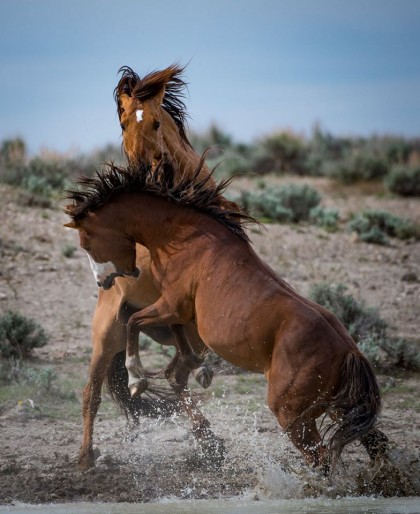
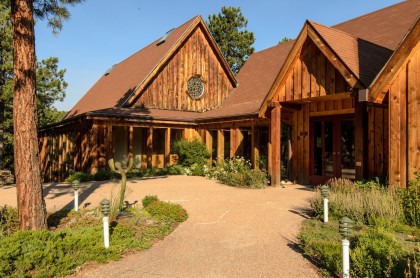 Irv Saltzman invited us to a performance by his singing group, the Renaissance Singers. It was held in a wooden Episcopal Church, St. Laurence’s, which is near our home. Directed by a Chinese national, Hannah Woo, who is finishing her Ph.D. in musicology, they were 8, four men and four women. As a group, they matched each other well. April, a soprano, had a lovely clear voice and a large range. Irv, formerly a tenor, has now transitioned into a bass/baritone role. Their performance was wonderful. At a meal afterwards we discovered April is our neighbor.
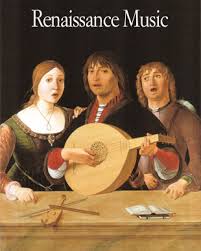 Renaissance choral music and instrumental renaissance music has always captivated me. It’s easy to see courtiers in colorful costumes listening to this music in a palace, brown robed and cowled monks hearing it in a morning prayer service, or small groups performing at home for their own amusement. It’s also the music most often heard at Renaissance festivals. Sorta makes sense, eh?
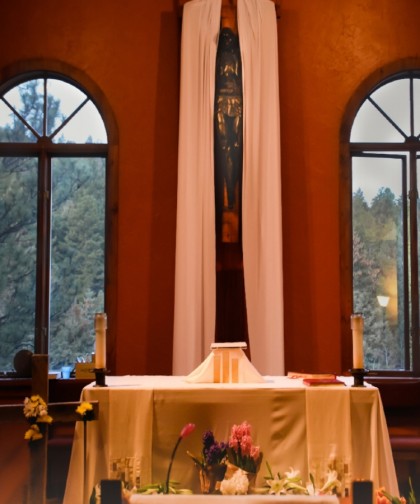 Between the two windows hung a large crucifix, a cross made of bare, light wood and a bronze Jesus hung by two nails. I had an odd sensation while listening to this music I’ve often heard in monastic settings on retreat. It carried me back into the spiritual space of an ascetic Christianity that often comforted me. This time though I came into the space as a peri-Jew, identifying more with Marilyn and Irv and Kate, with the still new to me spiritual space of Beth Evergreen, than the theological world represented by this spare, but beautiful sanctuary.
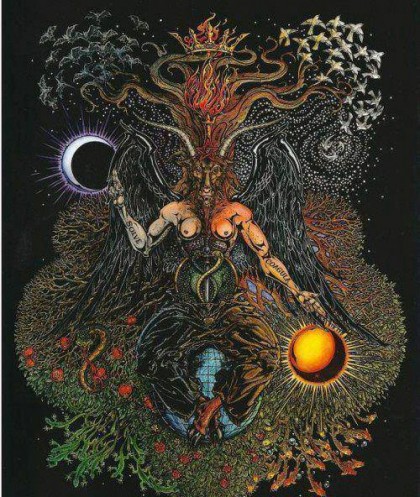 This was an afternoon filled with the metaphysical whiplash I’ve experienced often over the last year, a clashing of deep thought currents, spiritual longings. This process is a challenge to my more recent flat-earth humanism, a pagan faith grounded not in the next world, but in this one. Literally grounded.
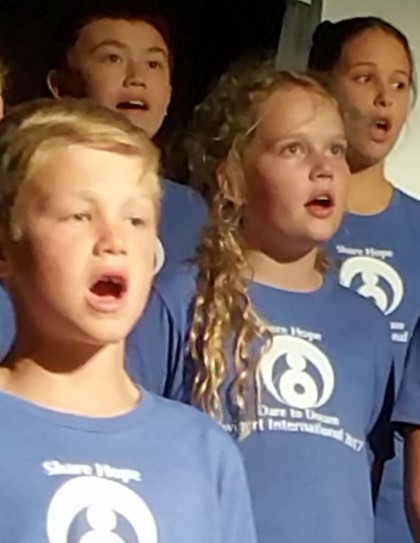 Spring is grandkid viewing time. That is, the schools here put on multiple performances and grandparents can watch their kin perform in various ways. Gabe narrated a portion of Midsummer Night’s Dream. Ruth and her team, the Jaw Dropping Crunchy Brains, performed their original play twice in competition. This last Friday Ruth performed both in the chorus of a Sweigert Elementary musical and in a smaller group singing “Somewhere.”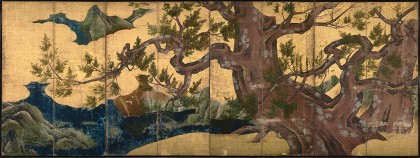

 The impetus may have been my favorite object in the entire collection of the Minneapolis Institute of Art, a Song dynasty tea bowl. I don’t recall now.
 Gong fu cha inspired visiting Japanese monks to introduce tea to their Buddhist compatriots as a way of staying awake during long sessions of meditation. The Japanese tea ceremony grew out of this cultural exchange beginning in the 12th century.
 Right now I’m drinking Master Han’s loose leaf pu’er from 2000. Very smooth and smoky. I guess that means I’m getting serious about the work.