Category Archives: Art and Culture

Up Early

Imbolc                                                  Black Mountain Moon

One of those nights. In spite of the warmth of my electric blanket I was awake at 3 a.m. For good. So I got up, let the dogs out, fed them, but didn’t go get the paper. (too early) It’s now 5:45 and I’m planning on working on Latin as soon as I finish this. Why waste the time?

There was more snow on the deck this morning. Not so much, maybe an inch. I’d say we got 10 inches over the weekend. Snow here is both more present-it snows more often-and less. It melts soon after coming. This week the weather will be cool enough to retain the snow on the grounds, but it should be sunny enough to melt the driveway.

I’m trying to increase my work. The long preparation for, then the execution of the move, distracted me at points, especially over the last couple of months. We needed our focus on the move and that’s where it was. Now though I want to write a new book, continue the work in Ovid and Caesar, dig into art scholarship, especially in aesthetics and Song Dynasty China, and get more deeply into my Reimagining Faith project by focusing on the concept of emergence.

We have a plan for a modest garden using raised beds designed around horse watering troughs. They have a root-centric bottom up watering system and come ready to use. All we’ll have to do is site them and fill them with soil. I purchased material for a Flow Hive set-up like the one posted below, but it won’t come until November, so I’ll give the bees a pass this year. In April I take the first of several classes in a Native Plant Master program.

Exercise is two-thirds of the way back to pre-move intensity and I’ve added three days.

All this happens wrapped in regular visitation with grandchildren, Jon and Jen, going to movies, reconnoitering Denver and our immediate area around home: Jefferson County, Park County, Evergreen.

Settling in. Becoming native to this place. A process.


Dialectic: Reason or Soul

Imbolc                                     Black Mountain Moon

When Kate and I went out last night, we went to a Regal cinema and afterward across the street to the Macaroni Grill for dinner. We could have been in any upper middle class retail enclave in the country. While there is a soothing, predictable quality to these often brick or stone centers, virtues not insignificant in a huge and varied nation like our own, we both commented that we could have been on France Avenue in Edina. In fact, we couldn’t tell the difference while inside the theater and eating at the Macaroni Grill. That’s ok once in a while, but visited frequently these standardized spaces can, like the electric light bulb, begin to blur, then obfuscate the true nature of a place.

Becoming Native to This Place, the book by Wes Jackson of the Land Institute which I quote from time to time, is the antithesis of this form of shallow standardization. He insists, like Aldo Leopold in his land ethic and Wendell Berry in his work on his family’s farm in Kentucky, that we root ourselves, both literally and figuratively in the place where we live. Particularity, not universality is key to their thought.

The core goal of Die Brücke, a movement among young Dresden based artists at the turn of the last century, was to embrace the German/Nordic soul, one based in the particular physicality of the soil and geography of Germany and the people’s nurtured by it, and give expression to that particularity, not the universality presumed by the application of reason.  Die Brücke rejected the Enlightenment’s emphasis on reason, distanced themselves from art’s classical tradition, favoring the Fauves, other key French artists like Cezanne and Gaugin and the Dutch Van Gogh.

This dialectic of reason and soul is a main theme of this new millennium, one with its trailhead deep in the ancientrail of Western philosophy. It may be the main theme of my life, a driving energy behind most of what I do.

Take Me Home

Winter                                                                                 Settling Moon II

Kate and I went into Denver to the Curious Theater for a production of Charles Ives Take Me Home by Jessica Dickey. Ives has long been one of my favorite composers and I had a chance to hear his music often when I attended St. Paul Chamber Orchestra concerts.

This is a play for three actors, staged on a minimal set with almost no props. The theater is an old church sanctuary so almost every seat is close to the stage. We had seats in the first row of the balcony.

The play had several memorable moments including one evocation of the aftermath of a father’s death. You realize then, Charles Ives says, that there is no one between you and the top of the sky. At another point near the end a second male character, a devotee of Ives and a violin player, suffers a heart attack. Ives tells him that there is nothing to worry about, he’s dying. Just play through it. This actor, a violinist who plays frequently during the drama, does just that, playing as he dies. Poignant.

Another memorable moment came when the violinist’s daughter, a basketball coach (source of much friction between art loving father and sports loving daughter), speaks to the young girls of her first team in their first game. If you want to succeed, to do your best, you have to dive for the ball. Dive recklessly. You have to play the game unreasonably.

This was a professionally handled piece from beginning to end and made me feel good about the Denver arts scene. Also, the theater was full and it was Superbowl Sunday. We were there for the 2 pm matinee.


Can You See Me Now?

Winter                                                                                  Settling Moon II

No post yesterday! Uncommon. Got too wrapped up in doing stuff.

First instance. Drove over to Conifer III (we have three retail areas, this is the one furthest south on 285, but closest to our house) to see an eye doc about my glaucoma. Due to a screw-up (mine) with the prescription I’d been out of my eye drops for a couple of weeks and, not wanting to go blind, got an appointment. Jennifer Kiernan, doctor of optometry, is a late 30’s woman with a common sense approach.

We discussed the fact that my pressures, 15 and 16, were normal without the drops. She looked at my retinal nerve, “Hmm. Suspicious.” She says the  current move is toward no drops, using a very tiny stent to drain the pressure. “But, medicare will only pay for it when it’s done in combination with cataract surgery. Let’s see how bad your cataracts are.” Not too bad, as it turned out. “Let’s keep you off the drops, see you in a month.” Sounded good to me.

Back at home Kate and I came up to the loft and entered her drugs in medicare.gov. This was in preparation for our appointment at 3:30 with John Downing and Larry Seligman. We needed advice about the maze of plans. Larry recommended the very plan that we had considered on the medicare site, so we signed up. Here’s the good news. $0 premium. Weird, I know, but there you are. Larry said it was a very popular plan, no complaints, and it looked like a good fit. Besides, it’s only until 2016 under any circumstances. We needed to get this done because our U-Care coverage expired January 31st.

After that we asked Ophelia (our Garmin) how to get to the exhibition space where Jon had five works on display. This is the annual show for Aurora art school teachers and is held just off Colfax Ave on Florence, deep in the heart of Latino Denver. Jon, Jen, Barb (Jen’s mother), Gabe, Ruth, Kate and I were there. The whole family. That felt good.

Back home. With no thought for a post. I guess that’s probably a good thing.

The Dawn Wall of Human Insight

Winter                                                      Settling Moon


The Dawn Wall climb completed by Kevin Jorgeson and Tommy Caldwell yesterday collided with some reading I’ve been doing in a book by Arthur Danto titled, What Is Art?

In a later chapter of the book Danto referenced this work by Piero della Francesca, painted in 1460, “The Resurrection.” I knew the painting so the image immediately floated into consciousness and attached itself to Caldwell and Jorgeson emerging at the top of the Dawn Wall, a climb realized by using only their hands and feet. Ropes attached to them were there only to prevent a fatal fall, otherwise this was a human powered, human body only effort.

In Francesca’s painting the human body has failed the guards placed at the tomb. They were there to prevent grave robbers from stealing Jesus’ body and declaring him resurrected. But they fell asleep. Even with the guards asleep it takes a supernatural force to circumvent the tomb.

This all occurs, as we can tell from the pale light creeping up over the hills on the painting’s horizon, at dawn. Countless are the number of sunrise services held to celebrate just this moment.

Coldwell and Jorgeson started at the base of El Capitan on its face that has greeted that same rising sun for aeons, at least 100 million years. Imagine their climb as the literal embodiment of the human spirit rising, on its own terms, to the top, to the summit, of this wall that celebrates the rising sun, the first time this wall has been climbed using hands and feet in 100 million years.

Now imagine El Capitan as the sheer rock face of our human attempt to understand this absurd world into which we were thrown at birth and let the summit represent adequate insight into that question, adequate to guide a life.  Supernatural metaphysics posited that we humans must hoist ourselves to the top using pitons and ropes supplied by the supernatural being of our choice. In this analogy Caldwell and Jorgeson represent the humanist, the pagan free-climbing the Dawn Wall of human insight, using only the tools granted to them at birth.

It was this notion that flashed across my mind when reading Danto and considering their feat. Their emergence at the summit of the Dawn Wall overlaid Francesca’s beautiful painting, putting these two climbers in the place of the risen Jesus while blinkered humanity lay asleep below or clung to the cliff tangled up in the ropes of Islam, Hinduism, Christianity.


Transported

Samain                                                                             Moving Moon

Kate and I just got back from a baroque/early music concert in St. Paul at the Baroque Room. After Bach’s Orchestral Suite Nr. 2 in B Minor, I leaned over to her and said, “Would you like to get coffee afterward at the St. Paul Hotel?”

That was my question the last St. Paul Chamber Orchestra concert of March in 1988. I’d waited the entire season to ask her out and almost didn’t even then. After that, we dated, then in 1990 got married not far from the Ordway Theater where we had met. The St. Paul Landmark center is just across Rice Park.

Chamber Music, the sort which the St. Paul Chamber Orchestra has made its repertoire, was originally just that, music played in a chamber, or room. The Baroque Room is a small chamber in which the Flying Forms, a Baroque ensemble, play and invite others in to play. They manage the room and the concert series there. I recommend it. The experience is intimate, just like chamber music was meant to be.

While writing this, I began to wonder where I first encountered chamber music. I think it must have been through a wonderful program that was in place while I was in seminary. It offered coupons for very cheap season tickets to the Guthrie, the Minnesota Orchestra and, I imagine, the St. Paul Chamber Orchestra.

When I first started going to the St. Paul Chamber Orchestra, they were directed by Dennis Russell Davies and played in the O’Shaughnessy Auditorium on the campus of St. Catharine’s college in St. Paul. Something in early music, baroque music and classical music speaks to my soul. I’m not literate enough musically to know what it is, but when I hear Bach or Mozart, Haydn, Purcell, Telemann a mode of transport occurs that carries me into another time and into a more serene and gentle world.

Realized today that I miss it. Kate and I stopped going some time ago. The evening drives, the 8 pm start time, the soft lights and warmth made the concerts sleep inducing. An affront to the music and to ourselves. 20 years or so I went, often weekly during the season, so this music was a major part of my life for a very long time.

Gonna spend some money in Colorado and get our sound system up and working so we can listen at home. We’ve not done much of that at all.

Grief and Delight

Samain                                                                                Moving Moon

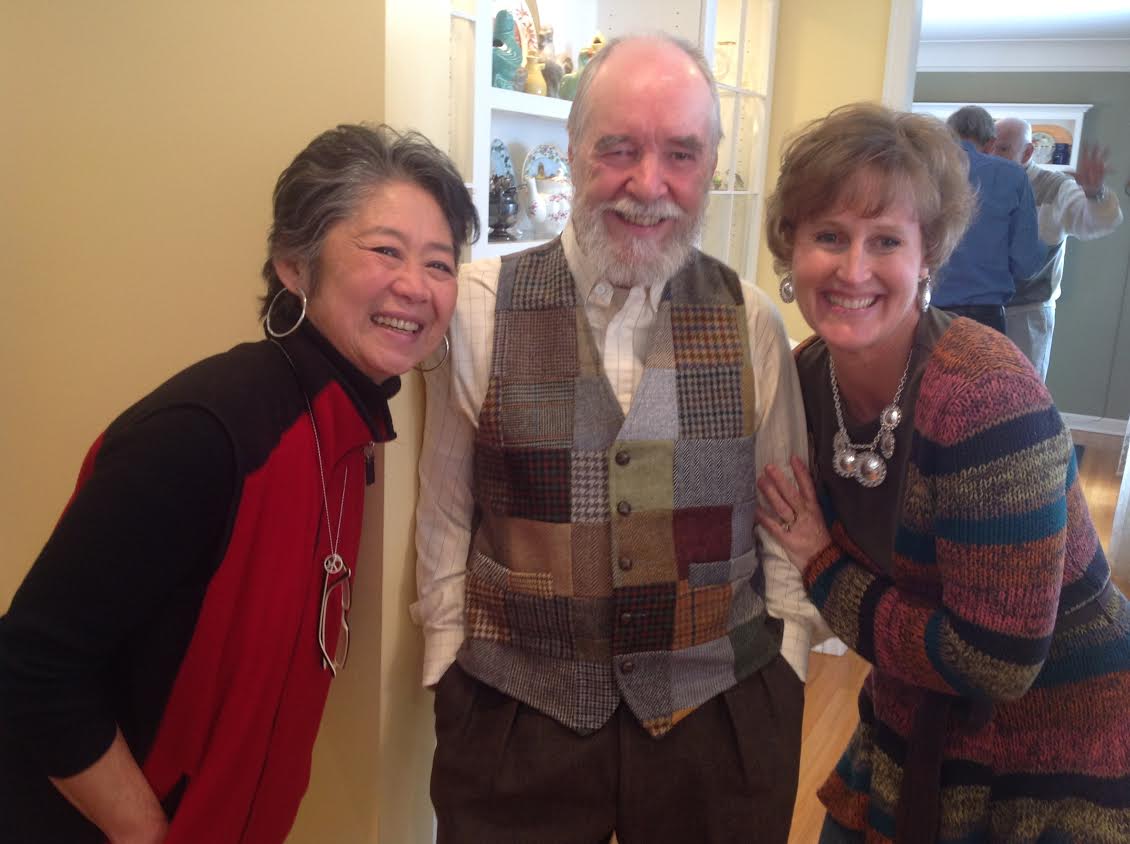
Antra, me, Wendy, Joy, Allison

Over the past seven and a half months we have lived with loss: friends, memories, arts and cultural opportunities, our home, even the belongings we have jettisoned. Our decision to move opened deep fissures in our day to day reality.

A turning point in this experience of loss came when Kate found our new home on Black Mountain Drive. At last we had a concrete spot, a place toward which our work aimed. Until then the consequences of our decision weighted toward grief, even though the decision itself was about joy and adventure.

This is, for me at least, a deep learning. That is, choices we make will often (always?) lead us away from as well as towards. When we move away from, we leave behind relationships, places, things and there is grief with each loss. This is not negative, just true. And grief is not bad, it reflects the bonds formed and now sundered. Grief readjusts our psyche to a life without whatever it was we left behind.

Now that the packing is almost done and the leaving Minnesota day is just two weeks photoRaway, my heart has begun to turn to Colorado and our new life. I’m feeling a sense of release from my life here, a release made easier by gentle leave takings, by having enough time to say farewells. There is a delight made more delicate and precious by knowing I can leave without regret.

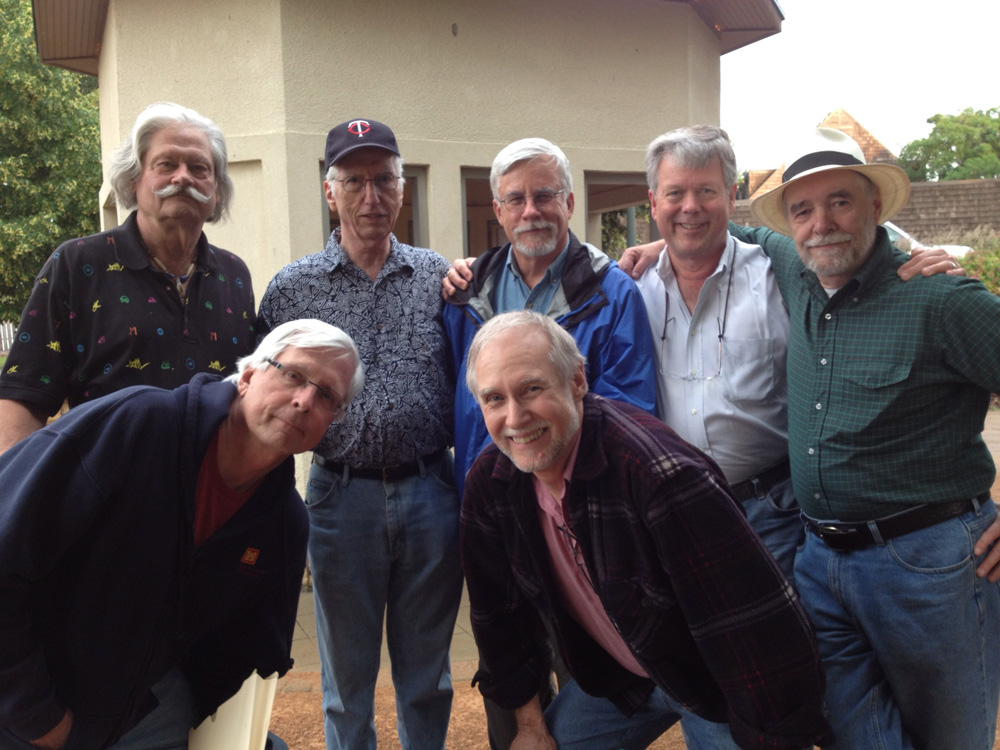
Again, thank you to all who read this: especially the fellow docents: Tom, Allison, Jane, Morry, Sally, Bill, Vicki, Joanne, Kathleen, Lisa, Marcia, Joy, Mary, Antra, Cheryl, Florence, Ginny, Sharon, Carreen, Wendy,  the Woollies: Tom, Mark, Bill, Frank, Stefan, Scott, Warren, and the sheepshead guys: Roy, Bill, Dick and Ed. You have made leaving a source of nurture and grief the solace it is meant to be.


The Final Movement

Samain                                                                              New (Moving) Moon

Feels like the final movement of a symphony, with all the hurried action, lots of 16th and 32nd notes, winding up and up and up, then a pause, a slowing that lasts for awhile, a slowing that precedes the last dynamic moment. After that. Colorado.

Ah.

We’re in the slowing time right now. Almost all of the packing and preparation has been done. A few odd bits here and there. Those files which I may choose to resolve simply by moving them and sorting them out later. A few items, like cassette tapes, that have archival value, but less utility. The stuff in the bathrooms and the final items to leave before the van loaders arrive: computer, two printers, my latin books, the stuff still on the desk. There are as well some magazine stacks that will need to get sorted, but that’s quick.

There will not be much left for A1 to pack beyond the kitchen and the garage, which we’ve already asked them to do. Maybe some clothes. Some stash in Kate’s sewing room. But not much at all.


So Did the Divine Right of Kings

Samain                                                                                    New (Moving) Moon

Holiseason has begun to gain strength. Thanksgiving preparations are underway in millions of households across the country. Tickets have been bought; cars checked; phone calls and e-mails made. America’s festival of gratitude has a lot of momentum. Yes, the earliest Thanksgiving (at least the one projected back into the founding history of the English colonies) has a negative image. Perhaps deservedly so, I don’t know the history well enough.

Since Abraham Lincoln made Thanksgiving a national holiday though, the family focused day has united Americans of diverse backgrounds and religious orientations in a secular celebration of extended family and friendship. Whatever form of Thanksgiving works for you, it is a day to remember the blessings we each have in our lives. No matter how great or how small they may be.

Of course, there is the dark pall of Black Friday, a habit so twisted in its mercantile logic that Best Buy tried to come out the good guy by saying that they were letting their employees go home to sleep.  Not many sales, the spokesperson said, were made late at night anyhow.

Ursula Le Guin gave a wonderful speech at the national book awards last night. I heard it on NPR today. She made several striking points and I’m embedding her speech in the next post, but she took a cut at capitalism that sunk the knife in deep. We live, she said, in capitalism. Its power seems inescapable. So, she went on, did the divine right of kings.

Whatever your plans I hope they include gratitude for the gift of life and for the wonder of this earth on which we live. What a privilege it is to be alive now.


Pickles on a Stick

Samain                                                                                Closing Moon

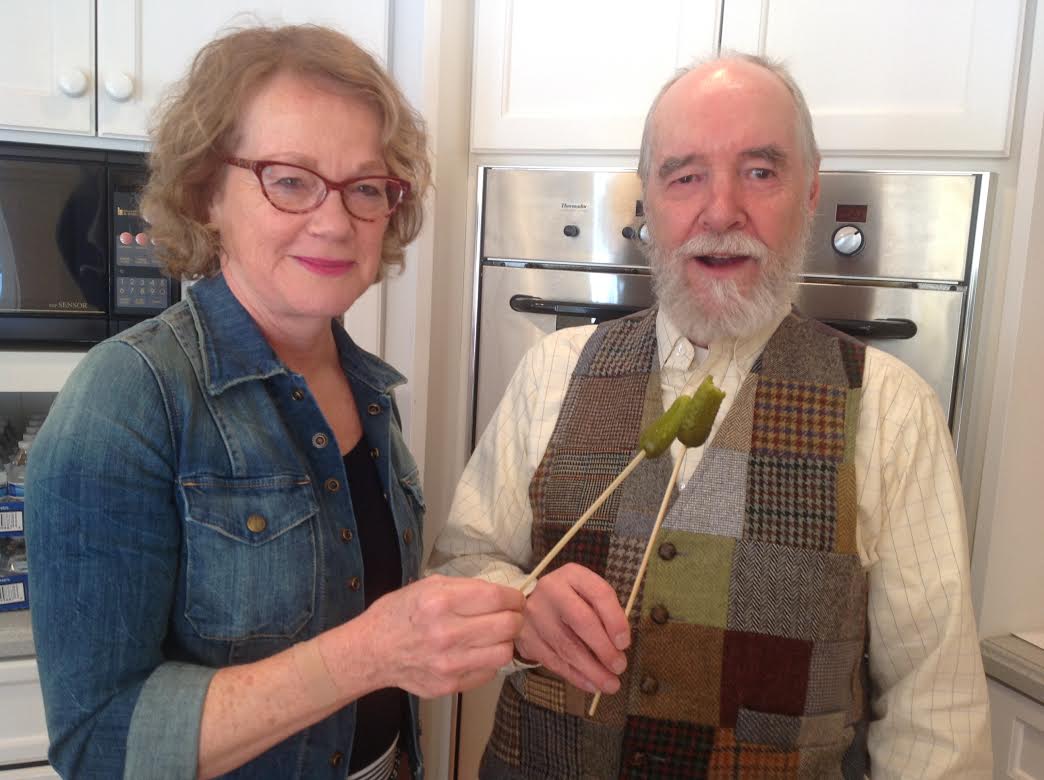
Thanks to Allison, Morrie, Sally, Mary, Joan, Wendy, Vicki, Bill, Carol, Antra, Joy, 0 (4)Kathleen, Merritt, Tom, Marcia, Sharon, Cheryl, Ginny, Florence, Carreen, Jane, Lisa for a wonderful, sweet, sad afternoon.

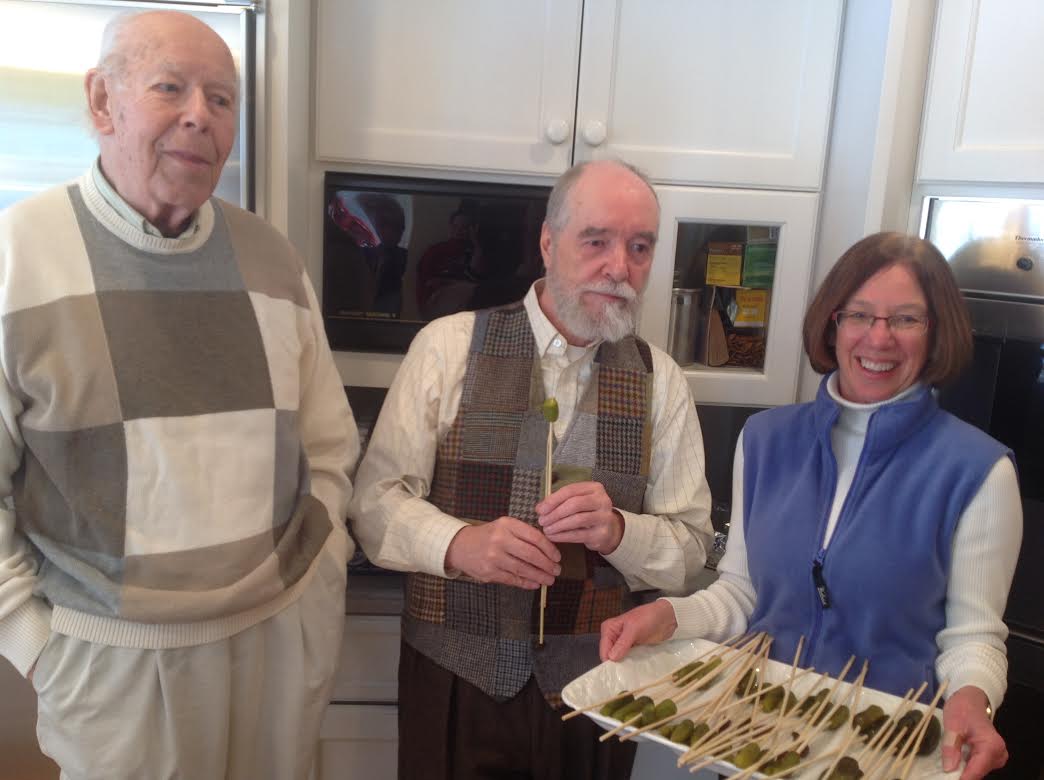
The hot dish, the pickles on a stick, the bundt form jello, the wild rice soup, the selection of desserts and the lefse with butter and sugar, all culinary masterpieces of Minnesota home cooking. There will be nothing like any of this in Colorado, I’m sure.

Friends for life, you all. My time at the museum became a place to see you, catch up on interesting lives and have conversations about art. A good life.

As I said this afternoon, this event was sweet and sad and those two in direct proportion to each other. Very sad, very sweet. Here are a few more pictures taken by Ginny:

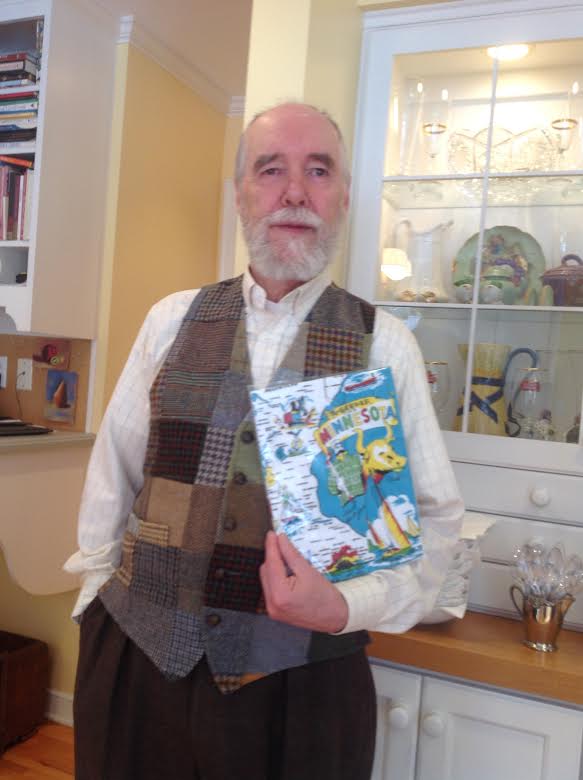
0 (1)a Minnesota memories dish towel

0 (3)

Mary and Tom and the pickle tray

0

Wendy and Joy

0 (2)

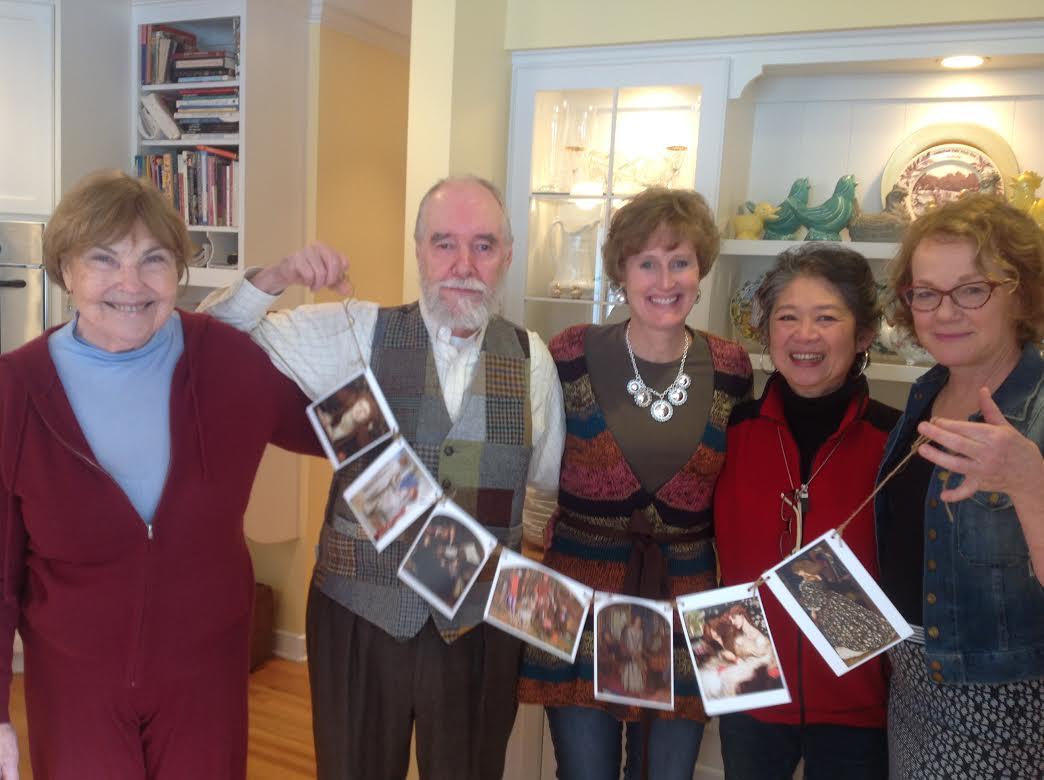
notes from everyone written on the back of these Pre-Raphaelite cards. Antra (on the left) also did the calligraphy for a beautiful card.