Category Archives: Garden

The Normal Extraordinary

Lughnasa                                       Waning Harvest Moon

Just back from the grocery store.  Kate went along, a nice treat.

On so many levels the grocery store speaks to privilege.  We have food, fresh food, all year round.  Kate and I can buy food all year round.  The U.S. has fields of grain, feeder lots with cattle and pigs, chickens and turkeys, fruit grows in many places, nuts, too.  Vegetables grow within miles of every major metro area and within them, too.

As citizens of a powerful country, albeit one in economic struggles, we have so many things available to us, things we consider normal, that are extraordinary in most of the world.

It’s not to early to start thanks giving.

The Visa Quest Nearly Finished

Lughnasa                                       Waning Harvest Moon

Today we moved from conjecture to certainty.  The top person at English Gate Academy, Ahmed, e-mailed Mark and said he would write a personal note to the Saudi Embassy asking them to speed Mark’s visa application along.

His papers cleared the Saudi Cultural Mission today and are at the Embassy so it should be a matter of days now before he has his passport back with his Saudi work visa in place.  At that point English Gate will send him an e-ticket.  He’ll pack and I’ll take him out the same airport where I picked him up in April, just as spring began to try breaking through the long and persistent grip of our long winter.

It’s been a long and not always straightforward journey for Mark, but he’s got his head and heart in better alignment plus he pulled off the difficult in this US economy; he found a good paying job, better pay than he’s ever made.

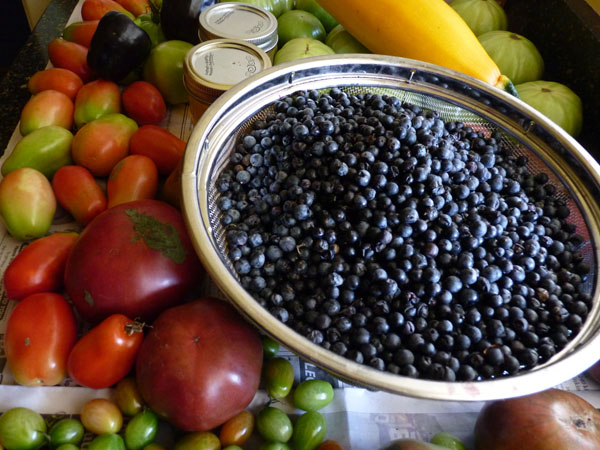
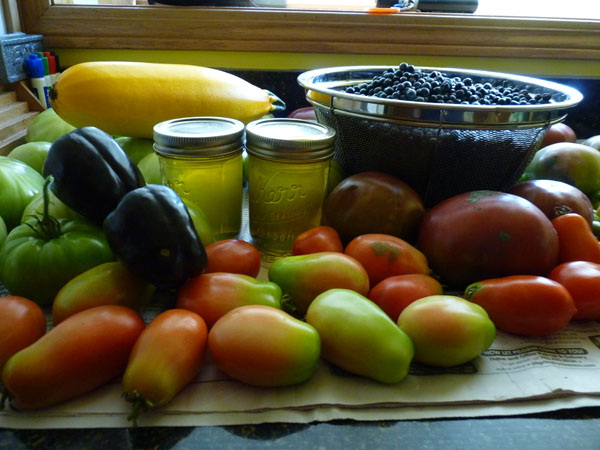
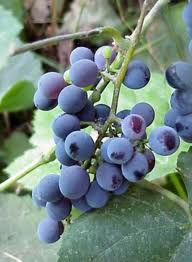
We spent the morning harvesting wild grapes, talking through the vine.  With the freeze tonight we had to get the sensitive crops inside.  Kate picked the tomatoes that will ripen over the next few weeks and a small bucket of raspberries while Mark and I picked a rose cone full of the small purple grapes.

That means Kate the jelly and jam maker will appear, working with her alchemical apparatus to strain the grapes, add the sugar and pectin and can the result.  Wild grape jelly has a special and tangy taste.  Great for those cold winter breakfasts.

Harvest Home

Lughnasa                                                 Waxing Harvest Moon

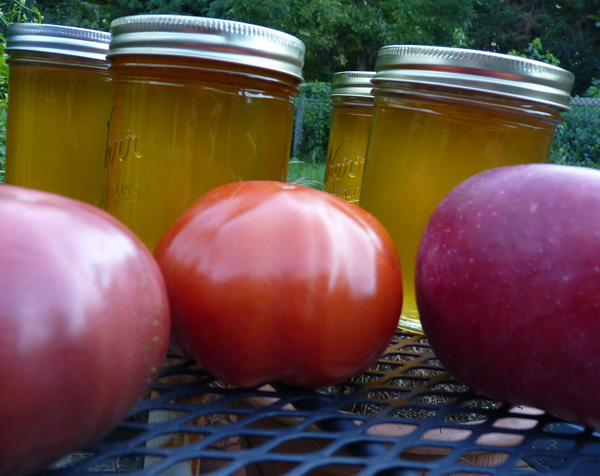
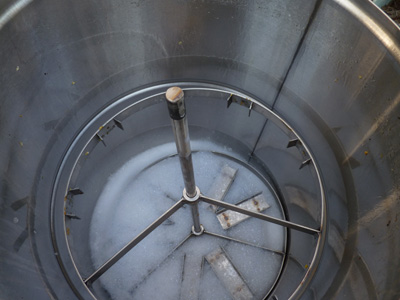
Tomorrow the season’s honey harvest.  Kate and I will haul out the extractor, fasten it to the deck and begin uncapping our honey.

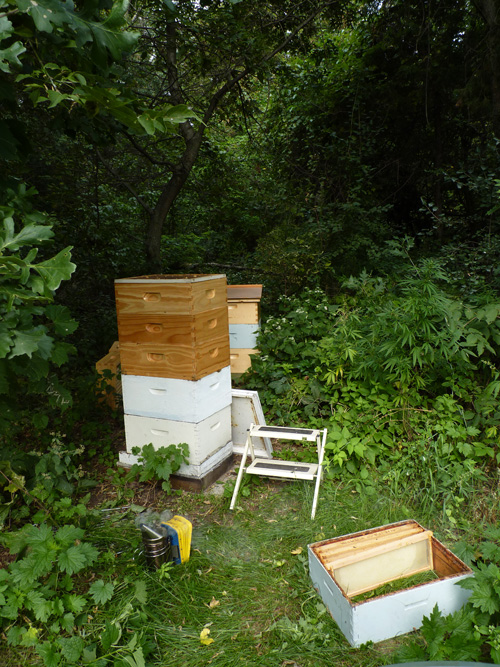
The process goes like this.  Each colony with surplus honey, 2 & 3, has at least two full honey supers and a third with some honey.  The bees have to be removed from the super, then the super covered with a bee tight lid.

The super goes in a wheel barrow and gets trundled to the deck.  Kate will uncap the frames by sliding a hot knife over the capped cells.  This is a sticky process, one that had several uninvited guests last year, but we’re taking steps to keep the bees away from the extraction.

In the first place we’ll only have one extractor load of frames at a time (6).  That means there will not be frames sitting free, inviting bees.  If we can, we will do the uncapping inside, further removing a source of attraction.

At any rate bees away from their queen are not defensive, so even if they do show up they’re not inclined to sting unless harmed.

Tomorrow’s work completes a journey begun two weeks late, at the very end of April and the beginning of May with three, three pound boxes of bees.

(6 frames go in the slots.  The motor turns the frames and centrifugal force extracts the honey)

Colony 1, which will over winter, has no surplus honey, and I have yet to determine if it has adequate stores.  That will come in the days after the extraction.

If my estimates are correct, we’re going to have a large harvest (for Artemis Hives).

Bee Diary: August, 2011

Lughnasa                                                                   Waning Honey Extraction Moon

Checked the honey supers this morning.  On the two package colonies that I do not intend to overwinter, we have approximately four full honey supers.  That is, we have for harvest the amount of honey they would have needed for the winter, close to 200 pounds.  Figure that 40 pounds is not recoverable due to drips, stuck on honey comb even after extraction then that should leave around 16o pounds to harvest.

If we chose to sell it at, say $7 a pound, that would create around a $1,ooo in sales after keeping some back for own use and gifts.  After the bee packages at $60 each and amortizing the honey extractor, supers and hive boxes, syrup, hive tools, smoker, pollen, queen excluders, honey jars, top and bottom boards and telescoping covers, we’d still be in the red for the first three years.  Don’t know what we’ll do with it this year, probably give away a lot again.  It’s good for barter and gifts for sure.

Artemis Hives has produced honey two years in a row now, an artisanal honey created by bees aided by the beekeeper, me, and the bee equipment and harvest partner, Kate.

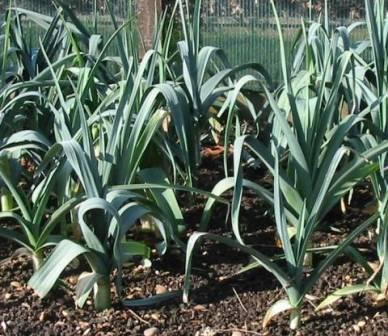
Looking at the gardening year in total we will have a good, not great honey harvest, a good potato harvest, leeks, beets, chard, beans and possibly a decent tomato crop.  Kate has good success with her zucchinis and the decorative gourds have bloomed but produced no fruit yet.  The gardening and beekeeping year will wind down in September, just in time for us to finish our cruise preparations.  Caring for gardens and bees requires a lot of face time with the plants and hives, visits to nurseries, attendance at Hobby Bee Keeper meetings, not to mention all the work of harvesting and putting food by.

I’m at the point in the year when my enthusiasm has run out a while ago and the only thing that keeps me active now is the need to finish, to harvest.  When it’s done, it’s over for the year.


The Late Summer Garden

Lughnasa                                                          Waning Honey Extraction Moon

Working in the late summer garden.  Those creepy pre-beetle organisms continue to gnaw on my potato plants and I gnaw right back.  So far the invasion has not gained a significant beach head thanks to soapy water and the occasional visit to prune out bugs.  Parts of the garden where harvest has happened need to be weeded and green manure sowed.  That’s a weekend task.  The onions didn’t do too well this year.  I think the bed they’re in just doesn’t get enough sun anymore.

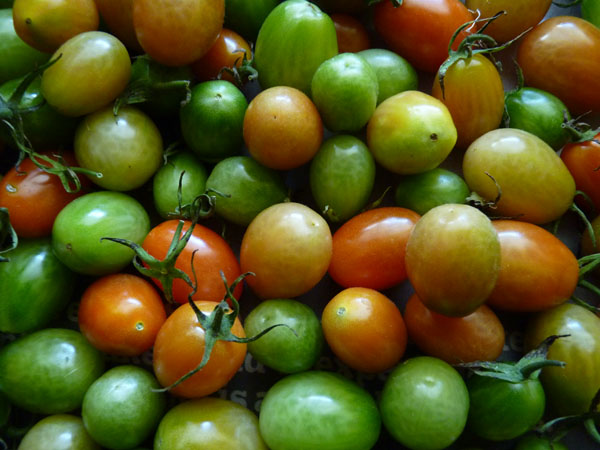
Our tomatoes have matured or are close, but we’ve only had a few ripe ones so far.  Too cool.

Kate planted decorative squash.  I took some time to look at them today.  Their tendrils reach out and grasp other branches, stalks, leaves, curl around them and seal themselves off.  These tendrils though look like springs and function like springs.  They give the squash plant some give as winds and rain put tension on the various connections.  It was easy to see how a clever blacksmith could have looked at this plant and been inspired.

With the vegetable garden in a slow period we returned to the three tiered garden in our patio area.  I worked there for an hour and a half or so this morning and it felt like being with an old friend.  I’ve spent many hours on my hands and knees among these plants, each one of which I put in the ground myself.  Well, not the trees and the dogwood, but everything else excepting Kate’s squash and zucchini.


The Continuing Storm

Lughnasa                                                                Waxing Honey Extraction Moon

The stock market whips around like a Post Office flag in a dereccho.  Our politics flounder like a, well, like a flounder on dry land.  The Europe Union has big troubles with its southern extremities testing their dive reflexes.  Meanwhile I’m picking developing Colorado beetles off my potatoes.  These are gross looking things part way between larvae and bug, no hard carapace just beetle shaped red wiggly surface.  Uuucck.

Our money managers called us asking if we wanted to talk about the market.  No, I don’t.  We pay them to worry about this stuff for us and this is when they earn their money.  Either this is an anticipated correction or the beginning of the fiscal end.  If it’s the latter, I have my hobo shoes and a bindlestiff ready to go.

No matter the macro wheezing and moaning we go on about our life, cooking supper, pulling weeds, visiting the track.  I imagine it’s quite exciting to play on the fields of high finance or national politics, but these days I’ll settle for a ripe tomato, a few frames of honey to extract and a dog next to me on the couch.

Senescence

Lughnasa                                                    Waxing Honey Extraction Moon

Walked in the garden alone.  Yep, it’s an old time spiritual, much loved in the churches of my youth.  It also describes my morning turn among our vegetables and in our orchard.

The garlic has come out already.  The potatoes have a while yet to go.  The beans have gone from green bean material to soup beans, waiting now for the pods to dry on the vine.  A few onions remain, as for the tomatoes, there are a lot of possibilities, but as the weather cools, will they ripen?  In the orchard we’ve had more productivity than any year so far, a few cherries, lots of currants, many dropped plums, but a few now maturing on the tree.  The apples, in their plastic sandwich bags, have begun to swell on the honeycrisp tree, but on the other, a green apple, they’re not a lot bigger than when the bags went on in July.  Our blueberries came and disappeared into the mouths of birds.

The wild grape harvest looks like it will be a big one this year.  These vines are everywhere on our property, but the ones that produce the most fruit hang in dense layers over the northern fence that fronts our orchard.  Picking the wild grapes usually marks the end of the gardening year here at Artemis Hives and Gardens, at least the food gardening.

The fall flowers of course begin to bloom then, the asters, the mums, the monkshod, the clematis.  It’s also the time to plant bulbs, tulips and daffodils, lilies and croci. It is, too, the time that the garlic bulbs harvested in July, yield up cloves from the largest bulbs for planting.  I like planting the garlic in late August, early September.  Garlic is a counter culture crop, sown in the fall and harvested mid-summer.

Senescence has fascinated me for a long time.  Earlier in my life the process of degradation that rotted wood, turned leaves into humus and prepared more soil got my attention.  An early interest, I suppose, in the great chain of being (note the lower case here, less Scholastic, more Great Wheel).   Now I’ve noticed another key aspect of senescence; it is the time of harvest.  Yes, in the plant world, the dying of the plant’s above earth body follows or is in step with the giving of its fruit.  That is, aging produces

This is also the time when gardening begins to wane in interest for me.  My energies now turn to novels, research for tours at the MIA, preparing for the fall issue selection process at the Sierra Club and the upcoming legislative session.

Now, too, the cruise, which begins in October, looms closer and the loose ends for it need to be tidied.  The Brazilian visa.  New luggage.  Check the clothes.  Rent a tux. (yes.  I’m gonna do it.  3 formal nights a week on the cruise.  i’ll pretend it’s halloween every one of those nights.  i’ll be some seriously weird expatriate Muscovite on the run from Putin’s secret police.  something like that.)

Co-Habitation

Lughnasa                                                                             Waxing Honey Extraction Moon

While harvesting Swiss Chard this morning, I looked down and saw a streak of blue head for the edge of the raised bed.  I stopped all motion and, sure enough, the blue streak slowed, blue-tailed-skinkstopped and looked.  A skink with a bright blue tail had a curious, what’s going on in my world, peek, then scurried down a small hole underneath the horizontal board topping the side of the raised bed.

One of the pleasures of non-toxic gardening lies in the number of garden critters that develop happy homes in and around the beds.  We have salamanders, skinks, various snakes, toads and frogs as well as the more common gopher, chipmunk, opposum, raccoon, groundhog, rabbit and squirrel.

The number of insects and arachnids also increase in variety, too. I see spiders, lady bugs, wasps, native pollinators and diverse number of mosquitoes, too.  Of course the butterflies, moths and dragonflies also show up as do lightning bugs.  Not so many of these last as my childhood nights in Indiana, but they are here.  Many, maybe most, of the insects and arachnids I do not recognize.

Birds, too.  Rose-breasted nuthatches, robins, blue jays, chickadees, red-tailed hawks, great gray owls, pileated woodpeckers and red-tailed woodpeckers, crows, sparrows and even the odd sea gull and pelican at certain times of year.

These sightings remind me of the truth I wrote about last year at some point:  Kate and I share this property with so many other living beings, most of whom will be here long after we leave.  Well, their direct descendants anyhow.  The bank and Anoka county say we own this land, but we don’t.  We’re merely occupying it for a period of time, co-habiting with an astounding number of others.

Bee Diary: July 18 2011

Mid-Summer                                                                   Waning Honey Flow Moon

The six new honey supers did not prove necessary since I’m still two supers ahead of each colony, but it does look like colonies 2 & 3 have already stored a lot of honey, especially in the two supers that went on in place of  the third hive box.  In colony 1, the colony I will overwinter, they seem to still be at work filling up that third hive box which will constitute their honey supply for the winter.  In 2 & 3 we will harvest the honey from the two super equivalents to that third full hive box.

Looked at the garlic, which I’ve been harvesting as its leaves brown.  When two leaves are brown, I pull them and I have about half the crop out now. It looks like the best garlic crop I’ve ever had.  Nice fat heads.  I’ll save a couple to plant next year, continuing this garlic’s acclimatization to our soil and weather.

We’re harvesting more frequently overall this year, getting beans, peas and lettuce before they over grow.  This part of the July is the hump part of the growing season.  From this point forward it’s either harvesting or making sure plants stay healthy until they are ready to harvest.  The bees are in mid-honey flow, storing and working like, well, like bees.

Artemis gardens and hives is having a good year.