Another short trough of time where work here will focus on moving, rearranging, hanging.
Decompressing after finishing a long project starts now. The joy of holding the weight of the manuscript in my hand as I passed it to Kate, always my first reader, pleases me in a deep way. Superior Wolf is the first work I’ve finished in Colorado, on Shadow Mountain, yet its bones are deeply Minnesotan.
The inspiration for Superior Wolf came from the last native packs of timber wolves in the USA, those in the Arrowhead region of northern Minnesota. It merged along the way with the Latin work I’d been doing, translating Ovid, which included the story of Lycaon, the king of Arcadia. Minnesota and Ovid, the core of this novel.
There is, too, the usual regret that I couldn’t have done better, written more poetically, created more tension, brought the characters to life more convincingly. These regrets are, strangely, the fuel that will carry me into my next novel, probably Jennie’s Dead. Perhaps it will be the one where my language sings and the plot cannot be put down, where the characters take over the work.
But not yet. The next period of time belongs to another very long term project, reimagining faith. There is that bookshelf filled with works on emergence, of pagan thought, on holiness and sacred time, on the Great Wheel, on the enlightenment, on nature and wilderness. There are file folders to be collected from their various resting places and computer files, too. Printouts to be made of writing already done. Long walks to be taken, using shinrin-yoku to further this work. Drives to be taken in the Rocky Mountains, over to South Park, down to Durango, up again to the Neversummer Wilderness. The Rockies will influence reimagining in ways I don’t yet understand.
Reimagining is already underway, has been for awhile. The first task is to collect all that work I’ve done, so what comes next will be clear. Maybe in a week or two. First though I want to wander around some, move some books, hang some art.
On this day, 12 days from the summer solstice, the first draft of Superior Wolf came to an end. It’s printing right now. This part of the work is done.
Once the formatting and other elements of the draft, like the dedication and an initial quote, were in good order, the laser jet printer set itself in motion taking bits and bytes and transforming them, Ovid style, into black words on white paper.
A first draft, of course, is not finished. It requires editing, checking for continuity, grammar, conceptual mistakes like plot holes, differing character descriptions and the other 10,000 things that make up a world created from my head over many years. I first began writing on Superior Wolf in 1999. This is my eighth novel. Some are better finished than others.
I’ve failed, in a significant way, as a writer. I can’t escape that fact. I’ve not sold my works, not labored in the fields of publishing, at least not hard enough. I’ve succeeded, too, and there’s no diminishing that fact. I have begun the creation of 8 different worlds filled with their own populations and places, carrying them through to completion.
Over the last 12 years or so I have written literally millions of words on Ancientrails. There have been, too, short stories, sermons and partial drafts for even more novels, perhaps four. Some work has been done as well on an ecological history of Lake Superior and Reimagining Faith. I now intend to turn myself toward Reimagining, writing as clearly as I can about what I believe is a critical perspective for our time. This perspective, one taken from close to the ground, but still seeing the sky might help us create a sustainable presence for humans on this earth, the great work of our time. I want to contribute in a way that I can.
Back at Superior Wolf. After a month or so of focusing on other things, chiefly that presentation for the mussar class, I’m writing again. The end of the first draft for this novel is near. Once I get it done I’m going to print it out and give it to Kate, then I’m going to move away from it for a while, perhaps three/four months, while I try to push Reimagining Faith further along.
I’d like to get a book length draft of Reimagining done this year or at least get one well started. My sense is that it requires a concentrated effort, not one done with other writing projects. I need to spend time in research and writing on it alone. I do best when I can focus on a single project for hours at a time.
Yes, mussar and kabbalah require a lot of reading, too, but that’s its own concentrated effort, not competitive with Reimagining. In fact I find the mussar and kabbalah work reinforcing for Reimagining, especially in a Reconstructionist environment. There’s a lot of energy and permission for rethinking fundamentals at Beth Evergreen.
Kabbalah may require a return to my Hebrew studies of over forty years ago. I learned functional Hebrew, enough to look up words and evaluate translations, but never had the goal of understanding grammar or building much of a vocabulary. I certainly never had the intent of using it for worship. A major component of kabbalah is gematria, a sort of numerology that focus on numerical values of Hebrew letters and words. To understand this aspect of kabbalah I’ll need to increase my Hebrew proficiency.
Not sure right now where Latin fits into all this. I’ve fallen away from it, but at the same time I miss it. Need to ponder this one for awhile.
I guess it’s time to admit it. I’m a deeply religious guy, whatever that means. It means at least that I find religion and religions fascinating, personally transformative. I have approached religion since high school with a mixture of deep skepticism and a willingness, no, a need to rethink, refeel, reexperience what I’m told.
J. Harry Cotton, professor of philosophy at Wabash College, introduced the radical skepticism to my journey. In my senior year of high school I had grown dissatisfied with the Methodist version of Christianity, so I asked the local Roman Catholic priest to give me instructions in the Catholic faith. He introduced me to the traditional Aquinian arguments for the existence of God. Since I had not, at that time, fully recognized the relentlessly logical bent to my mind, I found these arguments profound and felt like the Methodists had hidden them from me.
Triumph of Thomas Aquinas, Benozzo Gozzoli
Then, that fall, J. Harry systematically dismantled each one of them. It’s not hard to do with the proper philosophical tools. Take God as the Aristotelian prime mover of the universe. God put the whole shebang in motion, otherwise how would things have gotten started? Well, like many similar arguments, this one suffers from the problem of infinite regression. So, if the universe required a prime mover, then who or what moved the prime mover?
When I left J. Harry’s class that afternoon, walking across the great lawn with brick academic buildings on every side, my world had been shaken at a foundational level. Out went the whole Christian project in my life, right then. Later, I would find Camus and his version of existentialism, which still informs me, but then, there was nothing.
Since that day until now my ancientrail has always wound its circuitous path back to the big questions. I’ve explored Christianity, Islam, now Judaism, Taoism, existentialism, various spiritual disciplines like lectio divina, meditation, morning and evening prayers, contemplative prayer, even some modest peaks into Tibetan buddhism occasioned by my friendship with Gyatsho Tshering. Though I am now and have been for a while an idiosyncratic version of Taoist/pagan, I’m finding the Reconstructionist path in Judaism a surprisingly familiar one.
Rabbi Mordecai Kaplan
Reconstructionist thought, begun by Rabbi Mordecai Kaplan, is radical. Very radical. He asserted that the Torah is not divinely inspired. He went on to say that God as a supernatural intervener makes no sense. He rewrote Jewish rituals and insisted on a reexamination of the whole tradition, reconstructing it where it made sense. I love a key line of his, “The past gets a voice, but not a veto.” Yes. Very Emersonian.
Maybe my reimagining faith project is not so far out as I have sometimes thought. Perhaps it’s the work I’ve been in training for most of my adult life. What if I knuckled down and got at it with a reconstructionist bent in mind? Might be interesting.
Yesterday was my first religious work since moving to Colorado. I felt a bit awkward, mildly anxious. The awkwardness and the anxiety came largely from the Jewish portion of the session since I don’t read Hebrew and have a very limited feel for the deep background. This primarily involved understanding words like hasidut, which I had mistakenly translated as loving deeds when it actually refers to a person engaging in them. Chesed, which is familiar to me from seminary as loving-kindness, was less problematic. Ma’asim, which I took as deeds of daily life, seemed to mean close to that.
This was important because the material I had prepared focused on deeds of loving kindness toward grandmother earth. Bonnie and Tara, both fluent in biblical Hebrew, gently put me back on course when I made a mistake. Their helpfulness made me realize, just now as I’m writing this, that there is a different way of being a presenter, one that relies on others as well as on preparation. I know, obvious right? Not to me because in the Christian religious culture and even in the UU culture the clergy presents and others react. The process can be dialogical, yes, but usually involves only reactions to the ideas of the presenter.
We did have a wonderful discussion about anthropocentrism and various religions’ implication in its effect on the environment. Mostly though we discussed ideas generated by several quotes I gathered. They ranged from a segment of Emerson’s introduction to his essay, Nature, to Henry Beston from the Outermost House, and also included several thoughts on the nature of holiness by Jewish theologians.
Here are a few of the latter that I found especially moving:
Martin Buber: Holiness is not found in rising above one’s neighbors but in relationships, in human beings recognizing the latent divinity of other people, even as God recognizes the divinity in each of us. The commentary adds, “As human beings we can be Godlike by exercising our powers to sanctify moments and objects in our lives.”*
“The modern distinction between “religious” and “secular” is unknown to the Torah. Everything we do has the potential of being holy.”*
Again, from Buber, “Judaism does not divide life into the holy and the profane, but into the holy and the not-yet holy.” Another scholar, a man named Finklestein, adds, “Judaism is a way of life that endeavors to transform virtually every human action into a means of communion with God.”*
This, too, is in the commentary: “…(find) ways of sanctifying every moment of your life. We can be as holy as we allow ourselves to be.”*
Kate and I sponsored the oneg last night at Beth Evergreen. Oneg means delight and in this use it’s a modest event after the sabbath service. It involves the kiddush prayer over wine, the passing of challah (a ceremony not coincidentally similar to the Christian eucharist) and having some sweets or other snacks. It’s similar to coffee after a Christian or U.U. service, but different in one significant regard. The Jewish sabbath, as a day of rest and renewal has a focus on good food and general delight, so the oneg both is that ideal and reinforces the larger sabbath ethos.
Kate did her usual excellent job of providing a variety of tasty food and adult beverages, in this case white wine. We bought the challah at a small bakery, Alpine Bakery, in Evergreen. I picked out cookies: bunnies, unicorns and trains. The oneg was in honor of Ruth and Gabe so they seemed apropos.
In the service, sparsely attended, due I imagine to the snowfall over the last three days, the Beth Evergreen choir sang. The Reconstructionist book for the sabbath service is an impressive piece of liturgical accompaniment. It contains both Hebrew and English versions of the various portions as well as commentary that suggests the reconstructionist take on traditional elements of Jewish worship.
Charlton Heston at work
In a section focused on the Exodus, the parting of the Reed (Red) Sea the commentary says an early Reconstructionist prayer book did not include the parting of the sea because of its supernatural element. This version of the prayer book has it because “As myth, however, the ancient tale of wonder underscores the sense of daily miracle in our lives.” This gives you a good feel for the Reconstructionist approach to both theology and the Torah. It’s one I find myself nodding to a lot.
Though I retain my empiricist, flat-earth metaphysics I’m finding it under spiritual and intellectual siege. This ancient tradition, radically reconsidered from within, pushes me to open myself to a deeper, more mystical place. The mystical has always been a significant part of my spiritual journey, but I’ve let it lie fallow for the most part in recent years. Not sure where this is headed, stirrings of old feelings mixed with reimagining faith. An interesting moment.
Working on a presentation for our mussar class at Beth Evergreen. Want to include Berry’s idea of the great work for our generation: creating a sustainable human presence on earth.
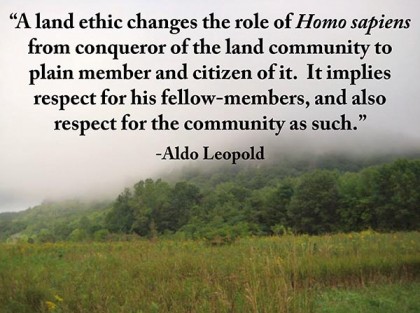
Also want to include Aldo Leopold’s land ethic:
“All ethics so far evolved rest upon a single premise: that the individual is a member of a community of interdependent parts.The land ethic simply enlarges the boundaries of the community to include soils, waters, plants and animals, or collectively the land.” The Land Ethic, A Sand County Almanac.
The date of the presentation happens to be Emerson’s birthday. So, from Nature: “The foregoing generations beheld God and nature face to face; we, through their eyes. Why should not we also enjoy an original relation to the universe? Why should not we have a poetry and philosophy of insight and not of tradition, and a religion by revelation to us, and not the history of theirs? Embosomed for a season in nature, whose floods of life stream around and through us, and invite us by the powers they supply, to action proportioned to nature, why should we grope among the dry bones of the past, or put the living generation into masquerade out of its faded wardrobe? The sun shines to-day also. There is more wool and flax in the fields. There are new lands, new men, new thoughts. Let us demand our own works and laws and worship.” introduction to his essay, Nature.
Linking up with the parsha* (Torah portion read in Shabbat services) I found Leviticus 25 filled with interesting ideas about the land. Here are a couple that fit well with these ideas.
Lev. 25:18 “…you shall live on the land securely.”
Lev. 25:23 “…the land shall not be sold permanently for the land belongs to Me, for you are all strangers and temporary residents with me.”
Of course, this is a mussar class so all of this has to connect with the Mesillat Yesharim, Path of the Upright, that we’re reading. To do that I think kedusha, holiness, hasidut, piety, and chesed, loving-kindness are key. These last two come from the same root.
Here are some ideas about holiness from the parsha of a couple of weeks ago, Kedoshim. Leviticus 19:2b: “You shall be holy, for I, the Lord your God, am holy.” In commentary on Kedoshim the Conservative text* that I have quotes many famous Jewish scholars.
Martin Buber: Holiness is not found in rising above one’s neighbors but in relationships, in human beings recognizing the latent divinity of other people, even as God recognizes the divinity in each of us. The commentary adds, “As human beings we can be Godlike by exercising our powers to sanctify moments and objects in our lives.” Namaste.
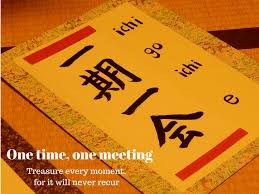
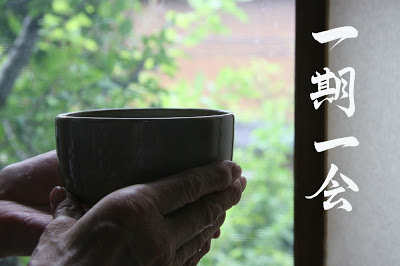
I can also link this idea to the Japanese ichi-go ichi-e, once in a lifetime, attitude gleaned from the work of Japanese tea masters, especially the renowned Sen no Rikyū. He learned ichi-go ichi-e from his master, Takeno Jōō. “Jōō believed that each meeting should be treasured because it can never be reproduced.” wikipedia
ichigo ichie
Another of my favorite Japanese ideas is shinrin-yoku or forest-bathing. Here’s a one-line summary from the website linked to here. “The idea is simple: if a person simply visits a natural area and walks in a relaxed way there are calming, rejuvenating and restorative benefits to be achieved.”
More from the commentary on Kedoshim: “The modern distinction between “religious” and “secular” is unknown to the Torah. Everything we do has the potential of being holy.”
Again, from Buber, “Judaism does not divide life into the holy and the profane, but into the holy and the not-yet holy.” Another scholar, a man named Finklestein, adds, “Judaism is a way of life that endeavors to transform virtually every human action into a means of communion with God.” or, perhaps with a pagan sensibility, ichi-go ichi-e.
I say perhaps intentionally because my reimagined faith could intersect with these ideas in a positive way, especially so if the locus of the divine is the individual soul, that part of us that connects with collective unconscious, Brahma, the three Sephirot: kether, the crown, chochmah, wisdom and binah, understanding, that part of the other to which we bow when we say Namaste. Or, as I quoted Buber earlier, “Holiness is not found in rising above one’s neighbors but in relationships, in human beings recognizing the latent divinity of other people…”
This, too, is in the commentary: “…(find) ways of sanctifying every moment of your life. We can be as holy as we allow ourselves to be.” again, the Japanese ichi-go ichi-e and shinrin-yoku.
I’m also trying to pick up some ideas about Hebrew roots but that, so far, has eluded me.
Somewhere in this stew is enough material for a session. Just gotta sort it out.
*Etz Hayim, Torah and Commentary, The Rabbinical Assembly, The United Synagogue of Conservative Judaism. 2001. New York, N.Y. 10027
Baahubali 2: the Conclusion. OK. Some confessions first. I love costume drama. Sword and sandal. Victorian England. Crouching Tiger, Hidden Dragon. Gone With the Wind. Ben Hur. Movies like that. Or, television shows, too, for that matter. No, I don’t like them all, but when a movie combines a compelling story with the recreation of a period of time, I’m there.
I also love foreign films not made for an export market. In other words, I enjoy seeing how filmmakers and writers from other cultures choose to tell stories within their own cultural idioms. Seeing these and reading novels written and loved in a particular place, not the U.S., is the moral equivalent of traveling for me and I do all of these as often as I can.
I’ve also come to enjoy for its own sake the peculiar Bollywood film-making style. Technically, Baahubali is not Bollywood made, but it is in the Bollywood style. That style inevitably includes several elaborate song and dance numbers, often coming at odd junctures in the story, at least odd to this mountain man raised in the Midwest.
So, for me Baahubali was a perfect storm. Set in some mythic era of India, in the state of Mahishmati, a real ancient city, but here represented as the ultimate utopia, there are court scenes, love scenes, song and dance scenes, hunting scenes, battle scenes all elaborately produced and choreographed. Yes, the acting is often very broad, but this is not realism, it’s fantasy. There is also plenty of humor.
Though it was three hours long, the film never dragged, moving from one intense moment to another. One beautiful scene, the most fantastic, found a swan shaped ship sailing through the clouds as the two doomed lovers, Baahubali and Devasena, stood Titanic-like, at the prow.
There is a thoughtful review from the Indian entertainment press with which I largely agree. In essence the reviewer says the movie was a visual treat and thrilling, very watchable. But. It didn’t grab the heart, leave memorable characters or ideas behind. A glorious ephemera.
True that. Even so, it’s still worth seeing if you share even some of my cinematic quirks: love of costume dramas, a desire to see how other cultures express themselves in film, a jones for beautifully clad, colorful choreography and Indian musical vocals.
Irv Saltzman invited us to a performance by his singing group, the Renaissance Singers. It was held in a wooden Episcopal Church, St. Laurence’s, which is near our home. Directed by a Chinese national, Hannah Woo, who is finishing her Ph.D. in musicology, they were 8, four men and four women. As a group, they matched each other well. April, a soprano, had a lovely clear voice and a large range. Irv, formerly a tenor, has now transitioned into a bass/baritone role. Their performance was wonderful. At a meal afterwards we discovered April is our neighbor.
Renaissance choral music and instrumental renaissance music has always captivated me. It’s easy to see courtiers in colorful costumes listening to this music in a palace, brown robed and cowled monks hearing it in a morning prayer service, or small groups performing at home for their own amusement. It’s also the music most often heard at Renaissance festivals. Sorta makes sense, eh?
The sanctuary had a vaulted ceiling with exposed beams and two large, clear windows that looked out to the east, toward Shadow, Evergreen and Bear mountains. It rained while we were there and the mountains were in mist, the windows covered with raindrops slowly moving from top to bottom. There were individual chairs, padded with kneelers, arranged in a three sided configuration, making the sanctuary a sort of thrust proscenium stage, an ideal arrangement for a small group of singers.
A church artist had painted the stations of the cross and they were around the sanctuary, set off by bent sheet metal frames. A copper baptistry, large, sat over a cinerarium where the congregation deposits cremation remains and memorializes the dead with small plaques.
Between the two windows hung a large crucifix, a cross made of bare, light wood and a bronze Jesus hung by two nails. I had an odd sensation while listening to this music I’ve often heard in monastic settings on retreat. It carried me back into the spiritual space of an ascetic Christianity that often comforted me. This time though I came into the space as a peri-Jew, identifying more with Marilyn and Irv and Kate, with the still new to me spiritual space of Beth Evergreen, than the theological world represented by this spare, but beautiful sanctuary.
The crucifix stimulated the strongest, strangest and most unexpected feeling. I saw, instead of the Jesus of Christianity, a hung Jew, a member of the tribe. More than that, I felt the vast apparatus and historical punch created by his followers, followers of a man who shared much of the new faith world in which I now find myself. It was an odd feeling, as if this whole religion was an offshoot, a historical by-blow that somehow got way out of hand.
These feelings signaled to me how far I’d moved into the cultural world of reconstructionist Judaism. I see now with eyes and a heart shaped by the Torah and mussar and interaction with a rabbi and the congregants of Beth Evergreen.
This was an afternoon filled with the metaphysical whiplash I’ve experienced often over the last year, a clashing of deep thought currents, spiritual longings. This process is a challenge to my more recent flat-earth humanism, a pagan faith grounded not in the next world, but in this one. Literally grounded.
What’s pushing me now is not a desire to change religious traditions, but to again look toward the unseen, the powerful forces just outside of the electromagnetic spectrum and incorporate them again into my ancientrail of faith. This makes me feel odd, as if I’m abandoning convictions hard won, but I don’t think that’s actually what’s going on. There is now an opening to press further into my paganism, to probe further into the mystery of life, of our place in the unfoldingness of the universe, to feel and know what lies beyond reason and the senses.
Yesterday on my Lego store, IKEA, Dairy Queen outing-all in the interest of Ruth and Gabe-I saw an unusual and unusually striking sight. While waiting for the stoplight at Chester and Yosemite after visiting IKEA, a flash of mylar caught my eye. In a parking lot across Yosemite I saw a person struggling, or at least that’s what I thought it was, to put shiny objects into their vehicle. Since the same shapes moved in, then came back out a couple of times, I realized it wasn’t going well. Then, just as most of them disappeared inside, one broke loose and drifted up, up, up into the air.
It was a silvery colored mylar A. As it lifted out of reach, the person at the vehicle looked up. Turning once onto its side, it became a triangular aircraft, life a B2 bomber. Then some current of air turned it again and it faded away toward the north, a clear and flashy A, signaling itself as a familiar part of the alphabet on a journey all its own, freed from both words and the earth.

 Another short trough of time where work here will focus on moving, rearranging, hanging.
 But not yet. The next period of time belongs to another very long term project, reimagining faith. There is that bookshelf filled with works on emergence, of pagan thought, on holiness and sacred time, on the Great Wheel, on the enlightenment, on nature and wilderness. There are file folders to be collected from their various resting places and computer files, too. Printouts to be made of writing already done. Long walks to be taken, using shinrin-yoku to further this work. Drives to be taken in the Rocky Mountains, over to South Park, down to Durango, up again to the Neversummer Wilderness. The Rockies will influence reimagining in ways I don’t yet understand.
 Over the last 12 years or so I have written literally millions of words on Ancientrails. There have been, too, short stories, sermons and partial drafts for even more novels, perhaps four. Some work has been done as well on an ecological history of Lake Superior and Reimagining Faith. I now intend to turn myself toward Reimagining, writing as clearly as I can about what I believe is a critical perspective for our time. This perspective, one taken from close to the ground, but still seeing the sky might help us create a sustainable presence for humans on this earth, the great work of our time. I want to contribute in a way that I can.
 Back at Superior Wolf. After a month or so of focusing on other things, chiefly that presentation for the mussar class, I’m writing again. The end of the first draft for this novel is near. Once I get it done I’m going to print it out and give it to Kate, then I’m going to move away from it for a while, perhaps three/four months, while I try to push Reimagining Faith further along.
 Yes, mussar and kabbalah require a lot of reading, too, but that’s its own concentrated effort, not competitive with Reimagining. In fact I find the mussar and kabbalah work reinforcing for Reimagining, especially in a Reconstructionist environment. There’s a lot of energy and permission for rethinking fundamentals at Beth Evergreen.
 I guess it’s time to admit it. I’m a deeply religious guy, whatever that means. It means at least that I find religion and religions fascinating, personally transformative. I have approached religion since high school with a mixture of deep skepticism and a willingness, no, a need to rethink, refeel, reexperience what I’m told.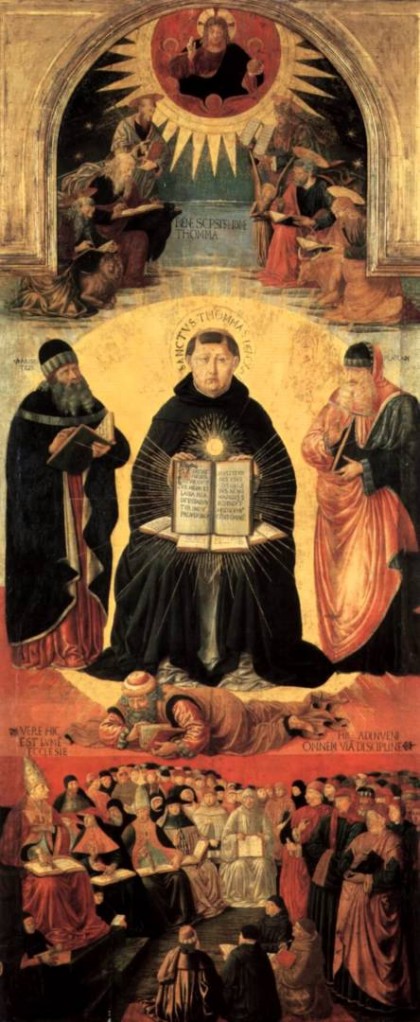
 Since that day until now my ancientrail has always wound its circuitous path back to the big questions. I’ve explored Christianity, Islam, now Judaism, Taoism, existentialism, various spiritual disciplines like lectio divina, meditation, morning and evening prayers, contemplative prayer, even some modest peaks into Tibetan buddhism occasioned by my friendship with Gyatsho Tshering. Though I am now and have been for a while an idiosyncratic version of Taoist/pagan, I’m finding the Reconstructionist path in Judaism a surprisingly familiar one.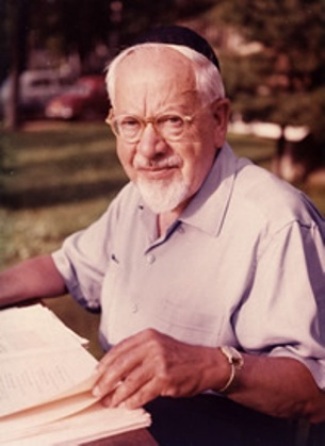
 This was important because the material I had prepared focused on deeds of loving kindness toward grandmother earth. Bonnie and Tara, both fluent in biblical Hebrew, gently put me back on course when I made a mistake. Their helpfulness made me realize, just now as I’m writing this, that there is a different way of being a presenter, one that relies on others as well as on preparation. I know, obvious right? Not to me because in the Christian religious culture and even in the UU culture the clergy presents and others react. The process can be dialogical, yes, but usually involves only reactions to the ideas of the presenter.
 Here are a few of the latter that I found especially moving:
 Again, from Buber, “Judaism does not divide life into the holy and the profane, but into the holy and the not-yet holy.” Another scholar, a man named Finklestein, adds, “Judaism is a way of life that endeavors to transform virtually every human action into a means of communion with God.”*
 Kate and I sponsored the oneg last night at Beth Evergreen. Oneg means delight and in this use it’s a modest event after the sabbath service. It involves the kiddush prayer over wine, the passing of challah (a ceremony not coincidentally similar to the Christian eucharist) and having some sweets or other snacks. It’s similar to coffee after a Christian or U.U. service, but different in one significant regard. The Jewish sabbath, as a day of rest and renewal has a focus on good food and general delight, so the oneg both is that ideal and reinforces the larger sabbath ethos.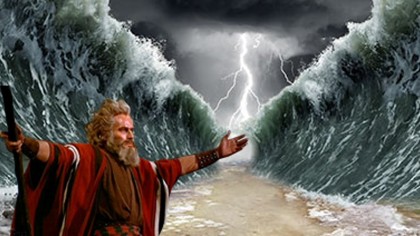
 Also want to include Aldo Leopold’s land ethic:
 The date of the presentation happens to be Emerson’s birthday. So, from Nature: “The foregoing generations beheld God and nature face to face; we, through their eyes. Why should not we also enjoy an original relation to the universe? Why should not we have a poetry and philosophy of insight and not of tradition, and a religion by revelation to us, and not the history of theirs? Embosomed for a season in nature, whose floods of life stream around and through us, and invite us by the powers they supply, to action proportioned to nature, why should we grope among the dry bones of the past, or put the living generation into masquerade out of its faded wardrobe? The sun shines to-day also. There is more wool and flax in the fields. There are new lands, new men, new thoughts. Let us demand our own works and laws and worship.” introduction to his essay,
 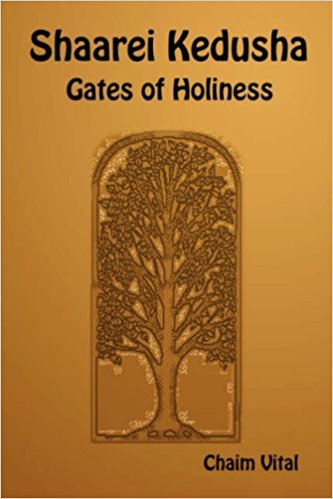 Here are some ideas about holiness from the parsha of a couple of weeks ago, Kedoshim. Leviticus 19:2b: “You shall be holy, for I, the Lord your God, am holy.” In commentary on Kedoshim the Conservative text* that I have quotes many famous Jewish scholars.
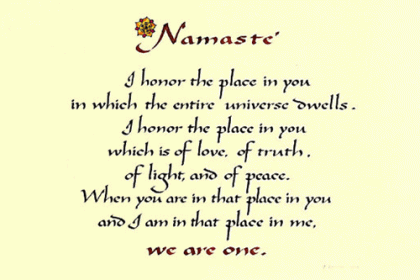 I say perhaps intentionally because my reimagined faith could intersect with these ideas in a positive way, especially so if the locus of the divine is the individual soul, that part of us that connects with collective unconscious, Brahma, the three Sephirot: kether, the crown, chochmah, wisdom and binah, understanding, that part of the other to which we bow when we say Namaste. Or, as I quoted Buber earlier, “Holiness is not found in rising above one’s neighbors but in relationships, in human beings recognizing the latent divinity of other people…”
 I’ve also come to enjoy for its own sake the peculiar Bollywood film-making style. Technically, Baahubali is not Bollywood made, but it is in the Bollywood style. That style inevitably includes several elaborate song and dance numbers, often coming at odd junctures in the story, at least odd to this mountain man raised in the Midwest.
 There is a
 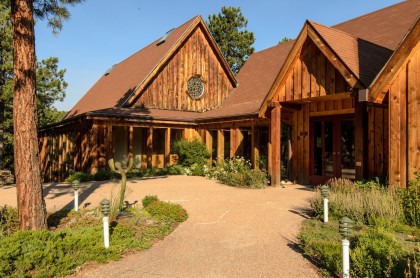 Irv Saltzman invited us to a performance by his singing group, the Renaissance Singers. It was held in a wooden Episcopal Church, St. Laurence’s, which is near our home. Directed by a Chinese national, Hannah Woo, who is finishing her Ph.D. in musicology, they were 8, four men and four women. As a group, they matched each other well. April, a soprano, had a lovely clear voice and a large range. Irv, formerly a tenor, has now transitioned into a bass/baritone role. Their performance was wonderful. At a meal afterwards we discovered April is our neighbor.
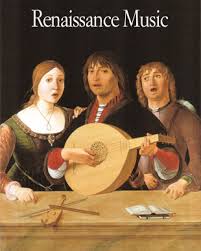 Renaissance choral music and instrumental renaissance music has always captivated me. It’s easy to see courtiers in colorful costumes listening to this music in a palace, brown robed and cowled monks hearing it in a morning prayer service, or small groups performing at home for their own amusement. It’s also the music most often heard at Renaissance festivals. Sorta makes sense, eh?
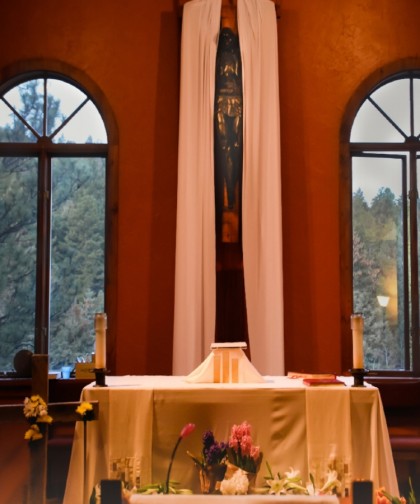 Between the two windows hung a large crucifix, a cross made of bare, light wood and a bronze Jesus hung by two nails. I had an odd sensation while listening to this music I’ve often heard in monastic settings on retreat. It carried me back into the spiritual space of an ascetic Christianity that often comforted me. This time though I came into the space as a peri-Jew, identifying more with Marilyn and Irv and Kate, with the still new to me spiritual space of Beth Evergreen, than the theological world represented by this spare, but beautiful sanctuary.
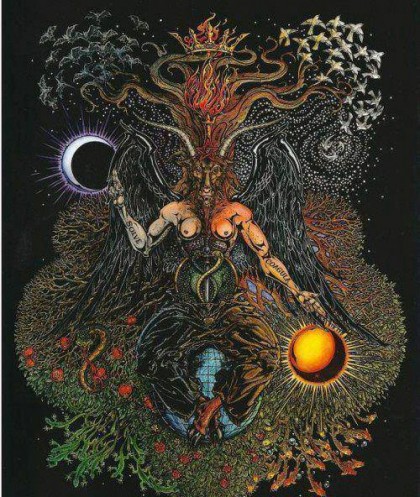 This was an afternoon filled with the metaphysical whiplash I’ve experienced often over the last year, a clashing of deep thought currents, spiritual longings. This process is a challenge to my more recent flat-earth humanism, a pagan faith grounded not in the next world, but in this one. Literally grounded.