Old Movies and Herbs

Summer                                                            Solstice Moon
Kate and I watched an old Sherlock Holmes movie, Murder by Decree, with a young Christopher Plummer as Holmes and James Mason as Watson.  Mason yes.  Plummer, unfortunately, no.  Not brooding or angular enough.  Basil Rathbone is better.

While watching we plucked oregano leaves for the dryer.  Kate has already frozen rhubarb and several cups of strawberries.  The harvest is well underway and will continue at one level or another through the latter part of September.

In the aches and pains department:  knee, bad last year, much improved, rarely gives problems.  back, normal now, after a very painful late April and May.  left shoulder, vast improvement, not better, but I can see return to normalcy.  and now, ta dah, just as the left shoulder has begun to heal, the right elbow.  Ouch.  Some form of tendinitis, I’m sure.  It seems as if there is a rhythmic pattern here: knee, back, shoulder, elbow.  A concrete, perhaps a skeletal poem.

Mathematics Makes No Sense

Summer                                                                              Solstice Moon

Found this via Big Think, which excerpted from this blog at RealScience, Newton, which listed the 10 greatest ideas in the history of science.  This one, #10, was the one that surprised me the most, especially the part about transcendental numbers.

(archimedes cigar box label)

I could, but won’t, challenge the list save to say this:  discoveries in so-called fundamental sciences like physics are neither fundamental nor necessarily the most important.  Evolution, listed as #1, is of the type I would tend to seek for my list of 10, those discoveries that lie in the complex world well above the world of elemental particles.  This list suffers from the reductionist bias of much of western science.  (we can discuss this at another time.)

“Fundamentally, mathematics makes no sense. That probably doesn’t come as a surprise to those of us who struggled in algebra or calculus. Though it is the language of science, the truth is that mathematics is built upon a cracked foundation.

For instance, consider a number. You think you know one when you see one, but it’s rather difficult to define. (In that sense, numbers are like obscenity or pornography.) Not that mathematicians haven’t tried to define numbers. The field of set theory is largely dedicated to such an endeavor, but it isn’t without controversy.

Or consider infinity. Georg Cantor did and went crazy in the process. Counterintuitively, there is such a thing as one infinity being larger than another infinity. The rational numbers (those that can be expressed as a fraction) constitute one infinity, but irrational numbers (those that cannot be expressed as a fraction) constitute a larger infinity. A special type of irrational number, called the transcendental number, is particularly to blame for this. The most famous transcendental is pi, which can neither be expressed as a fraction nor as the solution to an algebraic equation. The digits which make up pi (3.14159265…) go on and on infinitely in no particular pattern. Most numbers are transcendental, like pi. And that yields a very bizarre conclusion: The natural numbers (1, 2, 3…) are incredibly rare. It’s amazing that we can do any math whatsoever.

At its core, mathematics is intimately tied to philosophy. The most hotly debated questions, such as the existence and qualities of infinity, seem far more philosophical in nature than scientific. And thanks to Kurt Gödel, we know that an infinite number of mathematical expressions are probably true, but unprovable.

Such difficulties explain why, from an epistemological viewpoint, mathematics is so disturbing: It places a finite boundary on human reason.”

Source: Galileo’s Finger: The Ten Great Ideas of Science by Peter Atkins

The Garden This Time

Summer                                                                                         Solstice Moon

Since Friday night, we’ve seen explosive growth in our tomatillos and tomatoes.  It seems impossible, but I’m pretty sure the tomatillos gained 6 inches almost overnight.  The tomatoes both rocketed up and produced blooms.  We have fruits on both.  Not many, but some.  We’ve also been harvesting strawberries all week.

Carrot thinning, a task today, proved difficult on one row because tiny ants on both row ends felt disturbed by all the pulling.  They climbed onto my hands, up my arms, down my legs and onto my neck.  Nothing harmful about them, but they felt creepy.  Even so, I got all the carrots thinned.  Some beets have begun to mature, not ready yet, but they’re close.

The garlic crop, a diminished one as I’ve reported here before, also went from no scapes on Friday to scapes I could harvest on Saturday.  I’ve not done anything to the plants except for the initial broadcast and the jubilee and transplant water on the transplants.  The nutrient drenches and foliar sprays start next week.

My opinion of this year’s harvest potential has grown more positive.  The garlic, which I would have already harvested in years past, should be ready in the next week to ten days. It has brown up three leaves from the ground, then I’ll pull it.  The leeks and onions both look good.


Lightening the Load

Summer                                                                                Solstice Moon

Well. It seems I keep discarding things for the sake of writing.  In my early 40’s, not long after marrying Kate, I gave up the ministry.  More recently I’ve set aside the Sierra Club work and docent responsibilities at the MIA.  Now I’ve taken a pause in the Latin until Labor Day.

A loft class starts in a little over a week, one I’m in, focused on revision of novels and getting them ready for marketing.  Though I’ve been working away at revising Missing, I still have a long way to go.  Following up the useful thoughts of my beta readers and my own critiques of the second draft, I stripped out about 35,000 words and made dramatic changes to point of view.  Both require line by line reworking, a process that takes the amount of time that it takes.

I’d very much like to have a finished revision by Labor Day and with the garden plus the bees, something had to give.  Latin was the only thing left.  I’ve had one long caesura with it during the cruise around South America, but this will only be the second one since I began in 2010.  Probably time for a rest anyhow.

Now I’m going to devote as much time as I can to the revision.  Pushing now.  I want to get this done and the book on the market.

Bee Diary: June 29, 2013 An entry for Ruth

Summer                                                                          Solstice Moon

A set of photos for Ruth, my bee helper.

Ruth, I was sure glad you and Gabe and your Mom and Dad came to visit.  I’m going to be putting those stones in place for steps in the fire pit as you suggested.  You might also be interested to know that we got the lights working for the playhouse.  A little late, but soon enough that your grandma plans to hang the chandelier crystals.

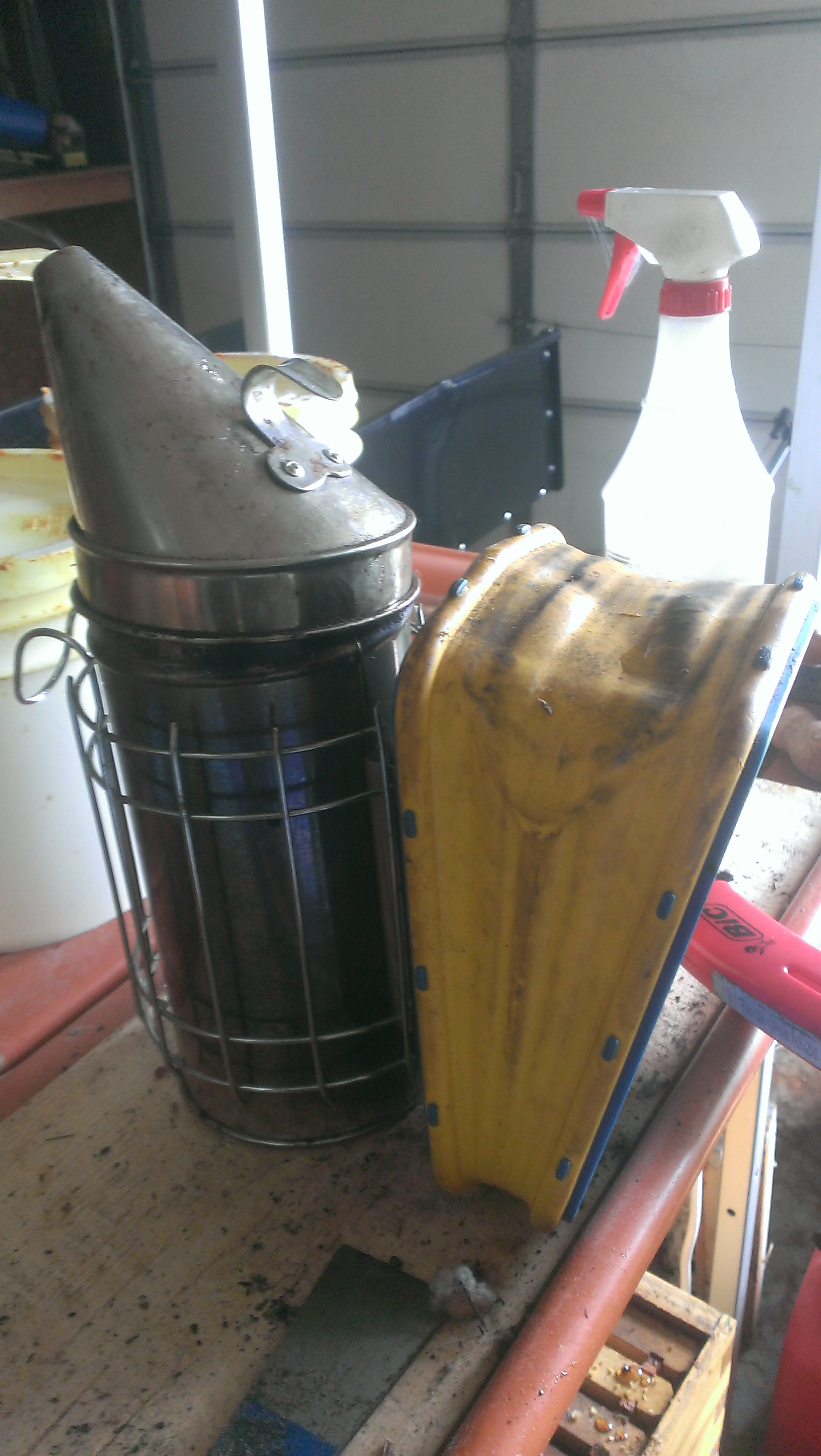
Here’s a few photographs to explain what happens next with the bees.  You might remember we used the smoker, right?  The smoke calms the bees down.

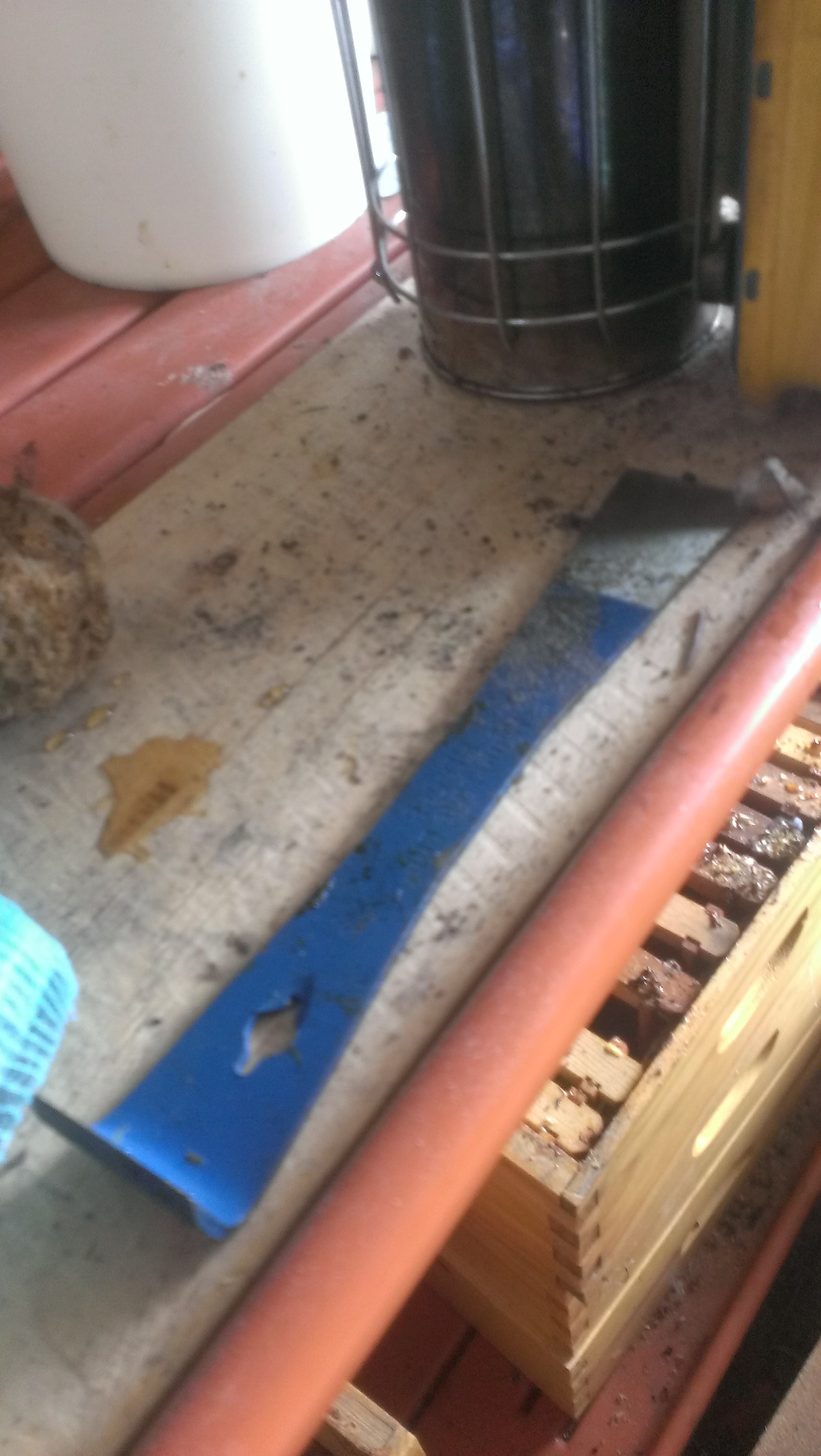
We also used the hive tool to separate the frames and to lift up the hive box to check for swarm cells.

This week, a week after you and I checked the bees (well, a week and a day), the nectar flow is about to start.  That’s when the bees make honey to store over the winter.  Lucky for us they make way more than they need.  That’s why we can harvest honey in September.

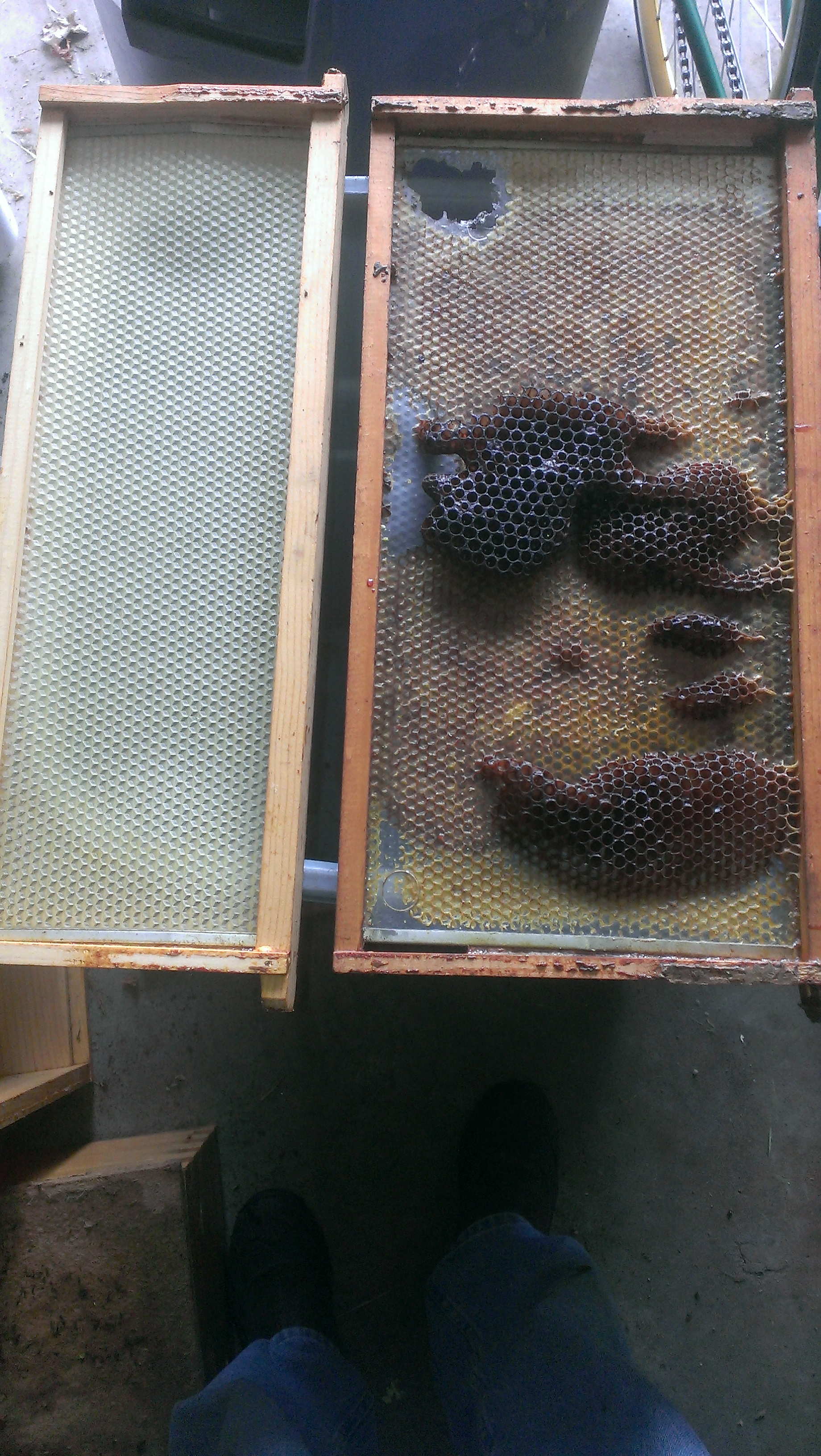
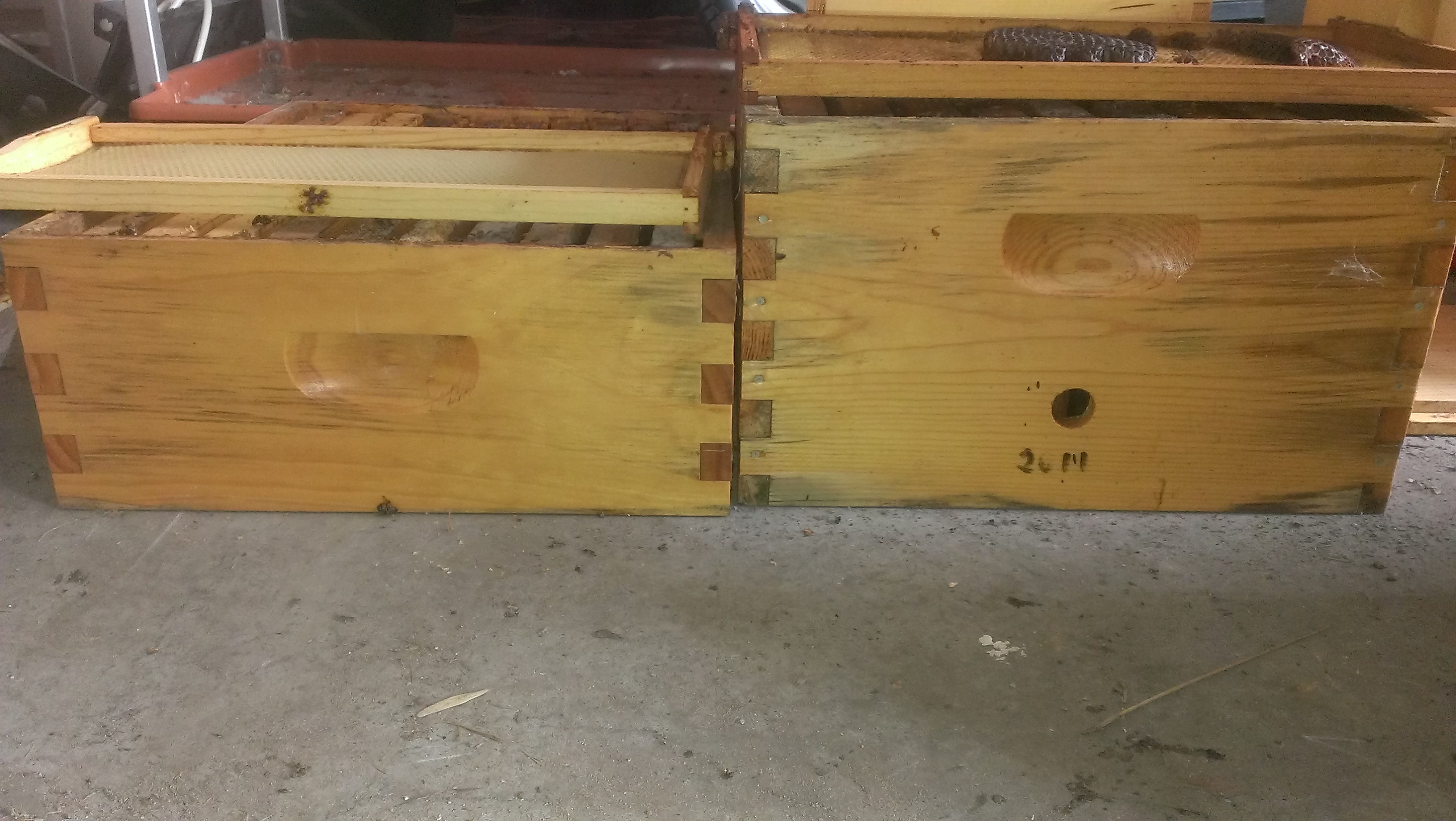
To collect honey to harvest in our honey extractor we first have to put on boxes called honey supers.  They have frames smaller than the hive boxes that you saw.  Here’s a picture of both of them.  Which one is the honey super frame?  The one on the left or the one on the right?

The honey super is smaller than the hive box.  It’s half as big.  How many honey supers would make up one hive box?  Here’s a picture of both of them.  Which is which?

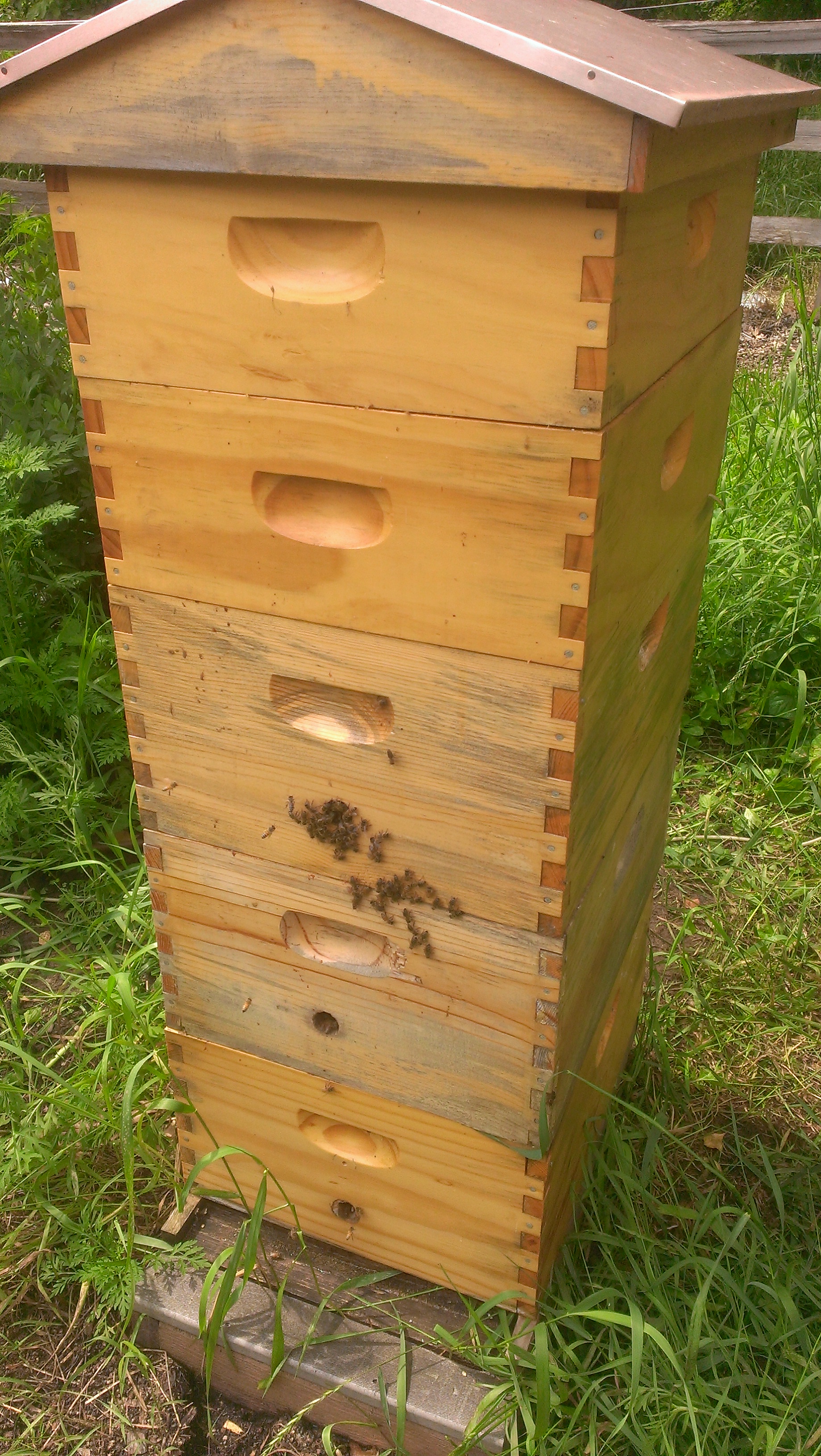
This is a picture of the colony (3 hive boxes) with two honey supers on it.  It’s as tall as you are now!  In some years we can put as many six or eight honey supers on.  Imagine how tall that would be.

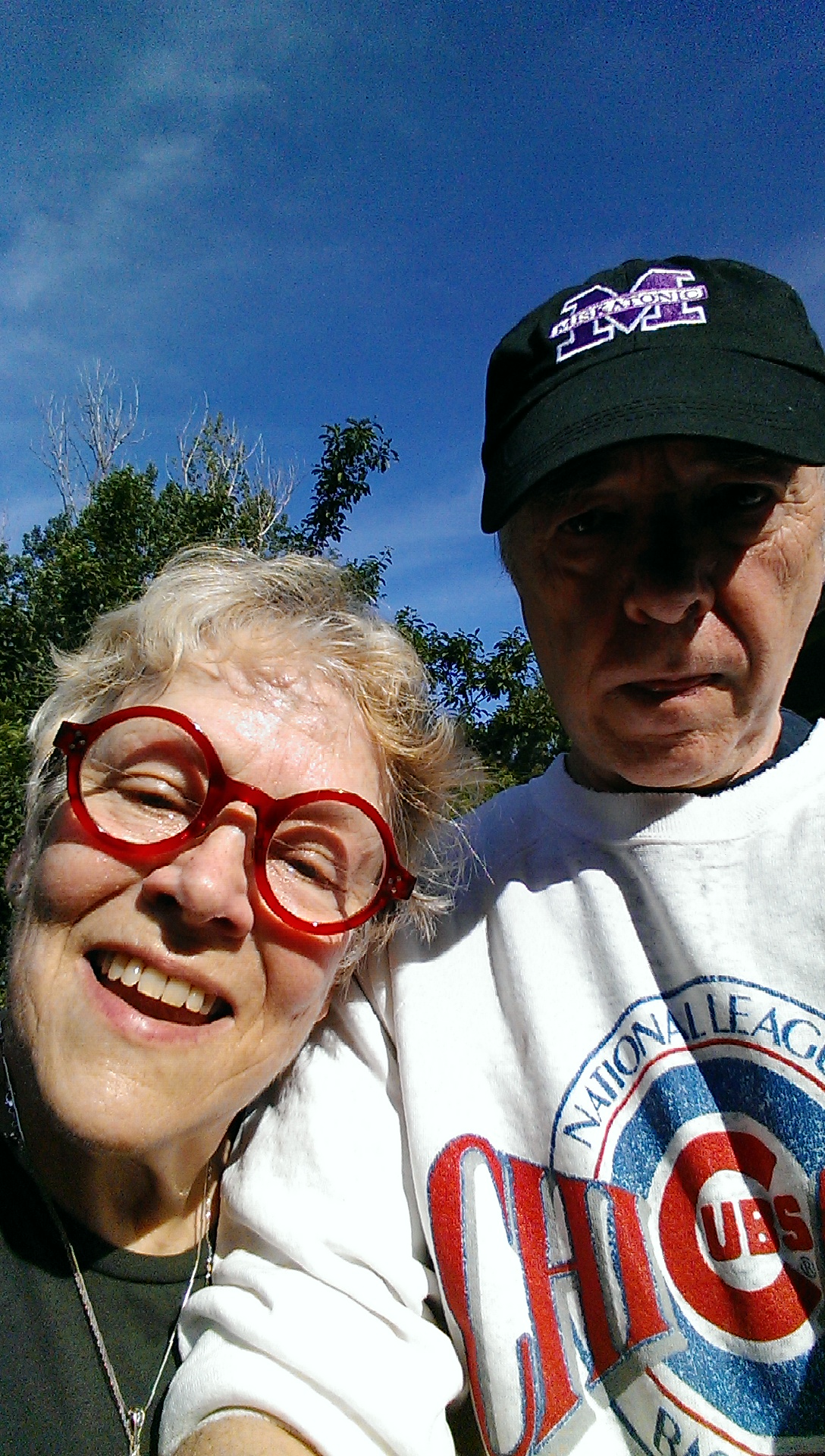
Here’s Grandma and Grandpa saying we love you all!!!

Svalbard

Summer                                                                            Solstice Moon

Friend Tom Crane and his wife Roxann are going polar.  Not bi polar, but north polar, getting all the way to the 78th parallel.  Pretty damned far north when you consider the pole itself is 90 degrees north.  On a long list of populated areas by latitude there are only three closer to the north pole and I’m guessing they’re not the kind of places you’d go to get lost in.

(Svalbard in brown on a polar projection.)

Two years ago Kate and I visited Ushuaia, Argentina, the fin del mundo, as it bills itself.  It’s where expeditions for Antarctica set forth.  By contrast it is only at the 68th parallel, a full 10 degrees closer to the equator than Svalbard.

This is one lonely location, though it’s not as isolated, interestingly, as the Hawai’ian islands.  But, I’ll bet when you’re there, it feels more isolated.  Tom says he’s drawn to this trip by the very high caliber naturalists who are along to give lectures and guide.

Svalbard came to my attention, as perhaps to yours, not as a tourist destination for an Arctic experience, but as the home of the Svalbard Seed Vault.

(The entrance and the portion under glass were designed by Norwegian artist, Dyveke Sannes.)

What is it?  Here’s a quick explanation from their website:

“The Svalbard Global Seed Vault, which is established in the permafrost in the mountains of Svalbard, is designed to store duplicates of seeds from seed collections around the globe. Many of these collections are in developing countries. If seeds are lost, e.g. as a result of natural disasters, war or simply a lack of resources, the seed collections may be reestablished using seeds from Svalbard.”

Here are two typically nordic answers as to why they chose this location, especially the last sentence of reason 2.

1. Svalbard, as Norwegian territory, enjoys security and political and social stability. Norway understands the importance of preserving Svalbard as an area of undisturbed nature, which is now an important research and reference area. The seed vault fits ideally into this concept.

2.  Svalbard has an isolated position far out in the ocean, between 74° and 81° N and only 1000 kilometres from the North Pole. The archipelago is characterised by an undisturbed nature. Permafrost provides stable storage conditions for seeds. Besides which there is little risk of local dispersion of seed.


More Than Honey

Summer                                                                              Solstice Moon

This movie is coming to the Lagoon on July 12.  I’ve lost 4 colonies in the past two years.  This is not an abstract or faraway issue.  It’s right here.  At home.

More Than Honey

“Over the past 15 years, numerous colonies of bees have been decimated throughout the world, but the causes of this disaster remain unknown. Depending on the world region, 50% to 90% of all local bees have disappeared, and this epidemic is still spreading from beehive to beehive – all over the planet.

In the US, the latest estimates suggest that a total of 1.5 million (out of 2.4 million total beehives) have disappeared across 27 states. In Germany, according to the national beekeepers association, one fourth of all colonies have been destroyed, with losses reaching up to 80% on some farms.

More than Honey – Markus Imhoof (Official Trailer) from CIBER Science on Vimeo.

Scientists have found a name for the phenomenon that matches its scale, “colony collapse disorder,” and they have good reason to be worried: 80% of plant species require bees to be pollinated. Without bees, there is no pollinization, and fruits and vegetables could disappear from the face of the Earth. Apis mellifera (the honey bee), which appeared on Earth 60 million years before man and is as indispensable to the economy as it is to man’s survival.

Should we blame pesticides or even medication used to combat them? Maybe look at parasites such as varroa mites? New viruses? Travelling stress? The multiplication of electromagnetic waves disturbing the magnetite nanoparticles found in the bees’ abdomen? So far, it looks like a combination of all these agents has been responsible for the weakening of the bees’ immune defenses.”

This last position is the one taken by Marla Spivak of the University of Minnesota Bee Lab.  She won a MacArthur Grant for her work.

Then again, a few more…

“That perfect tranquility of life, which is nowhere to be found but in retreat, a faithful friend and a good library.”
Aphra Behn, The Lucky Chance, Or, the Alderman’s Bargain
“There are thousands of wines that can take over our minds. Don’t think all ecstasies are the same!”
Rumi
“Be humble for you are made of earth.
Be noble for you are made of stars.”
Serbian Proverb 
“Knowing is not enough; we must apply. Willing is not enough; we must do.”
Johann Wolfgang von Goethe
“It is in vain to say human beings ought to be satisfied with tranquillity: they must have action; and they will make it if they cannot find it. Millions are condemned to a stiller doom than mine, and millions are in silent revolt against their lot. Nobody knows how many rebellions besides political rebellions ferment in the masses of life which people earth. Women are supposed to be very calm generally: but women feel just as men feel; they need exercise for their faculties, and a field for their efforts, as much as their brothers do; they suffer from too rigid a restraint, to absolute a stagnation, precisely as men would suffer; and it is narrow-minded in their more privileged fellow-creatures to say that they ought to confine themselves to making puddings and knitting stockings, to playing on the piano and embroidering bags. It is thoughtless to condemn them, or laugh at them, if they seek to do more or learn more than custom has pronounced necessary for their sex.”
Charlotte Brontë, Jane Eyre
“If what is seen and experienced is portrayed in the language of logic, we are engaged in science. If it is communicated through forms whose connections are not accessible to the conscious mind but are recognized intuitively as meaningful, then we are engaged in art.”
Albert Einstein
“If the possibility of the spiritual development of all individuals is to be secured, a second kind of outward freedom is necessary. The development of science and of the creative activities of the spirit in general requires still another kind of freedom, which may be characterised as inward freedom. It is this freedom of the spirit which consists in the interdependence of thought from the restrictions of authoritarian and social prejudices as well as from unphilosophical routinizing and habit in general. This inward freedom is an infrequent gift of nature and a worthy object for the individual.”
Albert Einstein
“Always do what you are afraid to do.”
R.W. Emerson
“All the thoughts of a turtle are turtle.”
R.W. Emerson
“All our progress is an unfolding, like the vegetable bud. You have first an instinct, then an opinion, then a knowledge, as the plant has root, bud and fruit. Trust the instinct to the end, though you can render no reason.”
R.W. Emerson
“All persons, all things which we have known, are here present, and many more than we see; the world is full.”
R.W. Emerson
“But words are things, and a small drop of ink,
falling like dew, upon a thought, produces
that which makes thousands, perhaps millions, think.”
from Don Juan, Canto III.88, George Gordon, Lord Byron
“All the books we own, both read and unread, are the fullest expression of self we have at our disposal. … But with each passing year, and with each whimsical purchase, our libraries become more and more able to articulate who we are, whether we read the books or not.”
Nick Hornby, The Polysyllabic Spree
“The splendor of the rose and the whitness of the lily do not rob the little violet of it’s scent nor the daisy of its simple charm. If every tiny flower wanted to be a rose, spring would lose its lovliness.”
St. Therese of Lisieux
“A little consideration of what takes place around us every day would show us that a higher law than that of our will regulates events; that our painful labours are unnecessary and fruitless; that only in our easy, simple, spontaneous action are we strong… Place yourself in the middle of the stream of power and wisdom which animates all whom it floats, and you are without effort impelled to truth, to right, and a perfect contentment.”
R.W. Emerson
“All life is an experiment. The more experiments you make the better.”
R.W. Emerson
“All great masters are chiefly distinguished by the power of adding a second, a third, and perhaps a fourth step in a continuous line. Many a (wo)man had taken the first step. With every additional step you enhance immensely the value of your first.”
R.W. Emerson
” The technology does not take away the man from the great problems of nature but forces him to study them in more detail. 
–  Antoine de Saint-Exupéry
“Stop insisting on clearing your head — clear your fucking heart instead.”
Charles Bukowski
“A man’s action is only a picture book of his creed.”
R.W. Emerson

The Ultimate Traveler

Summer                                                                             Solstice Moon

In my own travels I often look to find myself as the other, therefore to see myself more clearly.  When in Angkor, for example, the quarter mile long bas relief sculpture, which culminates in the churning of the sea of milk by Vishnu, made the religious worldview of these 1100 A.D. Khmer Hindus evident.  What they imagined, I could see, just as a visitor to any Catholic church can see paintings of saints, views of the Last Judgment, or a man on a cross, covered only with a loin cloth, a crown of thorns on his brow.

On the streets of Bangkok vendors sold for less than twenty U.S. cents fruits I had never known existed:  jack fruit, durian, dragon fruit.  Alleys less than three feet wide ran between store fronts filled with men’s, women’s, children’s clothing, plumbing supplies, watches, toys, home furnishings.  The crowds packed into the places were large and hot.  Not at all like the Mall of America.

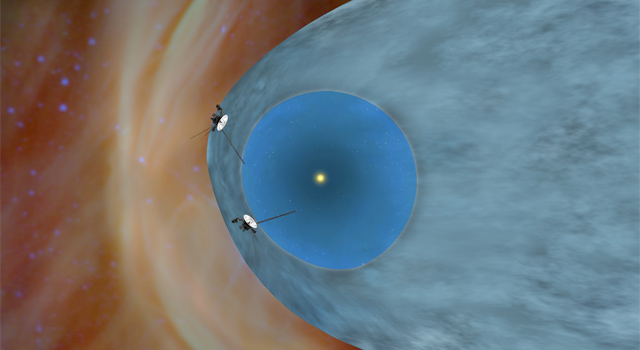
(Voyager’s 1 and 2 at the heliopause where the sun’s magnetic field hits the pressure of interstellar winds)

But.  There is no place on earth I can go where the influence of the sun cannot reach me.

Now this 35 year old pilgrim, on a trek to San Arcturus, or a Holy Well in the midst of the Orion nebula, will soon leave the sun’s influence behind.  Forever.  No magnetic field.  No warmth.  The heliosphere in the rear view mirror.  The solar system in the rear view mirror.  At least as we know it.  The Oort cloud is considered by some to be the true outer boundary of the solar system, but that boundary is still some 14,000 years away.

This human artifact has positioned itself as other by virtue of its madeness.  It was not crafted by the furnaces of the big bang, or the stellar ovens that crunch out elemental particles.  It was not made by the collision between planetary bodies or asteroids or volcanic activity.  No, it was made by human beings out of materials created in all those ways.  And now we have returned them to their origin, refashioned and able to talk about their experience.

But, ironically, Voyager is, exactly, the universe reflecting on itself, seeing itself, knowing itself.  Its pilgrimage is the same one Apollo inscribed on the doorway over his Delphic temple, Know thyself.  Only in this case the pilgrim is the universe, voyaging not to experience itself as other, but as its self.  Thus, Voyager can be seen as a metaphor for our inner journey, where we try to move beyond the Oort field of the Self, in order to better know the Self.  An equally daunting  trail.