Nocturne

Fall Equinox                                                                   New (Falling Leaves) Moon

For those of us who love the night, this is a fulcrum holiday. We enter the long period that starts with the final harvests and does not end completely until the vernal equinox. From today, till then, the night will gain dominance, peaking at the winter solstice, but not relinquishing its grip until the sun hits 0 declination in the east next March.

It’s not that I do not love the light, I do. It is rather that I prefer the dark, the quiet, the solitary. I’m also entranced, quite literally, by what I call Holiseason, that period beginning at Samhain and running through Epiphany. As we move into the dark, we also move into our fears, our paleolithic uneasiness with the reliability of the heavens.

These fears have driven humanity across time and across the globe to create brave holidays that feature the light. Yes, you could say that the emphasis on them really underscores our fears, rather than challenges them, but I choose to go with the perspective that they hit the fear directly. No, night, you cannot have us, not for all the day, never, and surely not for all the year. In the words of Battlestar Galatica, so say we all.

From late October to early January a parade of festivals bring us lights and gifts and warmth and family celebrations. What a delight. Good music, too. And theater.

It all starts tonight.

Mabon 2014 and the Springtime of the Soul

Fall Equinox                                                                      Leaf Change Moon

Today the earth’s celestial equator (the earth’s equator projected into space) passes through the sun’s ecliptic (the sun’s apparent path throughout the year, actually caused by earth’s orbit.) You usually hear this put the other way around; that is, as the sun passing through the earth’s celestial equator, but that represents the stuckness of paleolithic astronomy that assumed the earth was the center of the solar system. From the diagram above you can see the sun’s declination (degree above or below the celestial equator) is 0 on the vernal and autumnal equinoxes.

This same diagram is very clear about the solstices, too. You can see that when the earth’s orbit tilts the northern latitudes toward the sun, the sun is highest in the sky-the summer solstice.  When the sun is lowest in the northern sky-the earth tilts away from the sun and gives us the winter solstice.

Since the summer solstice day time has exceeded night time. In theory the autumnal equinox is the point of equilibrium between light and dark, but at our latitude that day actually occurs on September 25th this year. This is, however, the day the Great Wheel celebrates and it does so because of the sun’s zero declination at earth’s celestial equator.

This week then the victory of the sun, made complete on the summer solstice, begins to wane. The dark god of deep winter gains greater and greater authority as the sun’s rays spread out over a larger area of earth, thus weakening them, and the number of hours that the sun is in our sky, even in its weakened condition relative to the soil, decrease steadily until the night of the winter solstice. Thus comes the fallow, cold time.

It is no accident that the harvest season is now. Over the 475 million years (give or take a hundred million) since plants made it out of the oceans and onto land, plants have adapted themselves to the conditions that work with their particular genetics. Key aspects of a plant’s life include carbon dioxide, soil nutrients, available fresh water, adequate sunlight and temperatures adequate for all these to work with the plant’s life cycle.

Thus, as the earth’s orbit carries it to different relationships with solar strength, temperatures change along with it.  At its maximum when the earth tilts toward the sun and the sun is highest in the sky, the sun’s rays fall on a smaller area of land. Here’s an excellent simulation. University of Nebraska-Lincoln.

Plants have had the past 475 million years to refine their growing season so that it takes maximum benefit of the sun’s strength. In a very real sense the growing season is a clock, or an astronomical observatory directly correlated to the earth’s orbit around the sun–The Great Wheel.

On a spiritual level, if we follow the ancient calendar of the plants, the season of external growth, flowering and seed making, is waning now. Just as the plant either dies out and anticipates its rejuvenation from scattered seed or goes dormant and waits with stored energy below ground in roots or corms or bulbs, so we might consider this season as the one where we shift inward, away from the external demands upon us and the expectations put on us there.

Now we shift toward the interior life, the Self becomes more of a focus, our spiritual life can deepen. We can see this shift in the human life cycle if we compare the second phase of life with its emphasis on family creation and nurture and career, to the third, with its pulling back from those external expectations. The third phase is a post growing season time of life, not in the sense that growth ends, but that its focus is more down and in rather than up and out. The third phase is the fallow time.  Michaelmas on the 29th of this month is known by followers of Rudolf Steiner as the springtime of the soul.

The third phase marks the beginning of the springtime of the soul for the individual.
Love it or leave it

Lughnasa                                                                          College Moon

Cool nights. I’m enjoying these. A great advantage of mountain living is that most nights are cool nights. Looking forward to that. Also, realized that after we move Coming Down the Mountain will take on a new meaning in our life.

The push this week is getting things ready to make efficient use of the SortTossPack folks. A major emphasis will be sorting art, objet d’arts, souvenirs, all that stuff that hangs around because it got set down long ago and never moved. This is the love it or leave it sort.

Which reminds me of a conversation with Tom Crane at the War Memorial during the Woolly Meeting last week.  Pondering the weirdness around patriotism, the notion that the only patriots were veterans and flag wavers. I said, yes, and recalled the 60’s when the love it or leave it bumper stickers pretended to sort out the patriotic, worthy of citizenship folks from those of us with long hair and in opposition to the Vietnam War.

Love of country does not equate to love of government and pride in all its decisions. Nor does it equate to love of the economic system that sorts folks into the 1% and the 99%. Love of country has many roots and more than one flower.

With a son in the military I appreciate the dedication and sacrifice those who serve in the armed forces make, even in peace time. That some in the country want to remember and honor those who serve seems like a natural impulse to me. Most nations have needed warriors over the millennia and they are often the difference between freedom and servitude.

But, the warriors in our country serve at the discretion and for the policies of our elected officials. This means that the work they do passes through the sausage works of politics before it comes to marching orders. Not all wars (most wars?) are just. Thus, it is not reasonable to conflate opposition to war, or to a particular war, with opposition to the military per se.

The love I feel for my nation has three main sources: the people as a collective, the nobility of our experiment and the vast diversity of the land itself. Though we become separated by distance, by values, by history, by future potential each person in our nation is my fellow citizen, a person whose rights and responsibilities I respect.

This great experiment, whether a people with roots in other lands can flourish as one country, is a noble one because it represents in microcosm the world. The fact that our history has many regional, ethnic, even religious conflicts does not take away from the experiment, rather it underwrites it. Can we live with and grow together in spite of the depth of our differences? That a nation can persist, can become great under such circumstances is hopeful.

Finally, this land that is our land. The oceans and their shores. The rivers and lakes. Old mountains like the Appalachians and young vibrant mountains like the Rockies. Vast areas of level fertile soil in a humid climate. Even vaster areas of thin, rocky soil in arid climates. The forests and the wildlife, the farms and the ranches. The wild places and the domesticated. It is a wonder and a full lifetime, even two full lifetimes would not be enough to explore it.

It is this combination of people, political purpose and powerful geography that makes me love where I was born and where I will die. The good old U.S.A.


Enough

Lughnasa (last day of 2014)                                               College Moon

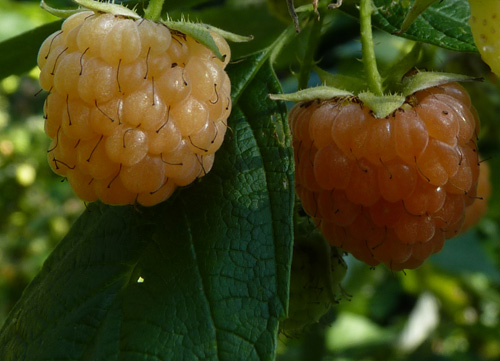
50008 28 10_late summer 2010_0198The raspberry plant. Source of the brambles, an imperial sort of plant that colonizes, then absorbs patches of land. Just realized today what an elegant form of evolutionary engineering it is.

In the spring it shoots up from last year’s cane or from seed. Then it grows up and up toward the sun, its spiny stalk with its thick, bark-like cover strong. During the summer months it spreads out its leaves, increases the size of its stalk, sinks its roots deeper into the soil. As the growing season begins to dwindle, it throws out small blossoms on thin, spindly branches. The resulting fruit at first weighs down the spindly branches just a bit, the whole still upright, able to drink in the sun.

As the fruit matures, however, it gains water weight and the spindly branches begin to IMAG1002bend toward the ground, overwhelmed by the cumulative mass of the maturing fruit. Once a large number of fruits are ripe, the weight of the whole may bend the tip and even the thinner part of the upper stalk toward the ground.

Think of it. At each stage of its presence during the growing season the raspberry has an optimal design. Firm and upright early to catch the sun, to get it above neighboring vegetation. As the fruits turn their soft golds or their beautiful magenta, the raspberry’s fruits gradually lower themselves so the seeds, which they exist to nourish, get closer to the ground. If a bird or animal doesn’t grab them for the taste of the fruit, they simply drop off and fruit and seed start more raspberry plants right there.

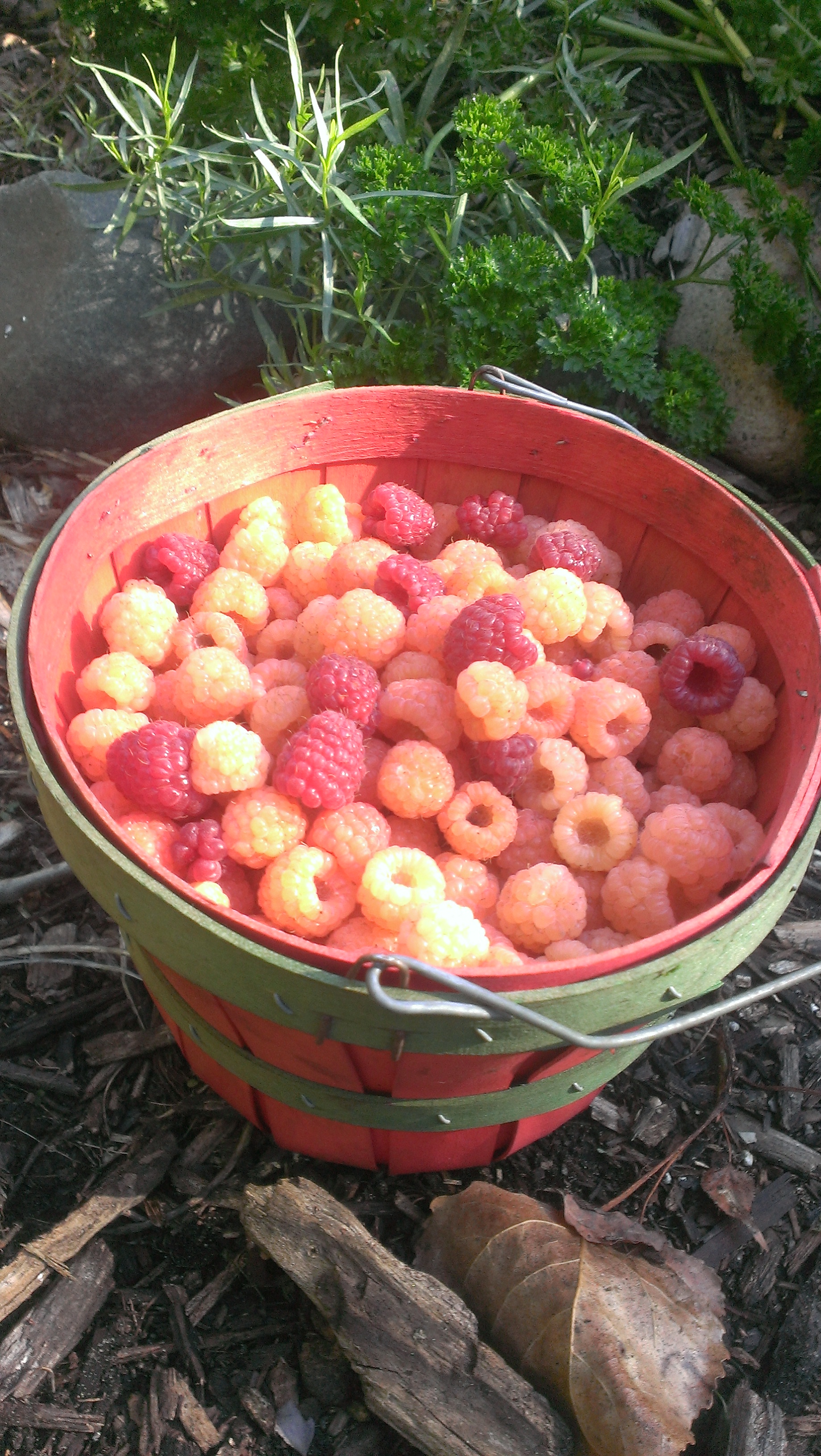
Picking raspberries in the cool of a sunny fall afternoon, the air sweet with the scent of snakeroot blooming nearby, the dogs waiting at the fence for fruits thrown over.  Enough. That’s all. Enough.

The Visible Fence

Lughnasa                                                                          College Moon

Installing the visible fence. The yellow wire fit neatly into the clips I’d put up for the electric fence around the orchard. That was the run of fencing that Gertie, our then and now challenge, defeated by jumping up on the top fence rail, standing with her feet on the electric fence with no connection to mother Earth. Game, set, match. Gertie.

Now we’ll have  different technology. A wireless burst of electricity delivered through a wicked looking collar with twin metal studs that project inward to the dog’s neck. If it weren’t a mild current and if I didn’t love my apple and pear trees, no way I’d use this. I know that’s a strange attitude from a dog person, but training has never been part of our life with our dogs, except at certain minimal levels.

I get little joy out of seeing dogs do behaviors generated by operant conditioning. Wagging tails, smiles, hugs, cuddling, licking, paws out for a touch all those behaviors give me great joy, instigated as they are within the dog’s own world-not my version of what their world should be. Still, I know that obedience training is important when dogs don’t have an acre and half of yard with trees. And, I also know that dogs love having a job and for some obeying their owner is that job.

When Celt turned away from the lure course track and walked over to the donut stand while his fellow compatriots ran off baying at the plastic lure, I couldn’t have been prouder.

The visible fence is an attempt to save the trees. Literally. It will also travel with us to Colorado, as will the electric fence. As I said before, critters to keep out and ones to keep in.

Last Day of Lughnasa, 2014

Lughnasa (the last day for 2014)                                        College Moon

The season of first harvests is drawing to a close. In our garden the harvest is largely over with only raspberries, leeks, carrots and beets left. Well, a few peppers and an egg plant might make it, but they’re pretty small. Lord willin’ and the creek don’t rise, this is the last Lughnasa in Minnesota. When we hit August 1st next year, we’ll either be looking at vegetables in a new garden or getting a garden ready for 2016.

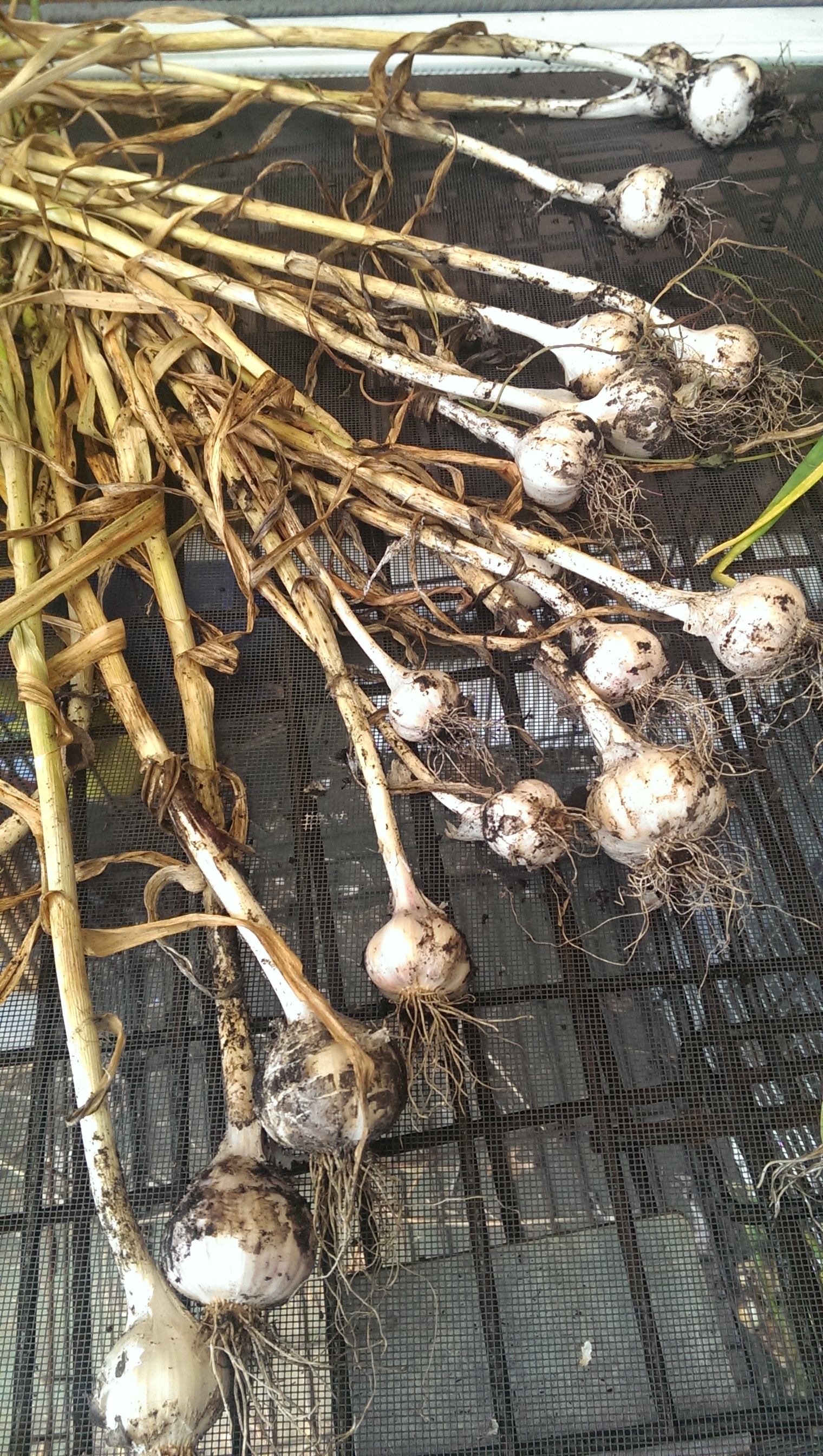
It’s been an abundant year here with plenty of onions, garlic, beets, carrots, peppers, tomatoes, green beans, cucumbers, collard greens and chard already brought in. There are all the herbs, too, plus the currants and the gooseberries, the blueberries. Apples, cherries, pears and plums were in scant supply this year, but that means the new owners should have a great crop next year.

What I’ve learned about horticulture and bees, I’ve learned thanks to this land. The soil and the sun, the rain and the plants have all offered themselves as partners, and willing partners. Their language is more clear, more straightforward than the one in which I write here. I’m ready now for another teacher, for Rocky Mountain soil and sun, the sparser rain and more abundant snow, for plants that thrive on elevated ground.

Too, there is a project, a project of wondering. How will a lifelong flatlander, a Midwestern boy all his days, react to life among the earth risen up, pushed away from the surface, grown massive and hard? How will a 40 year Minnesotan, who has lived among lakes and rain and rivers, with cropland and gardens, respond to an arid land where the dominant element is rock, tough and tall? This is not a wondering about which is better, but about what each place teaches.

This student is definitely ready.

The Last Planting

Lughnasa                                                                     College Moon

The garden has been less a priority the last month since packing became dominant. It’sIMAG0378 suffered some, the grass in between the beds has gone to seed, the collard greens have been picked apart by beetles and the chard has slowed down its growth. The raspberries though have become to ripen in large numbers and we’re freezing them as they’re picked, bags of frozen raspberries now available for breakfast.

After the next frost, if it’s a killing frost, I’ll harvest the leeks and beets and carrots. A bounty still available there. The carrots and leeks will go into my chicken/leek pies, also to freeze. The beets we’ll roast and can, pickle or make into a soup. Kate’s been perfecting a beet soup we had at the American Swedish Institute’s new restaurant. The last time she made it, it was wonderful.

As I’ve written here over the summer, there has been a subtle change in my relationship with the garden. The soil test went into International Ag Labs last week and I’ll do the broadcast fertilizer as recommended this fall. It’s just that after I plant the garlic next month, it will be the last planting I’ll do here. When we cut the raspberry canes, it will be the last time for that task. We’re still stewards, of course, but our stewardship is coming to an end.


Up Date

Lughnasa                                                                          College Moon

Business meeting at Key’s, breakfast of champions. Money doing fine. Work proceeding according to a flexible time-table, but staying up to our expectations. We’ll get everything packed and all the clean-up and fix-up work done in time. A good feeling.

(Janus is the official God of our move.)

More packing today. A busy week until SortTossPack comes on Friday. Putting most of the garden to bed, a bonfire, more of our own packing and pulling stuff out for SortTossPack to pack. Of course, Latin. Feeling some pressure to get back to writing, too.

After the 26th, SortTossPack day, the whole process should slow down some. We’ll have done the bulk of the pre-moving time period packing, if not all of it. Odds and ends, fiddling around with some outdoor work, scheduling the last of the fixers and cleaners, talking to the stagers.


Arrested for Organizing

Lughnasa                                                                       College Moon

Door-knocking is a rite of passage for many activists, first encountered often in a political campaign or in service of a group focused on some sort of organizing. Neighborhoods Organizing for Change (N.O.C.) is the latter, in this instance engaged in an organizing drive in North Minneapolis. It’s lead organizer and most of its door-knockers are people of color, not a surprise given the demographics of the North Side.

Lead organizer Wintana Melekin was at the American Votes table this morning representing N.O.C. If you recall, I’m there representing the Sierra Club. Wintana had some time on the agenda to report on an incident that happened to one of her organizers, then, in a cascade, to a crowd of onlookers and finally herself.

The organizer, a young man, was gathering signatures for a petition at a Cubs Food Store when a policeman confronted and arrested him. (Star-Tribune article) When a crowd gathered, the policeman threatened to shoot them. When Wintana showed up (having been called), to ask what was going on, she was arrested, too.

Melekin’s presentation this morning was brief, thoughtful and important. We must, she said, change the narrative about police interactions with black persons.  Even more important we must ensure the right of people of all colors to enact their democratic rights to assemble and represent themselves in the political process. We know what resistance to this kind of work looks like: Lester Maddox and his ax; George Wallace at the Alabama Statehouse; Bull Connor and his firehoses.

Yet we are not talking about the deep south, but the far north. We are talking about this very white state and its racist assumptions. (The policeman, Tyrone Barze, Jr., is black.) Institutional white racism does not need white actors to enforce its views.

Next Time

Lughnasa                                                                      College Moon

As a man with Celtic blood in my veins, I’m saddened by the vote in Scotland, but not surprised. Safety is a powerful motivator, coming in second in Maslow’s hierarchy of needs. Only the Hullian needs: air, food, warmth are more basic.

It would take a strong commitment to override the concerns of bankers and businesses, though a return of Celtic pride, perhaps, with the Celtic tiger, Ireland, even a return to Celtic prominence, could have been such motivator. But it was not to be this time.

I’m proud of the 44% that put their sense of national history and cultural heritage in the forefront of their minds.  In a world gone risk averse it takes courage to try something really different. The idea of an independent Scotland had been a wee bairn, now it’s grown into young adulthood. Perhaps next time such a vote happens it will have reached maturity.