Movie recommendation: Coco. A pixar film. Gabe and I went to see it. I loved this film so much that I’ll certainly buy it when it comes out on DVD and I will go see it again. Something I rarely do.
The story itself is touching. A young boy, Miguel, raised in a family that has banned music, wants to be a musician. He goes searching for a way to play and in the process ends up in the land of the dead over the holiday of Dias de los muertos. He’s searching for his great-great-great grandfather who left his wife to go on the road with his music and never returned. That abandonment is the reason for the family ban on music.
His adventures, accompanied by an engaging Mexican hairless dog, lead him eventually to a surprising revelation about his family history. He is almost trapped in the land of the dead, which he must leave before sunrise on Dias de los muertos or remain there forever. But with the help of his dead family, the very ones pictured on the ofrenda in his home, he makes it back to the land of the living. The end is a hymn to family, to the power of music, to the transformative nature of dreams. I cried.
The cgi in this film is extraordinary, transporting the viewer back and forth between the living and the dead, the past and the present with ease and beauty. The music itself is wonderful, too.
It also reminded me of a deep fascination I have with Mexican culture, its depth and its sense of wonder. Contemporary Mexican culture mixes together indigenous beliefs from such varied backgrounds as the Olmec, the Aztec and the Maya with a Roman Catholic faith transformed by the contact. It layers Spanish culture on top of the various cultures that existed in Mexico. Coco shows all this, not in a heavy handed or obvious way, but doesn’t caricature it, either.
Two small examples. At one point, when it looks as if he will be stuck in the land of dead, Miguel is thrown in what appears to be a hole in the earth with a lake at its bottom. It’s really a cenote of sacrifice, an artifact of Mayan civilization, one I’ve seen at Chichen Itza. Also, in the land of the dead there are colorful winged serpents. Quetzalcoatl is a feathered serpent god in both Aztec and Mayan mythology.
With the growing Latino presence in the U.S. this movie can help us gringos get a sense of their culture well beyond tacos and mariachis. It is a rich, mysterious, wonder-filled culture and Coco is a good ambassador for it.
Not trying to do this, but last night, before I fell asleep the subject was space. The first three kabbalah classes are titled: soul, space, time. The other night I got caught up in the concept of time. I realize my thinking on these matters is probably naive relative to, say, astrophysics, but I’m trying thought experiments to come to my own understanding. I’m trying to read the book of the universe on my own, pursuing what Emerson called original revelation to us.
So here was the thought experiment on space. Imagine space as a large box. Or disc. Or sphere, whatever object. Now. Remove all the objects in it. All the galaxies. All the stars in the galaxies. All the planets. All the debris traveling anywhere. All the black holes. Everything. So now we have a large, empty universe. There is, I think, at this point, nothing but space. No thing.
Empty. No way to know where you are because there are no reference points. Only empty space. But. This amount of space is contained by the limits of the universe. (I’m pretty sure this experiment violates some way of understanding the universe. An edge to the universe seems difficult to comprehend, but let me have this small-ok, large-conceit.) Now we put back in all the stuff. The things. Right back where they were.
We still have the same amount of space. It was empty and now it’s filled, but the space itself did not increase or decrease. So, then space itself is not a property of the things, it is sui generis. In other words space itself is not the gap between objects, it has nothing to do with objects, since we had all of it still when the universe was emptied. So when we move objects further apart we are not creating more space, just as when we move objects closer together we are not closing off space. The amount of space is a constant.
This means, I think, that space as we use the term in day to day life is actually about relationship, not stillness and not emptiness. In other words the amount of space remains constant, yet we perceive space as relational, the gap between things. Space is used as a way of understanding relationships, actually, of perceiving other objects, because without space to differentiate objects everything would mush together to a somehow independent observer.
So try this, too. Imagine a square meter of space, imagine it in a place between galaxies. Now try to find it relative to another square meter of space. Nope. Can’t do that. Without objects to create points of reference space itself will not differentiate. That means that though space is vast and changeless, it can only come into conscious awareness when it is filled with objects, things. So no-thing can only be known in relation to some-thing. Space is relational, yet we don’t change it as we move through it. We can only understand, comprehend, perceive space as a gap between things. No-things, then, we might say, no space.
Does this mean that our original thought experiment fails? Does space exist sui generis or is it only about relationships, about perceiving? I’m inclined to say that space is not a thing at all because its most basic definition is undifferentiation, yet it is impossible for us to know space, anything really, if it cannot be differentiated from other things. Therefore space must not be a thing, but a matter of consciousness, some-thing that springs into existence when we see this in relation to that.
Oh, geez. I may have lost myself here. I’m going to post this and leave it for awhile. Come back to this at another point. I’m going to give this whole thought experiment some space.
“In many shamanic societies, if you came to a medicine person complaining of being disheartened, dispirited, or depressed, they would ask one of four questions: “When did you stop dancing? When did you stop singing? When did you stop being enchanted by stories? When did you stop being comforted by the sweet territory of silence?”
Gabrielle Roth posted on facebook by Jimmie Johnson.
The day after the day after. See, there’s the sneaky part of our language. This is the day after the day after Thanksgiving. Yet, really, this is another day, neither after nor before, just a day on its own. Yes, it’s a little further along the third planet’s track around the sun, but it’s a spot on the orbit, so different than yesterday and tomorrow, but no different as a day than either of them save for the slightly less light occasioned by the planet’s tilt, now away from the sun for those of us in the northern hemisphere.
OK. We’ll not flog the old time horse anymore right now. There is a case to be made for chronos, too, but it’s the assumption we share and it obscures other, equally important ways of understanding time.
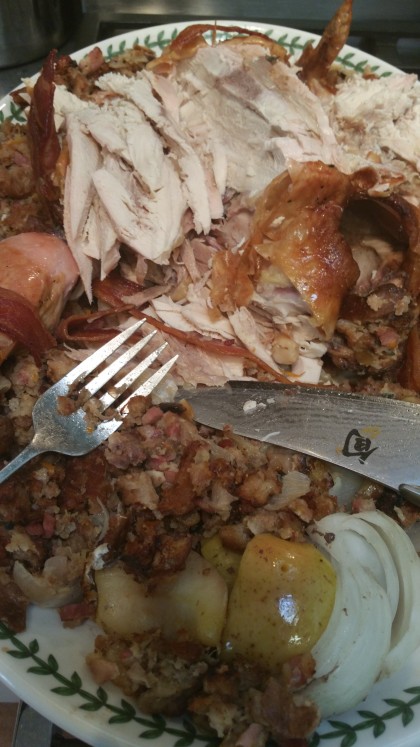
Anyhow leftover capon, pancetta and fig stuffing, green beans, mashed potatoes, sweet potato pie and caramelized sweet potatoes, pecan pie and deviled eggs rest in the fridge, awaiting their moment. The slow and the stuffed have gotten up off the couches, the beds, the chairs and started to move around again within their lives.
Yesterday (as my mind insists on designating it) I drove down the hill to Aurora. Jon has trees and shrubs on his fenceline that he wants removed. This is something I can do, so I wanted to get exact instructions. He showed me. It won’t take long to do and I plan to go down tomorrow (as my mind insists on designating a day/night cycle we’ll repeat as we return to this spot on our tilt-a-whirl ride of wandering space rock).
Yes, I’m having a little trouble letting go of thoughts about time. It’s just that the prepositional nature of our language is so larded with sequencing words that each time I start to use one, I jerk up short mentally, pulled on the leash of cyclical time. Henry Gustafson, my New Testament professor, talked about writing a prepositional theology. Prepositions and their less common linguistic sibling, postpositions, indicate relations between nouns. “Prepositions and postpositions, together called adpositions (or broadly, in English, simply prepositions),[1] are a part of speech (class of words) that express spatial or temporal relations (in, under, towards, before) or mark various semantic roles (of, for).” wiki
Ah, well, I’ve learned something here. It is exactly prepositions work in our language to indicate time and place. No wonder I keep bumping against them as the ship of cyclical time tries to stay at the dock and not drift away. We use prepositions because we cannot make sense of our reality without locating things in space or time. In using these words though, we reveal an underlying consensus that, while definitely shared, may well not be accurate. OK. I’m in the weeds again, apparently not yet done with the idea of cyclical time.
Jon, Ruth and Gabe and I went to Katsu Ramen for lunch. It’s close to their house, sort of, and I’ve wanted to eat there for a while. Ramen places are a very typical Japanese restaurant, more common there, I imagine, than sushi ones, because ramen is food for the masses, a sort of fast food. “Tampopo”, a Japanese movie from the mid-1980’s, features two truck drivers who learn how to cook great noodles.
I drove them back and returned to the mountains. Yesterday was a rest day, so I kicked back and watched yet another Marvel TV series. I’m as captivated by them as I was by Marvel Comics when Atlas comics rebranded themselves in 1961 and introduced the X-Men, the Fantastic Four, Doctor Strange and the Hulk, among many others. One of my cheesy regrets about my childhood is that I, like most other kids, threw away my early collection of Marvel Comics, not realizing how much an X-Men number 1 would be worth in 2017. Hell, I’m not sure I believed in 2017 back then except as an indefinite location filled with flying cars, rocket ships, interstellar travel, huge skyscrapers and maybe a few aliens.
Marvel has expanded its media presence to both movies and television. Spider Man, the Hulk, the X-Men, Guardians of the Galaxy, the Fantastic Four, Thor, Doctor Strange, Captain America, Iron Man all have at least one movie, some many more than that. Now on television Marvel has pulled off a rather stunning feat, populating streaming services like Netflix and Hulu with original made for television serials featuring many other Marvel characters. Right now you can watch (and I do) Daredevil, Jessica Jones, Luke Cage, Iron Fist, the Punisher, the Gifted, the Runaways, the Inhumans, Agents of S.H.I.E.L.D., the Defenders and Peggy Carter.
There is a link, which I’m not going to explore right now, between my affection for the Marvel stories and religion. I think they trigger the same impulse, the same capacity for wonder and speculation, just in different idioms.
And so. Thanksgiving 2017 has entered history. Though. Here’s what I thought about while falling asleep last night.
Working on my kabbalah presentation for December 6th, I’m trying to link up the Great Wheel and the Tree of Life. So, I got to thinking about time. The Great Wheel is a circle and marks cyclical time rather than linear. How to explain this to a chronos saturated worldview?
Here on Shadow Mountain the sun has risen again, Black Mountain is lit up and we can see easily. Daytime has come again, yet we’re in the same spot. Yes, this means that our spot traveled approximately 25,000 miles and has arrived back in the same position relative to the sun. That’s one day. That’s always one day. It’s not the “next” day; it’s the turning of a planet, very rapidly, around its axis. Today is a day just like what we call yesterday and what we’ll tomorrow, but in fact no time has “passed.” Instead we have experienced a physical phenomenon with illumination consequences.
Next. This month. A month marks itself out by the phases of the moon. Forget the calendar, which, confusingly, strings months together as if one month is different from the other. They’re not different. They’re simply the transit of our moon around its planet, changing its phase as presents different aspects to the sun and to our point on earth’s surface. That’s a month. And “next” month will be the same.
A year. Today, this morning, we are at the same point on earth’s orbit we were a year ago. This is true every moment of every day. A year is never completed, it is always underway, bringing us around and around the sun, always, as long as the sun remains its current size. (Yes, I know celestial mechanics can define all of these things much more precisely and that each day, month, year is also in transit as our solar system tracks along in its expanding orbit and our galaxy, and its local group and its super cluster also move at unbelievable speeds. This just ratchets up the thought experiment to cosmic levels, doesn’t change the point.)
In a year the amount of the sun’s energy shining on a particular, let’s say three meter, patch of land changes due to the earth’s current 23.5 degree tilt. This change in energy per three meter square alters the temperatures which in turn drive seasonal changes. The Great Wheel celebrates those seasonal changes, especially in the temperate latitudes, as we go, again and again, through the cycle of growth, harvest and fallow time. This is not a “new” fall; it’s the same season we had last year at this point on the earth’s track around the sun.
So. Each day, each month, each year, each season is not sequential to anything but the human mind. We think of history as in the past, we think of the future as somehow ahead of us, yet each historical occurrence happened on a day, in a month, in a year, not one in the past, but one just like the ones we’ve been through to get this Black Friday. The same will be true of the “future.” The sequencing, the marking of chronological time, is a trick of the mind, a need we have to organize space as if it passes along a linear track, one thing in front of the other, but no. We always only have this day, this time of the month, this point in earth’s orbit, all of which repeat and repeat and repeat and repeat.
I know, it took me awhile to fall asleep.
The tree of life, the kabbalist’s notion, posits a continuous act of creation with divine energy pulsing up and down the tree of life, from the crown, keter, to the physical world, malkuth, passing through the three triads of intellect, emotion and instinct. This understanding does not require chronos as the act of creation never ends and travels along a process of instantiation, into malkuth, and then back up toward the unity of the ein sof, up and down, up and down, until somehow God is repaired.
In the way I’m thinking about it now, the link between the Great Wheel and the Tree of Life goes like this. A day divides into light and dark, a month into new moon and full moon, a year into a fallow time and a time of vitality and growth. Likewise, a human life divides into a time of vitality and growth followed by a period of declining physical strength, then death. Each life not prematurely ended by trauma or disease, follows this path, not just human life.
Just so the seasons. Just so the month. Just so the day. Just so, I think, the flow of divine energy up and down the tree of life. As it becomes instantiated in malkuth, divine energy becomes actual and experiences a time of vitality, a time of being. Note that this applies to the inanimate as well as the animate. Our sun, our planet, Shadow Mountain all have ends, too, a period of existence in their current form that will, as changes occur, cause them to wink out, send their material essence back into the pool of material from which they started.
The Great Wheel is a metaphor for this cyclical reality, one built into the nature of our universe. Matter goes through a fallow time, then a time of growth and vitality, only to return to a fallow time where it can pass back into new forms. This is divine energy on its way up and down the tree of life, winking on, then off, traveling from the physical world which we know, back to the source of matter found in the crown of ongoing creation. Then, back down again.
Yes, that’s what I thought about on my way to dreamland last night, Thanksgiving night.
My phone camera didn’t do it justice, but Thanksgiving came in over Black Mountain with a gorgeous pink cloud, a penumbra of gold light on Black Mountain itself and a glow over our home. May the rest of the day, and especially the capon, be as beautiful.
Finished the pancetta and fig stuffing by celebrity felon, Martha Stewart, last night. It smells like it will be as good as I imagined. The capon-yes, we have it-thawed out and will go in the oven around 11:00 a.m. Kate made a pumpkin pie and got the caramelized yams ready. Ruthie’s pecan pie is covered in foil. She’s also bringing deviled eggs. They’re planning on coming up around noon or so.
Last night, for some strange reason, the neighbor had his sledge hammer out, using it to pound on a plastic garbage container. For quite a while. Don’t know if his mother or his mother-in-law or both are coming today.
We will be saying our gratefuls around 2 p.m. I’m grateful for you if you’re reading this. I’m also grateful for all the love here: dogs, Kate, Jon, Ruth, Gabe, Annie. I’m also grateful for the lodgepole pine that spent millions of years acclimating themselves to this particular altitude. And for the clouds and the mountains, which have such great altitude, and the streams and the mule deer. The elk, the red and gray fox, the moose, the mountain lions, the bears, the marmots and pikas. The rattlesnakes. The available oxygen in the atmosphere and the amazing organs we have that convert it to our use. So many things. Endless really. Thankful for all of them, now and forever.
On the #metoo phenomenon kicked off by the now thoroughly besmirched Harvey Weinstein. What has happened, I hope, is that the tacit cover for sexual harassers has become at least translucent, maybe on its way to transparency. It’s that cover, consisting of male privilege and the fear of retribution in ways large and small that go with it, which has given especially men in power, but also men in all walks of life, the sense that they can treat women as objects rather than persons.
This objectification of women has always been wrong, always leads to mistreatment. How else can we explain the gendered wage gap, the glass ceiling still leaving accomplished women trapped in their cubicles, the continued male on female domestic violence? Only when the 3/5th’s compromise, America’s true original sin, no longer applies to anyone in our society will we have justice.
THIS IS NOT A PARTISAN ISSUE. It is a male issue and in particular a males in power issue. As a result it is my personal position that anyone right now, even Minnesota Senator Al Franken, who has credible accusers should step aside. Resign. Quit. Admit that they were wrong and leave the position which made them feel so powerful that they could ignore the real lives of others.
Apologies are important. As an academic who teaches a course on apologies noted, they affirm, confirm and reinforce social norms. We need to establish as the real norm that unwanted sexual advances of any kind are not funny, playful, teasing, victimless. One way to do that is for each of those harassers to acknowledge what they did, who they did it to, and why their behavior is abhorrent and inexcusable. Then, they should be allowed to move on with their lives, but not in whatever position they currently hold.
My hope is that as a result we will be able to nuance these incidents in the future. Perhaps, as some say, Al Franken’s clear admission and apology and the nature of his acts are less heinous than, say, Roy Moore’s or Donald Trump’s, but as we shake off the social consensus that allowed these events to go unremarked and their victims shamed, we cannot allow any special pleading. The chance to change the nature of our public and private life in favor of women is too important to occlude with partisan rhetoric.
I regret this position leads me to support removing politicians with whom I generally agree, but, to me, the moment and its potential is just too important.
Conversations with Ruth. Yesterday Kate wasn’t feeling so well in the a.m., nausea that plagues her mornings on occasion. So I was the breakfast guy for Ruth and Gabe, who stayed here starting on Sunday evening through last night. Ruth came down first, unusual because Gabe is usually the early riser. She fixed herself some ramen, she’s a good cook all on her own, learned from Grandma.
We started talking. She loves her new school, Mcauliffe. It’s not in a modernist soul stealing box like Sweigart, her elementary school. It has ornamentation, having been built in 1914, which she described in some detail. Gothic arches over drinking fountains, molding with inlays, stair rails with decor under the polyurethane, big windows and the exceptional cupolas visible in this photograph. She’s an arts oriented girl, very aware of the design of her surroundings. We both like this older, more whimsical era of architecture.
Ruth, Wilson, Kate at a cross country meet
Mcauliffe also has periods, unlike the daily grind in an elementary classroom where you only leave for recess and lunch. The freedom that grants her between classes means a lot to her. She’s taking Mandarin, robotics, math, language arts, gym, earth science and art. It’s a more challenging environment for EGT’s, extremely gifted and talented, which she’s finally beginning to embrace as describing herself.
Polaris is the GT middle school, but she chose Mcauliffe because all save one of her friends from Sweigart chose it, too. Her bffs Wilson and Annika in particular are at Mcauliffe. Annika is a competitive climber, traveling the U.S. to participate in timed ascents of climbing walls. Wilson ran cross-country as she did. They spend a lot of time together outside of school.
This transition to middle school, along with declining stress from the divorce, seems to have allowed her to open up, blossom in ways that are beautiful to see.
We also talked about books. She’s a voracious reader, currently focusing a lot of her reading on Jodi Picoult, though she just started Little Fires Everywhere by Celeste Ng. Of course, she also has books to read for school, the humorous part there being that the first book assigned to her she had already read. In the third grade.
She wanted to know who my favorite authors were. Always a stumper for me since I’ve been reading much like Ruth for over 60 years. Lots of typeface over the eyeball transom, not all of it stuck in the memory banks. Yesterday I went with Herman Hesse, Tolstoy, Dostoevsky, and William Gibson. Asked today I would add Philip Kerr, Kim Stanley Robinson, Kafka. Tomorrow another group. Not to mention poets and classical authors, playwrights and non-fiction writers.
I put together an Ikea reading chair for her and an almost identical one for myself. She sat in hers, me in mine. She also loves art and wanted to know what my favorite piece of art was here in the loft. I have an Andy Warhol print of soup cans that I like a lot. She likes my Mike Elko print satirizing the Bush terror propaganda.
She’s a young lady with many interests, including alpine skiing. She’s been skiing since she was three and at this point is very accomplished. She and Jon are going to ski on Friday at Arapahoe Basin, or, as it is more usually known here, A-basin. She also loves to cook. Yesterday she made banana bread, rosemary bread, a pecan pie and cut up the yams for caramelized sweet potatoes. Today she’s making deviled eggs to bring to Thanksgiving tomorrow.
She’s still very tender on matters related to the divorce, not yet ready to sort out how she feels about it. The more I see her on this side of it, the more I believe the negative effects of Jon and Jen’s explosive fighting were awful for her. She has an inquisitive spirit, is very observant, and, unfortunately, is not inclined to talk about her feelings. All of these facets of her personality have made processing the turmoil of the last few years difficult for her. In the extreme.
It’s exciting to see her beginning to know herself, to gain agency in her life in a positive, not angry way. I’m grateful to have her as a grandchild, one I see frequently.
You have entered the holiseason zone. Of course, it’s well underway since it begins now with Rosh Hashanah, but Thanksgiving, with its grocery shopping, tablescaping, bedroom preparing and gathering of family is a key moment, the holiday that marks the start of a remarkable run: Advent, Posada, Hanukkah, Winter Solstice, Saturnalia, Christmas, Kwanzaa, New Year’s. Wow. The metaphysical crackling in the air gets intense with lights and ideas and gods and astronomical night. It’s my favorite time of the year.
The Thanksgiving project for me is a golden capon with pancetta and fig stuffing. A lot of oranges are involved, too. The challenge of finding a capon found its match in finding fresh figs. A nice man at Whole Foods explained that northern hemisphere figs are available in the summer and southern hemisphere figs just before Christmas. Oops, not in time for Thanksgiving. Then, a Thanksgiving miracle! Kate found them at King Sooper after I’d called specialty stores like Whole Foods, Sprouts, Natural Grocers and gotten nada. Yeah.
The whole gathering in of items for pecan pies, Ruth made ours last night, and yams and green beans and potatoes is a simulacrum of growing it all, or hunting and gathering for the feast. And, yes, our finding a retailer with figs and capons is no match, but it did add uncertainty and joy in discovery.
A mountain Thanksgiving is like others, but with a lot more altitude.
 Movie recommendation: Coco. A pixar film. Gabe and I went to see it. I loved this film so much that I’ll certainly buy it when it comes out on DVD and I will go see it again. Something I rarely do.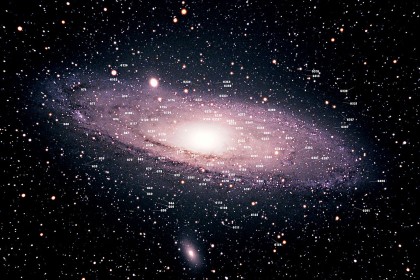
 Empty. No way to know where you are because there are no reference points. Only empty space. But. This amount of space is contained by the limits of the universe. (I’m pretty sure this experiment violates some way of understanding the universe. An edge to the universe seems difficult to comprehend, but let me have this small-ok, large-conceit.) Now we put back in all the stuff. The things. Right back where they were.
 This means, I think, that space as we use the term in day to day life is actually about relationship, not stillness and not emptiness. In other words the amount of space remains constant, yet we perceive space as relational, the gap between things. Space is used as a way of understanding relationships, actually, of perceiving other objects, because without space to differentiate objects everything would mush together to a somehow independent observer.
 The day after the day after. See, there’s the sneaky part of our language. This is the day after the day after Thanksgiving. Yet, really, this is another day, neither after nor before, just a day on its own. Yes, it’s a little further along the third planet’s track around the sun, but it’s a spot on the orbit, so different than yesterday and tomorrow, but no different as a day than either of them save for the slightly less light occasioned by the planet’s tilt, now away from the sun for those of us in the northern hemisphere.
 Anyhow leftover capon, pancetta and fig stuffing, green beans, mashed potatoes, sweet potato pie and caramelized sweet potatoes, pecan pie and deviled eggs rest in the fridge, awaiting their moment. The slow and the stuffed have gotten up off the couches, the beds, the chairs and started to move around again within their lives.
 Jon, Ruth and Gabe and I went to Katsu Ramen for lunch. It’s close to their house, sort of, and I’ve wanted to eat there for a while. Ramen places are a very typical Japanese restaurant, more common there, I imagine, than sushi ones, because ramen is food for the masses, a sort of fast food. “Tampopo”, a Japanese movie from the mid-1980’s, features two truck drivers who learn how to cook great noodles.
 Marvel has expanded its media presence to both movies and television. Spider Man, the Hulk, the X-Men, Guardians of the Galaxy, the Fantastic Four, Thor, Doctor Strange, Captain America, Iron Man all have at least one movie, some many more than that. Now on television Marvel has pulled off a rather stunning feat, populating streaming services like Netflix and Hulu with original made for television serials featuring many other Marvel characters. Right now you can watch (and I do) Daredevil, Jessica Jones, Luke Cage, Iron Fist, the Punisher, the Gifted, the Runaways, the Inhumans, Agents of S.H.I.E.L.D., the Defenders and Peggy Carter.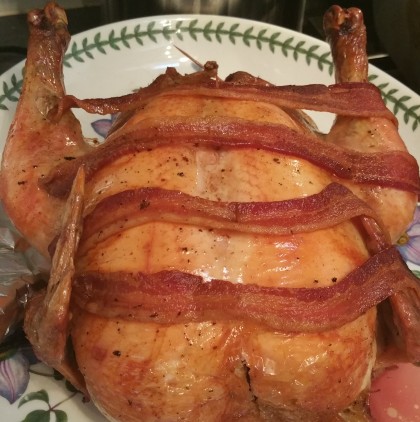

 On the #metoo phenomenon kicked off by the now thoroughly besmirched Harvey Weinstein. What has happened, I hope, is that the tacit cover for sexual harassers has become at least translucent, maybe on its way to transparency. It’s that cover, consisting of male privilege and the fear of retribution in ways large and small that go with it, which has given especially men in power, but also men in all walks of life, the sense that they can treat women as objects rather than persons.
 Apologies are important. As an academic who teaches a course on apologies noted, they affirm, confirm and reinforce social norms. We need to establish as the real norm that unwanted sexual advances of any kind are not funny, playful, teasing, victimless. One way to do that is for each of those harassers to acknowledge what they did, who they did it to, and why their behavior is abhorrent and inexcusable. Then, they should be allowed to move on with their lives, but not in whatever position they currently hold.

 She wanted to know who my favorite authors were. Always a stumper for me since I’ve been reading much like Ruth for over 60 years. Lots of typeface over the eyeball transom, not all of it stuck in the memory banks. Yesterday I went with Herman Hesse, Tolstoy, Dostoevsky, and William Gibson. Asked today I would add Philip Kerr, Kim Stanley Robinson, Kafka. Tomorrow another group. Not to mention poets and classical authors, playwrights and non-fiction writers.
 She’s still very tender on matters related to the divorce, not yet ready to sort out how she feels about it. The more I see her on this side of it, the more I believe the negative effects of Jon and Jen’s explosive fighting were awful for her. She has an inquisitive spirit, is very observant, and, unfortunately, is not inclined to talk about her feelings. All of these facets of her personality have made processing the turmoil of the last few years difficult for her. In the extreme.
 The whole gathering in of items for pecan pies, Ruth made ours last night, and yams and green beans and potatoes is a simulacrum of growing it all, or hunting and gathering for the feast. And, yes, our finding a retailer with figs and capons is no match, but it did add uncertainty and joy in discovery.