Winter Stent Moon
 10 degrees on Shadow Mountain. A couple of inches of fluffy powder fell over night, a minor storm compared to what had been predicted earlier. The lodgepoles have white flocking. Black Mountain hides behind a gray blue cloud. The neighbor’s Christmas lights, now past their expiry date, still glitter.
Frustrated here by realpolitik. Can’t say more about it.
Kate’s Sjogren’s flare has subsided. She’s still fatigued, both from all the insults her body has received since September 28th and Sjogren’s. There may be an anemia component in there, too. Fatigue, when it’s constant, carries with it its own malaise. Sleep, get up for a bit, sleep some more day and night. Her face does not, however, have the stress lines brought on by repeated bouts of nausea and cramping, bouts that followed every meal until last Friday. That’s a marker on the road leading out of this mess.
I’m working in a slightly larger format now, 8×10 canvases, trying to think more about design. The Western icons idea will require more gathering of props. I turned to items I had close to hand. My favorite tools. Those of you who know me well know I’m not a shop guy, not a handy guy, but I do have some tools I love.
 The learning curve in both astrology and oil painting slopes almost straight up for me. My mind gets short of breath at times. I remember this from Latin. Slog. Slog. Slog. Oh! “Confusion,” I read, “is the sweat of the intellect.”
Back in 1966 I was a very young student of symbolic logic. My second semester at Wabash. German had already defeated me and I was feeling the shock of intellectual challenges that seemed beyond me. Larry Hackstaffe, the professor who wandered around on off days with a six-pack of Bud hanging by one of its plastic rings from his belt loop, was a good teacher. After the D on a German test, a D!, my sense of myself was in trouble. Study. Study. In the library, in a carrel. My safe place.
The mid-term. When I sat down, my palms were sweaty and my socks uncomfortably moist. My neck hurt from slumping over in the study carrel. Larry passed out the blue books and the exam. And away I went, developing proofs, using the symbols like I’d had them from birth. That exam was a revelation to me. With hard work I could master something difficult, really difficult. I didn’t need the grade after that, though it was an A and I was glad. I had taught myself a life lesson, not in logic, but in persistence.
 At almost 72 I’m no longer naive enough to think I can master anything, but I’ve proved to myself over and over that with patience (difficult for me at times) and either a good teacher or a lot of autodidactic effort, I can learn new things. Even new things that might seem unusual for me. Organic gardening. Beekeeping. Raising perennial flowers. Writing novels. Teaching Jewish religious school. Living at altitude. Cooking. The downside of this valedictory life, that’s a thing, is that I’ve not become Tolstoy or a commercial beekeeper or Top Chef, certainly no Latin scholar. But I have had the chance to peek behind the curtain of numerous activities I might have once thought, like German, beyond me.
A lot of blather to introduce you to some paintings by me. As you can tell, I’m still breathing hard, looking for handholds on the ancientrail of creating beauty, of making pigments tell their story, but I’m having a hell of lot of fun. As I am with astrology.
These are in the order in which I painted them.
Here they are:


 Christmas and Hanukkah 2018 in the past. New Year’s eve coming Monday. 2019. The Blade Runner year: “In the 21st century, a corporation develops human clones to be used as slaves in colonies outside the Earth, identified as replicants. In 2019, a former police officer is hired to hunt down a fugitive group of clones living undercover in Los Angeles.”

 Not long after my December 1st, 2016, knee surgery, I had an odd moment. It was Hanukkah. Gabe and Ruth were plowing through their presents, and I sat on the couch, my leg up and some combination of pain meds circulating, morphine and oxycontin, I think. Ruth lit the menorah. A sudden, overwhelming (undoubtedly drug accelerated) sense of dislocation came over me. Sadness, too. What was I doing in this house? No Christmas tree. No decorations. This exotic holiday had pushed all that away and left me on the outside.


 On the drive over to Tony’s Market to pick up Christmas dinner I got to thinking about ohr, the shards of divine light kabbalists believe actually make up the known universe. When I bow to the divine light in you and you bow to the divine light in me, we say that makes sense in that framework. So there can be the ohr, the light of the divine blasted apart at the moment of creation; but, I thought, there’s also the more immediate light, that of the sun.
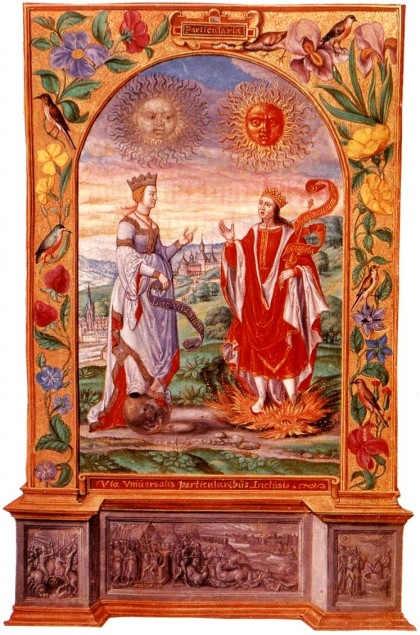 It is this dance, the days of the dancing star, that we are thrown into this world to execute. Sure, you could take this and conclude a scientistic flat-earth humanism, minus the divinity, but it seems to me you end up in the same place with a reductionistic refusal to see the simcha, the joy, of life as part of, not separate from. It is the bondedness we have with our star and our planet which is divinity, we are part of a dialectic between power and fertile elements, a fruit, in fact, of its creative tension.


 I’ve begun to assimilate into Jewish culture. Different from becoming a Jew, just like Jewish assimilation into American culture is different from no longer being a Jew, my identity is largely intact, but I find myself much more aware of living life through a Jewish lens. Their holidays are now mine. Their community, mine. Their marginal reality, also mine, though this last requires a full choice on my part, not just acquiescence. That is, I choose to stand with my new culture against all elements domestic and foreign and not to retire into privilege when things get hairy.

 The stent went in easily. No pain for Kate, only a local anesthetic at the insertion site in her groin. Whether the procedure solved the problem only time and many meals will tell.

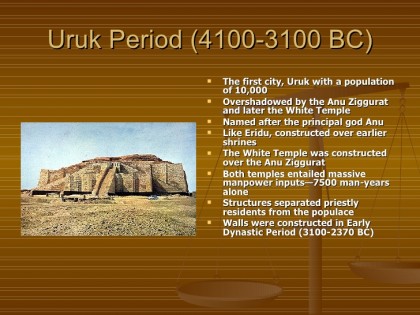 In ancient Uruk residents opened all city gates, lit bonfires and sang hymns timed to the rising and the setting of certain stars in the sky. This all night vigil honored many Sumerian deities, but most of all Anu, king of the gods, and special protector of the city. In the Congo the Mbuti hunters clap, sing, and dance around a fire at night, the Molimo Ceremony. This is not only a solstice observation, but for significant events. If there has been a death, they sing to the forest: “If darkness is, and the darkness is of the forest, then the darkness must be good.” from the Lapham Quarterly, Winter 2019
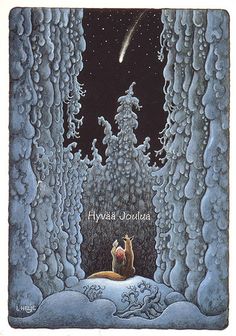 Then Kate can heal over the longest night of the year. Fecund darkness, calm and quiet night, holy night, sacred night. A 98% full moon. With all the energy of a still waxing moon, one very near fullness, she will receive the best energy this long night can offer. If you have a moment once the darkness falls, feel your way into it, perhaps in the moonlight, and remember Kate.
 Finally. The stent goes in tomorrow. God, I hope it does what we want. The guy, Dr. Mulden, is the senior guy in the metro on this particular kind of work. Lucky to have him. She’ll be in the hospital tonight, maybe tomorrow night if they feel observation is necessary after the stent placement. Home by Saturday lord willin’ and the creek don’t rise.

 Tomorrow is the winter solstice. I haven’t gotten yet to the six new rituals I found in Lapham’s, but I will either later today or tomorrow. The dark, the long night, to me symbolizes healing, fecundity, a depth experience for the Self, a soulful journey. It’s what I need right now, a time out of time, time with the ancientrail that winds in and down, following the shamans toward the center of the earth, the center of the soul.