
Spring New Shoulder Moon
 Surprising, sophisticated, jawbreakingly awful sign on a conservative church sign board: “Anxiety is just unbelief in disguise.” If you live in Christworld, there is a certain sense in which this appears to be true. If only your belief were strong, you would need have no worries. Look at the lilies of the field.
However, assume for just a moment that your metaphysic is wrong. Then, this sentiment is cruel. It doubles up the anxiety for those of us who are anxious, a whole big bunch of us*, by adding weak faith to the angst we already feel. And, even if God is watching out for you in a way totalizing enough to assure you in every situation, punishing anxiety as weak faith is not going to move you closer to faith. The opposite. It will push you deeper and deeper into the slough of despond.
Now, what’s funny is that I saw this sign on my way to The Happy Camper, the dispensary just over the Park County line near Bailey. Picking up our regular supply of thc, a sleep aid we’ve been using for a while now, is a monthly or so trip. Why do I need it? Anxiety is a bitch goddess who demands sacrifice as soon as my head hits the pillow. Has been true to a greater or lesser degree since high school.
Anxiety is not as much of a problem now as it has been, but the long established habit of chewing over the day once the lights are out has become a regular time for my brain to turn on, consider relational or political or philosophical matters. A habit I’ve been unable to break.
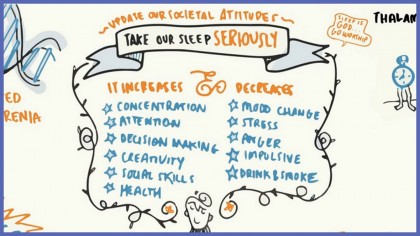 Friend Tom Crane sent me a book, he does that every so often, “Why We Sleep,” by Matthew Walker. This is an excellent review of the latest in sleep science and daunting as a result. Sleeplessness has drastic health ramifications, enough to make the favorite yuppie mantra, “I’ll sleep when I’m dead.” ironic. What I can’t understand, and Walker says the same, is the lack of attention the medical profession gives to sleep. Many of us are desperate to get to sleep. And by desperate I mean desperate. Yet the help offered is often better sleep hygiene, a good idea, I practice it, doesn’t do the trick for me though. If help is offered at all.
I hate to add this idea to all those others out there, but this is a NATIONAL CRISIS. Especially for those of us in the third phase when sleep becomes harder for a variety of reasons.
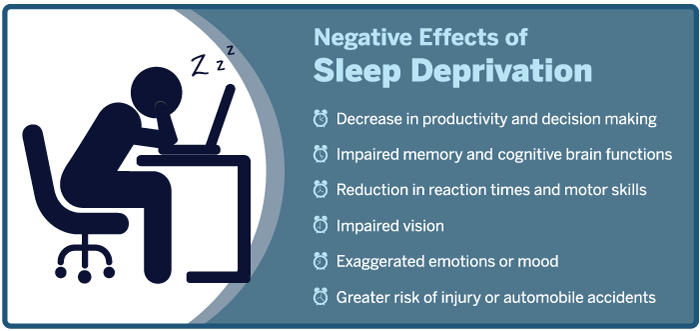 We have elaborate protocols for people with pulmonary issues like COPD or emphysema, cardiac issues of many nuances, joint replacements for tired and painful knees, shoulders, hips; but, what do we have for a part of our lives that constitutes a third of our time use each 24 hours? Yes, there are sleep centers, but they’re not on offer often and besides it seems that cognitive behavioral therapy is the current gold standard. Problem is not many CBT folk specialize in sleep and we’re certainly not referred to them anyhow.
It’s enough to make a guy lose sleep.
*Anxiety disorders are the most common mental illness in the U.S., affecting 40 million adults in the United States age 18 and older, or 18.1% of the population every year. Anxiety disorders are highly treatable, yet only 36.9% of those suffering receive treatment. AADD
 Kate has slept well, mostly, her first two nights home. She’s controlling her pain with tylenol and the occasional tramadol or vicodin. She had a bout of nausea yesterday; but, unfortunately, that’s not really unusual. Her weight is up, thanks, she thinks, to good intravenous hydration in the hospital. Prior to surgery she’d had trouble keeping water down. She’s on the mend.
 Snow. While the rest of the nation east of the Rockies has been pounded with storm after storm this land of ski resorts and mountain passes has been dry, one of the 14 driest winters in the state’s meteorological history. Last night though, maybe 9 inches of heavy, wet fire dampening snow! Welcome.


 On Thursday, the day of Kate’s surgery, I left Rigel and Gertie outside while I was at Ortho Colorado. Staying outside that long, several hours, is unusual for them. When I let Rigel inside, she ran to the couch, jumped up on it, jumped in the air a couple of times, then flopped down into her usual position. Ah.

 Beth Evergreen has reached out to us in several ways. Individual members have offered to bring food or otherwise help. Leah, the executive director, called, wanting to know if we needed anything. Several folks from our mussar group responded to my e-mail on Thursday with love and concern. For both of us. A thought that keeps going through my mind: beloved community. Christian churches aspire to this, Beth Evergreen achieves it. I’m proud to be a member of the congregation.



 As one of Dr. Agronin’s youngest informants said, even when physical decline and losses restrict one’s options, there remains the capacity to appreciate and approach each day with a sense of purpose. “It’s all about how you frame what you have,” she told him.
 Hopefully, our children, the millennials among them, will look at us and come to that phase of their lives with a different image. My hope is that they will see that aging is the accumulation of years, not a time of diminished hope and diffuse fear, but life continuing. If that image can become dominant, it will look like the diverse approaches people have to their first and second phases. In other words the third phase will have as many distinct trajectories as there are people who enter it. It will not be dormancy, or a pause before dying, but life itself.
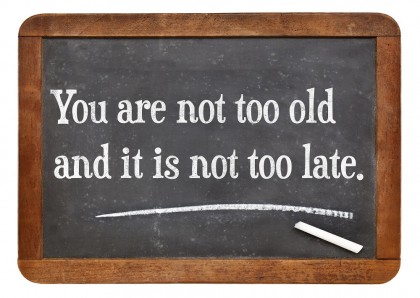 I like Robert Hill’s definition of positive aging: (It’s) “affected by disease and disability, but not contingent upon avoiding it.” Rather, it is “a state of mind that is positive, optimistic, courageous, and able to adapt and cope in flexible ways with life’s changes.”
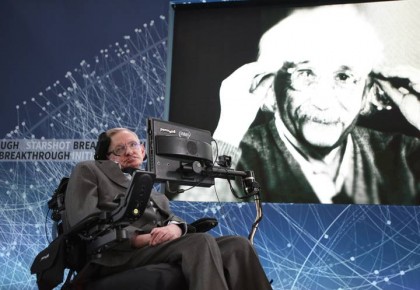
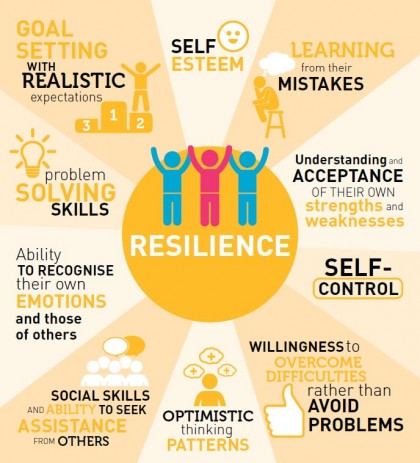
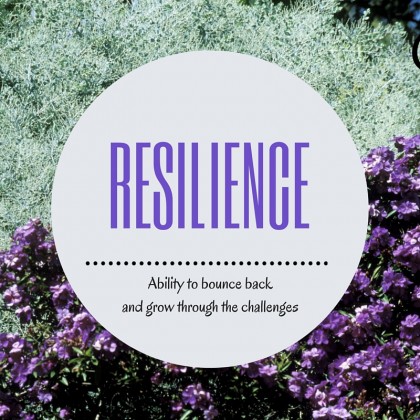 Not only in children, I think. Resilience can allow us to accept the changes of the aging body without losing hold of the power of our own lives. With a resilient personality even ALS will not cause us to stop growing. Just look at Stephen Hawking.