Spring New Shoulder Moon

Good conversation yesterday with friend Bill Schmidt. He turned 81 on Friday, a birthday call. He’s deeply involved in a business, UFaceme, (picture above), writing code, doing statistical analysis, using pitch decks to secure investors. May we all be as vital at his age.
My phone call with him took place at the Final Approach, the food court at the cell phone lot for Denver International Airport, while I waited for SeoAh’s text. She flew in from Atlanta yesterday to stay with us until Thursday. Her English has improved significantly and we chatted easily on the way back from the airport.

Been wondering for a while why I’m so damned exhausted. Caretaking seems to demand far more of my psyche than my body. The various chores I do, by themselves, are not physically onerous. Washing dishes. Not hard. Doing the laundry. Not hard. Running the vacuum, picking up. Not hard. Grocery shopping. Not hard. Taking Kate to medical appointments, handling the tasks with her that being one-handed makes difficult. Not hard. Feeding and managing the dogs. Not hard. The sum of them all? Makes me, as evening approaches, short of emotional reserve and wanting to flop in a chair. Why?
 Well, a reason occurred to me. Decision fatigue.* This involves the affective cost of constantly making decisions. The theory suggests that we have a limited amount of attention and choice-making each day. Sleep restores it, but as we make decisions our decision making ability depletes, often quite rapidly, leaving us emotionally drained and less than crisp in whatever we’re doing.
How does this apply to caretaking? All those not hard things each require a certain level of attention and decision making. Do I wash the dishes now or do I wait until after supper? How much laundry soap do I use? Which setting on the machine? Is it time to vacuum again? Does this stuff need to get put away? Where does it go? Why isn’t Rigel eating? What can I do to help her? What’s on the grocery list? Do I need to get gas? You get the idea.
Though none of these things individually are hard, many of them are ones that Kate takes care of in the normal division of labor in our relationship. That means I don’t have settled, habitual ways of handling them that bypass decision making. Over time I would gain those, figure out a way to include all of them in my day without having to find the detergent, measure it, wonder how long the cycle takes. But for now each of them requires a flood of mini-decisions, each of which drains energy.
Just writing about this makes me want to find a chair, flip on the TV and zone out for a while.
*decision fatigue refers to the deteriorating quality of decisions made by an individual after a long session of decision making.[1][2] It is now understood as one of the causes of irrational trade-offs in decision making.[2] For instance, judges in court have been shown to make less favorable decisions later in the day than early in the day. wikipedia
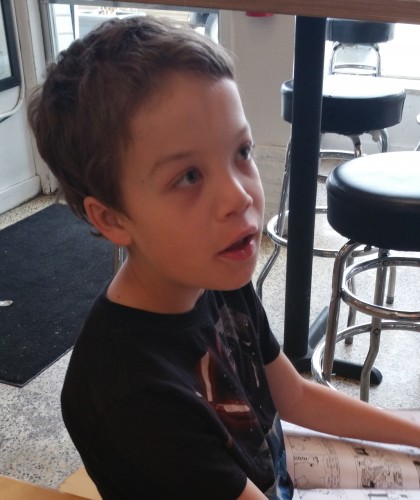
 We drove on into Denver, Colfax Avenue (sort of like Lake Street in the Twin Cities). To GB Fish and Chips. Their motto is “In Cod We Trust.” This is one of Ruth’s favorite spots and yesterday was her 12th birthday. We had a nice visit with her and her phone. Gabe was there, too, out of the hospital after septicemia, but still on IV antibiotics. He looked a bit exhausted.

 “I’m a doer.” Kate said this yesterday. Yes, she is. So much so that we often referred to her as the energizer bunny. Jon’s divorce, Sjogren’s and arthritis has made doing difficult, often downright painful. The combination put her in a tough place psychologically; but, it feels now, for the first time in a year plus, that she’s going to push through it. As Winston Churchill said, “If you’re going through Hell, keep on going.”
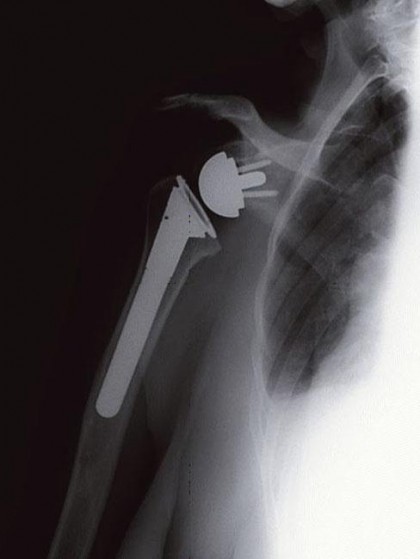 We had her first post-op appointment yesterday and got to see an x-ray of the new appliance. This isn’t hers, but it’s an accurate representation of what we saw. As this image shows, the ball of the shoulder is now where the socket used to be and the socket where the ball used to be. This reverse total shoulder uses different muscles to power the arm, the deltoid in the main. It also reduces pain more for certain patients though I’m not sure why.
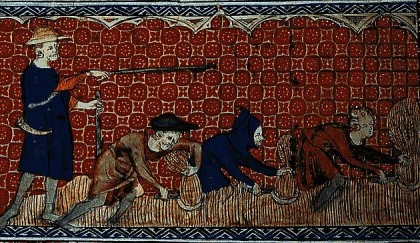 We often talk about folks for whom physical labor is key to their job: trades people, movers, utility workers, lumberjacks, mechanics, farmers, even physicians. Prior to joint replacement as an option, they had to suffer through the pain or stop working. Imagine what it was like on the frontier to have debilitating hip pain, a shoulder that would no longer move above a right angle, a knee that buckled under pressure. Or, in the middle ages, for peasants. Soldiers. Domestic servants.
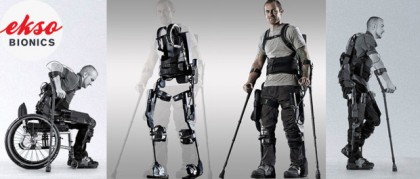 It’s likely, for example, that Kate’s years of lifting babies and young children led directly to the arthritis that ruined her right shoulder. That’s the Schneider hypothesis since the sort of dysfunction her shoulder displayed is most common in women.


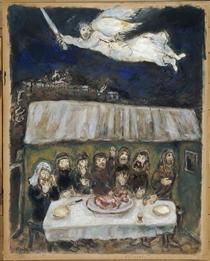



 Those of us who love libraries and those of us who have ones of our own take up their content like chicken scratching around in a farmyard. We poke, peck, pick up a few rocks to grind the ideas against the gizzard of our memory and our own mind, wait awhile, then, out pops words. Sometimes enough words come out to fill a book. And, voila, more library.
 A bit out of left field, more like right field where I played my entire (short) little league career, but occasioned by Tara’s visit yesterday with her son Vincent. Vincent had been explaining his understanding of general and special relativity to Tara and the conversation resumed at our table. He was explaining the difference between light and gravity, light is fast, but gravity is instant and I threw space-time curvature out there.