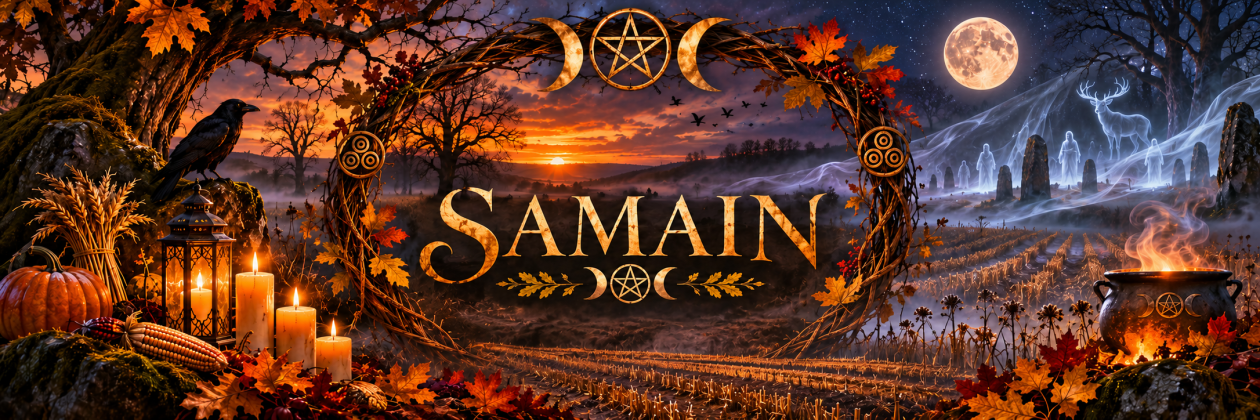
Midsommar Moon of the Summer Solstice
 As our habitable space ship races along its track, its tilt gives us seasonal changes and four regular moments, two with roughly equal days and nights, the equinoxes, and two extremes: the solstices. The longest days of the year occur right now with the sun rising early and setting late ignoring Benjamin Franklin’s early to bed, early to rise. Six months from now, in the depths of midwinter, we will have the winter solstice where darkness prevails and long nights are the rule.
Those who love the seasons of the sun find the heat and light of midsommar ideal. Even in northerly latitudes shorts and sandals and t-shirts or sundresses or tank tops can be worn outside. We who move upward by 8800 feet from sea level for the cooling effect of altitude find a different kind of joy at the winter solstice. Either way solstice days and nights, their temperatures, are remarkable.
 At midsommar in the temperate latitudes where farms dominate the landscape, the growing season, which began roughly around Beltane, is now well underway. Wheat, corn, barley, soybeans, sorghum, sunflowers have risen from seed and fed by rain or irrigation make whole landscapes green with the intense colors of full growth. Midsommar mother earth once again works hard to feed her children.
Extreme weather follows in the wake of these solar extremes with tornadoes, derechos, hail storms and flooding in the summer, bitter cold and driving snow in the winter. Especially around the summer solstice such weather can put crops at risk of flailing by hail, drowning from overflowing creeks and rivers, being ripped out of the soil by rapid vortices. The vast blue skies of midsommar can turn gray, then black, or brackish green. It’s the natural way of moving water from one spot to another.
There can be, too, the absence of this sort of weather, drought. When aridity takes over, when moisture moves elsewhere for a season or a decade or more, these wet weather extremes disappear. Crops wither, food dies.
 Our seasonal dance is not only, not even mostly, a metaphor, but is itself the rhythm of life. When its regularities falter, when either natural or artificial forces alter it, even a little, whole peoples, whole ecosystems experience stress, often death. We humans, as the Iroquois know, are ultimately fragile, our day to day lives dependent on the plant life and animal life around us. When they suffer, we begin to fail.
So this midsommar I’m reflecting on the changes, the dramatic shifts to new high temperatures, more violent weather, less reliable rain. What the Great Wheel once brought to us as a season for nurturing crops and livestock may now become the season when crops and livestock struggle to survive. That means we will have to adapt, somehow. Adapt and reduce carbon emissions.
 The meaning of the Great Wheel, it’s rhythms, remains the same, a faithful cycling through earth’s changes as it plunges through dark space on its round. Their implications though, thanks to climate change, may shift, will shift in response to new temperature, moisture regimes. The summer solstice may be the moment each year when we begin, again, to realize the enormity of those shifts. It might be that the summer solstice will require new rituals, ones focused on gathering our power to both adapt to those shifts and alleviate the human actions ratcheting up the risks.
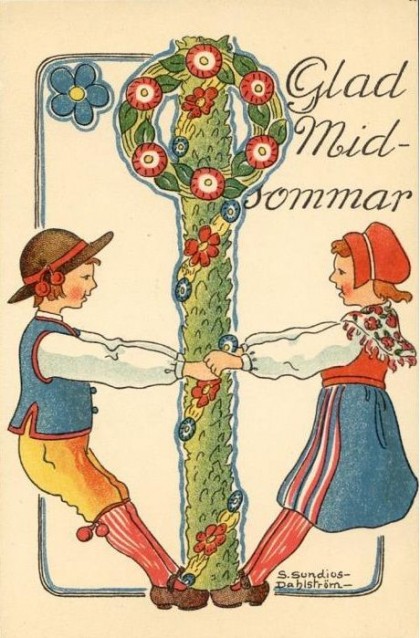 This is the last day of Beltane, the Celtic season marking the start of the growing season. Tomorrow is the Summer Solstice and in the way of the Celts, actually mid-summer. I plan to start calling the season midsommar, after its Swedish spelling since the Scandinavians do this season right: bonfires, family gatherings, great food, lots of naked dancing. Out here in the moisture starved West and up here on fuel rich Shadow Mountain, there’ll be no bonfires. Just too dangerous, but we’ll be with the Swedes in spirit tomorrow.


 You may not know I have a second blog,
 These are bread crumbs, usually no more than that, of the predilections I have, of the circumstances of my life. I say I do it for the grandkids or for folks I know, but really I do it for myself, to have a chance to speak out loud, to be able to follow my own life. So much of our daily life disappears (and probably should) under the onward spiral of time, but I find it interesting to know what June 18th in 2006 or 2010 was like for me.
 Kate continues to struggle with dry mouth, a very sore throat and other symptoms of Sjogren’s syndrome. She’s lost weight as a result. Lab tests don’t suggest anything terminal going on, but her distress is significant. If you know Kate, you know she has an energizer bunny mode, but she’s been on the battery depleted side of that equation for a while now.
 A new seasonal reality for us: pine pollen. All these lodgepole pines insist on involving on us in their reproductive orgy that happens this time of year. A fine yellow dust settles on everything. Coming in easily even through screens, it’s especially apt to settle on things electrical, so the computers and the tv and the microwave all have a coating. It also coats our solar panels, reducing their efficiency. If it rains, a yellow scrim settles over the driveway, pooling where the water does. I wish these pines could figure out a more direct way to make more pines.


 The shift to Reimagining has happened faster than I thought it would. My mind is like Kepler, our only dog who likes toys. He has a whole box of toys and he goes into it, noses around, finds the one he likes (why that one? no idea.), takes it out and carries it over to a place he’s decided is his toy stash area. I have several ideas that I’ve been playing with for years, e.g. becoming native to this place, emergence, tactile spirituality. In ways I don’t understand my mind goes over to the box of these ideas, hunts around, selects one and puts it front and center for maybe a second, maybe longer. Sometimes I pick up and play with one for awhile.
 In the shower one day I began to wonder where our water came from. At the time Kate and I lived on Edgcumbe Avenue in St. Paul so the question really was, where did St. Paul get its water? I had no idea. Turns out St. Paul public works pumps water out of the Mississippi and into a chain of lakes including Pleasant Lake and Sucker Lake just across the Anoka County border in Ramsey County north of St. Paul.
 Though I haven’t done it, it would be possible to track back much further to the arrival of water on earth. This is a very interesting topic which I raise only to demonstrate the potential in this kind of thinking.
 Open the refrigerator. Where did the food come from? How about the carpet on your floor? The roofing material. Concrete. Paint. How about the car in your garage? Where was it built? What sort of materials go into making it? Where do they come from?
 The incredible complexity of this web has put a thick wall between our daily lives and the earthiness of all that is around us. We start the car, shift into drive and head out to work or the store or on vacation dulled to the effort expended on the gasoline that fuels it, the rubber in the tires, the precious metals and the not-so precious metals in the body and frame and engine. I’m not talking right now about a car’s implication in climate change, or economic injustice, or urban planning. I’m focusing on getting to know how it came to be, what of our world made it possible.
 Why? Because focusing on these things, deconstructing our things, begins to break the spell of modernism. Modernism offers us in the developed world a world prepackaged for our needs, organized so that we don’t have to till the field anymore, or hitch up the horse, or drop a bucket down a well. In so doing it waves the wand of mystification over our senses, blinding us to the mines, the aquifers, the oil fields, the vegetable fields, the landfills, the seeds and chemicals required to sustain us. This enchantment is the first barrier to a reimagined faith, to placing ourselves once again in the world.