All posts by Charles

Gimmee That.

Lugnasa                                                               Garlic Planting Moon

Kona, our 12 year old whippet, as spry and agile as ever, a canine hymn to successful aging, started, about a week ago, jumping up and pulling down bagged honeycrisp apples.  They were on a low hanging branch and I can’t imagine what she thought she was about, but she bagged (sorry) several before I saw her in the act and promptly plugged up her way into the orchard.

Honeycrisps mature in mid-September, so her effort, maybe she was being helpful?, was premature by a month or so.  As a result, Kate and I decided to try drying apples and pears.

A word on pears.  Thankfully Kate saw this in a drying article on pears and we got them off the tree in time.  Saw what?  Well, the UofM extensions says the mistake most novice pear growers make is to let the pears ripen on the tree.  Geez.  Turns out they get grainy and not as tasty if you let Mother finish the job.

We cut up the seven apples I recovered (some had been gnawed on by other dogs) and the four pears, soaked them in sodium bisulfite (from your friendly home brewing store in nearby Springlake Park), spread them out on drying racks and put them in our Excalibur.  I had a slice when I got up from my nap and they taste just like dried apples!  Success.

We’re reinventing ma and pa every day here this fall in Andover.


# 68!

Lugnasa                                                              Hiroshima Moon

Kate and I went to the harness races at Running Aces.  The people watching there, as Kate said, is wonderful.  Big, little, old, young, wealthy, poor.  All kinds.

It was Kate’s 68th and the first birthday of her life since age 18 when she’s unemployed.  And happily so.  That’s a 50 year stretch.  Whew.

We had dinner at the bar, watched the pari-mutuel bettors using computer screens to bet races all across the U.S., thoroughbred and harness.  The users of these machines have an account that allows them to sign in, then bet using touch screens.  I don’t know how they reconcile the books, but it must be hugely complicated.

As we sat outside watching the gaily colored sulkies and the drivers in their equally colorful silks, dark clouds rolled in from the northwest, eventually sending a thundering rain to the ground.  That broke up the party.

Now we’re back.  Dogs are in bed.  Me, too, not long from now.

Good Enough

Lugnasa                                                                    Hiroshima Moon

When Kate and I visited our money in July, our financial planner, R.J. Devick, made an interesting observation.  Responding to the deluge of financial information–there are so many sources newsletters, private websites, newspapers, books, information services for financial professionals–he decided to have just four sources on which he relied, to the exclusion of the others.  I don’t recall the specific four, but they were high quality one private, one newspaper, one financial analysis group and something else.

He said he realized he could spend all his time reading and come away more confused.  Probably so.  There is, of course, a need, and I’m sure he does this, to check the continuing reliability of your sources, but overall this was an early information management strategy. Pare down your resources, make sure they’re high quality, then rely on them.

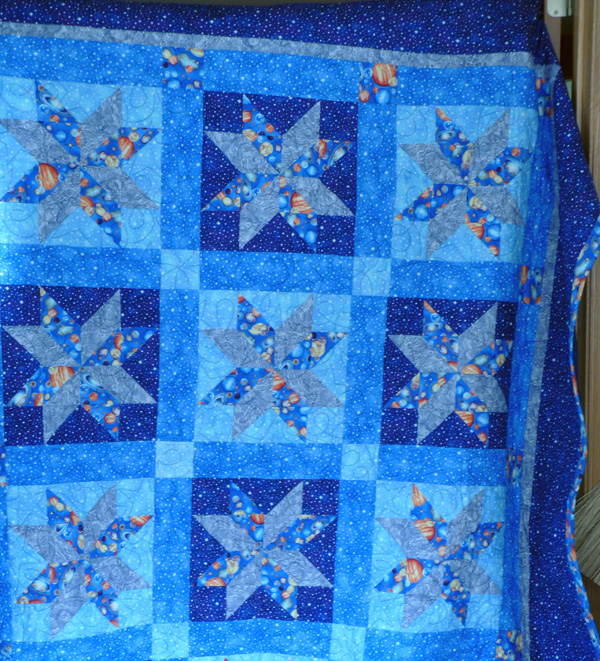
This struck me when Kate told me about seeing the quilt display at the MIA.  One of the artists dyed their own wool in slight gradations of hue in the same color, then used those variations as the design element in her quilts.  I asked Kate if she had any interest in learning to dye and she said no, quilting and piecing were what interested her.

Kate’s made a decision not unlike R.J.’s, an intentional choice to limit her range of interest in the service of getting higher and higher quality out of her work.  It’s a strategy some of the most creative folks apply, going back to the same well over and over again, though with infinite variation in treatment.

It may see obvious to you, probably does, but to me this is anathema.  And probably to my detriment.  I’ve written before about the valedictory life, the kind of life lived by valedictorians.  Once in awhile I check up on research about this topic because I was a valedictorian in the long ago faraway.  Mostly valedictorians don’t become famous experts, great writers or over achieving corporate climbers.

Why?  Because to be a valedictorian, you have to pay similar attention to all the classes that you take.  Or, at the least, in those classes that don’t come easiest, you still have exert enough effort to get an A or 4.0.  Apparently that style continues throughout life for most valedictorians.  That means we don’t achieve the kind of focus that designs the first computer, tracks down the most efficient way to manage information, builds the deep knowledge to become an artisan in cloth or paint.

Nope, we’re happily reading Scientific American, being a docent at a museum, writing a novel, translating Latin, putting in a vegetable and flower garden, doing all of these things at a reasonably high level but not high enough to stand out.  This is a hard life to accept, in one way, when achievement has been important, but it tends to not be the type of world beater achievement others expected.  On the other hand it meshes pretty well with the good enough life.  Good enough.

Lugnasa                                                                New (Garlic Planting) Moon

Morning with Missing.  Kate out to find sodium bisulfite, a preservative that maintains color in dried apples and pears.  Not an easy product to locate.

Up late last night and early today.  Sleepy.

Today’s Kate’s 68th birthday.  We’re going to the track tonight to celebrate.  The harness track, Running Aces.  It’s in our area.


Ancient Necessity

Lugnasa                                                                  New (Garlic Planting) Moon

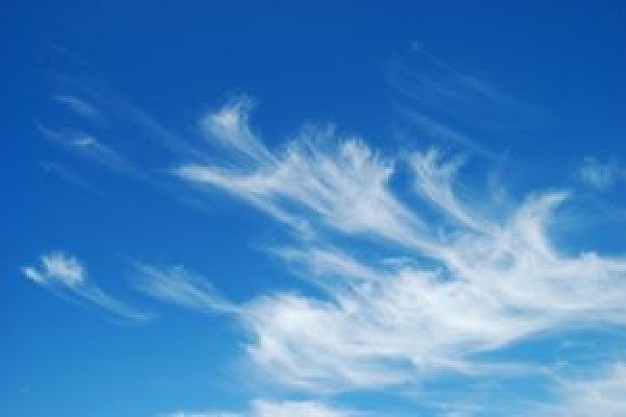
This afternoon as Kate and I drove out for a late lunch, the clouds were high cirrus, horse-tails against a robin’s egg sky.  The angle of the sun tells the story of seasonal procession and the temperature hinted at fall days still a ways ahead.  We’ve lost 97 minutes of daylight, having long ago turned the corner headed toward the winter solstice.

A lot of the garden activity now happens inside the house.  Herb and fruit drying, soup making, soon canning.  These are the harvest months of August, September and October.  No, we don’t subsist based on our garden’s produce, but eat it we do, over most of the year, either directly from the garden or laid by in any of various methods.  In a sense we only continue the long Midwestern cultural tradition laid down by ancient necessity, the life or death need to eat during the cold months.

Our harvest and preserving echoes that tradition since necessity long ago gave way to grocery stores and farmer’s markets, but in that echo we can hear the voices of our grandmothers and our grandfathers as they worked in the fields, filled the farm kitchen with the heat of their cooking, preparing themselves and their family for winter.

Lack of necessity, however, does not mean lack of need.  I believe there is a need for us to plant a seed, or nurture a transplant, to care for a tree or bush or a flower.  And more.  To gain in reciprocity something from that nurture: a fruit, a vegetable, some sustenance.  And more.  To use that food on our own tables, to create the magic of the true transubstantiation, flesh of the earth, blood of the sun, work of the plant made into our body.

This is an ancient necessity, to know this transformation from plant to food.  Why?  Because no matter our physical location, it is still and will be for the foreseeable future the source of everything we eat.  If we do not understand it, we will not protect it.  If we do not protect this source, we are in danger of losing it.  Ancient.  Necessity.

Latin Fridays. (Maybe I Should Eat Fish, Too?)

Lugnasa                                                       New (Garlic Planting) Moon

Down in the pits with Ovid this morning, rasslin’.  I’m not moving as fast as I did a month ago, but I believe that this stretch is more difficult, not that I’m slower.  There are many small satisfactions in translation:  learning new words, puzzling out word order, identifying conjugations, putting phrases together to form a sentence and sentences together to form a narrative.  I enjoy it.

Today is a Latin day, so I’ll whack away at Ovid in the afternoon, too, before I work out.  Tomorrow it’s back to Missing though I hope I can work some short Ovid sessions along the way, too.

I had two different couples stop me after the Rembrandt tour yesterday, none of them part of the home school group who were my primary tour.  They both said I was an excellent docent.  Used those words.  That felt good.  I thanked them and said it was good to hear.

Kate’s roasting peppers this morning.  That set off the smoke alarm and the co2 detector.

Lugnasa                                                        Hiroshima Moon

A tour with a home school group that accreted more folks as we moved along, even though we went from gallery 3 to gallery 2 then to 1.  These tours have been fun, audiences appreciative. Glad I got the chance to do it.


Grrr. Ruffff.

Lugnasa                                                                   Hiroshima Moon

The Hiroshima Moon has begun to fade.  Next up will be the Garlic Planting Moon.  The Hiroshima Moon made me aware, the whole month, of Hiroshima and Nagasaki.  The insanity of nuclear weapons.  Then, the insanity of using them.  Then, the insanity of stockpiling them.  Now, the proliferation of nuclear states.  I think I’ll keep the Hiroshima Moon in my naming list, just for the reminder.  Never forget.

Vega and Rigel have a new hobby, digging under the orchard fence.  There are now six such attempts, two have achieved break through.  At one point this kind of thing amused me.  Me against the dog.  Human mind against canine.  Now it frustrates me.  A lot.

These two, sisters never separated since birth, act in unison.  Rigel digs, then she rests and Vega digs.  A hundred pound plus dog can move a hell of a lot of sand.  A lot.  Grrrr.  Ruffff.


A Peat Bog

Lugnasa                                                        Hiroshima Moon

This has been a down August for me.  Still slogging through molasses.  Only bursts of energy, clarity.  Don’t like it.  Doesn’t seem to be much I can do about it.  One foot in front of the other.

Worked all morning on Missing.  Right now I’m summarizing chapters, creating character bios and defining scenes.  The result will be an outline with chapter summaries and a read through, quick, yes, but still a read through.  Once the read through is done and all chapters summarized, I’ll be ready to start working on Loki’s Children.

When that comes, my days will be Missing revision, writing Loki’s children, translating Latin and the occasional tour.  Hoping that I will get assigned to the terracotta warrior show since I’m prepared already for Qin Shi Huang-Di and the rise of the Qin dynasty.

Right now all this sounds too much, but a hold over from the days of salaried work is a good work ethic once I’m clear on where I’m going.  That means I’ll keep going.

The bees.  Dejected, yes.  Defeated, no.  Last year I decided I would buy packages, build up the colonies and take the honey they produced, all of it, including their winter stores, then start over again the next year.  This was partly a response to difficulty over-wintering bees, partly to mite loads.  Fail.

So.  I have to look at this a first year project, in which case I have one colony, the aggressive one, that will have plenty of honey and brood for the upcoming winter.  The other, the less active one, had, today, brood.  Surprise!  They must have swarmed earlier and created a new queen.  Not sure right now how to encourage them through the winter, but I’ll find out.  If the strong colony produces any extra honey, I’ll give it to the weak one.

These Strange Times

Lugnasa                                                   Hiroshima Moon

Pope’s butler accused of theft.  Wait.  The pope has a butler?  Shootings yesterday at Texas A&M.  The Sikh Temple in Wisconsin last week.  Aurora the 20th of July.  Can anyone else hear a tear in the moral fabric of the universe?

Not to mention that yesterday the stock market was down because of news from Asia.  Asia?  What happened to the euro?  It’s true that bad news always happens and good news is not, usually, news at all.  Still.

Let’s throw in the news from  Europe’s Cryosat that the polar ice has begun to retreat

(at) a loss of 900 cubic kilometers of ice in the last year. That’s 50 percent more than computer models predicted would melt.

A lack of ice is good news for shipping, and oil and gas exploration, but dark ocean water warms the air above more than reflective ice, a “positive feedback” that accelerates warming. Research suggests the Arctic is warming 2-4 times faster than the rest of the Northern Hemisphere. So what? This warming is nudging the jet stream north, to the tune of 1 mile a year, 18 feet/day.   (paul douglas weatherblog)

Predictions of the end times have a 100% failure rating (so far), so I’m not going there, but bizarre times?  Yes.

Of all of these, the news I understand least are the three shootings.  Like the man here who killed his three daughters, there may be a psychological explanation.  Certainly there is a psychological explanation.  Has to be.  But explanation does not serve.  Tracing the inner path to these crimes leaves us with the crime in the end.

I’d like to know, if anybody does know, the incidence of these or similar crimes in other cultures.  Are we truly aberrant or is it a statistical phenomenon, a law of large numbers reality?

Of all these, the news that worries me the most comes from the cryosat satellite.  This summer was miserable for us and horrific for much of the country.  In this case I understand the cause.  I drive one.  So do you.  I use electricity.  So do you.  We have treated global warming as a topic for next year.  For the next generation.  Guess what?

It is next year.  And we’re the next generation.