Beltane Mountain Moon
Rabbi Rami Shapiro spoke to Beth Evergreen parents on how to talk about god to their kids.  You can see on the board four terms and a fifth, panentheism, finishes it. (That’s Rami to the left standing and Rabbi Jamie to his right.) I think the first four are well known, panentheism perhaps not so much so. While pantheism says god is everything and everything is god, (all-god), panentheism says nature is part of god but god is more than that, too, perhaps even beyond time and space. The most well known panentheist, at least when I was in sem, admittedly 45 years or so ago, was Alfred North Whitehead, proponent of process theology.
My brother Mark asked me recently whether I was a theist or a deist. I wrote back, sort of tongue in cheek, polytheist atheist. This morning I thought, polyatheist. I like the contradiction, the tension between these two words. All the words on Rami’s sheet assume a monotheistic stance in which one believes, does not believe, doubts, makes coincident with nature or inclusive of nature but not limited by it. None of them describe my location in the world of god thought.
 Perhaps better, polytheist agnostic. Even that doesn’t carry quite the right emphasis. What was it they said on the x-files? I want to believe? When I graduated from college, yes, it was 1969, 49 years ago, I decided to revisit Christianity. I chose to use Soren Kierkegaard’s leap of faith as a model. After reading his Fear and Trembling, I decided I would live as if the Christian god were real and that the gospel stories were true. That’s how I ended up in seminary in 1971.
It was not a perfect reenchantment of my world. A lot of Christianity, even then, I just ignored. Nothing would have made me predeterminist or even one interested in salvation beyond this life. The God and the Jesus I believed in were guarantors of a just world, a world where evil could be fought successfully and where evil denied our essential oneness as a species, allowing certain people to feel privileged due to race, gender, wealth, nationality, sexual preference. “Let justice roll down waters, righteousness like an everflowing stream.” Micah 5:24 Or, Luke 4:18-19: “The Spirit of the Lord is upon me,
because he has anointed me to preach good news to the poor.
He has sent me to proclaim release to the captives
and recovering of sight to the blind,
to set at liberty those who are oppressed,
19 to proclaim the acceptable year of the Lord.”
 Martin Luther King, liberation theology, Jesus as a revolutionary those were my touchstones. Yes, I meditated, prayed, interpreted scripture, very occasionally served the sacraments, but the core of my shift from college non-belief to Christian clergy lay in the political implications of Christianity. This was a thin rationale for a metaphysical commitment. And, it broke apart. By the time I left the Presbyterian ministry in 1991, the scaffolding of bible, god, jesus, prayer had long ago collapsed.
When my then spiritual director, John Ackerman, said, “Charlie, you might be a druid,” I laughed. Then, I thought, hmmm. No, not a druid, but yes one whose religious instincts lead him to the garden, not for a last prayer before crucifixion, but as a participant in the web of life, hands in the soil. This was reinforced when Kate suggested I look for a particular focus for my writing. Since part of leaving the ministry meant novels, I took her suggestion seriously.

I have two broad genealogic streams in my dna, Irish and Welsh, and German. Ellis and Correll for the Celtic side, Spitler and Zike for the Germanic. I chose the Celtic side first, exploring the realm of Celtic religion. The Celtic Faery Faith, a book by W.Y. Evans Wentz, who went on to translate and make popular, the Tibetan Book of the Dead, was an early influence. As I got deeper and deeper into crafting novels, always fantasy, always with an ancient religion at their heart, I began to entertain strange thoughts.
 What if Cernunnos, the horned god of nature in Celtic myth, was real? Tailte, a Celtic goddess of the earth, came from a euhemerized Welsh woman. Euhemerus, a Greek mythologist, lived in the late 4th century B.C.E., and proposed that myth was an exaggerated account of the lives and deeds of real people. Thus, euhemerization might suppose that behind Zeus there was a strong, dominant man who ruled imperiously over his people. Or, that a certain Welsh woman, a gardener and farmer, one with a remarkable ability to make things grow and to find useful plants and animals in the wild, might become an Earth goddess. So euhemerization blurs the line between the real and the mythical. Had Cernunnos been a hunter so in touch with his prey that his success seemed super-human?
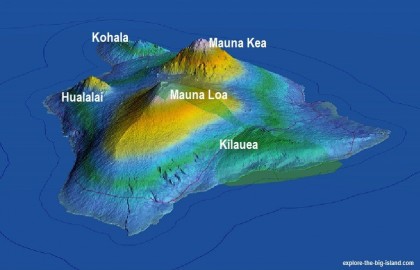
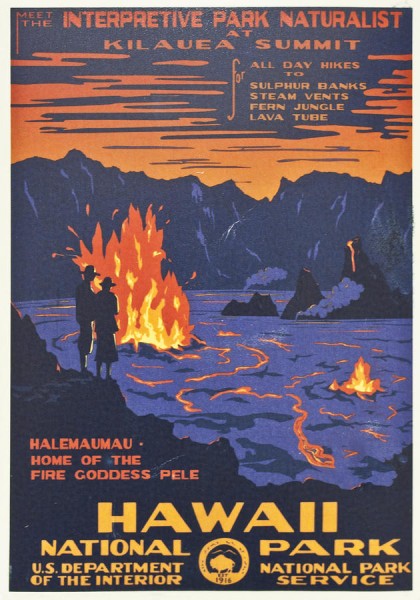
A more recent and accessible example of another myth-making process is Pele on the Big Island. Perhaps Pele was a strong, fiery Hawai’ian woman of long ago, one drawn to the vulcanism of her homeland. Perhaps she danced with the lava, foretold eruptions, protected people from the ravages of sulphuric gases. She may have come to hold the role of goddess of fire, goddess of the vital forces beneath the Hawai’ian archipelago, through repeated tales of her amazing feats. Or, it might be that ancient Hawai’ians personified the enigmatic and brutal forces of Mauna Kea, Kilauea, and Mauna Loa just as the residents of Leilani Estates have done since the eruptions began last week.

In my own post-Christian world these sorts of gods and goddesses resonate. The notion of one deity behind it all, a wizard or sorceress of creation, seems silly. That certain groups might confuse the god they hold closest with a monotheistic deity makes sense to me; that others might actually agree with them makes no sense to me. There cannot be more than one, one god. Simple logic.
When two groups assert that their god is The One, one of them has to be wrong and in my opinion, both are. Which leaves us where? Well, the assertion of two all-powerful deities makes sense to anyone with a polytheistic bent. Why is Allah any more sensible than Athena? Why is Yahweh any more divine than the triple-goddess Brigit? Why is Brahma more explanatory of cosmic matters than Ahura Mazda and Angra Mainyu?
 So, I have become a polyagnostic. I doubt the existence of all the gods and goddesses ever imagined. I do not chose Yahweh to doubt anymore than I choose faeries and Odin to doubt. Yet. I want to believe. I want to see Pele at work in the now 18 fissures breaking through the human hubris of Leilani Estates. I want to find the god and the goddess, Cernunnos and the Maid, frolicking naked in the fields of Beltane. I want to see the Wild Hunt cross the sky. And, yes, I’d like to see Yahweh deliver the tablets or speak from the bush. Hell, I’d even like to watch Allah send Mohammad by horse to the temple mount, through the sky. I could stand in the Mithraeum and be doused by blood or water. It’s not hard to imagine, for me, diving into a holy well and ending up in the Otherworld.
What I’m trying to say here is that my doubt is not tied to the monotheistic faiths, rather it is tied to the polytheistic nature of global religious thought. Polyagnostic. I doubt and embrace all gods and goddesses, all nymphs, daiads, faeries, banshees, rashis, and chupacabras.
 If we were to divide polyagnosticism into two camps, one leaning toward belief and one leaning toward polyatheism, I would be in the leaning toward belief group. I suppose that’s what keeps me a friend of all sorts of religious belief systems, all sorts though not all. I believe in the numinous, in the unseen mystery, in the still small voice that comes from the rock, the mountain top, the flowing river, the growing grass, the blooming flower. I believe it’s no accident that these forces have been named sacred, called divine. I think it’s appropriate to anthropomorphize them, to find in the wind Boreas, to find in the magma chamber, Pele, to find on Mt. Sinai, Yahweh. These are sources of wonder for me and ones I cherish.
I just don’t know which ones are more real than the others, or, if they’re all real in some way. I’m not even sure I know what real means or could mean here.
 Rabbi
Rabbi  As soul we become aware of our direct links to other people, to the world we live in and we understand them as part of us and ourselves as part of them. Shapiro says that such dictums as love thy neighbor as thyself become axiomatic at the soul level. When we know the true face of the other, which we can do at soul level, then we have to treat them with loving kindness. This includes the earth.
 He refers to himself as a perennialist. Here’s what that means:

 In the present, which has never existed before and will recede as if it were never there, all things can be made new. This is a subtle idea, at once obvious and at the same time almost impossible to grasp. Yet it is true that the 71 years of my life have passed in moments, always in the now. Even in 1947 my life passed moment to moment in increments, the very same as the increments I experience today in 2018.
 Turns out I missed a key move on powering up the sound board.
 I had to call Alan Rubin, a new Beth Evergreen friend, who is the A/V sage. He said he was sitting by his pool enjoying the weather. It was a blue sky, white cloud, warm but not hot, Colorado day. After some false starts, Alan isolated the problem, I poked a button and, right at 2, the sound. Whew.
 However. All this meant I had not had time to arrange the tables for folks to take notes, so they sat in chairs looking up at the screen. I also had not given sufficient thought to the pedagogy of the afternoon. How would we interact? What questions might prompt discussion? The fact that everyone faced front rather than seeing each other across a table made getting a conversation started difficult. Though I don’t think the audience cared, I’d hoped for a more interactive event and I didn’t facilitate that.

 Reenchantment has a precursor experience, a moment when we embrace the awe and the mystery, a feeling that we each experience, perhaps even experience often (childbirth, death, sunrise, the greening and flowering of spring, a snowstorm, bitter cold, blazing heat, the vastness of the ocean, love), but a feeling we have allowed others to reframe for us. The laws and beauty of scientific understanding do not explain away, as many assume. They are descriptive, a language of their own about the world in which we live. But they have not stripped out awe and mystery though men like Richard Dawkins, Sam Harris, and Christopher Hitchens insist on it. Empiricists, fed by scientism, want to suggest only through data and analysis can we know the truth.
 Or, the experience of the Celts and the Roman Catholic church is instructive here, one faith’s certainty can leave no room for the numinous anywhere but in their dogma, their rituals. Catholics built churches over Celtic holy wells. They deployed words like heretics and blasphemers and pagans to undercut the authority of the old faith. They appropriated Celtic holidays by turning Lugnasa into Lammas, Samain into All Saints. Mordecai Kaplan, the founder of Reconstructionist Judaism says it well, “It is not the seeking of God that is the problem, it is the certainty of those who believe they have found God that is the problem.”


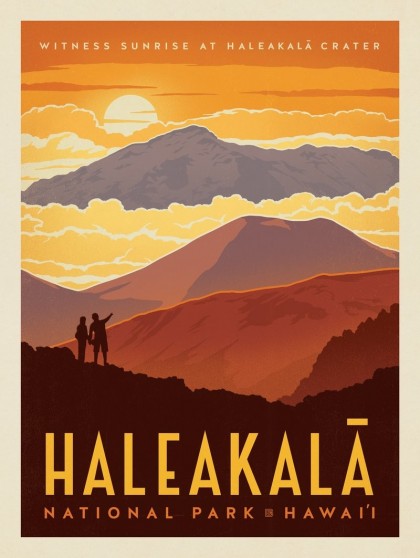 In the month of the Mountain Moon Kilauea has reminded me that my interest in mountains precedes the Rockies. My first mountain driving experience was Haleakala on Maui. I learned there that you don’t have to brake going up, take your foot off the accelerator and the mountain takes care of you.
 Hawai’i put vulcanology on my oh this fascinates me list. On a visit to the big island, Hawai’i, we drove the Highway east out of Kona, traversing first Hualalai, which sits just above Kona, then Mauna Loa, the long volcano, and finally, climbing up the eastern flank of Mauna Loa we went past Kilauea. We did not go in that day, driving on to Hilo town. On our way back, later that evening, we drove along the southern flank of Mauna Loa again, the air scented by gardenias and jasmine.
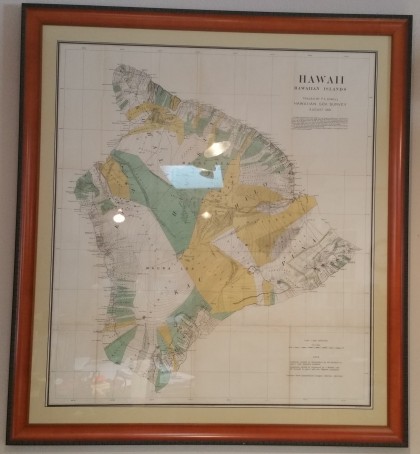 Maps. Kate bought me this wonderful vintage map of the Big Island. It now hangs in a prominent position here in the loft, reminding me of many adventures including our stay at Volcano House. Kilauea is in the yellow portion of the map that extends south to the Pacific and butts up against the large swath of green in the middle. The new eruptions are in the eastern, white segment that extends to the north from the point where Kilauea meets the Pacific. This is Kilauea’s eastern rift zone*. People building there knew about the rift zone, but hoped it wouldn’t affect them, much like we hope our location in the Wildlife Urban Interface, WUI, won’t result in our home burning down. Mother Nature gives no passes for human hopes however. She decides when and where things happen, according to her own laws.
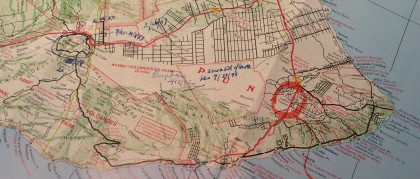 Over years of travel I have purchased maps and annotated them. I did this especially in Hawai’i where we visited often while Kate practiced. It is a popular location for continuing medical education. Each time we visited I would mark where we had gone, the date, sometimes a brief note though the longer explanations were in my notebooks. We spent time on Maui, Hawai’i, and Kaua’i, enjoying all of them in turn. Each has their particular charms.
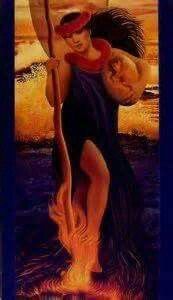 In 1999 I stood on the rim of Halema
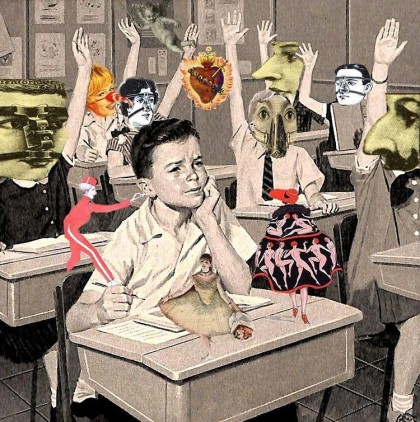 Back in the day, the now further and further away day, I always went to class. I might have missed a few, but it was rare. I enjoyed learning from lectures, getting in the mix of dialogue, thinking out loud. Last night I was the only student in the qabbalah class on Time.
 Being human is a daunting task, steeped in misdirection, existential isolation, perception clouded by tradition, by language, even by our body. Qabbalists and taoists and ch’an buddhists have worked, hard, to peel the onion of our awareness. They are subtle, in their own way as subtle as particle physics or genetics or neuroscience, attempts to understand this task, the one none of us can jettison, save through suicide. They differentiate from the narrowing tendency of science by insisting on a full, a comprehensive positioning of this strange creature that we are in the wild.
 Thought experiments like taoism, qabbala, ch’an or zen buddhism try to shock us out of our stupor, the life lived without seeing the wilderness for what it is, the life lived within the conventions of a particular time, a particular language, a particular place, a life lived without knowing what life is. Most people find little reason to peak behind the curtain of this emerald city that we think is what is. The apparent life, the one with family and money and the NFL and food and houses and sunlight and night, seems to be all that could be. We do not question, we try to paddle the little barque of our body on this river (life) often using only our hands over the edge of the boat.
 And yet there is more, not more in the sense of more layers or more depth, for those layers and depths, the wilderness, always surround us, are the water to which we are the fish, but more in terms of what we can know, what we can access, what we can use to help us become awake. Woke, in the current vernacular, not woke to racism and sexism and oppression in this instance, but woke to the true majesty and wonder of life itself, of this wilderness journey, this most ancient of ancientrails.
 Another recovery hallmark. Kate drove yesterday, went out on her own for the first time since March 22nd! The bank, a few groceries, gas. When doing these errands feels routine, they can be mindless or even a nuisance; but, this sort of moment allows us a glimpse into the ordinary miracles that make up what we think of as normal, usual. We can get up from the chair, pick up the keys, start the car, drive to the grocery store, the gas station, the bank.
 Mussar Vaad Practice Group last night. Vaad = sharing without comments. Mussar = Jewish ethics focused on developing middah, character traits. This is a group, partly because of its nature, partly because of its members that has become a Woolly Mammoth equivalent for me, a place where I can be transparent, share, look inside, gain from the ancientrails that others walk.
 Earth has come round the sun again to the second half of the Celtic year, marked by Beltane or Mayday, the start of the growing season. I’m going to try something new this Beltane and introduce at least a half year’s emphasis, a theme of sorts. Mountains. Yes, I’m working on Jennie’s Dead and the sumi-e and qabbalah, but I want to extend the mountain moon’s influence to Samain, to Summer’s End, six months away. On that day, the Celtic New Year, I’ll reassess.
 On this day a market week would commence among the ancient Celts, one where handfast marriages could be performed, women would leap over fires to enhance fertility, cattle would be driven between bonfires to ward off disease and young couples would go into the fields and imitate the marriage of Cernunnos and the Maid, adding their magic to that of the god and the goddess.