Category Archives: Commentary on Religion

Death, and given the date, Taxes

Spring                                                                        Rushing Waters Moon

This time the snow storm underperformed. Maybe 3 inches. Good news, really, since it means Colorado Pulmonary Intensivists won’t close and we’ll finally get to have a delayed visit there, pick up Kate’s ct reading and discuss her j-tube surgery.

fearGot my own thing going on, too. Second PSA showed a slight uptick from a month ago, from .12 to .13. As Kate said, probably in the lab’s margin of error. Still, it is cancer we’re talking about here. Any increase over .1 sends some sort of signal, just how serious a one I don’t know. Going in to see the urologist as soon as I can get an appointment.

Not the best judge of my anxiety about this. When I sent the note to Dr. Eigner, the surgeon who removed my prostate, I said my psa had gone up to 1.2. That’s a huge difference from .12. I misplaced the decimal point. Not at my calm best on that e-mail.

As I hear myself thinking, my self talk is like this. I need more information. I don’t know enough to  know whether this is bad or just something we’ll need to watch. Or, both. But wait. It’s cancer. You know, CANCER. I don’t want to have a sell-by date given to me, or worse an expiration date. This body no good after 13 years. Oh, come on. We all die. And, you’ve even referred to your eventual cause of death as your friend.

Yamantaka
Yamantaka

Death is not an enemy. It’s an inevitability. Yes, it takes my breath away when my inner conversation veers towards my absence, my annihilation. Sometimes. Other times, I take it in, embrace it. I take from the Tibetan Buddhists that being calm at the moment of your death is a spiritual goal. It is for me and that also means being calm about death since it always approaches, is never further away than your next breath.

We begin and we end. This much we know with certainty. If life, that time between a sleep and a sleep as the Mexica say, is filled with apprehension about the end, then this brief mayfly moment will be wasted. That’s why Yamantaka encourages us to consider our death in as realistic as a fashion as we can. See our dead body. Imagine it in a coffin. Feel the last breath leaving your body. Imagine the world without you.

Not sure about the notion of an afterlife. Reincarnation? The Buddhists think so. Heaven or hell? Very unlikely since I know the literary sources for both of them. Absorption back into the 10,000 things? Makes the most sense, but sense is an artifact of this life and in particular an artifact of human reason. All the data we have comes from our singular experience in this body, in this lifetime. We have no prebirth memories (I find past-life regressions difficult to believe. Which does not mean untrue.). We have no post-death returns save for those who have experienced death and been revived in some way. Even those experiences are brief and inevitably the product of a difficult moment.

death Osiris-nepraWhat about Jesus? There again, I know the literary sources. The earliest gospel, Mark, probably did not include a resurrection narrative. The dying and rising god is a motif of certain Middle Eastern belief systems, the story of Osiris for example.

Would we all like to have a definitive report back from beyond the pale? Not sure. What if it contradicts our hopes, our beliefs?

Here’s the nub of it. I know and love life. But it is, I admit, all I know for certain, except that it also ends. I’m not eager to trade a known good for an unknown. Most aren’t, I suppose. When a mortality signal like a possible return (or more like a reemergence) of cancer comes, part of me responds with fear, with anxiety. Another part of me responds with acceptance of my death.Which is, in any case, not  yet.

Charon and Psyche, John Roddam Spencer Stanhope. 1883

The older I get I realize carrying contradictory states is the norm, at least for me. It’s like pneumonia. I learned this February that you can have both viral and bacterial pneumonia, in fact, you can have different strains of both. At the same time. We’re more complex, less simple than our reductive thinking processes can usually entertain.

One thing I find odd is being given thirteen years to live (a possible prognosis if this is a reemergence), makes me more anxious than not having such a number. Which is silly from a rational perspective. All that’s being taken away, all he said, is the fantasy of immortality. Without such a prognosis I could continue to live, well, ongoingly. Which of course we know not to be true. Anyhow at 72 I’m already two years into the bonus range beyond three score and ten.

Consistency, Emerson said, is the hobgoblin of small minds. On the matter of death and cancer I’m not a small mind.

Legendary

Spring                                                                      Recovery Moon

IMG_0612

Tom Crane sent me this street poet’s work, found on Maui. I wrote him back after reading it and said we could go for an epic third phase. I meant legendary, but epic appeared anyhow. He wrote back, said he’d like that, too, but didn’t know how. I agreed. Beginner’s Mind, eh? We’d have to redefine epic, Tom replied. Yes.

And, we don’t want to get stuck in the success trap. That trap can consume the second phase, career and family, but it can be set aside in the third. So the question could be, what would a legendary third phase look like? Better than epic. Epic has that Hollywood feel, doesn’t it? Let’s forget I transmuted legendary into epic and go back to the poem.

Sadhu
Sadhu

What does an open spirit look like in the third phase? What risks might we take if we had one? What risks are particular to the third phase? To get an idea of where this might go, I looked up the Hindu sadhu. A sadhu intentionally creates a fourth phase of life.* Of course in a Minnesota winter like the last one the Jain option of wearing nothing would require modification unless the sadhu phase was to be short.

I wonder if other cultures have similar ideas? Don’t know. What I do take from the sadhu is that they have an open spirit, moving toward moksa means getting free from samsara, the worldly enmeshment that the second phase presses upon us with such vigor.

Part of a legendary third phase might involve letting go, leaving the old desires of life, shaped by education, work, and family behind. But, if they’re left behind we might be left wondering, what else is there? Those desires are the ones that motivated us, got us up in the morning, out the door coffee in hand, ready to do. The old finish line model of retirement pretended that this was as easy as buying a set of Pings, selling the house in Kenwood, and moving to a Del Webb village to drive, chip and putt. Or, head out to Margaritaville, collect umbrellas in the sand next to your beach chair. Doesn’t sound like a sadhu approach, does it?

Song dynasty
Song dynasty

Another image, similar to the sadhu, was the Chinese scholar who would retire from the bureaucratic life, paradigmatic of the second phase in that culture, and move into the mountains to write poetry and live amongst wildlife and forests. This is a Taoist vision, one that took over from the Confucian when either work was over or changes in the political life forced a scholar out of the court. I like this one a little better than the sadhu because I like clothes.

Wu wei: “a state of being in which our actions are…effortlessly in alignment with the ebb and flow of the elemental cycles of the natural world” is the Taoist principle these mountain hermits follow. And, a sound one, though as I’ve written before, I’m also a “take arms against a sea of troubles and by opposing end them” sort of guy. This may be the key attitude that prevents me from fully letting go of success, of my set of Pings, that beach chair.

I’m not talking here about monastics or hermits who take to those lives, as Thomas Merton did, in the midst of their second phase. These are escapist lives, profound in their way of course, but ones that set aside the second phase much earlier. What I want to consider is the legendary third phase possible after the more traditional transition from work and raising a family.

Look forward to any ideas you might have. This preliminary look suggests some things to me. Let go. Seek spiritual liberation. Attune life to the seasons, to the natural world. Live in some seclusion from the old, second phase world.


“The sādhu is solely dedicated to achieving mokṣa (liberation), the fourth and final aśrama (stage of life), through meditation and contemplation of Brahman. Sādhus often wear simple clothing, such saffron-coloured clothing in Hinduism, white or nothing in Jainism, symbolising their sannyāsa (renunciation of worldly possessions).” wiki


Ruach. Breath. Wind. Spirit.

Spring                                                                  Recovery Moon

breath ruachHead. Mostly clear. Lungs. Mostly clear. I’m beginning to feel the illness bidding me goodbye. So long, it was good to know ya. Nah, it wasn’t. And don’t come back, please.

Kate continues to show steady, if incremental, gains. She smiles more, laughs more. Until, that is, she opened the letter from Swedish Hospital advising us that our balance with them was $25,000. Oooff. Our insurance provider has not, for some reason, paid them. I get to chase that down today. Being sick in America. If the illness doesn’t get you, the debt collector will.

If we didn’t have resources, didn’t have enough education and chutzpah to front the insurance company about this, we might end up stuck with the bill. Kate’s experience since September has been long, invasive, and expensive. Without insurance we’d be eating away at our IRA. I don’t think this should be too hard to clear up; but the ominous nature of a letter like that creates an unpleasant frisson. To say the least.

I’m debating going to see my doc about o2 sats. They’re below normal, though not in a dangerous range. The high 80’s a good deal of the time. Normal is above 95, though above 90 nobody worries. Since we’ve gotten here, my sats have been around 90 most of the time. As Tom pointed out, we’ve lost 75% of our available oxygen just by being at 8,800 feet. That would make a normal reading 93 if I’m doing my math and physiology right.

breath in outI really don’t want to confuse Kate’s journey right now, especially since we see the same doc, so I may wait a bit, be sure the flight of respiratory illness I sampled over the last two months has actually ended. In time I would like to know if anything in my lungs compromises my breathing. It’s certainly possible. I smoked for 13 years. Not proud of it, but I did. I also worked in a couple of high particulate matter jobs in my younger days, cutting rags at a paper mill and moving completed asbestos ceiling tiles to pallets. And, Dad had severe asthma, using an inhaler virtually his whole life.

Ruach. The Hebrew word for breath, wind, and for spirit. The Greek word is pneuma. God breathed ruach into the lungs of Adam and he lived. Since the traditional test for death was holding a mirror or a hand up to the nostrils, no moisture on the mirror, no felt breath, it’s not a stretch to equate breath and breathing with life. No breath, no life. Many traditions, especially Hindu and Buddhist, have breathing related practices. So do the Sufi as my friend Debra Cope has taught me.

breath dive reflexWhat impedes breathing, impedes life itself. Impedes the spirit of all life that dwells within us. Like health breathing is unremarkable to most of us until its ease experiences an interruption. Water boarding, or extreme interrogation (not torture as our CIA likes to say), is horrific because it emulates drowning. Our body has reflexes built in, the diving reflex, for example, that protect us in the case of sudden immersion in water. This means that our DNA carries a history of dangers to our breathing.

The pulmonologist treats matters related to breathing. But the pulmonologist, no matter how skilled and learned, deals with the physical challenges to breathing, not the spiritual implications. No, that is up to us and our own way of understanding the body/mind/spirit links.

Breath jacob-wrestling-with-the-angelA breathing issue is not, then, solely the province of pulmonology. It is also the province of theology broadly understood. Theology, for me, is the way you identify, organize, and deal with matters of ultimate importance. Life itself is, of course, a matter of ultimate importance to an individual; therefore, life and how it is for us at any particular point is a directly theological matter. Breath, the spirit of life that fills our lungs, provides our cells with oxygen so that they can carry out the physiological functions that are life in the body, is also of ultimate importance.
Here’s a website devoted to breath meditation.* Note in the second sentence that prana, a Sanskrit word, means both breath and life. No breath. No life.

My journey right now forces me to investigate my breathing at both a physiological and a theological level. It’s all o.k., too. None of us get leave this ancientrail alive. Something takes our breath away. That something shows the fragile nature of even the most master of the universe sort of person. Right now I’m going to attend to my breathing, my o2 sats, the spirit and life they make possible within me. An ancientrail of the third phase, no doubt.


*Breath is the universal factor of life. We are born the first time we inspire, and we die the last time we expire. Breath is life itself. In Sanskrit the same word–prana–means both breath and life.

All that lives, breathes–even plants and the bacteria that make bread rise. The process of breath is identical in all, consisting of inhalation and exhalation. It is the most immaterial factor of our existence, being a link-manifestation of the mind/spirit that dwells in all. For this reason, the breath is the natural and logical basis for meditation, the attempt to “enter into life.” The breath is the key to the cultivation of pure consciousness.

The Velveteen Rabbit aspect of human identity

Spring                                                                            Recovery Moon

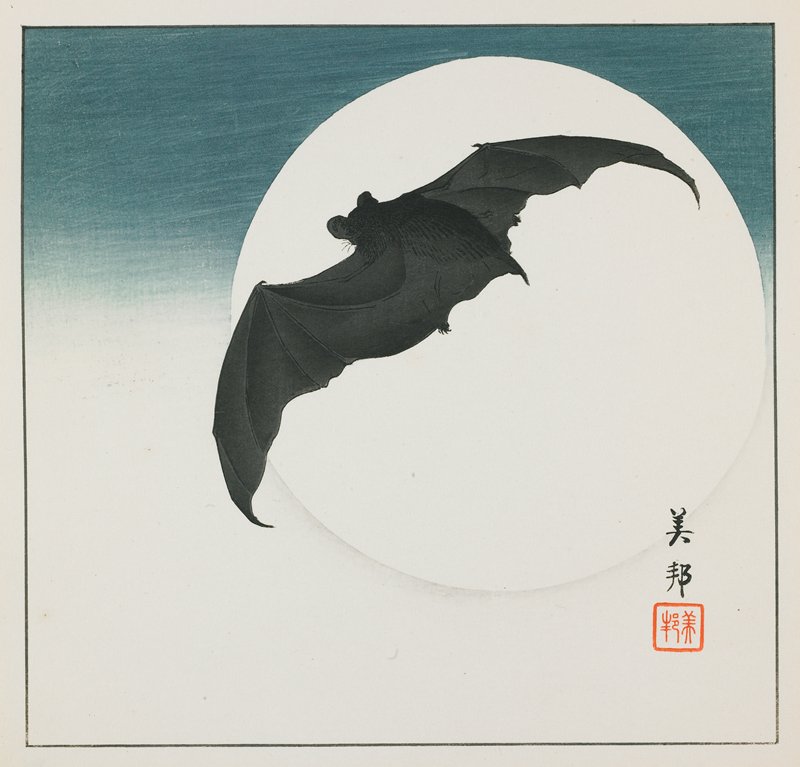
Bat and Moon, 1930s Takahashi Bihō. MIA
Bat and Moon, 1930s
Takahashi Bihō. MIA

The Recovery moon illuminates Black Mountain this morning. The ski runs carved out on the mountain are white strips reflecting back moon shine. A light breeze moves the lodgepoles and a thin dusting of snow covers the solar panels. Early spring in the Rockies.

Kate made a salad last night. We bumped into each other in our galley kitchen for the first time in months. She also tossed her friendship quilt from the Bailey Patchworkers into the washing machine. She’s beginning to emerge from a long time in the chrysalis of illness. Wow.

Since the recovery moon seems to find us both on the uptick, my doctor’s nurse called with lab results, actually a second call due to confusion there occasioned by a weeks long problem with their computer systems. The first call came when I was still pretty sick and I didn’t pay close attention. This time I did. My PSA has moved up from .o1 to .012. Doesn’t seem like much, but when your prostate’s gone, it’s supposed to stay at .1, which is effectively .0. A recurrence is defined, for those of us who had our prostate’s removed, when the PSA hits .2. Concerning, but not yet a problem. Further testing required.

Rabbi Jamie called last night, wondering how we were. We were both steady and frequent attenders of things at CBE up until Kate’s bleed on September 28th. I continued until my own illness which began in early February. Since then, I’ve only been back for the chicken soup cook-off. Our sudden disappearance from the synagogue’s life caused him to say last time he talked with Kate that the schul isn’t the same without us. Kate was on the board and I was teaching religious school. We both attended mussar on Thursdays. We went to services less frequently, but showed up at education and special events, too. We’ve woven ourselves into the fabric that is CBE.

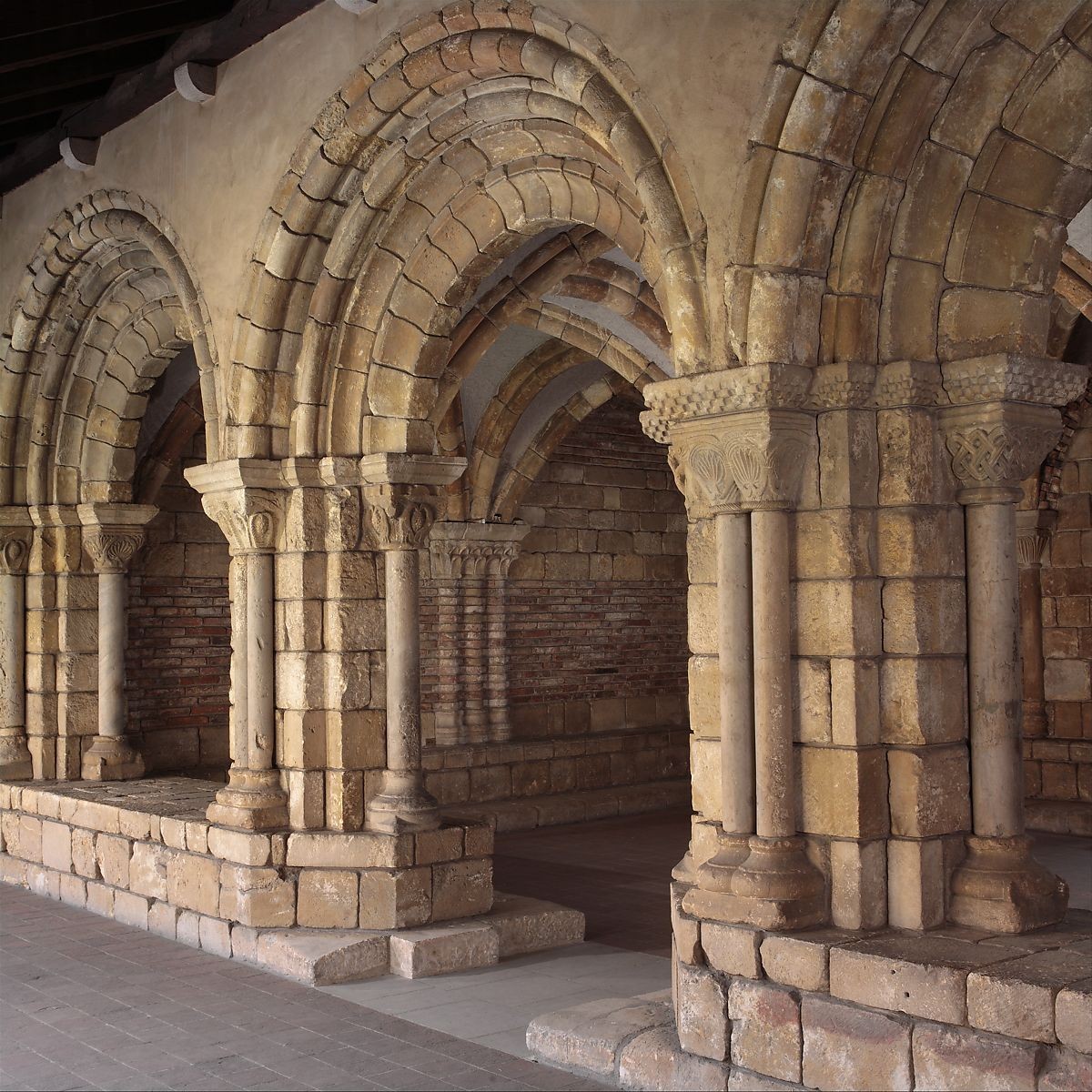
Chapter House from Notre-Dame-de-Pontaut,12th century French MMA

Community, like friendships, is reciprocal. You put your left foot in, then your right foot, then you shake it all about. With others doing the same thing. Over time we get to know each other, see each other, acknowledge each other. The line between thee and me is both more and less than we usually think. It’s more in that we don’t know our own selves well, our own depths eluding even the most introspective and life examining of us. How could others see into that, then? It’s less in that our perception of ourselves is constantly poked and prodded by interactions with others. In fact, much of our personhood gains definition as we sit down to coffee with someone, engage in critical thought, listen to music, sing with them. In community, in friendships, in family we become who we are.

At CBE, as with the Woolly’s, the docents, the political folks I’ve worked with, and our family, who I am has been in dialectical tension with both individuals and the collective. I’ve had to consider how Frank Broderick’s anti-Catholicism fits into my mostly positive assessment of religious life. I’ve offered ideas at CBE and had them put into action, changing myself and others in the process. As I got to know my fellow docents, I observed how they related to the art, to the art history we learned, to the museum visitors we guided on tours. And, how I was as a docent shaped itself in response.

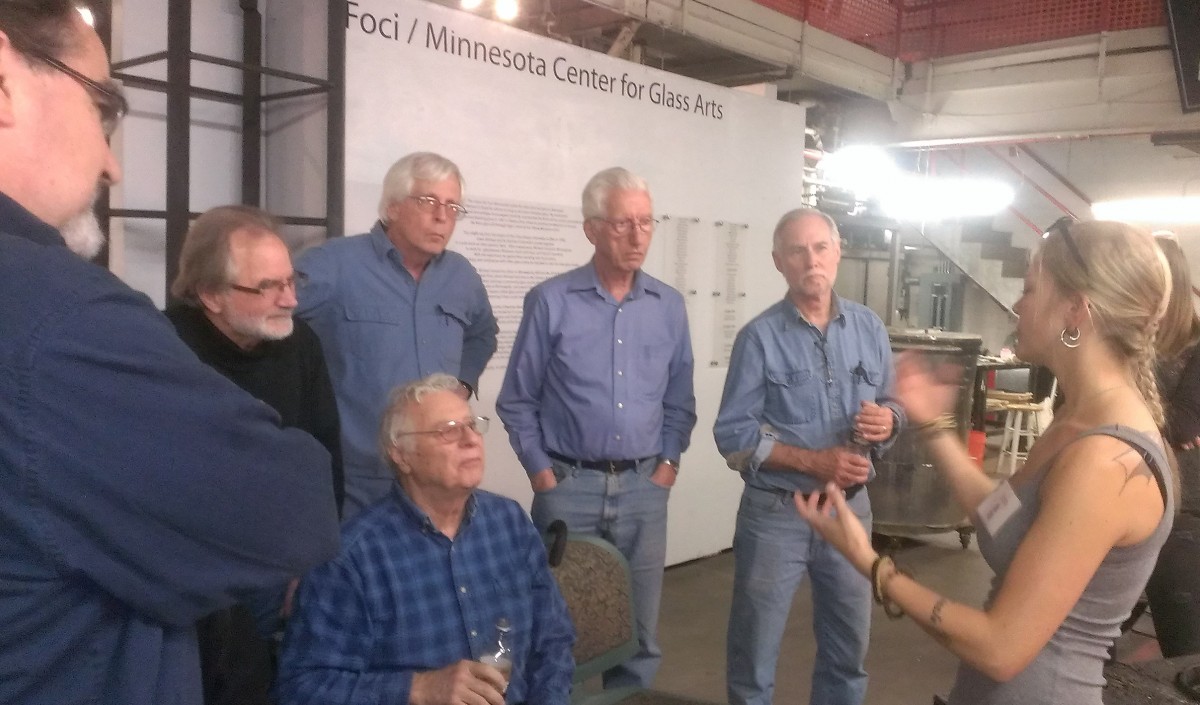
Woolly Mammoths instructed in glass blowing

In the instance of the Presbyterian ministry the two millennia plus history of Christianity was a body of thought and actions within which I had to find my particular place just like the thousands of year old history of art demanded I find a personal patch of ground on which to stand in relation to it. Both interactions shaped me and I, in turn, in small, individual ways reshaped both Christianity and the history of art. Not making a big, hubristic claim here, just observing that the dialectical tension affects both parties though not in equal ways.

This is, I suppose, the Velveteen Rabbit part of human identity formation. We rub ourselves up against people, animals, things and in the process we become real. And, we serve that same role for others. It’s an awesome responsibility. How do I, in my interactions, encourage the best in others? Or, do I? But that’s a question for another day.

Radical Change, or Radical Removal Roman Catholicism

Imbolc                                                                   Valentine Moon

Let’s switch off health. I know, I know. You want more picc lines and coughing and fatigue, but I wanna talk about a different sort of illness. The Roman Catholic Church.

Been thinking about Lord Acton, the power corrupts and absolute power corrupts absolutely guy. That’s not quite right. Here’s my version: if you think you have power, it corrupts you; if you think you have absolute power, it will corrupt you absolutely. Ideologues may not always have real political or economic power, but they think they have a power more important than either one, The Truth. Imagine a tyrannical father. A domineering mother. Donald Trump. The Shining Path. The KKK. Proud Boys.

I understand the allure, having veered off in that direction more than once in my life. If you know The Truth, your ends always justify your means. It just follows, doesn’t it? My ends, which are true, guide my method of achieving them. Ipso facto. QED. If there is some wreckage here and there, perhaps collateral damage, well, we’re still headed in the right direction and that’s what counts, right?

Max Weber, the father of sociology, famously defined religion as the rationalization of charisma. You have a dynamic, compelling leader, Jesus, Mohamed, who catalyze a movement. But these leaders die (or, in some cases, are killed) and those who surrounded them take over, vowing to keep the movement alive in the spirit of the fallen one. As you get further and further away from the death of the charismatic leader, bureaucracy begins to take over, making policies, setting rules, organizing everything. If you think about it, you’ve probably since this in action on a smaller scale at a business, a school, in sports.

Enter church councils, church fathers (see?), and, worst of all, theologians. The RCC believes it is the direct lineage of those early followers of Jesus, the followers who vow to keep the movement alive, in Weberian terms. They believe in particular that the bishops of the church are in direct line to the apostle Peter, containing his mystical power to define and shape the lives of Christians. All Christians.

This is a recipe for hubris. But, that’s not all. Celibacy. Celibacy became the mark of those who set aside their lives for service to the Church. Just how that happened isn’t important here, but it did happen and it acquired the theological imprimatur of the Church.

Now put celibacy together with the view that the church, whom the priest divinely represents through the sacrament of ordination, has the right, no, the responsibility to say what is good and what is bad in the lives of parishioners. In each congregation, each gathering of the body of Christ under the Roman Catholic rubric, the priest represents the power of Jesus, mediated through the apostle Peter who ordained bishops who then ordain priests.

I’m not trying to be subtle here. This ideology, for that’s all a theology is, a sanctified ideology, put absolute power over the lives of men, women, and children in the hands of men who agreed to never have sex. (Yes, nuns, but we’re sticking with the theme here.)

Here’s my main point. This has been true since Roman times. In other words, the same toxic combination of celibacy and absolute power has existed in Catholic congregations and monastic groups since the early 100’s a.d. That means, at least to me, that the same abuses of that power, driven in large part by the notion of celibacy, have existed since then. In other words, this moment is not an aberration, not a modern era problem, but a systemic one, an organized system of depravity and secrecy calling itself a Christian church.

I believe this questions the fundaments of the Catholic claims, not only questions, but destroys them. It needs a wholesale change: married priests, women priests, acceptance of lgbtq+ folk. Or, it needs to be torn out root and branch and burned on the bonfire of Apostolic vanity.


On Working at Your Best

Winter                                                                         Waxing Moon

20181214_081606Painting. A long, long ancientrail. Walked by so many. A few well, more journeypersons, and the rest of us.

Mediocre. An interesting idea, mediocre. If you’re working to your best capacity, your work is wonderful. Mediocre arrives on your doorstep when you begin comparing your work to others. I’m a writer of wonderful novels and short stories. I create wonderful paintings. Am I going to be hung in the National Gallery? No. Any gallery? Probably not. Am I going to make the NYT times best seller list? Unlikely. Have I done less than my best? No.

Success, I’m gradually beginning to learn, is not about the other. It is about yourself. If Michelangelo painted like me, he’d be mediocre because he had the skill to paint well. If Tolstoy wrote like me, same. Where do I fit? Hell if I know. I’ve had the chance to work at my best level in two fields where criticism is a given. I’ve learned to quiet my inner critic, to stay away from sweeping generalizations about my books, my paintings. Now you may read them, look at them, and say, “He’s no Song Dynasty landscape artist.” Or, “He’s no Marquez.” And you would be right. I’m just and only me.

breathe thich-nhat-hanh-calligraphyThis does not mean I’m uninterested in the quality of my work. Hardly. I want it to be the best I can do. Do I always work at my best level? Of course not. But I do as often as I can. Which is most of the time. I’ll leave the judging to others. I did write that novel. Several, in fact. I did create that painting. Several, in fact. Enough for me. Could I have done this without Kate? No. But Kate is in my life and I in hers. Both of us have sought the best for each other, have sought to create a home environment that encouraged our best work.

Quilting, making clothing, writing novels, and painting are not the only things we’ve done. Kate healed children. I worked hard at social justice, at following a small r religious path. Both of us have raised kids, learned how to be grandparents. Grew much of our own food, our own flowers, our own fruit, our own honey. There is no accounting, no form of critique that can measure these things. They are past. And we don’t live then. We live forward, on the ancientrail that leads into the time beyond this moment. What we have done is not what matters anymore. What matters now is what we do today, right now. As my buddy Bill Schmidt says, “Show up.”

crane2Life allows no do overs. We can reconsider, reframe, reevaluate, remember, but we cannot change yesterday, or any yesterday. We can make choices right now.
Today I chose to use turpentine to wipe out, literally, work I did yesterday. And, I’ll do new work on that painting today. I’m not doing over what I did yesterday. I’m going in a new direction today.

It feels to me like I’m beginning to get this, to accept the truth of the past, of my intentions, and to find a path with no attention to results. Not sure why but this excites me. A form of liberation, I guess. Not giving up, just going forward. Working at my best. Nothing else is possible, except apathy. And that’s not me.

The Holy

Winter                                                                     Waxing Moon

Going for calories
Going for calories

Took Kate to Bailey yesterday, the social hall of St. Mary’s of the Rockies. She stayed several hours for a meeting of the Bailey Patchworkers. It was the first time she’d been back since August, a session when she piled up the good eats for a quilt documentation day. That was also the day I backed into her friend’s car. With said friend in it. Sigh. Kate’s stamina has improved markedly. So good to see.

After Bailey, I drove not home, but to Evergreen where I had lunch with Tara and Alan. Murphy’s sits right on Bear Creek, a lovely place in the spring, summer, and fall for an outside lunch. Tara and Alan and I talked CBE religious school. Alan returned Saturday from a couple of weeks in Argentina. In Patagonia, at a national park, he was told, no, you can’t walk on the glacier. You’re over 65. Didn’t know glaciers took notice of such brief lifespans; but, it was Argentina.

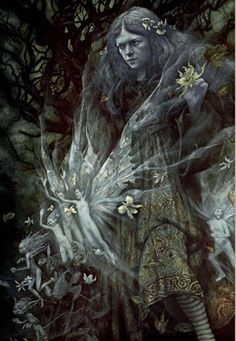
gods celtic twilight yeatsI’m responsible for the next lesson, tomorrow, as I was last week, but with Alan as back up this time. Last week we worked with the middah, character trait in the Jewish ethical discipline of mussar, chesed, or loving-kindness. This week we stay in mussar, but focus on yirah. Yirah often translates as fear in the Torah, as in “the fear of the Lord.” I prefer awe as a translation, but it does mean both and we’ll use that in the class.
Rudolf Otto, a famous theologian of the early 20th century, wrote a book called, The Idea of the Holy. I mentioned his thinking from this work in a post a couple of days ago. It’s one of a handful of theological texts that have had a radical effect on my thinking. Another is Moses and Monotheism by H. Richard Niebuhr. In both cases the authors try to dig behind religious concepts often simply accepted to find their phenomenal roots. Otto wants to understand the strange nature of the sacred. Niebuhr was after the psychic meaning of monotheism.

Otto’s work has a lot to do with yirah. His idea of the numinous, a distinctive feeling we often equate with the holy or the sacred, has two components: mysterium tremendum et fascinans. When we encounter the numinous, we encounter mystery, a mystery that both attracts us, we want to move toward the experience (awe, yirah, fascinans), and repels us, (fear, yirah, tremendum).

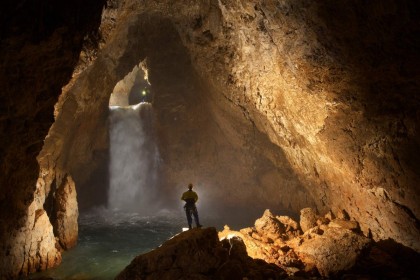
alvarez-adventure-caving-spelunking-1I have had many encounters of this kind and they vary in which characteristic of the Holy they emphasize. I’ve written before about my mystical experience on the quad at Ball State. Fascinans dominated. I wanted to be there, in a state of total linkage with all. I wanted to stay. In high school I attended a summer church camp at Epworth Forest in Indiana. We learned a lot about communion and in particular I took to the heart the idea that if we didn’t reconcile with others, we might “eat and drink our own damnation.” OK. I was an impressionable guy in that moment. But the fear occasioned by that idea made me find a young woman whom I’d teased and ask for her forgiveness. Stepping into the Sistine Chapel. Awe. Driving to Bailey and seeing the Continental Divide capped with snow. Awe. Contemplating my own death. Fear moving toward awe.
Processed with VSCOcam with p5 preset

Another. In Ely, Minnesota at the International Wolf Center, during a week long wolf studies immersion, we did a necroposy on a collared wolf that had been hit by a car. When we opened his rib cage, a space opened up in front of me where the mystery of life and death vibrated, took me in, absorbed me. This was both fascinans and tremendum. I wanted to look away, to be elsewhere. Right now. I wanted to dive in, swim in the galaxy revealed by this too intimate experience.

How about you? Got any experiences of the holy or the sacred? I especially encourage considering Otto’s point that an experience of the Holy is without moral freight. It simply is. We apply the morality later, much later.


iottoru001p1
iottoru001p1

*”In his most famous book, Das Heilige, Otto turned from a critical philosophical account of the possibility of religious experience to a descriptive psychology of the content of that experience and its relationship to the “rational,” symbolic dimension of religion. To designate religious feelings at their most distinctive he coined the word numinous, which referred, he said, to the Holy or Sacred minus the moral dimension. But he soon encountered a methodological limitation. Conscious experience is only available to the person who has it; therefore, it is possible to formulate a descriptive account of religious feelings only on the basis of introspection, informed by apparent similarities in what others have said. In other words, in order to study the experience that is the ultimate source of religion, a scholar must have a sensus numinis, an ability to experience numinous feelings—just as the description of color in painting or pitch in music requires certain kinds of perceptual abilities. Those who have such abilities, Otto suggested, experience the numinous as a mysterium tremendum et fascinans. As a mysterium, it is completely other, beyond the realm of ordinary existence, apprehensible but not comprehensible, evoking in human beings the feeling of stupor and stunned silence. People find this mysterium both attractive (fascinans ) and repulsive (tremendum ). On the one hand, it arouses the sense of grace, love, and mercy. On the other, it arouses feelings of terror and awe and the conviction that human beings are in reality nothing—feelings to which Otto, countering tendencies to equate genuine religion with love, gave a great deal of attention.” encyclopedia.com


A Feynman Method Explanation

Winter                                                                            Waxing Moon

feynmanRichard Feynman, the physicist, had a technique for learning. It’s pretty straight forward in its explanation:

  1. Choose a Concept
  2. Teach it to a child
  3. Identify Gaps and Go Back to The Source Material
  4. Review and Simplify (optional)

I’ve not used it before, but I’m going to try now with reimagining/reconstructing faith. I hope that by clarifying it this way, I can further my year theme: Seeking the myth beyond reason.

To Gabe. What do you need to stay alive? Food, yes. Oxygen, yes. Anything else? A house or place to live, yes.

20190101_103345OK. Let’s start with food. Where does food come from? The grocery store. Well, that’s where we buy it. But where does the grocery store get the food? From trucks? OK. How about the trucks. Where do they get the food?

From farms? Right. And, gardens. And, orchards. And, the ocean. Can you guess my next question? Where do the farms and the gardens and the orchards and the ocean get the food? What’s that? Plants and animals? Right again. You’ve got this, Gabe.

Think about the animals for a minute, Gabe. What kind of animals do we eat? Pigs and chickens. Check. Cows. Check. Fish. Check. Shrimp and turkeys. Check. That’s enough for now. So. Where do the pigs, chickens, cows, fish, shrimp, and turkey get their food? You don’t know? What’s that? Grass. Yes, good. Cows eat grass don’t they? What about chickens? Insects? For sure. How about pigs? Well, some pigs eat acorns. Others eat roots, fruit, fish. Yes, fish. That seems strange doesn’t it? What about shrimp? What do they eat? They eat tiny, tiny plants that live and grow in the water. Fish? What do they eat? Some eat plants that grow in the water, some eat insects, some eat other fish and other ocean animals.

photosynthesisDid you notice that a lot of the food the animals eat comes from plants? Acorns, grass, roots, tiny plants that live in water? What about the rest? Insects, other fish? What do insects eat? Some do eat other insects, that’s right. Praying mantises, for example. But most insects eat plants. Grasshoppers do. Leafchewers. Some eat plant roots. Some eat the nectar, like bees.

Here’s the thing, Gabe. When you really, really look at what animals eat, even if they eat other animals, you’ll find that the animals they eat get their food from plants. That’s strange isn’t it? Does that mean we all get our food from plants? Well, yes, in a way. If the hamburger you like tastes good, it’s because the cows ate grass and corn and beans. Can you guess my next question?

Exactly. Where do the plants get their food? What an interesting question. Land based plants dig deep into the soil with their roots. Their roots take water from the soil and some other things the plant needs to live. Here’s what might seem like a weird question. What color are plants?

Green. That’s right, Gabe! What part of the plants are green? Their leaves. Right again. What? Oh, their stalks, too? Yes. On many plants that’s right. They’re green, too. Here’s the really, really weird part, Gabe. Those green leaves? They make food for the plant from sunlight and water and vitamins from the soil.

photoHow do they do it? Even scientists have a hard time explaining it, but somehow the leaves take sunlight, water, and other things from the soil and make what the plant needs to live. Amazing, right? Sunlight, water, and nourishment from the soil. Nourishment? What does it mean? It just means anything that helps you live, or helps plants live. And you know what’s also amazing? Guess what the plants send out into the air when they’re done making food? Oxygen! That’s right, plants feed animals and they give off the thing we need to breathe to stay alive. Wow. Go, plants!
Now let’s see. Where are we, Gabe? You told me you need food to stay alive. And, oxygen. What’s that? Water. Water, too. We tracked down where food comes from, didn’t we? It all starts with plants and the sun and the soil and water. Plants get what they need from the sun, from mother earth and from the water on mother earth.

Sun. Mother Earth. Oxygen. Water. Without any of them, Gabe, you and Ruth and your mom and dad couldn’t stay alive. You’d die without oxygen which plants put into the air. You’d die without food, which plants create from the sun and water and nourishment (remember what nourishment is?) from mother earth.

Sol Invictus by Jake Baddeley

When it comes to what I’m thankful for Gabe, I’m grateful for you, of course, and your family, but I’m also grateful for the sun. The sun provides us with light, heat, and now we know it also plays a key role in providing us with food. Without sun the plants can’t make their own food. I’m grateful for mother earth. She provides nourishment for the plants and through them for us. I’m grateful for the water we have to drink. Did you know it gets made good to drink by going into clouds and coming back down as rain and snow? It’s true. I’m grateful for clouds and rain and snow, too. I like fresh water to drink.

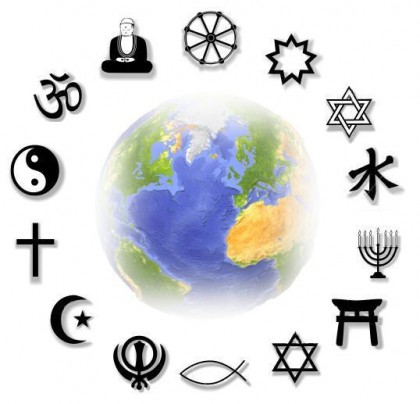
Gabe, I know you’ve been raised Jewish. That’s the religion of your mom. I don’t know how important it is to you right now, but I remember it was important enough that you didn’t like Christmas when you were five. There are a lot of religions, aren’t there? Let’s see if we can name some. Christianity. Judaism. Islam. Hinduism. Do you know that one? It comes from India. Buddhism. Taoism. You may not know that one. It comes from China. Lots and lots more, too.

religionI used to be a Christian, a while back. But, not anymore. What is a religion, do you think? There’s so many different ones that it’s hard to say. To me religions are about what is most important to you. What matters. It might be your relationships with your mom and dad, or Ruth, or your friends. How are you supposed to treat those close to you? It might be about animals and how you’re supposed to treat them. Do you remember when Herschel died? Your great-grandma? Your great-grandpa? Did you ever wonder what happened to Herschel and your great-grandparents after they die? Me, too. I’m not sure, but it is a question most religions try to answer.

Do you suppose a religion could be about food and where it comes from? Oxygen and where it comes from? Staying alive is pretty important. We agreed on that earlier. Right now my religion, my thoughts on what are most important, is about food, oxygen, and the things that make them. The sun and mother earth are like a god and a goddess to me. Together they make it possible for you and me to be alive. Through their children, the plants and the animals, they make possible the whole wonderful world of zebras, dogs, Ruth, you Gabe, forests, seaweed, whales, tuna, peanuts, apples, and oranges. Pretty amazing.

great wheel2Think of it, Gabe. The sun, that distant star that gives us daytime, the one we see everyday, provides us with the heat and energy to live. Mother earth, the ground we walk on everyday, that holds us up, that we see in parks and farm fields and mountains, provides a home for us and nourishment for the plants. The plants provide food for animals. And animals and plants make food for us. They also make our oxygen. You just breathed some in right now.

That’s enough for me, Gabe. The sun, mother earth. Their children. Us. When I drive through the forest, I’m driving in my church, my synagogue. When the rain or the snow falls on my head, it’s a holy act made possible by mother earth through her clouds. What’s that? You don’t know the word holy?

shamanic-spiral-with-qouteI think of the holy as something both amazing and mysterious. Imagine all the time you spent inside your mom’s womb, growing from two cells into the boy you are now. Amazing and mysterious. Think about a plant’s leaf taking energy from sunlight, mixing it somehow with water and nourishment from the soil to create food, give off oxygen. Amazing and mysterious. Or, how about the change from winter to spring when the cold goes away. Flowers come up. Trees put out their leaves. Grass turns green. Up here in the mountains you see fawns and elk calves. Amazing and mysterious. All holy.

And here’s one more amazing and mysterious piece. You were born on April 22nd, Earth Day, a day dedicated to Mother Earth. And, guess what. April 22nd was a Sunday that year. So you were also born on the day of the week that honors the sun. The sun and mother earth. You share a special relationship with them, Gabe.


Crullers, Empanadas, Goddesses, and Mussar

Winter                                                                                Waxing Moon

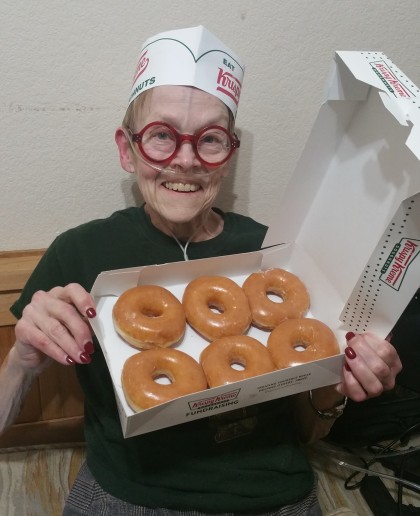
20190104_104318_001Made a big circle yesterday. Drove into Denver on 6, a six lane version of 6th Street between hwy 470 and Santa Fe. Wanted to try LeMar’s Donuts since Kate needs weight and likes donuts. It’s right at the intersection 6th and Santa Fe. I like Bismarck’s and crullers, Kate prefers original glazed. The Bismarck at LaMars was about twice the size of the usual. It was quiet there, mid-morning, after the before work rush. This picture is the counter.

Maybe 6-8 blocks further on 6th is Broadway. Turned right and headed south toward Louisiana Street. Broadway is fascinating. After it passes under I-25, just north of Mississippi, you could call it the Green Mile thanks to the number of dispensaries between there and Englewood. There are also funky bars, used bookstores, antique shops, design studios. Meiningers, the art supply store I mentioned earlier and the Wizard’s Chest, a magic and costume shop fit right in. At Louisiana sits Maria’s Empanadas.

cookingKate wanted more mushroom empanadas, corn, and spinach. Lisa Gidday, our internist, had recommended the spinach. “Your new favorite food.” I got an Argentina which has steak, onions, and red peppers.

The woman behind the counter had a very thick accent, Argentinian, I assume. Even with hearing aids accents often defeat me and with the ambient noise, we had difficulty communicating. I hope, in these situations, that I don’t come off as insensitive because I keep asking, “What?” The bill was more than I expected, but after my discomfort with our interaction, I just paid.

I have the same frustration with Vanessa. She’s a member of our mussar group at CBE who has MAS, a neurological disease that makes it very difficult for her to speak or swallow. It is, for her and me, a perfect storm. She can’t speak very well and I can’t hear very well. Third phase life.

20190104_112922As I drove further on the Green Mile, I came across Goddess Isis books. I thought it was on Colorado. I’d always wanted to stop and this was my chance. I’d accomplished my errands and had some free time.

Goddess Isis books used to be Isis books, but the turmoil with Daesh, or Isis in Iraq and Syria, occasioned the name change. Isis has books on astrology, Celtic magic, love magic, shamanism, Hinduism, chakras, a wall full of different Tarot decks, multiple statues and figures ranging from dragons to Kali to cutesy fairies. There’s also a magical apothecary with jars not of herbs or granola, but ingredients for spells.

I picked up Indian Temple Incense, a coloring book of the Tarot deck (to implant those images in my mind), and a magazine called Witches and Pagans. Wanted to see what the broader community was thinking. When asked how I was doing  by the owner, an older woman in a flower print dress with a flowing outer cover, I replied, as I often do, “I think I’ll make it.” She laughed and said, “I know I will.”

Our mussar groups sponsored a potluck last night. First time I’d been to CBE in a while since religious school shut down for the holidays. Lot of questions about Kate. “She’s improving, but had a setback the last couple of days.”

Still strange to me to be picked out as one of the mussar leaders, but I was, working with a small group to talk about the middot of responsibility. A quick example of how mussar works. When it came my turn to read, I had a long paragraph with a lot of Hebrew. I felt shy since the others all did much better than me at pronouncing it. And, I was leading.

Had a cruller after I came home. Unusual, but hey, it had been a long day.


Hark, The Herald Angels Sang…

Winter                                                                                    Stent Moon

20161203_083509

Happily in pain.    2016

ChristmasNot long after my December 1st, 2016, knee surgery, I had an odd moment. It was Hanukkah. Gabe and Ruth were plowing through their presents, and I sat on the couch, my leg up and some combination of pain meds circulating, morphine and oxycontin, I think. Ruth lit the menorah. A sudden, overwhelming (undoubtedly drug accelerated) sense of dislocation came over me. Sadness, too. What was I doing in this house? No Christmas tree. No decorations. This exotic holiday had pushed all that away and left me on the outside.

It was true nostalgia.* And it was painful. I swirled down, feeling a deep longing to get back to the seasons with which I was familiar. To push away this foreign intervention. To put myself under the Christmas tree on 419 N. Canal Street. All the way back. Not Colorado. Not Minnesota. Not Wisconsin. Indiana. An old fashioned, true to my culture Christmas.

Meanwhile Gabe was click-clacking a Rubik’s cube. Ruth held a money jar Kate had made for her. A fire crackled in the fire place and the menorah burned quietly on the dining table. No one knew I was somewhere else, sometime else. Here’s something from that day’s post:

                                                   2016

The Christmas spirit that still flows around this secular, pagan heart saw them. (Hanukkah presents) And rejected the moment. What followed was a period of dislocation, the closest analogy I can give is culture shock.

What was I doing in this house with this holiday underway? Mom, Dad, Mary and Mark rose up. I missed them all, a lot. Further the friends from Minnesota. Why was I here in cold Colorado, in the mountains, when my family and friends were dead or far away?

Having experience with the not so subtle influence of drugs on the mind, I knew this was both a false response and a true one. It was false in that I loved these kids, Kate, Jews all, and had begun to get more involved at Congregation Beth Evergreen. It was true in that Christmas spirit is a real thing, a tangible and mostly positive emotional state engendered by the church, by family, by memories of Christmas past, and, of course, by your favorite retail establishments. And at that moment I missed it.

Two years later the knee is fine, better than fine actually. I’m not using any drugs. (except at bedtime) And I’m much further along in the assimilation process I mentioned a few posts ago. My peri-Jewish identity has congealed around my membership at CBE. I’m part of a community I love, surrounded by people who love us and have shown that over and over again in the last few months. Love is a verb, after all.

Angelic host proclaiming the wonder of your birth

               Angelic host proclaiming the wonder of your birth

Last night was the night before Christmas. Today is Christmas day. The festive part of the day will be the big meal at noon and seeing Jon, Ruth, and Gabe at 2 pm. I’m ok with that. It feels like the right amount of celebration for us.

So. Christmas now has two components. One is much more tempered nostalgia than I felt in December, 2016, a warm spot from days now gone by. The second, and more important to me, is as a festival of incarnation, a celebration of the divine and human mixed inextricably together. As the bells ring out this Christmas day and churches the old familiar carols play, I’ll recall the folks I love, the animals I love. I’ll see past the mundane and look into their souls. There is the ohr. There is the divine. There is the sacred. And guess what? When I look in the mirror, I see the same thing.

*”…the term was coined by a 17th-century Swiss army physician who attributed the fragile mental and physical health of some troops to their longing to return home — nostos in Greek, and algos, the pain that attended thoughts of it.” The Guardian, Nov. 9, 2014