Category Archives: Great Wheel

A friend returns

Lughnasa                                                                        Kate’s Moon

alone in the cosmosAbout 5:30 am this morning I left the house for the loft. The sky was clear, unusual over the past few monsoonal weeks. There in the southeast, still partially in the lodgepole pine, was Orion. His shoulder and belt were visible, his sword and feet/legs were not. But he was back. I waved to him.
As I did, I realized this relationship, with a constellation, was really important to me. Not as metaphor. Not as an anchor to my long ago college night-shift memories. But as a friendship. This may seem odd, but I suspect it’s not. I think it’s analogous to a more common feeling, one I identify most easily with crossing Ford Parkway in St. Paul on my way to our house on Edgcumbe. When I crossed Ford Parkway, I felt like I was back in home territory. I had become, at least in that way, native to the Highland Park neighborhood. When we moved to Andover, it was coming up to Round Lake, the marker of our new neighborhood.

Orion is the Ford Parkway of fall and winter for me. In that sense he is a boundary marker between the growing season and the fallow season though right now he is a harbinger. His rising means, look, the seasons will change. You can know that with confidence. This transition, from growing season to fallow one marks an affective moment for me, a moment of change from a time I tolerate with some pleasures, to one I love that has some pains.

beherenow1-eternal-time-spaceThe dangers and pains of ice and snow are real, but manageable. Cold is a blessing as far I’m concerned. The pleasure of snow is real, too. Ice? Well, maybe not so much pleasure there. But the holidays, the beauty of fall and winter landscapes, the times of being isolated with a book to write, well, that’s my best time. And Orion’s emergence heralds its coming.

There’s more than that though. Orion is a friend in the heavens. His reemergence each fall reconnects me to astronomy and the beauty of the dark night skies, the long ones of the fallow season. He is a host who invites me into his world, lifts my heart literally off the earth. Yes, I can connect with the stars during the growing season, but I tend not to, at least not as well, certainly not as often. The night sky comes later then and I don’t have a guide, a host for it.

Like a good friend does, Orion reminds me of an important of myself and nurtures it. He does this silently, of course. But I hear him just the same. No wonder I waved.

Mountain Spirits

Lughnasa                                                                            Kate’s Moon

On Samain of 2014 I came up here to Shadow Mountain for the closing on our home. In the backyard of our new home three mule deer bucks greeted me. They were curious about me and I about them. We stood with each other for some time. The mountains had sent three spirits to welcome me.

They returned yesterday.

20170814_17223020170814_17225720170814_172305

Working

Lughnasa                                                                         Kate’s Moon

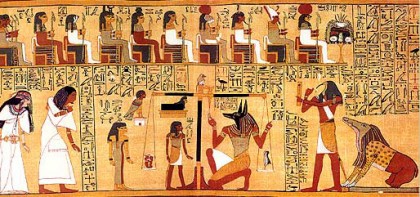
hell2Moving forward, slowly, with Jennie’s Dead. Exploring the religion of the ancient Egyptians, trying to avoid hackneyed themes, not easy with all the mummy movies, Scorpion King, Raiders of the Lost Ark sort of cinema. Jennie’s Dead is not about Egypt, ancient or otherwise, but it plays an important role in the plot. Getting started is difficult, trying to sort out where the story wants to go, whether the main conflict is clear, to me and to the eventual reader.
Also moving forward, also slowly, with Reimagining. The pile of printed out posts has shrunk considerably, now filed. As I’ve gone through them, I read them a bit, for filing purposes. One notion that jumped out at me was my turn away from text-based religions, from the sort of quasi-scholastic reasoning that occurs.

image of godAs Emerson said, “Why should not we have a poetry and philosophy of insight and not of tradition, and a religion by revelation to us, and not the history of theirs? Why should not we also enjoy an original relation to the universe?”
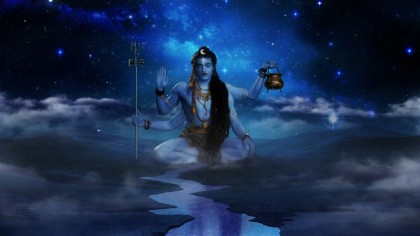
I guess Emerson and I had the same quandary. We love the ancient texts, their poetry and philosophy, yet do not want to be bound by them. We want our poetry and revelation straight from the source, nature and the human experience of our own time. Yet, it seems to me, we’re both informed in our search for the poetry of existence by the way those seekers of the past found revelation in their time. Surely the logic of wanting our own revelation grounds itself in the stories of Genesis, the work of Moses, the resurrection story of Jesus, even the night flight of Muhammad and the whirling cosmic dance of Shiva.

20-the-map-is-not-the-territoryThis means I’m in a curious position relevant to my own education in the Christian tradition and my new education, underway now, in the older faith tradition of Judaism. Both are normative, in their way, but not as holy writ. Rather, they are normative in a more fundamental sense, they reveal the way we humans can discover the sacred as it wends and winds its way not only through the universe, but through history.
We may not, in other words, be bound by their philosophy and insight, the history of their revelation, yet how the ancients made themselves open to the whispers and shouts of the sacred, how they received its insights and what use they made of it in their lives, those shape us because we are the same vessel, only thrown into a different time.

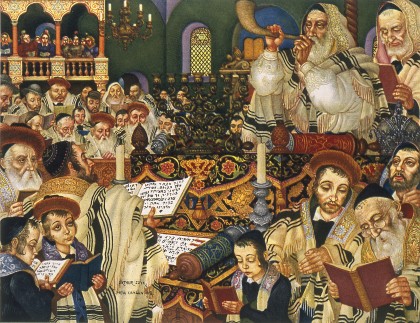
Arthur_Szyk_(1894-1951)._The_Holiday_Series,_Rosh_Hashanah_(1948),_New_Canaan,_CTThis is a similar idea to that of the reconstructionists, but not the same. Reconstructionists want to work with a constantly evolving Jewish civilization, grounding themselves in Torah, mussar, kabbalah, shabbat, the old holidays, but emphasizing the work of building a Jewish culture in the current day, reconstructing it as Jews change and the world around them changes, too. I’m learning so much from this radical idea.
2695406589_2517d8b0f2What I want to do though, and it’s a similar challenge, is to reimagine, for our time and as a dynamic, the way we reach for the sacred, the way we write about our experience, the way we celebrate the insights and the poetry it inspires. In this Reconstructionist Judaism is a better home for me than Unitarian Universalism. UU’s may have the same goal, but their net is cast into the vague sea of the past, trying to catch a bit from here and a bit from there. It is untethered, floating with no anchor. Beth Evergreen affirms the past, the texts of their ancestors, their thousands of years of interpretation, the holidays and the personal, daily life of a person shaped by this tradition, but also recognizes the need to live those insights in an evolving world.


All That Falls Shall Be Reborn

Lughnasa                                                                 Kate’s Moon

lughnasaOh. Right. Slept in yesterday until 7:30 am. About 2.5 hours past normal rising. The guy from Conifer Gutter came by to give us an estimate on needle guards for our gutters. Then, well, I worked out and forgot to post.

But, here we are on Tuesday, 48 degrees outside after a drippy, Midwest-nostalgia day of rain yesterday. Kate sewed; I dithered. Read a bit more on Dark Ecology and responding to the ecocide. That sort of uplifting thing.

Still don’t have the rhythm of the new workout routine and actual work down. This is because I shifted my workout to mornings-cooler and less likely to get distracted. That’s also my best working time, for writing and research not to mention stuff around the house. I’ll get it eventually, but the herky-jerky rhythm I’ve got now feels, well, herky-jerky.

Went to an energizing lecture titled Fifty Shades of Talmud. Yes, it was about sex in this compilation of commentaries and arguments that created Rabbinic Judaism. The woman who wrote the book, Maggie Anton, spoke about talmud study with an infectious enthusiasm. Made me glad. I love to see people living from their passion, deep into something that fascinates them.

lughnasa1

Kate, for example, loves to sew and quilt. She finished a great wall hanging for me yesterday, four moose prints on a field of green. I’ve long considered the moose my spirit animal. Thanks, sweetheart.

Rigel continues to spend her every outdoor moment yearning after jaws against the flesh of tiny critters. She sniffs under the deck and on the deck, presumably following the movements of whatever is under there. She digs and sniffs and barks under the shed, too. She’s rejuvenated and following her doggy passion. In fact, she’s my new third phase role model. I want to be like Rigel. No, I’m not going to start sniffing the deck, barking under the shed, but I want to live my life like she’s living hers, all in.


Lughnasa 2017

Lughnasa                                                                              Kate’s Moon

Welcome to the season of the first harvests. Coincidentally, on the Jewish calendar, today is Tisha B’Av  the 9th of Av, a fast day that commemorates the destruction of the first temple by the Romans in 70 CE.

demeterThe proselytizing Roman Catholics gathered in Lughnasa and turned it into Lammas, a sabbat name used often in Wiccan circles, but in fact part of a persistent and largely successful attempt by the Catholic church to eliminate the old Celtic faith. Parishioners baked loaves of bread (lammas means loaf mass) from the first harvested grains and brought them to mass.

The Celtic cross-quarter holiday (comes between a solstice and an equinox or an equinox and a solstice) of Lughnasa marks the beginning of the harvest season. The harvest, on the Great Wheel, has three holidays: Lughnasa, Mabon (fall equinox) and the start of the Celtic new year, Samain, another cross-quarter holiday celebrated on October 31st. In other words from today through October 31st the ancient Celts reaped the results of the growing season, which began on May 1st at Beltane. Beltane and Samain are the original holidays of the early Celts, one marking the start of the growing season, the other its end. Samain means Summer’s End.

fiddledIMAG0591A glorious time of year when the crops were good, Lughnasa also kicked off a long succession of market days, actually weeks, when celebrations were common. The tradition of Lughnasa market days with their heaps of produce from gardens and fields came to the United States with the Celts who immigrated here, many into the Appalachian mountains where their culture fed folk music and crafts into the new country. Their Lughnasa celebrations, then known as fairs, are the genesis of county and state fairs.

Living in the mountains as I now do, the dominant agricultural/horticultural emphasis of the Great Wheel comes into sharp relief, no harvest here, except some hay from mountain meadows, and a few farmer’s markets with desultory goods. Yet. In places with little to no agriculture the results of the harvest season are even more important, though occurring far away. No food, no life.

20170730_150912Kate has a garden remnant doing surprisingly well. She got this plant from a project at Beth Evergreen and had me transplant it. We will have a bit of Lughnasa sometime soon, if the fruits on it ripen. If they don’t, we plan to have fried green tomatoes. Kudos to Kate for accomplishing a difficult feat at 8,800 feet, growing tomatoes. She’s my Demeter.

We’re laying in stores for the long fallow season ahead. Kate made peach honey yesterday from Western Slope peaches we purchased on a cool, rainy Saturday from the Knights of Columbus. They would have happily assisted the Romans in destroying the first Temple. The contradictions of life.


Life near the end of Midsommar

Midsommar                                                                   Kate’s Moon

a while ago
a while ago

Jon’s work on the benches for our dining room shows his continuing growth in woodworking. I’ll post pictures when he’s done, but the panels he’s building are cabinet maker good. That’s a pretty high skill level and he’s self taught after an apprenticeship with Dave Schlegel, a renovation contractor in Minneapolis many years ago.

The grandkids were up last night. Ruth’s excited about middle school, “I won’t be in the same classroom all day.” Jon, “That’s good for your teachers.” Ruth, “That’s good for me.” She’s a sweet kid. Gabe wants to be a sweet kid, too, but some misfiring neurons keep pushing him toward ornery. Maybe as the divorce settles and they move into Jon’s new house, achieve a new normal, he’ll come back toward center. But, maybe not.

20170721_172815Kate’s doing a lot of self care. She’s eating more, trying to get her weight up, an irony lost on neither of us. She does facial saunas, sinus clearing saline, pays attention to the development of thrush and knocks it back. Yesterday was her third or fourth infusion of Remicade for her r.a. Her rheumatologist gave her a drug for her dry mouth, a saliva stimulator. She uses the oxygen concentrator at night and sometimes at naps. Its humidifier has been a big help. None of these aggravations are fatal, but they do rob her of energy and sleep, of time, of resilience. Hard. But, she’s a strong, smart woman and able to develop a solid care plan for herself.
In my world I’m rediscovering my love affair with writing novels and my resistance to writing non-fiction. I reread Jennie’s Dead, maybe ten to twelve thousand words. Got excited about entering that universe, finishing it. This one’s about magic, straight up. I’m still going to continue research and general work on reimagining through Samhain, seeing if, as I said the other day on Ancientrailsgreatwheel, I get renewed energy for it in the fall. I am, however, going to look at a few other project fragments and pick one to flesh out, probably Jennie’s Dead, but there are a couple more. I miss the discovery and joy of creativity I experience while writing novels.

Lariat Lodge, Evergreen

Since the visit with my orthopedic surgeon, Dr. Peace, I’ve ramped up my workouts, now aiming for 10,000 steps on the days I don’t do the resistance work, 7,000 on those days. So far, I’m hitting those marks. The new resistance work is good, sufficiently good that I’m considering extending my work with On the Move Fitness so that I can get a new workout every six weeks or so. Keeps things mixed up and I have a tendency to get into a rut with workouts I design myself. Also, my form gets out of whack, or was never in whack to begin with.

The Fourth Time Around

Midsommar                                                                   Most Heat Moon

ricoeur2This evening is the last of the introductory kabbalah classes. We’ll be discussing miracles again and hearing student presentations. Making it personal still seems like the right path for mine, how kabbalah has affected a decades long journey, a pilgrimage toward the world into which I’ve been thrown.

Paul Ricoeur, a French philosopher with a focus on hermeneutics, wrote about second naiveté*. It is a powerful idea. Ricoeur encourages any whose faith has been ravaged by the wildfires of Enlightenment reason to return to it again, a second time, and this time see “scripture and religious concepts as symbols, (i.e. metaphorical constructs) that we now interpret “in the full responsibility of autonomous thought.” (SE, p. 350)” (see below)

Kabbalah may be my third or fourth naiveté, a journey occasioned by a long ago commitment to religions inflected with Western cues, reasoning that the deepest knowing comes from within the way our inner world has been shaped by culture. I made this commitment over against the Hare Krishna, faux Zen, travel somewhere far away for a guru fervor of the 60’s. I faltered a bit in this commitment with my plunge into Taoism, which remains important to me, but in the main I’ve tried to search within the religious sensibilities of the West, especially the Judaeo-Christian flavors.

ricoeurHere’s a nice paragraph: “While the hermeneutic strategies to “open up the text” that Ricoeur presents are not simple or childlike, they’re only the first step in engaging with the ideas. If you understand “the meek shall inherit the earth” as a radical idea, what do you do with that? How do you apply it? How do you let it change you? Following Gadamer, we’re supposed to put ourselves at risk, allowing the possibility that the text could be life-changing.” The Partially Examined Life

I’m letting kabbalah change my empiricist worldview, again (third or fourth time) opening up to the world beyond mortal ken. How will this change me going forward? I imagine meditation and prayer will follow. Perhaps more regular worship, though with a much altered understanding of what that experience is about and what it is for. It will certainly lead me to further exploration of the kabbalah and, as a direct result, a deeper immersion in torah study, perhaps the Talmud, too. So, further into the Jewish worldview of the Reconstructionists.

gnosticismThe biggest change will be in how I sense the world around me. I will no longer be so reductive, imagining that even if there is an unseen world, that’s all it is, unseen. Perhaps this is how the reenchantment process works, seeing the living, intricately woven cosmos as manifest everywhere, visibly and invisibly. My pagan sensibility remains. I’m not sure that adding God language to the mix adds anything important.

Seeing all religious language, all religious ritual, all religious writing as metaphor is a radical shift in perception; and, it’s one I’ve been ready to make for a long time though I didn’t realize it. I’ll let you know how the presentation goes.

*Paul Ricoeur’s (from this summary)

Paul Ricoeur was more of a philosopher, but his work also crossed over into religion. His ideas on religion do relate to spiritual development, although Ricoeur did not use that exact term. Most of Ricoeur’s writings about religion dealt with the way a person would interpret scripture. But what they also definitely have bearing on religious belief as well.

Paul Ricoeur and the First Naïveté Though he mentioned the first naïveté only in passing, and as it relates to what happens after it, we can deduce that the first naïveté refers to the interpretation of scripture (or religious belief) where everything is taken at face value. This is the same as saying that the person in the first naïveté believes everything about his religion literally. This “first naïveté” is also the equivalent of the Faithful level of spiritual development, as described on this site.

Paul Ricoeur and the Critical Distance According to Ricoeur, the rational forces brought to our civilization through modernity have made it difficult to accept religion or scripture in the “first naïveté” sense. Once subjected to rational inspection, the literal meanings of religion really do not hold up. Once a person allows himself to take a step back from religious belief, and examine it critically, he really cannot believe the simple, naïve, concepts his religion teaches at face value. This “critical distance” is the equivalent of the Rational level of spiritual development, as described on this site.

Paul Ricoeur and the Second Naïveté After the critical distance phase, Ricoeur suggested, there is a way to engage faith in what he called a “second naïveté” way. “Beyond the desert(Rational stage) of criticism, we wish to be called again.” (SE, p. 349) In this second naïveté, scripture and religious concepts are seen as symbols, (i.e. metaphorical constructs) that we now interpret “in the full responsibility of autonomous thought.” (SE, p. 350) This means we accept that the myths we held as truth in the first naïveté (or Faithful stage) are in fact myths, but having passed through the critical distance (or Rational stage,) we begin to reengage these concepts at a different level. We no longer accept them at face value, as presented by religious authorities, but rather interpret them for ourselves, in the light of having assumed personal responsibility for our beliefs. We choose move toward our own interpretation that recognizes these concepts as symbols of something greater than that which the words or teachings imply in their literal sense. This “second naïveté is roughly equivalent to the Mystic stage of spiritual development as referred to on this site.

Dogged, Sirius

Midsommar                                                                     Most Heat Moon

 Santa Maria Assunta, Torcello. Revelation 20:15: "And whosoever was not found written in the book of life was cast into the lake of fire."
Santa Maria Assunta, Torcello. Revelation 20:15: “And whosoever was not found written in the book of life was cast into the lake of fire.”

The dog days. Maybe not yet as hot as this mosaic portrays, certainly not here on Shadow Mountain, though Tucson and Phoenix… Friend Tom Crane sent me a link to this Updraft post about the dog days. I miss having an erudite blog like Updraft keeping me alert about weather. Weather5280 is the closest I’ve found. It’s good on weather, but it doesn’t go off into sidebars like explaining the days after the heliacal rising of Sirius. Heliacal? What’s that you might ask? Turns out heliacal is the first appearance of a star after a long absence. The dog days begin with the return of the brightest star in the night sky, Sirius. Or, at least they used to.

The Romans believed that the dog days were so hot that they made dog’s rabid. Sirius is the major star in the constellation, Canis Major, the Great Dog, but the Romans didn’t originate linking the rising of Sirius with heat. That belongs to the Greeks. They named the star “Seirios, Greek for “sparking” (referring to its near-constant twinkling), “fiery,” or “scorching,”” According to this page on Sky and Telescope, the Greeks believed its -1.46 magnitude intensified the already hot days of a Mediterranean summer.

Neither the Greeks nor the Romans, however, were the first ancient civilization to highlight the dog star. The Egyptians began the New Year when Sirius returned to the night sky because it corresponded with the flooding of the Nile, a seasonal nourishing of the fields that made Egyptian civilization flourish. Their calendar though, because it lacked the leap year, gradually moved the month of the new year further and further from Sirius’s heliacal rise.

This lead to a discovery of the Sothic year, 1461 years of ancient Egypt’s 365 day year or 1460 of the Julian sidereal year which adds leap years. A Sothic year follows the gradual movement of the New Year until it once again occurs when the Nile floods, synching up with Sirius’s heliacal moment.

sirius

In spite of my long established affection for Orion, or perhaps because of it, I’ve never focused on Sirius. That’s a bit surprising since Canis Major is Orion’s hunting dog and Sirius is the brightest star in the night sky. I’ll be looking for it as rises this year here on Shadow Mountain, probably August 10th.

sirius22

When I see it, I’ll think of this from the Sky and Telescope article because it reflects my own wistfulness for a reenchanted world:

“While the first sighting of Sirius may not signify anything as momentous as the annual flooding of the Nile, seeing it tenderly twinkling at dawn can take us back in time to when it was commonplace for people to use stars to mark important events in their lives. How far we’ve strayed.”


A New Frame

Midsommar                                                                      Most Heat Moon

ein sofNext week we all give 5-8 minute presentations in our kabbalah class. The ostensible purpose is for us to have the chance to “learn as teachers.” It will be more than that for me. At first I thought I would work up something about tikkun olam, repairing the world, or, as the early kabbalists preferred, repairing God. The notion fits nicely within my political activism (now shelved)/reimagining faith work. But that would have been the more traditional student as presenter, a small talk focused on the content of what I’ve begun to learn.

Instead I’ve decided to go for it, to use the post below, Earthquake, as a starting point. I want to discuss my changing inner world, the push kabbalah has given me, adding its long standing contrarian position to my own.

Here’s how I imagine it might go right now.

Religion itself and sacred texts in particular as metaphors.

transcendence_ver5Kabbalah has reinforced and challenged a move I made many years ago away from the metaphysics of the Judaeo-Christian tradition as I understood it. I can summarize that move as a reaction against transcendence and its role in buttressing patriarchy. Transcendence moved me up and out of my body, up and out of my Self into a different a place, a place other than where I was, a better place, a place dominated by God. It didn’t really matter what image of God, what understanding of God you put in that sentence because it was the denial of the here and now, the embodiedness of us, that bothered me. The notion that transcendence puts us in a better place, a place only accessible outside of our bodies made us lesser creatures, doomed to spend most of our time in a less spiritual state. In the long tradition of a male imaged God it made that gender dominate because it was God that occupied the better place, the more spiritual place, the place, if we were lucky or faithful enough, that we might achieve permanently after death.

Going in and down became my primary metaphor for the spiritual life; spirituality became an inner journey, not a transcendent one. The body was not like a temple; it was a quite literal temple, a place, the place, where a journey toward understanding and meaning found its locus. It was natural, therefore, to leave Christianity and especially the Christian ministry, as this focus took hold of my pilgrimage.

images (6)This inner turn is what pagan means for me. It put spirituality more in the mode the Judaeo-Christian tradition terms incarnation, put a thumb on the scale for the notion of imago dei, rather than the three-story universe. Gardening and bee-keeping became ultimate spiritual practices. They made real, as real as can be, the whole immersion of this body in the web of life. Tomatoes, beets, leeks, garlic, raspberries, plums, apples, currants, beans, comb honey and liquid honey grew on our land, nurtured by our hands, then entered our bodies to actually, really become us. The true transubstantiation.

The Great Wheel, the Celtic sacred calendar that follows the web of life as earth’s orbit changes our seasons, became my liturgical calendar. Observing the wheeling of the stars above our turning earth was the closest I got to transcendence.

Kabbalah has reinforced this move. By suggesting the radical, very radical, notion that even such sacred texts as the Torah are metaphorical, a garment for the soul of souls, for example, it makes each metaphor used more important. The metaphysical becomes metaphorical. Or, perhaps it always was. So, metaphors matter.

You have come to the shore. There are no instructions. —Denise Levertov

Kabbalah challenges this move. By acknowledging transcendence as a metaphor, it allows us to soften its patriarchal implications, to seek, if you will allow this phrase, a deeper meaning. I can imagine an understanding of transcendence that poses a horizontal rather than a vertical metaphor. Transcendence, understood this way, could embed us in community, place us in the web of life. A hug could become a transcendent moment, the touching of another, one outside our inner world. So could this class be a time when our inner worlds intersect, when our body language and our spoken language give us brief entre to the world of another. Even the example I used of the garden and bee-keeping can also be seen as transcendent, a way the outer becomes inner.

Transcendence was not the only theological problem I had with the Judaeo-Christian tradition, I’m using it here as an example, a key example, but only that. I won’t go further into those today with one exception.

P1030762When I moved away from transcendence, I moved toward this world. This world of sensation and my inner world became the whole, I sheared off the metaphysical almost as cleanly as my logical positivist philosophy had done, though for quite different reasons. No metaphysics, no God. No metaphysics, no transcendence. I switched to an ontology informed only by my senses or by the extended reach of our limited human senses occasioned by science. That meant this world, at both the micro and macro levels was the only world.

Kabbalah has forced me to reconsider this drastic pulling back. It suggests a link between the hidden codes revealed by science and mathematics and the metaphorical nature of language. What language reveals, it also hides.  The language of the Torah unveils; but, it also conceals. Not done with this, not even by a long shot of Zeno’s arrow.

An Earthquake

Midsommar                                                                 Most Heat Moon

Kabbalistic_creatorKabbalah. It’s trying to pry off the empiricist covering I’ve put on my world. I say trying because I’m a skeptic at heart, a doubter, a critic, an analyst yet also, and just as deeply, a poet, a lover of myth and fantasy, a dreamer.

Last night’s conversation at Beth Evergreen was on miracles. As is my wont, I looked up miracle in the OED. The first definition, considered most important and most normative,  says a miracle is an event that defies nature and is therefore the act of God or another supernatural being. Its root though is the Latin miraculum which simply defines miracle as something amazing, wondrous. The Hebrew word for miracle, nes, means banner, flag, trial, test, as well as miracle.

Rabbi Jamie, and kabbalah, pushes us to broaden our definition of miracle, or perhaps, deepen it. What is a miracle? Several budding kabbalists offered answers. The human body, animal bodies. Anshel, who has an identical twin, says their relationship is a miracle, “I can feel her pain. And she lives in Florida. We pick out identical birthday cards.” I said life, the ineffable animation of the inanimate.

plate_tectonicsRabbi Akiva says that nothing in nature is less miraculous than the rarest exception. This means, for example, that the water in the Red Sea (or, Reed Sea) is as miraculous as its parting. Or, for that matter, the Hebrew slaves pouring across it are, too.

It’s hard for me to articulate how this changes me. There’s a stubborn I will not be moved part of my psyche (I know. You know this already.) that keeps me from changing my perspective without a lot of thought. Good and bad. Makes me resolute in the face of adversity, but also mulish in terms of new ways of thinking. Reason can take me up to the wall, but will not push me past it. So I entertain a lot of new ideas happily, but absorb few of them There has to be an emotional component, a combination of reason and feeling.

The emotional/psychological element involved here is big.  And, it’s not only about an attitude toward miracles, nor even toward kabbalah itself, but about an inner tectonic plate, one that needs subducting but that I have not been able to move for decades. This core substrata of my Self supports a continent and that continent is my productivity, purposefulness, agency. Messing around with it scares me.

caveIt is anxiety. I believe it infested my life in two early stages. The first was polio, a young boy’s physical experience of our human finitude. It happened once; it could happen again. The second was the death of my mother when I was 17. It happened once, to Mom. It will happen to me and could happen quickly.

Now, I believe anxiety has its purpose. It makes us attend to matters that might harm us in some way and it encourages us to resolve them by poking us psychically until we do. A good thing, in my opinion. Yet, when everything or many things seem harmful-like life itself-then anxiety becomes crippling, closing down joy, play, eagerness, and yes, the miraculous, too.

I can feel that plate beginning to grind its way under more positive parts of my inner world, kabbalah is one of the forces impelling it. So is, oddly, Kate’s health issues and my own, coupled with increasing age.

Seems contradictory, right, at least these last two? Yes, but here’s how that works. Both polio and my mother’s death have left me with a sense of impending catastrophe, not immediate, not right now, but…soon. And, of course, that’s both wrong and right. The sense of finitude that both put into bold face type on my inner sign board is real. I will die, there will be some final illness even more destructive to me than polio. That’s the right part.

timeThe wrong part is that it doesn’t matter. I don’t have to worry about it, fear it, be anxious about it. It is. Or, rather, will be. Maybe in the next ten minutes, maybe in the next ten years, maybe longer. I know this by reason, have known it for a long, long time, but I have not been able to displace the irrational fear in spite of that knowledge. That’s why I say reason can take me up to the wall, but not past it.

The shuddering that’s affecting my innerworld, a sort of psychic earthquake, is accepting the finitude, leaning into mortality, even embracing it. The wall that keeps this from happening is built of tangled vines. Will I work? Will I care about my projects? Will I just relax, sink into the hammock and never roll out of it? Cutting a gate through this wall to whatever lies on the other side feels like indulging myself, separating myself from the motivator/motivation that keeps me moving forward. That’s the resistance that anxiety has constructed in my soul.

the-secret-garden-kewYet, increasingly I find myself wanting a way through this. I can sense, and here kabbalah is playing a critical alchemical role, a different world, a better world now hidden from me. I can peek through the vines at times, can see the secret garden beyond. It’s this wall that holds up the substrata, keeps it from being ground other parts of my Self. This wall has its roots sunk deep into this tectonic plate, is a barrier to its movement. But I can feel the vines withering, their complicity in the substrata’s effect on my psyche weakening.

What lies on the other side? I really don’t know. That’s sort of the point, but it feels like a healthier, happier place. Perhaps soon I’ll find out.