Midsommar Most Heat Moon
 This evening is the last of the introductory kabbalah classes. We’ll be discussing miracles again and hearing student presentations. Making it personal still seems like the right path for mine, how kabbalah has affected a decades long journey, a pilgrimage toward the world into which I’ve been thrown.
Paul Ricoeur, a French philosopher with a focus on hermeneutics, wrote about second naiveté*. It is a powerful idea. Ricoeur encourages any whose faith has been ravaged by the wildfires of Enlightenment reason to return to it again, a second time, and this time see “scripture and religious concepts as symbols, (i.e. metaphorical constructs) that we now interpret “in the full responsibility of autonomous thought.” (SE, p. 350)” (see below)
Kabbalah may be my third or fourth naiveté, a journey occasioned by a long ago commitment to religions inflected with Western cues, reasoning that the deepest knowing comes from within the way our inner world has been shaped by culture. I made this commitment over against the Hare Krishna, faux Zen, travel somewhere far away for a guru fervor of the 60’s. I faltered a bit in this commitment with my plunge into Taoism, which remains important to me, but in the main I’ve tried to search within the religious sensibilities of the West, especially the Judaeo-Christian flavors.
 Here’s a nice paragraph: “While the hermeneutic strategies to “open up the text” that Ricoeur presents are not simple or childlike, they’re only the first step in engaging with the ideas. If you understand “the meek shall inherit the earth” as a radical idea, what do you do with that? How do you apply it? How do you let it change you? Following Gadamer, we’re supposed to put ourselves at risk, allowing the possibility that the text could be life-changing.” The Partially Examined Life
I’m letting kabbalah change my empiricist worldview, again (third or fourth time) opening up to the world beyond mortal ken. How will this change me going forward? I imagine meditation and prayer will follow. Perhaps more regular worship, though with a much altered understanding of what that experience is about and what it is for. It will certainly lead me to further exploration of the kabbalah and, as a direct result, a deeper immersion in torah study, perhaps the Talmud, too. So, further into the Jewish worldview of the Reconstructionists.
 The biggest change will be in how I sense the world around me. I will no longer be so reductive, imagining that even if there is an unseen world, that’s all it is, unseen. Perhaps this is how the reenchantment process works, seeing the living, intricately woven cosmos as manifest everywhere, visibly and invisibly. My pagan sensibility remains. I’m not sure that adding God language to the mix adds anything important.
Seeing all religious language, all religious ritual, all religious writing as metaphor is a radical shift in perception; and, it’s one I’ve been ready to make for a long time though I didn’t realize it. I’ll let you know how the presentation goes.
*Paul Ricoeur’s (from this summary)
Paul Ricoeur was more of a philosopher, but his work also crossed over into religion. His ideas on religion do relate to spiritual development, although Ricoeur did not use that exact term. Most of Ricoeur’s writings about religion dealt with the way a person would interpret scripture. But what they also definitely have bearing on religious belief as well.
Paul Ricoeur and the First Naïveté Though he mentioned the first naïveté only in passing, and as it relates to what happens after it, we can deduce that the first naïveté refers to the interpretation of scripture (or religious belief) where everything is taken at face value. This is the same as saying that the person in the first naïveté believes everything about his religion literally. This “first naïveté” is also the equivalent of the Faithful level of spiritual development, as described on this site.
Paul Ricoeur and the Critical Distance According to Ricoeur, the rational forces brought to our civilization through modernity have made it difficult to accept religion or scripture in the “first naïveté” sense. Once subjected to rational inspection, the literal meanings of religion really do not hold up. Once a person allows himself to take a step back from religious belief, and examine it critically, he really cannot believe the simple, naïve, concepts his religion teaches at face value. This “critical distance” is the equivalent of the Rational level of spiritual development, as described on this site.
Paul Ricoeur and the Second Naïveté After the critical distance phase, Ricoeur suggested, there is a way to engage faith in what he called a “second naïveté” way. “Beyond the desert(Rational stage) of criticism, we wish to be called again.” (SE, p. 349) In this second naïveté, scripture and religious concepts are seen as symbols, (i.e. metaphorical constructs) that we now interpret “in the full responsibility of autonomous thought.” (SE, p. 350) This means we accept that the myths we held as truth in the first naïveté (or Faithful stage) are in fact myths, but having passed through the critical distance (or Rational stage,) we begin to reengage these concepts at a different level. We no longer accept them at face value, as presented by religious authorities, but rather interpret them for ourselves, in the light of having assumed personal responsibility for our beliefs. We choose move toward our own interpretation that recognizes these concepts as symbols of something greater than that which the words or teachings imply in their literal sense. This “second naïveté is roughly equivalent to the Mystic stage of spiritual development as referred to on this site.


 Next week we all give 5-8 minute presentations in our kabbalah class. The ostensible purpose is for us to have the chance to “learn as teachers.” It will be more than that for me. At first I thought I would work up something about tikkun olam, repairing the world, or, as the early kabbalists preferred, repairing God. The notion fits nicely within my political activism (now shelved)/reimagining faith work. But that would have been the more traditional student as presenter, a small talk focused on the content of what I’ve begun to learn.
 Kabbalah has reinforced and challenged a move I made many years ago away from the metaphysics of the Judaeo-Christian tradition as I understood it. I can summarize that move as a reaction against transcendence and its role in buttressing patriarchy. Transcendence moved me up and out of my body, up and out of my Self into a different a place, a place other than where I was, a better place, a place dominated by God. It didn’t really matter what image of God, what understanding of God you put in that sentence because it was the denial of the here and now, the embodiedness of us, that bothered me. The notion that transcendence puts us in a better place, a place only accessible outside of our bodies made us lesser creatures, doomed to spend most of our time in a less spiritual state. In the long tradition of a male imaged God it made that gender dominate because it was God that occupied the better place, the more spiritual place, the place, if we were lucky or faithful enough, that we might achieve permanently after death.
 This inner turn is what pagan means for me. It put spirituality more in the mode the Judaeo-Christian tradition terms incarnation, put a thumb on the scale for the notion of imago dei, rather than the three-story universe. Gardening and bee-keeping became ultimate spiritual practices. They made real, as real as can be, the whole immersion of this body in the web of life. Tomatoes, beets, leeks, garlic, raspberries, plums, apples, currants, beans, comb honey and liquid honey grew on our land, nurtured by our hands, then entered our bodies to actually, really become us. The true transubstantiation.
 When I moved away from transcendence, I moved toward this world. This world of sensation and my inner world became the whole, I sheared off the metaphysical almost as cleanly as my logical positivist philosophy had done, though for quite different reasons. No metaphysics, no God. No metaphysics, no transcendence. I switched to an ontology informed only by my senses or by the extended reach of our limited human senses occasioned by science. That meant this world, at both the micro and macro levels was the only world.
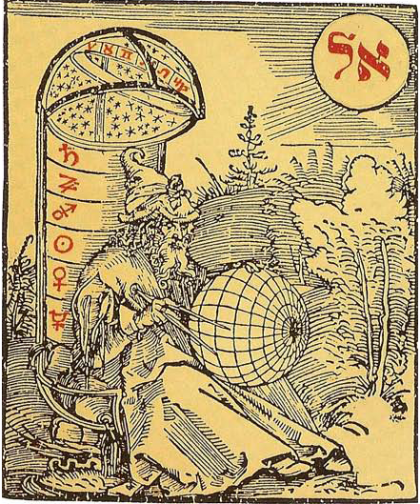 Kabbalah. It’s trying to pry off the empiricist covering I’ve put on my world. I say trying because I’m a skeptic at heart, a doubter, a critic, an analyst yet also, and just as deeply, a poet, a lover of myth and fantasy, a dreamer.
 Rabbi Akiva says that nothing in nature is less miraculous than the rarest exception. This means, for example, that the water in the Red Sea (or, Reed Sea) is as miraculous as its parting. Or, for that matter, the Hebrew slaves pouring across it are, too.
 It is anxiety. I believe it infested my life in two early stages. The first was polio, a young boy’s physical experience of our human finitude. It happened once; it could happen again. The second was the death of my mother when I was 17. It happened once, to Mom. It will happen to me and could happen quickly.
 The wrong part is that it doesn’t matter. I don’t have to worry about it, fear it, be anxious about it. It is. Or, rather, will be. Maybe in the next ten minutes, maybe in the next ten years, maybe longer. I know this by reason, have known it for a long, long time, but I have not been able to displace the irrational fear in spite of that knowledge. That’s why I say reason can take me up to the wall, but not past it.
 Yet, increasingly I find myself wanting a way through this. I can sense, and here kabbalah is playing a critical alchemical role, a different world, a better world now hidden from me. I can peek through the vines at times, can see the secret garden beyond. It’s this wall that holds up the substrata, keeps it from being ground other parts of my Self. This wall has its roots sunk deep into this tectonic plate, is a barrier to its movement. But I can feel the vines withering, their complicity in the substrata’s effect on my psyche weakening.
 After leaving the ministry, a gradual process of demythologization and disenchantment took over. In retrospect it’s not hard to see why. A primary motivator of the shift away from Christianity and toward a more pagan worldview came because transcendence bothered me. Transcendence takes us up and out of our bodies, or least out and away from our bodies.
 Then, at some point-the reimagining faith project signals that point-the flat-earth humanism of this pagan orientation no longer felt like enough. Could the warmth and the depth available to those in the ancient religious traditions somehow be suffused into this empiricist, anti-metaphysical worldview? Could, in other words, a feeling of religious awe and wonder emerge out of our relationship with the web of life and the cosmic experiment we know as the universe?
 Transcendence still seems suspect. Reimagining though has to take account of it in some way. Here’s one idea. The mystical experience, a well documented and not at all rare phenomenon, often carries the descriptor transcendent. I had one and I want to challenge that idea. In mine, which occurred in 1967 on the quad at Ball State University, I did feel a sudden and inexplicable connection to the universe, all of it. Threads of light and power emanated in a pulsing glory carrying with them a physical sensation of oneness.
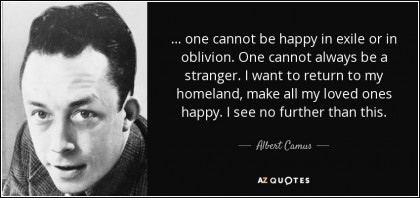 Yet again, I didn’t follow this one completely, but the Lurianic God is a God in exile, separated from the shards. So when the Jews go into exile, they do so as one with their estranged God. The purpose of the Jews is to remind humanity of this estrangement and that we all have a role to play in overcoming it.
 July is the hottest month, on average, on Shadow Mountain, hence the Most Heat Moon. Yet, this morning the temperature is 38 degrees. Admittedly we’re still in June, but June is hardly the heart of fall. I’m loving the cooler weather, but I feel for the folks experiencing record heat, especially those with inadequate cooling options.
 As our habitable space ship races along its track, its tilt gives us seasonal changes and four regular moments, two with roughly equal days and nights, the equinoxes, and two extremes: the solstices. The longest days of the year occur right now with the sun rising early and setting late ignoring Benjamin Franklin’s early to bed, early to rise. Six months from now, in the depths of midwinter, we will have the winter solstice where darkness prevails and long nights are the rule.
 At midsommar in the temperate latitudes where farms dominate the landscape, the growing season, which began roughly around Beltane, is now well underway. Wheat, corn, barley, soybeans, sorghum, sunflowers have risen from seed and fed by rain or irrigation make whole landscapes green with the intense colors of full growth. Midsommar mother earth once again works hard to feed her children.
 Our seasonal dance is not only, not even mostly, a metaphor, but is itself the rhythm of life. When its regularities falter, when either natural or artificial forces alter it, even a little, whole peoples, whole ecosystems experience stress, often death. We humans, as the Iroquois know, are ultimately fragile, our day to day lives dependent on the plant life and animal life around us. When they suffer, we begin to fail.
 The meaning of the Great Wheel, it’s rhythms, remains the same, a faithful cycling through earth’s changes as it plunges through dark space on its round. Their implications though, thanks to climate change, may shift, will shift in response to new temperature, moisture regimes. The summer solstice may be the moment each year when we begin, again, to realize the enormity of those shifts. It might be that the summer solstice will require new rituals, ones focused on gathering our power to both adapt to those shifts and alleviate the human actions ratcheting up the risks.
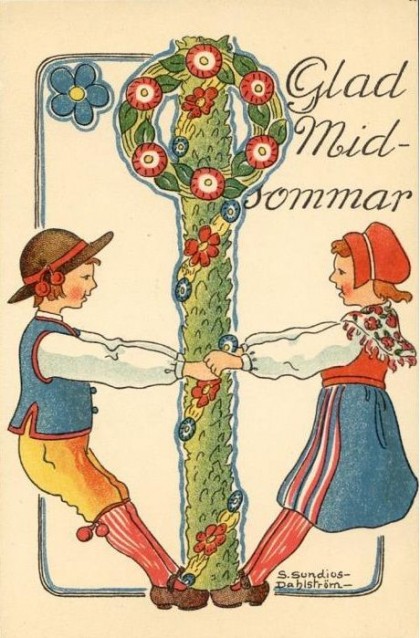 This is the last day of Beltane, the Celtic season marking the start of the growing season. Tomorrow is the Summer Solstice and in the way of the Celts, actually mid-summer. I plan to start calling the season midsommar, after its Swedish spelling since the Scandinavians do this season right: bonfires, family gatherings, great food, lots of naked dancing. Out here in the moisture starved West and up here on fuel rich Shadow Mountain, there’ll be no bonfires. Just too dangerous, but we’ll be with the Swedes in spirit tomorrow.