Claim a victory. An old political maxim and one I’m going to use this morning. It wasn’t a cleansing victory, not a whole field, run the bastards out victory, but a win. Yes. Control of at least one house of Congress. Yes. 22 governorships. Yes. Reduction in Senate margin. Sigh. Hands over head. Trump still in office. Duck and cover. Here in Colorado we elected the first openly gay Governor, Jared Polis. Looks like Democrats will have control of the state house and senate, too. Minnesota elected Democrats in key races. And Indiana. Well. And Oklahoma. Not much better.
The states of my childhood continue to remind me why I no longer want to live in either one. My second phase home, Minnesota, seems slightly more blue than in the recent Pawlenty stained past. Colorado, our third phase home, has pushed itself solidly into blue. Politics is cyclical, but Trump, I hope, is a unicycle.
I feel a bit lighter. Will take some time to assess, learn what all this means. But Colorado looks very hopeful.
Just a quick note about election day. I’m holding my psychic breath, not giving in to watching returns, following exit polls. I’ve peeked a bit on the NYT and Real Clear Politics, but when I feel myself drawn in, I move on. Perhaps it’s a very mild from of post-traumatic stress. Not the disorder, but a real aversive conditioning based on 2016. My understanding of American politics betrayed me that day. And the reality and depth of that betrayal has morphed into the lived reality of Trump’s awful Presidency. So, a trauma based stress reinforced daily in ways I still cannot believe.
Politics in this two year time frame have become repugnant to me. I consider myself clear eyed about the nature of politics. It was, ante-Trump, neither wholly good nor wholly evil. It was human, rooted in hopes and ideals, greed and self-interest. It was malleable. Politics was a way of sorting through our public dreams, deciding which ones to nourish, which ones to kill off.
Vietnam cured me of any illusions about the essential decency of politics, but it did not leave me jaundiced. Instead I felt the Vietnam protests and the counter-culture of that era made a real difference. No, not in a straight line from hopes to policies, but in the way American life took notice of new ways of thinking about war and its justification, about gender, about careers, music, art.
Of course there was always the KKK. The Minutemen. The Posse Comitatus. Waco. Ruby Ridge. But they were fringe actors, limning the boundaries of decency by their cross burnings, cult indoctrination, creation of strange understandings of the law. Now these fringe actors have moved center stage. Their abhorrent doctrines have currency, no longer defining boundaries decent folk will not cross, but helping define policy emanating from the White House. Build that wall. Send troops to “defend” America against poor people fleeing their homes, families with children just hoping to live out their days in peace. Give aid to our enemies and the finger to our allies. This is way, way beyond anything I ever imagined.
What will I do if it’s not repudiated at the polls today? I really don’t know. Perhaps retreat into isolation, even though the idea would close off a long dedication to social change. Perhaps recommit to some kind of radical vision. Don’t know. And in not knowing I do not know myself, do not know the one who feels that way. That scares me, BTW.
Wanted to get this down before the results finally roll in. Where I am now.
Kate and I got coffee, sat down at our beetle-kill pine dining table, cracked open the mailers from the state of Colorado, and voted. Not a complicated ballot in terms of candidates, though the retention questions for judges left us both scratching our heads. Guess which way we voted? Blue wave, blue wave, blue wave. At least two water particles added.
On the other hand there were several referendums on the ballot. Some obscure, like changing the way judicial candidates are presented on future ballots to a measure eliminating slavery and involuntary servitude. Some not so obscure but frustratingly necessary because of Colorado’s TABOR, a long ago referendum which passed requiring all tax increases to be voted on by the general public. These referendums are attempts to squeeze out more funding for education and transportation, both victims of TABOR’s constrictive grip on Colorado’s public economy.
Then there were two that make creating both federal and state legislative districts non-partisan. Like campaign funding gerrymandering is currently a cancer in our democracy, both in their own way as serious as the orange tumor in our body politic. Voting yes.
A controversial measure this year involves setbacks for drilling pads as frackers go after natural gas and oil often inconveniently located. One of the biggest oil and natural gas deposits lies in Weld County, part of the Denver-Aurora Metro. Prop. 112 would increase the setback from dwellings and businesses to “a 2,500 foot buffer zone between new oil and gas development and occupied buildings like homes and schools, as well as water sources, playgrounds and other vulnerable areas.” prop 112 website We voted for the setback.
Colorado continues to be a strange political environment to this native Midwesterner. The libertarian streak in all American politics colors issues with a let me alone and don’t make me pay swoosh, here it’s a swoosh often as big as the entire running shoe. That can drive electoral decisions. There’s also the even more dramatic than in most states divide between the liberal Front Range and the remainder of Colorado. Rural and mountain Coloradans often complain that their views are ignored. True, too, to some extent. The rural vote is often reflexively against candidates and ballot measures that seem to reflect Front Range values.
We’ll see how much in-migration has altered the politics here on November 6th.
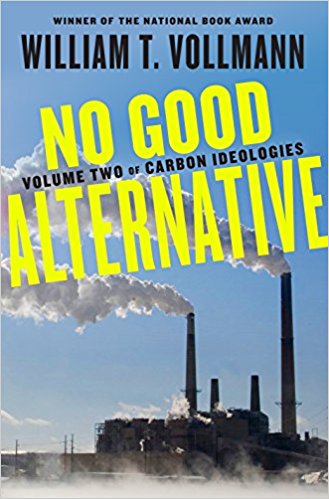
Though I haven’t begun to read them yet, William Vollman’s two volume work: No Immediate Danger and No Good Alternative, the Carbon Ideologies paints a bleak picture. So does the IPCC‘s latest report. I also reported here, quite a while back, about a new movement called dark ecology that, like these three works, takes a dim view of our (that is, the world’s) willingness to execute the necessary carbon emissions restrictions.
Much as I hate to admit it, I believe these darker, more hopeless perspectives about the struggle against climate change might be right. If they are, we may be walking down a path that leads to an HG Wellian Time Machine world with the poor morlocks wandering the face of the earth (think the 99%) and the eloi burrowed into her mantle, using their great wealth and power to survive the heat and climatic chaos.
If we cannot slow down the rate of climate change (which is the most we can do, since so much climate change is already baked in), then we move to mitigation and adaptation. Geoengineering will become a buzz word as various strategies are tried. Climate refugees will become more and more disruptive across the world, especially those moving from coastal areas into interiors and onto higher ground. The already underway shifts in plant and animal eco-systems, climate refugees all, will bring them with different disease vectors, disruption to agriculture and sea life.
We will not be known for Vietnam, civil rights, feminism, ruining health care, electing fascists to high office, but as the generation that allowed an earth compatible with human populations to slip away. Hard as it is to imagine the results of this inaction will be far, far more damaging than all the wars, holocausts and pogroms. How will we explain this to our grandchildren, to Ruth and Gabe in our instance? I understand the political and economic forces that have gotten us here, but explaining them will not alter the misery.
The country I used to know. It wasn’t perfect. Take MLK and the civil rights movement. Vietnam. Crushing, unnecessary poverty and the dismal, shameful access to health care. Coal and gas poisoning the atmosphere. The lives of women and girls. And, yes, so much else.
It wasn’t perfect, but it wasn’t sit at the stoplight, look at the car next to you and wonder if this asshole voted for Trump bad. It wasn’t mock the disabled, give aid and comfort to white supremacists bad. It wasn’t lock up democracy in a Republican’s only cabinet, then turn the Republicans into mean spirited and cruel operatives. It wasn’t grow the 1% at the expense of everyone else, grow the 1% at the expense of mother earth, grow the 1% at the expense of our allies. It wasn’t give aid and comfort to our enemies, to dictators and shun our friends.
No, this, this whatever we have now is worse, so much worse. I feel as if I woke up one morning, uncertain when, and found I’d moved to 1930’s Italy or Germany or Japan. As if the cultural fabric in which I lived and moved and had my being for 71 years had torn. In this case it revealed not an inept but kindly wizard, but a disturbing cabal of old white men, each one worse than Gollum, rubbing their own versions of the one ring and saying, my Precious, my Precious, my Precious.
As I drive down the hill, then climb back up, I wonder if this is the way it was. Lives going on, wives in hospitals, trying to make sense of the unexpected, sudden calamities that visit us all but finding those calamities embedded in a greater one like Russian nesting dolls. Kate’s struggle a small instance of the larger one, a people beset by unforeseen tragedy. But, where do you take a country in extremis? Where are the emt’s for a sick nation?
This will sound strange, but I find Kate’s troubles, significant and important as they are to our family and friends, pale in comparison to the rot, yes, the evil, the poison in the veins of our body politic. These are not times of political disagreement, of debates over national debt or military preparedness or immigration policy, these are times with the flavor of a cold civil war.
I cannot describe to you how sad all this makes me. How disorienting I find these times. I don’t know what happens next, where we go from here. I hope the November elections shake the foundations of the Republic.
Too much. Kavanagh’s cowardly confirmation now seats two known sex offenders, criminals, on the highest court in our land, both with lifetime appointments. How can we trust our country? What does it mean to be an American now?
OK. NYT article from an anonymous Trump administration official. Saying what we know about Trump, increasing logarithmically the force of Bob Woodward’s Fear, also making the news right now.
Wow. Trump reminds me of those weighted dolls in a carnival game. Hit’em hard with a fast pitch, they fall over, but bounce right back up, ready for the next one.
How, I would say, can he recover from these insider accounts of his tiresome pettiness, his annoying stupidity, his consummate cupidity? I would say that; but, it would ignore the other knock’em down pitches that started during his campaign when, for example, he mocked the disabled reporter, “moved on her like a bitch,” grabbed pussies because he felt his celebrity gave him an invisibility cloak.
He might be so venal, so incompetent, so clueless that no revelation will shock, no critique stick. A very, very strange situation for the person putatively in charge of the world’s most powerful military and what used to be a well respected hegemon. Shakes head, rolls eyes, goes on about his day.
In the spirit of the holiday weekend I’m relaxing before school starts, religious school that is. Getting ready has occupied my mind on some level every day since mid-June. Now that Alan and I have a plan, I’m giving myself these three days as a break. Feels great.
Yesterday Kate and I went to BlacKkKlansman. I’m sure many of you who read this have seen it, so we’re a little late. Several folks from Beth Evergreen have seen it. The story is a bit thin. The KKK in Colorado Springs was not historically significant and though hateful were, even as presented in the film, inept. What Spike Lee has done is take that thin story and use it as the core of a biting criticism of the Trumpstate and the folks he encourages.
He begins with a satirical short film of Alec Baldwin playing a fictitious race “scholar.” He also includes clips from Gone With the Wind and Birth of a Nation, both of which smuggle in a great deal of cultural commentary on race relations and the historical context that created and sustains white supremacist ideology. He also has several Trump related jibes. For example, after a Klan initiation ceremony, David Duke has a screening of Birth of a Nation. The berobed stand up and shout “America First!” According to a Colorado Springs reporter at the time, Nancy Johnson, this happened. There were also references to making America great again.
The Adam Driver character was not Jewish in reality, so Spike Lee’s casting of him as Jewish was a vehicle for commentary on anti-semitism. Driver’s comments about being raised as a secular Jew who had not thought much about his heritage are a critique of passing, whether by blacks or Jews. The frisson between Stallworth’s blackness, which undergoes a transformation when he goes undercover to a Stokely Carmichael, by this time Kwami Ture, speech and Driver’s gradually emergent Jewish consciousness was a key feature of the film for me.
The film does not end in the Stallworth era Colorado Springs. Instead Lee cuts to actual footage from the “Unity” march for white supremacists in Charlottesville, Virginia. Included are several different perspectives of James Alex Fields Jr driving his silver Dodge Charger into a crowd of counter protesters and killing Heather Heyer. Following those news clips and cell phone videos are scenes from Trump’s infamous, “There were good people on both sides.” reaction to those events.
A profound scene, which interlaces with the Klan initiation in which Adam Driver participates as Stallworth, has Harry Belafonte sitting in a Huey Newton chair, telling the story of the lynching of Jesse Washington in Waco, Texas in 1916.
The ongoing satirical edge of the film, begun with the Alec Baldwin short, lulls the viewer into the same sort of “oh these buffoons aren’t a serious threat.” mentality that pervades our cultural perception of not only the Klan but other white supremacists, too. Until, that is, we see Fields’ Dodge Charger smash into unprotected protesters. Until we see our President giving aid and comfort not to the victims but to the perpetrators. Then we’re forced to go back and consider Scarlett O’Hara wending her way through wounded Confederate soldiers and the blackfaced actors in the Birth of a Nation footage. We’re forced to consider that the America First shouts with the right arm salutes was not an artifact of an era now past, but with us now and not only with us now, but with us at the highest levels of our government.
The other turn that the movie makes is the implicit correlation between the America Love it or Leave it slogans embraced by the Klan and the same cultural tensions existing now. The era of the 1960’s lives on. Here’s a quote from a woman I know, an email she sent after I commented on a friend’s positive post about this movie:
“Unless i have misinterpreted your comment on Ron S.’s FB, I didn’t know you are anti our country, our flag, and no doubt have always been. If so, how come you and the others are not moving to another country? Seems hypocritical that you all are still here. To me, this is not at all free speech ala the 1st Amendment.”
Kate’s birthday present came yesterday. It has excellent lumbar and neck support, plus it inclines with the press of a small lever. She’s the queen of Shadow Mountain.
Went down the hill yesterday to the Native Roots dispensary. I wanted something Kate could use to quickly attack nausea, perhaps eliminate it. Research suggested Durban Poison, Northern Lights, Lemon Haze, or a strain like those.
Native Roots is a franchise operation, very slick and a little cold in their approach. Like all the dispensaries they check i.d. Here they made me take off my hat and glasses so the camera could get a shot of me. Inside I made a mistake when the budtender (silly, silly name) called me forward. I told her my wife had nausea and I wanted something that might help. “Never tell a budtender you’re buying for someone else. That’s illegal.” Oh, ok. “Well, I have nausea, then.” “OK. We’re good there.”
They didn’t have any of the particular strains I wanted, but she recommended a strain called Jilly Bean, one they grow themselves. I wanted a bong, but they “…don’t sell glass.” She offered me pre-rolled joints. Oh, the distance from the late sixties and its furtive culture, wrapping papers, sorting seeds and stems out on the kitchen table. These joints, spliffs, blunts have a spiral filter on the end to cool the smoke and neatly wrapped wrapped paper twisted off at the end. Very producty looking. And, not cheap. $7 each.
I bought two. She’ll try them when the nausea hits next time. If it works, we’ll get her a bong and some flower rather than pre-rolled joints. Can you believe I just wrote that sentence? This is truly the new millennium.
Kate wanted spring rolls for supper using some of the mushrooms she grew. (I know. This sounds like a back to the sixties day for us.) I sauteed the mushroom at noon. Kate got some shrimp out to defrost. After her throne arrived, I got busy. Cut up cucumber into matchstick sized pieces. Mix chopped nuts and carrots, shredded. Add fish sauce, juice of two limes and sugar. Mix. Heat water to boiling, pour over rice noodles. Mint leaves. Cilantro leaves. Lettuce leaves. Run the rice paper under the tap. Put on plate, assemble.
These were our first spring rolls, so they weren’t as elegant as, say, the Jilly Bean prerolls, but they tasted great. A successful beginning from the new Asian cookbook.
Alan is coming today and we’ll work on a calendar for our lesson plans. Classes start a week from today. Oh, my. Lots more to say about that, but not now.
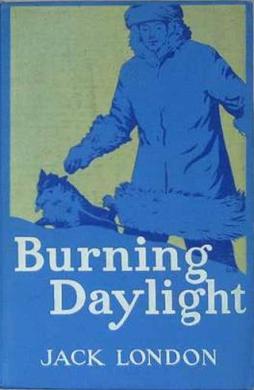
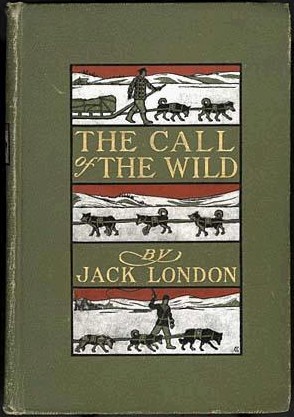
Still thinking about the north. In 1969 Judy and I left Connersville, Indiana, headed toward Appleton, Wisconsin. In my mind the landscape would be pine trees, glistening lakes, deer, lots of people in plaid shirts. Maybe still a lumberjack or two. Jack London’s White Fang, Call of the Wild, Sea-Wolf, Burning Daylight had made me a distant fan of a place closer to the Arctic, one where the wildness of our planet had not been consumed by factories and roads.
Turns out the Fox River Valley was not that place. The Fox River which runs from the Green Bay through Appleton and finally into Lake Winnebago had no available oxygen for aquatic life thanks to years of dairies and paper mills, two of the worst polluters, dumping effluent. But you could see this north from there. In the Fox River Valley it manifested itself in a tortured way through snowmobile culture and the annual ritual of the deer hunt. Both were violent and dangerous. On winter nights the lights of snowmobiles rake the roadways and countrysides as riders drive their vehicles alongside the roads from bar to bar for a shot and a beer. It was often said that grudges got settled during deer season.
White Fang’s north also announced itself in the weather. That winter we had two feet of snow in one storm, an amazement to this long time Hoosier, resident of an agricultural and industrial belt that had confused seasons often with slush and ice storms in place of winter, northern winter. I learned about engine block heaters. Temperatures dropped to way, way below zero. And stayed there.
Wisconsin was a bad experience for me. Judy and I had married at 21 and 17. I had graduated from college that spring and had no idea what to do next. So. Get married. By Appleton neither one of us were sure why we’d said yes to the other. The long winter nights found us drinking beer by the case and playing sheepshead with Judy’s family. Her father, a convinced alcoholic, and I, just getting started in my addiction, didn’t really get along. He was a snowmobile racer, a deer hunter, an ink salesman and a Packer fan. I had little interest in any of those things. Our only common ground was his daughter.
By 1970 I’d found myself withering in Appleton. Too much alcohol. Judy and I had agreed on an open marriage, it was the sixties after all, but when she acted on it, I discovered I hadn’t meant it. I had three jobs in Appleton: life insurance salesman (never sold a policy, lasted three months), a baker making bread and pound cakes, but getting to work at 4 a.m for $1.50 an hour lost its charm quickly, and, finally, as a rag cutter at the Fox River Valley Paper Company. This was a distinct change from studying anthropology and philosophy, fighting the establishment. And not a good one.
Seminary took me to Minnesota, where I did find my true north, not in New Brighton, of course, but up north in the boreal forest, among the 10,000 glaciated lakes and on the shores of Lake Superior. This was Burning Daylight territory. I stayed for forty-five years.
Burntside Lake, Ely
While up north, from 1969 to 2014, I discovered the insular nature of this land. The long blue ellipse of Lake Michigan made Michigan, Wisconsin and Minnesota, the Upper Midwest, lack a through route to the West. We were not on the way to anywhere. You had to want to go up there for some reason and most folks in the U.S. chose not to. Nothing there unless you fished or hunted or had business or family. Cold, too. Brutal winters. As far north as most folks got was Detroit or Chicago.
Especially distant, especially unknown were the Upper Peninsula of Michigan, northern Wisconsin and northern Minnesota with the Iron Range, the Arrowhead region, Lake Superior, Voyageurs National Park, the BWCA, Warroad. It is a culture that has some common ground, snowmobiles, snowshoes, ice fishing, hiking, mineral extraction, cross-country skiing, but little integration even with the states in which they lie. What integration there is tends to be that of tourist destination and tourist though of course the Iron Range and the copper mines of the Keweenaw, the laker supported transport of the Great Lakes, and such cities as Duluth, Superior, Sault St. Marie, and Marquette attract citizens as well as visitors.
Now living in a region dominated by the story of the vanishing frontier, the Indian wars, the cowboy, mountains, and the false allure of unbridled freedom, the north country has receded from view again. It is far away, not on the way to anywhere most choose to go, and largely unknown. Yet it still feeds my imagination and my memories there are warm and many. No, I never mushed a dogsled to take medicine to a plague ridden village isolated by a blizzard (Sergeant Renfrew of the Canadian Mounted Police), but I did mush a dogsled. I never caught a muskie or a lake trout, but I did spend many happy hours picking blueberries in the late August sun. It was the north of my Jack London induced fantasy and I loved it. As I now do the Rockies.
Reading two books right now, The Stranger in the Woods and Northland. They are oddly complementary. Northland recounts a three-year long journey by the author following the northern border across the U.S. It starts in Maine. This early part of his journey is through land very familiar to friends Paul and Sarah Strickland who live near the St. Croix River separating the U.S. and Canada. Stranger in the Woods tells the story of Christopher Knight, who grew up in central/northern Maine, graduated from high school, became a burglar alarm installer, then, at age 20 decided to disappear into the woods. He was found 27 years later after having spent the intervening time in silence, living alone in a rocky clearing and subsisting off of raiding cabins near his well-concealed home.
Porter Knox, author of Northland, says that land in the U.S. along the northern border is a land apart, distant from the rest of the country both for its inhabitants and visitors. Having lived in Minnesota for forty years, I know the Northland border there and in Michigan, too. It’s severe country in Minnesota with temperatures the rest of the country read about during the winter, lakes carved by the retreating glaciers of the last ice age and boreal forests. It’s also poor country with soil too rocky and thin for agriculture and too distant from cities for most commercial purposes. Tourism is the main economic driver there and that’s seasonal.
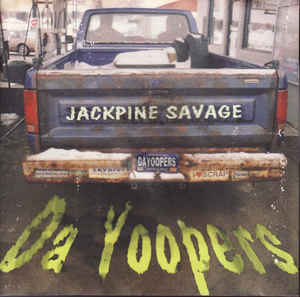
Knight’s family had developed a way of living in the Northland. They had a large garden, hunted, were clever with their hands and spent time with books, not media. It was a subsistence existence that reminded me of the movie Captain Fantastic. Christopher took the northland life style to a logical extreme, becoming isolated not only from the rest of the country, but from human community itself. In Minnesota and Wisconsin his family would probably have been called Jackpine Savages, which refers to folks who live off the land there, often taking multiple jobs while living mostly off game, fish and gardens.
As I write this from the top of Shadow Mountain, I can see how different and faraway this border and these lifestyles must seem to the rest of the U.S. In fact, it strikes me as odd how little known these northern lifeways are. Redneck culture, not the same, but also rural in origin, has a lot of visibility. So does the older Appalachian Scotch-Irish culture from which Redneck culture emerged. Cowboys were similarly isolated from mainstream U.S. culture, but their presence is large in U.S. history, too. Not so for the folks who live in the colder regions along the border with Canada.
 Claim a victory. An old political maxim and one I’m going to use this morning. It wasn’t a cleansing victory, not a whole field, run the bastards out victory, but a win. Yes. Control of at least one house of Congress. Yes. 22 governorships. Yes. Reduction in Senate margin. Sigh. Hands over head. Trump still in office. Duck and cover. Here in Colorado we elected the first openly gay Governor, Jared Polis. Looks like Democrats will have control of the state house and senate, too. Minnesota elected Democrats in key races. And Indiana. Well. And Oklahoma. Not much better.
 Just a quick note about election day. I’m holding my psychic breath, not giving in to watching returns, following exit polls. I’ve peeked a bit on the NYT and Real Clear Politics, but when I feel myself drawn in, I move on. Perhaps it’s a very mild from of post-traumatic stress. Not the disorder, but a real aversive conditioning based on 2016. My understanding of American politics betrayed me that day. And the reality and depth of that betrayal has morphed into the lived reality of Trump’s awful Presidency. So, a trauma based stress reinforced daily in ways I still cannot believe.
 Of course there was always the KKK. The Minutemen. The Posse Comitatus. Waco. Ruby Ridge. But they were fringe actors, limning the boundaries of decency by their cross burnings, cult indoctrination, creation of strange understandings of the law. Now these fringe actors have moved center stage. Their abhorrent doctrines have currency, no longer defining boundaries decent folk will not cross, but helping define policy emanating from the White House. Build that wall. Send troops to “defend” America against poor people fleeing their homes, families with children just hoping to live out their days in peace. Give aid to our enemies and the finger to our allies. This is way, way beyond anything I ever imagined.
 What will I do if it’s not repudiated at the polls today? I really don’t know. Perhaps retreat into isolation, even though the idea would close off a long dedication to social change. Perhaps recommit to some kind of radical vision. Don’t know. And in not knowing I do not know myself, do not know the one who feels that way. That scares me, BTW.
 Kate and I got coffee, sat down at our beetle-kill pine dining table, cracked open the mailers from the state of Colorado, and voted. Not a complicated ballot in terms of candidates, though the retention questions for judges left us both scratching our heads. Guess which way we voted? Blue wave, blue wave, blue wave. At least two water particles added.
 Then there were two that make creating both federal and state legislative districts non-partisan. Like campaign funding gerrymandering is currently a cancer in our democracy, both in their own way as serious as the orange tumor in our body politic. Voting yes.
 Colorado continues to be a strange political environment to this native Midwesterner. The libertarian streak in all American politics colors issues with a let me alone and don’t make me pay swoosh, here it’s a swoosh often as big as the entire running shoe. That can drive electoral decisions. There’s also the even more dramatic than in most states divide between the liberal Front Range and the remainder of Colorado. Rural and mountain Coloradans often complain that their views are ignored. True, too, to some extent. The rural vote is often reflexively against candidates and ballot measures that seem to reflect Front Range values.
 Though I haven’t begun to read them yet, William Vollman’s two volume work: No Immediate Danger and No Good Alternative, the Carbon Ideologies paints a bleak picture. So does the
  If we cannot slow down the rate of climate change (which is the most we can do, since so much climate change is already baked in), then we move to mitigation and adaptation. Geoengineering will become a buzz word as various strategies are tried. Climate refugees will become more and more disruptive across the world, especially those moving from coastal areas into interiors and onto higher ground. The already underway shifts in plant and animal eco-systems, climate refugees all, will bring them with different disease vectors, disruption to agriculture and sea life.
 We will not be known for Vietnam, civil rights, feminism, ruining health care, electing fascists to high office, but as the generation that allowed an earth compatible with human populations to slip away. Hard as it is to imagine the results of this inaction will be far, far more damaging than all the wars, holocausts and pogroms. How will we explain this to our grandchildren, to Ruth and Gabe in our instance? I understand the political and economic forces that have gotten us here, but explaining them will not alter the misery.
 The country I used to know. It wasn’t perfect. Take MLK and the civil rights movement. Vietnam. Crushing, unnecessary poverty and the dismal, shameful access to health care. Coal and gas poisoning the atmosphere. The lives of women and girls. And, yes, so much else.
 As I drive down the hill, then climb back up, I wonder if this is the way it was. Lives going on, wives in hospitals, trying to make sense of the unexpected, sudden calamities that visit us all but finding those calamities embedded in a greater one like Russian nesting dolls. Kate’s struggle a small instance of the larger one, a people beset by unforeseen tragedy. But, where do you take a country in extremis? Where are the emt’s for a sick nation?
 OK. NYT article from an anonymous Trump administration official. Saying what we know about Trump, increasing logarithmically the force of Bob Woodward’s Fear, also making the news right now.
 Kate’s birthday present came yesterday. It has excellent lumbar and neck support, plus it inclines with the press of a small lever. She’s the queen of Shadow Mountain.
 Turns out the Fox River Valley was not that place. The Fox River which runs from the Green Bay through Appleton and finally into Lake Winnebago had no available oxygen for aquatic life thanks to years of dairies and paper mills, two of the worst polluters, dumping effluent. But you could see this north from there. In the Fox River Valley it manifested itself in a tortured way through snowmobile culture and the annual ritual of the deer hunt. Both were violent and dangerous. On winter nights the lights of snowmobiles rake the roadways and countrysides as riders drive their vehicles alongside the roads from bar to bar for a shot and a beer. It was often said that grudges got settled during deer season.
 Wisconsin was a bad experience for me. Judy and I had married at 21 and 17. I had graduated from college that spring and had no idea what to do next. So. Get married. By Appleton neither one of us were sure why we’d said yes to the other. The long winter nights found us drinking beer by the case and playing sheepshead with Judy’s family. Her father, a convinced alcoholic, and I, just getting started in my addiction, didn’t really get along. He was a snowmobile racer, a deer hunter, an ink salesman and a Packer fan. I had little interest in any of those things. Our only common ground was his daughter.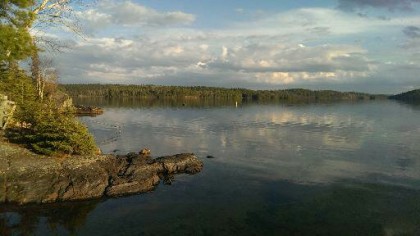
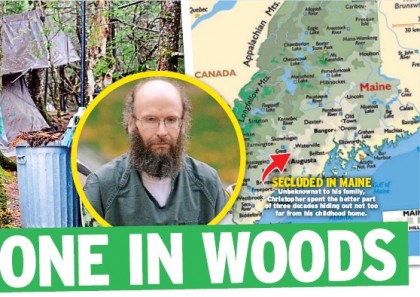 Reading two books right now,