Fall Hunter Moon
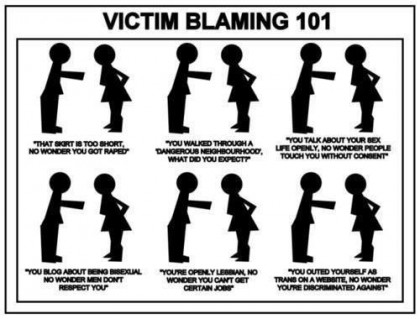 Sexual aggression and its effects. #PussysGrabBack is a hashtag encouraging women to vote and to vote against the would be pussy grabber in chief. The Access Hollywood video tape with its lewd, rude, casually mentioned and approved sexual assault language has caused an outpouring of actual stories from women in all walks of life and of all ages.
I want to add a male perspective, not because it’s more profound, it isn’t; but, because its relative rarity can underscore the climate of fear this despicable breaching of personal boundaries produces.
When I was young, my parents not only allowed me to travel by myself, but actively encouraged it. I would go down to the Greyhound Bus Stop by Stein’s Tailor Shop, load my suitcase underneath and go up the stairs to my seat. On my lap would be a fruit basket from Cox’s Super Market. Wrapped in a colored cellophane would be apples, bananas, perhaps some grapes, food for the journey.
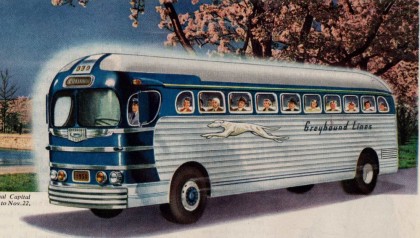 The Greyhound was not then the dismal transportation method it has become today, but an affordable way of moving long distances. And I traveled long distances, going from Alexandria, Indiana, 60 miles east of Indianapolis, to Oklahoma City, Oklahoma. All of my father’s side of the family lived in or near Oklahoma, so this was a way for me to get to know them. And never, on any of those trips, did anything untoward ever happen to me.
It was different though when I boarded the train headed for Arlington, Texas. This was a really big adventure for me, my first time riding a train. When we reached St. Louis, I had a long layover so I put my bag in a locker (this was before the time of bombs in lockers), took my brownie camera and went out into the humid heat of a Missouri summer afternoon.
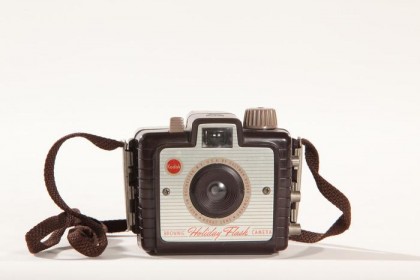 A Sunday, downtown was empty of workers and there were no tourists on the streets. I had stopped by a doorway to stand in the shade while I took snapshots of buildings. A man came back, noticed me squatting down changing the film in my camera. He said something, I don’t recall what and I replied because I was a courteous boy from the Midwest. He squatted down, pretending to be interested in my camera.
Then his hand was in my crotch, kneeding my testicles. I stood up, bolted up more like it, said, “You shouldn’t do that,” collected my camera and clutching it to my chest ran back to the train station where I remained until the train came that would carry me onto Texas. He didn’t pursue me, gave me no resistance. But I was shaken in a way that at that age I could barely comprehend. I was maybe 11 or 12.
During college there were various situations in which gay friends came onto me in a sexual manner, but I never considered that assault. It was the exploratory process, learning how to be sexual in a time of drastically altered mores, the late 1960’s and early 1970’s.
Just three weeks ago, in Minnesota, I had a very unsettling experience. I had driven for two days, leaving Conifer on a Wednesday, staying overnight in Lincoln, Nebraska, then on the road Thursday. It was about 4 pm and I was tired, my leg hurt and I was looking forward to getting to my hotel.
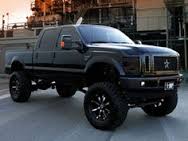 When I reached the intersection of Broadway and Central in Northeast Minneapolis, I noticed a Ford pickup, black with large tires that made it ride high. The driver gunned the engine, came up suddenly on cars in the lane beside me. Jerk, I thought. Then, he did it again. Very aggressive driving.
The second time he did this brought him parallel to me. I looked up, wondering what the guy (I assumed it was a guy.) looked like. He turned his head toward me. Cupping his right hand, he moved it back and forth in front of his mouth while pressing his tongue against the side of his cheek. A rude gesture, especially in a very casual, momentary encounter. He nodded at me, took his right hand and gestured again, this time to himself, then to me and indicated that I should follow him. He was much bigger than I was and had a rough looking face.
I turned my head away, looked forward and turned left away from him. He was in a lane that had to go straight. The encounter ended. It was brief and reasonably safe. I was in my own car and would have had no difficulty losing him even if he had decided to pursue me. But it didn’t feel safe, not at all. It shook me. I felt frightened and, yes, violated.
Neither of these two instances, and they were 50+ years apart, resulted in any physical damage. Both of them resolved quickly. Yet, they both left me repulsed and feeling vulnerable. They both made me rethink my normal assessment of the world as a safe place to be.
I can only imagine how I would view the world if I experienced these encounters regularly, as seems to happen to women. (I say seems because I’m not a woman.) I would feel that my world required constant diligence, constant attention to dangerous surroundings. My sense of safety in the world would probably be compromised beyond repair. And this is in the usual, the day to day.
It does not include a time when a candidate for the Presidency openly brags about such aggression, about the privilege that celebrity brings, about being able to do whatever he wants. This is a validation of sexual aggression, a lived experience for many, many of us, most women, a granting of legitimacy to these acts from a person vying to become the nation’s leading political authority figure.
Adding this abomination to the gradual accretion of insults caused by cat calls, by presumptive hands or body checking, by date rape and rape culture, makes our common space seem fraught with peril, even on a normal day. This is not acceptable. Fear is not the norm we want for our daughters, granddaughters, wives and mothers, sisters.
It’s a problem only solvable by alliances between men and women. Let’s strengthen them over the coming weeks and months.
 I imagine, all round the U.S., on all political sides, a fervent Thanksgiving prayer will be, “Thank God, it’s over.” Of course, the finish of this demeaning, dispiriting and dismal campaign will not heal the divisions it has unveiled. Welcome to the new America where less-educated white men and women are newly visible as an underprivileged and problematic slice of the citizenry.
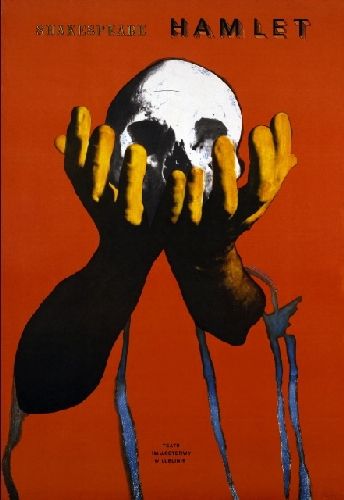
 He sits, early in the morning, while it is still dark outside, with his head in his hands. Orion, his longtime friend hangs in the sky visible to the southwest, Scorpio and Cassiopeia and the Drinking Gourd out there, too. A crescent Thanksgiving Moon, waxing toward its Super Moon event on November 25th, was visible last night.
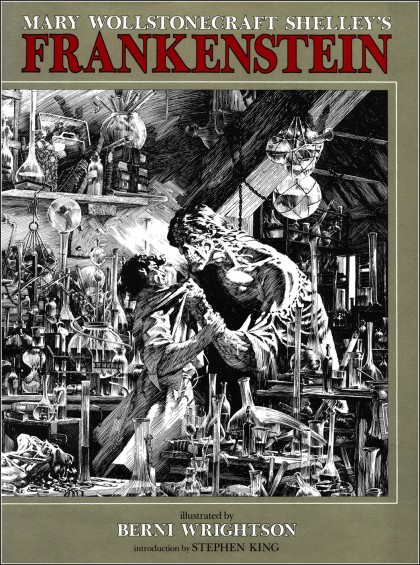 In this case Trumpism is the monster, a living candidacy patched together from a body of populist resentment, the brain of a nativist bigot, the nervous system of fearful white males and the legs of second-amendment worshipping other-phobic citizens. The arms, though, the arms are Trump’s, dangling like the tentacles of a squid, ready to grab, squeeze, embrace. Force. Trump is Frankenstein to this political moment in the Republican Party. The GOP provided the lightning that brought this monster to life and has paraded it with pride through this mockery of a campaign.
 Race relations are in a visibly violent phase. Police kill black folks with so steady a drumbeat that it has become like Trump’s long string of insults to America, dulling our capacity for outrage. Misogyny is at its peak in the Donald, powerful at the same time as our first serious female candidate.
 At 12:30 we drove over to Evergreen for mussar at Beth Evergreen. It was Rabbi Jamie’s birthday and each woman brought a cooked or purchased offering of some kind. We had cranberry juice with tea and mint, apple juice, brie and a wonderful soft cheese, warm carrots, pistachios, cashews, strawberries, grapes, melon, crackers, chips, guacamole, a birthday cake, sea-salt caramel and chocolate brownies (Kate, see pic), with Halloween plates and napkins.
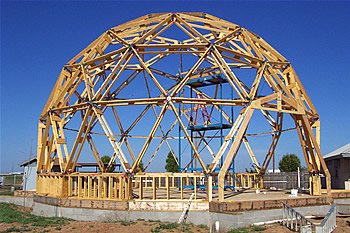 If the Donald wins, I’m not leaving for Canada. That would just leave the country to him and his kind. Not acceptable. But I will build a transparent dome around our house. The dome will have a semi-permeable membrane for its skin. Only healthy, clean, non-stupid ideas will be able to come onto our property whether delivered by newspaper, internet, or television. I haven’t figured out what to do when we leave our dome home, a work in progress.
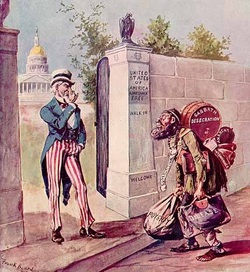 Since 9/11 our politics have become polarized, mean, unbending. The Donald has only ridden that cresting wave; he did not create it. Like any demagogue he has an instinctive feel for the anguish of ordinary citizens and an ability to say things that seem to give it voice. As a representative democracy, we rely on politicians for taking the pulse of their constituents. Yes, that’s true.
 Racism. Is complicated. Very complicated. And, yes, I believe all white Americans are part of its grip on our culture. I’m going to try to boil down a very thorny subject into a few words, see if I can convince you that you are part of the problem if you’re white and live in the U.S.
 Slaves did not vote, but if counted as full persons for population purposes they would have given slave states and the whites who did vote greater representation in the U.S. House. This would have unbalanced power between the North and the South.
 They also had an unearned advantage in their social status as at least higher than that of the slave, the three-fifths of a person enslaved. This unearned social status gave low income whites, often share-croppers, a psychological and social boost which had nothing to do with their personal merit. They were better, at least, than those who toiled without compensation and freedom. That unearned and undeserved lift in personal status persists in the minds and hearts of all white Americans.
 The civil war, you might say, shows the inherent goodness of the north and the hostile debasement of southerners. You might say that if you don’t factor in the unearned economic and social advantages even northerners gained from the enslaved. You might say that if the wreck of reconstruction hadn’t resulted in Jim Crow laws throughout the south. You might say that if you hadn’t grown up near Elwood, Indiana which had a sign at its city limits, No Niggers In Town After Sundown. This was taken down only after the civil rights act in 1964.
 How have all these terrible realities managed to remain in place? Because those with power rarely give it up willingly. We white Americans, through our avoidance of these issues, have capitulated to the structures already in place. Why? Because those structures: biased employment choices, biased voting requirements, lack of affordable housing, lack of available health care, still unequal education, are on the fringe of our lives, happening to someone else, some other African-American self. And to fix them would cost us in taxes, in our unearned advantage in employment, in our ability to control local and state and national elections.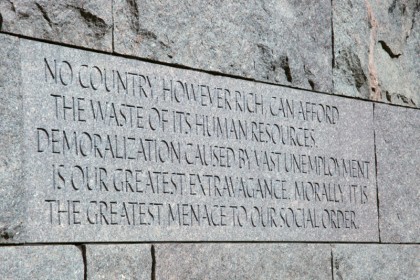
 The election is over. At least for Kate and me. We got our ballots in the mail on Tuesday. Yes, in the mail. We opened them and yesterday sat down together to vote. At our beetle kill pine kitchen table. The ballot spread out before us, front and back. The front had Hillary Clinton, Michael Bennet (Senate) and Jared Polis (House of Representatives) in a row, making it easy to vote for these Democrats.
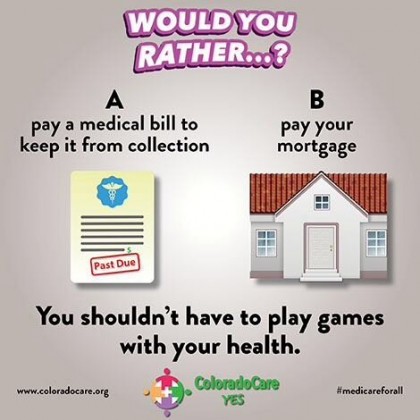 On the back of the ballot were several matters up for public decision, most amending the constitution, a couple with only statutory weight. These are placed on the ballot if they get enough signatures in a pre-election petition process. This is referendum politics and I don’t like it. It sounds like direct democracy, but in fact it is too often a place where large organizations run stealth campaigns, hammering the process with lots of money.
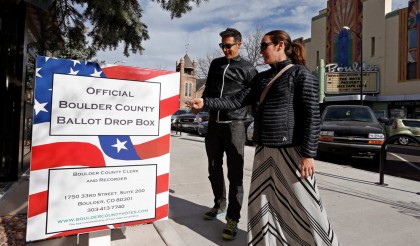 In effect the polling place became our kitchen table. It was better than a voting booth because we could discuss our votes, look up information on candidates or ballot issues. Today we’ll drop our ballots off at a ballot collection box at the Evergreen library.
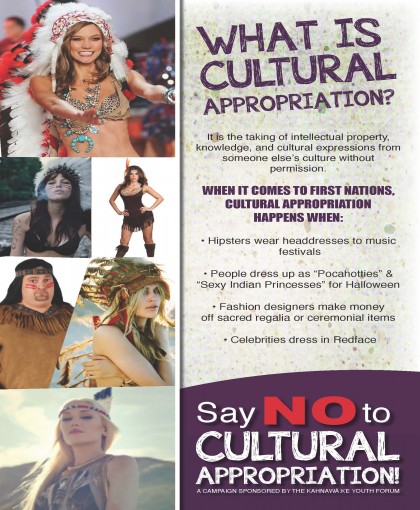 Ruth wanted to see the Queen of Katwe, the story of a poor Uganda country girl who became a chess champion. So we did. It was a good movie, not great; but, its almost all black cast reminded me of Luke Cage, which also has an almost all black cast. I have been and am suspicious of the idea of appropriation* as bad, but these two media pieces have made rethink it.
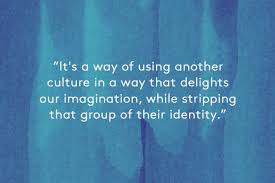
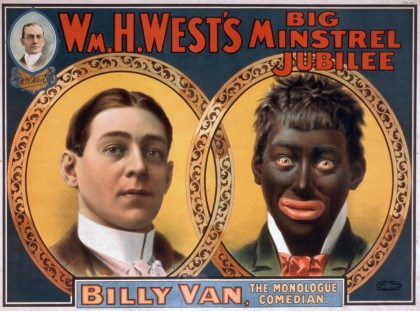 Having said that I found myself intrigued with both Luke Cage and Queen of Katwe because they had almost all black casts. The voice of the characters, the setting, the narrative drive had an integrity, a cohesiveness different from a white dominated movie or television program. The vulnerabilities, tensions, outright conflicts reflect immersion in Uganda and Harlem. They help open up a world, a way of being, a certain thrownness, as Heidegger put it, that is well outside my white, male, middle class, small town Midwest USA experience.
 However. The notion of silos, common in critique of bureaucracies, corporate or governmental or academic, seems to me to apply here, too. Silos are self contained domains, segments of a differentiated work place. The easiest place to see silos is in academe where biology and physics occupy different departments, often different buildings, and usually do not communicate. The internal culture of the military makes it secretive while congress wants transparency, the EPA is a separate agency of quasi-cabinet rank, so it is separate from the department of Agriculture where many matters of critical environmental concern receive attention. The critique is that while the silos differentiate and protect, the world is not so divided. Biology and physics operate within each organism. In the world as it is, Federal Superfund sites, under the administration of the EPA, interact directly with farms and municipalities. There was no bureaucratic barrier between the toxic waste pouring from the Gold King Mine and the waters of the Animas River.