Category Archives: Cinema and Television

Yesterday

Fall                                                                                         New (Thanksgiving) Moon

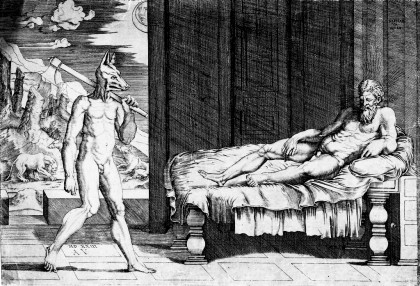
lycaon_and_zeus___veneziano_by_himera

Had a couple of days in a row where the writing didn’t happen. This and that. Now I have to finish my critiques for the writing group Monday night. Critiques are difficult to do well, at least for me. Superior Wolf continues to grow in size though. It’s at 60,000 words now, 2/3’rds of the way toward my goal of 90,000.

We went to see Miss Peregrine’s Home for Peculiar Children. A long movie and a dark one. As friend Tom Crane said, it’s a good movie, not a great one. A bit slow in the beginning and a bit scattered near the end. It has a grandpop as a central, heroic character.

Set in 1943 and 2016 the holocaust is the background. The grandfather is from Poland where, “There were real monsters.” The Home gets bombed by Nazi bombers. The grandfather and his son, a lead character, Jake, can see the Hollows, short for holocaust Ruthie said, but no else can.

Afterward we ate at a Brooklyn style pizza joint.

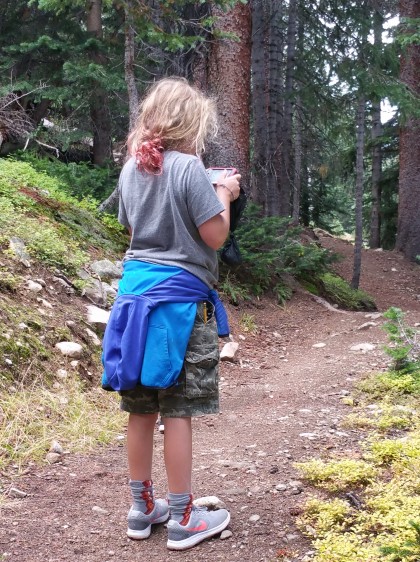
20160903_113024Ruth is filling out her application for the Denver School of the Arts. The application process includes an audition sometime in January. She’s going for fine arts. Ruth is a printmaker, a painter. She draws well, too. I really hope she gets in. She needs peers, other kids with her level of talent, intelligence and curiosity. Otherwise, she gets in trouble. Grandpop did, too.
Gertie is doing well. She’s a rascal and can’t keep her long, prehensile tongue from snaking up onto a plate without permission. Rigel bounds in the car when she can go. Most of the time she sits up in the back, looking this way and that. And Kepler, serious Kepler, watches and listens. Barks and growls. He also does athletic food catches.


Aaarrgghhh!

Fall                                                                            Hunter Moon

Aaaarggghhh. Let’s finish it. Two candidates, neither one of whom I want, but one I really, really don’t want. Vote. Vote. Count. Declare. Concede. I may want to underscore that last point, concede! “I’ve had all I can stand, I can’t stands no more.” popeye

Here’s a confession. Even though I want the election over, now, I think the aftermath will be ugly. In either case. Trump or Clinton. The polarization is real. It will be tough to govern through it, especially for Clinton if, as seems most likely, Republicans retain control of the House. Tougher if they retain control of the Senate. This could mean four more years of obstruction. Four more years of investigations. Four more years of rancor and fury, signifying very little.

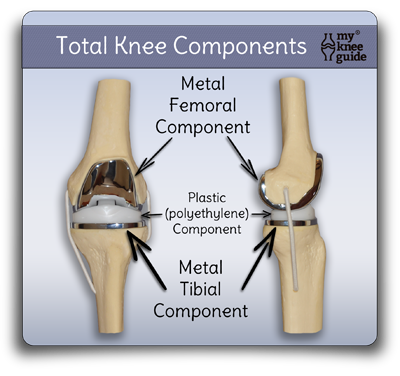
total_knee_replacement_components_modelBrother Mark wanted to know if there were images of my new knee. This is a generic image that shows the components of a common knee prosthesis. Total knee replacement is an increasingly good procedure and all of the anecdotal data I’ve come across has been positive. To be able to walk easily, get in and out of the car without pain, exercise, hike with Ruth and Gabe, sleep with less pain medication, and build up my endurance will be wonderful. December 1st.
The grandkids are here this weekend. More wonder and awe. Pumpkin carving and a trip to see Miss Peregrine’s Home for Peculiar Children.

I purchased a recent book on Vlad the Impaler. He’s become a fascination of Ruth’s. We got to talking about Dracula (I mean, who doesn’t? At least every once in awhile.) and I mentioned Vlad. She’s also noticed the t-shirt I bought Kate at Castle Bran, aka, Dracula’s Castle in the Carpathians. So, we’re going to learn more about him. And those stakes.


Complicated

Fall                                                                              Hunter Moon

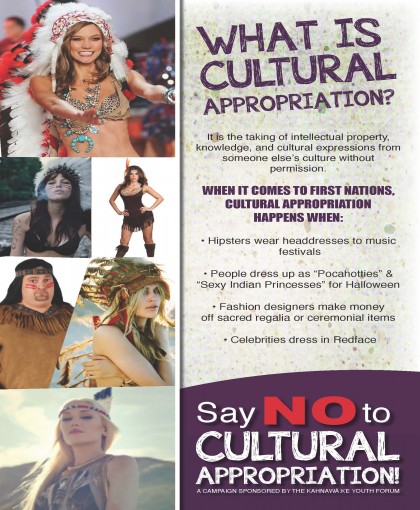
stop-trying-to-be-other-culturesRuth wanted to see the Queen of Katwe, the story of a poor Uganda country girl who became a chess champion. So we did. It was a good movie, not great; but, its almost all black cast reminded me of Luke Cage, which also has an almost all black cast. I have been and am suspicious of the idea of appropriation* as bad, but these two media pieces have made rethink it.
The problem I have with the idea of cultural appropriation is its clash with the aims of art. We could not write books, make movies, script plays, probably even compose music if we did not borrow both from the realm of our personal experience and from the experiential realm of others. At its most fundamental, a man could not write about women, or a woman about men. And, to drill even deeper into this morass, since we can never know the interior life of another, I could not write about anyone else.

Also, to have no characters or roles or melodies that have roots in cultural experiences other than your own would make novels, films, plays and music monuments to cultural isolation. Too, the voice of one culture’s representative commenting on another’s is the stuff of art and provides important information, reflection for our common life as members of a diverse human community.

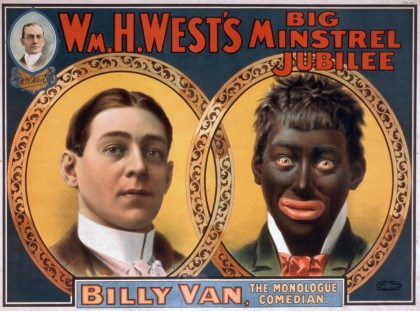
minstrel_posterbillyvanware_editHaving said that I found myself intrigued with both Luke Cage and Queen of Katwe because they had almost all black casts. The voice of the characters, the setting, the narrative drive had an integrity, a cohesiveness different from a white dominated movie or television program. The vulnerabilities, tensions, outright conflicts reflect immersion in Uganda and Harlem. They help open up a world, a way of being, a certain thrownness, as Heidegger put it, that is well outside my white, male, middle class, small town Midwest USA experience.
This presentation of the panorama of black and African characters humanizes them, makes them real, in a way that appropriated roles often cannot. What I’m saying here is that the positive argument stemming from the idea of cultural appropriation, that members of a group or culture can tell their own story best, seems validated for me by this particular movie and this television series.

stop2However. The notion of silos, common in critique of bureaucracies, corporate or governmental or academic, seems to me to apply here, too. Silos are self contained domains, segments of a differentiated work place. The easiest place to see silos is in academe where biology and physics occupy different departments, often different buildings, and usually do not communicate. The internal culture of the military makes it secretive while congress wants transparency, the EPA is a separate agency of quasi-cabinet rank, so it is separate from the department of Agriculture where many matters of critical environmental concern receive attention. The critique is that while the silos differentiate and protect, the world is not so divided. Biology and physics operate within each organism. In the world as it is, Federal Superfund sites, under the administration of the EPA, interact directly with farms and municipalities. There was no bureaucratic barrier between the toxic waste pouring from the Gold King Mine and the waters of the Animas River.

Sorry to have belabored that but my point is this: even if cultural appropriation was to become a norm, it would create its own problems by cordoning off the experience of one culture from another, creating silos of African-American experience or LGBT experience.

It seems to me that the best world would allow and encourage both works by members of all cultures that include and therefore reflect on other cultures and works by and about members of one culture. Let the reader, or the movie goer, or the symphony audience experience the tensions and conflicts. That’s the way to a richer and more intense dialogue among and between all people.

*Cultural appropriation is the adoption or use of elements of one culture by members of another culture.[1]Cultural appropriation is seen by some[2] as controversial, notably when elements of a minority culture are used by members of the cultural majority; this is seen as wrongfully oppressing the minority culture or stripping it of its group identity and intellectual property rights.  wikipedia

It Had Me At Sad Eyes

Lugnasa                                                                   Superior Wolf Moon

20160813_154908Jon and I picked up the kids yesterday at 4 p.m., then went over to Colorado Mills for a movie, Pete’s Dragon. In some ways it’s a thin story with little complexity in the plot line, but it has the virtue of a dragon with fur, one that acts like an Irish Wolfhound. With the dog/dragon hook it had me at sad eyes and dragon protects vulnerable boy. It tugs the heart.

I did wonder, based on a sample size of 2 recent movies, about the role of nature in children’s movies. In both BFG (big friendly giant) and Pete’s Dragon the world outside cities and towns has a romantic purity, a place where dreams are collected, BFG, and a place where dragons and four-year olds can survive and play together for years unnoticed. In both cases the children return to the human dominated world as the movie ends, but retain an affection for the hidden home of the giants, BFG, and the forest in the north where dragons can be.

Black Mountain in the cloudsThese tales of the wild turned protector may reflect our deepest wishes about the natural world outside the built environment. We want the mountains and the forests to be safe places, congenial to humanity, places we can retreat to when we have the need. As John Muir said, “Thousands of tired, nerve-shaken, over-civilized people are beginning to find out that going to the mountains is going home; that wildness is a necessity; and that mountain parks and reservations are useful not only as fountains of timber and irrigating rivers, but as fountains of life.”

Both Gabe and Ruth thought Elliot, the dragon, acted like our Rigel. They were right.

The divorce drags on, drawing a deep harrow across the former lives of all of us it touches. It may wrap up in about six weeks, at least by dissolving the marriage and reaching agreements on key issues like custody, decision making for the kids and sale of the Pontiac Street house. But even that moment, the final divorce hearing, only marks the beginning of a long, long process.

Gabe is 8 and Ruth is 10. They will live their childhood shuttling between homes. Jon and Jen will have to establish new homes, engage life as single parents, yet have to negotiate the mutual terrain of the kids lives. None of this will be easy given the acrimony that has marked the ending of this marriage.

Having raised a boy in this very way, I can testify to its problematic though my relationship with Raeone was more civil all along. Life is hard, then you get divorced.


Indolence in Horse Country

Summer                                                               Park County Fair Moon

An indolent day yesterday. Kate, Jon and the grandkids left for Fairplay, about an hour west of here in South Park, headed to the Park County Fair. Neither Jon nor us has a vehicle that comfortably seats 5, so somebody had to stay behind. Me.

Did a little binge watching, read the Sport of Kings. This book, Sport of Kings, is a major American novel. It catches American aristocracy (that strange self-inflected club), slavery, westward expansion, effectively compares the breeding of blue-blood humans and blue-blood horses-thoroughbreds, the respective dynamics of working class, upper class and poor black families, all seen through the prism of Kentucky bluegrass horse culture. It’s one I may read twice.

Jon’s into Denver today to work on his and Jen’s house, getting it ready for sale in the red-hot Denver market. I’m following in just a bit to pick up some portion of his stuff: tools, clothes, walnut boards for the loft, machines for ski-making. This whole process has been icky so far, but I’m entertaining a hope (maybe, really, a fantasy) that this week marks a modest turning point in the acrimony.

Ladders rattle over the roof of the garage as the final masking is underway. The staining will commence on the whole very soon, perhaps today. The preparation for a good painting/staining job is painstaking, time-consuming.

Weekend Stuff

Summer                                                                      Park County Fair Moon

columbine Black Mtn DrWent to a delightful children’s movie, BFG, with the grandkids. A Spielberg film, it uses CGI as seamlessly as anything I’ve seen. This is a big-hearted movie with childish wonder spilling out all over the place. A Roald Dahl book. The story of an orphan who inadvertently sees a giant deploying dreams. He kidnaps her because she’s seen him. They develop a relationship, one threatened by other giants. Sweet and sad.

Ruth and Gabe were here overnight. Ruth and Jon worked on printmaking in the garage. He’s developing a body of work focused on found objects, metal objects crushed by traffic. He inks them up, then uses a press to transfer the ink to paper. Gabe and I talk because he likes to come up here in the loft and play.

penstemon
penstemon

The staining of the garage is underway. It will look good and last longer when this whole project finishes. The shed and decks, too.

Wandering the back yard now, looking at flowers that grow here with no help. I’m going to gather seeds, then reseed with them in the fall. We have two varieties of penstemon, wild flax, columbine, sulfur flower, indian paintbrush, daisies, shrub roses and a few I haven’t identified. Work with what already likes this soil and this microclimate. Encourage them.

Later in the fall we’ll plant lilacs and more shrub roses in the far back, perhaps some aspen. I want to plant some aspen out front, too.


Birdman

Imbolc                              Black Mountain Moon

This is for Allison, who told me to see this movie two months before I got around to it. Kate and I just got back from seeing Birdman at the Denver West Cinema.

Still digesting, willing to see it again. Soon. First, it grabbed me emotionally like a stage production. It had me in the story the whole time. Its meta-nature, a film about a play taken from a short story and written by a used-to-be comic book action film hero, Birdman, who also stars in the play could have suffocated a lesser work, but the weaving in and out of these various artistic forms was done well, not jarring at the transition points.

The acting, especially Michael Keaton, Edward Norton and Emma Stone, was bravura, taken to the edge of emotional intensity over and over again.

This is a movie about passion, about love, about hope and dreams, about going as far with a project as possible. It is a movie about art and the fragile humans who create it.

Keaton deserves to win an academy award for his performance, as do Norton and Stone. Keaton’s weariness and wariness overlaid by his taking a huge artistic risk in bringing this show to Broadway comes across in so many scenes, but in none more clearly than the magical realism of the Birdman sequences. The tension between his Hollywood, movie star past and his dream of doing something worthwhile in live theater clash.

At one point he is in despair about his play (again) and throws himself off a building, an apparent suicide. Instead he flies along the streets of Manhattan, balding and wearing a Columbo wrinkled overcoat: in appearance he’s the middle-aged man who has put his life up for judgement on Broadway, in flight though he is once again Birdman.

Any of us who have put our dreams on paper, canvas, stage, film, or in digital media will find this film a fellow traveler with our own journey. My novel manuscripts, stacked in bankers boxes in the loft, traveled with Keaton as he paced the back halls of the theater.

If you’ve not seen this movie, see it. It’s a work of art.

Grandkids

Winter                                                      Settling Moon

Spent the late morning and afternoon with the grandkids. Lunch at Which ‘Wich (a new chain sandwich joint) then Into the Woods. Into the Woods is a Stephen Sondheim classic, one of my favorites and this movie version is good, if not great. Meryl Streep as the witch is excellent. The plot wanders some and the show is too long, but overall I enjoyed it.

After the movie we went to Target so Ruth and Gabe could spend their Hanukkah gift. Gabe picked up a large lego set, an Antarctic research facility. Ruth got a bow and darts (plastic) and a robotic insect. Looked like something I’d enjoy.

It was fun to have this time with them, felt like a good beginning, underlining the grandparent motivation for this move.

Jon’s had strep and a flu-like illness for the last week. He sounded croaky, but looked good. Sounds like the Woollys.

The kids were off to swimming lessons, so Kate and I drove home in the pm rush. Still learning routes and strategies for coping with traffic between Conifer and Denver.

Scottish Independence? Yes.

Lughnasa                                                                               College Moon

The global market in television programs, which has increased its reach now that aggregators have entered the market, offers insights into other cultures. I’ve found a clue about the English/Celtic divide in one of them.

Kate and I have converted our television viewing to Netflix, Hulu and Amazon Prime as I’ve mentioned before. A knock on effect (as the Brits would say) has been an increase in watching BBC shows: Waking the Dead, Life on Mars, Ashes to Ashes, Line of Duty and others whose names I can’t recall. We’re currently watching MI-5, a long running show that features Britain’s internal security service, a combination of the CIA & the FBI.

It’s interesting as drama. They have us on edge at least once during most shows. It’s equally interesting as a reveal of stereotypical British views, especially of other countries. The Americans are loud or devious or arrogant, or, often, all three. The French. Well, they’re French and can be dismissed pretty much.

The Celts have representation on the show mainly through the IRA which MI-5 portrays as ruthless, blood-thirsty and callous. Which mirrors exactly the Irish attitude toward the English, their long time occupiers. The Welsh show up occasionally and the Scots appear mostly through the Glaswegian accent which I’ve learned to recognize.

The other night Harry Pearce, head of MI-5, made a remark about the Celts. I’m paraphrasing: Oh, you know there’s no such thing as a Celtic race. Doesn’t exist. This is an ethnocentric point of view, one which posits English culture as the norm (not really a big surprise in that attitude) and uses it to dismiss the cultural roots of the Celts.

Culture does not equal race, never has. Race, in fact, is a nonsense phrase in terms of the homo sapiens gene pool. Yes, people discriminate on their folk understanding of race as discernible by skin color, but genetically? The differences that do exist (and they are minor) have no correlation to racist typologies.

One clear marker of culture has always been language. Find a different language from your own and you’ve usually found a different culture. All the Celtic lands have some form of the Celtic language as their historical tongue: Welsh, Irish Gaelic and Scots Gaelic chief among them though there are variations on the Isle of Mann, Brittany (Briton) and Galicia (a Celtic province in Spain’s far northwest). Probably Cornwall, too, but I’m not sure about that.

Then, there is the matter of history. The Picts (Scots), Welsh, Irish, Manx and Cornish were the indigenous people of the British Isles. Yes, they were immigrants likely, too, sometime after the culture that built Stonehenge and before the Roman and Anglo/Saxon invasions, but the various tribes of the Celtae were in place long before the Anglo/Saxons, the direct ancestors of the English.

The English have a subdue, occupy and rule mentality that did not begin in the days of the British Empire writ global. No, it began, like most good empires do, close to home. The Scots held off the British (and the Romans, Hadrian’s Wall) the longest, succumbing only after a Scottish king, James Stuart, inherited the British throne, but Scotland has a long, long history of self-rule, the longest of all the Celtic lands.

Harry Pearce of the television show MI-5 had it partly right, there is no Celtic race (no black race or yellow race or white race or brown race either), but the bald attempt to dismiss the Celtic reality, its long and distinctive history and culture, is not, again as the British say, on.

Conclusion? Yes. Rationale? No.

Lughnasa                                                                               College Moon

A.O. Scott’s article, The Death of Adulthood in America, has this claim at its heart:

In suggesting that patriarchy is dead, I am not claiming that sexism is finished, that men are obsolete or that the triumph of feminism is at hand…In the world of politics, work and family, misogyny is a stubborn fact of life. But in the universe of thoughts and words, there is more conviction and intelligence in the critique of male privilege than in its defense, which tends to be panicky and halfhearted when it is not obtuse and obnoxious. The supremacy of men can no longer be taken as a reflection of natural order or settled custom.

Woolly Mammoths take note. His claim rings true to me and I am happy that it does. Those who find feminism an important part of their political and personal life will, too. Scott’s argument highlights the reason intelligent conservatives have concern about the Republican future. It is a party controlled by and serving mainly the interests of elite white men.

While I appreciate and concur with Scott’s conclusion, his analysis seems shaky to me. As the film critic for the NYT, he naturally sees an arc in cinema and television that expresses this change through popular media. You can read his article for the particulars of his claim, but the essence is that film and television used to reflect patriarchal assumptions about family, career and the meaning of life; but, now, such television programs as Mad Men, the Sopranos and Breaking Bad reveal the tenuous and disintegrating hold maleness has in our culture. Instead of valiant heroes we have flawed men in morally compromised, even morally bankrupt roles.

So far he’s making sense. But he then tries to track back through American literature a quasi-homo erotic thread: Ishmael and Quee-Queg, Huck Find and Jim, Natty Bumpo and Chingachgook and make the case that Americans have generally written young adult novels rather than the more mature marriage and courtship work prevalent in European writers. This argument he gets from the famous literary critic Leslie Fielder.

Scott quotes Fielder:

The typical male protagonist of our fiction has been a man on the run, harried into the forest and out to sea, down the river or into combat — anywhere to avoid ‘civilization,’ which is to say the confrontation of a man and woman which leads to the fall to sex, marriage and responsibility. One of the factors that determine theme and form in our great books is this strategy of evasion, this retreat to nature and childhood which makes our literature (and life!) so charmingly and infuriatingly ‘boyish.’ ”

The works of Dreiser, Lewis, Anderson and Fitzgerald, to mention four all have works counter to this conclusion. Dreiser’s American Tragedy, The Financier and its trilogy of desire and Sister Carrie each one cut against this argument’s grain. Lewis’s Babbit and Arrowsmith do so as well. Sherwood Anderson’s Winesburg, Ohio and Fitzgerald’s Gatsby are novels of American civilization, not “man on the run” fiction. Willa Cather, too. Think of Death Comes for the Archbishop or My Antonia.

Too, Scott posits a run of puerile comedies, Judd Apatow and Adam Sandler’s work for example, as consistent with this man on the run ethos though admittedly devolved. I don’t have his grasp of third millennium cinema, so I don’t know what to cite as counter evidence, perhaps some of you readers do, but my sense is that the Apatow/Sandler axis surely represents the low end of the pool.

My point here is that American culture is not puerile, not young adult fiction, but is a distinctive and thoughtful attempt to understand who we are as a people and how sex roles have worked and have changed and are changing. I’m not arguing against Scott’s conclusion, but rather in favor of what seems to me to be his intuition, not his rationale.