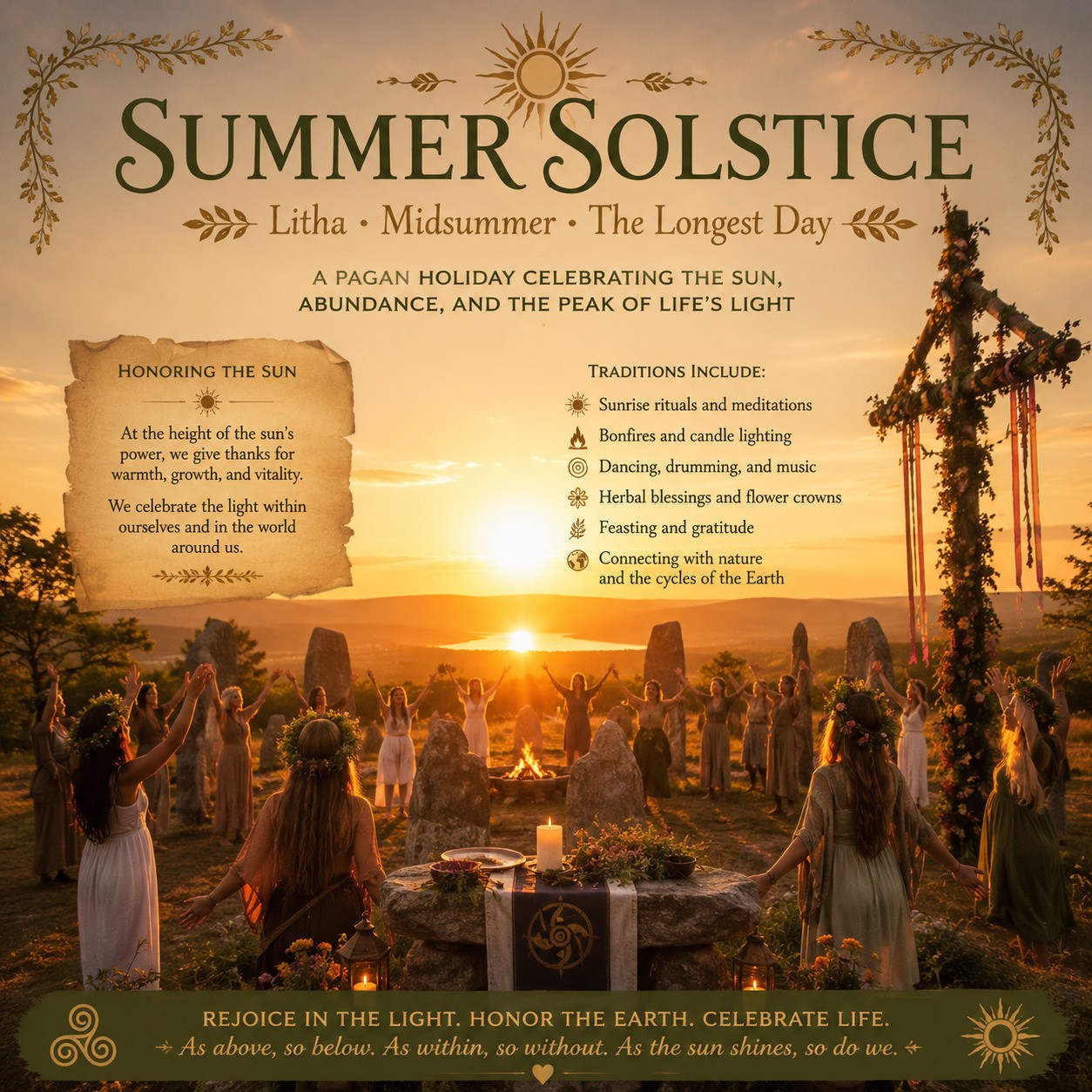
Spring Mountain Moon
A cloud crawls down Black Mountain,
Cotton embraces ski runs, blue above.
A light scrim of snow covers our solar panels,
The sky falls toward us, slowly.
 Today is 4/20. In Colorado and elsewhere it’s a pot linked holiday and here’s a brief explanation of its strange origin.* A couple of years ago I was downtown Denver near the National Western Stockshow Grounds on April 20th. Driving to a small taqueria for lunch I passed hundreds of people walking along the road, smoking joints, smiling, lots of dreadlocks under Rastafarian knit saggy caps. Last year the 4/20 crowd made such a mess at a city park that Denver stopped the celebration for this year.
4/20 is also Adolph Hitler’s birthday, my brother Mark reminded me. Hitler is a figure in the childhood dark closet of most Baby Boomers whose parents, like mine, were veterans of WWII. My dad had a beaten up copy of Mein Kampf, Hitler’s autobiography. It always seemed strange to me as a boy; but, as an adult, I came to realize how large Hitler loomed over his life, occasioning several years in the military for both him and my mom.
 Now Hitler is mostly a boogeyman, a perfect example of either evil or the potential power of white supremacy. His Nazi party serves a similar function, offered up in movies if an ultimate villain is needed. Just as the Vietnam War, which dominated my life in the late sixties and early seventies, has faded from the memory of millennials, so even the holocaust has begun to fade from memory. Yes, it’s dangerous to lose sight of this horror; but, it’s also human. As an event moves further away from us, it changes, transforms.
Most, all?, religions are an attempt to hold a historical moment close, to keep it vibrant, vital. Easter and Passover. Even these though show the great difficulty in maintaining the urgency of something that has been covered over by distance and lack of direct experience. Max Weber called this the rationalization of charisma. As the charismatic figure or moment recedes, institutions grow up to protect its memory, but that very fact, the institutionalization of a matter of the heart, encrusts the event and eventually depletes it of its power. It becomes covered over by dogma, by tradition, by the ridigities of too much thought.
 Emerson knew this. “The foregoing generations beheld God and nature face to face; we, through their eyes. Why should not we also enjoy an original relation to the universe? Why should not we have a poetry and philosophy of insight and not of tradition, and a religion by revelation to us, and not the history of theirs?” From the introduction to his essay, Nature.
We need to discern not only, perhaps not even most importantly, the facts of the holocaust, though they are incalculably significant, but we need to look evil in the face in our time, confront it now, name it now. Stop it now. Evil, like good, does not stop in a historical moment, but gains new, contemporary expressions. If we keep looking for revelation about what it means to be human in sacred texts or historical tragedies, we can easily miss the revelation appearing in the neighborhoods and rural areas of our own country.
*In 1971, Steve Capper, Dave Reddix, Jeffrey Noel, Larry Schwartz, and Mark Gravich, five high school students[4] in San Rafael, California,[5][6] calling themselves the Waldos[7][8] because “their chosen hang-out spot was a wall outside the school”,[9] used the term in connection with a fall 1971 plan to search for an abandoned cannabis crop that they had learned about,[7][10] based on a treasure map made by the grower. wiki
 Sho’ah is Hebrew for catastrophe and has come to refer explicitly to the catastrophe for Jews after slavery in Egypt, the Holocaust. On the 27th of Nisan, April 12th this year, Jews celebrate Yom ha-Sho’ah, or Holocaust Remembrance, on the anniversary of the Warsaw Uprising. This is a crucial twist to Holocaust remembrance because it frames the day with a symbol of Jewish resistance to the Nazi’s.
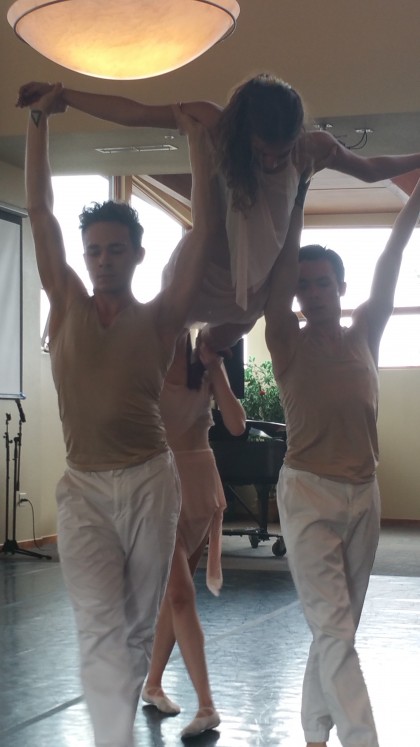 It’s a tragedy so outsized, so without precedent as an act of calculated evil, that how to approach its remembrance, its historicity, is fraught. Words and analysis, though important in certain venues, cannot touch the emotional complex around its reality. Congregation Beth Evergreen, this Sunday, tried another approach. Dance and music.
 Got a TV for the kid’s room. A Hanukkah present. Maybe not the most mind nourishing gift, but one they’ll really like. I spent a couple of hours setting it up yesterday, which seems like a lot until you factor in the passwords and fiddling with other settings.
 Right now we’re in a major cultural transition, trying to learn how these tools can be most useful for human life. They will become integrated and less shiny, less compelling as we move on to the next transition, probably to a sustainable human presence on this planet. All civilizational artifacts have ripple effects, often of unsuspected power. Think of the plow. Language. Writing. The printing press. Governance. Bow and arrow. Ships and boats. Ceramics. All had their initial years of adoption, then a clumsy time when their utility seemed swamped by the problems they created. Finally, though, they became part of human life. How did we get across the lake before we invented the boat and paddles? Or the boat and a sail? Speaking our language means we can understand each other better, no more grunting and pointing. Books contain and retain ideas over time and space. How cool is that?
 Maybe I’m a starry eyed optimist, probably am, but I believe we can handle this transition and that it will not save us, nor will it enslave us. A hundred years from now, maybe two hundred, we’ll see the full arc of this change, in an undoubtedly hotter and stormier future. It will have become an ancientrail, one still affording advantage, but no longer scary, at least not in the way it seems to be now.
 I really like cooking, used to do a lot more. It requires mindfulness and produces a meal for others to enjoy. Just popping up from my days of anthropology:
  We’re not like dogs in that fundamental sense. As Emerson observed, “The days are gods.” Another binary opposition is the sacred and the profane, like the holy and the secular, ordinary time and sacred time. We imbue, out of our speculative capacity, the passing of time with certain significance. The day we were born. The yahrzeit notion in Judaism, celebrating the anniversary of a death. A day to celebrate the birth of a god, or to remember a long ago war against colonial masters. We identify certain days, a vast and vastly different number of them, as new year’s day, the beginning of another cycle marked by the return of our planet to a remembered spot on its journey.
 When we merge our speculative fantasies with the chemistry of changing raw food into a beautiful cooked meal, we can have extraordinary times. The natural poetics of wonder join the very earthy act of feeding ourselves to create special memories. Very often on those days we gather with our family, a unit that itself memorializes the most basic human purpose of all, procreation of the species. We don’t tend to think of these most elemental components, but they are there and are sine qua non’s of holidays.
 So what I’m proposing is not another religion with a different origin story, a different set of scriptures, different roots from, say, Hinduism, Zoroastrianism, Christianity, Islam. And what I’m definitely not proposing is a reductionistic attempt to find out what all religions have in common, nor am I proposing a sort of tolerance for all faiths, an attempt to learn from each of them (though this is a good thing to do) and out of that shape a new faith.
 So, what are some of those fundamentals? Prayer, worship, gods, ritual, art, revelation, congregations, sacred space, the notion of sacred, divinity, after life, morality and ethics. How might a radical approach take the long history of prayer, for example, and reshape it, reconfigure it, reuse it for the person who chooses to stand outside particular traditions, but still wants to paint? Or, what about gods? How does the notion of powerful, unseen entities with various agendas fit into the life of persons no longer monotheists, no longer willing or able to see many gods?
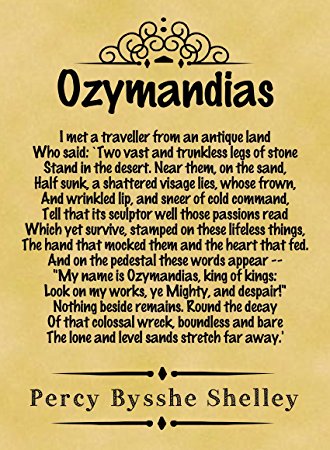 The last night of the Eclipse Moon, a disastrous month for North America from the eclipse to its waning moment. The wildfires are still burning in the West from the state of Washington to California, in Oregon and Montana and Idaho. Harvey and Irma related disaster cleanup has only begun. The same in southern Mexico for the victims of the 8.1 earthquake. Jose is still pounding around in the Atlantic and Maria, now a category 5, has just shattered Dominica, Guadeloupe, and is headed for Martinique and Puerto Rico. It’s not the apocalypse, no, but for those whose homes and forests are on fire, under water, battered by wind or destroyed by the movement of the earth, it may as well be.
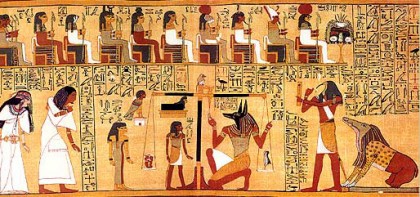 Moving forward, slowly, with Jennie’s Dead. Exploring the religion of the ancient Egyptians, trying to avoid hackneyed themes, not easy with all the mummy movies, Scorpion King, Raiders of the Lost Ark sort of cinema. Jennie’s Dead is not about Egypt, ancient or otherwise, but it plays an important role in the plot. Getting started is difficult, trying to sort out where the story wants to go, whether the main conflict is clear, to me and to the eventual reader.
 As Emerson said, “Why should not we have a poetry and philosophy of insight and not of tradition, and a religion by revelation to us, and not the history of theirs? Why should not we also enjoy
  This means I’m in a curious position relevant to my own education in the Christian tradition and my new education, underway now, in the older faith tradition of Judaism. Both are normative, in their way, but not as holy writ. Rather, they are normative in a more fundamental sense, they reveal the way we humans can discover the sacred as it wends and winds its way not only through the universe, but through history.
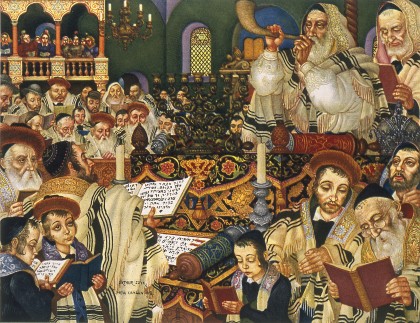 This is a similar idea to that of the reconstructionists, but not the same. Reconstructionists want to work with a constantly evolving Jewish civilization, grounding themselves in Torah, mussar, kabbalah, shabbat, the old holidays, but emphasizing the work of building a Jewish culture in the current day, reconstructing it as Jews change and the world around them changes, too. I’m learning so much from this radical idea.
 What I want to do though, and it’s a similar challenge, is to reimagine, for our time and as a dynamic, the way we reach for the sacred, the way we write about our experience, the way we celebrate the insights and the poetry it inspires. In this Reconstructionist Judaism is a better home for me than Unitarian Universalism. UU’s may have the same goal, but their net is cast into the vague sea of the past, trying to catch a bit from here and a bit from there. It is untethered, floating with no anchor. Beth Evergreen affirms the past, the texts of their ancestors, their thousands of years of interpretation, the holidays and the personal, daily life of a person shaped by this tradition, but also recognizes the need to live those insights in an evolving world.
 The alt-right and Charlottesville, Virginia. Many said this violence doesn’t represent American values. Horsepuckey, as we used to say.
 Dark ecology. I’ll post more about this both here and on AncientrailsGreatwheel.com, but it interests me a lot right now. It’s a contrarian view of the climate crisis, but not in a denier vein. These are folks who accept climate science, but take a pessimists look at the likelihood of change, at least change sufficient to stave off disaster. They don’t see it happening. This could be equated to the final stage of the grief process, acceptance.
 I’m not familiar enough now with the movement to comment in depth, but the tone of it strikes a chord in me. Admittedly, it’s a melancholy chord though the more you know about both climate science and the current political will to tackle change, the more that chord may come to dominate the melody of your life. It’s either brave, facing reality in spite of its horror, or defeatist. Maybe it’s both.
.jpg" title="Fair use of copyrighted material in the context of The Raw and the Cooked">Fair use</a>, <a href="https://en.wikipedia.org/w/index.php?curid=45649279">Link</a>)