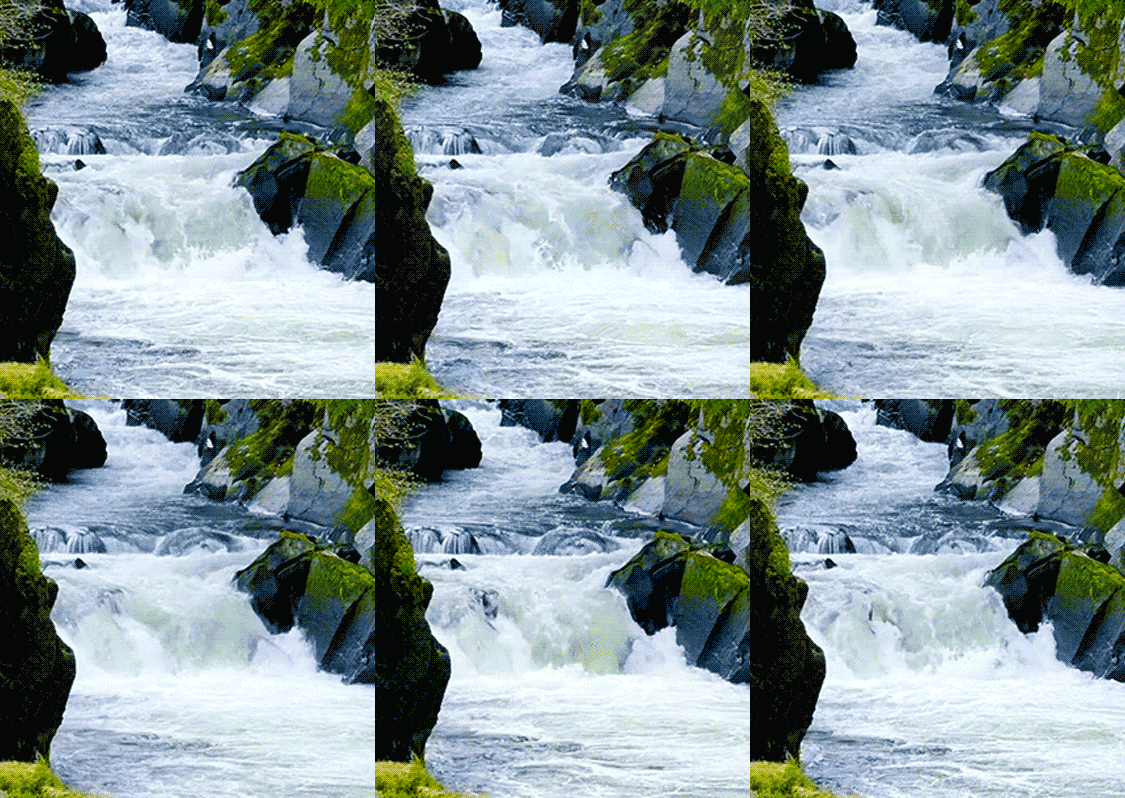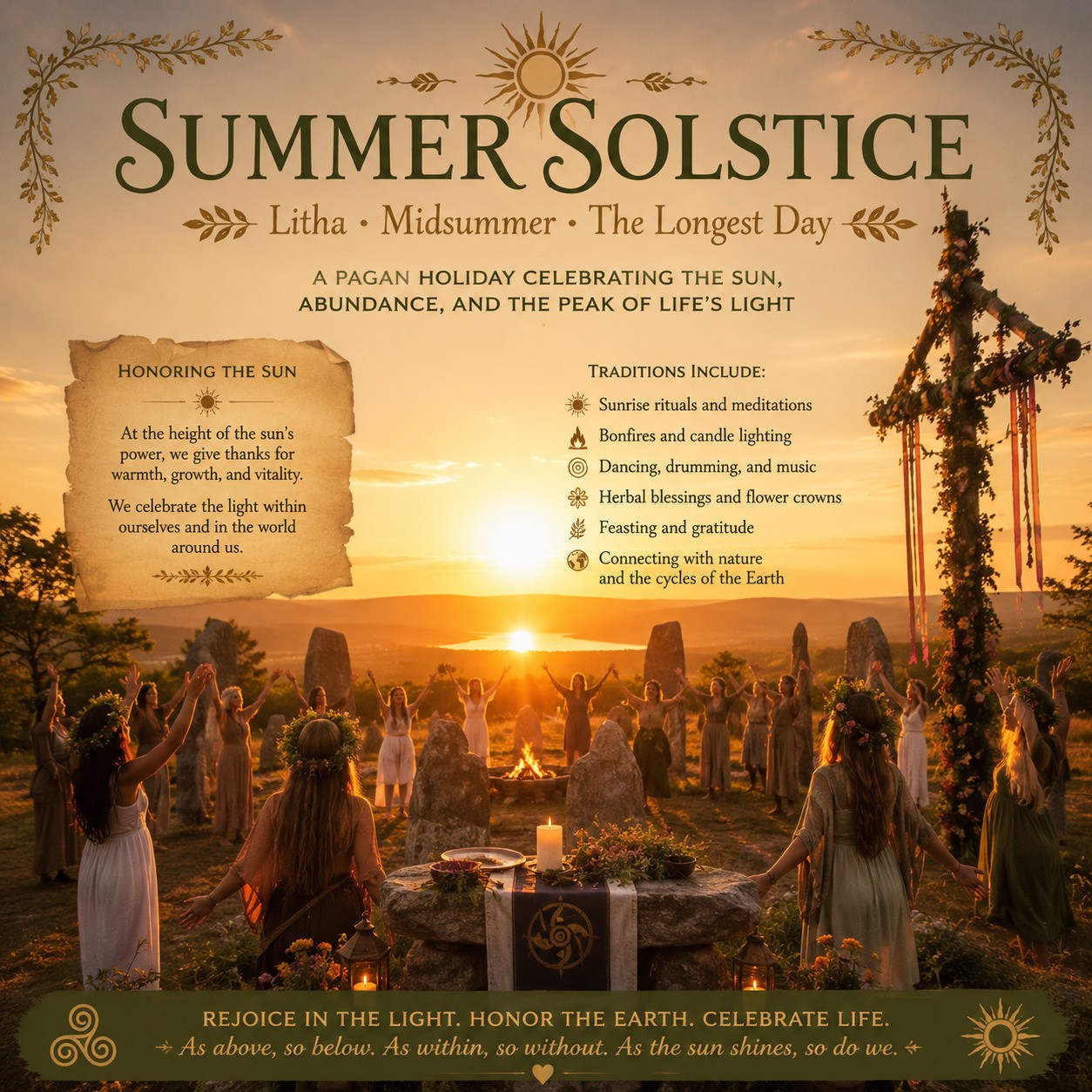
Midsommar Most Heat Moon

The dog days. Maybe not yet as hot as this mosaic portrays, certainly not here on Shadow Mountain, though Tucson and Phoenix… Friend Tom Crane sent me a link to this Updraft post about the dog days. I miss having an erudite blog like Updraft keeping me alert about weather. Weather5280 is the closest I’ve found. It’s good on weather, but it doesn’t go off into sidebars like explaining the days after the heliacal rising of Sirius. Heliacal? What’s that you might ask? Turns out heliacal is the first appearance of a star after a long absence. The dog days begin with the return of the brightest star in the night sky, Sirius. Or, at least they used to.
The Romans believed that the dog days were so hot that they made dog’s rabid. Sirius is the major star in the constellation, Canis Major, the Great Dog, but the Romans didn’t originate linking the rising of Sirius with heat. That belongs to the Greeks. They named the star “Seirios, Greek for “sparking” (referring to its near-constant twinkling), “fiery,” or “scorching,”” According to this page on Sky and Telescope, the Greeks believed its -1.46 magnitude intensified the already hot days of a Mediterranean summer.
Neither the Greeks nor the Romans, however, were the first ancient civilization to highlight the dog star. The Egyptians began the New Year when Sirius returned to the night sky because it corresponded with the flooding of the Nile, a seasonal nourishing of the fields that made Egyptian civilization flourish. Their calendar though, because it lacked the leap year, gradually moved the month of the new year further and further from Sirius’s heliacal rise.
This lead to a discovery of the Sothic year, 1461 years of ancient Egypt’s 365 day year or 1460 of the Julian sidereal year which adds leap years. A Sothic year follows the gradual movement of the New Year until it once again occurs when the Nile floods, synching up with Sirius’s heliacal moment.

In spite of my long established affection for Orion, or perhaps because of it, I’ve never focused on Sirius. That’s a bit surprising since Canis Major is Orion’s hunting dog and Sirius is the brightest star in the night sky. I’ll be looking for it as rises this year here on Shadow Mountain, probably August 10th.

When I see it, I’ll think of this from the Sky and Telescope article because it reflects my own wistfulness for a reenchanted world:
“While the first sighting of Sirius may not signify anything as momentous as the annual flooding of the Nile, seeing it tenderly twinkling at dawn can take us back in time to when it was commonplace for people to use stars to mark important events in their lives. How far we’ve strayed.”
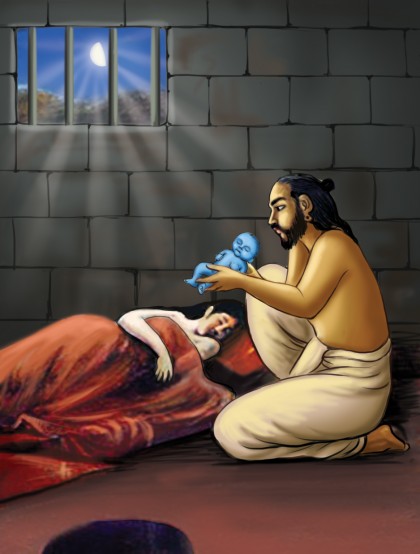 Looking for light in prison. An assignment for the kabbalah class tonight. Rabbi Jamie suggested watching a movie like Hurricane, about Rubin Carter. I thought of MLK and Letters from the Birmingham Jail and Nelson Mandela, too. Then I remembered a portion of the
 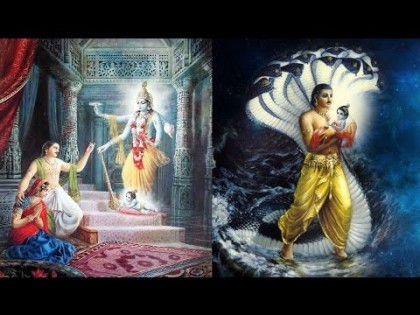 Finally, nine years later, Devaki is pregnant again, this time with the eighth son Kansa dreaded. This son is Krishna, an avatar of Vishnu.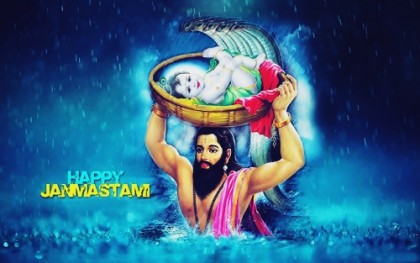
 While the world burns, at least the Trump world, kabbalah suggests a bigger world, more worlds, right next to this one. There is, as Rabbi Jamie said, a bigger picture. I learned a similar lesson from Deer Creek Canyon during my cancer season two years ago. These Rocky Mountains, still toddlers as mountains go, were and will be present when we are not. In their lifetime humanity will likely have come and gone.
 Yet. We do not live either in the deep geological past nor in the distant geological future, we live now. Our lives, our mayfly lives from the vantage point of geological time, come into existence and blink out, so we necessarily look at the moment, the brief seventy to one hundred year moment into which, as Heidegger said, we are thrown.
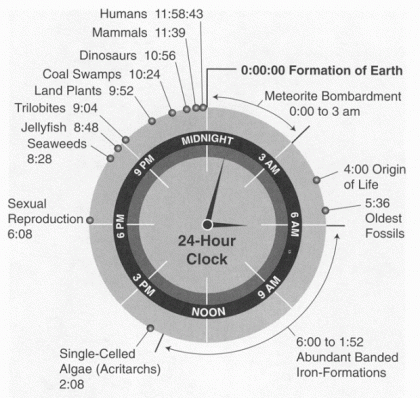 Somehow we have to realize that though our lives are small compared to the immensity of the universe and the imponderable nature of time, they are everything while we have them. As for me, I find all this comforting. Putting my efforts in the larger perspective gives me peace, putting them in the immediacy of my life gives me energy. We will not complete the task, no, we will not. But we are not free to give it up either.
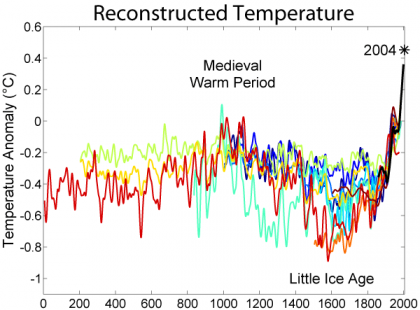 I wish I thought it was cynicism, the gratuitous act of a calculating politician, this latest, perhaps species’ ending decision. “I’m deciding for the citizens of Pittsburgh, not the citizens of Paris.” I wish I didn’t think it was a faulty mind at work, but I do. By faulty in this case I mean stupid. Trump may not be I.Q. stupid, though I don’t imagine he’s top of the class, but he’s unlearned, uninquisitive and lacks critical thinking skills. This is the functional equivalent of stupidity.
 Climate change does not care about boundaries. It does not care if you’re a resident of Paris, Pittsburgh, Timbuktu or Katmandu. The rain, as the proverb goes, falls on the just and the unjust. So with a ratcheting up of the earth’s temperature. Trump thinks he’s putting Pittsburgh ahead of Paris when what he’s really doing is pitting this generation against the next, saying that this one deserves more attention than the next. There is no hint, none at all, of seven generations thinking in his choices. Today is all that matters. Right here in the U.S.A. is all that matters. Right here in the U.S.A. all that matters is the effect on my base. (which he badly misreads, by the way)



 The waning passover moon is behind a faint scrim of clouds giving it a moonlit halo. Each moon cycle repeats the past, yet is unique to itself. The slow orbit (relatively slow) of the moon around the earth produces the same phases each month and in that sense repeats. But the lunar month and the sidereal year do not quite match up*, as all cultures that depend on lunar months for their calendars have long known. Judaism is such a culture.
 When you consider the irregularities in the lunar position occasioned by the sidereal/synodic difference and the speed of our solar system both moving on its own toward Lambda Herculis and around the Milky Way and then throw in the speed of the Milky Way itself, it becomes clear that no one phase of the moon every occurs in even remotely the same location.
 Finally, the point. We are, each of us, unique and precious instances of over 2 billion years of evolution of life on Earth. We represent a moment in time, yet even our moment is not static. It finds us moving incredible distances.
 Think about it. Out of all the billions of years since the Big Bang, moving in all the various ways discussed above and at speeds that make Formula One look slothful in the extreme, you and I exist in this special time together. How remarkable! We are in fact made as the conscious image of this whole universe, with all its reckless momentum and we have been given the chance to know each other and through knowing each other to know the universe that gave birth to us.