
Spring Passover Moon
 “You need a rest day.” “Not for cardio.” This exchange with Kate has reverberated since we had it a couple of days ago. “You need a rest day.” I’d taken Sundays for many years, but recently began doing a longer cardio workout on that day.
Then again. A rest day. A sabbath. Oh. Since early in my seminary days, I’ve been taken by the idea of sacred time. Christianity adopted the word and a changed practice from Judaism. Christians, except for the 7th Day Adventists, shifted the sabbath to Sunday and started the day in the morning, rather than on the night before. This was to emphasize that the Christian sabbath celebrated the resurrection. With the crucifixion recorded as happening on a Friday, three days later meant Jesus rose from the dead on Sunday.
Even in my youth Sunday had a special tone. Just why it should was not well understood intellectually, but it was strong in practice. We had church in the morning with Sunday School then communal worship, in our case sitting in the second pew from the back, on the west side of the sanctuary, under the stained glass window of Jesus praying in the Garden of Gethsemane.

Afterward, we would often drive 7 miles to Elwood, Indiana and eat lunch at Mangas Cafeteria. This was a major event in our week since going to restaurants was a rare occurrence. I don’t recall if the later afternoon had much of a pattern, but we did often visit relatives on Sunday, too.
What I do know is that my body remembers Sunday as a day when doing nothing was encouraged. Even now, at 70, Sundays still have a languid feel, a pull away from the usual, whatever the usual is.
When I was in the ministry, Sunday was, ironically, a day of work, with Monday taking the place of Sunday, as it does for many Christian clergy. After I retired from the Presbyterian church in 1991, leaving behind Christianity for good, Sunday lost any sacred aura it had, but retained the languid overlay.
 As many of you know, I began, not long after this time, to follow the Celtic sacred calendar, The Great Wheel, a practice now long embedded in my life as you can see each day on this blog in the upper left hand corner.
Now, with shabbat shalom a familiar greeting on Friday night and Saturday, I’m still fascinated with sacred time and wanting some version of the Jewish sabbath as part of my week. Why? Well, at its simplest, it’s a rest day. But, it’s a rest day with a purpose. The Jewish sabbath emphasizes relationships and torah study.
 Work is discouraged (forbidden, in the stricter applications). The discipline includes not even discussing work on the sabbath, no planning for the next week. It also emphasizes personal spiritual development, torah study, attending services, private meditation. This is a day, once a week, strictly for being. Being in the here and now.
As I’ve written here before, this makes a lot of sense to me, even in retirement. So, I’m going to take my rest day starting on Friday night and continuing through Saturday night. I’m not becoming a Jew, nor do I want to play one on TV, but I believe I am becoming Jewish. That is, a lot of the cultural practices of Judaism resonate with my own spiritual development. Beth Evergreen encourages that growth and I find it nourishing. Trying out the sabbath, the old, original one, is part of that ancientrail and one I plan to walk on for now.
So, yes. A rest day. Kate was right. And today is that day.

 My ratzon for political work, which I critiqued in a past post, needs sharpening, focus. Part of my problem with Fighting Trump, my previous title for articles I saved in Evernote, was, I realized, that being against something is a weak ratzon for me. I need to be for something and the Trump resistance tends to focus on opposing him. He demands opposition and resistance, no question about that, but I need to be working toward a just society, an equitable society, a sustainable society, a compassionate society, not only, not even primarily, saying NO.
 The loft is near it’s final configuration, at least for now. I do get the urge to move things every once in awhile, but I’m liking this setup. Just some art hanging and rearranging, pull-up bar installation, book reordering, a bit of moving boxes down to the garage below and it will be complete. Two and a half years later it feels wonderful.


 Writing can lay bare something hidden, perhaps something that needed excavation or something attached to a thread, even a flimsy thread, by which it can be pulled from the inner world. Things get lost in there, pushed behind stacks of unused memories or stored with a faulty label. Sometimes ideas once full and vibrant get partially severed from their context, crucial links of thought go missing and the idea fades away.
 Which, speaking of ideas, then links to the idea of the third phase. That quote comes from recent thoughts on the third phase. A primary wondering for me, I think for all third phasers, is this: what am I about in this last phase of my life?
 Part duty. For whatever reason I came out of Alexandria with fully formed political ideas about justice, equality, fairness. They were strong, rooted in the powerful union movement among my friend’s parents who worked for General Motors, reinforced by the liberal politics of my Roosevelt Democrat parents and then pushed toward action in the turmoil of the 60’s.
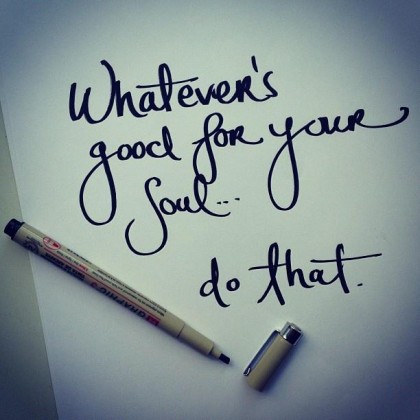 There are shifts and changes going on, movement in my soul. When we moved here, I left behind relationships precious beyond words. Not entirely, no. I’ve stayed in contact through facebook, e-mails, occasional visits, especially from the Woollies, but the day-to-day, go to lunch chances for nourishing those relationships has disappeared. I was lonely here atop Shadow Mountain.
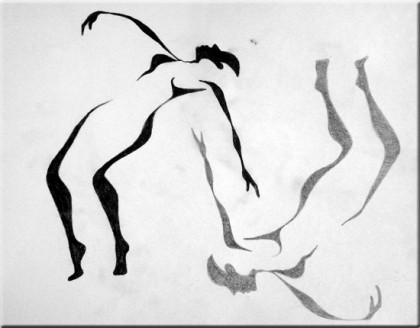 But it was real and significant. It manifested as a sense of yearning, a desire for companionship like what I’ve had with the Woollies and the docent corps at the MIA. I think, had it continued, that it would have become corrosive, perhaps even damaging to those core aspects of my life that remained solid.
 No certainty yet on Kate’s malaise though the likelihood of something terminal has receded. Dr. Gidday is good at reassurance, no false cheer, just a reasoned confidence. I remember in the midst of my prostate cancer workup she looked at me and said, “We’re going to get you through this.” I believed her. She’s moving methodically through the possibilities for Kate’s shortness of breath and her fatigue, ruling out the most pernicious first. We’ll know more over the next month or so. I’m relieved right now and want to stay that way.
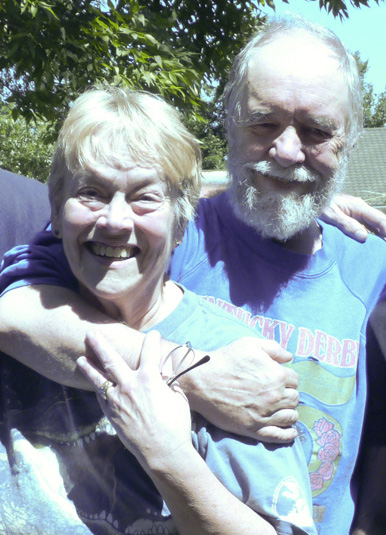 “You know, if we weren’t in our 70s, I’d say this move to Colorado was jinxed. But when you take 70 year old+ bodies and move them somewhere else. Well. Wherever you go, there you are.” Kate nodded. We’re in that time when the body comments on its journey in unpleasant ways. The way things are.
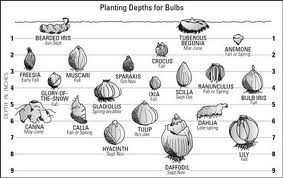 Yet it is not a true analog. Mother earth only seems to defy winter and the fallow time. It is not, in fact, death and resurrection, but a continuum of growth, slowed in the cold, yes, but not stopped forever, then magically restarted. Corms, bulbs, tubers and rhizomes all store energy from the previous growing season and wait only for the right temperature changes to release it. Seeds sown by wind and animal, by human hand are not dead either. They only await water and the right amount of light to send out roots and stalks.
 I prefer the actual analog in which human and other animals’ bodies, plant parts and the detritus of other kingdoms, all life, return their borrowed materials to the inanimate cache, allowing them to be reincarnated in plant and animal alike, ad infinitum. Does this deny some metaphysical change, some butterfly-like imaginal cell possibility for the human soul? No. It claims what can be claimed, while reserving judgment on those things that cannot.
 It is spring, I think, that gives us this hope, no matter how faint, that death might be only a phase change, a transition from this way of becoming to another. It’s possible.