Category Archives: Third Phase

I Knew Her Right Away

Spring                                                                              Bloodroot Moon

Home again, home again.  The dogs greeted me with unusual joy and vigor.  Vega spun round and Gertie jumped up, biting at me to come play.  Tumultuous.  And wonderful.

Kate came into the Loon Cafe and picked me up from the Hiawatha light rail.  She had on blinking ear-rings.  The server at the cafe, before I arrived, had asked her, “Is that how your friend will recognize you?”  It was.  I knew her right away.

She led us through the maze of parking spaces to the truck, not easy in the mammoth commuter ramps that collect cars from the western burbs.

The trip home had no remarkable moments, a good thing for travel.  I did use, for the first time, a bar code boarding pass on my cell phone.  Felt very with it.  You all have probably done it for years, but it was amazing to me.

It’s nice to use the full size key-board and not the 92%, slick metal keys of the netbook.  Having said that, the netbook has been the best single computer purchase I’ve ever made.  It goes everywhere with me when I travel.  It’s compact, picks up wi-fi with ease and has a 92% keyboard, which is why I bought it.  It’s allowed me to post on this blog from as far away as Cape Horn, south of Tierra del Fuego.


And Now, Reverse Field and Head Home

Spring                                                          Bloodroot Moon

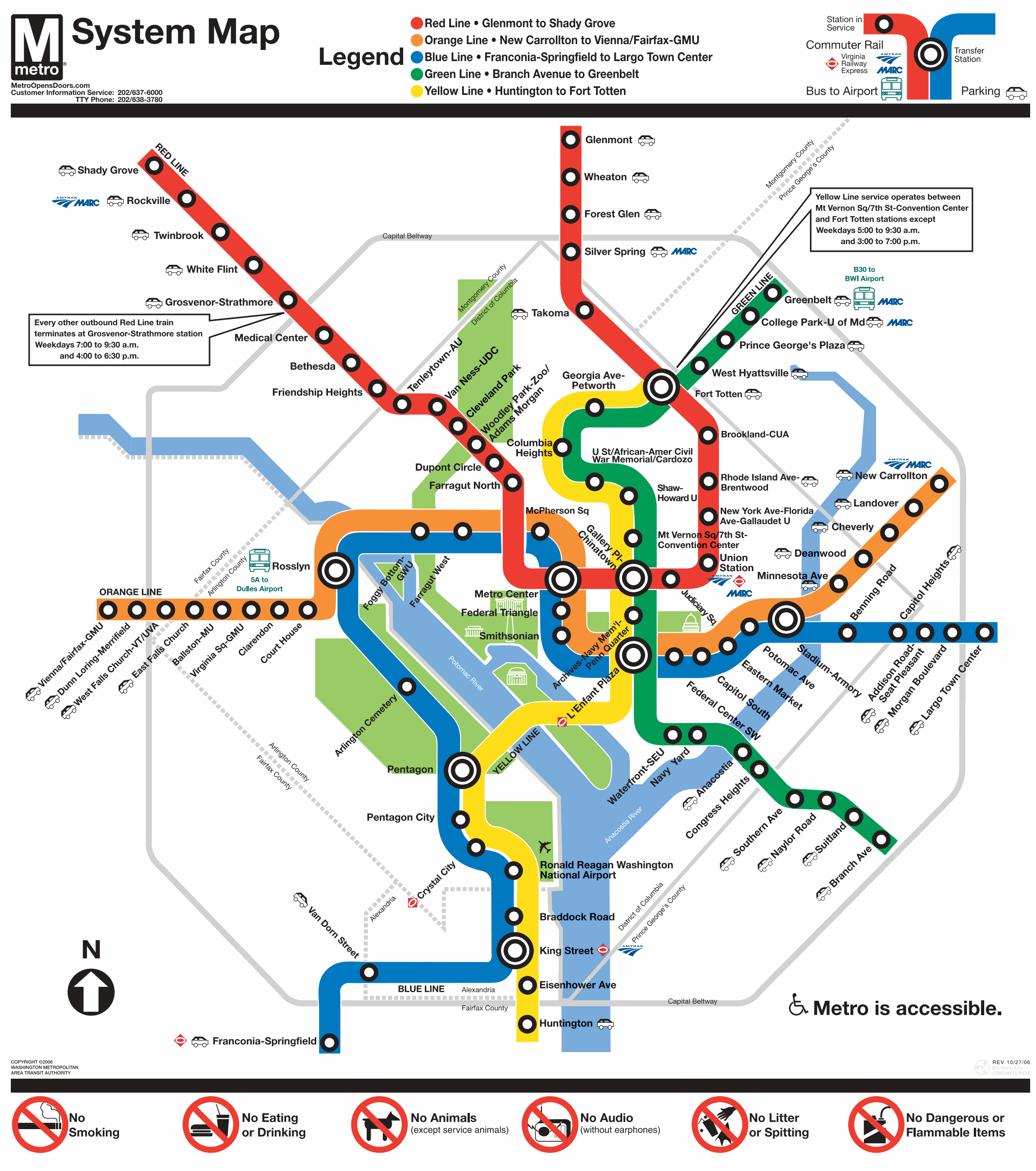
Everything’s rolled up and in the bag, ready to check out, then board the metro for Reagan International.

This was a trip where I had to confront some unpleasant truths about traveling.  For me.  My physical stamina, which I rate as pretty good, is still less than it was.  And that matters for my planning.

Also, not new, but apparent during this trip, too, was the easy slide into OMG, what am I doing?  This is a neurotic pattern that I recognize, having largely learned to slip its bonds, but in a foreign place, separated from my regular routine, wife, friends, dogs it can and does easily return.

On the up side I have learned that my new interaction with art will include embedding art history within the larger history of ideas, letting these two large disciplines bump into each other, suggest questions and directions for each other.  One place I know these streams will converge is in Reimagining Faith.

There is, too, a renewed interest in early American history, especially the Revolutionary war period and its immediate aftermath.  Not sure how strong this is, though it did occur to me that it might be a good journey to take with our Western raised grandkids.

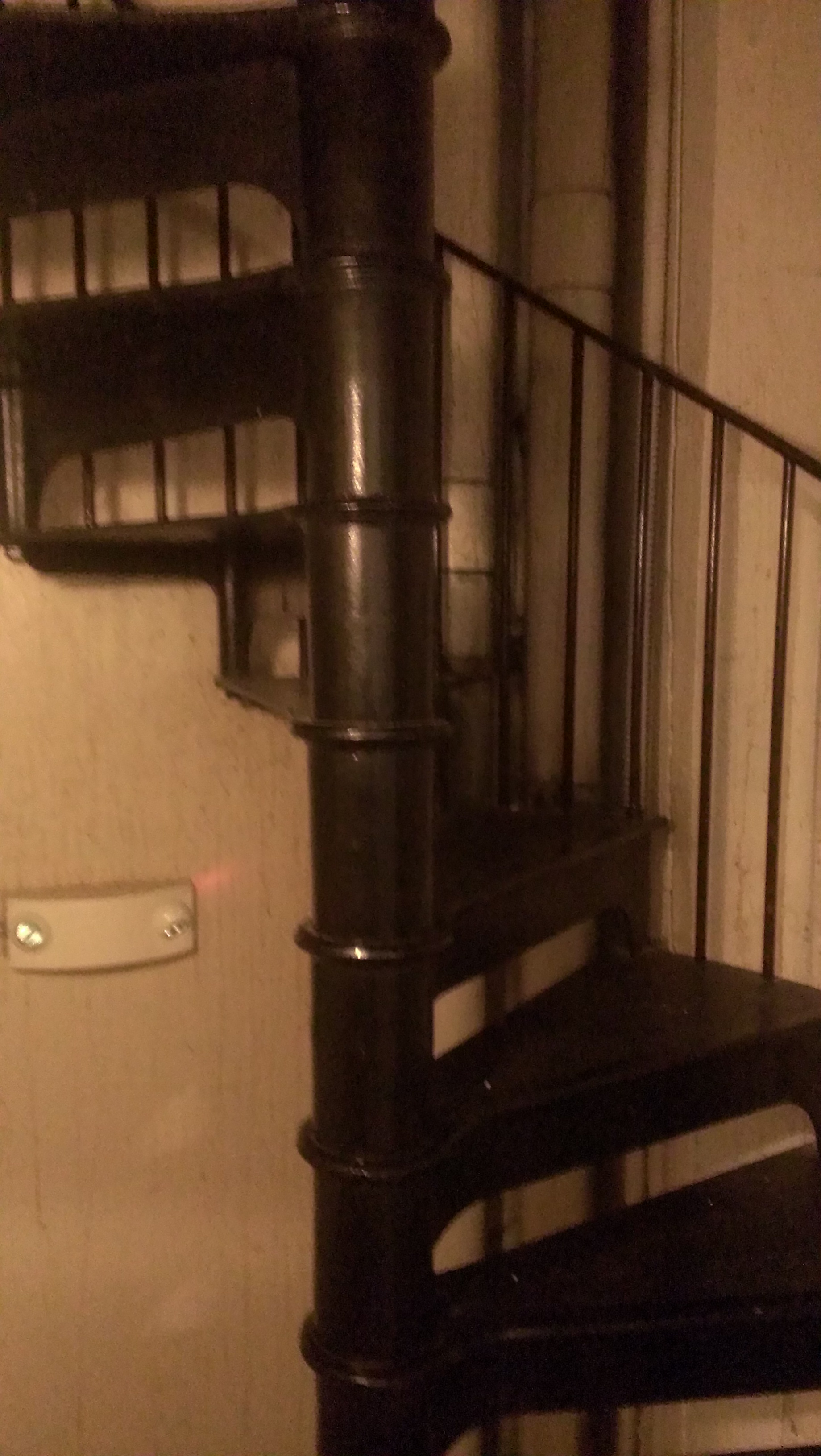
(Hotel fire stairs.  1910 vintage)

There is, as well, a definite sense of my own regional identity, an Upper Midwesterner, and the way that identity differs from and could inform the culture of national policy.  This is an odd phenomena since I feel very much a man of the North, of the continent more than the country; yet I feel more and more like a citizen of the planet, also more than the country.  Whether this is a personal experience or a more broadly shared one interests me.

Specifically I wonder if the internet intensifies globalization of perspective while reinforcing local identity.  I wonder if think global, act local and the whole locavore movement might feed this pattern, too, making the local the touchstone not for national identity, but for Terran identity.


Sightseeing By the Dollar

Spring                                                                 Bloodroot Moon

Whenever I travel, I get performance anxiety.  Weird, huh?  Spending the amount of money required for travel makes me want to get plenty of sightseeing in per dollar. But, how much is enough?

Surely walking past the Willard, the Dept. of Treasury, the Whitehouse and out to the Lincoln Monument, then back is enough.  Isn’t it?  How many hours at the museum or paintings per visit is enough?  Does eating in the cafeteria count?

Now I wouldn’t raise these questions at all if I felt I’d done enough, so  you can tell how I’m doing by my own barometer, but I question my barometer.  At home I work most in the morning, usually a couple of hours in the afternoon after the nap, too.  That seems fine to me.  Most of the time.

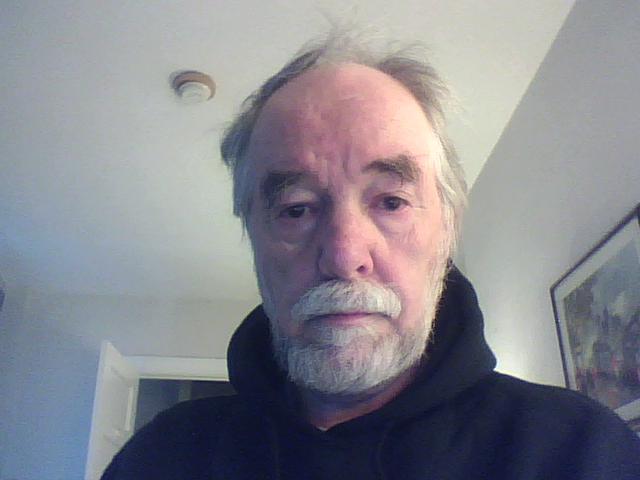
(Me wondering about enough.)

On vacation though I get up in the morning around 8, my usual time, wander to some breakfast place, then head off for sightseeing that counts.  However, about 1 pm or so, my everyday nap habit reels me in, back to the hotel.  After a nap it’s the middle of the afternoon and doing much else just doesn’t happen until dinner. Which is the big event, then I’m done, not being a drinker, dancer, night outer type.

Anyhow, it’s a very bourgeoisie problem.  Or, it’s not exactly a problem so much as it a perception of value for the dollar.  How much more Babbity can you get?

Ah, finally I’ve written long enough to get to the nub of it.  After my trips the memories and thoughts enjoined during them always enrich my life. Always.  So, it’s not the sights seen, nor the miles walked that matter.  It’s the quality of the time overall and it has been this time and will be next time, wonderful.   All that thinking on power that I haven’t written about yet.  But I will.

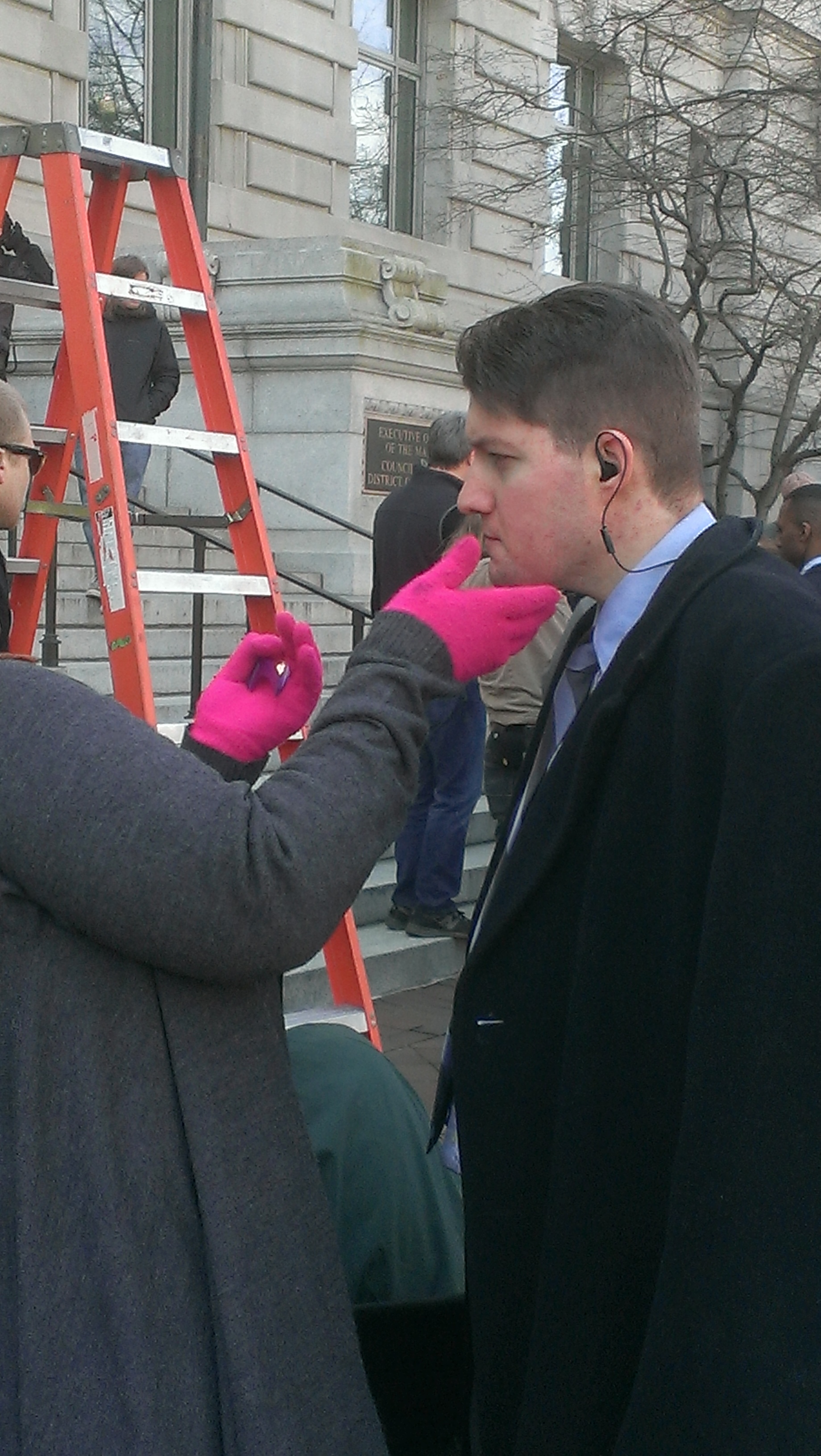
This is a guy, just some guy, in front of the D.C. city hall getting made up for a press conference on the front steps.  A very D.C. moment.


In Spite of the Evidence on the Ground, the Sky Says It’s Spring

Spring                                                                 Bloodroot Moon

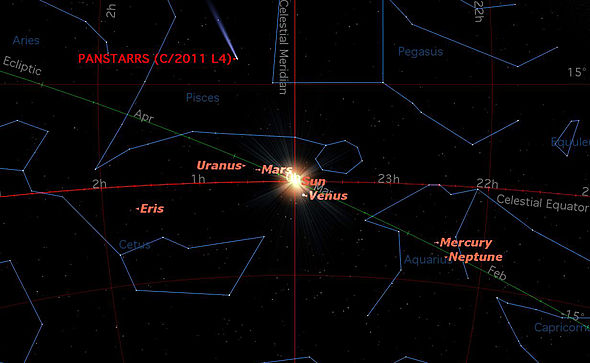
I’m beginning to wonder whether I misnamed this moon.  Not sure the bloodroot’s gonna bloom before it wanes.  16 degrees out now, headed down to 2 tonight.  Average daily high now 40 degrees.  But, in terms of astronomical events today is the day we shift past the  the celestial mid-point and the celestial equator. (see illustration)

That makes spring the formal designation.  Meteorological spring began on March 1st, but I follow the stars as does the Great Wheel.  The Vernal Equinox has a long tradition as not only the start of spring, but of the new year.  It lost its spot as the New Year in 18th century England, 1752 to be exact, when Lady Day, March 25th (a fixed date to celebrate the coming of spring and the new year and the feast of the annunciation), lost its New Year’s Day status to January 1st as the Gregorian calendar reforms began.

Today neither meteorological spring nor astronomical spring puts us in that season.  The weather is not co-operating with the calendar in either instance.  There’s a lesson here.  Rules, no matter how precise, or how ancient, no matter how usually reliable or hoaried with veneration, can never overcome, as the military says, the facts on the ground.

The lesson of the Great Wheel will, however, grind its way toward truth.  At some point the winds will shift.  The cold air will retreat back to the North Pole.  The snow will melt and the grass will green, flowers bloom and children ride their bikes in the streets.

Even though today doesn’t shout out verdant or shorts and t-shirts the vitality of Mother Earth is only delayed, not denied.  When we use the seasons as a metaphor for human life, we can imagine that we have passed the spring time of our lives.  This is not so.  Our bodies, yes, they continue on, hammered by entropy, drawn back toward the earth by the gravity of our years, but our soul, or whatever that mysterious piece of us is that hovers in and around that body, renews itself over and over.

Take down a new book.  Pick up a hammer, or a carving tool, or lines of computer code.  Perhaps a paint brush or a blank page.  Visit the grandkids or an old friend or make a new friend.  The sparks of love and creativity in our lives can rejuvenate us over and over again, turning a winter, even one that seems determined to stay too long, into a springtime.  Those seeds you planted when you were twenty, but forgot to water?  Remember them.  This is their season.  Wake them up.

Pain

Imbolc                                                                         Bloodroot Moon

Put your shoulder into it.  Increasingly difficult for me, at least on my left shoulder.  This is a post about pain, aging, the third phase.  Not because pain during aging is new or a surprise, not, rather the opposite, because its common.  Known.  Experienced.  But rarely discussed.

As the body changes, at any time, sure, but especially as we age and the terminus grows closer, we bring our personal history into our consideration, our weighing, our evaluation.

The shoulder pain, for example, pushes me back to a certain Madison County 4-H fair in August of 1949.  I’m young, very young, 2 1/2 years old, but I swear I remember the bare light bulbs strung on thin braided electrical cord, pink cotton candy, my blue blanket and my mother’s shoulder as she carried me.  I also remember a shiver, a full body shudder as I registered what I later came to believe was the onset of polio.

Whether this was the moment and whether the memory is even possible is uncertain.  That I would go on to contract bulbar polio and be paralyzed completely on my left side for over six months is not.

So, 63 some years later, when my left shoulder makes me wince as I lift my arm or move it  backwards or pains me especially if I try to lift an object, like a book, with my arm extended, as I’ve done many times in the last couple of weeks as I reordered my studies and eliminated books, my thoughts go to polio.  More specifically post-polio syndrome.

Probably not post-polio, a slippery diagnosis, not completely believed in by docs.  Probably not.  But that doesn’t make me stop considering it.

This pain has persisted, now maybe two months.  Not long, compared to someone like, say Kate, who has had persistent back, hip and neck pain for over 20 years.  But long enough to make me ready to see a doctor.  I want a diagnosis.

So Kate’s hunting for the best shoulder doc in the orthopedic community.  I’ll see whomever she finds and go from there.  In the meantime I waver between accepting the pain, avoiding the movements that exacerbate it, and medicating it.  I don’t like either of those choices.  If I can help it through exercise, or if I won’t make it worse by using it in spite of the pain, I’ll exercise and use it.  Just put up with it.  Maybe add some meds to help even things out.

If I can’t help it through exercise or if moving it creates more problems, then I’ll really need a doc because I’m in a bad place at that point.  I depend on exercise as part of my personal health regimen and having to back away from any part of it is not something I’m willing to do.  At least right now.

This will be a continuing series.  Part of the third phase.



Botox

Imbolc                                                                              Bloodroot Moon

Great line in a note from Tom Byfield, longtime docent at the MIA, recently resigned.  He writes:  For many years being a docent was the Botox I needed to ease my way into old age feeling good about myself.  This is third phase thinking, considering this next, long portion of our lives and deciding what’s necessary to keep feeling good.

We all need some reconstructive surgery as we move away from life’s second phase, the one of work/career and family.  That is, we have to reshape, reconfigure our presence in the world.  This is different, in my mind at least, from reinventing yourself.  Not sure I’d want to do that. Not sure I could do that. But discovering new parts of myself or neglected parts that could blossom with sufficient attention, now that’s important.  And doable.

Another way to think about this is that the first two phases of life, education and career/family are instrumental.  We see ourselves as in training for something to do, then doing it, often with a spouse and children.  Much of the angst of the first two phases of life comes in the tension between the (necessary) instrumental view of our self and the Self aching to discover its true purpose.  The lucky ones match the instrumental with Self discovery, but most aren’t so lucky.

In the third phase of life though the instrumental drops away and the Self emerges, perhaps as out of a cocoon, with wings and the ability to fly.  After all those years of crawling along the ground.  Wow.  But, it turns out, flying is scary and leaving the ground behind also means leaving behind a lifetime of habits and learnings for the unknown.  It’s not surprising that so many fail to even spread their wings during the third phase.

We humans often hold close pain in preference to change, being familiar with the outline and shape of our misery while ignorant of the other.  We fear those things we do not know and this is wise.  It lends that side note of caution that often keeps us safe.  But, it turns out, that same side note can keep us from growing, from spreading those new wings and heading off into the morning.

So this is a message of encouragement if you’re stuck right now, hanging on to the job, the career, the skills that made you successful.  They’re not you; they’re things you learned.  Now you have an opportunity to learn some more.  I hope you take the chance.  Crawl out of that chrysalis and find out what life has to offer today.


Legacy

Imbolc                                                            Valentine Moon

Writing.  Learning about the craft 20 years after devoting myself to it.  Yes, I admit it.  Kate was right.  Though I don’t recall, she says she urged me to go to the Loft way back, back in the days after I left the Presbytery.  Now I am.  To learn about publishing and about serious revision.  She’s often more clear about my vocation than I am.  Strange, but true.

The third phase continues to shimmer in front of me, a veiled space not yet known, the part of life that lies on boundary with the undiscovered country which doubles its resonance as if a great bronze tocsin tolls; though still faraway, its sound grows stronger with each passing day.

So. Legacy, then.  What will remain of mine when I cross the veil and enter that other world?  Of course there will be the vague collation of memories in children and grand-children, the sort of hazy recollection that fades with each passing generation.  Of course. There will be, too, the even gauzier remnants of actions taken:  those apartments and houses on the West Bank, a strengthened legislative program at the Sierra Club, work for non-profits and affordable housing through various groups, but in these my print lies barely visible, as it should be, but it means that connection will soon be lost.  If it has not been lost already.

Where I have most hope lies in the words I have written, like my father before me.  No wonder then that as the third phase beckons and the life of the past recedes writing becomes more important.  There is a sense in which legacy is a thing of vanity only and in that regard insignificant, after all most of us travel that last ancientrail unknown soon after we have set out.  There is, though, another sense in which legacy matters because it matters; that is, the legacy continues to entertain, to provoke, to evoke, to engage not in the world of the hereafter but in the world that is here after we are.

It is to this sort of legacy that I aspire and its persistence through time will depend on the quality of the work and thought I bring to it.  I know it seems perverse from some perspectives but I do not care about my legacy while I live.  Fame or money or recognition do not matter.  Only the work.  If any of them would come, I would choose money for the freedom it would give Kate and me to travel.  Recognition matters to me only as affirmation of labor’s worth.  But I value my work myself, so it is not needed.


Chess. Again.

Imbolc                                                                Valentine Moon

Calibrated the TV, put the WII onto component video.  The last of the tasks I decided I wanted to finish this weekend.  Did that last night.

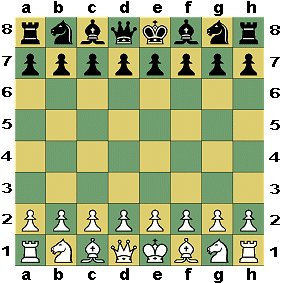
Now I need to get some work done.  First task.  Doesn’t seem like work, but I’ve decided to devote an hour or so a day to learning chess, from the almost ground up.  I’ve played chess off and on over the years and have had various spurts of trying to get better, but I’ve never given myself the training I need to improve.  Now, I’m going to do it.  Poked around on various chess sites and found this one, Chess.com, that has very useful tutorials.   I’m doing the free ones right now, then I’ll pony up for a year’s subscription, if I’m still into it.

Keeps the mind working and it has a puzzle aspect I enjoy, too.  Like astronomy I’ve gone in and out of enthusiasms with chess, but I have a sense this time will be of longer duration.  Not sure why I feel that way, but I do.

Second task, another sentence in Jason and Medea, then on to the grocery store.

Third Phase Path on the Sea

Imbolc                                                               Valentine Moon


Life offers moments when our primary ancientrail seems to run out, fade off into a meadow surrounded by a forest or stopping at a rocky cliff, leading into the dark waters of a great lake.  Entry into the third phase is such a signal  moment.

The paths of education, family and career no longer extend into the distance, rather they can be seen now from trail’s end, a looking back at how knowledge came, how the children grew, the winding journey careered until it no longer mattered.

Ahead is a dark forest, or a sheer wall of Ely greenstone, a watery path like the one in Anthony Machado’s Pathmaker, “…there is no path, only the wake on the sea.”  No wonder then that the third phase can force relationships to alter, to find new footing.  Nor is it a mystery that the kind of doggedness and ambition so characteristic of life’s first and second phases turns into a short sword for hara kiri.  This time insists on, no, demands a new ancientrail and the trail head  lies hidden behind rock or fire or under water or deep in an unknown forest.

How can we proceed?  This is a time for stillness.  For quiet listening.  To the Thou with whom you walk in your inner garden and the Thou with whom you walk in your outer life.  This is a time for adventure.  Risk taking.

This might be a fairy tale where a magic doors opens right into the heart of the rock.  Or a mermaid awaits to guide you under the lake.  Perhaps a Vergil will find you in the dark wood wandering and take your hand.  This is no time to be shy about learning from the other, the Thou; this is no time to be shy about opening your mind beyond what seems obvious, like the imperviousness of rock.

Look for the faint letters written in Elvish, which you find you can speak.  As you say them a door appears.  Don’t waste time on how or why, just walk through the door and close it behind you.  Away you go.

Percussive

Imbolc                                                                           Valentine Moon

Woke up.  Turned on the phone.  Nothing.  Frozen.  Onto the internet.  Tried several fixes. Nothing.  Over to Verizon. No joy there either.  I’d had my HTC Thunderbolt for four years, so I opted to get a new phone, an HTC DNA.  Another Android phone, in the same lineage as the Thunderbolt so I already understood its basic use.  Not cheap, not outrageously expensive.  Did add one feature to the plan, text messaging.  Yes, after four years of owning a smartphone I’m catching up with today’s elementary school kids.

Later on Kate and I went into the McPhail Center, a place for music learning and performance, now located very near the new Guthrie and the Mill City Museum.  We were there for a performance by the Bakken Trio featuring the gamelan.  The gamelan is an Indonesian instrument, a percussion instrument played by several people.  It includes gongs, zithers, xylophones and upside down bronze pots that each have a tone and are struck with a mallet.

The gamelan’s music organizes around rhythm and melody, having as a particular feature density of tone achieved by the layering of one rhythm on top of another simultaneously.  There are no harmonics.

Joko, an Indonesian gamelan artist who teaches gamelan, has lived in the Twin Cities now for 18 years.  He said that a full gamelan orchestra is the largest percussive ensemble in the world.  (see image above for an Indonesian setting).  Gamelan concerts typically run 8 hours and gamelan musicians in Indonesia may play 8 hours during the day and another 8 at night.  Geez.

I wanted to see this because I’m fascinated by how other people do things.  In this case, music.

The concert itself featured quartet pieces by Ravel and Debussy, both influenced by a traveling program focused on Javanese culture, plus a work by a contemporary composer, Louis Harrison.  Impressed with the gamelan music and its difference from the Western tradition Debussy and Ravel both incorporated it.  Especially in pizzicato and in movements with narrow tonal ranges.

(Ravel)

Both Debussy and Ravel are in the romantic tradition and, for some reason I can’t explain, I don’t like romantic classical music.  I say for some reason because in painting and literature I find myself a romantic by nature and inclination.  There were some beautiful melodies, especially in the Ravel, his String Quartet in F Major.

The Harrison piece, though, Philemon and Baukis (for violin and gamelan), was wonderful.  It was airy and spacious, filled with the rapid changing of tempos typical of gamelan music. Harrison builds and plays the gamelan himself.  Philemon and Baukis, btw, is a story found in Ovid’s Metamorphoses.  It was the only piece in which the gamelan played.

Following the concert we ate at Sea Change.  We had a miserable experience there a few years back, but tonight was pleasant.  Then back home to the burbs.

Over the meal Kate and I discussed a possible (probable) move into the city at some point before infirmity strikes us so we can enjoy the city life again.  I’m hesitant about it, having spent 19 years adapting myself and my life to the exurbs, but aging has its own relentless pressures.