
Spring Mountain (New) Moon

Today the new shoulder moon sets. Since I name the moons each month, either using a traditional name or one I’ve created, I sometimes use them to remind me of something over the course of the month. Without melancholy this time I’ve come to an additional revelation, a sudden insight into who I am here in Colorado. Sorta obvious, but I’m a mountain man, a man of the mountains.
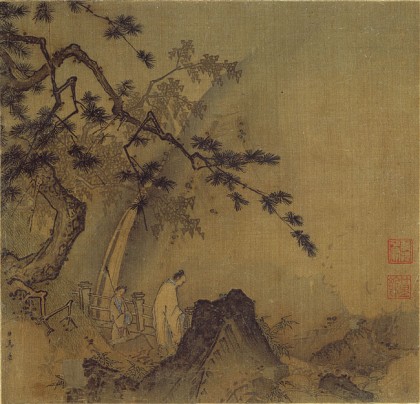
However. I’ve been reading a lot of the mountain poetry of China, a very old tradition extending from the Eastern Jin Dynasty into the present. The Eastern Jin Dynasty began in 317 A.C.E. T’ao Ch’ien (365-427) began writing poetry about his mountain life.
I’d long felt these mountains and lakes
Calling, and wouldn’t have thought twice,
But my family and friends couldn’t bear
Living apart…
After Mulberry-Bramble Liu’s Poem, T’ao Ch’ien
I just ordered more books of Chinese mountain poetry and I’m going to start looking for more poetry about mountains. If you know any, I’ll appreciate the reference. Not just poetry though. I’m also looking through my books of Chinese art, especially the (many) paintings that feature mountains, often scholars and poets by streams or in mountain huts. I want to learn from these how to use sumi-e to paint mountains. Lots of them here to serve as subjects and they politely remain in their pose. There are also many paintings in the Hudson School tradition: Bierstadt, Cole, Church, e.g.

Too, I’m fascinated by the geology and orogeny of the Rockies. How did they get here? Where are they going? How do they compare to other mountain ranges?
And, even more obvious. Get out there, dude. No use repairing the knee if you don’t use it to wander in the mountains. To be my kinda pagan you need to immerse yourself in the local, the around you. It’s not only the soil, the animals, the plants, the trails, the streams and lakes though they are essential. It is too the human deposit of art about the place to which you’ve become native. Science, too. Also, if you can, adding to the expressive vocabulary that art shares with the world.
So, this is the Mountain Moon and I’m under it, nourishing another new turn in my attention.
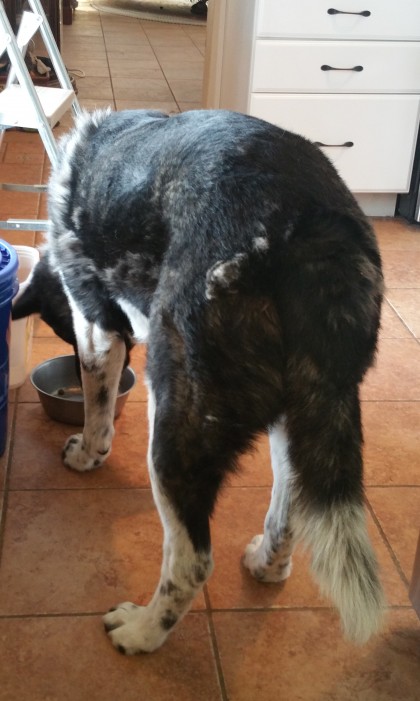
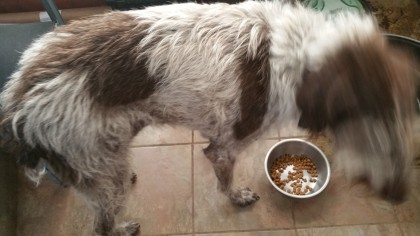
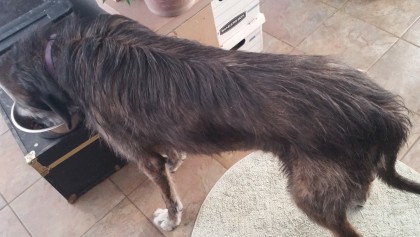
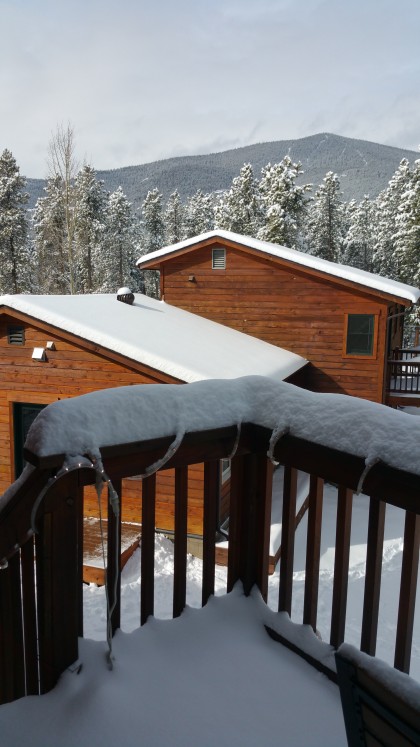
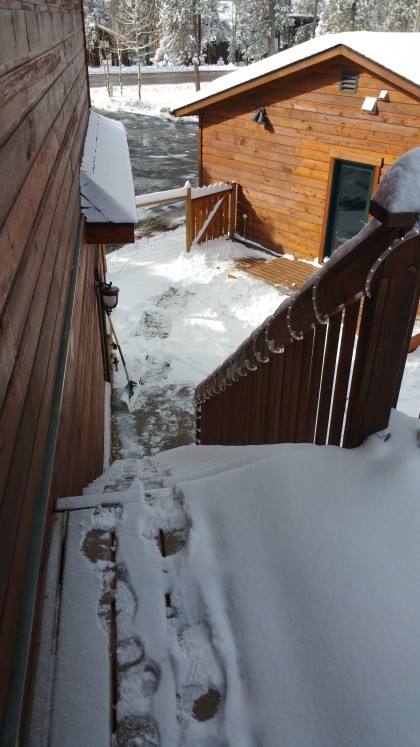

 On Thursday, the day of Kate’s surgery, I left Rigel and Gertie outside while I was at Ortho Colorado. Staying outside that long, several hours, is unusual for them. When I let Rigel inside, she ran to the couch, jumped up on it, jumped in the air a couple of times, then flopped down into her usual position. Ah.
 Beth Evergreen has reached out to us in several ways. Individual members have offered to bring food or otherwise help. Leah, the executive director, called, wanting to know if we needed anything. Several folks from our mussar group responded to my e-mail on Thursday with love and concern. For both of us. A thought that keeps going through my mind: beloved community. Christian churches aspire to this, Beth Evergreen achieves it. I’m proud to be a member of the congregation.


 As one of Dr. Agronin’s youngest informants said, even when physical decline and losses restrict one’s options, there remains the capacity to appreciate and approach each day with a sense of purpose. “It’s all about how you frame what you have,” she told him.
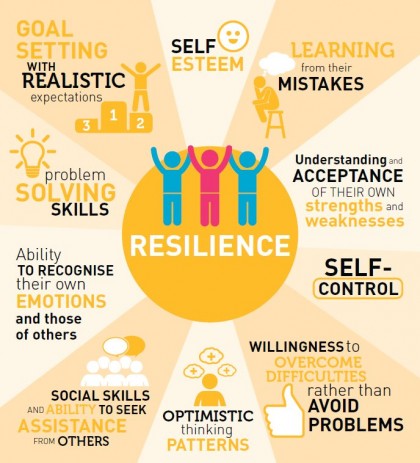 Hopefully, our children, the millennials among them, will look at us and come to that phase of their lives with a different image. My hope is that they will see that aging is the accumulation of years, not a time of diminished hope and diffuse fear, but life continuing. If that image can become dominant, it will look like the diverse approaches people have to their first and second phases. In other words the third phase will have as many distinct trajectories as there are people who enter it. It will not be dormancy, or a pause before dying, but life itself.
 I like Robert Hill’s definition of positive aging: (It’s) “affected by disease and disability, but not contingent upon avoiding it.” Rather, it is “a state of mind that is positive, optimistic, courageous, and able to adapt and cope in flexible ways with life’s changes.”
 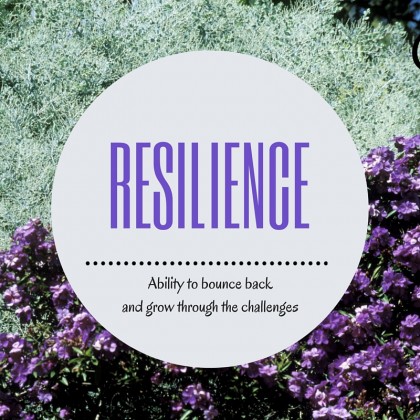 Not only in children, I think. Resilience can allow us to accept the changes of the aging body without losing hold of the power of our own lives. With a resilient personality even ALS will not cause us to stop growing. Just look at Stephen Hawking.
 The last letters of the Hebrew alphabet now have renderings in sumi-e, lying on my table ready for quotes and the chop. A member of Beth Evergreen last night referred to me as an artist. Oh. I thought he said audience. Artist is not a word I’ve ever associated with myself so my brain heard something else. A revealing moment. How others see us is not always, perhaps often, not the way we see ourselves.
 Before we got to Beth Evergreen yesterday, we stopped at Safeway. Kate had a fun idea. She would buy bite size Almond Joy candy bars and have them for everyone. While in the store, she also found some yellow roses and bought enough to give each person around the table a flower to take home. Though she had to settle for full size Almond Joys, the idea was still there and the flowers were a gentle, beautiful and fragrant memento of the time together.
 We then spent an hour plus in an energetic sharing, each person picking one instance from each column. The responses were as varied as the people in the room and the time frames to which they returned while filling them out. “Getting my pilot’s license.” “Grandchildren.” “First kiss.” “Traveling alone, being alone in a strange place.” “Throwing rocks up so bats would follow them down.” “Playing hide and go seek.” “Having sex and finding out you’re not pregnant.” The general tone was joyful, celebratory as we both learned more about each other and got to share in each other’s joy.
 Here are several words and phrases offered: Joy requires authenticity. It has a definite physiological, embodied component. Joy flows; you can’t hoard it; it’s contagious. Joy mixes awe and gratitude. Many people identified natural settings as joyful. Joy is transpersonal, often involving connection, (I would say intimacy.) with animals, other people, places. We get outside of ourselves, beyond ego, become one with whatever causes our joy. Being with children, especially grandchildren. Constant learning is a source of joy. Degas. Joy is transformative. Joy ignites gratitude. Joy is quiet and internal; happiness loud and external. Joy is a choice.
 In addition to cooking, the sumi-e (ink brush painting), and working out, I mentioned the possibility of a greenhouse. Expensive, so we’ll see about that. But. I began reading a book I’ve had for a while,
  Buddy Bill Schmidt will recognize the quote that begins the chapter on Soil: “See what you’re looking at.” Carey Reams, an unlikely looking radical, used to say this. He was the founder of the outfit from which I purchase soil additives, the High Brix Gardening folks in Farmington, Minnesota. He contended, as do many now in the farm-to-table world, that agriculture went astray long ago, moving toward products that fit mechanized food production rather than human nutrition.
 The vast wheat fields of the Great Plains grow an annual wheat, two varieties that work well in steel rolling mills. Not only have these annual crops destroyed the ten feet or more of top soil that buffalo and deeply rooted grasses developed there, but the steel mills which make this crop profitable separate the germ and bran from the kernel, leaving only fluffy white flour. What’s bad about that? Well, turns out the nutrition in wheat lies in the germ and the bran.
 I guess this is the native Midwesterner in me. I grew up driving past corn fields, pastures filled with Holsteins and Guernseys, pigs and beef cattle. The Andover gardens, the orchard and the bees, along with our small woods satisfied this part of my soul. I’m going to investigate local CSA’s, see if that’s a route back into this world. We have to buy groceries anyway, so why not from folks who share a philosophical position close to my own.
