Lugnasa Harvest Moon
Jon and the grandkids went camping at Upper Maxwell Falls, less than 2 miles from here in the Arapaho National Forest. They watched a fawn come up underneath a doe and whack her underside a couple of times, then drink. Having this kind of opportunity so close to our home makes grandkid life richer. Ours, too. Ruth got cold; Gabe got hot. They ate clam chowder with sourdough bread and drank hot chocolate. Breakfast was back here.
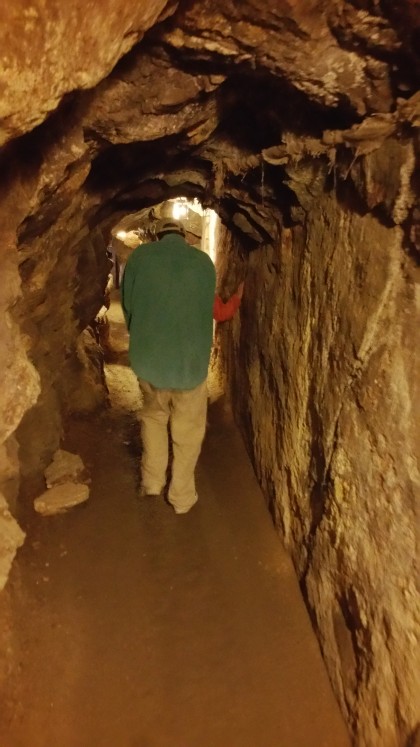
The trip to the Argo Gold Mine was a promise to Ruth, made after I took Gabe there last year. It was much better this time since new owners had a guide that went with us on the whole tour, including the Double Eagle Mine. The Double Eagle was dug by hand, went back maybe two hundred feet, following a vein of quartz (gold shows up near the quartz). It was called the Double Eagle because the entire mine netted its two miners only $20, a double eagle coin. A helluva lot of work for 20 bucks, even in the late 19th century.
The tour is really of the Argo mill, the processing plant that received, through the Argo Tunnel, ore from 800 mines. The tunnel, 4.2 miles long, ran from upslope Central City to a spot just above the processing plant.
An assayer’s office determined the percentage of the big five metals in each ore cart: gold, silver, copper, lead, zinc. The mill purchased the ore cart based on the value of the metals. Then the ore cart moved over to the receiving pits. The cart tipped over on its side, spilling the ore into these deep bins.
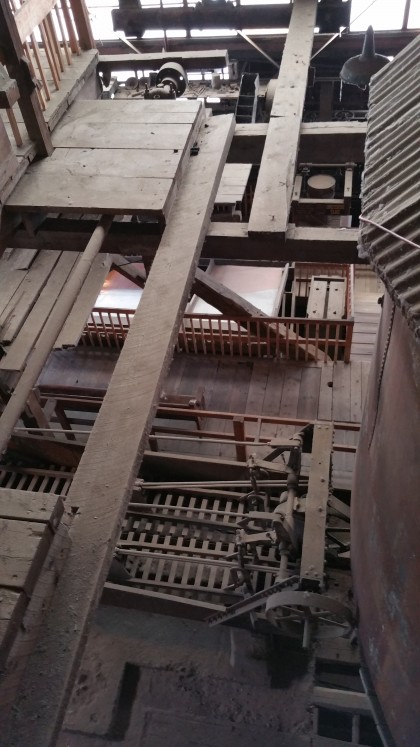
From there the ore went to stamping mills for crushing of larger chunks of ore, through chemical slurries and ball mills and finally onto sorting tables. The process used vaporized mercury at one point and a cyanide leaching tank for the gold. Added to the physical dangers in the wooden mill, criss-crossed by belts to drive various machines and filled with the noise of the stamping mills that could be hear fourteen miles away, the poisons used made the mill a dangerous place to work.
This all came to an end when 5 miners, trying to retrieve gold from a vein when the mines were shut down, set off an explosion that drained older mines of water built up in their drifts. This sent a pulse of water jetting through the 12 foot wide Argo Tunnel, killing four of the miners, shooting a one ton ore cart a mile in the air and making the tunnel unfit for use.
The Argo mill shut down the next day. No way to get ore out of the mines and to the mill.
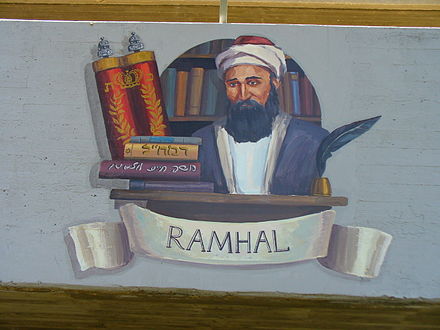
 Interesting intersection of past and present yesterday. In my Christian days, I explored many different forms of spiritual practice, including a Benedictine form called lectio divina. Turns out a Rabbi is teaching a version of lectio to other rabbis for use, in particular, with Torah study. Bonnie, a rabbi in training who attends Beth Evergreen, modified it to use in our Mussar study.
 I found myself slipping into a comfortable place, going inside, considering my inner journey. It felt good. I hope we use the process more.
 The clouds are at 8,800 feet this morning. We’re surrounded by and inside them. A foggy start to the day.
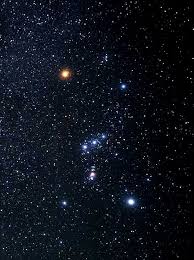 Black Mountain, which is covered in lodgepole pine and actually green as a result, has small gold flecks this morning. Those few aspen groves on its slopes have begun to turn, as have more and more aspens between here and Evergreen, but not those on our property. Too, Orion appeared in the southern sky a week or so ago, the early morning southern sky. On Shadow Mountain Orion and the changing of the aspens are true harbingers of autumn.
 Mussar is defined here by Rabbi Ira Stone, of the
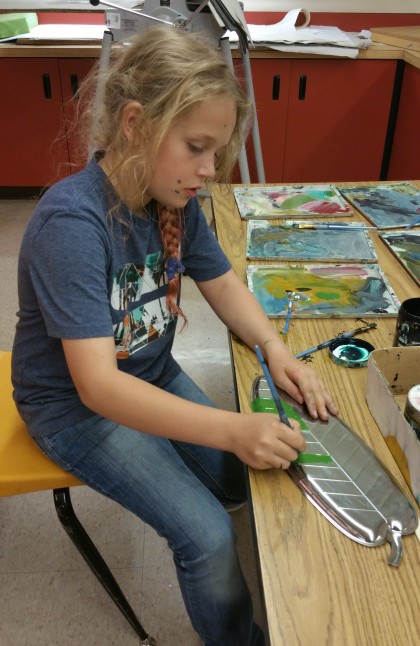 Spent another evening at Montview Elementary with Jon, Ruth and Gabe. We ate a light supper of foods selected at King Sooper (grocery store chain here), then began to make more prints. Ruth has gotten into the spirit of found objects used as surfaces for print making. She bought some things at Goodwill to print: a leaf shaped metal serving dish and a small metal kitchen utensil that looks surprisingly like a giraffe when inked. I printed another spoon, gray-white this time. Gabe made wheeled objects with something like tinker-toys.
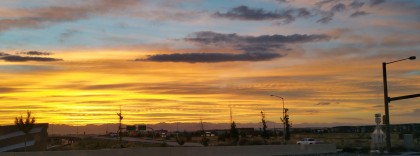 After the printmaking, Jen picked up Ruth and Gabe. I headed over to I-70, turned onto it going west and drove into this amazing sunset. The mountain silhouette in the evenings often looks like a Potemkin village, a prop set against the backdrop of a falling sun. This night it was something.
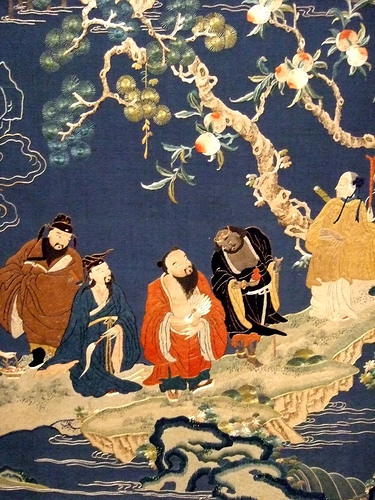 Palisade, Colorado has had a bumper peach harvest. There is a small area on the Western Slope that has an ideal peach growing microclimate. They have other crops, too: lavender, apples, sweet corn, strawberries and vegetables. The newspapers have carried photo spreads of workers in the orchards with peach baskets gently picking and placing the delicate fruit into baskets. Back in Andover, this time of year, the honey harvest would be in, the raspberries just beginning. I would be out planting garlic and pulling the last plantings of carrots, beets, leeks and onions. This is the peak harvest season, when the land and its workers combine to feed millions, even billions of people.
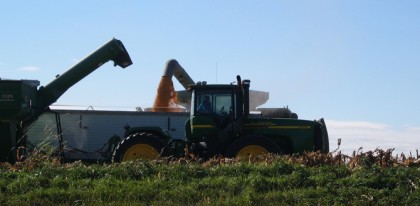 Being so far removed from farms and large truck gardens feels strange to this former Midwestern lifer. No more so than in this long harvest season. Corn pickers and combines have begun to roll through fields. The state fairs have swept up 4-H’er raised cattle, pigs, sheep, chickens. The vegetable harvest has peaked. Self pick apple orchards have hayrides and cider stations set out. Not there, though.
 Labor Day does mark the winding down of one season long harvest up here: tourist dollars from Denver folks. July and August are the heaviest tourist months for our favorite mountain town, Evergreen. We’re not a winter tourist destination, at least not like the ski resorts, so the roads will have less traffic and fewer visitors in Evergreen’s restaurants.