
Imbolc New Life Moon

“The noun simcha is mentioned in the Bible 94 times and is derived from the verb samach, which appears 154 times in the text. It is rooted in the Akkadian word shamahu meaning sprout or flourish.” Simcha, The Dayton Jewish Observer
A thing of beauty is a joy forever. So says Keats in his Endymion. Kate and I are leading the mussar class on Thursday, focused on joy and sadness. What else is a joy forever?
Most of the material I’ve read about joy distinguishes it from pleasure with a time distinction. A bite of food, a kiss, a winning hand, a new toy brings pleasure in the moment, but the pleasure dissipates quickly. Joy, to paraphrase Keats, is a thing of beauty forever. Joy, in other words, is lasting.
Rabbi Jamie says true joy can be recalled and experienced again whenever we want. Not fully sure about that, but a finger on the scale in favor of a lasting experience seems right to me.

Kate has come up with an exercise that will get us started on considering joy in our own lives. She designed a sheet with three columns: single-digit, adolescence, adult. We will write as many instances of joy as we can recall from each of these life phases. My hope is that in telling our stories of joy that we can experience them again and help others experience them with us.
How can we increase joy in our lives? Can we? (A)…rabbinic teaching concerning simcha points to the inner self as the source of contentment and joy. “Aizehu ashir? Hasameach bechelko, Who is rich? He that rejoices in his own portion (Avot 4:1).” ibid
So at least part of joy is perspective. What makes our life rich? Joyful? Knowing what is enough. What is enough? No less than we need, no more than we require. This seems to link joy to gratitude. If we have enough, we are grateful for what we have. Our life gains in simplicity since we don’t end up on the constantly promoted hedonic treadmill.
With simplicity, then, we know deep satisfaction. Not only do we have enough, but we do not waste our energy and our worry on getting more. Ah.
 Last week at mussar we had a fascinating conversation on the essential dourness of both Jewish and northern European cultures stimulated by the Norwegian concern that they had won too many medals in the winter Olympics. In both cases happiness, and by correlation, joy, are suspect. Why are you so happy? What makes you think that will last?
In the Jewish instance this trait seems to correlate with the multiple times in Jewish history, starting with slavery in Egypt, that a golden age or at least a comfortable existence had been destroyed by pogroms, the expulsion from Spain, the holocaust. Are you happy now? Just wait.
In the northern European instance it seems to have more to do with seriousness. “For the soul is dead that slumbers, And things are not what they seem. Life is real! Life is earnest! And the grave is not its goal; “Dust thou art, to dust returnest,” Was not spoken of the soul.” Psalm of Life, Henry Wadsworth Longfellow

Both cultures, in other words, find joy and delight and glee and exultation, ecstasy and exhilaration suspicious at best and distracting at worst. Distracting from what? From the possibility of life’s stability being snatched away in an instance. From the need to keep the shoulder to the grindstone, quite literally. From the guardedness that protects us from disappointment, suffering, pain. Joy may make us vulnerable.
So it’s no wonder that joy is a middot, a character trait that needs cultivation. The soil for it is rocky, like that in our backyard here on Shadow Mountain, at least in these two cultures.

How to do that? I chose to scan my life looking for joyful moments. My hope is that I can begin to identify in the now, embrace them, live in them. Looking at my list (it’s posted here.) I can see some common threads. Intimacy: seeing Orion at night, dogs nuzzling, the mountain night sky full of stars, hugging Kate, hearing from Tom, Bill, Mark, seeing them. Challenging myself: learning Latin, using my sumi-e brushes, grinding ink, having a new idea, reading a new book, writing ancientrails. Letting the world in: driving over Kenosha pass and seeing South Park laid out ahead, the golden aspen among the lodgepoles on Black Mountain, paying close attention to the natural world. Being in community: working with Marilyn and Tara and Anshel, setting up for adult education events at Beth Evergreen, having an idea, sharing it, seeing something happen. Travel: hearing the howler monkeys on the road to Angkor, leaving for a trip, rolling retreats (roadtrips), the earthen smells when getting off the plane on Maui, Kauai, Hawai’i. Inner moments: the moment of mystical connection with the universe in 1967, meditation, remembering the two year old me who learned to walk after polio, mindful cooking.
One track for increasing the joy in my life then would be to seek intimate moments, identify new ways to challenge myself, stay alert and let the world in, continue at Beth Evergreen, travel, allow time to cultivate the inner life.
“On the bright side, simcha is a word laden with exhilaration and festive activities. Simcha expresses not only the joy of an event, but it is also the noun which means a happy event.
A holiday is a simcha, a family gathering is a simcha, a wedding is a simcha, the birth of a child is a simcha and a Bar or Bat Mitvah is a simcha.
The host of an event is a baal simcha and the sound of joy resonating from the event is kol simcha.
Simchat yetzirah, a joy of creativity, is a way to describe the exhilaration one feels while being engaged in a creative process…
(A)…rabbinic teaching concerning simcha points to the inner self as the source of contentment and joy. “Aizehu ashir? Hasameach bechelko, Who is rich? He that rejoices in his own portion (Avot 4:1).” ibid

 It was also time to slough off some of the Minnesota based, second phase lingering work. Especially the political. I am going to the caucus this Tuesday; however, I no longer see myself as a dedicated activist. But, and I consider this great news, Ruth told me she was walking out on April 9th, standing outside Mcauliffe, her middle school, for seventeen minutes, one minute for each of the Parkland victims. She’s doing it in spite of the fact that adults tell her no one will listen. Go, Ruth!
 The melancholy also uncovered a tension I’d been feeling between leaning in to the domestic, cooking, for example, and Kate and mine’s presence in the Beth Evergreen community, and what I consider my work. Recalibrating second phase expectations about work, which I have not yet fully done, feels like a task for this time. In fact, I enjoy the domestic part of our lives and it feels good to devote more energy to it.
 Thursday afternoon mussar. Talking about joy and sadness, how to cultivate joy. The middot of this month. Middot = character trait. Though the discussion was good, the time immediately afterwards was even better. I shared in vaad (speaking into the group, with no feedback. Concentrated listening.) about melancholy, being there now and having learned to listen to the melancholy instead of trying to fix it. Waiting it out.
 A couple of things have come into focus over the last few days. One, I need to work more with my hands, with my body. Now that the turmoil of our first years here has begun to subside I’m missing the garden, the orchard. Not just the growing, the plant care, the flowers and vegetables and fruits fresh out of our soil, but carrying bags of compost or digging or moving bee hives, tending to the raspberry patch. If I don’t do this, I can get stuck in my head. Not the only part of me I want to nurture.
 And the reading. Oddly, the deeper my immersion into Judaism, the more my interest in Taoism increases. So. Diving into those books, some online educational material. Also, Reimagine. Reconstruct. Reenchant. Material on emergence. James Hillman. Magic and reenchantment. Reinvention of the sacred. The auld Celtic faith.
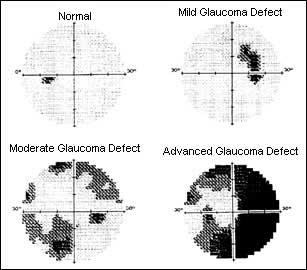 Glaucoma stable. Did a visual field exam yesterday, space invaders with a clicker and dots of light flashing off and on, testing peripheral vision.
 So. More flannels and plaids. Fleece vests. Another pair or two of blue jeans. Some new hat, though I don’t have a particular one in mind right now. There is a tiny part of me that relates to loggers, lumberjacks. Not the whole lumberjack look that spread out from Minnesota a few years back. That’s not still a thing, is it? But related to it. With all the chainsaw work I’ve done over my lifetime I feel I’ve earned some of that.
 Wow. Weather station says the humidity outside is 66%. Inside 2%. Aridity is the norm, humidity a rare phenomenon here. Like most rarities it’s welcome. Most welcome.
 It is axiomatic that each person is unique, a particular example of the human, of life, of the creative process that began at tzimtzum or the big bang, thrown into a particular time and a particular place. It is that particularity that Emerson elevates. It is that particularity which formulates within us, as instantiations of the whole, our own work. When we tap into the sacred, the shard of ohr (divine light) lodged within us, we come to know our work. And, the world needs it because you are the only one with this spark of the divine and the only one in the whole history of the universe who has it. If you don’t express your ancientrail, it will die with you and the world will be poorer.
 Life still trickling by. A bit of snow over the last few days, colder now, in the Colorado measure of that term. So relative. Saw a facebook meme with Texans in parkas at 70 degrees. Could have countered that with a Minnesotan in shorts at ten below. Meanwhile 11, last night, felt pretty cold after three years here. These gross physical acclimatizations are easy to spot, but what about the more subtle mental adjustments?
 This is all by way of becoming native to this place, a key element in my pagan creed borrowed from Wes Jackson at the
  Kate and I did it on the Great Anoka Sand Plain. Over the Andover years we listened to the soil, to the rhythms of the growing season. We stuck our hands in the soil, partnered with it. We planted trees and fruit bearing shrubs. There was the open prairie we cultivated on either sides of the more traditional suburban lawn carpet. Bees, with whom we partnered, for honey. Dogs who used the woods as their home and hunting ground. By the time we left we were native to that place. Its rhythms shaped our own and together we created a place to live.
 71 times Valentine’s Day and I have shared a moment. This was a quiet one, a good one. Decided I would cook Kate a special meal. In all our years together I’d never done that. It felt great. Went to Tony’s Market (upscale groceries, great meat). Bought a ribeye and some model thin asparagus. Kate found some tiny potatoes. Candles and jazz from Kate’s Pandora Satchmo and Ella channel. Just right. Later, a dusting of snow.
 At one point concentrating on Colorado and the west. At another, more Taoism. Stop writing novels. Read more. A lot more. A year of the Tao or a year of the West. Travel. In our immediate region. As much as possible. Continue with the sumi-e. Take classes? Go to a Progoff workshop?
 Sort of feeling crummy yesterday, Kate, too. Not sure whether last month’s illness lingers. Or what. Kate said, “Maybe the radon mitigation system’s not working.” Oh. Well. Damn. “I’ll go check.” The radon mitigation system has a fan that disperses radioactive particles, blowing them up and out of the house. If it’s on and the barrier’s intact, the system’s working.
 Going into the crawl space is a bit like opening the closet to go to Narnia. The makeshift door to the crawl space is in a closet and opens to the world beneath our house. However, even before I removed the door, I reached up to switch on the light. By god, right there, beside the crawl space light switch was another switch. It said, fan. Oh. Could it be this simple? It was. I hit the switch, which was in the off position, then went back outside to listen to the fan. On.