Category Archives: Judaism

In the Time of the Crown

Imbolc and the Leap Year Moon

Thursday gratefuls: the warm reception for my presentation yesterday. Alan and the Bread Lounge. Being the doorman last night for Purim. Seoah greeting me when I got home. Kep, who stayed up waiting on me. The melting of the snow. The coming snow. The drive back from the Kabbalah Experience.

An all CBE all the time day yesterday. Left the house at 7:45 for the Kabbalah Experience. Not a fun drive into morning rush hour in Denver. If I do this again, I’ll do most of them by Zoom. It’s an unsatisfying technology in this context, perhaps because it’s not well integrated into the classroom at Kabbalah Experience.

Yesterday the sun had a corona as it sat behind a veil of cirrocumulus clouds. There was a streaky rainbow smeared across underneath it. Last night the moon, too, had a corona, a faint golden hue with a red tinged outer circle.

Seemed appropriate for life in the time of coronavirus. It’s spreading no rainbows. On the New York Times page I counted 46 stories that were virus related. That’s two-thirds.

Last night at the Purim event at Beth Evergreen I filled in for Kate who had a Sjogren’s flare. She was to be the board member on duty. The bmod greets people at the door. That’s the primary task. I also had to shoo folks into the sanctuary so the Purim spiel (a musical written by CBE’r Ron Solomon) could begin.

There was elbow bumping, some shoe greetings, and the purloined Cohen blessing, live long and prosper with fingers spread to create the shin letter in the Hebrew alphabet. There was bravado. I’m living my life as usual. I’m not afraid. There was cautious laughter with each improvised non-handshake. Even so, more folks showed up than I had imagined. The sanctuary was well-over half full, many of them older, like me.

As I opened the locked door for each congregant or visitor, I greeted them with a welcome, a smile, an occasional elbow bump. Yes, two contagions affected my work. Antisemitism keeps CBE’s doors locked at all times. We’ve had visits from the Jeffco sheriff, the FBI, and letters from politicians expressing support. It’s a virus of the heart, infectious hatred cultured in a stewpot of fear, white supremacy, Trumpian permission.

We had the whole megillah. No, really. The whole thing. On Purim the book of Esther, the megillah, is read in its entirety. It’s the story of Ruth, who saves all the Jews from the evil vizier, Haman. I want to write a bit about Purim, maybe tomorrow, but for today I’ll just add that as Haman’s name comes up in the reading everyone cranks their grogger and shouts boo! Sort of like watching a silent movie when the villain twirls his mustache.

The groggers, the boos, the whole megillah work against both contagions: antisemitism and the coronavirus. Next time you see the word coronavirus whip out your grogger (no, not that. look at the link on grogger above) and shout boo. Might catch on.

Art House Cinema

Imbolc and the Leap Year Full Moon

Wednesday gratefuls: Kabbalah Experience. The stimulation I’ve gotten from that reading. Bill, fellow seeker and his gifts this morning. Kate and the start of our 31st year together. Kimbop. Picnic food, Seoah says, a Korean sushi-like roll. Seoah’s delight at the ease of her UPS interaction. Jackie, a sweet and delightful person. The coronavirus, for what it’s teaching us about global community and compassion.

Max von Sydow died. His Antonius Block in Bergman’s The Seventh Seal captivated me long ago. His turn in the Exorcist. Memorable and difficult. Liv Ullman, Bibbi Anderson, Max von Sydow, Gunnar Björnstrand, and Ingmar Bergman introduced me to art house cinema. I got infatuated with Bergman and his ensemble of actors, watched all of them I could. Hard to remember now how difficult it was to find movies and watch them in the pre-internet era.

When I was at United Seminary, I organized an arts week. This was 1972. I was able to show two Bergman movies that had not been seen too often then, Hour of the Wolf and the Ritual. It might have been the American premier of the Ritual.

Turns out that Albert Camus’ widow was good friends with Bergman and had all of his movies in her collection. I had some connection to her but I can’t remember what it was. She lived in Wisconsin, so I borrowed them from her. It took a lot of phone calls, visits, and organizing to get them onscreen. Nowadays I could look them up on the internet, find a place to either buy or stream them, set up a projector and we’d be ready to go.

Von Sydow was a key presence in Bergman’s work. His tall, angular, serious demeanor gave each film an anchor in his gravitas. He is among my favorite actors and I’ll miss him in this life, but will continue to enjoy his work on screen.

Driving in today to make my presentation at the Kabbalah Experience in Denver. I’m feeling good about the work I’m doing in this class. It has pushed me into new clarity about religious life, given me some conceptual hooks for things I’ve been thinking about for years.

Long day. Lunch with Alan after the class. Purim celebration tonight at CBE. Kate’s the board member on duty. She greets folks as they come in. Quieter week overall. Good.

First Draft Presentation

Imbolc and the Leap Year Moon

                                Shadow Mountain Midrash

We need to reshape our religious languages in such a way that they will inspire the great collective act of teshuvah, “return” or “repentance,” required of us at this moment.” Radical Judaism, Art Green, p. 8

Green’s book is honest and radical, character traits I admire. His rejection of supernatural theology stated baldly and often, makes this a radical work. His commitment to remain, however, within the Jewish condition makes it honest. He is what he is. Perhaps the most radical claim in the book is this, “As a religious person I believe that the evolution of the species is the greatest sacred drama of all time.”[i]

I want to make two moves that are different from Green. First, I want to push the scope of his sacred drama all the way back to whatever is the beginning, bereshit. The Big Bang. Or, its equivalent as science and kabbalah press further into its truth. I believe that evolution of the cosmos is the greatest sacred drama of all time. Second, I no longer have a pathway home, back to the tradition of my childhood, or my professional ministry. I cannot follow him into a tradition.

That means I’m left with my Celtic inflected paganism.[ii]

I’m using the word in its sense of outside religious institutions, or religious outsider. A Latin word for rustic, villager, or peasant pagan got its current connotations in relation to the accelerating reach of the Roman Catholic church. As the church took hold in Europe north of Italy, it had to push out the then existing folk religions to gain converts.

This effort was effective in cities and towns where churches and priests could divide the area up into smaller, easily manageable parishes. In the countryside, however, where the peasants and other rural folk lived scattered from each other, where rural agricultural traditions still held sway, the old religions tended to hang on, resist assimilation. The Roman Catholics were relentless, however, and eventually most traditional religions found themselves sequestered among stubborn believers who often had to hide the practice of their beliefs. The old religions held on among villagers and peasants, pagans in the Latin usage.

Paganism then, as I use it, is a placeholder for those of us who share with Green his notion of the sacred as “an inward, mysterious sense of awesome presence, a reality deeper than we normally experience.”[iii], but do not share his devotion to tradition. Instead of panentheism, then, I’m neologizing: panenpneuma.  Spirit in all and all in spirit.

There is a love of wild Nature in everybody, an ancient mother-love ever showing itself whether recognized or no, and however covered by cares and duties.” ― John Muir

Could there be a pagan midrash? A friend of mine often quotes a mentor, “See what you’re looking at.”[iv] A good beginning for a midrash of the natural world.[v]

Is this even a sensible question to ask? I think so, since Green himself says: “We thus make the same claim for Torah that we make for the natural world itself: remove the veil of surface impressions, go deeper, and you will find there something profound and holy.” Green, p. 116 If we look beyond the veil of surface impressions, go deeper, we’ll find the profound and holy. How to do this in the natural world? Midrashim of the Torah rely on repeated words, etymological similarities and differences, gaps in the flow of a text, gematria, the meanings of individual Hebrew letters.

The naïve viewer of nature might, instead, see the wonderful cumulus clouds over Black Mountain and think, they’re so high, so far away that they don’t have any connection to me at all. She might, though, wait and watch. When the rains begin, she might wonder. Hmm. They water the forest, don’t they?

Consider the bumblebee and the butterfly. The bumblebee, according to aerodynamic theory, shouldn’t be able to fly. So, which is right, aerodynamic theory or the bumblebee? Later information has sorted out the problem. Turns out bumblebees don’t flap their wings up and down, but back and forth. This was learned in 2005 when high-tech cameras and robotic bee model investigated the question. See what you’re looking at.

What if you were a child like me, who watched caterpillars intently? I followed them as they munched on leaves, as they put themselves in splendid isolation, as that isolation got broken by a creature as light as the caterpillar was stolid. And, it could fly!

The lodgepole pines on my property have a clever snow removal trick. When the snow gets too heavy on a branch, the branch dips down, the snow falls away.

Those are all scientific observations in one way or another, but they meet Green’s criteria, at least to me, of revealing the profound and the holy.

Here’s another midrashic method for nature. When we bought our house on Shadow Mountain, I came here from Minnesota for the closing. It was Samain, Summer’s End, the Celtic New Year. October 31st. I mention that because at Samain the veil between the worlds thins and creatures can pass both ways, out of the Other World to our world and out of this world to the Other World.

The next morning, on the rocky soil behind our new house, there were three mule deer bucks standing on what I now know is our leech field. I looked at them. They looked at me. I moved a bit closer and they didn’t shy away. I’m not sure how long we stood there, but it was long enough to establish a wordless communication.

As I considered this remarkable (at least to me) event, I decided that the mountain spirits had sent these angels (messengers) to say we were welcome here. I’ve felt welcome among our wild neighbors ever since.

Second event. I have prostate cancer and am right now going through a recurrence. Last June I started radiation therapy, five days a week for seven weeks. The morning before I started radiation two elk bucks jumped the five-foot fence around our back and began eating dandelions. They stayed in our yard that night and left the next day. They were the only wild animals I’ve seen in our back since the mule deer visitation five years ago. The mountain spirits had come to reassure me, calm me. It worked.

A friend challenged me to find a name for our property. I’d thought about it before but most of what I considered seemed corny or pretentious or just silly. Then my Korean daughter-in-law came for a long visit. Her presence led me to pay more attention to things Korean and I realized the person she’d called her mentor was in fact a Korean shaman.

When I looked up muism, or Korean shamanism, I found one of the mountain gods was called Sansin. Seemed right for our house.

From another, very different angle. Transubstantiation. The Catholic doctrine that the host and the wine are the body and blood of Jesus Christ. OK on the mythic level, sure, but in reality? Odd at least. There is, however, transubstantiation of a different sort. When you eat bread, the wheat becomes you. That steak. You. Brussel sprouts. You. Even chocolate. You. Everyday we transform food into our own bodies. How amazing, profound, holy is that?

What midrashim do you have about the natural world? What methods could we identify to help people see what they’re looking at?

Creating a sustainable presence for humans on this earth is the Great Work for our time. Thomas Berry


[i] Green, p. 16

[ii] Neo-paganism, Wicca or Druidism or Asatru (Nordic), for example, has shallow roots, most in nineteenth century Victorian fancy. I’m not referring to this sort of paganism.

[iii] Green, p.. 4 

[iv] Carey Reams

[v] I’m using natural world here in a restricted sense, that is, the non-artificial world, the non-humanbuilt world. This is wrong on the face of it since humans are of the natural world and our homes, for example, are no different than a swallow’s nest or a bear’s den in meeting our particular requirements. I believe we should avoid anthropocentrism if at all possible, as Green says we are neither the pinnacle nor the end of evolution.
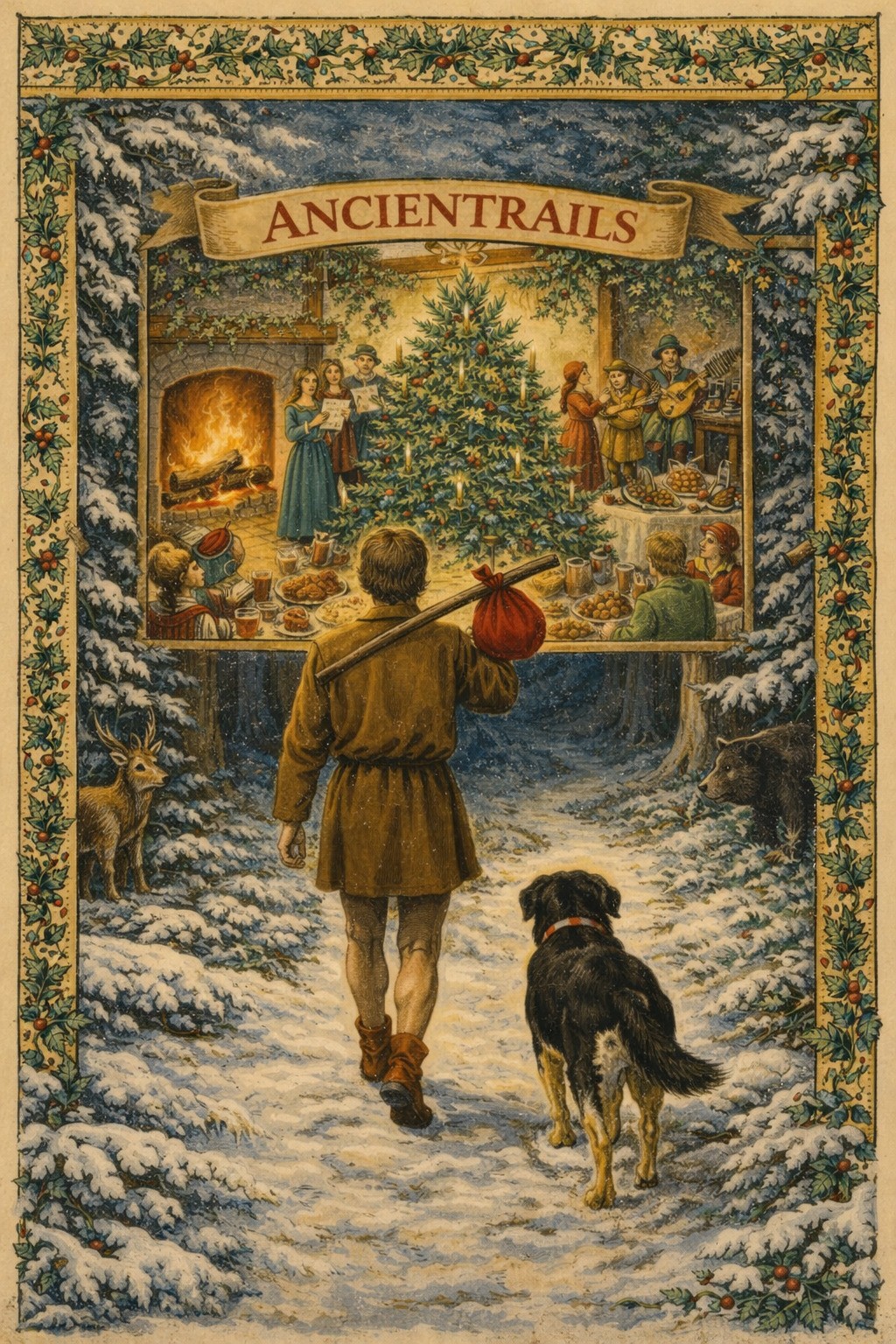
Ancientrails

Imbolc and the Leap Year Moon

Tuesday gratefuls: Alan, recovering from pneumonia. Brenton and Corrine who have both contacted us through DogsonDeployment. We see Corrine on Thursday in Boulder. The gentle aches in my body, the sleeping in this morning that mean I had a good workout yesterday. The steer that gave its life for our ribeyes. Rocky Mountain Land Library.

Art Green’s book has done what he intended. I’m looking backwards, now even to Christianity, for a religious language that can express the deep moments, open up the inner world of the one. Hear oh, Israel, the Lord our God, the Lord is one. Over the next months, years I imagine this work will become easier.

Paganism and Christianity have many crossover points. Why? Because Christianity absorbed and integrated many pagan religious ideas. I’m sure you know about the Christmas tree (eternal life to Teutonic auld faith), the Easter bunny and Easter eggs (signs of fertility, again Teutonic). You might know about Lammas, the feast of loaves, which follows the Celtic Lughnasa, a first fruits harvest festival. Or, All Saint’s Day which recapitulates the Celtic Samain, the end of summer, and the time when the veil between the worlds thins. The Saturnalia, a Roman festival, “…was celebrated with a sacrifice at the Temple of Saturn, in the Roman Forum, and a public banquet, followed by private gift-giving, continual partying…” wiki. It ended on December 23rd and became the precursor of Christmas.

Ancientrails of the human condition all: the mystery of life and death, the wonder of pregnancy and birth, of seeds quickening, the relief at the first harvest, the longing for loved ones who have died, the need to brave the darkening over mid-winter with light and friends and food and gifts. We die. We make love and we plant. We hope for food sufficient to cover the long fallow time. We grieve, mourn, yearn. We wonder whether spring will ever come, whether the sun will return this time.

Green says each religion is a language, a language that speaks in the varied tongues of the one. Yes. I agree with him, though I can’t do what he did, that is, remain in the religious culture of his childhood. What I can do, though, is go back to Christianity’s pathways, its way of speaking the language of oneness, as I did yesterday with Jesus at the Mount of Olives and his resurrection. What I can do is stay in what I call paganism, perhaps a form of panentheism, and speak from within it about these ancient human trails. I say perhaps a form of panentheism because I do not share with Green the easy use/reuse of the God word. That word carries, again for me, way too much baggage: violent, misogynist, patriarchal, xenophobic. Maybe a panenpneuma? Panenpan? Panenohr? We’ll talk about these options tomorrow.

A Task

Imbolc and the waning crescent of the Shadow Mountain Moon

When I first began reading Art Green’s Radical Judaism, I thought maybe my job would be to think Christianity through from his truly radical, non-supernatural perspective. Look at Christian civilization in the manner of Mordecai Kaplan with Green’s theology as a pathway, a halakha. The way to walk. Couldn’t get any energy up to start. Why?

Ah. I left Christianity behind long ago now. Of course, it still informs me and my life as the Torah informs the life of a Jew whether secular or religious. But, I don’t feel shaped by it in the distinctive manner my friends at CBE exhibit. Even if G-d no longer requires the hyphen, they still bow during the Amidah, wear the kippa, show up for High Holidays. I have no interest in Christmas or Easter services, that old life.

Huh, I thought. That’s weird. I spent all that time in sem, 15 years in the ministry, and I’m a product of Western civilization, profoundly shaped by Christian belief and thought. I like big projects. Why wouldn’t I want to go back and rethink all that?

It came to me slowly. Somewhere in Green’s book, I can’t find it right now and that frustrates me, he casually dismisses neo-paganism. It’s not clear what he meant, whether he’s taking a substantive jab at pantheists from his panentheistic position, or knows the shallow roots of Wiccan’s, witches, and druids. If it’s the latter, I agree with him. Silliness abounds in contemporary pagan practice and what passes for thought.

If it’s the former, he and I are in conversation with each other. In either case though it triggered a realization. I’m a pagan. Maybe not the best word with all its freight, but one I use intentionally. The pagans of the middle ages, rural folk (classical Latin paganus: rustic, villager, rural folk, peasant, unlearned, countryman, bumpkin), held onto their older religious practices and beliefs because the church had a more tenuous connection with them, less power over their daily lives.

In contemporary usage pagan is a very broad umbrella: Wiccans, latter day Druids, Asatru, Dianists, polytheists of many shades all fall under it. There are also pagans, see this page, who use the term much as I do, as a placeholder for a religious position outside the usual suspects of Christianity, Judaism, and Islam as well as outside other traditions, in particular Buddhism, Hinduism, and most shamanisms.

That’s it, I realized. My task is to use the theological tools of Art Green and the civilization leaning thought of Mordecai Kaplan to reconstruct paganism for a contemporary audience. That I have energy for. Stay tuned.


Midrash of Ordinary Things

Imbolc and the waning crescent of the Shadow Mountain Moon

Tuesday gratefuls: Colors. White snow. Green lodgepole pines. Black sky. Blue sky. Pink skin. Pale coffee skin. Fur. Kep’s. Rigel’s. Hats for us bald guys. Gloves. Coats. My Chilean fjord scarf knit with love. Coffee. That first bitter taste in the morning. Eggs. Bacon. Rice cakes. Pho. The gas heater in the loft.

Continuing to study Art Green’s Radical Judaism. Read the final section of the Torah chapter yesterday morning. The power was out, our generator on, but the internet was down so I couldn’t write.

Last week Rabbi Jamie talked about midrash, a playful method of reading the Pentateuch, Its chief characteristic is finding relationships among seemingly unrelated verses, etymology of similar words, looking at individual Hebrew letters, considering their gematria (numerological significance). Green, for example, explores an Hasidic midrash that connects the ten utterances of God in the creation narrative and the ten dibrot, or ten words, that constitute what Christian’s call the Ten Commandments.

The underlying assumption of midrash is its critical feature. Everything connects, everything relates to everything else. We have to pay attention, be aware. Since, according to Green, paying attention is the ur religious task, occasioned by our nature as sentient creatures, midrash is an important tool for uncovering the occulted sacred.

Paying attention = Carey Ream’s, “See what you’re looking at.”

Midrash as a neo-pagan’s tool is my current fascination. Stars and fish. Mountains and apartment buildings. Cars and amoeba. Self and other. What is the underlying connective tissue? How are they related to each other, how do they critique each other? What can we learn from the frisson between two apparently disconnected, unrelated things?

Hitchhiker’s Guide to the Galaxy. A midrash on space and time. Thanks for all the fish. 42. A depressed robot. The restaurant at the end of the universe. Douglas Adam gives us dialectical shock after dialectical shock. Dolphins and whales in space? Building a freeway, through the solar system? The hyper drive. A mechanical person with feelings.

The cloud slowly falling down Black Mountain. When the cloud covers the mountain is the mountain still there? How can small droplets of water obscure (or, delete) 10,000 feet of granite and basalt? What does the gradual disappearance of the mountain suggest about what the mountain itself hides? We live in and amongst mystery.

Gratitude can open us to the midrash of ordinary things. What a wonder, a matter of sacred beauty, is color, which reveals as it hides. That piece of bread, toasted, eaten, is no longer toast, no longer wheat, but is now you. Breathe. We cannot live without the second by second inspiration of a gas we cannot see, yet need desperately. Hold your breath. Know the intimacy of our connection to the world around us.

Think, too, of the intimate connection Green proposes as our new sacred narrative, our link to that first squiggly cell coughed up by inorganic matter around a sea vent or in a tidal pool. Or, press even that idea back to the formation of stars and the creation in them of elements. Extend the link with the flow of change that is our universe. Where does it go? Nobody knows.

I’m leaning into monism right now. Seeing the midrash in the everyday. We’ll see where that takes me.

Speak, Rock

Winter and the Leap Year Moon

Friday gratefuls: Kate’s improvement and her skill as a doc. Kep, his kindness. Gertie, getting up, moving around. Rigel, who prances. Murdoch, whose youthful energy keeps me hopping. The 400+ episodes of Resurrection: Ertugrul. The Pho place in Evergreen.

How can a silent God speak? Remember Art Green’s challenge to himself: Does adding the word God help or obscure? Not sure how I feel about his answer, as I said yesterday. He answers not only in the affirmative, but then uses that affirmation to retrieve Jewish civilization (as does Mordecai Kaplan), especially the Torah.

The motive force behind the evolving, becoming universe. That’s god in Art Green’s formulation. Not too far from a usual understanding of god, at least in theological thought. He does, however, state explicitly that he does not believe in the god of the liturgy, the Torah, the one god he came to know in his early Jewish immersion. (His parents were atheists and he became Orthodox for a while in his youth.) It is, I just realized, also close to Aristotle’s idea of a prime mover.

If I understand Green correctly, he answers the question of how a silent god can speak with his claim that evolution is the new sacred narrative. As the Big History idea of evolution sees it, the universe began with the big bang (the tzim tzum) and has proceeded from there to create stars, galaxies, planets, empty space, and all the processes that occur in those stars, galaxies, planets, and empty space. Big History includes all this and its eventual winking out (big freeze, big crush) or its eternal existence in its definition of history.

On earth the motive force, god, has pushed elemental matter into many shapes: rocks, water, atmosphere, and, life. God has done this silently, working through molecules and accidents, deep sea vents and tidal pools. Following evolution’s arrow (not the same as time) from the inorganic to the organic, from the simple one-celled organic to the complex, conscious human, we can see the language of this silent god.

God, this universal motive force, acting in all places at all times, speaks in granite, sea water, fertile soil, amoebas and bonobos. These are the phrases in god’s expansive book, one written in such a way that a conscious mind will wonder about it. Try to find its place among its pages.

This is the silent god asking the first question of the book of Genesis: where are you? The same question god asks of Adam and Eve after they’ve eaten of the Tree of Knowledge of Good and Evil. Where are you, human, in the ongoing dance that is this emerging world?

I’m with Green up to this point. I can hear the silent god speak. What Green contends, if I’m clear on this, is that religions are repositories of guides and signals, hints at how to commune with the one hidden within the many. They are all partial glimpses, I think, but Green’s project is to transform all religions (I’m extrapolating here.) into avenues for mystical consciousness, a direct relationship with this motive power within and among all things.

Far enough for today. The Silent god speaks. But how can religions serve as fingers pointing to this moon? Maybe tomorrow.

A God of Silence

Winter and the Leap Year Moon

Thursday gratefuls: Art Green, author of Radical Judaism. Zoom technology. Brother Mark’s insights about his work in Saudi Arabia. Gertie’s visible improvement. Murdoch. The Kep. Rigel, who prances in from the outside like she’s 3, not 11. Kate’s rebound from a tough early afternoon.

Intellectual vertigo.

“What could it possibly mean to speak of Torah as “God’s word” or “revelation” in the religious context I am offering here? I challenge myself yet again, as I do frequently, asking whether my mystical language is not merely an obfuscation of my disbelief. God is Y-H-W-H, the wholeness of Being, the energy that makes for existence, the engine that drives the evolutionary process. This is a God of silence…” p. 92, Radical Judaism, Art Green.

The vibration in Art’s challenge to himself is what I call intellectual vertigo. I feel it while reading his work, while contemplating the unusual congruence between his well-formulated, honest ideas and my own less systematic thoughts over the past 65 years.

I’ve pushed away the embrace of all major religious traditions. I know some of you have, too.

Modernism offers the empirical method as its intellectual scythe. Richard Dawkins, Sam Harris, Christopher Hutchins all wielded this scythe, believing it allowed them to cut through the obfuscation that Green fears and find nothing. This modernist versus religion cage match has resulted in a situation not unlike our current political one. Two sides, fearing and loathing the other, generating quantities of heat, but little light.

Step through the door of post-modernism, however, and a new range of possibilities occur. Post-modernism, to those of us like Art Green, raised firmly in the arms of modernism, can seem dizzying. Vertigo inducing. Art leaps the uncanny valley between Newton and Niels Bohr with mysticism.

The confidence once placed in Newton’s thought was as certain as certain could be. He deployed the scientific method, mathematics, and logic like fine scalpels, flensing the musculature, then the organ systems of our cosmos for all to see.

Einstein shook his electric hair. Not quite. Then Bohr and others developed the Copenhagen Consensus, describing a sub-microscopic world buzzing with uncertainty, with probability rather than certainty, with spooky action at a distance entailed its thought. Classical physics (modernity) and quantum mechanics (post-modernity) have not yet reconciled.

Those of us shaped as religious persons in the modern era have also failed to reconcile the older, confident dogmas of the many religions to the newer, science-affirming ways of understanding. One avenue for this reconciliation is an understanding of language as a mediator which stands between each human and core reality.

In this case any language, including the Torah, the Upanishads, the Diamond Sutra, the Tao Te Ching, the Gospel of Mark or Matthew or John or Luke, does not “reveal,” but covers truth. That is, since language is the way that our thinking manages all data, sensory data included, words and letters are a real, unbreachable (perhaps) barrier between us and reality.

When the religious instinct (I don’t know what else to call it.) imbibes from this stream of post-modernist thought, a possibility occurs not available in modernism. In modernism we’re stuck with Wittgenstein, “Whereof one cannot speak, thereof one must be silent.” (Tractatus 7). If there is a reality behind the screen of language, we can’t know it, so we must be silent.

But. If we make the post-modern leap and accept a broader view of evidence, including our heart and Big History*, we can make out, as Green does, a unifier, “…the wholeness of Being, the energy that makes for existence, the engine that drives the evolutionary process.” It is this wholeness of being with which we interact in a mysterious way.

As a side note, I keep wanting to change Green’s metaphysics as I read his book. Key example above, the wholeness of being. I’d prefer the wholeness of becoming. He goes on in the next phrase to talk about the energy that makes for existence, for example.

This mystical dip into the silent world behind language, or before language, allows us contact with the Becoming, the energy that makes for existence. This is the God of Silence. Silent, yes, but in possession of all the agency that there is.

The question then becomes, if you track with me this far, how does a God of Silence communicate? How does this most ancient (or, timeless) motive force speak across the quiet. And, across the barrier thrown up by language?

This becomes the central religious question, is the central religious question. Not sure I’m fully on board with Green’s answer, but it’s a good shot anyhow. Another post and I’ll elaborate.

* “Big History is an academic discipline which examines history from the Big Bang to the present. Big History resists specialization, and searches for universal patterns or trends. It examines long time frames using a multidisciplinary approach based on combining numerous disciplines from science and the humanities, and explores human existence in the context of this bigger picture.” David Christian. (I corresponded with Christian for a while after listening to a Great Courses class he taught.)

Early to bed…

Winter and the Future Moon

Thursday gratefuls: Marilyn Saltzman, who works so hard. Rabbi Jamie’s The Human Narrative class. Truly radical religion. Extra sleep this am. (writing this at 9 am. way late for me) Heirloom tomatoes. Honeycrisp apples. Metamucil. The old garden in Andover where I learned so much. The beautiful light illuminating Black Mountain.

Still tired today, but less so. Got back to the house about 9pm last night after a focus group at Beth Evergreen. The first one of several. Part of a five year strategic planning process. They put me in this group with mostly founding members and other long termers. I was the only Gentile in the room. The focus group started at 7 pm, a time when I’m in my jammies and within an hour of going to bed. Not my time for peak performance.

Felt dull on the way home. Don’t like evening meetings anymore. Used to be my bread and butter. Now I fade after 6, 6:30 pm. The pattern we’ve gotten into. Since I get up between 4:30 and 5:00, it makes sense. But it makes evening sessions requiring, as Hercules Poirot says, “…the little gray cells,” hard.

More sleep still needed, but much better.

Fumes

Winter and the Future Moon

Wednesday gratefuls: Debra Cope, who came by for dinner. Safeway for deli salad and the baguette. The E-collar that solved the Murdoch no come in problem. Kate’s advice in that matter, and in so many others. Gertie, who will not let up on being a rascal. Mike who put in a wall socket for our new microwave.

Exhaustion. Creeps up, miss a nap here. Have Gertie chewing on a box in the sewing room after leaping out of the bedroom window there. Murdoch not wanting to come inside. The constant Game of Rooms necessary to keep Kep and Murdoch apart. Also, of course, the long term stress of first Kate’s Sjogren’s and loss of weight, then her bleed, then all that came after. Toss in a dash of cancer recurrence and a soupcon of COPD.

Plain weary. Short tempered. Thoughts not as crisp. Ashamed of myself for not being able to reign in my anger. Not new. Anger is hard for me. It comes, rising red and proud, sudden. Pushing. Demanding release. I do not have the mussar attitude here, lengthening the pause between striking the match and lighting the candle.

Right now. Up. Tired.