Forward and backwards for Kate these days, but yesterday was a forward day. Her spirit was as good as it’s been for quite some time. She’s recovering a sense of her self as an agent, a confident person and it’s a delight.
We have a routine on Thursdays. Go to mussar, get a new character trait to practice or continue work on one. Yesterday we discussed the chesed of chesed, or the loving kindness of loving kindness. It’s an odd idea, but Rami Shapiro, author of the book we’re using right now, compared it to a brush stroke and a painting. An act of chesed gives shape to the whole picture of chesed, one only created over time, by brush stroke after brush stroke.
In a typically Jewish and mussar move intent is not key. It is better to perform an act of loving kindness for a base or less charitable reason than not to perform one at all. Why? Because in doing so, the one who performs the act will discover the personal reward that comes from acting on another’s behalf. That opens the way to look for opportunities for choosing chesed.
After mussar, we take the back way through Hiwan Hills and enter the commercial district of Evergreen, the part for tourists, from the east and drive up to the Vienna Beef shop. It’s on a board walk that extends maybe two blocks and has art galleries, coffee shops, clothing stores and Mountain Man fruits and nuts. I buy two Vienna Beef sandwiches, equivalent to the ones you can purchase in Chicago, and we have them for supper. Up till yesterday afternoon it was a bland, but tasty source of protein for Kate. There was something a bit spicier on either the bun or the the beef yesterday and it made her mouth hurt. We’ll try again, just to see.
Yesterday and today are about reentering mountain world. Tired yesterday, probably today, too, from the journey. The electric panel needed a gentle push to return power to the eastern wall of Kate’s sewing room. E-mails needed to be sent back to the auld home, thank yous and follow ups. Pushed Superior Wolf out the door to an agent, the biggest toe I put back in the world of daily life, save one.
The biggest. Mussar Vaad Practice (MVP) group last night. I have three clusters of commitments in Colorado: family/home, Beth Evergreen and the Sierra Club, my writing. The time last night with the MVP was a return to the world of Beth Evergreen. Both Kate and I had significant matters to share.
The practice this last month focused on bitachon, trust. We placed bitachon on a continuum with trust at one end and fear on the other. I chose to concentrate on fear, specifically the fear that has held me back for almost thirty years, fear of submitting my work for publication. While on the Durango trip, I read an essay about setting a rejection goal and, as I said before, I set 100 rejections as my goal for the year. Pushing that article together with my commitment to practice facing my fear resulted in my first organized and disciplined approach to submitting my work.
Aboard the lucky dragon
In group last night I admitted/confessed/shared the results. Each rejection I’ve received, two so far, hurt, made me ashamed of my Self in such a deep way that I can’t describe it. Like the grief I experienced at the MIA last week the shame in this instance came unexpected. Why shame?
At one point last night I buried my head in my hands to emphasize both that searing feeling from the rejections and the less searing, but still real, shame of not facing this fear before now. After I talked, I didn’t disappear, melt down like the Wicked Witch of the East. No one ran out of the room, too disgusted to still talk to me. In fact, the reception of my experience was careful and kind. As I like to think I would be to someone sharing something similar.
Now, in the way of these things, the angst drained out by exposure, I imagine submitting work will become a routine matter. These dates, this agent, that magazine, following up. Writing more work. Continuing the work of writing.
At the ICE protest. July, 2018
Kate shared an even more profound realization. While it’s really hers to share more publicly, I can report that after she spoke, her confidence level rose and I could hear, see a lighter Kate. Both of us helped ourselves change our own lives. That’s a powerful result for an hour and a half.
Kate remarked that kavod*, honor, is not only person to person, but can be applied to a community. We both regard Beth Evergreen with great respect. That’s the character virtue, soul trait, for next month.
My practice is seeing the holy soul. At the meeting I said my practice would be seeing the holy soul in others, but on reflection, I want to see it also in myself and in animals and plants. This broadening of the practice came when I realized last night that I have a gift for seeing the holy soul of dogs. I relate to all dogs as if they were presenting their most sacred self. I see cows and horses, mule deer and elk the same way, though with much less experience. And, can I treat my own holy soul, my own most sacred self as respectfully as I treat that of others. This last may be the key challenge for the month. We’ll see.
Rigel, being beautiful. July, 2018
“The term meaning honor and respect is very important in any society, but even more so in Middle Eastern societies. The English word “respect” means “look back (again), regard”; honor means “regard with great respect, dignity.” The Hebrew kavod is related to kaved, meaning “heavy.”* Indeed, until not long ago, the heavier a person was, the more respectable he or she was, for rich people could afford to eat whatever they wished, whereas poor people were undernourished, eating very little and looking light, unimportant. A related word is kibbud, meaning “honoring (parents, teachers)”; as well as “(serving the guests) refreshment” (thus showing them respect).
*Also related to kaved “liver,” the bodily organ assumed to be the source of dignity, just as the heart is the source of emotions and intellect.” Jewish Journal
Suggested to the woman who organized the immigration talk that perhaps the Beth Evergreen Social Action committee should be doing this kind of work. She passed my e-mail on to the Rabbi and to the chair of the Social Action committee. Lengthy response from the Social Chair chair amounts to, we do small things because they’re not political. Sigh. Same ol, same ol. Heard this all the time as a clergy in the Christian church, less so in the UUA. Say the word politics and you’ve touched the third rail.
Uncharacteristically, however, I intend to stay back from this conversation. I’ve got Jewish Studies Sunday Sampler and 6th grade religious school to prepare for. Perhaps the slight nudge will create a larger conversation. Hope so.
Kate and I are going to a protest at the Aurora ICE detention center next week. It’s led by the Moral Minyan*, a project of bendthearc. Family separation, though attenuated by the court ruling last week, remains a reality. Immigration is a distinctive American good, mixing our polity with new citizens from all over the world. It’s always been fraught with tension, with nativism, xenophobia, chauvinism, and, our record as a people with regard to persons of color is still miserable, but that French gift, Lady Liberty, with the poem by Emma Lazarus, represents the ideal toward which many of us strive. I believe most of us.
This notion that only a certain kind of person, usually white, can be a good U.S. citizen is racist at its core. The obvious rejoinder is the facebook meme of Indians confronting immigrants on the Mayflower. As Valentina said Tuesday night at Beth Evergreen, “Immigrants work hard. Immigrants pay their taxes, raise families.” Immigrants contribute to our national well-being and always have. In fact, immigrants created our nation.
This current politics of meanness, of grudge-settling, of honoring foreign strongmen over our own government BY OUR PRESIDENT, the unleashing of the American id typified by the Charlotte rally and the way too many video clips of various individuals calling out persons they suspect of being “illegals” or “terrorists”, makes us all smaller. He who shall not be named is spending the capital accumulated since World War I which made this country a superpower. Shame on him.
Parker was a Unitarian clergy, an abolitionist, and an activist who kept a loaded gun at his desk in case slave catchers showed up. Be like Theodore.
*In Jewish tradition, acts of public prayer require at least 10 people to gather to form a minyan.
In this moment of political crisis, we’re calling on progressive Jews across the country to gather to form Moral Minyans for acts of public protest, solidarity, and organizing as part of a national network of Jewish Resistance.
People who become leaders of Moral Minyans have a variety of skills and experience levels. We provide trainings and support for activists in our network who are organizing their Jewish community in living rooms and in the streets.
supermoon = closest new moon to Earth. See the tides go up. Bay of Fundy, watch out.
Skype yesterday with RJ Devick of Bond and Devick, our financial planners. We meet with him once a year to go over our portfolio, look at upcoming needs, see if we need to make any adjustments to the draw from our IRA. This session in particular may have changed our lives a bit. We’ll see. Maybe some more money available for travel or work around the house. That would be nice, put a bit of a skip in both our steps yesterday.
Mussar was a profound conversation about the nature of equanimity, turning into a discussion of the nature of chaos and how we can keep ourselves calm in the face of disorder.
Last night I went to bed about a half an hour before my usual time and got up early, 5 am. Still a little asleep. It’s 49 up here on Shadow Mountain, delightful.
Spent most of yesterday on submissions. I revised School Spirit, taking 2.0 down to 2,700 words from 4,800, and submitted the revision to Mysterion. I developed a table in Word to track my submissions. It has these columns: submission, work, publisher, response, rejection, acceptance, contract, published. Later on today I’m going to begin revision of Superior Wolf, which I want to get out as soon as I can get it where I want it.
I now have an Evernote file for Novel and Short Story markets which contains 25 new markets and I will build that file. I need another log to track reading periods, periods when a particular market opens to submissions. They are often only a month long, so you have to both have work that fits their interests and know when to send it. Once I get a rhythm going here, I’ll get back to agent submissions, arguably more important than submissions to markets.
So, I’m facing my fear, not only that, I’m leaning into it, grabbing it by the scruff of the neck and saying, “Come on, now. Message received. Stop already.” This is partly mussar driven, the practice I wrote about on July 6; but, it’s also driven by self talk that long preceded mussar, though ineffectually, and even a bit by the shame and embarrassment.
What, exactly, has the fear been doing for me? It’s tried to protect me, fence me off from disappointment and failure. It feels the pulse of shame before it rushes through me and says, go another way, that feels bad. Just keep your head down, don’t poke it up, make yourself visible. And, of course, in spite of that self-protective urge, the result has been that for 30 years I’ve felt disappointed and I’ve failed at publishing because I never took the risk.
Fear, like doubt, is good. To not fear the fall from a high cliff is stupid. Getting a flu shot makes sense because fear rightly says the flu is worse. Slowing down around a mountain curve? Sure, fear tells me I’d fly off into the void otherwise. But fear is pluriform, it responds to many things. When on the Savannah, a fear of vulnerability probably sensed a predator nearby, or an enemy. Pay attention. Hide. Be ready to defend yourself against death. Having a red light moment is adaptive, until it isn’t.
Publishers and editors and agents, even critics and readers, are not lions or hyenas on the veldt. The fear I’ve allowed to rule me for the past three decades however has believed them so. The shame then is a complicated emotion which recognizes the self-deception and self-protection. It knows I’ve chosen the critique of intimates, why hasn’t Charlie ever published, to the critique of possible readers. That’s embarrassing, but it’s where I’ve been for a long, long time.
Now, however, a strange, new moment is on the rise. In part I got tired of the narrative I’d been telling myself, been telling others. “I’m just not good at marketing.” I call bullshit on that. In part I read this article about setting a rejections goal and this time it made sense to me, a sort of akido move, use the power of your adversary against them. In part it was this month’s mussar practice of facing fear in order to learn about trust.
Yesterday, for the first time I can ever recall, I felt like I was getting down to the business side of writing. Yes, I’ve made submissions before, but I have never made as organized and concerted an effort as now. It feels good.
But, if I’ve begun to push the fear, tried to educate it that this is not an arena where it’s helpful, which I have, I’ve begun to wonder about it, too, from the mussar perspective. If I face the fear, face it down, then does trust appear? If the student is ready…
I know that fear vitiates trust. If we’re afraid of another person’s motives, we’ll never get to know them well. If we’re afraid of public speaking, no one will hear us. If we’re afraid of our own motives, we’ll take few risks. In these cases, if we face the fear, listen to it, talk it down, choose to act differently, then we may find love, may discover that people want to know what we have to say, may open ourselves to the world’s rich opportunities.
I’m starting from the fear, however, not trust. If I eliminate the fear, if I continue (and I’m pretty sure I will) to organize, revise, submit, and create new work, will trust appear? In what? The question I’m asking is this, does eliminating or modulating fear create trust, always? If so, in what?
seeing through the fear goggles on
In this instance, for example. If I have pushed back the fear, acknowledged the shame of constant wheedling about submitting my work, and have finally gotten somewhere with both, in what do I now have trust? That eco-system of publishing and readers will therefore embrace my work? Not really up to me beyond getting my work out there. That I’ll be a better person? Maybe. Since the fear has weighed heavily on my psyche for all these years, lifting it might have, probably will have, a positive effect on my sense of self. Perhaps I’ll trust life more, be less reticent. This would be huge, obviously.
Don’t think this is the heart of it though. Somehow the trust that emerges is, more importantly, in acceptance of vulnerability, trusting that when I’m afraid, or even ashamed, that I can still be in this world. We’ll see, of course, if this is true, but it feels right. Fear, then, can be seen as a tool, an important and necessary one, but one to pick up and then set down. It’s not a tool we want to always have to hand and when it is in hand, we need a plan to get it back in the toolbox after it’s done its work.
Yesterday two worlds came into contact, even if only briefly. The first was Kate and mine’s current world, the world of the Rocky Mountains and Reconstructionist Judaism, Evergreen and Shadow Mountain. The other was our old world, the world of the Land of Lakes and the Woolly Mammoths, Andover and the Twin Cities.
First, Ode showed up at mussar. Then, Tom and Paul. The middot of the week is grace and reading Rami Shapiro’s book, The Art of Loving Kindness, carried us into a discussion about shabbat as a “counter-cultural rebellion” which encourages living one day a week as if work and worry are not the point of life. Has always made sense to me, BTW, long before Beth Evergreen, but I’ve never acted on it, never observed a sabbath day.
Anyhow the context of the conversation made me realize what a grace-full moment it was for me when Tom, Paul and Mark showed up here in Colorado. It was, in one sense, perhaps even the best sense, ordinary. I knew they would find the conversation fascinating, because it was a conversation we’d been having for over thirty years. How do you live? What about life is important? How can we move ourselves into a more meaningful, graceful, gratitude filled existence?
So that moment at the synagogue smooshed together two venn diagrams, Minnesota and Colorado. And it felt really good. They met Rabbi Jamie. Debra referred to the four of us as the quadruplets, older white haired white guys of similar size and habitus and life.
Then the party moved over to Shadow Mountain. My slow cooker Irish stew was, well, partly there. The lamb was tender, but the potatoes were not. Neither Kate nor I, though she is much more able at it than me, are big on hosting events at our house. Too busy at one point, now a bit less able. But these were friends who would forgive an underdone potato for the conversation around the table. And the occasional poking of Rigel’s head under their arms.
Kate went to bed, then got up, came out and said, “You have the best friends.” Indeed, I do.
This morning at 8:30 we’ll take off in the giant SUV that Tom has rented. First stop, the Crow Hill Cafe, then The Happy Camper. Maybe the Sasquatch Outpost? Certainly Kenosha Pass, South Park, Fairplay. On down through South Park. Maybe we’ll look at the Rocky Mountain Land Library, maybe we’ll stop in Pagosa Springs for a soak in the hot springs. Not sure. Doesn’t matter.
We’re headed to Durango in the southwest corner of the state. The 416 fire, north of Durango, as of yesterday:
“While residents in two areas were allowed to return to their homes Thursday, the 416 Fire grew to 32,076 acres with no update on containment.
The fire, burning just 13 miles north of Durango, is still being worked by over 1,000 firefighters who are battling this thing from the air and the ground. Burn out efforts, that is, efforts to burn up the fire’s potential fuel, continued throughout the day.” 9News, Denver.
I know how well you have succeeded in making your earthly life so rich and varied, that you no longer stand in need of an eternity. Having made a universe for yourselves, you are above the need of thinking of the universe that made you.
On every subject, however small and unimportant, you would most willingly be taught by those who have devoted to it their lives and their powers. … How then does it come about that, in matters of religion alone, you hold every thing the more dubious when it comes from those who are experts?
Friedrich Schleiermacher, On Religion: Speeches to its Cultured Despisers, 1799
Faith. The middah of the month for Beth Evergreen. Emunah. Last night at MVP, the mussar vaad practice group, we talked about emunah. Rabbi Jamie and Marilyn said that in the early days of mussar classes at Beth Evergreen, some time ago, the middah that caused the most consternation was this one.
I can see why. Faith is a word often used, but little understood. Faith is also a word often abused both by religion’s adherents and by religion’s cultured despisers. (Friedrich Schleiermacher) Faith is a sine qua non inside any mega-church in America. Either you have faith or you don’t. Black and white. It was true for me as a clergyman in the Presbyterian church. When I could no longer claim with authenticity that I had faith in God (whatever conception of God I was using at the time), I could no longer serve in that role.
Religion’s cultured despisers, a term coined by Friedrich Schleiermacher in 1799 in his book of the same name, often use faith as a straw concept with which to flog the irrational religious. Faith makes people blind. Faith makes people malleable to cult leaders. Faith makes people believe in a magical world. Faith blots out a person’s capacity to see the world as it is.
One of us in the group last night said, “The universe is for me.” I have other friends who believe the universe is a place of abundance, or, as author Gabrielle Bernstein titled her book, “The Universe has my back.” I don’t buy it. This abundant universe will kill you. It will kill you. This is not a matter of faith, but of oft repeated experience. The universe offers up all we need to live, then takes it all away.
I don’t believe the universe gives a damn. The problem for me is placing a value judgment on the actions of this vast context into which, thank you Heidegger, we were thrown. I don’t believe the universe is out to get me; nor do I believe it has my back. I’m a part of that universe and I can choose to live into my part, follow the tao as it manifests in my life, or I can resist it and struggle, but in either case the universe will keep on evolving and changing. Maybe what I’m saying here is that I’m not willing to shift the religious notion of God’s agency to the universe, no matter how construed.
If the universe is, as I believe it is, neutral to us and our lives, or, said another way, if we are no more privileged than any other part of the world, the cosmos, then what can faith mean? What is there in which to have faith?
Turns out quite a lot. Another of us last night told a story of night diving. A favorite activity of hers. She said she turns off her diving light and floats in the night dark ocean. While she’s in the dark, she imagines a shark behind her. The shark may kill her in the next moment, but until that moment she is keenly alive. This is, for me, a perfect metaphor for faith. Each day the shark is behind us. A car accident. A heart attack. A lightening bolt. A terminal diagnosis. Yet each day we float in the dark, suspended between this moment in which we live and the next one in which we are dead. And we rejoice in that moment. There is faith.
This is the existentialist abyss of which Nietzsche famously said, “If you stare into the abyss, the abyss stares back at you.” Living on in spite of its direct glare, that’s faith. This sort of faith requires no confidence in the good or ill will of the universe, it requires what Paul Tillich called the courage to be. I would challenge that formulation a bit by altering it to the courage to become, but the point is the same.
Here’s the interesting twist. Doubt and faith are partners. As a quote Rabbi Jamie offered last night says, they live in the same apartment building. Here’s the big learning I got last night. Doubt is the true sine qua non for faith. And to the extent that we have doubt, I would identify doubt with awareness of the shark, we have faith. There is, and this is the aha for me, a frisson between doubt and faith that makes life vital.
So. My practice for this month involves, in Rabbi Jamie’s phrase, sharpening my doubt. I will remember the shark as often as I can. I will recognize the contingent nature of every action I take, of every aspect of my life. And live into those contingencies, act as if the shark will let me be right now. As if the uncertainty of driving, of interacting with others, of our dog’s lives will not manifest right now. That’s faith. Action in the face of contingency. Action in the face of uncertainty. Action in the face of doubt.
I want to sharpen doubt because I want to taste what it feels like to live into doubt, to choose life over death, to have the courage to become. If I only use the automatic responses, make money, achieve fame, watch television, play with my phone, immerse myself in the needs of another, or several others, then I blunt the bravery, the courage it takes to live. I do not want a life that’s but a walking shadow, a poor player that struts and frets his hour upon the stage. I do not want a life that is a tale told by an idiot, full of sound and fury, signifying nothing. (Macbeth, Act 5, scene 5)
I want a life that flourishes not in spite of the uncertainties, the contingencies that are all to real, but because of them.
So. Couldn’t get the mower started. Last year’s fuel still in there. Don’t know how I missed that, but I did. Gonna have to siphon it out, didn’t feel like it yesterday. I did run the snowblower out of fuel last week, so that won’t be a problem come winter. I also got all the chairs and the table moved, the swinging chair and the yellow lounger, too. An outside space for eating, hanging out. Not happy with it yet. Also picked up a lot of loose wood, not all of it, but a good chunk. By the time I got to the chainsaw I was tired. And I don’t do the chainsaw when I’m tired. Too damned risky.
A good start. One thing writing novels has taught me is that even a big task can be accomplished if done through persistence. A big push often wears me out, makes me task phobic for a while. Small increments get progress and a feeling of accomplishment that keeps me engaged. Doesn’t always work, of course. Reimagining, for example. Guess I’ve never figured out the incremental steps.
In writing the short story Jail Break yesterday, I found myself tapping memories of my day at the Plaza del Toros in Mexico City. Hadn’t expected that, but it is a good example of how much travel can offer to writing. That trip was in 1994, I think. Still clear and present.
Regression. Kate got eager on Saturday and helped me as I cleaned out the garage. She helped herself into a very sore shoulder, neck muscles and bursitis. A three vicodin day on Sunday. I saw it as a good thing. Not the pain of course, but that she’s healed enough to overdo it.
Jon and the kids are coming up this afternoon. They’ll spend the night, go hiking tomorrow.
A big Beth Evergreen week. Tomorrow is an adult ed session on linguistics. On Wednesday afternoon Tara, Alan Rubin and I meet with Rabbi Jamie to discuss the curriculum for the 6th/7th grade religious school. Tara (director of religious ed) started her note to us with, “You brave men.” Oh, my. Turns out the curriculum focuses on bar/bat mitzvah preparation. I’m honored that they trust me. This rite of passage is important, though not universally observed. Wednesday night is the MVP, mussar vaad practice group, Thursday has mussar and qabbalah.
Another recovery hallmark. Kate drove yesterday, went out on her own for the first time since March 22nd! The bank, a few groceries, gas. When doing these errands feels routine, they can be mindless or even a nuisance; but, this sort of moment allows us a glimpse into the ordinary miracles that make up what we think of as normal, usual. We can get up from the chair, pick up the keys, start the car, drive to the grocery store, the gas station, the bank.
So different from not being able to get out of the chair, being unable to pick up the keys, being too physically impaired to drive. That milk, the bread, the full gas tank, the money in your pocket then become unobtainable. Not a nuisance, not something to go through as if by habit. No. These are vital, though small, increments of life, necessary and significant in themselves. Worthy of attention, even celebration.
Mussar Vaad Practice Group last night. Vaad = sharing without comments. Mussar = Jewish ethics focused on developing middah, character traits. This is a group, partly because of its nature, partly because of its members that has become a Woolly Mammoth equivalent for me, a place where I can be transparent, share, look inside, gain from the ancientrails that others walk.
Marilyn brought in an article about a child of pogrom survivors. This woman felt she had to be perfect, show that she was worth saving, worth the sacrifices her parents made. An awful burden. She started her own company by the age of 30, then slowly fell apart in her thirties. Discovering compassion, nedivut ha lev, generosity of the heart, led her to a new way of life. In particular she talked about self-compassion. “Talk,” she said, “to yourself as you would to a good friend.”
Snowing here this morning, fat heavy flakes. Rained and snowed yesterday. All moisture good, welcome.

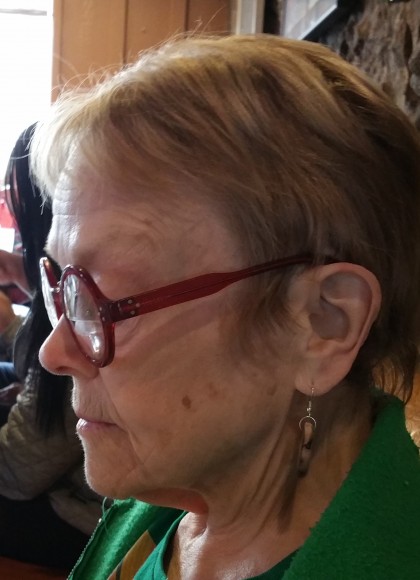
 After mussar, we take the back way through Hiwan Hills and enter the commercial district of Evergreen, the part for tourists, from the east and drive up to the Vienna Beef shop. It’s on a board walk that extends maybe two blocks and has art galleries, coffee shops, clothing stores and Mountain Man fruits and nuts. I buy two Vienna Beef sandwiches, equivalent to the ones you can purchase in Chicago, and we have them for supper. Up till yesterday afternoon it was a bland, but tasty source of protein for Kate. There was something a bit spicier on either the bun or the the beef yesterday and it made her mouth hurt. We’ll try again, just to see.


 Skype yesterday with RJ Devick of Bond and Devick, our financial planners. We meet with him once a year to go over our portfolio, look at upcoming needs, see if we need to make any adjustments to the draw from our IRA. This session in particular may have changed our lives a bit. We’ll see. Maybe some more money available for travel or work around the house. That would be nice, put a bit of a skip in both our steps yesterday.
 Spent most of yesterday on submissions. I revised School Spirit, taking 2.0 down to 2,700 words from 4,800, and submitted the revision to Mysterion. I developed a table in Word to track my submissions. It has these columns: submission, work, publisher, response, rejection, acceptance, contract, published. Later on today I’m going to begin revision of Superior Wolf, which I want to get out as soon as I can get it where I want it.
 So, I’m facing my fear, not only that, I’m leaning into it, grabbing it by the scruff of the neck and saying, “Come on, now. Message received. Stop already.” This is partly mussar driven, the practice I wrote about on
  Publishers and editors and agents, even critics and readers, are not lions or hyenas on the veldt. The fear I’ve allowed to rule me for the past three decades however has believed them so. The shame then is a complicated emotion which recognizes the self-deception and self-protection. It knows I’ve chosen the critique of intimates, why hasn’t Charlie ever published, to the critique of possible readers. That’s embarrassing, but it’s where I’ve been for a long, long time.
 I know that fear vitiates trust. If we’re afraid of another person’s motives, we’ll never get to know them well. If we’re afraid of public speaking, no one will hear us. If we’re afraid of our own motives, we’ll take few risks. In these cases, if we face the fear, listen to it, talk it down, choose to act differently, then we may find love, may discover that people want to know what we have to say, may open ourselves to the world’s rich opportunities.
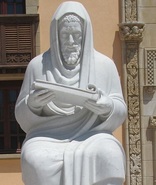
 Faith. The middah of the month for Beth Evergreen. Emunah. Last night at MVP, the mussar vaad practice group, we talked about emunah. Rabbi Jamie and Marilyn said that in the early days of mussar classes at Beth Evergreen, some time ago, the middah that caused the most consternation was this one.
 One of us in the group last night said, “The universe is for me.” I have other friends who believe the universe is a place of abundance, or, as author
  Turns out quite a lot. Another of us last night told a story of night diving. A favorite activity of hers. She said she turns off her diving light and floats in the night dark ocean. While she’s in the dark, she imagines a shark behind her. The shark may kill her in the next moment, but until that moment she is keenly alive. This is, for me, a perfect metaphor for faith. Each day the shark is behind us. A car accident. A heart attack. A lightening bolt. A terminal diagnosis. Yet each day we float in the dark, suspended between this moment in which we live and the next one in which we are dead. And we rejoice in that moment. There is faith.
 This is the existentialist abyss of which Nietzsche famously said, “If you stare into the abyss, the abyss stares back at you.” Living on in spite of its direct glare, that’s faith. This sort of faith requires no confidence in the good or ill will of the universe, it requires what Paul Tillich called the courage to be. I would challenge that formulation a bit by altering it to the courage to become, but the point is the same.
 So. My practice for this month involves, in Rabbi Jamie’s phrase, sharpening my doubt. I will remember the shark as often as I can. I will recognize the contingent nature of every action I take, of every aspect of my life. And live into those contingencies, act as if the shark will let me be right now. As if the uncertainty of driving, of interacting with others, of our dog’s lives will not manifest right now. That’s faith. Action in the face of contingency. Action in the face of uncertainty. Action in the face of doubt.
 So. Couldn’t get the mower started. Last year’s fuel still in there. Don’t know how I missed that, but I did. Gonna have to siphon it out, didn’t feel like it yesterday. I did run the snowblower out of fuel last week, so that won’t be a problem come winter. I also got all the chairs and the table moved, the swinging chair and the yellow lounger, too. An outside space for eating, hanging out. Not happy with it yet. Also picked up a lot of loose wood, not all of it, but a good chunk. By the time I got to the chainsaw I was tired. And I don’t do the chainsaw when I’m tired. Too damned risky.
 In writing the short story Jail Break yesterday, I found myself tapping memories of my day at the Plaza del Toros in Mexico City. Hadn’t expected that, but it is a good example of how much travel can offer to writing. That trip was in 1994, I think. Still clear and present.
 A big Beth Evergreen week. Tomorrow is an adult ed session on linguistics. On Wednesday afternoon Tara, Alan Rubin and I meet with Rabbi Jamie to discuss the curriculum for the 6th/7th grade religious school. Tara (director of religious ed) started her note to us with, “You brave men.” Oh, my. Turns out the curriculum focuses on bar/bat mitzvah preparation. I’m honored that they trust me. This rite of passage is important, though not universally observed. Wednesday night is the MVP, mussar vaad practice group, Thursday has mussar and qabbalah.
 Another recovery hallmark. Kate drove yesterday, went out on her own for the first time since March 22nd! The bank, a few groceries, gas. When doing these errands feels routine, they can be mindless or even a nuisance; but, this sort of moment allows us a glimpse into the ordinary miracles that make up what we think of as normal, usual. We can get up from the chair, pick up the keys, start the car, drive to the grocery store, the gas station, the bank.
 Mussar Vaad Practice Group last night. Vaad = sharing without comments. Mussar = Jewish ethics focused on developing middah, character traits. This is a group, partly because of its nature, partly because of its members that has become a Woolly Mammoth equivalent for me, a place where I can be transparent, share, look inside, gain from the ancientrails that others walk.