Samain Thanksgiving Moon
 Wonder what the stars (and the planets) have to say about reading my full chart for the first time today? We could look it up. I’m going to Golden, under Table Mesa, to the Bean Fosters coffee house. Elisa, a petroleum geologist, dean of academics at a consortium of community colleges and a member of Congregation Beth Evergreen has done whatever astrologists do with my birth information. She says the consult lasts as long as I have questions. She really doesn’t have that long, so I’ll restrain myself.
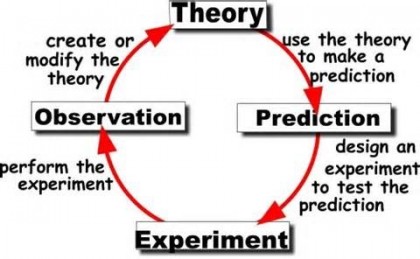
Even after finishing Tarnas the old statistical line, often heard in scientific circles, keeps coming to mind: Correlation without causation. It reminds us that many things correlate with each other, say a line of cars at a stoplight, with no cause behind them. It’s like diagnostics in medicine. A particular complex of symptoms may seem to point to a particular cause, but until the link between the symptoms and a certain cause is identified, all you have is correlation. And, it may be pointing you in the wrong direction.
Francis Bacon mentions four idols of the mind that lead us astray:*
*”Bacon also listed what he called the idols (false images) of the mind. He described these as things which obstructed the path of correct scientific reasoning.
- Idols of the Tribe (Idola tribus): This is humans’ tendency to perceive more order and regularity in systems than truly exists, and is due to people following their preconceived ideas about things.
- Idols of the Cave (Idola specus): This is due to individuals’ personal weaknesses in reasoning due to particular personalities, likes and dislikes.
- Idols of the Marketplace (Idola fori): This is due to confusion in the use of language and taking some words in science to have a different meaning than their common usage.
- Idols of the Theatre (Idola theatri): This is the following of academic dogma and not asking questions about the world.” wiki
 Bacon also points out that the path of facts and induction may be slow, but it heads in the right direction. No matter how fast you go down a path without facts, you will never reach the truth.
This way of thinking is the grand inheritance of the Enlightenment, follow reason. However, if you look at Bacon’s fourth idol, the idols of the Theatre, you will notice a potential problem. In Bacon’s time of course he aimed his critique at the Scholastics whose main mode of learning was deductive, starting often with scripture. It’s fair, at least to me, that now we consider whether the Copernican Self has become a contemporary idol of the theatre, an explanatory idea with great power, just like Scholastic reasoning, but, much like Scholastic thought, obscuring greater truths.
To summarize. I found Tarnas’ critique of skepticism personally valid. It’s a tool, not a way of life. I found his description of the Copernican Self and the primal Self accurate and helpful. I also took his point about the angst and anomie that infects our age as rooted in the disenchantment of the universe occasioned by thinkers like Copernicus and Descartes. His argument that it is time for a synthesis between the Copernican (modern) Self and the primal Self seems important to me, a correct diagnosis and a possible solution.
 His emphasis on depth psychology, in particular synchronicity and the collective unconscious, as partial evidence that the modern Self need not be wholly isolate makes sense to me. I had many years of Jungian analysis and find the non-pathological approach of Jungian thought very congenial. I’m not sure how many outside the world of depth psychology would agree with him on this point however. But, I do.
That synthesis between the modern and the primal, perhaps a neo-primal Self, does require some way of convincing modernist thought to make the leap, to create openings in the seal around its Self. This is a difficult requirement since it means setting aside that Self as the center of a disenchanted universe; much, it has just occurred to me, in the manner that Copernicus and Kepler dethroned the earth as the center of the universe.
 Neither an obvious nor an easy matter. “I’m going to have my chart read this afternoon.” “I know.” “Yes, you know, but you don’t approve.” “Oh, I think it’s fine to read your chart. But, believing it?” She shrugged. Kate and I share a strong or high version of the modern Self, reason uber alles. I have flirted, however, for a very long time with a Romantic view carrying an aesthetic and spiritual seeker’s heart inside a rationalist’s body and mind. This is not a synthesis. It’s a carrying of opposites, learning from both, knowing the parallel, never touching rails down which they run.
The synthesis between these two metaphysics, one disenchanted, one ensouled, seems like the task of our time, our Great Work, to use Thomas Berry’s idea. I don’t think it’s a coincidence that his Great Work for our generation, creating a sustainable human presence on earth, may require such a synthesis to succeed. I also think this synthesis defines the inchoate sense that I had about the need to reimagine faith. No, I don’t want to revert to an unexamined enchanted universe, to become a shaman for a world without reason. At the same time I no longer want to live in a disenchanted universe, alone in the cold vastness. Will astrology prove a tool to help with the synthesis? I’m not sure. But I’m gonna give it an honest examination. Starting with the event on 9:30 am on February 14th, 1947, in the small Red River town of Duncan, Oklahoma.

 Christmas and Hanukkah 2018 in the past. New Year’s eve coming Monday. 2019. The Blade Runner year: “In the 21st century, a corporation develops human clones to be used as slaves in colonies outside the Earth, identified as replicants. In 2019, a former police officer is hired to hunt down a fugitive group of clones living undercover in Los Angeles.” IMBD
 Been thinking about actions to fight climate change. The inversion of the Great Work championed by his Satanic Majesty, the orange tumor on our democracy, threatens human genocide. Intentional mass murder of potentially billions. Hitler and his crowd? Pikers.
 “The United States has an abundance of natural resources and is not going to keep them in the ground,” Mr. Griffith said. “We strongly believe that no country should have to sacrifice their economic prosperity or energy security in pursuit of environmental sustainability.” Wells Griffith, Trump’s international energy and climate advisor,
  Astrology is a thicket of wild claims, unjustified certainty, and intriguing utility. Sorta like religion. In my reading so far I’ve found sensible, modest intellectuals who lean on the utility, using this ancient discipline (Mesopotamian in origin.) to promote self-knowledge. I’ve also found, as you might expect, a number of at least charlatanesque figures who are only one step away from the traveling potion wagons of the early frontier. OK, maybe not one step away.
 In the later days of my interest in psychometrics there was a similar change from seeing certain personality characteristics as bad or good, especially those characterized as abnormal. Two instances from my own testing. I spiked both the 4 and 5 scales* of the MMPI when tested in the mid-1970’s in seminary. In the original uses of the MMPI these two scales supposedly determined whether you were a psychopath, 4, or a homosexual, 5. The new (then) understanding became: 4 spike = non-conforming, rebellious, angry, creative, family problems, impulsive and 5 spike = lacks traditional masculine interests. This testing was also done while I was still drinking and some of those 4 scale attributes reinforced my addiction. Though I may have lacked masculine interests (not quite sure what that means), I did have one clear masculine interest. Women.
 One more turn to Tarnas before my consultation with Elisa tomorrow. He made his move toward a synthesis of the modern mind and the Romantic–equivalent to the distinction between the self shaped by the Copernican disenchanted cosmos and the primal, ensouled (enchanted) universe that went before. His initial step came through depth psychology, tapping the collective unconscious and the idea of synchronicity to suggest a permeable self influenced by the cosmos and influencing it. Having opened the door between Self and cosmos with depth psychology, he turned toward astrology.
 His argument about skepticism as a tool, not an end, was a wakin’ up moment for me. Oh, duh! Of course. Only I hadn’t seen it that way. Skepticism was a way of life for me and I treated the world of ideas as you might expect. I embraced almost nothing, held every philosophical and religious claim at a skeptical arms length. Yes. And no. I had let the tool use me, rather me using the tool.
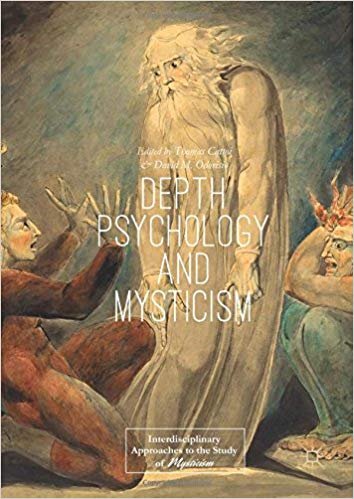 My only point here is that astrology, especially one linked as Tarnas does to the concept of archetypes, may provide us with aids to self-knowledge, aids that light up an enchanted universe, help it become visible. And if it does, I want to use it, include it in my tool kit. Right there alongside skepticism. But I don’t see it as the only, or even the most important, clue to an ensouled universe.
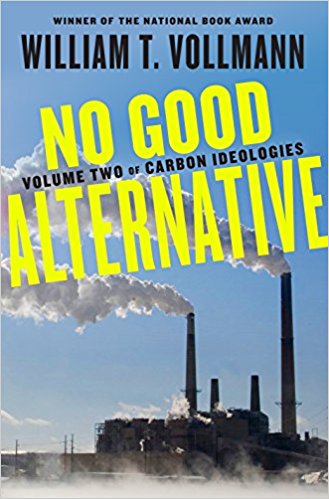 Though I haven’t begun to read them yet, William Vollman’s two volume work: No Immediate Danger and No Good Alternative, the Carbon Ideologies paints a bleak picture. So does the
  If we cannot slow down the rate of climate change (which is the most we can do, since so much climate change is already baked in), then we move to mitigation and adaptation. Geoengineering will become a buzz word as various strategies are tried. Climate refugees will become more and more disruptive across the world, especially those moving from coastal areas into interiors and onto higher ground. The already underway shifts in plant and animal eco-systems, climate refugees all, will bring them with different disease vectors, disruption to agriculture and sea life.
 We will not be known for Vietnam, civil rights, feminism, ruining health care, electing fascists to high office, but as the generation that allowed an earth compatible with human populations to slip away. Hard as it is to imagine the results of this inaction will be far, far more damaging than all the wars, holocausts and pogroms. How will we explain this to our grandchildren, to Ruth and Gabe in our instance? I understand the political and economic forces that have gotten us here, but explaining them will not alter the misery.

 Meanwhile in the Trump dimension: “
 Yale Environment 360 elaborates