American?

Summer                                                                Most Heat Moon

As the fourth of July spreads around us like Adirondack chairs scattered on a vast green lawn and the coming night brings the promise of fireworks, Andover has that casual, up at the lake feel. Motorcyclists went by on Harley’s earlier, flags whipping behind them. Here and there bicyclists go for a daytime ride. It’s America.

Octavio Paz tried to find the Mexican identity in his “Labyrinth of Solitude.”  The land we now call Mexico was already inhabited by complex civilizations like the Mexica and the Maya as well as numerous smaller groups of indigenous peoples. In Oaxaca state alone there are 250 languages. When the conquistadors came, they began a process of suppression and assimilation that, in Paz’s view, obscured and/or erased indigenous identity and conquistador identity alike. Given that the stock of both had given way in the mix, what was a Mexican? Who was a Mexican?

In the United States the process has been different. The land was bigger, the native population smaller and the clash between native and colonist much more about suppression than assimilation. Too, continuing waves of immigration, including the importation of enslaved Africans, caused assimilation to occur more among groups of immigrants, rather than between colonists and indigenous peoples. The numbers of immigrants, as well as the size of the United States, led, also, to large enough immigrant communities where assimilation could be staved off for a long time, and perhaps avoided altogether, at least in the Mexican sense.

So, we now have a country not based so much on the melting of one group into another, Mexico is a much better instance of the so-called melting pot, but of different peoples from many lands living under the same political and legal roof. In Chinatowns throughout the country thousands of American citizens, maybe millions, live their daily life speaking Mandarin or Cantonese, working in Chinese restaurants, retail establishments and in general conducting their lives within a cultural context more Chinese than Western. Yet they are Americans as much as I am. The same with the Hmong. African-Americans, though stripped away from their original cultures long ago, have created a strong sub-culture of their own and many if not most of them live within it totally. Yet, they too are as American as I am.

Then there is the strong stream, ironically, of Latin immigrants, most from Mexico, who not only live their lives here speaking Spanish, shopping in bodegas, celebrating quinceaneras and attending Mass or visiting botanicas, but have begun to assimilate us, reshaping certain cities toward a more Latinized culture. This is a process that will continue. Up here in white, Scandinavian and German Minnesota, all of this can seem quaint, even a touch exotic, but Minnesota too is being transformed, now by waves of immigrants from the Sudan, Ethiopia and Eritrea.  Thousands of these Africans, not enslaved, never enslaved, come here with their culture’s intact, but when they raise their hand and pledge allegiance to the United States of America, at that point they, too, are as American as I am.

We are unusual in our commitment to integrating many races, many ethnic origins, many religious beliefs under one flag. Even though there are certainly countries with more internal diversity than we have, India for example, we are the one country committed to making ourselves a nation of others. Even though we go through waves of nativism-badly mistaken as we are all boat people except for the natives-we do take in people in large numbers and often they are as Emma Lazarus wrote:

“…your tired, your poor,
Your huddled masses yearning to breathe free,
The wretched refuse of your teeming shore.
Send these, the homeless, tempest-tost to me…”

I’m not a flag-waver, not hardly, but I have come to appreciate the unique and precious nature of this experiment we call the U.S.A. I’m proud to be an American.



Writing

Summer                                                               Most Heat Moon

Started reading Erich S. Gruen’s, “The Last Generation of the Roman Republic.” This 1974 work challenges preceding understandings of the fall of the Roman Republic.  Until Gruen, scholars focused on the conflicts, tensions and undercurrents in the period just before Caesar crossed the Rubicon. Gruen chooses to look at those elements of the Roman Republic that remained intact even after the civil war.  It’s a big book, heavy. But readable.

Over the years I’ve focused on Mexica, Celtic and Northern European gods and culture in my novels. There was one side excursion into chaos magic and another into contemporary iron range, boundary waters culture, but I’m headed now towards Rome, especially Augustan Rome, the time of Publius Ovidius Naso. I’m not sure where this journey will take me, though the translation of the Metamorphoses will inform it, as will the trip to Romania and Constanta.

What will happen to the Tailte novels I can’t say right now. If I start getting nibbles or a bite on Missing, they remain available to me with about a third of the second novel already written. As I wrote a while back, I don’t want to invest the years it will take to finish the trilogy if there’s no interest in the first book. Perhaps I’ll feel differently at another point.

That means I have the book about our property here, the Roman work and a couple of other novels part way done. One, Superior Wolf, a werewolf story set in northern Minnesota, still draws me back from time to time as does a story about witchcraft.

In light of the process before productivity thinking I described a few posts ago, I realize the writing itself, the process of creation defines me. The products, finished novels and short stories, are in fact byproducts of a relentless curiosity. A further byproduct, publication, is pretty far removed from the journey. Journey before destination.


Almost the 4th

Summer                                                          Most Heat Moon

The last few days have been cool, more late September than early July. Kate worked 2011 06 26_0933early spring 2011outside a long time yesterday, clearing weeds out of the third tier of our garden and it looks great. It’s pleasant to work outside when it’s cool, much less so when it’s hot. I sprayed the orchard and the garden, mounded soil around the leeks to blanch them and moved much of what Kate had thrown over the fence.

Jon and Ruthie are on the road right now, headed toward Kansas City (on purpose), then north to Andover. It will be fun to have them here.

Jon’s going to put in a new deck for us. This was arranged long ago, but it will be good for selling the house.

These nights leading up to the 4th of July and the 4th itself are a problem for our thunderphobic (astraphobic) dogs. They inspire those neighbors who like to shoot off fireworks, one batch (not the usual suspects) who set them off around 10 p.m. each night lately. That’s just enough to launch Gertie (our German shorthair) out of her crate.

Click on the poster for its full effect.


Living in the Move

Summer                                                         Most Heat Moon

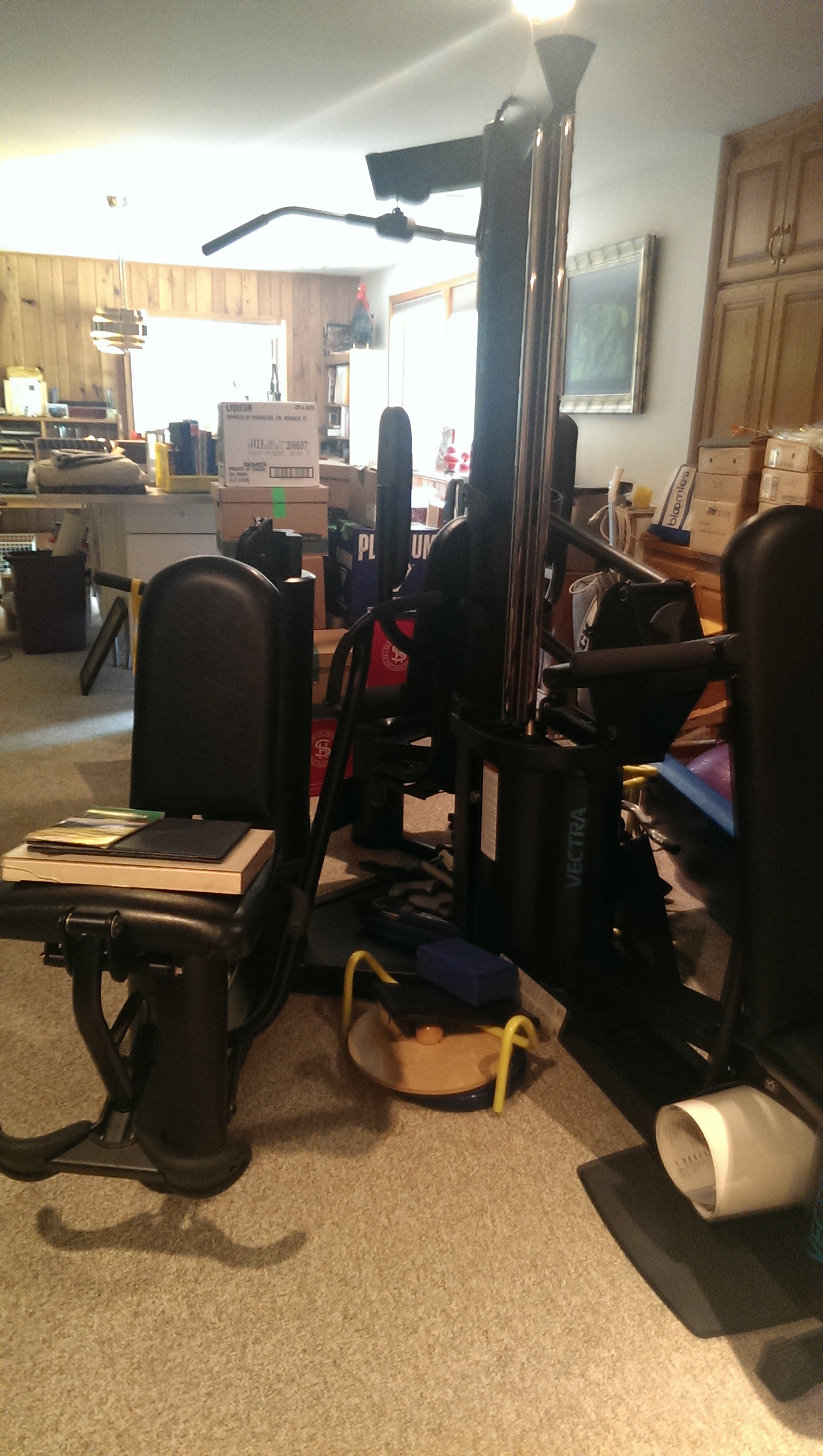
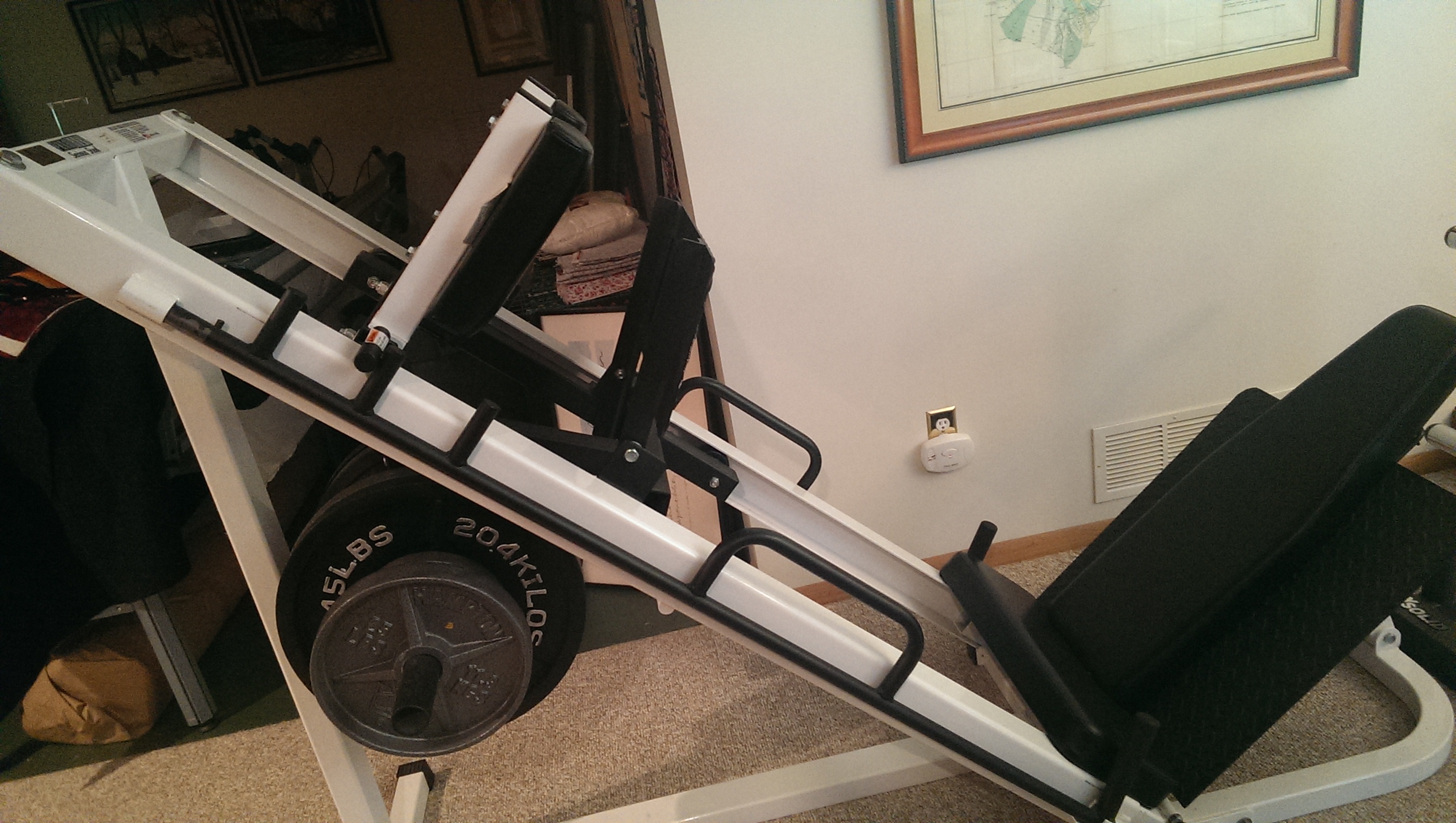
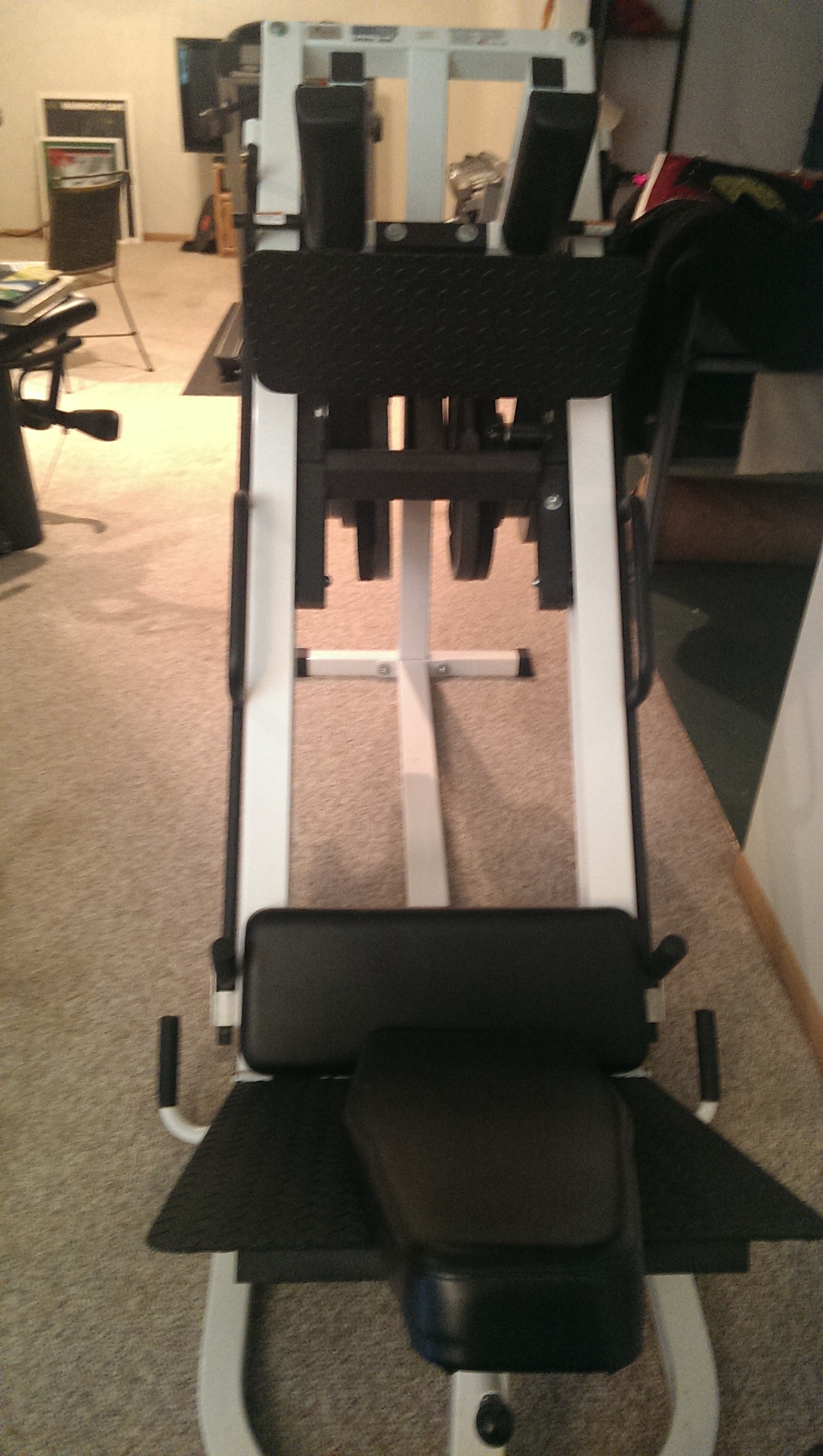
Left behind. The Vectra and the leg press will rapture out of here this week or next, sold toIMAG0292 2nd wind for a small fraction of their original price. But, as I said, we amortize that cost over the many years we’ve had them, the gym fees we didn’t pay and the travel time we saved. We come out ahead, plus we’ve had that commitment to fitness they encouraged.

Mark Allard just came by on another move related errand, getting the front of the house pruned and made pretty for marketing in March of next year. He runs a lawn and yard work company out of Stacy. There’s a lot of work to do, but nothing a crew that knows what they’re doing can’t knock out in a day or less.

We’re slowly putting slack in the lines of that circus tent, you might be able to see it sag a bit now. Once the Minnesota several-ring circus gets pulled down, loaded up and moved, though, we still have the task of setting up the circus in the west. That will take time, too.

Living in the move is the only way to handle this process for us. We’re neither fully here nor at all there. And won’t be for awhile.

Be the Change or Change the System?

Summer                                                                  Most Heat Moon

1968. Martin dies. Bobby dies. The Chicago riots at the Democratic National Convention. Local boy Hubert challenges Richard (enemy’s list) Nixon and Nixon wins with a knockout 301 electoral votes. This brought Spiro (nattering nabobs of negativism) Agnew into office, too. Oh, what a time it was.

On the outside, including certain rioters at the Chicago convention who would become famous as the Chicago 7, was a massive, incoherent largely college student uprising known as “the movement.” In those days there was a split within the movement about whether to engage the political system, the establishment (a term borrowed from American thinker Ralph Waldo Emerson), through protests and (usually) alternative candidates for election like Dick Gregory, or, to drop out.

Tune in, turn on, drop out was a favorite mantra of those who contended the establishment was too corrupt to change and instead must be ignored while a new culture was built. This was the time of communes and the back to the land movement. The split within the movement identified hippies who wanted to live together in a participatory democracy, often rural, but not always, and radicals, who thought protest and work in congress could bring an end to the Vietnam War and usher in an era of peaceful, socialist-style politics.

These two groups, the hippies and the radicals were, within the movement itself, seen as opposite, if not opposing camps. At its core it was a political equivalent of the debate within Western Christendom between quietist monastics who retired from the world into a life of prayer and contemplation and the engaged church which tried to influence the lives of people in their worldly home.

Today the camps divide less obviously but they cluster around, on the one hand, folk who might have a “Be the change you want to see in the world.” bumper sticker, and on the other, those who have a 99% button or a Sierra Club hiker on their car.

I never understood the conflict myself. I became a committed back to the lander, purchasing a farm in northern Minnesota while remaining, at the same time, committed to political action. It still seems to me that living the change and acting politically go together. They are points on a continuum of belief turned toward action, not dialectical opposites.


Stuff We’re Leaving Behind

Summer                                                                     Most Heat Moon

Selling used exercise equipment. Over the last six to nine months I’ve revised my workout IMAG0286routine using P90X resistance and high intensity aerobics. This new combination, which I prefer over everything else I’ve done, takes 3 sessions of about an hour a week. My Landice treadmill, free weights, a bench and a pull-up bar are all I need. The multi-exercise Vectra 1850 and the Parabody legpress don’t fit in any more, are heavy and there is no reason to move them.

But. Exercise trends have changed since 2004 when I bought the Vectra with money from my dad’s estate, moving more in the direction I’ve taken myself. That reduces the market for Vectra like equipment to almost zero. Plus it’s big. So, I’ll try to use it for barter with one of the workers we hire over the coming months.

The Parabody is an excellent and functional apparatus, too. 2nd Wind exercise may buy or deal for both of them. Still, these are instances, as you might imagine, where the retail price and the wholesale price diverge quite a bit. Kate has the right attitude. We’ve had IMAG0289good use from both machines. I used the Vectra daily for many years and used it a lot right after my Achilles surgery for rehab. The leg press likewise. It’s only recently they’ve been supplanted by my free weight work. When you add in ten years of use, the elimination of expensive gym memberships and travel time to and from a gym, we’ve more than gotten our value out of them.

This is just part of the process of decluttering and reordering our lives.