We had two ribeye steaks last night. After Kate and Ruth lit the shabbos candles, I said my piece about the cattle we knew from the meadow. The primary point was to say thank you to the animal who gave his or her life. The words felt clumsy and anachronistic in my mouth, but right. It was a simple moment, not long, but placing us, as brother Mark pointed out, among others from Jain to Native Americans who stop to honor their food.
It particularly felt right juxtaposed against the familiar Midwestern grace, Bless this food to the use of our bodies. The food is all about us. We can safely ignore the real animals, the real vegetables because God made them for us to eat. This is another way in which traditional Christian values deflect believers from the world around them to the world beyond or at least to a source beyond.
This was a pagan ceremony, one that directs us toward the vital and necessary web of interdependence that sustains us all. This particular cow was not a sacrifice to an abstract principle. In fact there was nothing abstract about it at all. This meat came from an animal that lived this year, ate grass that grew this year, nourished by rain that fell this year, breathed oxygen this year. And her essence did not reach the gods through an altar fire, rather it entered into the truest and most significant transubstantiation, the same transubstantiation that occurred when the grass entered her four stomachs, a transubstantiation facilitated by water falling from the mountain skies of Colorado and the true and astounding miracle of photosynthesis.
Ultimately our meal, not only the beef, but the green beans, the baked potatoes, the pasta and pineapple, the bacon bits and sour cream, was on the table, hecatombs for humans, by the power of nuclear fusion. The sun projects light and warmth into the solar system it holds in its gravitational thrall. On this earth the also miracle of evolution, began among the deep sea vents billowing out sulfur and heat from earth’s own interior, has found a way to embrace Sol, our sacred source of life and light. (eatsunshine) We eat sunshine. Reimagining faith then must embrace astronomy, evolution, plant biology, animal science, human culture. This embrace occurs most intimately each time we sit down to eat, no matter the culture or religious beliefs represented. We live and move and have our being thanks to the elemental forces driving our local star and the astonishing fact that our planet has shaped its own elements into hands and leaves and hearts and minds able to receive those forces into our own bodies. Quite amazing.
Divorce matters seem finally to be breaking Jon’s way. Can’t say more than that right now, but I’m glad.
Took a long ride with Kate out to Elizabeth, Colorado to the Elizabeth Meat Locker. We purchased a quarter side of beef from the Carmichael Cattle Company and they have a contract with the Elizabeth Meat Locker for butchering. We’d not been out this way, south and east of the Denver Metro, so it was an interesting drive. Passing through Parker we both commented on the area’s similarity to Chanhassen, Chaska, Jordan in Minnesota. Then the hilly country began to look like 169 headed to Mankato. Of course, to maintain these similarities we had to keep our eyes from the west where the Front Range rose.
Elizabeth itself is a small rural community that could have been anywhere, usa. It has a small historic downtown; that is, older retail buildings repurposed into boutiques and a fiber art store and antique shops. Mainstreet is Co. Highway 86 and there is the obligatory Walmart anchored, downtown killer of a strip mall on the edge of town.
We ate at the Catalina Diner, a restaurant that would have felt at home in southern Indiana. It had automobile, 1950’s automobiles, posters, high-backed white booths, two lunch counters. Comfort food.
shootout-in-elizabeth
This whole journey was an unusually difficult one, emotional in a way I’ve found strange for over a year. Let me explain. Each time we headed down Shadow Mountain Drive for Aspen Park or Denver, we passed two small fields carved out of a narrow mountain meadow that sits under Conifer Mountain. It has two ponds, a few stands of trees, but is mostly grass.
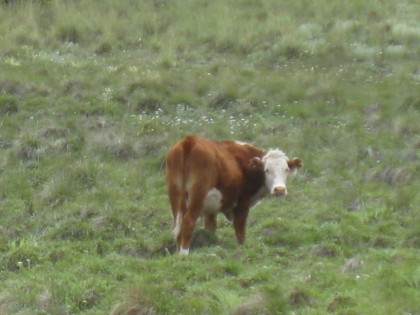
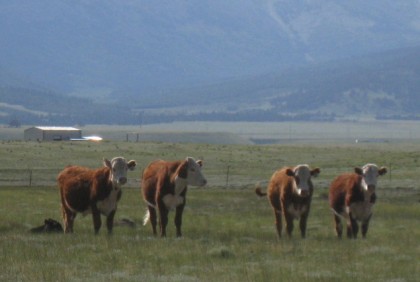
Over the course of the year Carmichael Cattle has fed three angus and one hereford there. As we drove past, I would look for these cattle, tails twitching, heads down. Or, huddled together in the shade in a hot summer sun. Each time I was glad to see them. Glad these animals were there as we drove by. Part of my enjoyment of them was a tie to my rural roots in the Midwest. I miss the ever present signs of agriculture: fields of corn, fields of soybeans, tractors, combines, dairy and beef cattle. These cattle gave me a link back to the roadsides of my former life.
But. I also enjoyed them as individuals, seeing them interact with each other, wander off in search of a good spot to graze, standing next to each other. Each time I went past them I knew it could be that later in the fall I would be eating one of them. This made me sad and a bit forlorn, knowing that my heart was in conflict with my head.
My head says ethnobotany. Our culture chooses our diet for us, decides which foods are tasty, which gross, which taboo. Our bodies are neither obligate carnivore nor obligate vegetarian. We are designed by evolution as omnivores, able, thankfully, to eat what the world places in front of us, be it plant or animal. This is a great advantage for us as a species and has allowed us to thrive in many diverse climates. There is nothing wrong, then, about eating meat, either from a biological or cultural perspective. Meat is simply one source of food.
But. I enjoyed seeing them as individuals. I knew they were individuals. I could tell by they way moved through the field. One seemed to gravitate toward the shade. Another seemed more social, following its colleagues closely. They were, in fact, separate from each other, unique, not cattle sui generis, but this cow, that bull. They were not, in other words, meat in the abstract, but meat on the hoof, meat as the muscle of living creatures, muscle that functioned within these animals I enjoyed.
To purchase their meat was to kill them as surely as if I took a rifle out and shot them. Back in 1974 I moved onto the Peaceable Kingdom, a farm Judy and I bought in Hubbard County, Minnesota, the county home to the headwaters of the Mississippi. We had goats and decided we wanted to barbecue some goat meat. Johnny Lampo, the man who rented our fields and farmed them, gave me his rifle and I killed one of our our goats. I’ve not been the same since. I can’t even euthanize our dogs.
Though raised in the agricultural Midwest, though I attended 4-H fairs in my youth and state fairs in Indiana and Minnesota, though I knew well the connection between actual animals and the wrapped packages of hamburger, the sirloin steak, the lamb chop, the pork tenderloin, I had still been insulated from knowing that this cow, this bull was the source of my pot roast.
It was this awakened sensitivity, perhaps a sentimental one, ok, definitely a sentimental one, a sensitivity awakened in brief moments passing cattle in a mountain meadow that put my heart into conflict with my head. Even in my heart I don’t feel eating meat is wrong, but I do feel that knowing the animal from which my meat comes changes things. A lot.
So this evening when Kate cooks the ribeye steaks thawing right now in our sink, I plan to add a small ritual to the lighting of the shabbos candles and the sharing of challah. We will remember the animal that died so that we may eat, so that our bodies might be strong. We will thank this particular individual for the role he or she plays in our daily life. We will acknowledge the cycle of life, the interlocking web of life and our mutual parts in it.
This is, I think, one of the missing parts of our 21st century life, honoring the plants and animals that have to die to keep us alive. Without the heart connection we are rapers and pillagers of our environment, no better than Big Ag and its ruthless exploitation of the chain of life for profit.
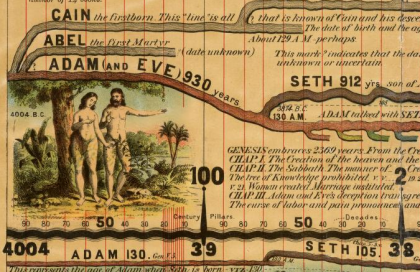
The ten days of awe have ended, the book of life has been sealed. The year 5777 is well underway. In case you wondered, as I did, when the Jewish calendar began, it’s with creation. There are apparently fudges about the first six days and their length. One, for example, says the first four days could not have been 24 hours because the sun had not yet been created.
Anyhow, it’s similar to Bishop Ussher’s famous calculations in the Christian tradition. He estimated the age of the earth by counting generations from the 7th day of creation. “By Ussher’s calculations, we are now set to enter the year 6020: 4004 plus 2016. This is very close to Jewish tradition, which puts us in the year 5777.” Globe and Mail
We slide now into ordinary time until, that is, the next holiday. Which on the Jewish calendar is Sukkot, or the feast of the booths.
I now celebrate several distinct new years. The Jewish new year, just over, comes not long before the Celtic new year which begins on Samain eve, or All Hallow’s Eve, Halloween. The next one is the Western calendrical new year on January 1st and that is followed by the lunar Asian new year, which comes sometime in February. That’s at least four opportunities to assess the old year and make plans for the new one.
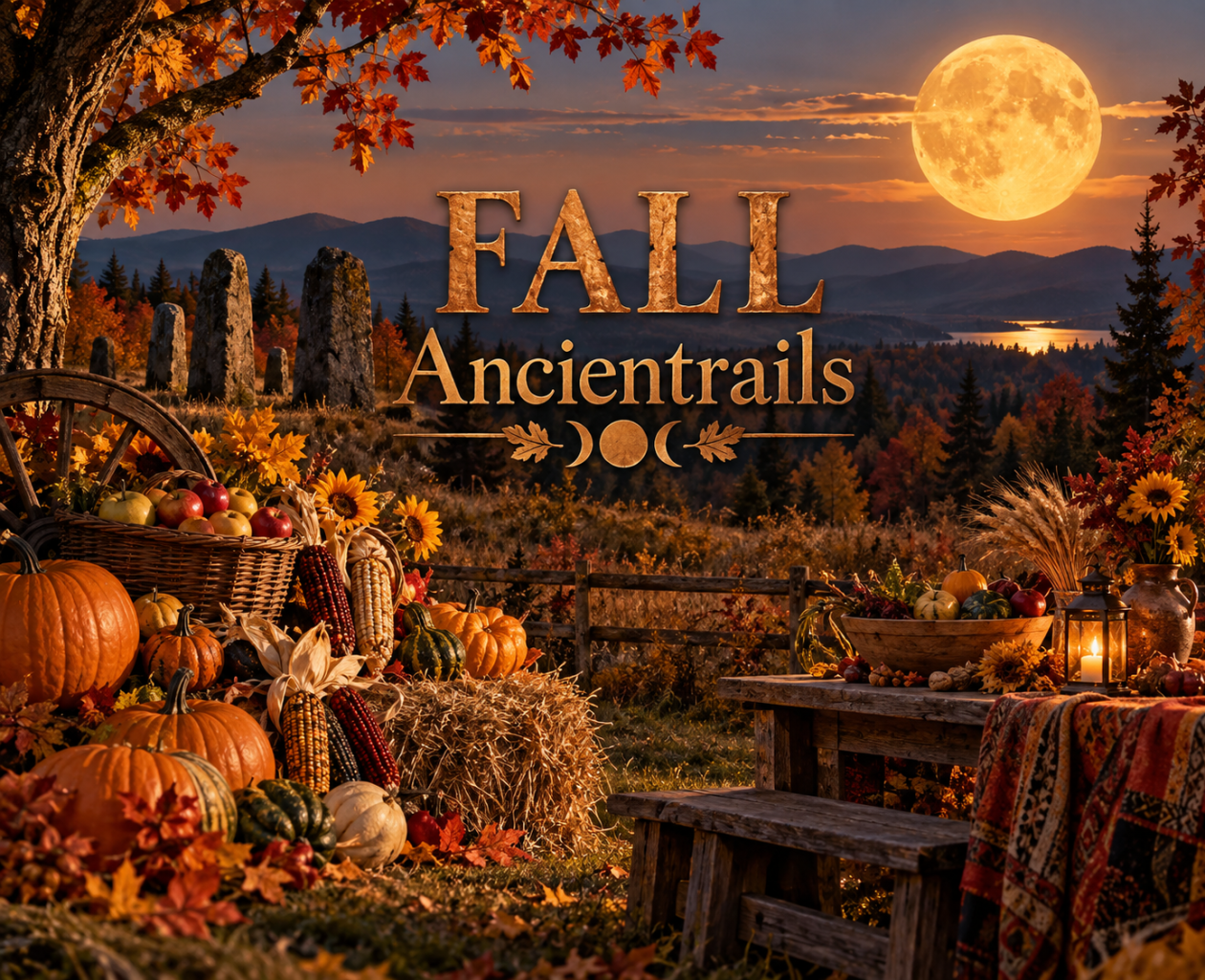
This fall season will end on Samain, the third of the three harvest holidays: Lughnasa, Mabon and Samain. The Celts began their new year with the end of the growing season, a last fruit’s festival, one marking the beginning of the fallow time. I like the specifically seasonal emphasis of Samain, tying the new year not to dogma or tradition or an arbitrary date like January 1, but to the cycle of life on earth, a cycle influenced by the sun.
Each of these new years has its own flavor, it’s own thing to commend it. A good deal, really, all these variations.
On erev Rosh Hashanah I went to Beth Evergreen with Kate. The beginning of the Jewish New Year, 5777. Last night I went to the kol nidre service which starts the holiday of Yom Kippur, the end of the 10 days of awe. This morning Kate and I went to the main service for Yom Kippur. It began at 9:30 am and finished at 1:00 pm. Surprisingly, it went so smoothly that I barely noticed the time passing.
Beth Evergreen’s sanctuary has multiple clear glass windows that offer views of Bergen Mountain and Elk Meadows. The view next to the Torah Ark had a mountain side filled with lodgepole and Ponderosa pine. Almost to the peak of the mountain though there was a small stand of aspen, golden still, in a perfect heart shape. All through the service I had a symbol, an accident of nature, created by my view, my perspective that synched up remarkably well with the overall theme of Yom Kippur, atonement. Also, up and to my right, at the roof of the sanctuary, a square window framed the tip of a Ponderosa pine. It looked like a painting by a member of the Kano school of Japanese art.
On this day Jews (and those of like mind) look back over the last year and consider the ways they have fallen short. A prompt to discover how you might have done so are the al chets. For example:
For the mistakes we committed before You through having a hard heart.
For the mistakes we committed before You through things we blurted out with our lips.
For the mistakes we committed before You through denial and false promises.
There are 44 such prompts at this website. A woman who spoke during the service made a very helpful distinction, “Christians,” she said, “are sinners. We sin.” And, Yom Kippur is a day when Jews can acknowledge their sin, atone for it and enter the new year a new creation. This makes abundant sense to me. We are limited creatures, bound to err, even as we strive not to. This does not make us essentially bad (original sin); it makes us human. It is no wonder that Yom Kippur is the most sacred day of the year for Jews.
There was much music. A choir. A jazz band. Last night a cello. Guitars, Rabbi Jamie Arnold and a former member of the congregation. A grand piano. The cantor Tara Saltzman. A lot of congregational singing. A congregational songbook of 30 pages contained songs for the congregation to sing, several of them written by Rabbi Jamie.
This was interspersed with events like members of the congregation lighting candles, taking the Torah in its full dress and carrying it throughout the congregation, short speeches and Torah readings. The Reconstructionist prayer book provided the traditional liturgy, but one filtered through the reconstructionist theology.
When the Torah in its red cover and its silver ketel (crowns) on its atzei chayim (the wooden shafts that hold the scroll itself) and a torah shield hanging from the atzei chayim went among the congregation on the shoulders of a congregant, people reached out with their with High Holy Day prayer books, touched it and kissed the book. Others with prayer shawls lifted a corner of the shawl and touched the Torah, kissing the shawl where it had touched the Torah.
At other moments those who had a death in the last week stood and gave the names of the one who died. Remembrance of those who have died and recognition of those in mourning are parts of each service, not just Yom Kippur. This recognizes the tribal nature of the congregants, their intimate relationships with each other through blood. The Yahrzeit, the year anniversary of a death, is also important and recognized during each service.
This was my first experience of the ten days of awe, the period from Rosh Hashanah to Yom Kippur. It reinforced my view of Judaism as a practical, humanistic faith, one that knows the human animal for what we are, not what we pretend to be. Yes, for many it still has a God at the center, but for many it does not. Oddly, it works just as well either way. At least from where I sit.
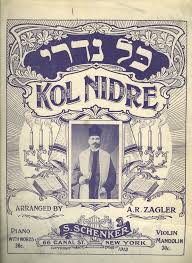
When Kate and I drove home from the kol nidre service at Beth Evergreen last night, the Hunter Moon lit up a sky covering labyrinth of white fluffy clouds. Occasionally, a few clouds would become very bright, then a hole would open, briefly, and the three quarter moon would not only backlight the cloud cover, but provide a luminous presence, too. It was a magical sky, a sort that seems particular to the onrushing fall. Aspens still blaze bright gold in some places, in others the leaves have turned brown and blown away leaving stands of naked branches as harbingers of the winter months.
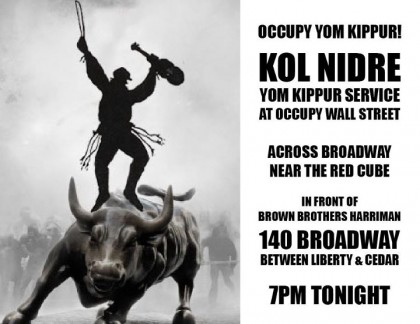
The kol nidre service starts Yom Kippur, the day of atonement, and has many elements, most elements, new to me. Even so, I could tell that this service with roots in the middle ages as well as the ancient past, spoke of a people, a tribe, with a nuanced understanding of what it means to be human. We are neither angels nor devils, rather we do good one minute and bad the next. Knowing this, placing it at the heart of the most sacred day of the year, makes Judaism a powerful poem. It teases out the curious mix of pride and shame that inhabits us all, says, yes, ok, but now let’s focus on next year. Let’s seek pardon and forgiveness for where we failed and reinforcement for what was good.
I feel odd at Beth Evergreen. My physiognomy is out of place. The language of many of the prayers and songs is foreign to me. I don’t feel, and don’t expect to feel, part of the tribe. Yet, Kate feels, is, part of the tribe. Also, much of the content resonates with my own faith reimagining project.
I’m learning, at 69, that analytical thought is not the best tool for religious insight. Rather, the heart and its contradictions, its powerful pushes and pulls, can create a warm and joyous place where even the most egregious of errors can be contained without problem.
Superior Wolf has reached a rough half way point. Maybe. I’ve written about 45,000 words toward a goal of 90,000. I say maybe because my ambitious goal for it may require a longer novel, perhaps as much as 150,000 words. Not sure yet, not sure right now how I’ll know if I need to go longer. My goal is to write a novel of a sort I admire, long and bending of genre, deeply researched, typified by two books: Jonathan Strange and Mr. Norrell by Susanna Clarke and The Historian by Elizabeth Kostova. Superior Wolf feels like my best effort toward this goal of anything I’ve written.
750 words a day seems like a sweet spot for me. Sometimes it takes 30 minutes. Other days four or five hours. But writing 750 words every day produces a steady accumulation of text, enough to make it seem both adequate and effective. Self reinforcing.
Working on homeowners insurance right now, a fraught topic in the red zone. The red zone, which I have mentioned before, is the area in Colorado most likely to experience wildfire. Jefferson County, our home county is the long, narrow county which abuts the southwest side of the Denver metro (gray blob, high center right). We are smack in the middle of Jeffco’s redzone.
There are many things to consider, but the most important is the replacement value of the home. Since replacement for a structure will be undertaken in a contemporary environment (at the time of the fire), the home’s initial construction value is irrelevant. What matters is what it will take to rebuild an equivalent structure when a fire occurs. This is, of course, affected by any upgrades. We’ve added solar panels, refreshed the kitchen and redone the downstairs bathroom. You don’t want to pay for too much replacement value, but you for sure don’t want to have too little. A tough balance to strike.
Also called the guy who installed our boiler for an inspection before winter gets ornery.
Final activity for yesterday was changing the oil in the snowblower. If you have any mechanical aptitude, this is probably not worth mentioning. In my case the material world and I struggle every time we come in contact. I did get the job done, but it took much more thinking and jiggering than it might have. Example: to drain the oil the snowblower has to be tipped over on its side, but not fall over. That meant balancing the snowblowers unwieldy bulk with my legs while my arms prevented it from tipping over all the way. The result was dependence on my knees for backward stability. And that left one isn’t working so well right now. Gave me a couple of interesting moments.
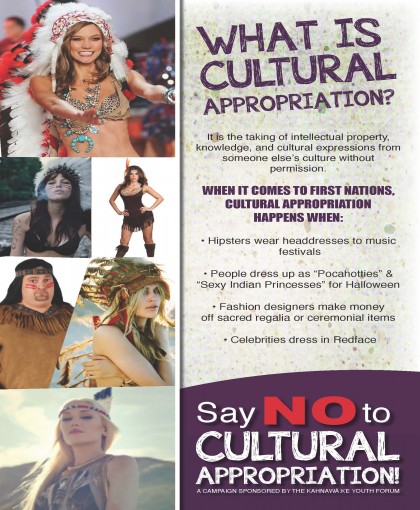
Ruth wanted to see the Queen of Katwe, the story of a poor Uganda country girl who became a chess champion. So we did. It was a good movie, not great; but, its almost all black cast reminded me of Luke Cage, which also has an almost all black cast. I have been and am suspicious of the idea of appropriation* as bad, but these two media pieces have made rethink it.
The problem I have with the idea of cultural appropriation is its clash with the aims of art. We could not write books, make movies, script plays, probably even compose music if we did not borrow both from the realm of our personal experience and from the experiential realm of others. At its most fundamental, a man could not write about women, or a woman about men. And, to drill even deeper into this morass, since we can never know the interior life of another, I could not write about anyone else.
Also, to have no characters or roles or melodies that have roots in cultural experiences other than your own would make novels, films, plays and music monuments to cultural isolation. Too, the voice of one culture’s representative commenting on another’s is the stuff of art and provides important information, reflection for our common life as members of a diverse human community.
Having said that I found myself intrigued with both Luke Cage and Queen of Katwe because they had almost all black casts. The voice of the characters, the setting, the narrative drive had an integrity, a cohesiveness different from a white dominated movie or television program. The vulnerabilities, tensions, outright conflicts reflect immersion in Uganda and Harlem. They help open up a world, a way of being, a certain thrownness, as Heidegger put it, that is well outside my white, male, middle class, small town Midwest USA experience.
This presentation of the panorama of black and African characters humanizes them, makes them real, in a way that appropriated roles often cannot. What I’m saying here is that the positive argument stemming from the idea of cultural appropriation, that members of a group or culture can tell their own story best, seems validated for me by this particular movie and this television series.
However. The notion of silos, common in critique of bureaucracies, corporate or governmental or academic, seems to me to apply here, too. Silos are self contained domains, segments of a differentiated work place. The easiest place to see silos is in academe where biology and physics occupy different departments, often different buildings, and usually do not communicate. The internal culture of the military makes it secretive while congress wants transparency, the EPA is a separate agency of quasi-cabinet rank, so it is separate from the department of Agriculture where many matters of critical environmental concern receive attention. The critique is that while the silos differentiate and protect, the world is not so divided. Biology and physics operate within each organism. In the world as it is, Federal Superfund sites, under the administration of the EPA, interact directly with farms and municipalities. There was no bureaucratic barrier between the toxic waste pouring from the Gold King Mine and the waters of the Animas River.
Sorry to have belabored that but my point is this: even if cultural appropriation was to become a norm, it would create its own problems by cordoning off the experience of one culture from another, creating silos of African-American experience or LGBT experience.
It seems to me that the best world would allow and encourage both works by members of all cultures that include and therefore reflect on other cultures and works by and about members of one culture. Let the reader, or the movie goer, or the symphony audience experience the tensions and conflicts. That’s the way to a richer and more intense dialogue among and between all people.
*Cultural appropriation is the adoption or use of elements of one culture by members of another culture.[1]Cultural appropriation is seen by some[2] as controversial, notably when elements of a minority culture are used by members of the cultural majority; this is seen as wrongfully oppressing the minority culture or stripping it of its group identity and intellectual property rights. wikipedia
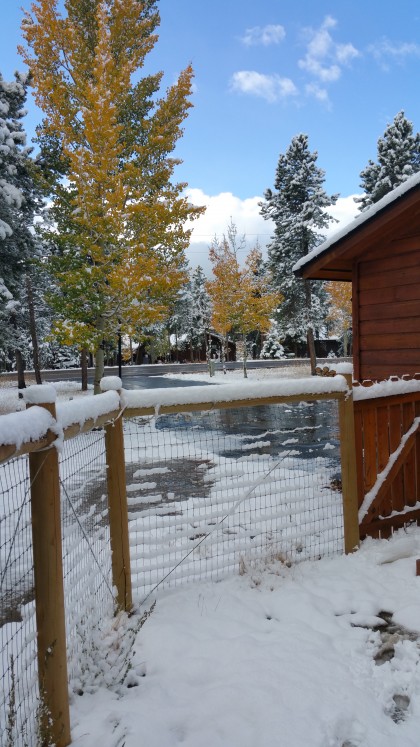
I didn’t post these when it happened, on Wednesday of this week, but we’ve had our first exposure to the upcoming winter. We still have snow in our backyard which faces north and the ski runs cut into the face of Black Mountain also have snow. It’s higher and the runs have trees for shade. You can see them in the first picture.
 (eatsunshine) We eat sunshine. Reimagining faith then must embrace astronomy, evolution, plant biology, animal science, human culture. This embrace occurs most intimately each time we sit down to eat, no matter the culture or religious beliefs represented. We live and move and have our being thanks to the elemental forces driving our local star and the astonishing fact that our planet has shaped its own elements into hands and leaves and hearts and minds able to receive those forces into our own bodies. Quite amazing.
 Divorce matters seem finally to be breaking Jon’s way. Can’t say more than that right now, but I’m glad.
 Elizabeth itself is a small rural community that could have been anywhere, usa. It has a small historic downtown; that is, older retail buildings repurposed into boutiques and a fiber art store and antique shops. Mainstreet is Co. Highway 86 and there is the obligatory Walmart anchored, downtown killer of a strip mall on the edge of town.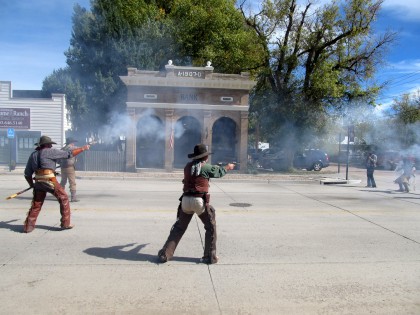
 My head says ethnobotany. Our culture chooses our diet for us, decides which foods are tasty, which gross, which taboo. Our bodies are neither obligate carnivore nor obligate vegetarian. We are designed by evolution as omnivores, able, thankfully, to eat what the world places in front of us, be it plant or animal. This is a great advantage for us as a species and has allowed us to thrive in many diverse climates. There is nothing wrong, then, about eating meat, either from a biological or cultural perspective. Meat is simply one source of food.
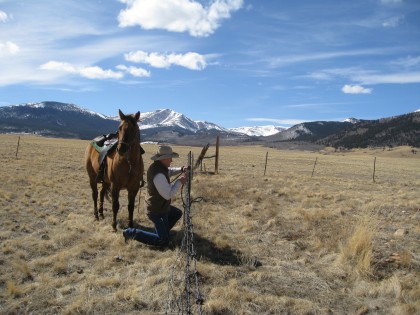 To purchase their meat was to kill them as surely as if I took a rifle out and shot them. Back in 1974 I moved onto the Peaceable Kingdom, a farm Judy and I bought in Hubbard County, Minnesota, the county home to the headwaters of the Mississippi. We had goats and decided we wanted to barbecue some goat meat. Johnny Lampo, the man who rented our fields and farmed them, gave me his rifle and I killed one of our our goats. I’ve not been the same since. I can’t even euthanize our dogs.
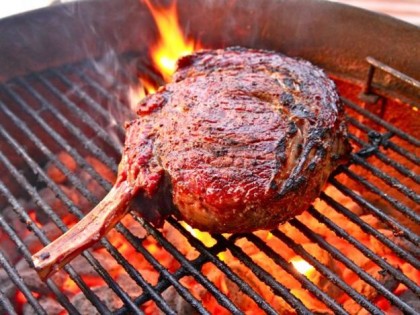 So this evening when Kate cooks the ribeye steaks thawing right now in our sink, I plan to add a small ritual to the lighting of the shabbos candles and the sharing of challah. We will remember the animal that died so that we may eat, so that our bodies might be strong. We will thank this particular individual for the role he or she plays in our daily life. We will acknowledge the cycle of life, the interlocking web of life and our mutual parts in it.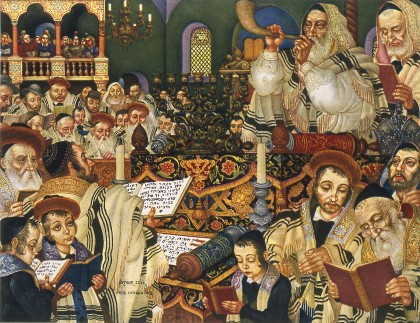
 I now celebrate several distinct new years. The Jewish new year, just over, comes not long before the Celtic new year which begins on Samain eve, or All Hallow’s Eve, Halloween. The next one is the Western calendrical new year on January 1st and that is followed by the lunar Asian new year, which comes sometime in February. That’s at least four opportunities to assess the old year and make plans for the new one.
 This fall season will end on Samain, the third of the three harvest holidays: Lughnasa, Mabon and Samain. The Celts began their new year with the end of the growing season, a last fruit’s festival, one marking the beginning of the fallow time. I like the specifically seasonal emphasis of Samain, tying the new year not to dogma or tradition or an arbitrary date like January 1, but to the cycle of life on earth, a cycle influenced by the sun.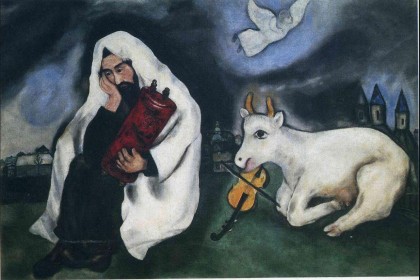
 Beth Evergreen’s sanctuary has multiple clear glass windows that offer views of Bergen Mountain and Elk Meadows. The view next to the Torah Ark had a mountain side filled with lodgepole and Ponderosa pine. Almost to the peak of the mountain though there was a small stand of aspen, golden still, in a perfect heart shape. All through the service I had a symbol, an accident of nature, created by my view, my perspective that synched up remarkably well with the overall theme of Yom Kippur, atonement. Also, up and to my right, at the roof of the sanctuary, a square window framed the tip of a Ponderosa pine. It looked like a painting by a member of the Kano school of Japanese art.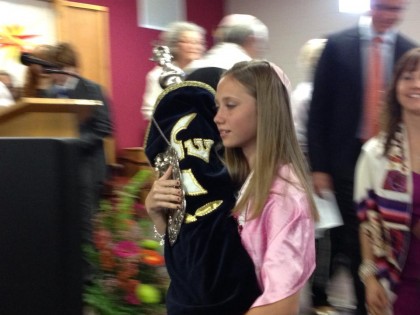
 When Kate and I drove home from the kol nidre service at Beth Evergreen last night, the Hunter Moon lit up a sky covering labyrinth of white fluffy clouds. Occasionally, a few clouds would become very bright, then a hole would open, briefly, and the three quarter moon would not only backlight the cloud cover, but provide a luminous presence, too. It was a magical sky, a sort that seems particular to the onrushing fall. Aspens still blaze bright gold in some places, in others the leaves have turned brown and blown away leaving stands of naked branches as harbingers of the winter months.
 I feel odd at Beth Evergreen. My physiognomy is out of place. The language of many of the prayers and songs is foreign to me. I don’t feel, and don’t expect to feel, part of the tribe. Yet, Kate feels, is, part of the tribe. Also, much of the content resonates with my own faith reimagining project.
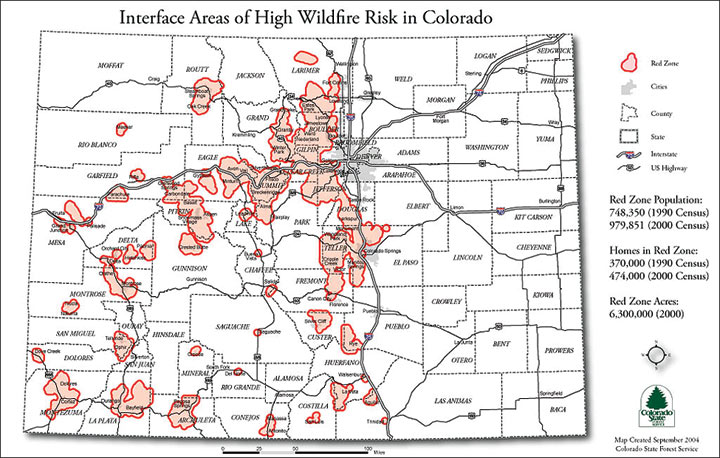 Working on homeowners insurance right now, a fraught topic in the red zone. The red zone, which I have mentioned before, is the area in Colorado most likely to experience wildfire. Jefferson County, our home county is the long, narrow county which abuts the southwest side of the Denver metro (gray blob, high center right). We are smack in the middle of Jeffco’s redzone.
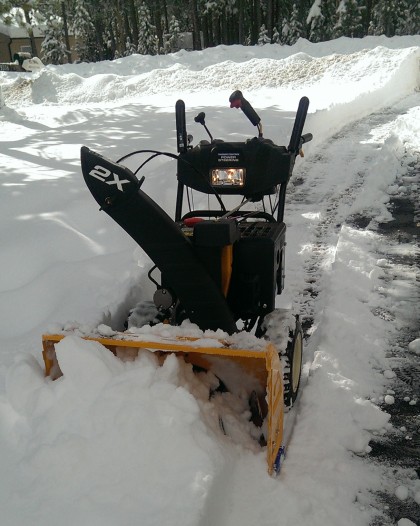 Final activity for yesterday was changing the oil in the snowblower. If you have any mechanical aptitude, this is probably not worth mentioning. In my case the material world and I struggle every time we come in contact. I did get the job done, but it took much more thinking and jiggering than it might have. Example: to drain the oil the snowblower has to be tipped over on its side, but not fall over. That meant balancing the snowblowers unwieldy bulk with my legs while my arms prevented it from tipping over all the way. The result was dependence on my knees for backward stability. And that left one isn’t working so well right now. Gave me a couple of interesting moments.
 Ruth wanted to see the Queen of Katwe, the story of a poor Uganda country girl who became a chess champion. So we did. It was a good movie, not great; but, its almost all black cast reminded me of Luke Cage, which also has an almost all black cast. I have been and am suspicious of the idea of appropriation* as bad, but these two media pieces have made rethink it.
 Having said that I found myself intrigued with both Luke Cage and Queen of Katwe because they had almost all black casts. The voice of the characters, the setting, the narrative drive had an integrity, a cohesiveness different from a white dominated movie or television program. The vulnerabilities, tensions, outright conflicts reflect immersion in Uganda and Harlem. They help open up a world, a way of being, a certain thrownness, as Heidegger put it, that is well outside my white, male, middle class, small town Midwest USA experience.
 However. The notion of silos, common in critique of bureaucracies, corporate or governmental or academic, seems to me to apply here, too. Silos are self contained domains, segments of a differentiated work place. The easiest place to see silos is in academe where biology and physics occupy different departments, often different buildings, and usually do not communicate. The internal culture of the military makes it secretive while congress wants transparency, the EPA is a separate agency of quasi-cabinet rank, so it is separate from the department of Agriculture where many matters of critical environmental concern receive attention. The critique is that while the silos differentiate and protect, the world is not so divided. Biology and physics operate within each organism. In the world as it is, Federal Superfund sites, under the administration of the EPA, interact directly with farms and municipalities. There was no bureaucratic barrier between the toxic waste pouring from the Gold King Mine and the waters of the Animas River.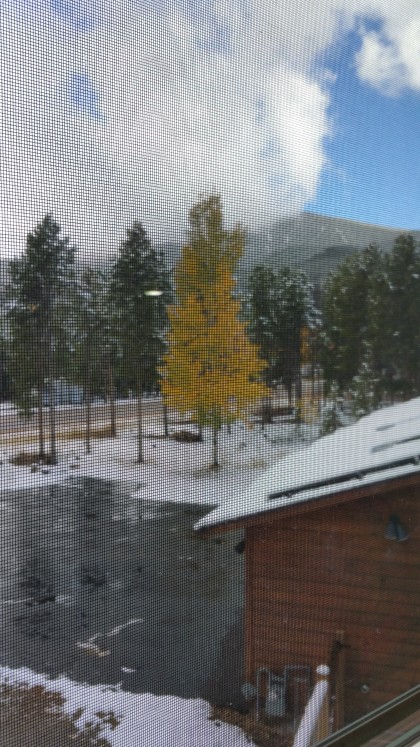
 “He’s a cockroach at the end of a nuclear winter,” said a New Hampshire Democrat.