
Midsommar Most Heat Moon
 After leaving the ministry, a gradual process of demythologization and disenchantment took over. In retrospect it’s not hard to see why. A primary motivator of the shift away from Christianity and toward a more pagan worldview came because transcendence bothered me. Transcendence takes us up and out of our bodies, or least out and away from our bodies.
A more important idea, at least for these times, seemed to be incarnation, a going in and down, rather than out and up. Incarnation takes us toward mother earth, toward our blood and bones. It does not pretend there’s an escape hatch from this earthly realm. This is our home, where we live, how we are.
Over time a godless world emerged. This was a world without a scrim, a world in which what you saw was what was. And that seemed enough. The Great Wheel provided a sacred lens through which to see seasonal change and the dramatic results those seasonal changes had on daily and yearly life. This focus on the here and now also informed, in a positive and self-reinforcing way, the Great Work. Building a sustainable presence for humankind on this earth requires, first of all, a sensibility attuned to the earth herself.
 Then, at some point-the reimagining faith project signals that point-the flat-earth humanism of this pagan orientation no longer felt like enough. Could the warmth and the depth available to those in the ancient religious traditions somehow be suffused into this empiricist, anti-metaphysical worldview? Could, in other words, a feeling of religious awe and wonder emerge out of our relationship with the web of life and the cosmic experiment we know as the universe?
Must be possible since, with the trappings of culturally specific myths and legends, all religions are an attempt to explain why we’re here, where we’re going and what we need to do on the journey. The journey takes place within in the web of life and the grand experiment of cosmological evolution.
 Transcendence still seems suspect. Reimagining though has to take account of it in some way. Here’s one idea. The mystical experience, a well documented and not at all rare phenomenon, often carries the descriptor transcendent. I had one and I want to challenge that idea. In mine, which occurred in 1967 on the quad at Ball State University, I did feel a sudden and inexplicable connection to the universe, all of it. Threads of light and power emanated in a pulsing glory carrying with them a physical sensation of oneness.
You might focus on the threads moving out from the center and psychically travel with them in some sort of astral projection, maybe that would be transcendence, but I don’t think so. The critical point for me is that all this connecting and interconnecting occurred within me. Yes, the sensation was of cosmic linkage, and, yes, I believe it was cosmic connection, but it didn’t feel as if I left my body at any point. I entered fully into my inner world, a world that already had these interconnections, always had them, and in that moment I could see them, at least for a sudden, blazing instance. This is maybe incandescence, perhaps the feeling often referred to as transcendence.
Still working on this one.
 Yesterday was the fourth of July. Our September 16th, viewed from Mexico. Our July 1st, from the northerly perspective of Canada. A day to launch an almost-ICBM from Pyongyang. A day not long after our President, OUR PRESIDENT, released on Twitter a video of himself wrestling, during a WWF event, another person whose head had been replaced by the CNN logo. I can’t believe I just wrote that. I can’t believe I’ve seen the video. I can’t believe DJT is in the Whitehouse.
 We are more than our government. We are a nation of vast reaches, landscapes that fire imaginations around the world. We are a nation of immigrants, a nation to which immigrants from that same world still desire to come, even if the xenophobic, chauvinistic politicians infesting Washington try to make us undesirable. We are a nation of hopers and dreamers in spite of the dreamkillers on Pennsylvania Avenue.
 Over to a mostly closed PetSmart in Littleton at 8:30 a.m. yesterday after retrieving a Kepler rabies certificate from Sano Vet. Before it opens at 10 am PetSmart’s veterinary service, Banfields, and their groomers are working. That means walking through a dark store all the way to the back, workers stocking shelves, but no checkout. There Darla took over with Kep, who looked, as he always does, nervous, when we left him. He was there for furmination.
 The hearing world (or, better, the not hearing world) in which I live. I’ve not written about this before, at least I don’t recall it if I have. It’s a profound disability, but invisible, often even to me. I’ll explain.
 This was an early and extreme instance of a situation I encounter daily. Since I don’t hear anything from my left, if some noise happens over there, for me it’s as if it doesn’t exist. And even now, over 30 year later, I still forget. I am much more cautious about crossing streets, fear will do that, but in other situations, the absence of noise is, of course, just that. It means even if it’s there, I don’t know it. Basic epistemology. If I can’t hear it, it doesn’t enter my world. What’s the sound of one person speaking to me, if I don’t know it? Silence.
 Danced the hora last night, mixing up my feet as I normally do while dancing, but enjoying myself anyway. Joy, it turns out, is a character trait in mussar. “It’s a mitzvah to be happy.” Rabbi Nachman. Judaism constantly challenges my Midwestern protestant ethos, not primarily intellectually, but emotionally. Last night was a good example.
 We ate our meal together outside, all at one picnic table. Tara’s Hebrew school students had decorated it and it was colorful underneath our paper plates and plastic bowls. The evening was a perfect combination of cool warmth and low humidity. The grandmother ponderosa stood tall, lightning scarred against the blue black sky. Bergen mountain had already obscured the sun which still lit up the clouds from its hiding place.
 We all laughed when Rabbi Jamie asked if I hoped (another middot, character trait, clustered with joy) to be able to greet strangers the same way. “Well, not by kissing them on the lips or licking them.” I was thinking, but yes, I hope I can add that level of uncalculated joy to my meetings with others.
 Kabbalah was a trip through contractions, shattering, shards and healing. In the cosmology of Isaac Luria the ohr, the divine energy that was once all there was, wanted an other, yet it was all that there was. The ohr contracted, leaving room for something else. It created a vessel for the other, then poured divine energy into it, but the vessel proved too weak and shattered, scattering shards with ohr, divine light, trapped within them. Those shards, each filled with ohr, are the elemental stuff of the universe, forming the stuff which we experience as reality.
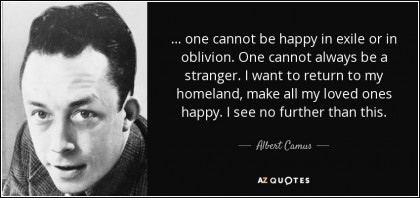 Yet again, I didn’t follow this one completely, but the Lurianic God is a God in exile, separated from the shards. So when the Jews go into exile, they do so as one with their estranged God. The purpose of the Jews is to remind humanity of this estrangement and that we all have a role to play in overcoming it.
 Drove the hour out to Denver International to get Kate. Found Scott Simpson with her at the arrival gate. He’s on his way to Carbondale to see his son. We took him to Union Station where he planned to board a Bustang for the rest of his trip. Scott’s reading Homo Deus right now and says it’s rocking his world. Good to see him.