Spring Passover Moon
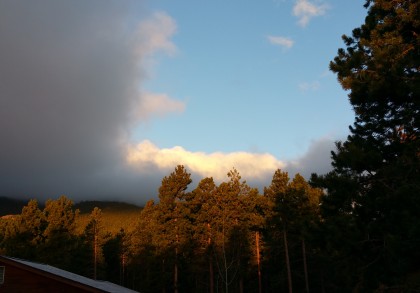
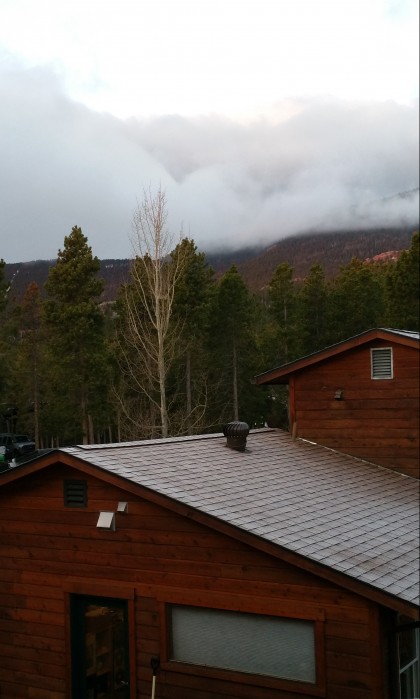
Black Mountain this morning.
Spring Passover Moon
Black Mountain this morning.
Spring Passover Moon
 Monday. Physicals back to back. We do things together, like our physicals and our dental cleanings. So sweet. Very romantic. And it is, in its way. Sort of like dates. We go out to lunch afterwards.
This week is the slow drip after as test results and imaging work reveal their information. So far, generally good news. The usual deterioration occasioned by 70 + years on the planet, not a surprise, but not yet deadly.
The zen of Kate. One of the imaging tests could have returned something bad, but even in the weeks after she learned a second test, a cat scan, would be necessary, Kate didn’t flinch. “Can worrying about it make it different?” she said. A wise woman, my Kate. Of course, that didn’t prevent me from worrying about it, but I’m trying to learn from her on this one.
She’s bouncing back from a three/four month bout of low energy and shortness of breath. Nighttime oxygen (we live at 8,800 feet) and more calories each day have given her more pizazz. She’s also just had her second infusion of Remicade, a drug for rheumatoid arthritis. RA can also produce fatigue so the Remicade may be helping her energy level increase, too.
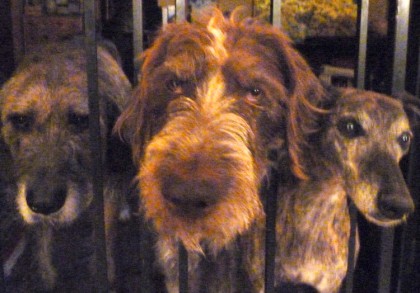 The zen of dogs. Over the last few weeks I’ve paid special attention to how the dogs in my life live: Gertie, Rigel and Kepler. We share moments often during the day and at night. A dog is always in the now, ready to take a nap, run outside, eat, get a head or neck scratch, some petting. They remind me of the brevity of life and how precious each moment, each interaction is, not only with dogs of course, but with family and friends. With the mountains, too. The clouds and stars. The snow.
Spring Passover Moon
 The waning passover moon is behind a faint scrim of clouds giving it a moonlit halo. Each moon cycle repeats the past, yet is unique to itself. The slow orbit (relatively slow) of the moon around the earth produces the same phases each month and in that sense repeats. But the lunar month and the sidereal year do not quite match up*, as all cultures that depend on lunar months for their calendars have long known. Judaism is such a culture.
Each lunar month happens at a slightly different place in earth’s orbit due to this irregularity over the course of sidereal year. In addition, our whole solar system is not static, but moves through the universe at a speed of 12 miles per second toward the constellation Lambda Herculis.** At the same time our solar system is also spinning around the Milky Way and the Milky Way itself is speeding toward a collision with Andromeda Galaxy in 4 billion years.+
 When you consider the irregularities in the lunar position occasioned by the sidereal/synodic difference and the speed of our solar system both moving on its own toward Lambda Herculis and around the Milky Way and then throw in the speed of the Milky Way itself, it becomes clear that no one phase of the moon every occurs in even remotely the same location.
Why belabor this? Becauses it underscores the irreproducibility of much seemingly regular phenomena. Now think about the long span of evolution on this moving planet, within this speeding solar system. This means that no animal or plant species has occupied the same cosmic location for even a short span of its existence. So, in this sense alone, each animal or plant species is unique. But, each animal or plant itself is also unique because it comes into existence and dies, having occupied only one small niche in the larger web of life.

Within this context regard human evolution. Australopithecus, considered the first instance of the Homo genus, has been dated to 2.8 million years ago. Since that time the genus went through many speciations until, about 200,000 years ago, our own species, Homo sapiens, emerges. So, for over 200,000 years individuals of our own specific branch of evolution have been born, lived and died. Each one of them are unique within just our species.
Each of us, then, from the moment of our birth and for the very brief span of our life (in cosmic terms), travels literally millions and millions of miles, speeding around the sun, the Milky Way, toward Lambda Herculis and as part of our galaxies own rush toward Virgo and Libra. In addition each of us represents a specific instance of an evolutionary branch with its own branch on the tree of life, a branch that split off on its own some 2.8 million years ago.
This means we are each unique in many different ways in addition to the obvious ones of parentage, genetics and personal development.
 Finally, the point. We are, each of us, unique and precious instances of over 2 billion years of evolution of life on Earth. We represent a moment in time, yet even our moment is not static. It finds us moving incredible distances.
A key insight of both Judaism and Christianity is the notion that we are all made in the image of God. This insight casts a bright light on both each person’s uniqueness while also revealing our oneness. This truth does not change no matter what content you put into the word God.
 Think about it. Out of all the billions of years since the Big Bang, moving in all the various ways discussed above and at speeds that make Formula One look slothful in the extreme, you and I exist in this special time together. How remarkable! We are in fact made as the conscious image of this whole universe, with all its reckless momentum and we have been given the chance to know each other and through knowing each other to know the universe that gave birth to us.
Camus talked about the river of life that flows toward death, what I have called in recent posts the Gulf of All Souls. He suggested that it was our common responsibility to make this journey as pleasant and peaceful for each other as possible. As Ram Dass says, we’re all just walking each other home.
*watch this short movie to understand the difference between the sidereal month, 27.322 days, and the synodic or lunar month of 29.531 days.
**solar system speed and the other measurements that complicate it
+This webpage shows the difficulties in measuring the speed of objects in the universe and gives a speed for the Milky Way as it moves in the universe–an amazing 1.3 million miles per hour!
Spring Passover Moon
 This weekend focused in part on grandson Gabe though he was absent from it. Gabe has hemophilia.
Many diseases have their own subcultures. Think HIV/aids, Hepatitis B, breast cancer, MS, cystic fibrosis. Hemophilia has its own. On Friday and Saturday Kate and I attended a hemophilia education event in Lone Tree.
A notable defining characteristic of the bleeding disorder subculture is how misunderstood the disease itself is, and how much others don’t appreciate the demands on both those with the disease and their family. I imagine other disease focused groups share this general attitude. While it is certainly true that most folks have never heard of the clotting cascade or what can go wrong with it and we don’t live with the day-to-day strain of possible bleeds or other serious complications, these attitudes create an us against them mentality.
Physicians don’t understand. Friends don’t understand. Grandparents don’t understand. The only ones who get it are those of us directly affected.
 And, ironically, Big Pharma. One of the oddities of the bleeding disorder community is its relationship with big drug companies. In most, perhaps all, other instances, the choice of medication for a particular condition or illness is the physician’s responsibility, often in consultation with the patient, yes, but just as often not. The physician’s job is to understand the patient and, if needed, the application of a certain pharmaceutical to their situation.
Not so in bleeding disorders. Parents of afflicted children and adults with a bleeding disorder have a personal relationship with drug representatives from companies like Bayer or Shire or CHS Behring and Octapharma. They have to learn about how molecular structure impacts the efficacy of a factor product. Factor is short for clotting factors which are missing or weakened in bleeding disorders. There’s also the issue of half-life. In recent time the choice about whether to use a product produced from human plasma or a synthetic product has tilted now toward the synthetic, recombinant, because human plasma derived products too often carried HIV-but they were all that was available. This necessity to choose among the various factors offered, taking on a role normally filled by a physician, no doubt empowers parents and afflicted adults, but it also makes the circle draw closer, tighter.
All of this reinforces a cult-like insularity. One couple spoke about their children’s grandparents as “clueless.” The laughter in the room indicated that most of those there shared that opinion. How could grandparents possibly understand? Now, you might imagine that didn’t sit well with me, Kate or Barb Bandel, Jen’s mother. There were other ageist moments when our commentary in group discussions were either ignored or diminished. We raised these very children who now see us as unable to understand issues that affect children. This is not only ironic, it’s damaging.
When the nuclear family becomes the stronghold against uninformed outsiders, a whole panoply of possible resources wither up. Parents don’t take time for themselves, at least at first, because who else could know what to do? Children don’t go away for the night, even to grandparents. The strength of the extended family is cut off to the detriment of all parties.
Spring Passover Moon
 Easter morning. Sunrise services somewhere. The celebration of the resurrection and, by implication, the incarnation. As Passover defines Jews, Easter defines Christians. Whether you find the idea of resurrection absurd or inspiring, it heralds, as does Passover, the coming of spring. It’s not difficult, at least for me, to see the power of resurrection in the emergence of spring ephemerals: daffodils, crocus, grape hyacinth, early tulips, snowdrops, pasque flowers, bloodroot.
The same flowers could be seen as passover metaphors, too. Their emergence from the long sleep of winter makes good on promises made the year before as the bulbs, corms, rhizomes all stored up energy from the sun, drank in nourishment from the minerals of the soil and sipped up water from the sky, all gathered below ground after the leaves and flowers of last year withered away. The hiddenness of these promises and the darkness in which they flourish is like the life of the Hebrew slaves in the Egypt of the Exodus.
 Moses reminds the slaves, and God, of the covenant made with Abraham long ago. That covenant is the bulb planted in the hiddenness and darkness of bondage. When God finally forces Pharaoh to let the slaves go free, the bulb begins to push its stalk toward the surface. Though it takes forty years of wandering for the stalk to break the surface in the Promised Land, the beauty of freedom’s flower has dazzled those struggling with their own personal or political bondage ever since.
My sister Mary’s friend, Anitha Devi Pillai, who teaches in Singapore with Mary, posted on facebook about the Kerala new year, Vishu, which is also celebrated right now. This was new to me, but it underscores the number of New Year holidays that honor the same rhythm of mother earth. The spring festivals in Korea and China, which come earlier, also mark the resurrection in fields and gardens.
These human holidays honor the emergent freedom from darkness and cold as each new flower and vegetable breaks the surface.  So on this great wakin’ up morn, I’m greeting the sun, the greening lodgepole pines, the daffodils, the pasque flowers and bloodroot with a religious fervor.
During my cancer season two years ago I wrote about the consolation of Deer Creek Canyon, the stolid, very long term lifetime of the mountains that create the canyon. Today I’ll make note of the consolation of spring, its power to awaken wonder. We will all die, this we know, but the mountains will continue and so will the daffodils. Blessed be.
Spring Passover Moon
 Yesterday in mussar Jamie gave us a writing prompt: write about a want that occupies a lot of inner time and attention, then to try to find the root of that want. This was a lead in to talking about avarice.
I wrote about wanting to finish Superior Wolf, about getting back to translating Latin and wonder why, at 70, I still wanted to do these things. It’s not as if we need the money or I need the recognition.
This desire, this want, is about a desire to remain an agent in the world, puissant, to not disappear. So, in a sense, it’s about death, about not dying early, I think.
Later in the discussion a woman who travels to India once a year to stay in a Buddhist nunnery said that an early Buddhist teacher of hers had talked with her about the hungry ghost within each of us. The example he gave her was about a person who walks into a bookstore to buy one book and then walks out with five. Hmmm. I recognize that person, c’est moi.
 I’ve looked up the idea of the hungry ghost and I don’t think it really applies to me, but the caution evident in the bookstore example certainly does. Buying books represents a deep seated want, too. But what is it?
Knowledge can also be a hedge against death. If I only understand, then I can prevent, stave off, head off, my canoe’s eventual transition into the Gulf of All Souls. Which of course, I can’t do. As I wrote in the exercise above, nothing counters death, not puissance, not agency, not even, ironically, health. Nor, knowledge.
 So, the books represent my own struggle with the nature of mortality, my way of structuring my inner world. And, yes, it can be a problem if I refuse to recognize it for what it is. But, and here’s the liberating possibility for me in both books and writing, if I acknowledge what they are for me, if I embrace the underlying motivation, yet not its anticipated result, then I can continue writing and reading, using them not as shields against disappearing, but as ways of being in the world, not as ways of protecting myself.
Let me try to say this a bit more clearly. Wanting to be an agent in the world is, in itself, a good thing, so long as the reason for doing it is a desire to be of service, to offer something from my uniqueness. If that desire becomes corrupted, becomes a way to hide, then no matter the books on the shelves, no matter the understanding that comes from reading, no matter the stories and books in manuscript form, it is all for nothing. In fact, it’s worse than being for nothing, for hiding from our known fate leaves us in a constant state of hunger for that which we will never reach and, even worse, for that which will not secure its goal even if I sold all all my books and stories and learned all the information my books I have to offer.
Conclusion. I will continue to read and write because it is what I do, because it is an important part of what makes my presence in the world unique and valuable for others. But neither writing nor reading will save me. Only acceptance will do that.
Spring Passover Moon

Brother Mark has been in town for the last couple of days. It was, in some ways, as if I saw him for the first time this visit. His lifestyle is unusual, truly counter cultural. He works at his long time occupation, teaching English as a second language, saves money, then heads off to travel for a few months. Over the last five years or so he’s worked in Saudi Arabia, teaching in Hail, Jubail, Jeddah and a couple of other places I don’t recall right now.
He’s seen every continent except Africa, crossed the old Soviet Union on the Trans-Siberian Railway, a trip he started in Beijing, and worked day labor type jobs when his funds from the teaching ran low. He also makes time to drop in on relatives and friends, staying a while, then moving on. I admire his willingness to live frugally and engage his passion, to see the world. So, a shoutout to Mark, the wanderer.
Spring Passover Moon
Under the full passover moon Kate and I drove over to Mt. Vernon Country Club for a community seder. There were about 60 people there, sitting in groups of 8 around circular tables. The dining room looked out to the south and east. As the sun set, the lights of Denver began to sparkle around Table Mesa in the distance.

The tables had platters of oblong chunks of gefilte fish, a bowl of haroset (a sweet mixture that symbolizes the mortar used by Hebrew slaves in Egypt), a small bowl of pink grated horseradish, a stack of matzo covered in a linen napkin, and a seder plate with the traditional passover items: lamb shank, boiled egg seared over a flame, parsley, haroset and maror (horseradish). And an orange. The orange is a recent addition to the passover plate-at least for Reconstructionists-and it symbolizes the fruitfulness of women’s contributions in Jewish history and in the present.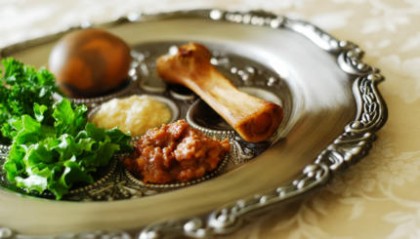
The haggadah, the telling of the story, contains all the prayers, readings, songs and explanations for the evening. The seder (order) of the passover celebration has 15 steps, symbolizing the 15 steps that led up to the Temple in Jerusalem. The Temple passover celebration had two priest on each of the fifteen steps and they sang the passover ritual as worshippers brought up their lamb for sacrifice.
The evening followed this ancient ritual, commemorated in Christian churches as the last supper and ritualized among them as communion or the eucharist.

As Kate and I got out of the car at Mt Vernon, a young woman asked, “Is this the place for the seder?” It was, I said. Her name was Leah. We walked in together, past the slightly ridiculous pretension of the lobby, its fireplace and the sitting room with the observation deck like windows. Down a set of stairs was a lower level under the sitting room.
We chatted casually with Leah. The room was almost empty then, not many had come. We were early. I went out on the big deck that overlooked Table Mesa and Leah followed. She knew Rabbi Jamie in the synagogue he served previously in Buffalo, New York.
“I’m bi-polar and I went on a road trip, trying to find someplace new. I went to Florida, drove all over and came this way but decided I couldn’t cross the mountains in the winter, so I ended up working in Boulder.”
Oh. I have bipolar illness in my family. Two aunts hospitalized, one died in the state hospital, another came out, but under heavy medication. “Oh. That’s good. Well, I mean it’s not good that you have bipolar in the family, but it’s good you understand.”
And I do. It was as if this ancient ritual, one that gathers the tribe across the world to honor its release from bondage, had found a member of that tribe who also belonged to mine. Leah sat next to me and we dipped our little fingers in the wine, the parsley in the salty water, the tears of those in bondage, ate our matzo with haroset and made our Hillel sandwiches, haroset and maror between two slices of matzo.
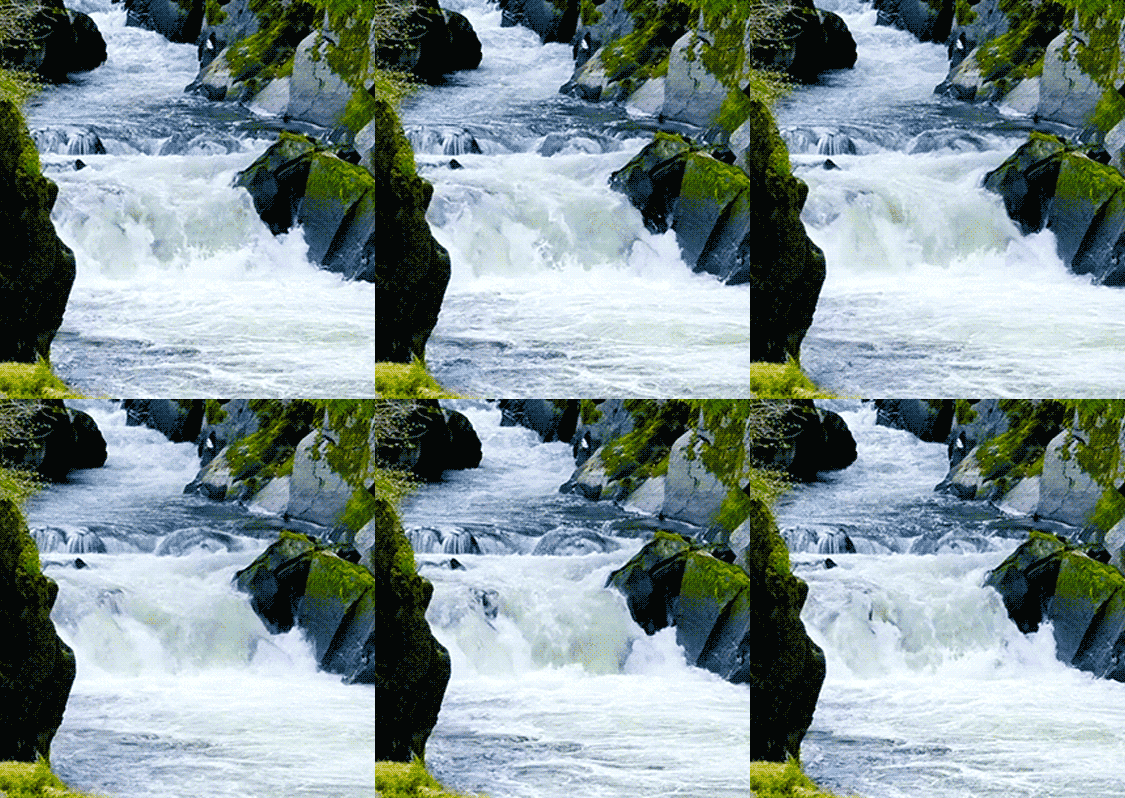
The ways the universe conspires with us: it lets us paddle along the river of time for a bit, then puts us through some rapids, lets us drift into a clear pool, but always moves us forward through the Grand Canyon of our life, and sometimes helps us to land on shore for awhile, perhaps in a spot that looks familiar, yet is always new. At 70 the river which carries me is much closer to the Gulf of All Souls than it was in my twenties, but unlike then, I can see through the translucent canyon walls to the canoes of my friends, family and new acquaintances.
There are even moments, like an April passover meal in the Rocky Mountains, when we come together on the strand of our common journey, our lives and our rivers joined for a moment. We travel apart but we are not alone.
Spring Passover Moon
Published on Nov 12, 2013
The video shows scientific ocean drilling and coring technology.
Scientific Deep Sea Drilling Vessel CHIKYU is the state-of-the-art research vessel exploring the deep earth by sampling, measuring and monitoring operated by JAMSTEC. The Earth deep below the seafloor contains a unique record of our planet’s evolution and structure.
Spring Passover Moon
Last night Kate and I went over to Marilyn and Irv Saltzman’s home, also in Conifer, but up King’s Valley Road out toward Bailey off 285. We had African themed food cooked by Marilyn, who went to Africa last year, and desserts made by Irv. The food was good and the conversation even better. Two of Marilyn and Irv’s friends also came over. We talked traveling, politics, Judaism and Christianity, those topics so often literally off the table at dinner gatherings.
It was great to have a night out with adult conversation. Though. Going to bed at 8 pm, my practice now since the knee surgery last December 1st, means staying out until 8:30, as we did, makes the next day difficult. I’m deciding I need a rest day after “late” nights like this one.

Probably will tomorrow night, too, since we have the Beth Evergreen community seder at Mt. Vernon Country Club over near Lookout Mountain. Passover is the defining holiday for Jews as Easter is for Christians. Both emphasize overcoming. And, due to the Christian formula for determining Easter’s date*, both come in roughly the same time period. Easter Sunday this year, for example, is the 16th of April.
The snow from last week is nearly all melted. The wildfire risk is moderate now, rather than high or extremely high as it was not so long ago.
Kate’s been to the cardiologist this morning for an echo cardiogram. Don’t expect any big news from it.