
Midsommar Most Heat Moon
 Next week we all give 5-8 minute presentations in our kabbalah class. The ostensible purpose is for us to have the chance to “learn as teachers.” It will be more than that for me. At first I thought I would work up something about tikkun olam, repairing the world, or, as the early kabbalists preferred, repairing God. The notion fits nicely within my political activism (now shelved)/reimagining faith work. But that would have been the more traditional student as presenter, a small talk focused on the content of what I’ve begun to learn.
Instead I’ve decided to go for it, to use the post below, Earthquake, as a starting point. I want to discuss my changing inner world, the push kabbalah has given me, adding its long standing contrarian position to my own.
Here’s how I imagine it might go right now.
Religion itself and sacred texts in particular as metaphors.
 Kabbalah has reinforced and challenged a move I made many years ago away from the metaphysics of the Judaeo-Christian tradition as I understood it. I can summarize that move as a reaction against transcendence and its role in buttressing patriarchy. Transcendence moved me up and out of my body, up and out of my Self into a different a place, a place other than where I was, a better place, a place dominated by God. It didn’t really matter what image of God, what understanding of God you put in that sentence because it was the denial of the here and now, the embodiedness of us, that bothered me. The notion that transcendence puts us in a better place, a place only accessible outside of our bodies made us lesser creatures, doomed to spend most of our time in a less spiritual state. In the long tradition of a male imaged God it made that gender dominate because it was God that occupied the better place, the more spiritual place, the place, if we were lucky or faithful enough, that we might achieve permanently after death.
Going in and down became my primary metaphor for the spiritual life; spirituality became an inner journey, not a transcendent one. The body was not like a temple; it was a quite literal temple, a place, the place, where a journey toward understanding and meaning found its locus. It was natural, therefore, to leave Christianity and especially the Christian ministry, as this focus took hold of my pilgrimage.
 This inner turn is what pagan means for me. It put spirituality more in the mode the Judaeo-Christian tradition terms incarnation, put a thumb on the scale for the notion of imago dei, rather than the three-story universe. Gardening and bee-keeping became ultimate spiritual practices. They made real, as real as can be, the whole immersion of this body in the web of life. Tomatoes, beets, leeks, garlic, raspberries, plums, apples, currants, beans, comb honey and liquid honey grew on our land, nurtured by our hands, then entered our bodies to actually, really become us. The true transubstantiation.
The Great Wheel, the Celtic sacred calendar that follows the web of life as earth’s orbit changes our seasons, became my liturgical calendar. Observing the wheeling of the stars above our turning earth was the closest I got to transcendence.
Kabbalah has reinforced this move. By suggesting the radical, very radical, notion that even such sacred texts as the Torah are metaphorical, a garment for the soul of souls, for example, it makes each metaphor used more important. The metaphysical becomes metaphorical. Or, perhaps it always was. So, metaphors matter.

Kabbalah challenges this move. By acknowledging transcendence as a metaphor, it allows us to soften its patriarchal implications, to seek, if you will allow this phrase, a deeper meaning. I can imagine an understanding of transcendence that poses a horizontal rather than a vertical metaphor. Transcendence, understood this way, could embed us in community, place us in the web of life. A hug could become a transcendent moment, the touching of another, one outside our inner world. So could this class be a time when our inner worlds intersect, when our body language and our spoken language give us brief entre to the world of another. Even the example I used of the garden and bee-keeping can also be seen as transcendent, a way the outer becomes inner.
Transcendence was not the only theological problem I had with the Judaeo-Christian tradition, I’m using it here as an example, a key example, but only that. I won’t go further into those today with one exception.
 When I moved away from transcendence, I moved toward this world. This world of sensation and my inner world became the whole, I sheared off the metaphysical almost as cleanly as my logical positivist philosophy had done, though for quite different reasons. No metaphysics, no God. No metaphysics, no transcendence. I switched to an ontology informed only by my senses or by the extended reach of our limited human senses occasioned by science. That meant this world, at both the micro and macro levels was the only world.
Kabbalah has forced me to reconsider this drastic pulling back. It suggests a link between the hidden codes revealed by science and mathematics and the metaphorical nature of language. What language reveals, it also hides. The language of the Torah unveils; but, it also conceals. Not done with this, not even by a long shot of Zeno’s arrow.
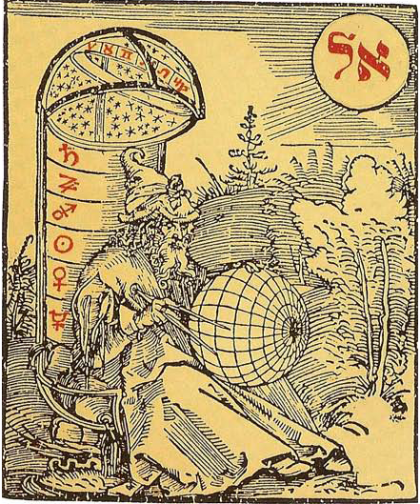 Kabbalah. It’s trying to pry off the empiricist covering I’ve put on my world. I say trying because I’m a skeptic at heart, a doubter, a critic, an analyst yet also, and just as deeply, a poet, a lover of myth and fantasy, a dreamer.
 Rabbi Akiva says that nothing in nature is less miraculous than the rarest exception. This means, for example, that the water in the Red Sea (or, Reed Sea) is as miraculous as its parting. Or, for that matter, the Hebrew slaves pouring across it are, too.
 It is anxiety. I believe it infested my life in two early stages. The first was polio, a young boy’s physical experience of our human finitude. It happened once; it could happen again. The second was the death of my mother when I was 17. It happened once, to Mom. It will happen to me and could happen quickly.
 The wrong part is that it doesn’t matter. I don’t have to worry about it, fear it, be anxious about it. It is. Or, rather, will be. Maybe in the next ten minutes, maybe in the next ten years, maybe longer. I know this by reason, have known it for a long, long time, but I have not been able to displace the irrational fear in spite of that knowledge. That’s why I say reason can take me up to the wall, but not past it.
 Yet, increasingly I find myself wanting a way through this. I can sense, and here kabbalah is playing a critical alchemical role, a different world, a better world now hidden from me. I can peek through the vines at times, can see the secret garden beyond. It’s this wall that holds up the substrata, keeps it from being ground other parts of my Self. This wall has its roots sunk deep into this tectonic plate, is a barrier to its movement. But I can feel the vines withering, their complicity in the substrata’s effect on my psyche weakening.
 Turns out that among other distinctions Colorado has a central spot in the Flat Earth movement:
 Back to exercising yesterday. Yeah! Still a bit foggy in the am and my energy level remains subdued. Might be a summer slump occasioned by the heat or I might need a vacation. It’s been a stressful time period since December 1st, when I had the total knee replacement. That in itself was plenty but Jon’s divorce and Kate’s health tripled down on our resilience. It’s pretty good, I think, but the challenges this last few months were severe.
 It’s been an odd week. I felt physically down for three days, not awful, as I said below, but enough to make me stop exercising (very unusual) and thinking was hard, maybe not unusual in itself (I mean, thinking can be hard, after all.) but in its persistence and its type, sort of a muddy feeling in my mind that made the thought of mental exertion seem too much effort. When, for example, I had to consider e-mails to three new Muslim contacts for our first Evergreen Forum event in the fall, I set them aside. Same thing with fixing some ongoing computer issues, none remarkable in themselves.
 After leaving the ministry, a gradual process of demythologization and disenchantment took over. In retrospect it’s not hard to see why. A primary motivator of the shift away from Christianity and toward a more pagan worldview came because transcendence bothered me. Transcendence takes us up and out of our bodies, or least out and away from our bodies.
 Then, at some point-the reimagining faith project signals that point-the flat-earth humanism of this pagan orientation no longer felt like enough. Could the warmth and the depth available to those in the ancient religious traditions somehow be suffused into this empiricist, anti-metaphysical worldview? Could, in other words, a feeling of religious awe and wonder emerge out of our relationship with the web of life and the cosmic experiment we know as the universe?
 Transcendence still seems suspect. Reimagining though has to take account of it in some way. Here’s one idea. The mystical experience, a well documented and not at all rare phenomenon, often carries the descriptor transcendent. I had one and I want to challenge that idea. In mine, which occurred in 1967 on the quad at Ball State University, I did feel a sudden and inexplicable connection to the universe, all of it. Threads of light and power emanated in a pulsing glory carrying with them a physical sensation of oneness.