Spring Mountain Moon
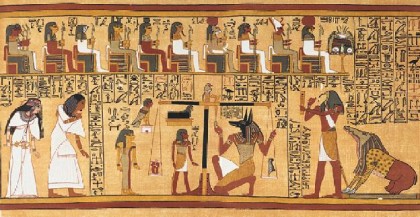 Suicide. A dark mystery. It closes off communication, denies explanations. Though it seems cruel to me, the Roman Catholic prohibition against suicide puts a moral weight on the individual’s scales. Says, wait. Pause. They see it, clearly I think, as self-murder, but there is no nuance in the stance. No admission that life sometimes becomes a heavy burden, heavier than can be borne.
Among people I know, I know of two suicides, one a software programmer, an adult, and another, recent, a young man with apparently psychotic tendencies. I also know, closer to home, of an instance of suicidal ideation. That’s the difficulty, it’s so easy to proceed from considering suicide to a brash act, a momentary lapse in judgment that becomes tragically permanent.
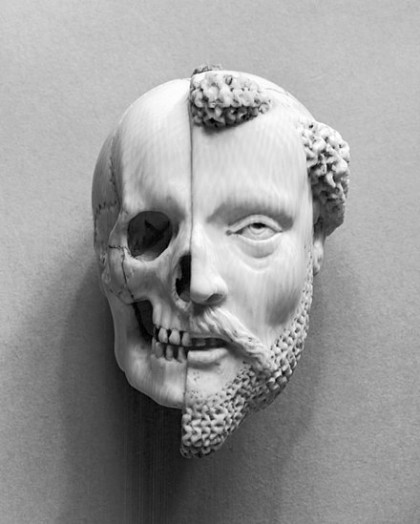
I applaud the hot lines, the counseling centers, the encouragement to see a person slipping away and to do something concrete about it, now, before nothing can be done. I’m also sure that no number of such services and attitudinal shifts will stamp out suicide.
The French existentialists posited suicide as the ultimate moment of human freedom, choosing how to die expressing a final raised fist against the crowd, against ennui, against the absurd. And, as an instance of individual choice, I agree. It is this stance toward suicide that carries forward into the debate about choosing death when a terminal illness allows for no hope.
Death remains the barrier about which we all wonder and about which we have no reliable information. Is it an extinction level event for the individual? Or, is it merely a passage way to a different mode of existence? How about reincarnation? I have no idea. I do know that our body returns its star dust to the great pool where it will resurrect in some other form. I do know that though the dead no longer have agency, they can continue to influence life through wills, through creative work, through those they affected.

It is this profound and blanket uncertainty that gives death and, by extension, suicide, their fearsome reputation. Yet it does not need to be so. As I read recently, every generation finds entirely new clerks at the grocery store, politicians in office, farmers and factory workers, scholars and dancers. Death itself is not an uncertainty and in that intransigence gives away its secret. Death is not abnormal, in fact it is a perfect example of normal since it affects 100% of humans, of all living things save for a handful. That which is normal is just that, normal.
No one, to paraphrase Garrison Keillor, is above average when it comes to dying.
 Sho’ah is Hebrew for catastrophe and has come to refer explicitly to the catastrophe for Jews after slavery in Egypt, the Holocaust. On the 27th of Nisan, April 12th this year, Jews celebrate Yom ha-Sho’ah, or Holocaust Remembrance, on the anniversary of the Warsaw Uprising. This is a crucial twist to Holocaust remembrance because it frames the day with a symbol of Jewish resistance to the Nazi’s.
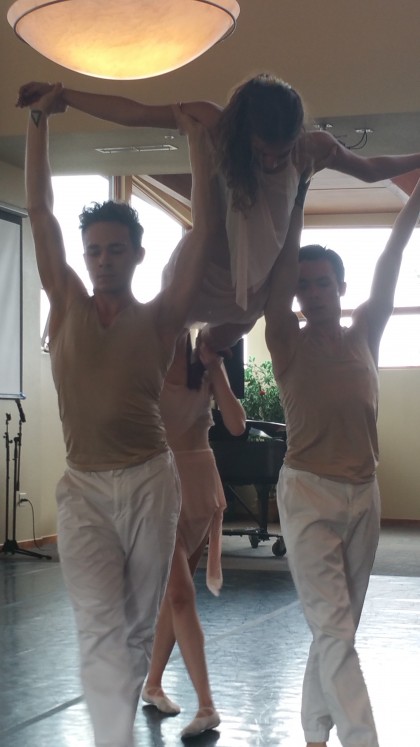 It’s a tragedy so outsized, so without precedent as an act of calculated evil, that how to approach its remembrance, its historicity, is fraught. Words and analysis, though important in certain venues, cannot touch the emotional complex around its reality. Congregation Beth Evergreen, this Sunday, tried another approach. Dance and music.
 For example, we measure Kate’s energy in K.U.’s, Kate units. When she’s used up her K.U.’s for a day, she often goes to bed. No matter what time it is. One woman, Sjogren’s is overwhelmingly a woman’s disease, measures her energy in spoons. She sets out 6 spoons and as she does a task, she removes a spoon. When the spoons are all gone, so is her capacity to do things.
 Even here the tao flows. Tapping into it means feeling the surges of healing, of exhaustion, of relationship weakening and strengthening, of giving and receiving. Accepting them as they come, not fighting them, not trying to be stronger than we are, yet finding the moments and the things we can do to make healing hasten. In this moment the tao reminds me of the power of love, the wisdom of the body, the necessity of rest. Going with it. Letting it come through me. Like water rushing down the mountain.
 Besides the quirky reputation of Atlas Obscura, which draw me in, I also went because Joy said she would discuss qabbalah and the tarot. Only a couple of mentions but they were there. Here’s a for instance in this blurry photograph of one of her slides. In another spot she mentions the correspondence between qabbalah (translation note: Rabbi Jamie says the q is the correct translation) and the qabbalistic Tree of Life with its ten sephirots. Not a detailed examination of the relationship, but enough to make me want to explore it further.
 Tarot by itself has fascinated me for a long time and I have three decks of my own. I like the iconography and the mythical, archetypal leanings of current Tarot readers. That doesn’t mean I put much stock in the readings themselves, though I do believe any sincere examination of self, whether occasioned by a hallucinogen, meditation, an analyst or a Tarot reader can be of benefit.

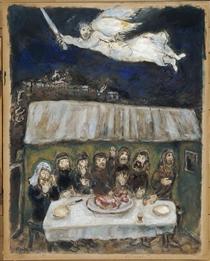
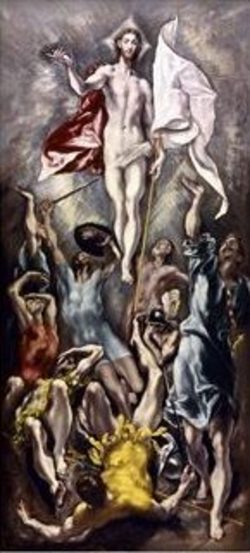

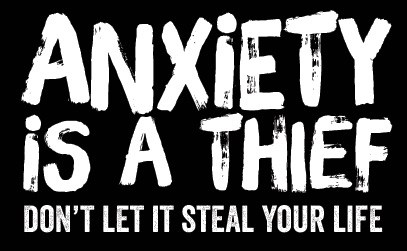 Surprising, sophisticated, jawbreakingly awful sign on a conservative church sign board: “Anxiety is just unbelief in disguise.” If you live in Christworld, there is a certain sense in which this appears to be true. If only your belief were strong, you would need have no worries. Look at the lilies of the field.
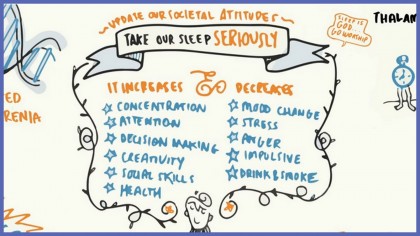 Friend Tom Crane sent me a book, he does that every so often, “
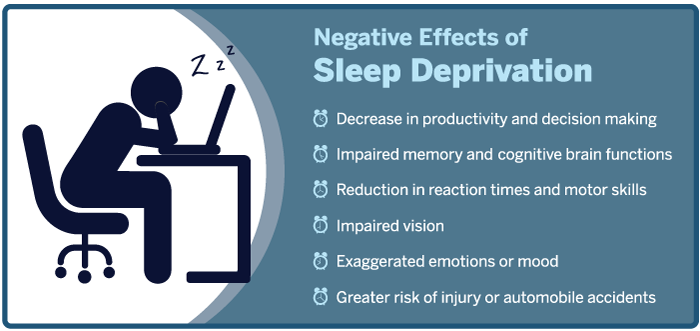 We have elaborate protocols for people with pulmonary issues like COPD or emphysema, cardiac issues of many nuances, joint replacements for tired and painful knees, shoulders, hips; but, what do we have for a part of our lives that constitutes a third of our time use each 24 hours? Yes, there are sleep centers, but they’re not on offer often and besides it seems that cognitive behavioral therapy is the current gold standard. Problem is not many CBT folk specialize in sleep and we’re certainly not referred to them anyhow.
 As one of Dr. Agronin’s youngest informants said, even when physical decline and losses restrict one’s options, there remains the capacity to appreciate and approach each day with a sense of purpose. “It’s all about how you frame what you have,” she told him.
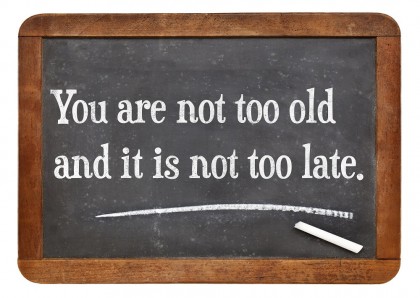
 Hopefully, our children, the millennials among them, will look at us and come to that phase of their lives with a different image. My hope is that they will see that aging is the accumulation of years, not a time of diminished hope and diffuse fear, but life continuing. If that image can become dominant, it will look like the diverse approaches people have to their first and second phases. In other words the third phase will have as many distinct trajectories as there are people who enter it. It will not be dormancy, or a pause before dying, but life itself.
 I like Robert Hill’s definition of positive aging: (It’s) “affected by disease and disability, but not contingent upon avoiding it.” Rather, it is “a state of mind that is positive, optimistic, courageous, and able to adapt and cope in flexible ways with life’s changes.”
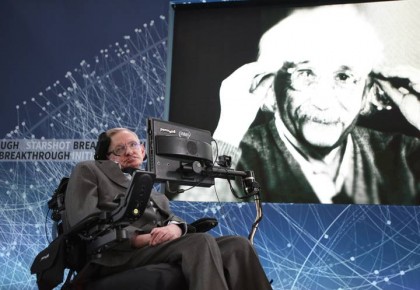
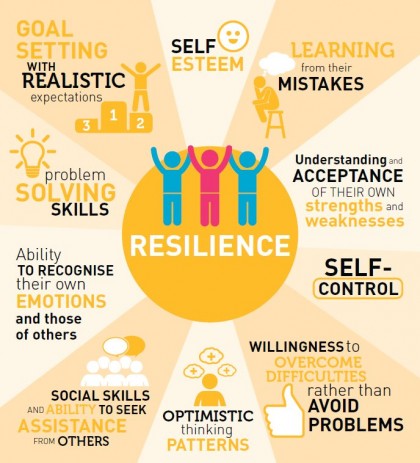
  Not only in children, I think. Resilience can allow us to accept the changes of the aging body without losing hold of the power of our own lives. With a resilient personality even ALS will not cause us to stop growing. Just look at Stephen Hawking.
 Made corned beef and cabbage for dinner last night. Erin go bragh! When I decided to write novels, now long ago, Kate suggested I find an area that I could relate to. I chose my Celtic heritage, both Welsh and Irish. It is a fertile realm, filled with gods and goddesses, fairies and banshees, this world and the other world. Not so deep into it right now with one exception, the Great Wheel.
 Its sumi-e material material, though, was feeble compared to the hole in wall (by comparison), Red Herring. Meiningers’ selection of brushes were all cheap, beginner’s brushes. They did have a couple of Yasumoto inks that I bought, an Ultra Black and a Black Gold. I also picked up an Olfa knife to cut paper, from the kraft roll that came last week and from the rolls of rice paper I bought from Red Herring and Blue Heron, an online sumi-e store.
 The last letters of the Hebrew alphabet now have renderings in sumi-e, lying on my table ready for quotes and the chop. A member of Beth Evergreen last night referred to me as an artist. Oh. I thought he said audience. Artist is not a word I’ve ever associated with myself so my brain heard something else. A revealing moment. How others see us is not always, perhaps often, not the way we see ourselves.