Lughnasa Eclipse Moon
 The mind and heart, so wonderful, so necessary, so amazing, but also so fragile. Take mine for instance. Yesterday was a full day, beginning, as my days do, around 4:45 am. I got the dogs fed, ancientrails written, Jennie’s 750 words written and went downstairs to eat breakfast and make two sugar cream pies.
I met Rabbi Jamie for lunch in Evergreen, drove back to Shadow Mountain and took Kate to Bailey for her Patchworker’s gathering. Stopped by Happy Camper on the way back home. A 30 minute rest, then back to Evergreen for a meeting about the first ever Evergreen Forum.
Here’s the tricky part for me, the tricky part for moving more fully into the space of Beth Evergreen. My responsibility for the meeting was to get the four panelists there. I reminded them all in an e-mail a week plus ago, but only Rabbi Jamie and Rev. Dr. Judy Morley of the Science of Mind church showed up. I was embarrassed. Of course, they’re adults and had plenty of prior notice; still, I felt I failed at part of my task. Not a great feeling. The planning went fine though and we got the work done.
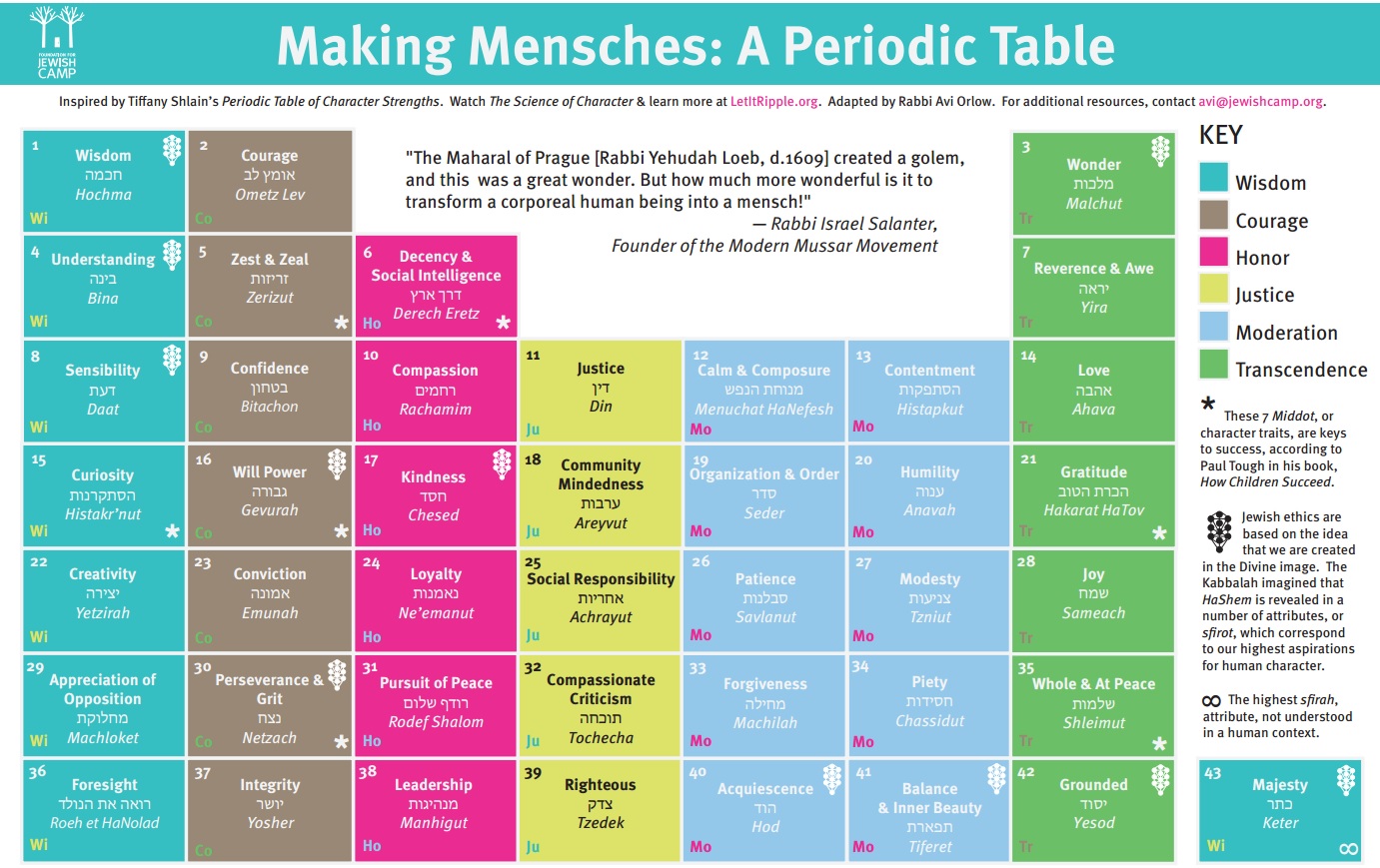
However. This meeting preceded a second meeting, Mussar Vaad Practice leadership, of which I am also a part. (MVP, get it?) At this one I’m part of a group of six taking responsibility for continuing the integration of mussar’s character development work into congregational life. This was the meeting for which I baked the pie.
During this meeting, I fell into a dispirited place. Dispirited is such an interesting and evocative word. Exactly right here. My spirit, my ability to engage as me, waned during the course of the time. Why? Well, MVP intends to lead by deepening our own personal practice of mussar. Part of that practice involves focusing for a month on a particular character trait, last month’s was self-awareness, this month’s is awe.
The practice involves using a focus phrase, mine was be aware, to keep our attention focused on how we are with that particular trait over the month. I said I’d journal my awareness. Others made lists twice a day of how they made choices, another put a note on their car dashboard asking, Where I am going, why, Where I am going, how, and another turned off the radio in their car and used that time to focus, while yet another checked in on how they were eclipsing themselves, hiding their true feelings behind socially expected behavior.
At check in we said how it had gone over the month. Most of the folks had very fruitful months with some behavior changes I would describe as significant. When it came my turn to check in, I couldn’t remember any of the things about which I’d journaled and I admitted that the journaling didn’t last long. As my Woolly friends who read this will know, I love assignments and am diligent about fulfilling them. Comes from all those years as a student. Except I hadn’t this time. Again, I felt embarrassed.
Too, this meeting went until 8:30 p.m. I’m in bed at 8:00 p.m. since I get up at 4:45 or 5:00 to feed the dogs and start my day. I’m not sure, but I think as my mind begins to move toward sleep, at least at this age, my emotional resilience goes down, especially when I’m out.
The end result of this was that I came home feeling like a failure. Too big a word? Not really. The good news here is that I recognize the context for this feeling, why it came over me and that it was contextual, not core. I told Kate I’d feel better after some rest. And I did.
Being older means having gone through this cycle before and being self-aware (hah, ironic, eh, in light of last month’s character trait?) enough to know the feeling will pass. This is so important, though it may not be obvious. If I allow my embarrassment to mutate into shame, then it could well weaken the bonds I’ve begun to develop at Beth Evergreen.
Shame at not being able to fulfill my obligations could make me much more reticent in future meetings and in general with the people involved. It could push me away from Beth Evergreen. But that only happens if I see the embarrassment (my reaction) as being produced by the other’s shaming me. If I understand and own the reaction as my own, and as a reaction to circumstance, not as a character flaw, then I can continue in community.
A tough but good learning.
 Today is a busy one. Once I’ve finished my writing, ancientrails and Jennie’s Dead’s 750 words, I’m going to make two sugar cream pies. One is for home, the other for the mussar leadership group that meets tonight. Sugar cream pies are a distinct cultural marker for the Hoosier state, but more than that, they’re really delicious. Why I don’t make them often.
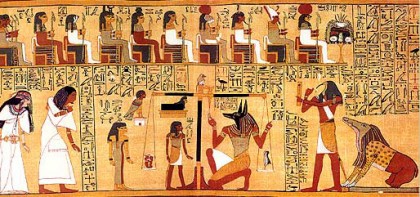 Moving forward, slowly, with Jennie’s Dead. Exploring the religion of the ancient Egyptians, trying to avoid hackneyed themes, not easy with all the mummy movies, Scorpion King, Raiders of the Lost Ark sort of cinema. Jennie’s Dead is not about Egypt, ancient or otherwise, but it plays an important role in the plot. Getting started is difficult, trying to sort out where the story wants to go, whether the main conflict is clear, to me and to the eventual reader.
 As Emerson said, “Why should not we have a poetry and philosophy of insight and not of tradition, and a religion by revelation to us, and not the history of theirs? Why should not we also enjoy
  This means I’m in a curious position relevant to my own education in the Christian tradition and my new education, underway now, in the older faith tradition of Judaism. Both are normative, in their way, but not as holy writ. Rather, they are normative in a more fundamental sense, they reveal the way we humans can discover the sacred as it wends and winds its way not only through the universe, but through history.
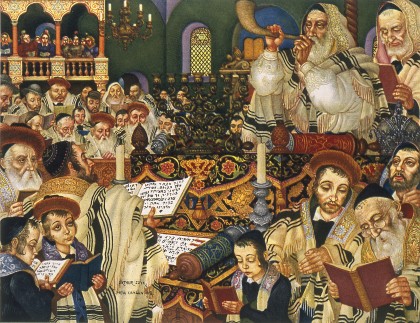 This is a similar idea to that of the reconstructionists, but not the same. Reconstructionists want to work with a constantly evolving Jewish civilization, grounding themselves in Torah, mussar, kabbalah, shabbat, the old holidays, but emphasizing the work of building a Jewish culture in the current day, reconstructing it as Jews change and the world around them changes, too. I’m learning so much from this radical idea.
 What I want to do though, and it’s a similar challenge, is to reimagine, for our time and as a dynamic, the way we reach for the sacred, the way we write about our experience, the way we celebrate the insights and the poetry it inspires. In this Reconstructionist Judaism is a better home for me than Unitarian Universalism. UU’s may have the same goal, but their net is cast into the vague sea of the past, trying to catch a bit from here and a bit from there. It is untethered, floating with no anchor. Beth Evergreen affirms the past, the texts of their ancestors, their thousands of years of interpretation, the holidays and the personal, daily life of a person shaped by this tradition, but also recognizes the need to live those insights in an evolving world.
 A week from today we’ll be on the road in a rented R.V., Ruth and Gabe on board, headed to Driggs, Idaho. It will be Kate’s 73rd birthday. I wrote a post on
  Perhaps this eclipse on August 21st is an opportunity for us all to merge the outer with the inner, to experience the same fear our long ago ancestors did when they imagined the world might die, the sun might never reappear. It may be a chance to integrate this slow motion catastrophe through which we are living, in which we are implicated, and consider it in a new way.
 It’s been a rainy, cold week here on Shadow Mountain. The dial on the various fire risk signs is either on low or moderate. Gotta love the monsoons. Yesterday we came home from Beth Evergreen and it was 71 in Evergreen, 60 at the house. Not very far mileage wise from Evergreen, but the altitude really makes a difference.
 Ruth and I are going to the Fiske Planetarium tomorrow for a show on the moon. Kate will go along, as will Gabe. That way Jon can have time to work on the bench in the dining room. I’ll have a chance to stop at the
  Oh. Right. Slept in yesterday until 7:30 am. About 2.5 hours past normal rising. The guy from Conifer Gutter came by to give us an estimate on needle guards for our gutters. Then, well, I worked out and forgot to post.
 The proselytizing Roman Catholics gathered in Lughnasa and turned it into Lammas, a sabbat name used often in Wiccan circles, but in fact part of a persistent and largely successful attempt by the Catholic church to eliminate the old Celtic faith. Parishioners baked loaves of bread (lammas means loaf mass) from the first harvested grains and brought them to mass.
 A glorious time of year when the crops were good, Lughnasa also kicked off a long succession of market days, actually weeks, when celebrations were common. The tradition of Lughnasa market days with their heaps of produce from gardens and fields came to the United States with the Celts who immigrated here, many into the Appalachian mountains where their culture fed folk music and crafts into the new country. Their Lughnasa celebrations, then known as fairs, are the genesis of county and state fairs.
 Kate has a garden remnant doing surprisingly well. She got this plant from a project at Beth Evergreen and had me transplant it. We will have a bit of Lughnasa sometime soon, if the fruits on it ripen. If they don’t, we plan to have fried green tomatoes. Kudos to Kate for accomplishing a difficult feat at 8,800 feet, growing tomatoes. She’s my Demeter.
 With concern about my knee prosthetic assuaged, I’ve gotten a better workout routine going. It’s taken me awhile to match my new workout time, start between 9 and 10 am, with productivity on other projects like reimagining and a new novel, but I’m getting there.
 The kabbalah class is over until after the high holidays, but I plan to read in both the first volume of the Zohar and the key work by Isaac Luria. No idea right now about how to organize that reading, but Rabbi Jamie will help. Kate and I continue to study mussar, the Thursday at 1 pm group grounding us in both Jewish ethics and a small community.
 This evening is the last of the introductory kabbalah classes. We’ll be discussing miracles again and hearing student presentations. Making it personal still seems like the right path for mine, how kabbalah has affected a decades long journey, a pilgrimage toward the world into which I’ve been thrown.
 Here’s a nice paragraph: “While the hermeneutic strategies to “open up the text” that Ricoeur presents are not simple or childlike, they’re only the first step in engaging with the ideas. If you understand “the meek shall inherit the earth” as a radical idea, what do you do with that? How do you apply it? How do you let it change you? Following
  The biggest change will be in how I sense the world around me. I will no longer be so reductive, imagining that even if there is an unseen world, that’s all it is, unseen. Perhaps this is how the reenchantment process works, seeing the living, intricately woven cosmos as manifest everywhere, visibly and invisibly. My pagan sensibility remains. I’m not sure that adding God language to the mix adds anything important.